Petroleum

Dangote begins free petroleum distribution across Nigeria to ease fuel prices

By Abdullahi Mukhtar Algasgaini

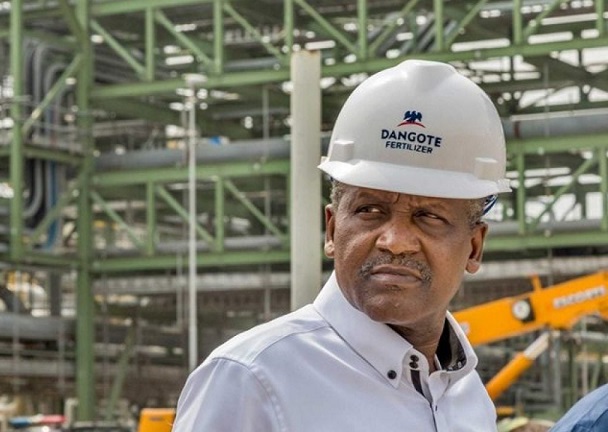
The Dangote Group has announced its plan to distribute petroleum products across Nigeria free of charge in an effort to reduce the soaring fuel prices in the country.

A fleet of Compressed Natural Gas (CNG)-powered trucks has already arrived in Lagos, signaling the company’s commitment to easing the fuel supply crisis.

This move comes as the Nigerian government tightens regulations on petroleum distribution, potentially displacing independent marketers from the sector.

Meanwhile, Aliko Dangote has announced his retirement from the cement business to focus entirely on the petroleum industry.

The development has sparked mixed reactions among Nigerians, with many questioning how this shift will reshape the nation’s fuel market dynamics.

₦700/litre: A warning of petroleum marketers and the free market economy

By Aliyu Nuhu

The Petroleum Marketers, under the umbrella of IPMAN, are saying that petrol will be sold at N700 per litre if the next imported fuel arrives. But even at the current price, ask them “how market?”.

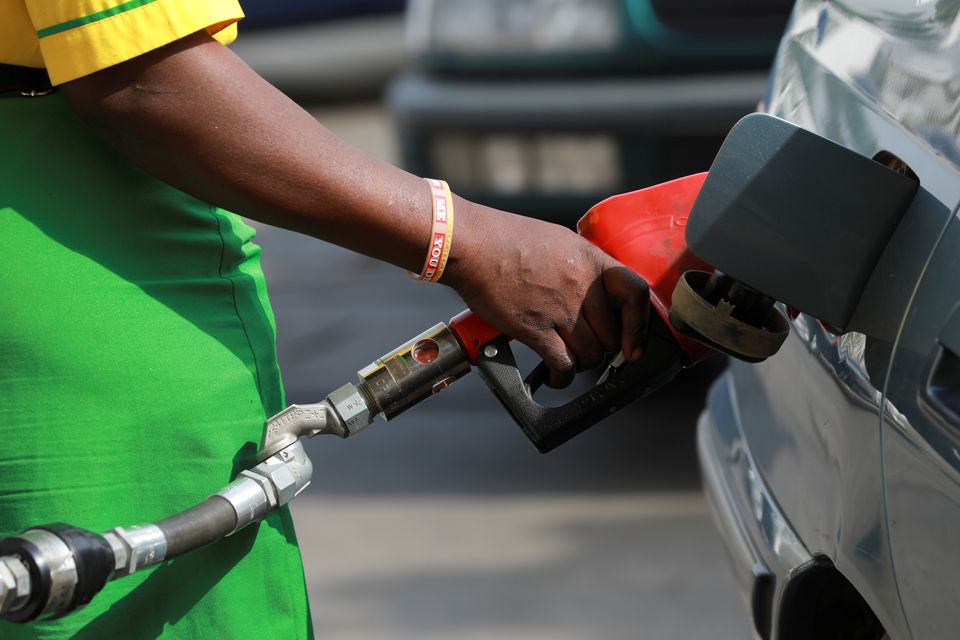
These days you see pump attendants sitting down for hours without selling 200ltrs. The moment they see a car approaching, they start shouting, ‘Come here! come here!’ It is now the buyer’s market; all that arrogance associated with the seller’s market during scarcity periods has vanished.

During fuel subsidy regimes, NMDPRA said we used to consume 66.8m ltrs of petrol daily. But after the withdrawal of the subsidy, the figure has dropped to 40m. If they increase the price to N700/ltr, the consumption may drop to 20m ltrs per day.

This will shrink the downstream industry and shut down half the filling stations in the country. Nigerians are resilient, and they know how to adjust to every difficult situation. People with many cars will sell them. Those with big cars will go for smaller, fuel-efficient cars. People will take Keke or bus and only travel when and where necessary.

The beauty of a free market economy is that the market forces of demand and supply will set price equilibrium to the acceptance of both sellers and buyers. There will be no market distortion, and petrol marketers will only make marginal gains relative to their level of capital and investment.

We are not scared of a free market. It is a waiting game. If they fail to sell their products due to low demand, they will lower the price. Otherwise, new entrants into the industry will come and offer lower prices for market penetration.

We are waiting.

Aliyu Nuhu writes from Abuja, Nigeria.

FG closes 7 petrol depots for selling above government price

By Muhammadu Sabiu 

Seven private depots were closed by the Nigerian Midstream and Downstream Petroleum Regulatory Authority (NMDPRA) for selling gasoline above the N148 per litre permitted by the federal government.

Independent petroleum marketers had complained in recent months that they were purchasing the product from private depots for more than N200 per litre, making it impossible for them to sell the commodity at the government-approved price.

The Authority’s Chief Executive, Engr. Farouk Ahmed, said the depots would be closed until a decision was made on how to proceed while speaking to journalists on New Year’s Eve in Abuja.

Among the companies, he identified were Ardova, Rainoil, TCL, Bluefin, and NEPAL.

According to Engr. Ahmed, two of the depots are in Lagos, two are in Warri, one is each in Oghara, Port Harcourt, and Calabar.

He reassured customers that the closure would not affect the availability of petrol around the nation, stating that there would be enough fuel for about 30 days.

He said that in an effort to lessen fuel shortages, the authority had many discussions with marketers on how to address supply issues that operators were having.

He also noted that certain privately operated depots were found to continue loading the commodity above the government-approved price, despite having obtained the cargo under favourable circumstances.

Petrol shortage hits Kaduna

By Muhammadu Sabiu

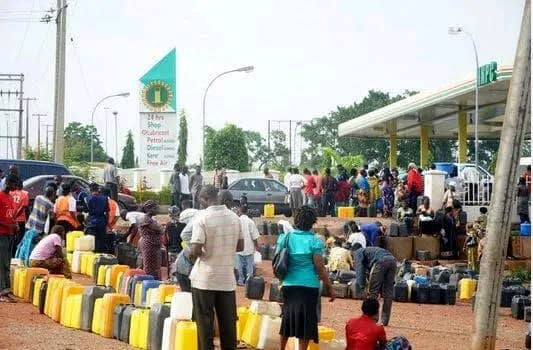
Reports reaching The Daily Reality have indicated that residents and drivers were in a panic on Monday as fuel shortages hit many filling stations in Kaduna State and the surrounding area.

Many petrol stations had long lines of vehicles, and this forced buses drivers and commercial motorcycle riders to increase transportation costs by 50%.

Madam Ashatu Suleiman, a local, claimed that it cost her N150 to move from Sabon Tasha to Kaduna Central Market, where she sells food, adding that she paid N200 this evening as she was heading home.

According to a report, the cost of transportation from Kaduna to Zaria has jumped from N800 to N1,000.

Many people feared that the state’s fuel shortage was caused by floods in Kogi, which made it difficult for fuel trucks to pass.

The Kogi flood, according to Mr. Samuel Ebiko, station manager of Enyoojo filling station, has nothing to do with the Kaduna station’s gasoline shortage.

Remove this notorious subsidy but with conditions

I support the removal of fuel subsidy with conditions attached for the government. I have known that fuel subsidy is giving corruption a legal garb. But IMF didn’t tell government the whole truth. For government that cares for its people, removing fuel subsidy should only be done after the following conditions are taken care of:

1- Repair the refineries. As long as the refineries are working, petrol will come at reasonable price to Nigerians. The transport, NPA, custom duty and throughput components of the price will be taken care of.

2- Stop importation of petrol- fuel subsidy is not the only way government wastes money. Fuel importation in the most corrupt and wasteful venture of the government. As at June 2021, Nigeria spent N1.09trn on fuel importation. It is the cause of the deteriorating value of the Naira and Nigeria’s biggest import, the cause of our balance of trade and current account deficits. In fact fuel importation is the major cause of Nigeria’s economic crisis. As long as Nigerians will buy fuel without subsidy, they will be subsidizing government corruption and inefficiency.

3- Address the macro-economic crisis facing the country especially exchange rate and food inflation. Life is unbearable for Nigerians and removing fuel subsidy that will increase price of petrol will add more hardship to Nigerians. Fuel price increase has negative multiplier effects on cost of rents, transportation, school fees and prices of goods and services. When Nigerians are down with excruciating economic problems why add more hardships on them by jerking up the price of fuel?

4- Provide effective transport system like rails, good roads and bus services. In Nigeria, only Lagos has public transport system, even at that Lagos does not have rail system. Abuja has no public bus system and the light rail only covers a small fraction of the town. You can live in Abuja for months without seeing the train because it covers few stops. Other Nigerian cities don’t have public transport system.

5- Improve salaries of workers. Even without fuel price increase inflation has made Nigerian workers paupers. Without commensurate increase in salaries people will be working for nothing.

6- Solve the deliberating security situation affecting the roads and villages. People have no livelihood because they can’t farm. People cannot connect with towns and do business because of insecurity. Bandits have overrun most states in the Northeast and Northwest and people can’t till their lands or rear livestock.

7- Reduce cost of bureaucracy. The minister of finance said government did not budget anything for fuel subsidy for year 2022. But ask her, how much does the government budget for maintaining political appointees and you will know that the government thinks of itself not the poor Nigerians. According to former CBN governor and former emir of Kano State, Malam Sanusi Lamido Sanusi, at least 70% government revenue is spent on officials.The money to be spent on the president, vice president, ministers and CEOs of parastatals and members of house of assembly is far more than the fuel subsidy they are talking about. That covers fat salaries, allowances, estacodes, new expensive cars and even planes. But they will not touch their welfare. It is the same at state levels.

If the government can address these it can go ahead and remove fuel subsidy, otherwise it will be punitive to make life unbearable for Nigerians. Even the rich are crying in today’s Nigeria.

Aliyu Nuhu: is a social analyst, he lives in Abuja.