PDP

Musa Majakura, 29, defeats Yobe Speaker

By Muhammad Suleiman Yobe

Speaker Yobe State House of Assembly, Hon. Ahmed Lawan Mirwa of the ruling All Progressive Congress, APC, has lost his seat in the just concluded governorship and state house of assembly elections held yesterday, Saturday, March 18, 2023.

Lawan Mirwa, representing Nguru outside constituency in the Yobe State House of Assembly since 2003, has lost his seat to People’s Democratic Party, PDP, candidate Musa Lawan Majakura.

Majakura got 6,648 votes, Mirwa got 6,466 votes, Bukar Jatau of New Nigeria People’s Party got 23 votes, while Mai Zare Idriss Idriss of APM Party got 14 votes followed by Isah Sa’idu Shehu of the ADC party who got 30 votes.

While declaring the election results, the Independent National Electoral Commission INEC’s returning officer, Nguru Outside state Constituency, Alhaji Mahdi Damaturu, announced Lawan Musa Majakura of the PDP as the winner.

“Musa Lawan Majakura of People’s Democratic Party, PDP, having satisfied the requirement of the law, is hereby declared the winner and return elected”, he added.

Musa Lawan Majakura, who is 29 years old, obtained a diploma from Atiku Abubakar College of Legal and Islamic Studies Nguru, Yobe state. Before winning this election, the ruling party APC did its best to force him to withdraw his candidacy, but he refused.

Recalled that the Speaker, Ahmed Lawan Mirwa, first came to the Yobe State House of Assembly in 2003 and became the Speaker of the House in 2019.

Yobe: The fall or success of Mai Mala Buni 

By Muhammad Suleiman Yobe

Yobe has been called a one-party state since the return of the fourth republic. Firstly, in 1999, after the return of democracy, the All People’s Party, APP, won the governorship election, where former Governor Bukar Abba Ibrahim won the election and was re-elected in 2003.

After ruling the state for eight years, the late Mamman B. Ali won the state governorship election held in 2007 also in the same party APP, after the party’s name was changed to All Nigeria People’s Party (ANPP).

After spending two years in power, God took over the life of Mamman B Ali and later, his deputy Ibrahim Geidam at that time, became the governor of Yobe state.

Ibrahim Geidam continued to lead the state for ten years in power. The ANNP continued ruling the state until 2014, when the coalition of opposition parties united and created a new party, the All Progressive Party (APC).

This means that since the return of democracy in 1999, only one party has been ruling the state up to 2019 when Mai Mala Buni emerged as the governor of the state under the banner of the APC party.

The most surprising thing in Yobe state is that there has never been a victory over the ruling party in the presidential election until this year’s elections. Even in 2011, when the ANPP nominated Malam Ibrahim Shekarau as a presidential candidate, the ANPP party won the state in the presidential election by a wide margin.

The question here is, what caused the ruling party’s failure in this year’s presidential election?

 How will the presidential election affect the success of Governor Mai Mala Buni?

Of course, the election held on February 25 scared the leaders of the APC in Yobe state, especially the way the opposition party PDP won by a considerable margin.

In the election held, Professor Umaru Pate, the returning officer of the state in the just concluded presidential and national assembly elections, declared the PDP party as the winner of the election as follows; APC 151,459, LP 2,406, NNPP 18,270 and PDP with 198,567.

This means that the PDP won by a margin of 47,108 votes, even though elections were cancelled in some polling units with large crowds in Fika, Bade, Fune and Jakusko local governments, which are expected to be won by the PDP.

What is more surprising and interesting is how the ruling party failed to win in the major local governments with the most registered voters as follows:

(1) Potiskum 181,091 registration voters

(2)Damatura 122,197 registered voters

(3) Fune 121,900 registered voters

(4) Bade. 113,716 registered voters

(5) Nguru. 101,044 registered voters

Total = 639,948 registered voters.

Surely! If the people of the towns mentioned above will vote massively for the PDP again, there is no doubt that governor Mai Mala Buni will fail because the total number of registered voters in the state is 1,485,146. As we saw in the presidential election, only less than 400,000 cast their votes.

The presidential election may not signify Mai Mala’s future, but there is a threat to the ruling party. Because many years ago in Yobe state, it was not possible to oppose the state government because of the threat of firing a person from a job or confiscating a person’s farm if he did not support the ruling party, but now because of the emergence of social media, there has been a change in society’s awareness and opposition.

Further, the change in the presidential election happened because Mai Mala Buni failed to meet the situation of the top politicians helping the state’s poor people.

Similarly, the emergence of Bola Tinubu in the APC presidential elections contributed to the downfall of the APC because the people of the state did not accept him. And the governor failed to help the rural residents, so the government lost the presidential election in his local government of origin (Gujba).

With this, I think if the state residents will be allowed to vote for their prepared candidates without buying votes, without compulsion on the people, both APC and PDP will all be able to win the gubernatorial election on March 18, 2023.

Muhammad Suleiman Yobe wrote via muhammadsuleiman190@gmail.com.

NigeriaDecides: We won’t accept election results—PDP

By Muhammad Sabiu

Nigeria’s main opposition party, the PDP, has declared to contest the presidential election results.

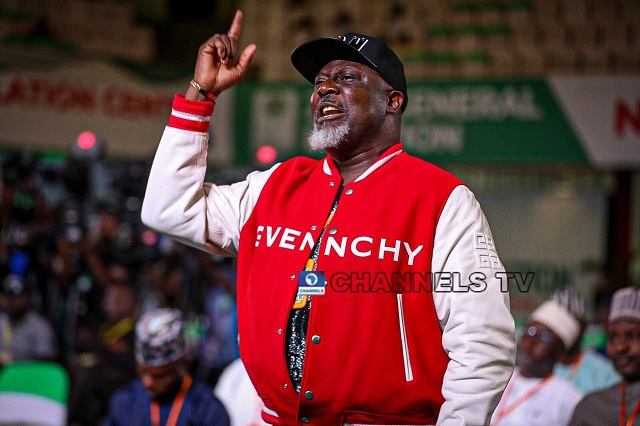
Dino Melaye, a PDP representative at the national collation centre in Abuja, stated this on Monday while raising the alarm over presidential election results coming from Kwara.

Mr Melaye contended that the results are in doubt since INEC failed to promptly post the results from the polling units online.

Just-in: FCT PDP chairman dies in an accident

By Ahmad Deedat Zakari

The Federal Capital Territory Chairman of the People’s Democratic Party (PDP), Sunday Zaka, has passed on.

Mr Zaka, who was popularly known as HIV, was involved in a car accident that claimed his life on Saturday morning.

Bawa Benjamin, a close aide of the deceased confirmed his demise to newsmen.

According to Bawa, Mr Zaka lost control of his car and crashed into a tree on his way home from the party’s meeting.

He also disclosed that the deceased was rushed to the University of Abuja Teaching Hospital Gwagwalada, where he was confirmed dead by doctors.

Reports have it that Mr Zaka’s personal security also died alongside his boss in the car crash.

A chieftain of the party, Michael Kpatuba mourn the death via a post on his Facebook page on Saturday morning.

“Dying Election day is really heartbroken to the FCT, PDP family.

“Rest in peace, Hon Zaka Sunday, FCT PDP Chairman”, the post read.

Coalition asks Atiku to step down for Kwankwaso

By Muhammadu Sabiu

A coalition of civil society organisations asked Atiku Abubakar, the candidate of the Peoples Democratic Party, to step aside in favour of Musa Kwankwaso, the candidate of the Nigeria Peoples Party, to prevent needless vote splitting in the North.

Bishop Godwin Abah, the coalition’s head, said in a press conference at the NNPP secretariat in Abuja on Wednesday that Nigeria’s future was in jeopardy and that, as a result, the Kwankwaso Presidency’s political sagacity and tenacity of purpose were needed to turn the country around.

Abah noted that the organisations had carefully examined the presidential candidates of major political parties, as well as their backgrounds and democratic credentials, adding that Kwankwaso stood out among the other candidates.

He was quoted as saying, “A servant-leader with milk of human kindness, Kwankwaso transformed Kano State as a two- term governor and will bring his wealth of experience as former Minister of Defence, Ambassador, Senator, Deputy Speaker, House of Representatives etc., to bear on national governance as President of the Federal Republic of Nigeria.

“It was also the opinion of the rural Nigerians that the coalition interfaced with that Alhaji Atiku Abubakar should set aside his presidential aspiration for a dynamic, pragmatic, energetic and resourceful Kwankwaso.

“Accordingly, the coalition calls on Alhaji Atiku Abubakar, the Peoples Democratic Party’s presidential candidate to step down for the NNPP presidential candidate, Rabiu Musa Kwankwaso to avoid unnecessary splitting of votes in the North.

“Kwankwaso will inject fresh air in governance, restore hope to a bewildered nation that has seen more carnage than dividends of democracy and build a new Nigeria we all desire.

“Atiku has done his best for the nation, we appreciate his contribution as Vice President of Nigeria. He remains a statesman.

There are now about three days left until the presidential election, which involves four major contenders, including Bola Tinubu (APC), Atiku Abubakar (PDP), Rabiu Musa Kwankwaso (NNPP), and Peter Obi (LP).

2023: Christian leaders endorse Atiku for President

By Sumayyah Auwal Ishaq

The United Christians Leaders Eagle Eye Forum (UCLEEF) has formally endorsed the former Vice President and People’s Democratic Party’s (PDP) presidential candidate, Alhaji Atiku Abubakar, GCON, as its presidential candidate ahead of the February 25 general elections.

According to the group’s national coordinator, Pastor Aminchi Habu, “as the great democracy defender of Africa, we see Alhaji Atiku Abubakar as the political pilot that will fly Nigeria to its promise land, the political engineer that will repair the damaged engine’s of Nigeria economy, the political architect that will redesign and take Nigeria to a glorious future and the political doctor of our nation who has the prescribed drugs that will heal Nigeria of all its security and other societal ills”.

Pastor Aminchi further stated that “we have four Million two hundred and sixteen thousand one hundred (4,216,100) registered members, which we have instructed each and every one of them to win at least one (1) vote for His Excellency Atiku Abubakar GCON at the coming Polls, so as it stands now we have eight million four hundred and thirty-two thousand two hundred (8,432,200) votes on the ground for his Excellency”.

Representative of the former Vice President, Mr Dele Momudu, thanked the group and promised that an Atiku presidency would be for all Nigerians irrespective of religious, ethnic, or political differences.

Atiku vows to implement CAN’s policy document

By Uzair Adam Imam

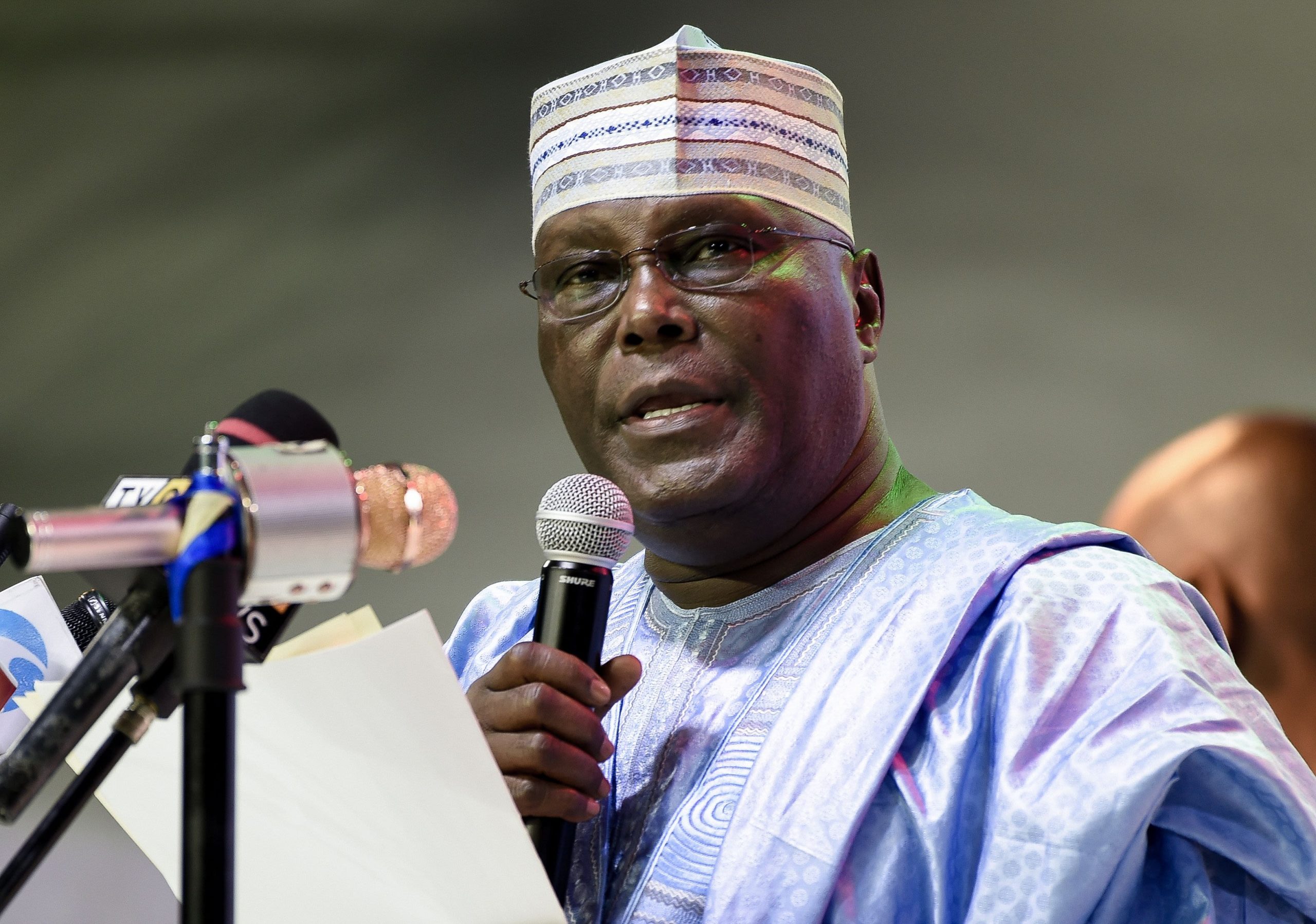
The Presidential Candidate of the People’s Democratic Party (PDP), Atiku Abubakar, vowed to implement policies presented to him by Christian Association of Nigeria (CAN) on Tuesday.

According to him, the CAN’s policy document was not in contradiction with his belief, as some of the points presented were contained in the book he wrote when he was a vice president of Nigeria.

The Presidential Candidate made this disclosure during his meeting with the CAN leadership in Abuja Tuesday.

He said, “I have listened to the presentation of the CAN document and I can tell you the CAN document is totally in conformity with my thoughts in a book that I published when I was the Vice President and this led to a fundamental disagreement with my boss as well as my constituents.

“There is no difference between my book and CAN’s presentation. I stand before you not to campaign but to tell you the honest truth, what you have presented is what I have always believed in. And if I have the opportunity, I swear to God I will do it.

“Oil didn’t send me to school, my parents paid cattle tax, market tax, radio tax and these were the taxes that sent me school from primary to university. If God has given you gold or oil, take your oil or gold but I will tax you.

“Why should we be fighting over resources that have been endowed to whoever it is endowed to,” said the presidential candidate.

Atiku was received by the CAN’s President, Archbishop Daniel Okoh, the Secretary of the association, and other executive members.

The CAN’s president, while presenting the document they titled “Policy Roadmap for Future Nigeria”, said the the document was for avoidance of doubt.

He said, “For avoidance of doubt, we present the policies that we believe will address the crises of development in Nigeria.”

As Nigerians head to the polls

By Salim Yunusa

In less than a week, Nigerians will get to exercise their democratic and electoral rights in carefully selecting and choosing new leaders that will steer the affairs of the country and represent them across local, state and federal levels; with the hope of bringing on board people that will – among many other things – secure the country and improving its economy.

The last 8 years have been characterized by a turbulent administration; with glaring insecurity caused by banditry and kidnapping in the North-West and North Central, IPOB uprising in the South – East and the lingering Boko Haram insurgency in the North – East.

The Nigerian economy took hits and was severely battered, with double digit inflation figures and millions of Nigerians plunged into poverty. Recently, the cashless policy, which is good in the long run, has caused untold hardship to many Nigerians, with protests and riots in some places.

As Nigerians head to the polls, they’re left with clear choices of who they want to steer the affairs of this country; a leader who can tackle the insecurity ravaging the country, a leader who can improve and strengthen the economy and mostly, unite a nation whose unity is precariously held by few loose strings.

Nigerians should elect a leader with a clear-cut vision on how to effectively utilize the millions of youths that are unemployed and underemployed. They should vote vote a leader devoid of religious, ethnic and regional bias for the betterment of the country.

Someone who will prioritize education – enrollment of the millions of out-of-school children roaming on the streets – and will put to an end the incessant industrial strikes bedeviling the public universities.

Nigerians should opt for a leader that listens and doesn’t infringe on their rights – whatsoever right that may be. We have seen how this administration banned Twitter, one of the most popular platforms that gave young Nigerians a voice, for six months. We have seen how the government cracked down on young Nigerians protesting police brutality during the #EndSARS protests.

We have seen how the government has tried to gag press freedom through the introduction of the social media bill. No sensible Nigerian should bring forth a leader that will enshrine this.

As Nigerians go to the polls, they should remember that the greatest mistake they made was placing all their hopes in the hands of one person; thinking that one person alone would ‘change’ the country. They should know – and if they do know – they should remember that change and nation building is not a job that can be done and achieved by just one man.

That it is a collective responsibility of everyone to play their part in making the country work for everyone. They should know that there is no magic wand that will swish away the problems of this country and that there’s no messiah that will come and save us.

Luckily for Nigeria, the problems are clear – and that’s half the problem solved. It is left to us to choose what is right over what is easy; to look away from hype and what is in vogue and to opt for options that will put first the interest of Nigerians and Nigeria.

Salim Yunusa is a prolific writer, poet and public affairs commentator. He writes in from Zaria, Kaduna.

2023: Presidential elections and the battle between two categories of Northern elders

By Ibraheem A.Waziri

Every election season in Nigeria comes with its provoking premises and issues! This time around, apart from the usual North and South, Muslim and Christian divides that are often most prominent than party affiliations; a new dynamic which has not yet caught public attention has been added up to the mix. The struggle to maintain relevance between two different categories of Northern eldership or leadership. These two categories, in the realm, are separated primarily by order of generational cohort (GC) in age!

Falling back to the scholars in anthropology, we learn that a GC is usually pegged at 15-20 years. All persons born within such intervals are regarded to, more or less, belong to the same groupings defined by the same circumstances; social, economic, and cultural events and would likely share some core elements in perspectives, tastes and life preferences.

Since the completion of the taking over of Northern Nigeria by the British in 1903, a generation who will eventually become Nigerians from the territory began to be given birth to that same year. Therefore the first generational cohorts (GC) of Northern Nigerians can be said to be those born between 1903 and 1919. That is if the mode at which boys usually reach puberty is considered as the norm to be 16 years!

The second GC came between 1919-35. The third was between 1936-51. This GC is the one that did the 1967 military counter-coup and prosecuted the then Nigerian civil war from the Northern Nigerian side led by 2nd GC member, General Yakubu Gowon, as Head of the Nigerian state.

One can be right to say that the 3rd GC of Northern Nigerians has been influencing politics and government policy not only in the North but in Nigeria from that time until now! The politicians among them, intellectuals and business owners, have been holding the region at its nape!

After the 2019 elections, some pundits among us have been harping about the fate of the North come 2023, as it was obvious that the 3rd GC are threatened by senesces and, therefore, very weak. The assumption is that they will reach a consensus among themselves to identify an able group of successors to hand over the affairs of the North and fade themselves into retirement, having put in their best for about 57 years now! The longest any GC have been there and probably will ever be.

None of us thought that the successor cohort, the 4th GC, born between 1952-67, would need to necessarily put up a fight to dislodge the 3rd GC from the power circle and forcefully take over like what is happening now in the ruling party.

However, since the statement made in Abeokuta on the 25th of January, 2023, in a campaign rally, by Asiwàju Bola Ahmed Tinubu, the All Progressive Congress (APC) party presidential candidate; to the effect that there are saboteurs in the Presidency – which ironically is occupied by his party – who are against his emergence as winner of the 2023 presidential Elections slated to hold 25th of February, 2023.

Bola Ahmed Tinubu, though a Southerner, enjoys the support of 14 of the 19 Northern Governors, who are from the ruling party. 11 of them also belong to the 4th GC. 1 belongs (Borno State) to the 5th GC. 

Kaduna State Governor, an outspoken element among them, has granted a series of interviews on the 1st and 2nd of February 2023. To a number of media Houses, including BBC and TVC, in both Hausa and English, implying that some 3rd GC Northern influencers around President Muhammadu Buhari (who is himself a member of the same cohort) are plotting to work against their candidate! By following other means, they do that to ensure a member of the 3rd GC, Atiku Abubakar of the opposition People Democratic Party (PDP), and a Northerner emerge as the winner of the 2023 presidential Elections!

The ultimate question now, apparently, is whether the people in the North will agree to prolong the tenure of leadership and eldership of the 3rd GC Northerners, adding another eight years to their 57 years, making it 65 long years. Or, in the alternative, they want to hand over the realms of their leadership and eldership to the 4th GC Northerners; to bring their own uniqueness to the table early enough.

It is obvious that the 4th GC Northerners, born during the years building up to the civil war to its end, have different perspectives and arguments about how Northerners should see themselves and live with their neighbours in Nigeria. They don’t view Southerners with the kind of suspicion the 3rd GC Northerners think of them. It is why in the first place, they would resolve to fulfil the unwritten agreement of power shift to the South in 2023.

Some members of the 5th GC of Northerners, either those born between 1968-83, would appreciate seeing a new perspective taking control of the space and atmosphere of Northern Nigeria come 25th February 2023. It will guarantee an experiment with fresher perspectives that are sure catalysts to positive change and comprehensive progress, not the same old perspective that has dominated the space for 57 years. 

Also, it is only when the 4th GC Northerners move a little higher on the ladder that the 5th GC Northerners, the post-civil war generation, will enjoy a certain degree of influence at some social plane. The same thing with the 6th GC Northerners, born between 1984-1998, the military rule generation. Also, the 7th GC Northerners, born between 1999 – 2015, Fourth Republic, Peoples Democratic Party (PDP) rule generation. Each movement on the ladder creates opportunities for growth and stability for others to play their role and display their God-given talent for the benefit of all.

These can be among the reasons why most Northern Nigerians would consider lending their support to the 4th GC Northern leaders in their bid to take control now. Politicians and bureaucrats like Nasir El-Rufai, intellectuals and opinion leaders like Dr Aliyu Tilde, Mahmud Jega; Abdulaziz Abdulaziz of the 5th GC and a host of other businessmen and religious leaders deserve this chance to move us to another level of life-changing perspective with Asiwàju Bola Ahmed Tinubu Nigerian leadership come 25th February 2023!

Ibraheem A. Waziri wrote from Zaria, Kaduna State. He can be reached via iawaziri@gmail.com.

Old naira notes exchange: Atiku begs CBN to extend deadline 

By Muhammadu Sabiu

The presidential candidate in the 2023 election under the platform of the Peoples Democratic Party, Alhaji Atiku Abubakar, has called on the Central Bank of Nigeria to extend the deadline for the exchange of old naira notes.

This was contained in an address posted on his verified Facebook Hausa page.

Recall that a CBN policy says that the old naira notes in circulation will cease to be legal tender on January 31, 2023.

Commenting about the deadline, Atiku Abubakar noted that such a policy is practised worldwide due to its impact on the economy, adding that Nigerians, at this critical moment, need an extension of the deadline.

He was quoted as saying, “There is no doubt that the CBN policy has generated heated debates within and outside Nigeria.

“It should be noted that the change of currency is a normal practice from time to time—it is not something new.

“Looking at the fact that the January 31st deadline is drawing nearer, patriotic Nigerians are expressing their fear of the policy worsening the situation of Nigerians.

“It would be difficult for many people who do not transact online to have their old notes changed before the deadline.

“While we will continue to educate people on the policy, it’s important for the CBN to consider extending the deadline.”