PDP

PDP remains unyielding as some stakeholders decamp to APC: A move long overdue

By Jamil Jetta

The Peoples Democratic Party (PDP) has noted the recent decamping of some of its stakeholders in Kaduna State to the All Progressives Congress (APC). While this move has been long anticipated, it comes as no surprise given the lack of credibility, political momentum, and true patriotic zeal exhibited by these individuals in their various constituencies. It is remarkable to understand that some of the decampees have left the Party since 2024.What happened was just a political Circus show put forward by the APC to mask its dwindling fortunes.

The PDP remains unshaken by this development, as the party continues to enjoy the unwavering support of the majority of the people of Kaduna State who recognize its commitment to good governance, national unity, and sustainable development. The decamping of these individuals, many of whom have struggled to maintain relevance in their political careers, only reinforces the PDP’s position as the party of choice for the people of Kaduna State who value integrity and progress.

For those decamping from Southern Kaduna, it is important to remind them that the zone has always been a traditional PDP stronghold. Their departure will not alter the fact that the PDP remains the preferred party of the people in this Zone.The voters of Southern Kaduna are politically astute and have consistently demonstrated their loyalty to the PDP, a trend that will continue in future elections.

To those decamping from other Senatorial Zones, the PDP wishes to remind them that the political opportunities they have enjoyed were made possible by the party. Without the platform provided by the PDP, many of these individuals would not have attained the positions they hold today. Their decision to abandon the party that nurtured their political careers is a testament to their lack of gratitude and foresight.

The PDP reiterates that politics is ultimately a game of numbers, and the majority of actual voters remain loyal to the party. These voters, who are the backbone of Kaduna State’s democracy, have consistently voted along the lines of integrity, development, and good governance – values that the PDP embodies. The decamping of a few individuals will not sway the resolve of the millions of Nigerians who continue to stand with the PDP.

The PDP remains committed to its mission of delivering a brighter future for all the people of Kaduna. The party is confident that its track record of achievements and its vision for a better Nigeria will continue to resonate with the electorate. As we approach future elections, the PDP is more determined than ever to consolidate its support base and emerge victorious.

The PDP urges its members and supporters across the country to remain steadfast and focused. The party’s strength lies in its people, and together, we will continue to champion the cause of democracy and development in Nigeria.

Piquantly,the People Democratic Party (PDP) is one of Nigeria’s leading political parties, committed to promoting democracy, good governance, and sustainable development. With a rich history of achievements and a vision for a better Nigeria, the PDP remains the party of choice for millions of Nigerians.

Honorable Jamil Shuaib Jetta, a former aspirant for the Kaduna State House of Assembly, wrote in from Kaduna and can be reached via jamilshuaib57@gmail.com.

Zamfara govt halts political gatherings amid rising tensions

By Uzair Adam 

The Zamfara State government has banned all political gatherings and rallies across the state, citing the need to maintain peace and stability.  

The restriction, which immediately applies to all political parties, was announced following a political clash in Maru Local Government Area.  

Speaking with BBC Hausa, Mustapha Jafaru Kaura, the Senior Special Assistant to the Governor on Broadcast, Media, and Public Affairs, said the decision was taken to prevent further unrest after a recent incident in Maru that resulted in casualties and property damage.  

He clarified that the ban is temporary, not intended to suppress political activities but to ensure public safety. Security agencies have been instructed to enforce the directive.  

However, the opposition All Progressives Congress (APC) has rejected the move, arguing that it infringes on their rights. 

The party’s spokesperson, Malam Yusuf Idris Gusau, described the decision as politically motivated, claiming it was triggered by a recent APC gathering that unsettled the state government.  

“There is no law that permits the banning of political gatherings. Our party is registered at the national level, and our members are law-abiding citizens who will not engage in actions that threaten peace,” Gusau stated.  

The ban has sparked debate, with concerns over its implications for political engagement in the state.

Kwankwaso denies rumours of power-sharing deal with Atiku, Obi

By Uzair Adam 

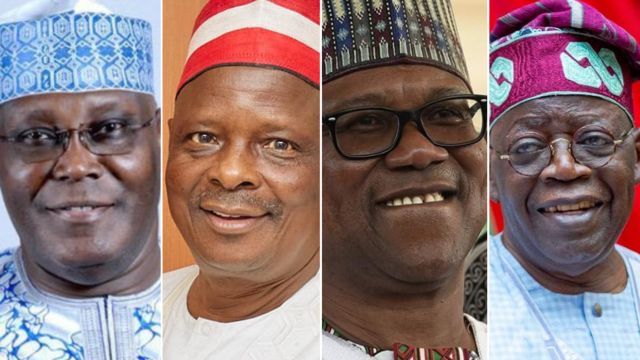
Senator Rabiu Musa Kwankwaso, former governor of Kano State and presidential candidate of the New Nigeria People’s Party (NNPP), has dismissed rumours suggesting he entered a power-sharing agreement with opposition candidates Atiku Abubakar of the Peoples Democratic Party (PDP) and Peter Obi of the Labour Party (LP).  

In an interview with the BBC, Kwankwaso expressed anger over the claims, describing them as baseless fabrications intended to mislead the public. 

He alleged that Atiku’s camp had met with regional leaders, including clerics, to promote the false narrative.  

“This issue deeply angers me—to hear that respected elders are spreading lies about something that never happened. 

“I was told that nearly 45 clerics were gathered and informed about this fabricated story. I did not appreciate this at all,” he said.  

Kwankwaso further clarified the alleged agreement, which claimed Atiku would serve as president for four years, followed by Kwankwaso for another four years, and Peter Obi for eight years, stating categorically, “This is completely false; such an agreement never existed.”  

Reflecting on his departure from the PDP to join the NNPP, Kwankwaso said he left the party to escape the “humiliation” he and his supporters faced. 

He emphasised that such incidents reinforced his decision to forge a new political path.  

“Such lies and deceit are precisely why we left. Myself, Peter Obi, Wike, and others all left. Now they are coming back, asking us to help those who humiliated us to achieve their goals,” he said.

Political unity on display as Senator Kwankwaso’s daughter marries in Kano

By Abdullahi Mukhtar Algasgaini

Senator Rabiu Musa Kwankwaso, PhD, FNSE, National Leader of the NNPP, welcomed Nigeria’s top political dignitaries to Kano for his beloved daughter’s wedding.

The illustrious event, held under the serene ambience of Kano’s cultural heritage, saw the presence of Kano State Governor Engr. Abba Kabir Yusuf joined hands with his mentor and received many prominent leaders. Among them were Senator Abdulaziz Abubakar Yari, CON, former Governor of Zamfara State; Senator Abdul Ahmed Ningi; and His Excellency Adamu Aliero, former Governor of Kebbi State.

Social media commentators praise the politicians’ display of unity. Others add that the occasion transcends political affiliations, bringing together leaders from diverse backgrounds to celebrate a union rooted in love and tradition. The wedding symbolises more than just a family milestone—it has become a testament to the power of unity, respect, and collaboration in Nigeria’s political sphere.

The event was a magnificent display of cultural pride and leadership, leaving a lasting impression on all attendees and further solidifying Sen. Kwankwaso’s role as a unifying figure in the nation.

Strengthening democracy: A call for reforms in Nigeria’s governance 

By Alamin Musa Muhammad 

In recent years, Nigeria has stood at a pivotal juncture in its democratic evolution. Our country, rich in natural and human resources, has grappled with challenges that threaten to undermine its democratic institutions. While there have been successes, particularly in the peaceful transfer of power and the continuation of democratic processes, systemic issues call for reflection and reform.

At the heart of these challenges is the question of participation. Democracy, in its ideal form, seeks to empower every citizen, granting them a voice and ensuring that the governance structures are responsive to all needs.

Many since have similar opinions about the actual practice of democracy in Nigeria. Peter Obi, a former presidential candidate for the Labour Party (LP) in the general election of 2023, has expressed dismay at the state of Nigerian democracy, claiming that it has seen numerous losses and is hampered by poor leadership.

He tweeted, “We have continued to rank low and perform badly in every measurement of true democracy, signalling a critical deficiency in our democratic system.”

The Nigerian experience with democracy has revealed gaps in this aspiration. These gaps are not necessarily due to a lack of commitment to democratic principles but rather to a broader issue of implementation and inclusivity.

One of the core pillars of democracy is the ability of its citizens to participate meaningfully in governance, or at least that is what the famous scholar Plato believes. While voting and elections form the bedrock of this participation, they alone are insufficient to achieve the broader goals of justice, equity, and empowerment.

Gabriel Dewan, Plateau state speaker house of assembly, said, “Nigerian leaders, including myself, have failed the people after 25 years of the country’s unbroken democracy; he rated Nigeria’s democracy low”.

Nigeria’s political landscape, shaped by decades of military rule and the influence of elite-driven politics, often fails to translate electoral victories into genuine empowerment for its citizens.

Premium Times reported the speaker to have said that the country was blessed with abundant human and natural resources, but the leaders did not correctly harness them. With the natural resources and blessings God had bestowed upon Nigeria, the country ought to be far better than it is now; there are countries with far fewer resources than Nigeria, yet they were in a much better state.

Like many before it, the current administration has embarked on a series of reforms aimed at stabilising the economy and addressing security issues. Yet, while commendable in intent, these efforts highlight the complexities of governance in a diverse and multifaceted society. The rising cost of living, coupled with increasing insecurity, suggests that reforms must be more attuned to the lived realities of the people.

Nigeria is a poignant example of the disconnect between democratic theory and practice within the country’s political landscape. As BBC reporter Simi Jolaoso noted in a Wikipedia publication, Nigeria is experiencing “the worst economic crisis in a generation,” marked by soaring inflation and skyrocketing food prices. 

The crisis has been exacerbated by economic reforms introduced under the current administration, including the removal of fuel subsidies and the devaluation of Naira. While these measures were ostensibly aimed at liberalising the economy and attracting foreign investment, they have instead intensified the hardships faced by ordinary citizens. 

Protests erupted on July 29, 2024, with demonstrators taking to the streets, brandishing placards proclaiming messages like “Enough is Enough” and “We Are Not Slaves in Our Country.” Such sentiments highlight the erosion of social justice and the exclusion of the masses from meaningful political participation, reflecting the theories posited by Dewey and others that underscore democracy’s essence as a system of values rather than merely a political framework. 

Reforms must also extend to the institutions that safeguard democracy. A robust judiciary, a free press, and an active civil society are essential components of a functioning democracy. Strengthening these institutions will protect citizens’ rights and ensure that the government remains accountable to the people it serves.

Furthermore, the concept of democracy as merely a political system defined by elections and power transfers must evolve. Democracy, at its core, is about fostering a system of values—justice, equity, and social progress. A democracy that fails to address society’s socioeconomic disparities or marginalises large sections of its populace cannot fully claim the mantle of democratic legitimacy.

As Nigeria looks to the future, the question that must be asked is whether the current reforms genuinely work for the greater good of all Nigerians. While there are many challenges, they also present an opportunity—a chance to redefine governance in a way that is more responsive, more inclusive, and more attuned to the aspirations of its people.

The strength of Nigeria’s democracy will ultimately depend on its ability to adapt and reform in ways that bridge the gaps between policy and practice, between the elite and the grassroots, and between political ambition and the needs of everyday Nigerians.

The decisions made today will shape Nigeria for tomorrow. It is a call to action—not just for those in government but for every Nigerian who believes in the promise of democracy.

Bala Mohammed: A leader par excellence, a mandate for glory and growth

By Usman Abdullahi Koli, ANIPR

Ralph Waldo Emerson once said, “The creation of a thousand forests is in one acorn.” This profound metaphor resonates deeply in the context of Bauchi State, where Governor Bala Mohammed’s dedication and visionary governance are sowing the seeds of transformation, elevating Bauchi into a beacon of progress. His re-election is not merely a continuation of policies but a renewed commitment to fostering hope, growth, and a brighter future for all.

Governor Bala Mohammed embodies humility, passion, and an unyielding commitment to public service. His journey from a distinguished Senator to the Minister of the Federal Capital Territory (FCT) and now as Governor illustrates a leader devoted to selflessness and service. His transparency and community-centred governance ethos have left an indelible legacy that resonates across the state.

Born on the 5th of October, 1958, Bala Mohammed began his educational journey at Duguri Primary School in Bauchi, where he graduated with a first leaving certificate. He attended Government School Bauchi from 1972 to 1976, obtaining his WAEC certification. After completing his advanced-level studies at the North East College of Art and Science in 1979, he earned a Bachelor of Arts degree from the University of Maiduguri.

Bala began his civil service career as an administrative officer at the Federal Ministry of Internal Affairs, progressing to the Presidency as a Principal Administration Officer. His rapid ascent through the ranks—from Chief Supplies Officer at the Federal Ministry of Solid Minerals to Deputy Director at the Federal Ministry of Transport—culminated in his voluntary retirement to pursue a political career.

Under Governor Bala Mohammed’s administration, a remarkable passion for education has flourished. With an investment exceeding N13 billion in this sector, he recognises education as the cornerstone of a prosperous society. His administration has consistently supported students by covering WAEC, NECO, and UTME fees for thousands, ensuring that no student is denied educational opportunities due to financial constraints.

Beyond financial assistance, his administration has renovated over 100 schools, constructed more than 50 new institutions, and provided essential learning resources, fostering an environment conducive to quality education. Continuous investment in technical and tertiary institutions reflects a commitment to a holistic education that addresses the diverse needs of the state’s youth.

Under his stewardship, the health sector has also witnessed a remarkable transformation. His dedication is evident in the construction and renovation of over 204 primary healthcare centers and general hospitals across the state. Understanding that health is wealth, he tirelessly ensures that every citizen—especially those in rural areas—has access to quality healthcare services.

During the COVID-19 pandemic, Governor Bala swiftly responded by distributing over 85,000 face masks and implementing stringent health measures, saving countless lives. His collaborations with development partners have successfully eradicated polio, and his ongoing efforts to combat diphtheria and other infectious diseases have earned him accolades locally and internationally. Recently, he approved the upgrade of the Misau General Hospital to Federal Medical Centre status, fully equipping secondary healthcare centres across various local government areas.

A hallmark of Bala Mohammed’s leadership is his proactive approach to security and crisis management. He has significantly enhanced their operational capabilities by equipping military and paramilitary agencies with over 50 vehicles. His decisive actions during crises and efforts in conflict mediation demonstrate his commitment to peace-building.

Bala’s respect for traditional institutions and support for religious and community leaders foster a harmonious atmosphere in Bauchi, positioning it as one of the most peaceful states in Nigeria. His governance style is rooted in inclusivity, ensuring every group has a voice and representation in decision-making.

Governor Bala’s administration has revitalised Bauchi’s agricultural sector. Over 8,000 metric tons of fertiliser have been produced, and 1,000 farmers have been trained in modern agricultural techniques. The state has also been positioned as a food production hub. Distributing fertiliser to over 10,000 farmers has significantly increased yields, enabling irrigation farmers to export their produce beyond state borders.

Perhaps the most visible legacy of Bala Mohammed lies in infrastructure development. His administration has constructed over 300 kilometres of roads, including significant projects such as Duguri to Yashi (68.4 km) linking Tafawa Balewa and Alkaleri LGAs, Itas to Gadau (24.5 km), Udubo to Gamawa (25 km), Sade township road (2.8 km), Dualization of major roads, including the Kano road (22 km), Maiduguri road (14 km), and Jos road (12 km).

Additionally, the construction of flyovers in Bauchi, particularly at Wunti and the Central Market, underscores his commitment to enhancing infrastructure and urban development. Thanks to the governor’s relentless focus on urban and rural development, this transformation is so profound that visitors may require a guide to navigate the city.

As an indigene of Ningi LGA, I can personally attest to the life-changing impact of the new road network in my hometown of Nasaru. The network has opened up economic opportunities, improved access to markets, and reduced travel times for residents. This is a testament to how Governor Bala’s leadership enhances people’s lives.

Under the auspices of the Kaura Economic Empowerment program, Bala Mohammed’s administration has launched the most successful and sustainable empowerment initiatives in Bauchi State’s history. 

Key accomplishments include the distribution of 156 commercial buses across the 20 LGAs, the distribution of 1,500 tricycles to support local entrepreneurs, the implementation of a micro-grant scheme providing N10,000 each to petty traders, with a total funding of N200 million, the launch of the N75 million KEEP initiatives per LGA for youth and women empowerment and allocation of N500 million for soft loans to traders and artisans.

As Governor Bala Mohammed marks his 66th birthday, we celebrate him as a leader, father, mentor, and patriot. His life exemplifies the power of perseverance, vision, and service. The people of Bauchi and Nigeria are fortunate to have a leader who addresses today’s challenges and is dedicated to creating a future that benefits future generations.

Recognised for his remarkable achievements in Bauchi, Bala has received numerous accolades, including the prestigious Federal Government Award of Excellence and the esteemed title of CON. His traditional titles, such as Kauran Bauchi, Turakin Ningi, and Wazirin Dass, reflect the respect and admiration he commands across diverse communities.

As we look ahead to the next three years of Bala Mohammed’s administration, one thing is clear: Bauchi is on a path to greatness. His leadership has established a solid foundation for growth, and his vision will continue to propel the state to new heights. The people of Bauchi have once again placed their trust in him, and he has repeatedly proven that he is worthy of that trust.

Governor Bala Mohammed’s journey is far from over. His determined dedication to the people of Bauchi, his passion for development, and his commitment to good governance will continue to inspire us all. As we celebrate his achievements, let us also look forward to the brighter future he is building for us all.

Happy 66th birthday, Your Excellency. May your days be long, and may your leadership continue to shine as a flare of hope and progress for all.

Usman Abdullahi Koli wrote via mernoukoli@gmail.com.

Court sacks Malumfashi as KANSIEC chairman, five others over partisanship

By Uzair Adam 

A Federal High Court in Kano has disqualified Prof. Sani Lawan Malumfashi as Chairman of the Kano State Independent Electoral Commission (KANSIEC) due to his affiliation with a political party. 

Justice Simon Amobeda delivered the ruling following a suit filed by Aminu Aliyu Tiga and the All Progressives Congress (APC).

The court also disqualified five other members of KANSIEC—Anas Muhammad Mustapha, Mukhtar Garba Dandago, Isyaku Ibrahim Kunya, Kabir Jibril Zakirai, and Amina Inuwa Fagge—on similar grounds. 

According to the court, they are active members of the New Nigeria People’s Party (NNPP), making them unqualified for their roles under the Nigerian Constitution and the Kano State Independent Electoral Commission Law.

Justice Amobeda further ordered that KANSIEC must cease all activities related to the upcoming 2024 Local Government Election in Kano State until a properly constituted commission is appointed in accordance with the law. 

This includes halting the issuance of election guidelines, candidate screenings, and the sale of nomination forms, all of which were declared null and void.

Additionally, the court directed the Independent National Electoral Commission (INEC) to withhold all electoral materials, including the voter register, from KANSIEC until the commission is legally restructured.

The ruling emphasizes that any actions taken by KANSIEC in preparation for the 2024 Local Government Election are invalid unless qualified individuals are appointed to the commission.

Governor Fintiri’s successor

By Zayyad I. Muhammad

Governor Ahmadu Umaru Fintiri recently stated that his successor must be a grassroots politician. So, to all grassroots politicians, are you prepared?

Whether or not you agree with Governor Ahmadu Umaru Fintiri, it’s impossible to ignore that he delivered an impressive performance in just five years. His leadership style, marked by decisiveness and a strategic approach, has left a lasting impact on Adamawa State. 

Three key factors contributed to his success: first, he profoundly understands local politics at the grassroots level. This knowledge allowed him to manage diverse interests, bringing various stakeholders together while effectively navigating the political landscape. He knows how to utilise power not just to control but to drive progress and development as well as the political power itself.

Second, Fintiri is known for making bold decisions without hesitation, which sets him apart from many political leaders who are often bogged down by fear or indecision. Whether in policy formulation or tackling complex issues, he has consistently courageously taken risks where necessary. However, boldness doesn’t equate to rashness. Fintiri rarely rushes critical decisions, opting instead for careful deliberation. He balances this decisiveness with a thoughtful approach, ensuring resources are allocated judiciously across various sectors, leading to sustainable development and equitable growth.

Finally, while he can be measured and calculated in his decision-making, Fintiri is also forthright. He doesn’t shy away from expressing his views openly, making him a leader who is both pragmatic and honest. This combination of boldness, caution, and openness has earned him recognition on a national level, bringing Adamawa into greater prominence. Recently, Fintiri expressed his political views in Rivers State but remained balanced as a leader. That is how a true leader speaks.

For Fintiri’s successor, the road ahead will be marked by both challenge and opportunity—a situation that could be described as sweet-bitter. The primary challenge will be following in the footsteps of a highly successful leader. Succeeding a high performer often comes with the burden of high expectations. The new leader will be required to exceed Governor Fintiri’s accomplishments, as merely matching them or falling short would likely be a failure. This catch-22 is often the hardest part of leadership transitions—especially when the predecessor has set a high bar.

On the flip side, there is a significant advantage. Fintiri has laid a strong foundation, which includes efficient tools, systems, and a skilled human resource base. Gov. Fintiri’s successor will have the opportunity to build on these assets, improving where needed while inheriting a well-established structure. With the right approach, he or she can take Adamawa to even greater heights.

Fintiri’s understanding of politics in Adamawa has been straightforward—he sees it as the art of balancing interests driven by fairness and people’s rights. His ability to manage conflicting interests while making decisive moves has been crucial to his success. Bold yet measured, he has used resources to create visible impacts, from infrastructural developments to social programs, all of which have put Adamawa in the national spotlight. His performance will give his successor powerful momentum on which to capitalise. However, whoever succeeds Governor Fintiri must recognise the weight of expectation that comes with succeeding a well-regarded and high-performing predecessor. It will require vision and strategy to maintain the trajectory and deliver even greater results.

Zayyad I. Muhammad writes from Abuja via zaymohd@yahoo.com.

PDP crisis deepens as NWC splits

By Sabiu Abdullahi 

The crisis rocking the Peoples Democratic Party (PDP) has taken a dramatic turn, with the party’s National Working Committee (NWC) factionalised over issues in Rivers State and the conflict between Minister of Federal Capital Territory, Nyesom Wike, and Bauchi State Governor, Bala Mohammed. 

Acting National Chairman, Umar Damagum, has faced mounting criticism and calls for resignation since taking over after Senator Iyorchia Ayu’s court-ordered removal.

The crisis escalated when Damagum and other NWC members, supporting Wike, approved controversial PDP Congresses in Rivers State and postponed the National Executive Committee meeting. 

The lingering conflict between Wike and Rivers State Governor, Siminalayi Fubara, intensified on August 24, with PDP governors publicly backing Fubara and urging a review of the state congresses.

Wike responded by threatening to disrupt activities in the governors’ states, but the PDP Governors’ Forum labeled his threats “irresponsible”. 

In a surprising move, the NWC suspended National Publicity Secretary, Debo Ologunagba, and National Legal Adviser, Kamaldeen Ajibade (SAN), citing opposition to Damagum’s efforts to hand over control to Wike.

However, Ologunagba’s faction of the NWC swiftly suspended Damagum and National Secretary, Sen. Samuel Anyanwu, for alleged disloyalty, appointing National Treasurer Yayari Ahmed Mohammed as acting National Chairman. 

The situation remains fluid, with the PDP’s future hanging in the balance.

Stop making noise, wait for investigation, PDP chieftain tells El-Rufai

By Abdullahi Mukhtar Algasgaini

A chieftain of the Peoples Democratic Party (PDP) in Kaduna State, Isa Rabiu, has asked former governor Nasir El-Rufai to be patient and allow a proper investigation to be conducted into his eight years administration in the state.

The PDP chieftain was reacting to El-Rufai’s claim that he did not steal public money during his time as Kaduna governor.El-Rufai had said he is ready to swear with the Holy Quran to prove his innocence.

Reacting to El-Rufai’s assertion, Rabiu said, “Former governor El-Rufai should wait patiently for the final investigation before uttering anything against his predecessors or swearing with the Quran on what transpired during the eight years of his administration in Kaduna State.”

Rabiu observed that the same El-Rufai ‘arranged’ a petition against former governor of Kaduna State, Senator Ahmed Makarfi, following which the Makarfi administration was investigated.

He added, “To be honest, from all indications, El-Rufai lacks discipline, self control and focus to do the right thing than swearing with holy Quran. The same El-Rufai ran away to a foreign country during the regime of late President Yar’Adua and only came back when the President died in 2010 and started making unnecessary utterances against the late President Yar’Adua.”

He called on the Kaduna State government, the Economic and Financial Crimes Commission, EFCC, and the Independent Corrupt Practices and related offences Commission, ICPC, to investigate the former governor with a view to recovering what was stolen from the state during his tenure.