PDP

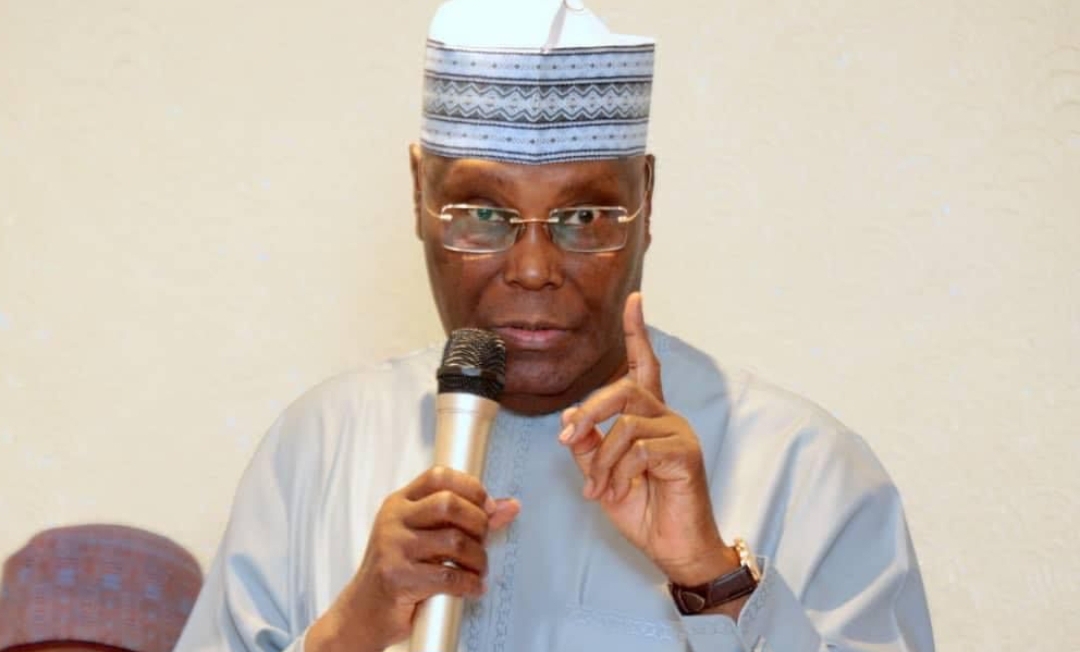
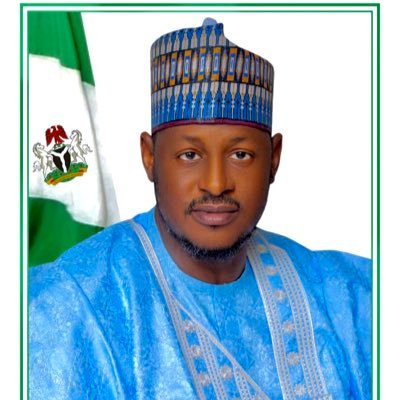
Atiku quits PDP over irreconcilable differences

By Ibrahim Yunusa

Former Vice President of Nigeria, Atiku Abubakar, has officially resigned from the People’s Democratic Party (PDP), marking a significant political shift ahead of the 2027 general elections.

The resignation was contained in a letter dated 14th July, 2025, and addressed to the PDP Chairman in his Jada Ward, Adamawa State.

Atiku, who served two terms as Vice President and contested the presidency under the PDP in both 2019 and 2023, is allegedly left the party due to internal crises and increasing allegations of anti-party activities as key reasons for his departure.

The PDP, once Nigeria’s leading opposition party, has struggled in recent times with internal divisions, weakening its political strength.

Atiku’s exit is viewed as a major blow to the party’s stability.

Recently the former Vice President confirmed has aligned with a new political coalition involving aggrieved members of APC and other parties, with a consensus to adopt the African Democratic Congress (ADC) as their new platform moving forward.

Buhari: The Last March of a General

By Usman Abdullahi Koli, ANIPR 

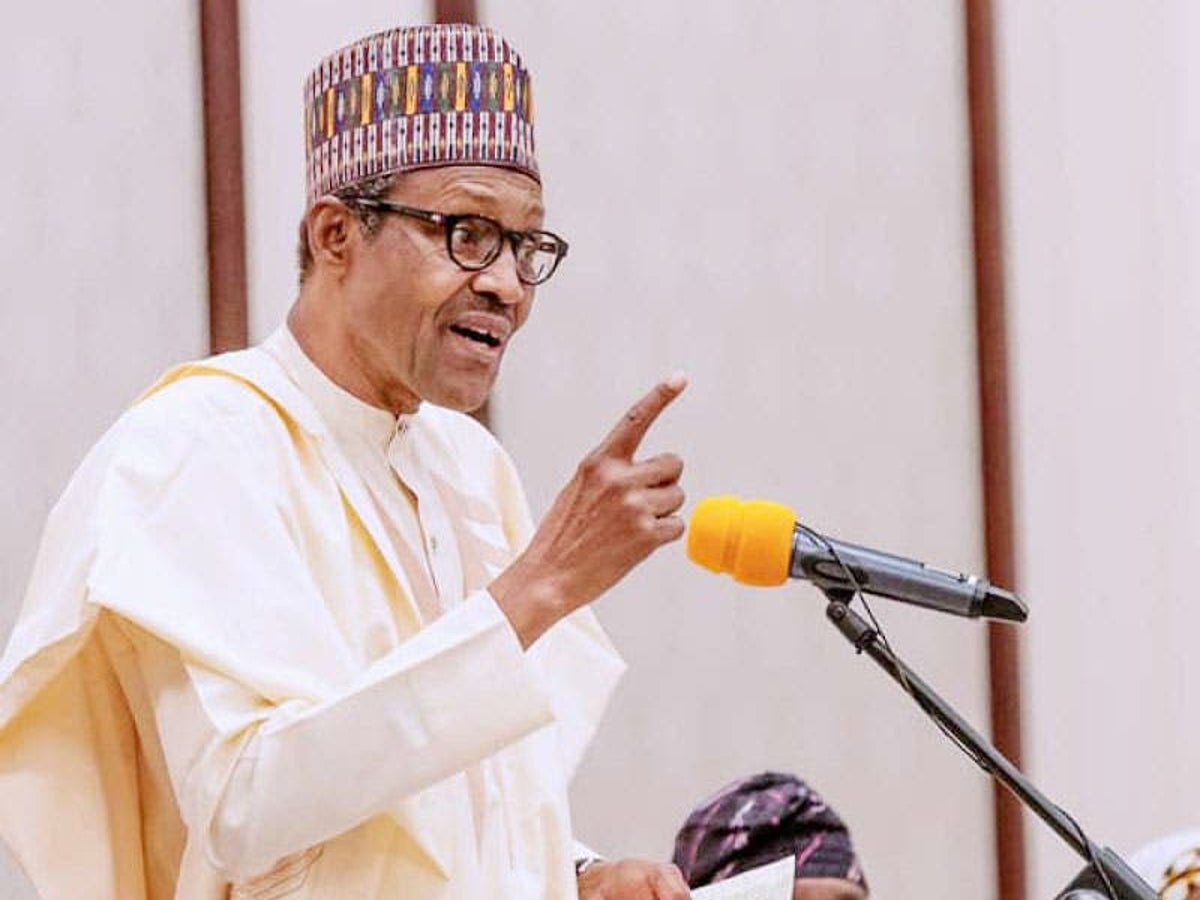
Muhammadu Buhari, former President of Nigeria, is no more. For a moment, I felt very shocked and touched. Not because I expected him to live forever, but because I had never honestly imagined a Nigeria without him somewhere in the background watching, guiding, deciding, or simply being present. I asked myself why the end of some lives feels heavier than others. Perhaps it is because those lives were never ordinary. Buhari’s life was one of service, controversy, silence, and symbolism. Now that the chapter is closed, what remains is the long shadow of his presence, a legacy that will be remembered, questioned, and reflected upon for years to come.

Buhari was never a man you could ignore. You were either with him or against him. I, more often than not, stood in opposition. I challenged his approach to national security, criticised his handling of the education system, and voiced strong concerns about his oversight of Nigeria’s crude oil sector and economy. My criticisms were never born out of malice, but out of conviction. I believed, and still do, that our country deserves better. I thought it was our duty to demand it.

Yet, amid my disagreements, I never lost sight of the man behind the decisions. In 2020, during the #EndSARS movement, when the nation was boiling with fear and fury, I felt compelled to offer a different perspective. I wrote an article titled “Calming the Tide: Buhari’s Antidote.” In that piece, I tried to humanise him. I described him as a lanky man, often caught smiling with his teeth in full view, yet known for the signature frown that defined his public image. Something was striking about how he carried himself in his flowing babban-riga, standing tall and firm like the general he once was, even in the calm of civilian leadership.

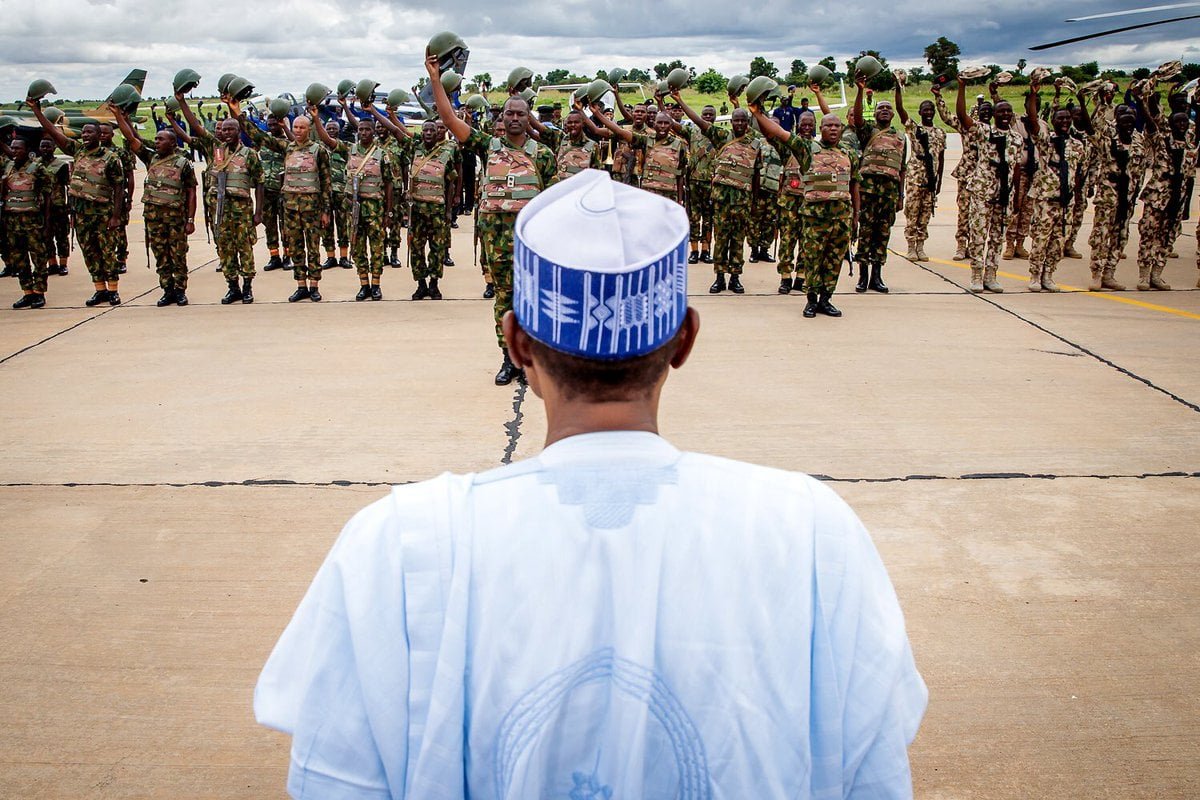
Buhari’s story began long before he entered Aso Rock. As a young man, he embraced the uncertainties of military life. He rose through the ranks with grit, ultimately becoming a general in the Nigerian Army. He ruled Nigeria first as a military leader and returned, decades later, as a civilian president. His reemergence was not merely a political move; it was deeply personal. He saw his return as a duty to complete a mission he once began in uniform. Whether he succeeded or fell short, Buhari believed in his cause, and that belief fueled his resolve.

He was undeniably a man of sharp edges. His stubborn adherence to principle often came at a cost. He preferred silence when the nation needed clarity and stood firm when compromise was necessary. His integrity, once lauded, became the subject of scrutiny. Some wounds were self-inflicted; others were inherited from the complexities of leadership. Regardless, they will shape how history remembers him.

Despite it all, Buhari remained anchored in a modest way of life. He never sought extravagance. He governed in the way he understood best—that is, through order, discipline, and restraint. These traits, while admired by some, alienated others. Yet, behind that stoic exterior was a man deeply invested in the idea of service, even if the methods failed to reflect the expectations of many.

The end of a life always casts a different light on it. Legacies are never truly complete until the final chapter has been closed. Buhari’s legacy will be debated in homes, classrooms, and political circles for years to come. But today is not for judgment. Today is for remembrance. For the man, not just the president. For the soldier who once stood on the frontline, and for the leader who walked through the dust of Daura into the marble halls of national power.

At over eighty, he still had something to give. Not in speeches or policy, but in presence, in counsel, in memory. Nigeria needs his wisdom, perhaps now more than ever.

I mourn him, not because I always agreed with him, but because I respected the weight of the burden he carried. He did not lead perfectly. But he led. And in many ways, he led with sincerity.

Now he is gone. But his footprints remain on the battlefield, in the ballot box, and in the hearts of those who watched, waited, and sometimes wept. His story is one of contradictions, courage, convictions, and consequences. But above all, it is a Nigerian story.

Rest in peace, General Muhammadu Buhari. The march is over. The bugle has sounded. And history, in all its fullness, will remember you.

Usman Abdullahi Koli wrote via mernoukoli@gmail.com.

“Buhari was a courageous leader, disciplined officer” – PDP

By Uzair Adam

The Peoples Democratic Party (PDP) has expressed sorrow over the passing of former President Muhammadu Buhari, describing him as a courageous leader and a highly disciplined military officer devoted to the nation’s service.

In a statement issued on Monday in Abuja by its National Publicity Secretary, Debo Ologunagba, the PDP said it received the news of Buhari’s death in a London hospital with deep sadness.

According to the party, Buhari will be remembered for his various roles in public service — including his time as Governor of Borno, Federal Commissioner for Petroleum and Natural Resources, Chairman of the defunct Petroleum Trust Fund, Military Head of State, and later, as a democratically elected President.

The PDP extended its condolences to his widow, Hajia Aisha Buhari; the entire Buhari family; the Federal Government; the Nigerian Army; the people and government of Katsina State; and the Daura Emirate.

The party also prayed for Almighty Allah to forgive his shortcomings and grant him eternal rest.Meanwhile, President Bola Tinubu has ordered flags to be flown at half-staff nationwide as a sign of mourning and respect for the late former president.

How the lack of strong opposition masks the government’s failures in Katsina 

By Muhammad Isyaku Malumfashi

One thing I despise about Katsina’s political realm is the absence of a strong and formidable opposition that will tackle the government’s dormancy and make them very focused and renaissance-like toward their responsibilities by using both envious and constructive criticism against those in power, so that at least the citizens may witness democratic dividends seen in some states.

But for the opposition to hold hands and keep mute without holding those in power accountable for any misfortune is unhealthy, and that’s the reason why we are here. Many citizens have questions about the power, but they are afraid to ask due to threats of arrest or intimidation by those close to the power. Perhaps some would disguise themselves in the name of advice to convince you not to oppose this failed government led by the so-called PhD, but they will not prove to you that what you said about the government is not true.

It’s a good thing to advise one to be cautious and watchful of his tongue, but it’s cowardice to intimidate him with arrest or cite the quibbles of his words without pointing out the error in them. The present Katsina government at all levels has become a failure despite the boasting made about the ‘educational qualification’ of the governor during the campaign and even after in his first year of office.

The governor made it clear that he would work with only ‘educated people’ because he is a PhD holder. His academic position was also used to deceive people into believing that Katsina would have a governor for the first time who had attained such a high level of education, unlike his predecessors, who were only master’s degree and diploma holders. People believed that the highest level of education equates to good governance until Governor Radda spent two years in office with nothing to show, or at least outshine or perform better than his predecessors.

That’s when we realised that a secondary school leaver may do better than a PhD in governance because it’s not about the qualification but fear of God, experience, integrity, and honesty. This administration of a PhD holder has not endangered any sector in Katsina. Take the security issue first, which is the most pressing issue in the state.

During the campaign, the governor made it clear that even if it’ll cost him not constructing a single gutter, he’ll eliminate insecurity in the state. We were happy to hear that and even began to see some desirable steps toward actualising that by distributing ammunition to citizens, launching the Katsina State Security Watch Corps, and arresting and killing many people found sabotaging the fight against insecurity. But what happened along the way?

The emphasis was later shifted to politics; the bold promise of no negotiation with bandits at the weak point was broken, and we saw negotiations made in some local governments when it was apparent that the bandits breached many trusts that had been placed in them by the previous government after the talks, and the insurgency escalated. It’s only during Radda that we’ve seen the worst of banditry, especially in my hometown of Malumfashi.

Initially, they only attacked villages, but later they expanded their attacks to cities. People are no longer safe. The son of our immediate local government chairman has been in bandits’ captivity for months now. My sibling, a sister of the same father and the same mother, was kidnapped in the same area where the ex-chairman lived while in office, and his child was abducted.

Many people inside Malumfashi were kidnapped; some were killed, and some had ransom paid to release them. Even today, I woke up seeing the sad news of the death of a PDP leader in Malumfashi from bandits. It’s under this government that dozens of villages in Malumfashi were evacuated due to banditry, and a whole brigadier general from Tsiga was kidnapped and spent more than 50 days in their hands before gaining freedom after millions were paid to them as ransom.

And a first-position winner from Katsina of the National Qur’anic Competition (Musabaqa) held in Kebbi was also kidnapped with his parents along their way back to Faskari from Katsina, where the governor gave him prizes and gifts, but was not able to ask security to escort him home despite the apparent danger of their town. And the governor made a blatant lie in a video, which I saved for my unborn children to remind them that ‘he’s the one feeding every family whose head is kidnapped in the state.’ This is not just a capital lie but a grievous one.

If you take education, you still have nothing to show. The previous government was paying WAEC and NECO for every student in government schools who passed the qualifying exams. Still, this government of ‘PhDs’ paid only NECO to every student, even if he or she passed both WAEC and NECO last year. Katsina’s NECO result was released late last year, after many schools had concluded their admission processes, and the pass rate was very low. Katsina was ranked among the three lowest-passing states in the NECO exam last year.

The governor employed thousands of teachers and a few from the health sector. I agreed, but he did not tell us how many thousands have retired in every sector every year and how far along the replacement process is. No school will go without seeing a shortage of teachers, and the same goes for clinics.

How long did it take him to implement the 70k minimum wage, and has it been implemented 100%? You’ll hardly see a civil servant who saw an increase of up to 50k in his salary, like in other states. What was the cause of his dispute with the university staff about the minimum wage implementation, and how many times did they reject his low implementation of minimum wage for them?

The tertiary school fees were raised when many students were dropping out due to the high cost of education, even though the governor is now earning more than his predecessor because of the removal of subsidies. His predecessor did not increase the school fees, but PhD did. In his just two years in office, he claims to have spent more on security than the previous government did in 8 years, yet there has been no clear difference between the two governments in their success against banditry in the state.

Only these two crucial areas are sufficient to condemn this Yan Boko government, but the lack of opposition in Katsina is giving the governor the confidence to speak badly about the coalition. 

Coalition/opposition has come to stay in Katsina, and no man born of a woman can stop it.

While I’m still in PDP, I’ll fork for ADC—Sule Lamido

By Ibrahim Yunusa

Former Jigawa State Governor and founding member of the Peoples Democratic Party (PDP), Sule Lamido, has expressed his willingness to support the African Democratic Congress (ADC) in a bid to ensure President Bola Tinubu’s defeat in the 2027 general elections.

Lamido, while reaffirming his membership in PDP, accused President Tinubu of having total control over the party, alleging that figures like Samuel Ortom and Nyesom Wike are being used to weaken the PDP’s position as a formidable opposition.

He declared support for any coalition or group that aligns with the goal of unseating the ruling APC, adding that reclaiming the country’s integrity and ensuring peace for the masses is his top priority.

Atiku celebrates wife Titi at 75, reflects on 50+ years of marriage

By Muhammad Abubakar

Former Nigerian Vice President and presidential candidate of the People’s Democratic Party (PDP), Atiku Abubakar, has penned a heartfelt tribute to his wife, Titi Abubakar, on the occasion of her 75th birthday.

In a message shared on his social media platform, Atiku reflected on their unconventional journey to marriage. He revealed that the couple tied the knot without their families’ consent, witnessed only by two friends. Despite the odds, their union has endured for over five decades.

“Titi has been a blessing beyond measure to me and our family,” Atiku wrote. “I thank her for being patient with my shortcomings. Patience is a virtue you can never regret.”

He also encouraged couples to embrace patience in their relationships and wished his wife many more years of “bliss and blessings.”

It was a joyous occasion attended by family and friends, including the wife of the former military president, General Sani Abacha, Maryam Abacha.

PDP vs. APC so-called political elders and the Gospel of Barnabas

By Nura Jibo

Whenever I see sure PDP political power losers and their APC bedfellows making historical myths and inaccuracies about their pseudo performance of national economic growth and development, it reminds one of the gospel according to Barnabas.

As a Muslim, I actually believe in the Gospel of Barnabas as a myth rather than a reality. Though his assertions are very true and apt, they are considered among Christians as a non-canonical, pseudodepigraphical gospel attributed to him. They somehow believed Barnabas was a disciple of Jesus who lived in the 14th or 15th century.

These historical myths and inaccuracies are what the so-called PDP and APC elders would wish to present to ordinary Nigerians. Indeed, their misrepresentation of facts is contrary to a detailed account of Barnabas, who, according to his Torgado Siburian theological belief, explained Jesus’ life. This account includes elements that align with Islamic reality and beliefs, such as the denial of Jesus’ crucifixion and a focus on Jesus as a prophet rather than the Son of God. 

Indeed, the PDP/APC elders’ gospel on Nigeria’s political leadership/claim on its progress is nothing but something to be considered a fabrication, as it contradicts the canonical gospels and includes historical conundrums that even the so-called generals in politics that resort to this falsehood amidst public glare cannot provide an answer to!

The PDP presidency under Obasanjo and Jonathan is nothing but a political disaster.

These two presidents presided over Nigeria with impunity and first-class corruption that drained Nigerians and stripped them bare of their dignity in the comity of nations.

Obasanjo shamelessly accused his National Assembly of being a “den of corruption by a gang of unarmed robbers”.

Indeed, Evan Enwerem’s emergence as Obasanjo’s Senate president against Chuba Okadigbo confirmed his corrupt tendencies as a political but not military leader to Nigerians. This remains fresh in our psyches and memories.

The Siemens and KBR bribery scandals, which the FBI investigated, indicted President Obasanjo’s government internationally.

On the other hand, President Jonathan allowed a corrupt Diezani oil ministerial hubris of over N100 billion, alleged to have been collected by Diezani as undue enrichment.

This is not to rule out the role of his wife, Patience, in the $8.4 million and N7.4 billion linked to her by the EFCC under a file suit dubbed FHC/L/CS/620/18.

What the likes of Governors Sule Lamido, Amaechi, Nasiru El-Rufai, Peter Obi, and even VP Atiku Abubakar want to tell Nigerians after being frustrated and pushed to the periphery of power and out of national and global relevance, one hasn’t the vaguest idea.

Please note:

There is no point in alluding to the APC’s leadership under Buhari and Tinubu. Because doing so will not allow us to see the light of day, it is better not to mention the terrible economic harakiri, democratic suicide, and perturbed insecurity that the APC and, by extension, its PDP rivalries have thrown into Nigeria. Recounting APC ordeals is a déjà vu that this writer is not ready to waste more energy delving into.

Happy Eid celebration!

Nura wrote from Shahrazad Homes, 21 Zerifa Aliyev Street, Baku, Azerbaijan.

2027: A gale of defections, eroding opposition and quest for power

By Emeka Blaise Okpara

As the 2027 general elections draw closer, the gale of defections that has rocked the People’s Democratic Party in recent times has thrown those in the current ruling All Progressives Congress (APC) into wild ecstasy. Once the largest political party in Africa, the PDP ran out of luck in 2015 when it lost the presidency to the APC. Before then, the party held power for sixteen years. 

In fact, at the peak of the party’s stronghold in power, the national chairman, Chief Vincent Ogbulafor, boasted in 2008 that the PDP would rule Nigeria for another sixty years. Perhaps lost in the effervescent aplomb of public office, he forgot that the future cannot always be assured. His boisterous vituperation was perceived as the height of braggadocio, a trait synonymous with most Nigerian political elites. 

Many were not surprised when, a few years after this declaration was made, the party started witnessing some implosion within its ranks. The fall of the PDP was masterminded by members of the party who formed an alliance with the opposition, which eventually led to its calamitous loss in the 2015 general elections.

Sadly, the party that once reigned monstrously in Africa’s most populous black nation has become a shadow of itself. Unfortunately for the PDP, since they found themselves out of power, they have not been able to play the role of the opposition because it is not in their DNA to do so, unlike the APC, which was birthed through opposition. 

In fact, it would not be out of place to say that the APC has so mastered the art of opposition that it has even devised means of creating its own opposition within and outside the party to keep any real opposition party at bay through controlled opposition.

With the open declaration of support for Tinubu’s presidency from governors of supposed opposition parties, and the defection of notable figures like the current Governor of Delta State, Mr. Sheriff Oborevwori, and Senator Ifeanyi Okowa, the immediate past governor of Delta State and running mate to Alhaji Atiku Abubakar in the 2023 presidential elections, many in the President’s camp have picked up a trumpet to sound it to whoever cares to listen that President Tinubu is a master political strategist.

As far as those in the President’s camp are concerned, the 2027 presidential election is already in the bag, awaiting to be transported home. In their assessment and assertiveness, nobody can defeat the chief political strategist of our time in the forthcoming elections.

It would be simplistic for anybody to assume that the mere fact that opposition members are trooping into the President’s camp is enough reason to believe that he will have an easy ride into his second term – far from it! If anything, Nigerians should be worried, as such actions only indicate state capture.

Nigerians are well aware of the politics their political office holders play. With the nature of politics played in Nigeria,where stomach infrastructure and personal interest supersede national interest, this junketing shouldn’t be a surprise.  What do you expect from politicians in a land where political parties lack ideologies apart from grabbing power? 

Interestingly, these massive defections should teach Nigerians that there is obviously no difference between the APC and the PDP. These political elites only care about themselves and not the welfare of Nigerians! At a time when Nigerians’ living standards are at an all-time low due to ill-thought-out policies by the Tinubu-led administration, politicians are falling over themselves to dance owambe in the APC. 

To keen observers of the Nigerian political landscape, these mass defections to the APC are nothing short of a defense mechanism employed by the party to give the impression that it is in total control, and for the defectors – whose priority should be governing and serving the people – to have a haven when the chips are down.  Unless on paper, there is no clear evidence that this administration has performed well enough to warrant admiration from the supposed opposition,who now join them in troops.

Moreover, the only reason political elites are decamping is that Nigeria has a flawed electoral process where the votes of the electorate do not count. If the so-called independent electoral umpire, INEC, were living up to its mandate, political office holders would learn to be disciplined and understand that only performance can guarantee their election or re-election.

While those who believe that the President is a political strategist continue to bask in his political mastery, one is compelled to ask why he has not been able to apply his strategy effectively in governance. Politics, according to Plato, should be for the common good. Nigerians would love to see and benefit from President Tinubu’s acclaimed strategy. 

Political strategy should not begin and end with seizing power. Where is his strategy for overhauling the economy since he assumed the presidency? Are Nigerians better off today than they were three years ago? Why hasn’t he employed his renowned strategy to tackle the nation’s insecurity? Or has the security of lives and property ceased to be the government’s primary responsibility? Where is his plan for reliable power, and why must Nigerians pay excessively for unstable electricity? Don’t we need his strategy for quality healthcare facilities? These vital sectors urgently require his strategic attention!

It would be ludicrous for anyone to believe that the future of Nigeria is solely in the hands of the political officeholders. Whether or not anyone wants to believe it, 2027 is still a long time off. Though Nigerian politicians are always thinking of the next elections, and not how to better the lives of their citizens, they must realise that the political dynamics can change anytime. 

General Sani Abacha was almost certain of becoming a civilian president in 1996. He had convinced all the key political actors of the time to endorse his presidency, and everything was working for his good, but fate had other plans. 

The only thing that will guarantee any political office holder a re-election in a constitutional democracy like ours is performance! A second term in office is like a referendum on an individual’s first term. The power to elect still rests with the people and not with politicians, except that we are no longer a democracy. 

If President Bola Ahmed Tinubu is keen on his second term, he should up his game. If he is unaware, someone should inform the President that Nigerians are not having it easy. Instead of focusing on the 2027 reelection in 2025, he should take advantage of the remaining two years of his first term in office to show his work. PR without performance is pure propaganda!  

A working Nigeria benefits all, irrespective of religion or tribe. Nigerians are groaning under his knee-jerk policies, which have plunged a vast majority of citizens into penury. More than ever, this is when Nigerians expect to feel the impact of his much-trumpeted strategy. Nigerians want to see evidence beyond the rhetoric.

Blaise Emeka Okpara, a student at the International Institute of Journalism, writes from Abuja and can be contacted at: emyokparaoo1@gmail.com

Wike vows to lead PDP campaign in 2027, denies sabotaging party

By Abdullahi Mukhtar Algasgaini

The Minister of the Federal Capital Territory (FCT), Nyesom Wike, has declared his intention to lead the Peoples Democratic Party (PDP) campaign in the 2027 general elections. He made the statement on Monday during a media interaction in Abuja, dismissing claims that he was undermining the PDP while serving in President Bola Tinubu’s cabinet.  

“I am still in PDP. I worked hard for the party,” Wike said. “No one can question my membership because nobody has contributed more than I. I will lead the PDP campaign in Rivers in 2027.”  

Wike, a former Rivers State governor, has faced criticism from PDP members for his role in the All Progressives Congress (APC)-led government. However, he defended his actions, stating that he takes pride in making tough decisions, even if they upset powerful figures.  

“I step on the toes of big men, and it makes me happy,” he said. “If you don’t do the right thing, too bad. I don’t care.”  

On the political crisis in Rivers State, Wike denied any personal rift with Governor Siminalayi Fubara and stated that he would have opposed a state of emergency if consulted by the president.  

“I don’t have any crisis with Fubara,” he said. “If Mr. President had asked me, I wouldn’t have agreed to a state of emergency.”  

Wike’s remarks come amid growing tensions within the PDP, with his loyalty remaining a contentious issue among party members.

FCTA seals PDP national headquarters

By Anwar Usman

Officials from the Federal Capital Territory Administration, under the leadership of Minister Federal Capital Territory, Nyesom Wike, have sealed the National Headquarters of the Peoples Democratic Party (PDP)A group of FCTA staff, locked the entrance gate of Wadata Plaza, the PDP’s national secretariat at exactly 2:06 pm, alocated in Wuse Zone 5, Abuja.

This action follows the recent announcement by the FCTA on Sunday, stating its intention to reclaim properties affected by the revocation of 4,794 land titles due to non-payment of ground rent spanning 10 to 43 years.

Details later…