Palestine-Isrsael

Mahmoud Abbas urges Hamas to release hostages, relinquish Gaza control

By Muhammad Abubakar

Palestinian Authority President Mahmoud Abbas has called on Hamas to release all remaining hostages and relinquish control of the Gaza Strip, in a rare and direct rebuke of the group.

Speaking at a press conference on Tuesday, Abbas said that Hamas’s actions had not only deepened the suffering of Palestinians but also provided Israel with “excuses to commit its crimes.”

“Hamas must take responsibility for its decisions and the consequences they have brought upon our people,” Abbas said. “They must release all hostages and step aside to allow for national unity and reconstruction.”

The statement comes amid ongoing violence in Gaza and heightened international pressure to reach a ceasefire and address the humanitarian crisis. Abbas’s remarks reflect growing tensions between the Palestinian Authority and Hamas, which has governed Gaza since 2007.

There was no immediate response from Hamas to the comments.

State Department memo reveals lack of evidence against detained student

By Hadiza Abdulkadir

Rumeysa Öztürk, a 30-year-old Turkish doctoral student at Tufts University, was detained by U.S. Immigration and Customs Enforcement (ICE) agents on March 25 near her home in Somerville, Massachusetts. The arrest, captured on security footage, showed masked agents taking her into an unmarked vehicle without identifying themselves, leaving her screaming for help.

Öztürk, a Fulbright scholar pursuing a Ph.D. in Child Study and Human Development, had co-authored a 2024 op-ed in The Tufts Daily criticizing the university’s response to the Gaza conflict and calling for divestment from companies linked to Israel. Following the publication, her name and photo appeared on Canary Mission, a controversial website that profiles individuals accused of anti-Israel activism.

The Department of Homeland Security (DHS) accused Öztürk of supporting Hamas, though no public evidence has been provided. Her student visa was revoked, and she was transferred to a detention center in Louisiana, despite a court order requiring 48 hours’ notice before moving her out of Massachusetts.

Öztürk’s detention has sparked widespread protests and condemnation. More than 2,000 students rallied at Tufts University, and demonstrations have taken place in Boston and Washington, D.C. A coalition of 27 Jewish organizations filed a legal brief in her support, arguing that her arrest threatens free speech and academic freedom.

Tufts University President Sunil Kumar stated that the university has no information supporting the allegations against Öztürk and emphasized the importance of due process. Öztürk’s legal team, including the ACLU, is seeking her immediate release, citing violations of her constitutional rights.

A federal court hearing is scheduled to determine the jurisdiction of her case. Öztürk remains in ICE custody, facing possible deportation to Turkey.

Al Jazeera journalist Hossam Shabat killed in Israeli airstrike in Gaza

By Muhammad Sulaiman

Al Jazeera journalist Hossam Shabat was killed in an Israeli airstrike in northern Gaza shortly after reporting on the death of his colleague, Mohammed Mansour.

Shabat’s car was bombed on Sunday, marking yet another fatal attack on media workers in the besieged Palestinian territory.

Shabat had just posted about Mansour’s killing when he himself became a victim of Israeli bombardment. His death adds to the growing toll on journalists in Gaza, where at least 208 media workers have been killed since Israel launched its military offensive on October 7, 2023.

The targeting of journalists has drawn widespread condemnation, with press freedom organizations calling for accountability and urgent protection for reporters covering the war.

Al Jazeera has repeatedly accused Israel of deliberately targeting its journalists, a charge Israel denies.

The ongoing war in Gaza has led to unprecedented casualties among civilians and media professionals, raising concerns over press freedom and the safety of journalists in conflict zones.

BREAKING: Israel launches new ground offensive in Gaza

By Hadiza Abdulkadir

Israel has launched a fresh ground offensive in Gaza, targeting key areas amid escalating violence. The Israeli military described the operation as a “limited ground offensive” aimed at securing strategic zones.

The assault follows intense airstrikes that have killed hundreds of Palestinians, including women and children, and damaged civilian infrastructure. The renewed fighting has shattered a fragile ceasefire, with Prime Minister Benjamin Netanyahu vowing to continue until Hamas is dismantled.

International leaders have expressed concern over the growing humanitarian crisis, urging restraint to prevent further civilian casualties and displacement.

Oscar-winning “No Other Land” faces screening bans in US amid free speech controversy

By Hadiza Abdulkadir

The Oscar-winning documentary No Other Land, which portrays the displacement of Palestinian communities in the West Bank, is facing significant opposition in the United States, reigniting debates over censorship and freedom of expression.

Co-directed by Palestinian activist Basel Adra and Israeli journalist Yuval Abraham, the film documents the Israeli military’s demolition of Palestinian villages to establish a military training zone. 

The documentary has gained critical acclaim worldwide, winning the Academy Award for Best Documentary Feature at the 97th Oscars.

However, the film has struggled to secure mainstream U.S. distribution, with several screenings facing backlash. In Miami Beach, Mayor Steven Meiner called the documentary “one-sided propaganda” and “antisemitic,” pushing to terminate the lease and withdraw funding from O Cinema, an independent theater that screened the film. His actions have drawn criticism from civil rights groups, who argue that this amounts to censorship and an attack on free speech.

Yuval Abraham has condemned these efforts, calling them “very dangerous” and warning that accusations of antisemitism should not be used to silence criticism of occupation policies. 

Despite the controversy, O Cinema went ahead with its screenings, resulting in sold-out shows and additional dates being added.

The situation has sparked a broader conversation about the portrayal of the Israeli-Palestinian conflict in Western media and the limits of artistic expression. 

As the debate continues, No Other Land has become a focal point in discussions on censorship, free speech, and the complexities of Middle Eastern geopolitics.

Israeli authorities withholding over 665 Palestinian bodies, some for decades

By Maryam Ahmad

Israeli authorities are reportedly holding at least 665 Palestinian bodies, many of which have been buried or stored in refrigerators since the 1960s, according to the National Campaign for Retrieval of Bodies. 

The campaign reveals that the bodies include individuals who were killed in past decades, as well as those who lost their lives as recently as last week.

The practice of withholding bodies has sparked widespread condemnation from Palestinian families and human rights groups. 

Relatives demand the return of their loved ones for proper burial, while critics argue the act is a violation of fundamental humanitarian rights.

Israeli authorities have not publicly addressed the full scope of the issue. Still, it is believed the bodies are kept for security or political reasons, with some allegedly buried in unmarked graves or stored in cold storage.

Human rights organisations have called for the immediate return of the bodies and demanded accountability for what they describe as an ongoing violation of human dignity.

Trump proposes U.S. Gaza takeover, sparks outrage

By Muhsin Ibrahim

In a recent press conference, U.S. President Donald Trump unveiled a controversial plan for the United States to assume control over the Gaza Strip.

The proposal includes relocating Gaza’s roughly two million Palestinian residents to neighbouring countries such as Egypt and Jordan to transform the territory into a thriving economic hub, potentially named the “Riviera of the Middle East.”

Trump emphasised the economic potential of the initiative, arguing that U.S. oversight would bring stability and prosperity to the region. He also suggested the possible deployment of American forces to maintain order during the transition.

The plan has been widely condemned. Middle Eastern nations, including Saudi Arabia, have rejected it, warning of its implications for international law and regional security. 

Human rights organisations have also strongly criticised the initiative, calling it a form of ethnic cleansing that could worsen Gaza’s humanitarian crisis.

Israeli Prime Minister Benjamin Netanyahu, who was present at the press conference, expressed support for the plan, saying it aligns with Israel’s security interests. However, international opposition and legal challenges may hinder the proposal’s feasibility.

As the debate over Trump’s plan intensifies, world leaders and analysts continue to scrutinise its potential consequences for regional stability and the rights of the Palestinian people.

In his place, many more Sinwars would rise

By Ismail Obansa Nimah

The Israeli military killed Yahya Sinwar.  A picture of Sinwar in a military vest, with a sniper shot at his forehead, with one arm cut off and the other holding an AK-47 riffle, his body under enormous concrete from a collapsed building, circulated online.

Hamas confirmed the news of Sinwar’s death, fighting alongside his comrades for his people, his land, his home and the liberation of Palestine. Until his death, Israel had tagged Yahyah Sinwar as the most wanted man in Gaza and, by extension, the whole of Palestine. The Israeli military has been on the hunt for him for years. 

Born in Khan Younis refugee camp in 1962, after the infamous massacre and Nakbah that saw the newly formed state of Israel exile more than 750,000 Palestinians from their homes and livelihood, Yahya Sinwar spent his life as a refugee in Gaza and was quick to join the Palestinian resistance forces, after being a witness to the miserable treatments and denial of the rights and freedom of Palestinians by Israel.

He lived through the 1967 Arab-Israeli war and was a bedrock in the Hamas resistance movement founded 20 years later, in 1987. 

In 1989, he was arrested by Israel on the accusation of orchestrating the killing of two Israeli soldiers and was given four life sentences. Sinwar went on to spend 22 years under brutal conditions in an Israeli prison. He maximised his stay in prison by becoming fluent in Hebrew and acquiring various diplomas aimed at understanding the Israeli colonial entity, Jewish history and Zionism. He was subsequently released following a prisoner swap in 2011 and was elected the leader of Gaza following Hamas’s political win in the 2007 Gaza elections.

Until Ismail Haniyeh’s death, Yahyah Anwar was the de-facto ruler of Gaza and was second in command regarding Hamas after late Hamas Chief Ismail Haniyeh. Following the assassination of Ismail Haniyeh in Tehran in August of this year, he became the ultimate leader of Hamas and has, since October 2023, led a principled and steadfast fight against Israel in its war in Gaza.

In the last year, the Israeli government has manufactured countless falsehoods and made widespread propaganda about its war on Gaza, Hamas and the leadership of Hamas, particularly Yahyah Sinwar. Israel, through numerous outlets, claimed that Sinwar was hiding in tunnels, surrounding himself with wealth and using hostages and Palestinian civilians as human shields. And even though these claims have been debunked countless times, the Israeli military became the ultimate belier of itself when it released a droned footage of Sinwar’s last moments. 

The intent behind the footage release was to mock Sinwar and the entire Palestinian resistance, but the footage did the opposite. Instead, it propelled Sinwar to become a legendary figure. It showed Sinwar, sitting honourably on a couch, putting on a keffiyeh, debris around with his comrades down; after being fired on by a tank, a missile and sniped on the forehead, he used his remaining arm, in one last act of defiance to throw a stick at the filming drone. He was side by side with his comrades on the front lines, defending his lands and fighting for the liberation of Palestine and every Palestinian.

Sinwar’s entire life has been an inspiration and a huge source of strength for the resistance axis against the apartheid state of Israel. His story bears many sacrifices and losses for the Palestinian front. He was born a refugee and brutally raised as a refugee in his land amidst an unwavering magnitude of oppression and apartheid. 

Regardless of what the U.S.-led West and Israel wanted the world to believe about Sinwar, he died a hero, one that his greatest adversary inadvertently publicised. Even in his death, he continued to inspire the many more Sinwars who would ultimately rise in his place.

Ismail Obansa Nimah wrote via nimah013@gmail.com.

Israeli military occupation: Nigeria’s suggestion

By Bilyamin Abdulmumin

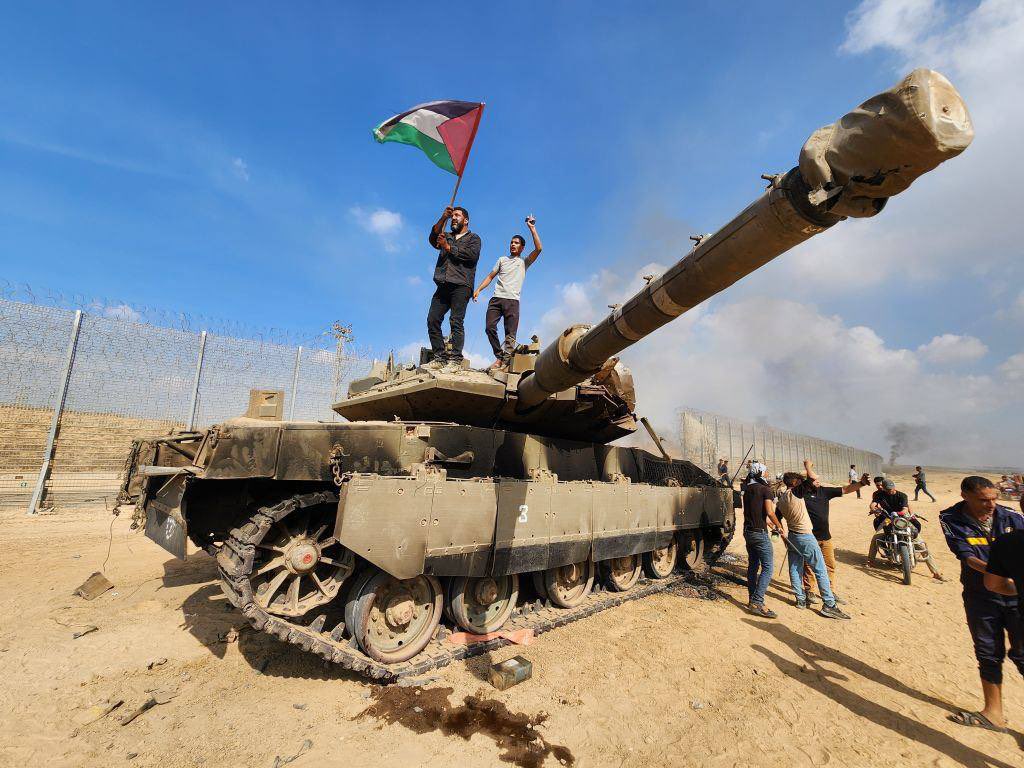
Last quarter of 2023, 7th October to be precise, the patience of Palestinians on the forceful occupation and increasing encroachment of Israel in the Gaza Strip, Westbank, and East Jerusalem reached the breaking point, as the voice and heartbeat of Palestine in the Gaza Strip, Hamas, launched a devastating attack on Israel in the occupied areas. The coordinated attack was said to bypass Israeli intelligence and caught their security off guard. But in a swift reaction, Israel has since been responding brutally, threatening the annihilation of not only Hamas but Palestinians in Gaza.

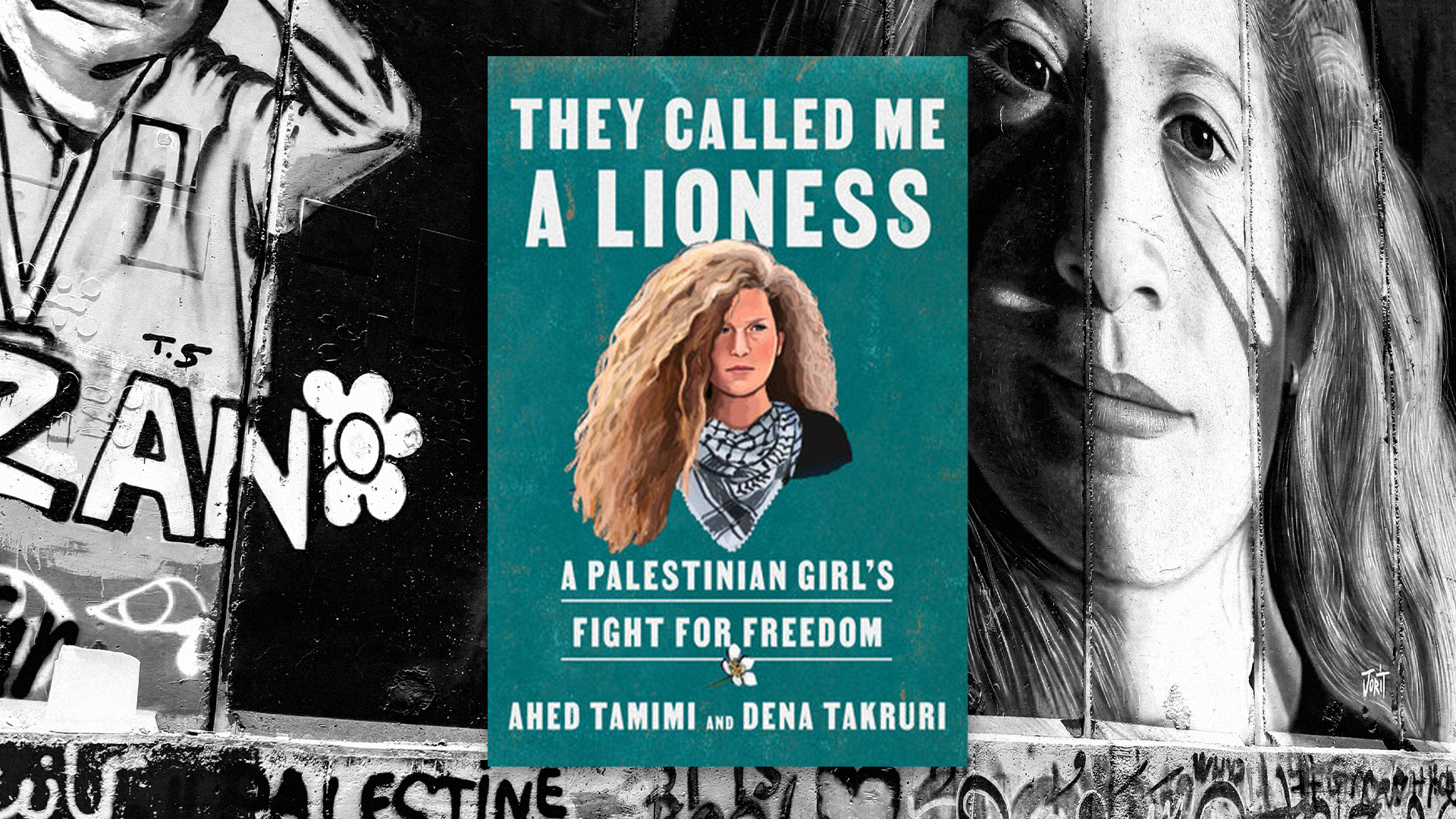
This article is the second from my reading of the book that Dr Muhsin Ibrahim generously shared: They called me a lioness.

 As far back as the beginning of the 19th century, the geopolitical entity now known as Israel did not exist. Instead, the Jewish population was scattered globally (this is a topic for another day); their population would be dispersed across Europe, America, and even our continent, Africa, as some reports claim. 

The clamour for Israel to settle in Palestine first gained traction after the First World War. When the Ottoman Empire collapsed, the control over Palestine fell under British rule.  Regardless of how one will view the situation,  the genesis of the Palestine-Israel turmoil must go back to the British. Because they sought both the help of Israel and Palestine during the war,   promising  Israel to establish a state for them on one hand and agreeing to get independence for Palestine from the Ottoman Empire on another, the British eventually sided with Israel.

So, in 1917, the British issued the Balfour Declaration, pledging to establish “a national home for the Jewish people” in Palestine. This marked (substantially) the beginning of a series of ongoing conflicts between Israel and Palestine.

 The Second World War saw the Zionist movement get even more traction.  According to Hitler’s fascist ideology, for humanity to attain Utopia, all forms of inefficiency must be removed, including problematic races and even physically or mentally challenged individuals. In Hitler’s vision, Israel fell in the former category,  so they have to be eradicated. In this regard, about six million Jews had been said to have met their brutal end. The individuals with discounts, either physically or mentally, should also have allied nations to thank for ending the fascism ideology; had Hitler succeeded, it would have been the beginning of their eradication, too.  But for Palestine, their predicament increased. Hundreds of thousands of Holocaust survivors fled Europe, with tens of thousands seeking refuge in Palestine.

It appears that Hitler’s apprehension against Israel had some element of truth because all European countries closed their doors to Jews both before and after the World War. The Jewish population seemed a burden, and the world grappled with an approach to address the puzzle.

In 1947, the United Nations formalised Zionism by approving a plan to partition Palestine into a Jewish state and a Palestinian state, with Jerusalem remaining under international control. This marked a triumphant year for Israel, the culmination of the Zionist struggle. Conversely, for Palestinians, it was a time of national mourning and sadness.

A whole new chapter of the standoff between Israel and Palestine would ensue as Arab nations united against Israel to stop the partition. However, the coalition achieved limited success, with only Jordan managing to capture East Jerusalem and the West Bank and Egypt taking control of Gaza after the 1948 war; Palestinians referred to this war as the “Nakba” or catastrophe, reflecting the extent of devastation that was inflicted on them by Israel.

Again, in the 1967 war, known as the Six-Day War, Israel got the upper hand, capturing Gaza, the West Bank, and East Jerusalem and initiating what Palestine currently fights with their heart in their mouth: the military occupation of Palestinian territories. In this process, Israel implemented various methods to relegate Palestinians to second-class status, including the construction of a separation wall, the issuance of green identification cards, and the assignment of white license plates to Palestinians, a sort of apartheid-style.

The fact that both Israel and Palestine are descendants of a common ancestor, Abraham, with the former tracing their lineage through Isaac and the latter through Ishmael, is significant and, at the same time, intriguing. To paraphrase former US president W. J. Clinton, dear brothers and sisters Shalom, sheathe the sword and make a sacrifice to accept the common deal beneficial to both sides like the one Nigeria offered.

 Through the then Ambassador/Permanent Representative of Nigeria to the UN, Tijjani Muhammad-Bande, Nigeria gave the suggestions: “We encourage Israel to take concrete steps to freeze and reverse all settlement-related activities in the West Bank and East Jerusalem. On their part, Palestinian leaders must also signal their readiness to return to the negotiating table, and we reaffirm our unwavering support for a two-state solution, with Israel and Palestine existing side-by-side in peace.” 

Bilyamin Abdulmumin is a doctoral researcher in chemical engineering at ABU Zaria.

They Called Me A Lioness: Tamimi’s rise and fame

By Bilyaminu Abdulmumini

One of the four books I read in 2023 was They Called Me A Lioness, which I read courtesy of Dr Muhsin Ibrahim, who shared the soft copy. The book’s true-life storytelling and the author’s command of the English language captivated me, keeping me glued to its pages.

Ahed Tamimi, the book’s narrator (written by Dena Takruri), was born and raised in the village of Nabi Saleh, northwest of Ramallah, a city known for its flashes in the Israel-Palestine conflict in the West Bank. Nabi Saleh gained notoriety for its resistance system, characterised by coordinated processions that garnered local and international attention every Friday. Journalists, sympathisers, and NGOs witness these Friday processions. Nabi Saleh vehemently opposed the Israeli occupation (I reserved the history and Israeli occupation saga to another article).

While the protests in Nabi Saleh were generally considered peaceful, occasional outbreaks of violence were not unheard of, though they were one-sided. While Palestinians employed stones, the Israeli soldiers were armed with superior weapons such as water cannons, tear gas, rubber-coated steel bullets, and sometimes even live ammunition.

Amid these sporadic instances of violence, Ahed would witness her mother being shot in the leg by a soldier, her younger brother pinned to the ground by another soldier, her favourite uncle bleeding to death, night raids, and the repeated arrest and imprisonment of her father.

To say that this series of events paved the way for Ahed’s transformation into a brave individual, as her nickname implies, would be an understatement. Ahed’s courageous resistance and fearless confrontations with Israeli soldiers earned her both local and international acclaim.

Tamimi first gained international recognition when she was just a child, under the age of 10, for confronting Israeli soldiers who had abducted her brother. This confrontation, captured on film, went viral, captivating people worldwide. She was seen as a symbol of the bravery of Palestinian children and the spirit of their resistance against the Israeli occupation. Early during the Ukraine-Russia war, the video resurfaced, and the usual social media misinformation circulated it to be a Ukraine child protesting against Russian inversion.

Tamimi’s next international spotlight was intriguing. She engaged in a confrontation with soldiers to prevent them from arresting an Israeli, Miko Peled. Few expected this turn of events. Miko is the son of the famous Israeli general Mattityahu Peled, a celebrated hero who fought in the 1967 war on the side of Israel. However, he later retired from the army and became a tireless peace activist, advocating for Israel’s withdrawal from the occupied territories. 

The last straw that broke the camel’s back was when Tamimi lost her temper and slapped a uniformed, armed Israeli soldier. As expected, this action went viral, leading the Israeli authorities to imprison her for eight months. A prison, even run by one’s country of citizens, might be full of provocations, rights abuses, and infringement, let alone a prison run by an arch-rival. Tamimi and many Palestinians who got under the net of Israel had to endure a series of incarcerations. 

Ironically, imprisonment is one of the most successful ways to achieve fame and knowledge. While someone may be imprisoned as a deterrent, it can inadvertently lead to greater recognition and public sympathy, drawing attention to their cause. The same happened to Tamimi; her imprisonment further elevated her fame and the cause she advocated for. In Nigeria, imprisonment got sympathy from both former presidents Muhammadu Buhari and Olusegun Obasanjo; the former Ghanaian president, Jerry Rawlings, would change the course of history from a death sentence to being a president; and in this regard, no one remained fresh in the memory like Nelson Mandela.

Beyond fame, Tamimi, alongside her mother, who was also incarcerated, completed her high school education. This accomplishment was particularly telling in the mother’s case because she had been unable to complete her education since her marriage. This fact resonates well with Nigerian correctional service centres where many inmates complete online degrees, which, of course, like Tamimi’s Mother, might not achieve the feat without imprisonment. 

Last month, a Turkey legislator slumped in a chamber (and died later in hospital), challenging the president’s seeming “accomplices”. Excerpt from the opposition legislator to Tayyip Erdogan: “You allow ships to go to Israel, and you shamelessly call it trade. … You are Israel’s accomplice”. This reminded me of the Tamimi encounter with Erdogan. 

While Tamimi was visiting Turkey to receive the Handala Courage Award, Erdogan sought an audience with her. In their meeting, he would express how much he loved Palestine, indicating that Turkey would always support the Palestinian people. In response, the iron lady, who never minced words, threw a hammer directly in the face, “How can you say you love us when we have to enter your country with a visa, but Israelis can travel here with no visa?” Erdogan became speechless.

Bilyamin Abdulmumin is a doctoral researcher in chemical engineering at ABU Zaria.