Olusegun Obasanjo

Obasanjo blames leaders, not constitution, for Nigeria’s woes

By Abdullahi Mukhtar Algasgaini

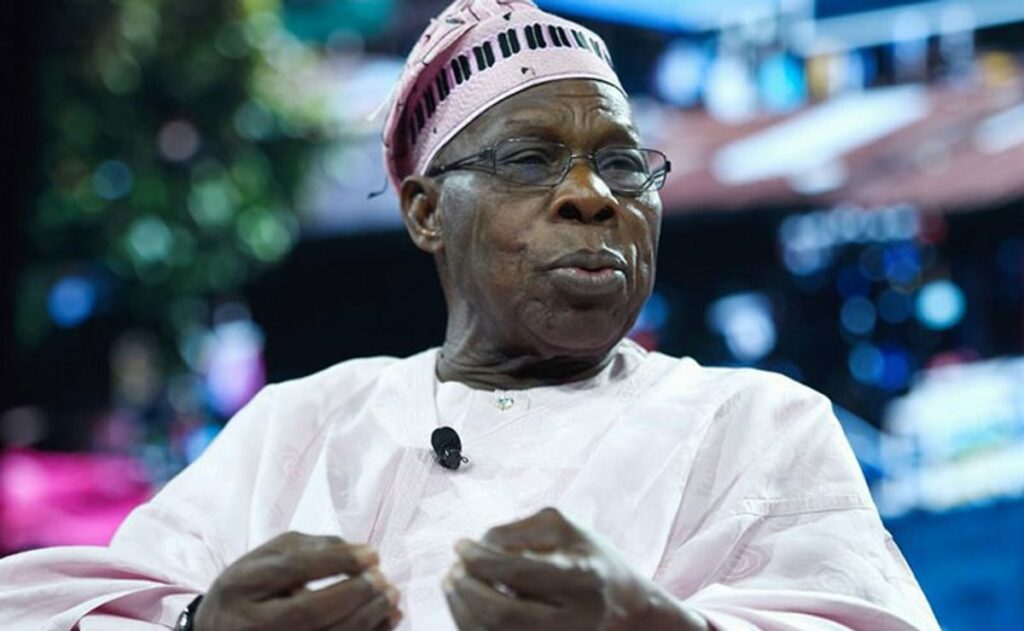
Former Nigerian President Olusegun Obasanjo declared that the nation’s 1999 Constitution is not inherently flawed but is undermined by its operators.

He delivered the critique at a national summit on Nigeria’s constitutional democracy in Abuja on Wednesday.

Obasanjo’s speech, read by Olawale Okunniyi, Secretary-General of Eminent Patriots, argued that while no constitution is perfect, Nigeria’s can foster good governance and citizen welfare if implemented faithfully.

“The best constitution can be perverted and distorted by the operators, and we have experienced that all over Africa; Nigeria is not exempted,” he stated.

The ex-president stressed that leadership behaviour remains the core issue, warning: “No matter what you do to the Nigerian constitution, if the operators remain unchanged, the welfare of Nigerians will continue to be sacrificed on the altar of selfishness, corruption, and impunity.”

He urged a focus on ensuring operators uphold integrity, honesty, and the rule of law to rescue national progress.

The summit was organised by The Patriots and the Nigeria Political Summit Group.

A nostalgic tribute to Muhammadu Buhari

By Amir Abdulazeez

During the early and mid-months of 2002, I would often visit an uncle (now deceased) who generously provided me with newspapers before he had even read them himself. On one such visit, I picked up a copy of the Daily Trust, a relatively new publication at the time, and while flipping through its pages, I read the delightful news that not only made me happy but also propelled me into a brief career in partisan politics. Retired General Muhammadu Buhari had decided to join democratic politics and announced his entry into the All Nigerian Peoples Party (ANPP).

At the time, the Obasanjo-led administration was widely perceived as underperforming, failing to address Nigeria’s mounting challenges sincerely. The PDP had morphed into a formidable political giant, while the ANPP was weakening steadily; other newly registered parties existed only in the briefcases of their founders.  Buhari’s decision to enter politics at that time represented the single most decisive move that changed the Nigerian democratic landscape over the last 25 years. Youths, pensioners, activists, comrades, veterans and even fence-sitters found a new rallying point, and almost everyone else joined the new messiah.

Although many harboured reservations about Buhari, especially those whose interests had been hurt during his military regime or the post-1999 established elite who saw him as a threat, I was among the countless young Nigerians who adored Buhari to a fault. My admiration for him was so intense that another uncle once felt compelled to caution me. It was just before the 2003 presidential election when he walked into my room, saw a large framed portrait of Buhari on my wall, smiled, and advised me to moderate my obsession.

My love for Buhari began about 30 years ago. The establishment of the Petroleum Trust Fund (PTF) by General Sani Abacha’s administration in 1994 coincided with our early years in secondary school. By the time the Fund was a year old in 1995, the name of Muhammadu Buhari was on the lips of virtually all Nigerians. In my estimation, then, he was the only tangible positive aspect of the Abacha government. In fact, he appeared to be more popular than Abacha himself; a hypothesis that reportedly inspired Obasanjo to scrap the Fund in 1999 to avoid ‘running a government inside a government’.

I vividly recall a day in 1995 or 1996 when I accompanied my father to a bookshop. The PTF low-price edition of every book we went to buy was available at a 50% or so discount without any compromise in quality. While paying the money, I could see the smile on my father’s face reflecting deep satisfaction and appreciation for the work of the PTF. That was the first time in my life that I truly felt and understood the direct impact of government on the people. In pharmacies, PTF drugs were sold at subsidised rates. There was no propaganda, rhetoric, cosmetics, or media packaging; the work of Buhari’s PTF was there for everyone to see and touch. I was fortunate as a young lad to join elders on travels across the country from 1995 to 1997. I got tired of seeing the PTF road projects that I once asked: “Why won’t this Buhari return as president to fix Nigeria?”

Muhammadu Buhari, a constant figure in Nigerian political discourse since 1983, is no longer with us. Few anticipated his death, as the brief illness he suffered in London seemed either a rumour or a routine medical trip. Ironically, many of his detractors had “killed” him multiple times in the past; some of them dying before he did. In 2014, former Ekiti State Governor Ayo Fayose ran a notorious advertisement predicting that Buhari wouldn’t last in office for months if elected. Yet he won, served for eight years, and died just months short of turning 83.

Buhari lived a long, dedicated, and enduring life of service and commitment to Nigeria, spanning about six decades in both military and civilian capacities. Save perhaps for Obasanjo, there’s no Nigerian, dead or alive, who matches his array of public portfolios. His personal reputation for discipline, honesty, integrity, and austerity endured throughout his public life. He stood as a symbol of principled and stoic leadership, leaving behind a legacy that will continue to resonate for generations.

Just before his death, the debate of who made him president in 2015 resurfaced with an exchange of tantrums between some pro-Tinubu and pro-Buhari gladiators. While I found the debate outdated, my position remains that Buhari ought to have become president 12 years earlier. For the avoidance of doubt, Muhammadu Buhari did not lose the 2003 presidential elections; it was brutally rigged to return Obasanjo for a second term. That year’s election ranks among the most fraudulent in modern global history. In 2007, the presidential election results were allegedly fabricated, so we can’t even call that an election, let alone determine who won or lost.

Despite my immense love for Buhari, I was left with no choice but to join his critics after 2015. Less than a year in, it became clear that his government lacked the vision and effectiveness many had hoped for. In 2015, I queued until about 10:00 p.m. to vote for him, believing he was Nigeria’s last chance. By 2018, I was disappointed and called for him to serve just one term. I argued then that if he couldn’t lead like Nelson Mandela, he could at least exit like Mandela. By 2021, while in his second term, I was so disillusioned that I openly advocated for his impeachment.

It remains a mystery how our much beloved, tested, and trusted (his campaign slogan in 2003) Buhari failed to meet expectations so short. Some blamed his arrogant and underperforming appointees; others cited a fractured and directionless party. But ultimately, he bore the responsibility. His inability or unwillingness to discipline ineffective ministers eroded his credibility. In 2022, during the eight-month strike by university lecturers, I contacted one of his aides (a relative), who confirmed that it was Buhari’s ministers, not Buhari himself, who opposed paying the lecturers. Another indicator that he wasn’t really in charge. 

In the midst of the storm, Buhari’s administration achieved several landmark milestones in infrastructure, social welfare, and the fight against terrorism. He delivered the elusive Second Niger Bridge, the Lagos-Ibadan and Abuja-Kaduna railways and upgraded numerous critical road networks. His government implemented the Treasury Single Account (TSA), which significantly improved public financial transparency and curbed leakages. Buhari’s war against Boko Haram yielded mixed results but succeeded in reclaiming substantial territory from insurgents. He introduced arguably the largest Social Investment Program in the history of Africa, targeting millions of beneficiaries through initiatives such as N-Power, Trader Moni, Survival Fund, Anchor Borrowers Scheme, and conditional cash transfers.

Nigerians are free to hold divergent views on Buhari. But there should be decency in how we express those views. No one is without flaws; we all have our good and bad sides. One day, we too shall pass, and others will speak of us. Buhari had both triumphs and failings; some reaped benefits, others suffered losses. If you can pray for him, please do. If not, be measured in your words.

The past few days have witnessed a flurry of deaths, a sobering reminder that life is fleeting and death is inevitable. Today’s giants will one day lie lifeless. When Garba Shehu broke the news of Buhari’s death, I immediately made up my mind to put up a tribute. A few minutes after the announcement, I visited his Wikipedia page to verify some information about the general. To my surprise, the information about his death had already been updated: “Muhammadu Buhari (1942-2025)”—so swiftly? I said to myself. Baba is gone. May Allah forgive and grant him Jannatul-Firdaus.
Sule Lamido launches his autobiography, “Being True to Myself”

By Samaila Suleiman, PhD

Political memoir is an important genre of autobiography. It preserves not only the memories of its author but also serves as a first-hand account of critical policy decisions and political milestones in a nation’s historical journey.

In a country where official records are often incomplete, contested, or deliberately erased, writing autobiographies is more than just a historiographical or literary venture—it is a moral and social obligation on the part of the political class to share their personal truths, address silences, and contribute honestly to the preservation of our national history. 

What lessons can the life of Sule Lamido, who is one of Nigeria’s most principled elder statesmen, offer us about our country’s turbulent and checkered national history, marked by deep-seated contradictions?  

Having been active in the political scene for over four decades, the story of Sule Lamido is hand in glove with Nigeria’s political history, spanning important political transitions and dispensations. 

Following years of thoughtful introspection, Sule Lamido’s long-awaited autobiography, Being True to Myself, will be formally launched on 13 May 2025 at the NAF Conference Centre in Abuja.

With a foreword by Olusegun Obasanjo, Being True to Myself promises to deliver a constellation of compelling insights and thought-provoking revelations on the inner workings of power and governance in Nigeria – a story of unflinching refusal to compromise the ideals and principles that have guided Lamido’s politics since the Second Republic.

The event will be chaired by former Head of State, General Abdulsalami Abubakar, with former President Olusegun Obasanjo as the Special Guest of Honour, and Dr Iyorchia Ayu, former Senate President, as the book reviewer—three eminent national figures whose presence underscores the national significance of both Sule Lamido and his autobiography.

Being True to Myself will surely resonate not only with students of history and politics but with every Nigerian who still believes in the politics of principles and the promise of a better Nigeria.

Is the PDP dead?

By Kabiru Danladi Lawanti, PhD

By every objective measure, the People’s Democratic Party (PDP) has ceased functioning as a viable political entity in Nigeria. Its carcass continues to move but without pulse, purpose, or coherence. As a ruling party, the PDP had its moments, but its legacy is weighed down by monumental abuses of power, systemic electoral malpractice, and industrial-scale corruption. 

From the open manipulation of election results mid-process to the weaponisation of state institutions for partisan gain, the party leadership helped normalise impunity at the highest level. Two decades on, many of these cases—alleging theft of billions—are still unresolved.

But the party’s death didn’t happen overnight. It began in 2007, when President Olusegun Obasanjo imposed a sick candidate on Nigerians, followed by Goodluck Jonathan’s directionless presidency. In 2014, a mass defection gutted its internal cohesion, when five of its governors established the new PDP to challenge what they called a lack of internal democracy within the party. 

Losing power in 2015 should have been a moment for self-correction. Instead, the PDP lost its ideological compass. It abandoned the one role opposition parties must play in democracies: the duty to provide clarity, contrast, and credible alternatives. 

Even as the All Progressives Congress (APC) drifted into policy incoherence from 2017 onward and the confusion that followed – petroleum prices increase, ASUU and other university union strikes, economic recession, open stealing never seen before in the nation’s history, fuel subsidy removal, minimum wage controversy, etc.- the PDP remained inert—leaderless, rudderless, and largely invisible.

Today, what remains of the PDP is a loosely held patchwork of political actors in retreat. Governors are defecting. Its 2023 vice-presidential candidate has walked away. State-level structures are hollowed out. Internal leadership is fractured, and there is no unifying idea or strategic doctrine to rally around. What does this tell us? The PDP is not in decline. It is defunct.

Nigeria is experiencing a vacuum of governance across federal, state, and local levels. What is needed is a credible alternative with intellectual spine, strategic clarity, and moral authority. The PDP has forfeited that opportunity. Nigerians are now confronted with two bleak options: to stick with a failing ruling party or scavenge among opportunistic startups branded with catchy acronyms and no ideological soul.

The PDP’s collapse is more than a party’s fall—it is a signal of deeper systemic decay in Nigeria’s political architecture. But in every collapse lies an opening: for principled political entrepreneurship, grounded in values, competence, and execution. Who will offer that? The people that landed us in this mess in the first place or new faces? 

We need new faces in the political arena. These people parading themselves as opposition are no different from the PDP or APC; they are the same. Our youth need to return to their senses, and most people we see in leadership positions started showing their ability to lead in their early 20s. We must step forward if we want to see a Nigeria of our dreams. The time for lamentations is over.

The future belongs to those who can build systems, not just win elections.

The fall of the mighty

By Bilyamin Abdulmumin, PhD

When the PDP began its first tenure in 1999, there was a level of humility and fairness. But it was in their second tenure that their invincibility began to take shape.

As a former military Head of State, Olusegun Obasanjo did not help matters. For the second time in Nigeria’s history, he declared a state of emergency in Ekiti and Plateau and threatened several other states. During this period, the legislature was allegedly weaponized for political control, and allegations extended even to the Economic and Financial Crimes Commission (EFCC), a respected anti-graft agency. 

Arguably, the PDP reached its zenith in 2007 and became so confident that it could “do and undo. ” The opposition could no longer hold any chance; instead, they covertly or overtly carried out the bidding of the powerful PDP. This exuberance and excesses of the then-ruling party culminated in a ditch for democracy: reports indicated that the 2007 presidential election results were declared while the collation was still ongoing. 

In 2011, Goodluck Jonathan’s administration continued its escapade. Allegations of corruption and mismanagement ran rampant, and the PDP became a haven for anyone singing its praises. This perception was palpable, and the public echoed that anything labelled ‘dubious’ came from the party. 

Complacency eventually led them to boldly declare that the party would remain in power for sixty years. Instead of sixty, the PDP barely added another six years. Even the former party chairman, who initiated the sixty-year maxim, considered leaving the party in 2015. 

Never mind the masses’ outrage, founding fathers decrying maltreatment, and bigwigs, including governors, decamping to the opposition. PDP could not see the handwriting; they thought it would be normal. 

The death of the PDP would be slow, with several deep cuts. One of them was shunning them by decamping opposition. Shehu Sani, Nasir El-Rufa’i, Rabiu Musa Kwankwaso, and Peter Obi should all naturally have considered the PDP as an alternative. 

Another blow to the slowly fading party is an internal crisis. One crisis after another continues to shake the once-indomitable party, providing those looking to defect a compelling reason to change sides. 

Perhaps the deepest cut was Nyesom Wike’s presence, who actively undermined the party from within. As Minister of the Federal Capital Territory, Wike not only revoked the PDP land title of the new secretariat but allegedly facilitated a Supreme Court victory for his ally, Mr Samuel Anyanwu, against the current party secretary.

History is replete with the downfall of the mighties. Leaders, nations, and brands often reach a status where they seem invincible, only to succumb to the very excesses that caused their rise.

A call for a presidential library in memory of Alhaji Shehu Shagari

By Bilyamin Abdulmumin, PhD

On the 25th of February, the former president Mallam Alhaji Shehu Shagari posthumously celebrated his 100th birthday. To honor this significant occasion, his grandchild, Bello Shagari, wrote him a letter in heaven, where he now resides, inshallah.

In the letter, Shagari told his grandfather the entire story he had missed during the seven years since he left. He perhaps started with what would have concerned him the most: Muhammadu Buhari completed his eight-year tenure but never fulfilled the promise to honor him, even though a similar gesture was extended to MKO Abiola for recognizing June 12 and renaming the Abuja stadium after him, as well as completing a mausoleum for Dr. Nnamdi Azikiwe.

The letter continued: Bola Ahmed Tinubu has become the President of Nigeria, but surprisingly, Nigerians are now more patient with the burden of reforms than they were before when they celebrated coups.

Another piece of information shared in the letter was the launch of General Ibrahim Badamasi Babangida’s autobiography, a book surrounded by controversies on all sides. Interestingly, the book cleared Shagari of corruption.

The objective of this article was the Presidential Library the Shagari family is considering, as mentioned in the letter. The family hopes to achieve that by converting his decaying house into a historical monument.

Just before that birthday, a fatherly figure sent me a viral video of an old house belonging to Shehu Shagari, which had fallen into disrepair. The video was interestingly captioned with a suggestion: converting the house into a presidential library. The viral video may have already reached the Shagari family, who might have already contemplated it.

I think that so far, the only official presidential library we have in Nigeria is the Olusegun Obasanjo Presidential Library (OOPL). The complex is described as a mini village, featuring an open-air amphitheater, an auditorium, a hotel, an amusement park, a wildlife park, an observation point, restaurants and bars, a Jumu’at mosque, and of course, a church.

I was surprised to learn that OOPL has a Jumu’at mosque. This highlights not only the size of the village surrounding the library but also the diverse local and international users.

Ultimately, a promising archive of this significance—a repository of presidential documents, a tourist attraction, and an academic center—stands as a proud monument not only for a specific state or region but for all of Nigeria.

As the only democratically elected president of Nigeria’s Second Republic, the call to preserve his legacy for future generations cannot be overstated. Dear Nigerians, in memory of Alhaji Shehu Shagari, let’s make this dream a reality.

Corruption and market distortions in Nigeria: A historical perspective

By Muhammad Usman

Markets do not exist in isolation; they rely on trust, fair competition, and robust institutions. When corruption remains unchecked, the market becomes skewed in favour of a select few, and ordinary individuals bear the consequences. 

Over the decades, Nigeria has experienced corruption at different levels, from the military era to democratic governments. This article examines corruption under different administrations and how it has affected various sectors of the economy, benefiting elites like MKO Abiola, Aliko Dangote, Mike Adenuga, and other politically connected businessmen.

Under General Ibrahim Badamasi Babangida (IBB), Nigeria’s oil and gas industry, which should have been a national blessing, became a tool for personal enrichment. Instead of promoting a competitive and transparent market, Babangida awarded oil licenses to individuals and companies with close government ties.

A clear example is Mike Adenuga’s rise, who received an oil block from Babangida’s government. This preferential treatment enabled him to build a substantial business empire, including Conoil, while smaller enterprises lacking political connections were excluded. Likewise, Aliko Dangote, who later became Africa’s richest man, gained immensely from government-backed monopolies and exclusive importation rights.

During the first Gulf War (1990–1991), Nigeria earned an estimated $12.4 billion in oil revenue, which was never accounted for. The Pius Okigbo Panel (1994) revealed that these funds were squandered on questionable projects and private accounts instead of being used for national development. Ordinary Nigerians saw no benefit from this windfall, facing rising inflation and economic hardship, while a few became extraordinarily wealthy.

One of Babangida’s most significant economic policies was the 1986 Structural Adjustment Program (SAP). While it was meant to liberalize the economy, it favored those with government connections. Under SAP, state-owned enterprises were privatized, but instead of an open and competitive process, these businesses were sold at giveaway prices to Babangida’s allies.

For example, MKO Abiola, a wealthy businessman and close associate of the regime, gained immensely from these privatisation deals. Meanwhile, ordinary Nigerians suffered as the naira was massively devalued (that’s the beginning of the naira devaluation) that continues to haunt us to this day.

Babangida’s government also enabled massive corruption in public contracts. One infamous case was the $150 million Ajaokuta Steel project, which was riddled with mismanagement and corruption. Similarly, when Babangida moved Nigeria’s capital from Lagos to Abuja in 1991, many development contracts were inflated or abandoned, yet payments were made to political allies.

Furthermore, consider the power sector scandal during Olusegun Obasanjo’s administration, in which over $16 billion was allocated to electricity projects with little to show for it. Examine the Halliburton bribery case from that period, where Nigerian officials allegedly received $180 million in bribes from foreign contractors in exchange for lucrative government contracts. Despite the overwhelming evidence, many individuals implicated were never prosecuted.

During this period (Obasanjo), Aliko Dangote’s business empire expanded rapidly, as he received exclusive waivers and importation rights. While many businesses struggled with high tariffs, Dangote was given government-backed monopolies in cement, sugar, and flour, ensuring that competitors could not challenge his dominance. 

Muhammad Sani Usman writes from Zaria and can be contacted at muhdusman1999@gmail.com.

The politics of autobiographies

By Amir Abdulazeez, PhD

In ancient times and through the Middle Ages, people used autobiographies to share hidden truths, make confessions and communicate genuine experiences. Nowadays, they are used by politicians and world leaders for self-justification and self-glorification. Whether in the West, across Africa, or within Nigeria, the pattern remains the same—political figures use autobiographies to rewrite history in their favour, often ignoring their failures or controversies.

Between 1948 and 1954, former British Prime Minister Winston Churchill published multiple volumes of memoirs portraying him as World War II’s hero. While Churchill was undeniably a key figure in the war, his narratives downplayed criticisms of his leadership, including his alleged role in the Bengal Famine of 1943, which resulted in the deaths of millions. His autobiographical works cemented his legacy as a wartime leader while sidestepping his more controversial decisions.

Modern political memoirs have increasingly become exercises in selective storytelling, where leaders carefully articulate their narratives to present themselves in the most favourable light possible. Former United States President Richard Nixon used his autobiography, The Memoirs of Richard Nixon, to repair his image after the Watergate scandal. After lying about the possession of weapons of mass destruction as a justification to invade, Tony Blair’s A Journey and George W. Bush’s Decision Points cruelly and shamelessly attempted to justify their baseless war in Iraq in 2003. 

Across Africa, many leaders have also engaged in the practice of using autobiographies to deny or justify their shortcomings. As good as they were, Ghana’s Kwame Nkrumah, Zambia’s Kenneth Kaunda, Tanzania’s Julius Nyerere, and Kenya’s Jomo Kenyatta have all been accused of using autobiographies to exaggerate their legacies, downplay their shortcomings, and ignore controversies around their stewardships.

In Nigeria, Olusegun Obasanjo’s 2014 book My Watch has been widely criticised for being self-serving. While Obasanjo portrays himself as a patriot and a visionary leader, he conveniently overlooked his authoritarian tendencies and allegations of corruption and electoral fraud during his tenure.  

Despite all the glaring circumstances that led to Dr. Goodluck Jonathan’s decisive defeat in the 2015 Presidential elections, in his 2018 book My Transition Hours, he tried hard to justify and downplay his actions while also constructing different conspiracy theories that gave the impression that he didn’t lose the elections freely and fairly. 

Just when we thought we had enough of all these politicised autobiographies, former Military President General Ibrahim Badamasi Babangida has released his own memoirs. While often and correctly presented as one of Nigeria’s finest soldiers, strongest leaders, and elder statesmen, we cannot expect his memoirs to differ significantly from those of other Nigerian, African, and world leaders. IBB is unfortunate to be one of the most studied and documented Nigerian leaders, and there are numerous controversies, inconsistencies, and tactical deceptions associated with his tenure that no autobiography can reconcile. 

One major criticism of IBB’s memoir is its timing. The delayed release suggests a strategic waiting period for public emotions to cool and memories to fade. Apart from the main actors, many others in a position to validate or refute whatever he might say in his book are deceased. In fact, the majority of the current generation of Nigerians were not even born when he left power in 1993. In a nutshell, while Babangida’s autobiography may attempt to rationalise many of his decisions, the scars left by the events he oversaw, such as the Structural Adjustment Programme, state executions, public corruption, and the endless and wasteful transition programme, will remain fresh in the country’s memory.

In Nigeria, what have these autobiographies taught us? Many leaders and political figures have left behind terrible legacies that they cannot afford to entrust to impartial storytellers. While they ought to spend the remainder of their lives in regret and reflection, they prefer to add salt to the wound by publishing half-truths and falsehoods as autobiographies. When they do this, they invariably have other elitist co-conspirators, who benefited from their actions and inactions in power, gathering to celebrate them as heroes. 

As a former Nigerian leader, as long as you are alive and influential, you can always find a way to redeem your image despite your atrocities. I often ask people to imagine if General Sani Abacha were still alive; who would dare to recover any foreign loot associated with him? Who doesn’t have skeletons in their cupboards? Unfortunately for Abacha, apart from being dead, he had also stepped on most, if not all, of the toes that would have protected him, and again, one of the most affected became President just 11 months after his death.

Not everyone is the same. There are patriotic Nigerian leaders, statesmen, and freedom fighters who deserve to write autobiographies. Unfortunately, when they do, their works often get drowned in the ocean of the more negative ones who are wealthier and more popular. By tradition, Nigerians tend to promote and accept things that are popular and glamorous rather than those that are truthful and sincere. This is why you don’t hear trending biographies about Gani Fawehinmi, Abdulkadir Balarabe Musa, and others.

Ultimately, everyone has the right to their own opinion and narrative of events as they wish others to perceive them. While autobiographies offer valuable insights into the minds of world leaders, they should be read critically. Readers must recognise that these books are not always honest reflections of history but are often carefully crafted narratives aimed at preserving a leader’s legacy. 

The memoirs of political leaders frequently function more as instruments of image control than as genuine historical accounts. The ultimate judgement of political leaders should not lie within the pages of their autobiographies but rather in the lived experiences of their citizens and the tangible impacts of their policies. 

I read three autobiographies recently, and I found them to be outstanding and honest: Sir Ahmadu Bello’s My Life, Nelson Mandela’s Long Walk to Freedom and Mahatma Gandhi’s The Stories of My Experiments with Truths. Sardauna’s was simple, least self-glorifying and occasionally self-critical. Mandela’s was strictly a chronicle of collective struggles, only mentioning but leaving out details about subjective issues and cleverly terminating his story to the point he was inaugurated as President. He left the story of his presidency to be told by others. Gandhi’s was the best; when he was literally forced to write his memoirs in 1925, he named it ‘My Experiments’; the translators added the word ‘autobiography’. He never wanted to write because he believed that if your actions were right, there was nothing to boast about; for the wrong ones, there would always be many people to help you write them.

Twitter: @AmirAbdulazeez 

Obasanjo advocates leadership accountability in anti-corruption fight  

By Uzair Adam 

Former President Olusegun Obasanjo has emphasized that the fight against corruption in Nigeria must begin with accountability at the highest levels of leadership to inspire public confidence and ensure effective governance.  

Speaking during a virtual interactive session tagged “Boiling Point Arena” on Sunday, hosted by a private radio station in Abeokuta, Ogun State, Obasanjo asserted that leadership plays a pivotal role in combating corruption, which he described as deeply entrenched in Nigerian society.  

“The best way to fight corruption is by starting from the head. Leadership must set the example for transparency and integrity to achieve meaningful progress in this battle,” he stated.

Several private radio stations in Abeokuta broadcast the session, which focused on Obasanjo’s legacies and views on contemporary Nigeria.  

Highlighting the complex nature of corruption, Obasanjo likened it to a “babbar riga,” saying, “If you fold it on one side, it falls apart on the other side. 

It is not a one-day affair, nor is it limited to one regime. It must be a consistent and daily effort. Once any regime lets its guard down, corruption spreads.”  

The former president called for reforms in the recruitment and appointment of leaders, advocating for merit-based selections over political or tribal considerations.  

On leadership, he argued that only leaders ordained by God are likely to succeed, warning against self-made leaders or those installed through corrupt or malevolent means.  

“We must acknowledge that while some leaders are prepared by God, others may be made by Satan. The power of Satan is real, and it must not be underestimated,” he remarked. 

Obasanjo concluded by urging Nigerians to remain vigilant and committed to holding leaders accountable, stressing that corruption can only be curtailed with sustained effort and collective responsibility.

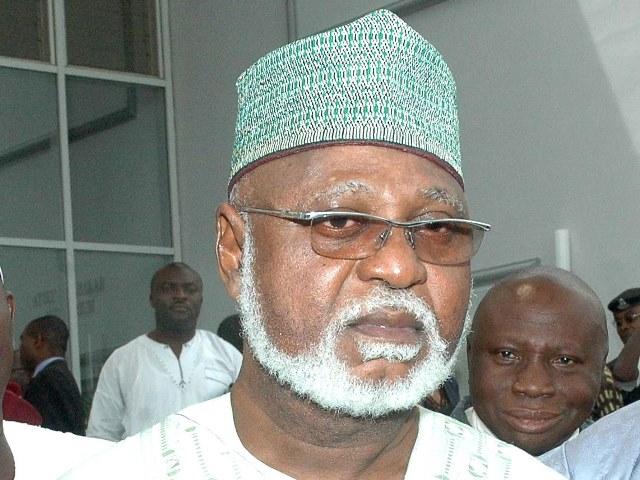
I’ve no regrets handing over to civilian government – Gen. Abdulsalami

By Uzair Adam Imam 

Former Head of State General Abdulsalami Abubakar expressed his satisfaction with handing power over to a democratically elected president in 1999.

Abubakar made this disclosure during an interview with journalists over the weekend. 

He stated, “Not at all! Not at all! Not at all! I am happy with what is going on. Yes, everything is not perfect, but here we are today, celebrating 25 years of unbroken democracy.”

Abdulsalami, who handed over power to former President Olusegun Obasanjo, acknowledged that while there are still challenges, Nigeria has made significant progress since 1999.

“We are not yet there but have come a long way since 1999. The only drawback we have in the system is people still sell their votes, and they do all types of things; they allow the politicians to use them in ballot box snatching here and there – unnecessary things that we should have overcome at this age.”

He emphasised the importance of voters holding elected officials accountable and lamented that some individuals still engage in vote-buying.

“Unfortunately, I still maintain, there are some very few people who abuse the process and they allow their votes to be bought. 

“And if they are buying these votes, certainly they cannot be called to be accountable, the people who are being so elected.”

Despite these challenges, Abdulsalami expressed optimism about Nigeria’s democratic progress and the growing awareness among citizens that their votes matter.