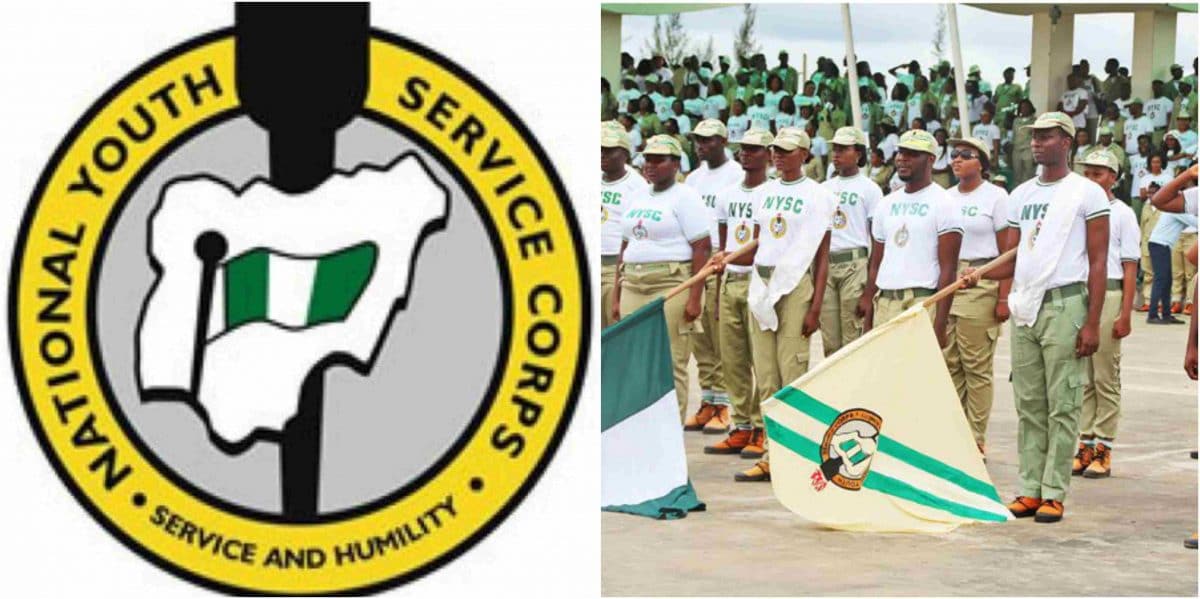
NYSC

Education minister proposes two-year NYSC scheme to boost job creation

By Abdullahi Mukhtar Algasgaini

The Minister of Education, Dr. Maruf Olatunji Alausa, has called for the extension of the National Youth Service Corps (NYSC) program from one year to two years.

The proposal aims to expand the Skill Acquisition and Entrepreneurship Development (SAED) training to better equip corps members for self-employment.

Dr. Alausa made the suggestion on Friday during a courtesy visit by the newly appointed NYSC Director-General, Brigadier General Olakunle Nafiu, in Abuja.

He commended the NYSC for its digital reforms, which have helped reduce certificate fraud among foreign-trained graduates, particularly from West Africa.

The minister also addressed concerns over OND part-time graduates with full-time HND degrees who were previously exempted from national service, urging a review of the policy.

In response, the NYSC DG praised Dr. Alausa’s leadership in the education sector and proposed the creation of a database for Nigerian students pursuing degrees abroad to enhance monitoring and policy planning.

The call for an extended service period aligns with the government’s push to tackle unemployment by fostering entrepreneurship among Nigerian youths.

NYSC assures corps members of N77,000 allowance implementation

By Uzair Adam

The Director General of the National Youth Service Corps (NYSC), Brigadier General Olakunle Nafiu, has assured corps members that the new monthly allowance of N77,000 will take effect starting in March 2025.

He gave the assurance during an interactive session with corps members at the Wuse and Garki NYSC Zonal Offices in Abuja, reaffirming the commitment of both the NYSC and the Federal Government to their welfare.

The development follows months of anticipation after the NYSC announced an increase in the allowance from N33,000 to N77,000, in line with the new minimum wage of N70,000 approved by President Bola Tinubu in July 2024.

The last increment was in 2019 when the allowance was raised to N33,000 after a review of the minimum wage to N30,000.

According to a statement signed by the Acting Director of Information and Public Relations, Caroline Embu, the approval for the new allowance was conveyed in a letter from the National Salaries, Incomes and Wages Commission, dated September 25, 2024, and signed by its Chairman, Mr. Ekpo Nta.

Brigadier General Nafiu emphasized that the well-being of corps members remains a priority, urging them to remain calm, dedicated, and disciplined in their service to the nation.

“With effect from March, you are going to receive the sum of Seventy-Seven Thousand Naira as your monthly allowance. NYSC is good at record-keeping, and I can assure you that your money will be paid. The nation and the Scheme appreciate you,” he stated.

He also praised the vision of NYSC’s founding fathers, describing the scheme as a vital institution fostering national unity by exposing graduates to diverse cultures across Nigeria.

He assured corps members that NYSC management would continue to instill values such as patriotism, discipline, leadership, and teamwork.

Speaking on behalf of her colleagues at the Garki Zone, Corps Member Zaka Deborah Alheri (FC/24A/5831) expressed gratitude to the Director General for his commitment to ensuring the timely payment of their increased allowance.

President Tinubu appoints Brigadier-General Nafiu Olakunle as NYSC Director-General

By Abdullahi Mukhtar Algasgaini

Brigadier-General Nafiu Olakunle, a distinguished artillery officer from Ileogbo in the Aiyedire Local Government Area, Osun State, has been appointed the new Director-General of the National Youth Service Corps (NYSC).

This prestigious appointment has brought pride to the people of Ileogbo, Iwoland, and Osun State and marks a significant milestone in the nation’s progress. 

Brigadier-General Olakunle is recognized for his unwavering commitment to national service, exemplary leadership, and dedication to the country’s development.

With his appointment, many expect Brigadier-General Olakunle to drive positive changes within the NYSC and reinforce its vital role in uniting and empowering Nigeria’s youth. 

His leadership is anticipated to enhance the NYSC program’s contribution to fostering national unity and progress.

This achievement represents not only a personal triumph for Brigadier-General Olakunle but also a significant moment for the Osun State community.

NYSC member kidnapped on Benin-Ore expressway freed after ransom payment

By Abdullahi Mukhtar Algasgaini

A National Youth Service Corps (NYSC) member, Rofiat Lawal, has regained her freedom after being kidnapped along the Benin-Ore Expressway on Tuesday.

Lawal, who was traveling from Benin, Edo State, to Ibadan, Oyo State, where she was set to resume her primary assignment, was held captive by the abductors until her family paid a ransom of N1.1 million.

The incident occurred as Lawal was on her way to begin her service year, but she is now safely back with her family following the payment. Authorities are yet to make any arrests in connection with the kidnapping.

Inside NYSC Permanent Orientation Camp

By Usman Mujtaba Shehu

The National Youth Service Corps scheme idea was to expedite contacts across cultural zones and bridge the cultural gaps, and surmount cultural stereotypes.

Being in an NYSC dress is a dream come true for me. Having visualized how it would feel or how I would look in it about two decades ago, I’m thrilled to experience it finally. When I was younger, I used to wear my father’s NYSC ceremonial shirt. Although it was oversized, the tip reaching my knee sparked my interest in the NYSC program.

The question isn’t just about the dress but about the experience and feeling of being a Corp member. That’s what many people long for. During the registration process, I didn’t encounter many hitches. The main challenge was the duration of my university program, which was prolonged due to the long ASUU strike and the emergence of the COVID-19 pandemic.

Apart from these two reasons, all the delays were natural, stemming from the nature of my school’s (ATBU) calendar. The NYSC registration, receiving my call-up number, and anticipating my state of deployment were challenging. I spent 13 hours in the CAFE in the queue waiting to be registered. Additionally, I waited several more hours to receive my call-up number and was eventually deployed to Dakin Gari Orientation Camp in Kebbi State.

When I saw the call-up letter, I was sad, and my mind wandered to the 1-day, almost 12-hour journey ahead. After arriving at Birnin Kebbi, I had to find a taxi to the camp, which was a struggle. It took me 4 hours to get a cab and another 2 hours to reach my destination. I arrived at the camp in the evening, around 5:30 pm. Luckily, the registration queue had been reduced, so I didn’t have to wait.

After checking my bag, I proceeded to the admin block for registration. I discovered my platoon from my state code, which was like a registration number. And from the last digit, I knew I was in platoon 4. I collected my meal ticket, which served as a food ID, and was given a mattress and bed space in the Boys’ Hostel (3).

After settling in, I attended another registration session conducted by the platoon officer. Once completed, I received a set of light-green khaki, the NYSC ceremonial shirt, an orange boot, a white cover shoe, a customized cap, and two pairs of short white trousers and shirts. I felt mixed emotions, reflecting on the future and how it would unfold.

Is it true that the orientation is difficult? In the NYSC Orientation Camp, you feel a sense of belonging regardless of your background or who you are. This is rooted in the NYSC act and the orientation design, which aligns with their motto of “humility and service.” The process is humbling, bringing together people from diverse tribes, such as Yoruba, Hausa, Igbo, Ebra, Tiv, and Fulani.

Religious activities are also accommodated, with three Christian prayer points and one mosque. This allows Corp members to practice their faith without discrimination.

The sense of togetherness is reinforced by the uniform dress code, which includes white shirts and trousers, customized shirts with NYSC alphabets emblazoned on the front, and khaki trousers with boots and customized caps for ceremonies. Trust among Corp members develops quickly as they view themselves as similar or familiar, united by their platoons.

Platoons unite Corp members, and my platoon (platoon 4) leader, a Yoruba from Lagos, exemplified this unity. With 10 platoons, each comprising over 100 Corp members from different states, backgrounds, languages, and cultures, we were united under a shared platoon identity designed by NYSC to foster unity and patriotism.

People tend to trust those within their in-group, and belonging is a primal instinct. When Corp members display attitudes, beliefs, or platoon membership, others tend to like and trust them more. My response to lowering the Nigerian flag every 6:00 pm still amazes me. Every activity would come to a halt when the trumpet was blown.

My new identity became my platoon. I made new friends across all platoons, but Platoon 4 became like family. Competitions were organized to strengthen bonds within platoons. I participated in the football competition and cheered for my platoon in the parade competition, cooking, cultural dance (Edo Dance), and other events.

I attended over 30 lectures and sensitization sessions with my platoon, covering education, health, relocation, finances, and more topics. I only separated from my platoon during the Skill Acquisition and Entrepreneurship Development (SAED) launch. Corp members were allowed to choose their training. I attended and listened to about 30 lectures and sensitization sessions with my platoon. The lectures cover almost all areas, including education, health, relocation, finances, etc.

That was how we were shared with eight different skills Acquisition classes. I chose ICT and learned basic Data analysis and graphic design using pixels.

The orientation is rigorous and tedious. But when I reflect on the whole objective of the NYSC initiative itself, it’s worth it. It’s not a pointless activity but a scheme meant to instil discipline, love of country, and love of one another. As mentioned in the national anthem: ‘Though tribes and tongue may differ, in brotherhood we stand’.

Usman Mujtaba Shehu wrote via usmanmujtabashehu@gmail.com.
FG lifts ban, allows corps members to serve in banks, other private institutions

By Anwar Usman 

The Federal Government has lifted the ban that restricted the posting of members of the National Youth Service Corps to the public institutions, allowing for corps members to now be posted to private sector organisations, including banks and oil and gas companies. 

According to a memo released by the Minister for Youth Development, Ayodele Olawande, on November 18, 2024, the new policy directive will take effect with the commencement of the 2024 Batch ‘C’ Orientation exercise. 

The previous policy that was implemented during the former Minister for Youth and Sports Development, Bolaji Abdullahi, aimed at discouraging private companies from exploiting cheap labour while promoting public sector capacity building and restricted corps members to only four sectors of the economy, including education, agriculture, health, and infrastructure. 

The minister added that the new policy follows President Bola Tinubu’s strategy to tackle rising youth unemployment by ensuring that government agencies align with the vision of his administration, adding that the directive will initially take effect in Lagos and Abuja. 

“The new policy would also allow the corp members to gain valuable experience in their chosen fields of study, noting that the previous policy discouraged Nigerian youths from gaining experiences that would prepare them for the labour market. 

The memo further read in parts, “There is a serious need to review this policy to expand the opportunity and access for corps members to serve in places that are relevant to their areas of study. Without prejudice to the need to constantly review per prevailing realities, I now direct as follows: Lifting of all restrictions on postings.”

Beyond the call: How NYSC transformed my skills and perspective

By Mujahid Nasir Hussain

Before I received my call-up letter to serve in Kaduna, I had only visited two states in Nigeria: Bauchi and Katsina. As rooted as I was in Kano, I was confident that one day, a journey would take me on an expansive adventure. On a Monday morning, my letter arrived, and I was assigned to Kaduna. Without hesitation, I accepted the call, feeling both the weight of the commitment and a sense of excitement for the journey ahead.

My arrival at the Government College Temporary Orientation Camp, Kurmin Mashi, was immediately followed by an unexpected nomination. A day after settling in, the NYSC certificate officer responsible for Muslim affairs addressed us after the Fajr prayer. He announced they would select a camp Ameer, Imams, and mosque officials to guide and regulate Muslim activities for the three-week orientation. While the officer invited all interested corps members to a screening at 9:00 a.m., I initially had no interest in volunteering. 

I had been an Imam throughout my four years at Bayero University Kano and knew the demands of such a role well. However, a friend’s persistent encouragement eventually swayed me. He reminded me that contributing in this way could be significant, so I agreed to attend the screening. By the end of the process, I was nominated as the camp Ameer among a large pool of competent Muslim corps members. This role demanded dedication, organisation, and the ability to balance multiple responsibilities, each of which became an invaluable part of my camp experience.

I sought additional ways to engage and support my fellow corps members throughout the orientation. Given my background in a medical-related field, I joined the Red Cross team, a requirement for those in health-related disciplines. This opened up an opportunity to teach cardiopulmonary resuscitation (CPR) and choking management, skills I had learned and been certified in through the Basic Life Support training at Aminu Kano Teaching Hospital just four weeks before arriving in camp. Sharing this knowledge with my peers was a gratifying experience and reinforced my commitment to the responsibilities I had taken on.

As the orientation phase ended, the NYSC program’s next chapter brought me another unexpected role—the position of Medical & Health Community Development Service (CDS) president. This time, I was both surprised and a little amused at the nomination, especially when someone in the group remarked, “He only studied physiology,” implying that there were candidates with medical and pharmacy degrees who might be more fitting for the role. However, my fellow corps members saw beyond that comment, recognising my active participation and consistent presence in discussions on various health issues. Their confidence in me reaffirmed my belief in engaging fully in every opportunity, regardless of qualifications or prior experience.

One of the most transformative aspects of my NYSC journey was my placement at a diagnostic centre. This placement became a learning ground where I progressed from never handling a sonography probe to becoming a trusted cardiac sonographer. Each day at the centre involved performing different scanning procedures, including cardiac sonography—a skill I never expected to acquire. 

Before long, I began visiting primary healthcare centres to conduct these scans and report results, trusted to work independently by the centre. This experience not only built my technical skills but also gave me confidence and professional growth that went far beyond the confines of my physiology degree.

Reflecting on this journey, I am grateful for the complete immersion I experienced by staying in Kaduna. Many corps members, especially those posted close to their home states, travel back frequently, often missing out on opportunities to develop their skills more deeply. Though I only made two trips back to Kano throughout my service year, the experiences and skills I gained in Kaduna were irreplaceable. 

NYSC offered a space where I could grow beyond the confines of my academic background, gaining hands-on expertise that would ultimately make me more valuable in the job market. The scheme is a golden opportunity to stand out for those wondering about the job prospects after NYSC. If I had only my physiology degree to present to future employers, I’d be no different from countless other graduates with the same qualification. But by stepping out of my comfort zone, learning sonography, and building leadership experience, I now have more to offer.

Prospective corps members should view the NYSC year as more than a routine or obligatory service period. It’s an opportunity to develop skills that add value to your degree and increase your chances in the job market. 

With the right mindset, your NYSC journey can transform and empower you unexpectedly. My time in Kaduna will remain one of the most defining chapters of my life, a journey marked by growth, resilience, and the pursuit of a purpose greater than myself.

Mujahid Nasir Hussain wrote via mujahidhnasir@gmail.com.

Celebrating NYSC-member teachers: A trio of inspirers

By Ibrahim Sulaiman

Let me celebrate a trio of my teachers, Miss Tina, Mr KJ Kabir and Mr Nebo Ekene. They are not only my teachers but have also stood out for making me academically ambitious. 

Graduating from a nearly dying government secondary school system in the North Eastern part of Nigeria in the early 2000s was discouraging for students being churned out from these schools. These National Youth Service Corps (NYSC) members were determined to make us think and dream like our counterparts in other schools that were practically better than ours. 

Miss Tina (as she was then), a UniLAG-trained geographer, was very concerned about covering the syllabus. She wanted me to sit for JAMB the following year, as none of us had registered for the matriculation exam that we finished every year at school. She gave me a pass in A&B to read in preparation. She also contacted me after leaving Jama’are when she hadcompleted her one-year mandatory NYSC.

Mr KJ Kabir (from Kwara State) was concerned about my proposed course of study. He was our Press Club patron, and I was one of the club’s newscasters. He would always ask through discussion, ‘Ibrahim, what do you want to study? ‘I would reply, ‘Mass Communication, Sir’ (having been influenced by the press club plus the fact that I was and am still a radio fan). From our discussion, I learned that he wanted me to study political science (he is a university graduate of political science, too). 

Mr Ekene (a Baga-born Igbo from Enugu state with an excellent and near-perfect command of the Hausa Language) was another dedicated teacher and a mentor. This corp-member teacher will always fix classes and/or extend classes beyond the allotted time in his bid to cover the syllabus. 

The lodges of the trio were vestibules for extra lessons for me. I frequent their houses, and they’re always available for me. I remember vividly when Mr Ekene left the school quarters to stay in Cooper’s lodge in Jama’are town. I used to go there for my lessons. These experiences prepared me and, of course, made me conscious about proceeding with my studies immediately. 

This consciousness made me focus more on education than anything else. Some of them were disappointed in me when I told them that I was enrolled in a diploma program. They all wanted me to be in university after secondary school. But I always assured them I would proceed from there, and I did!

To these teachers, the trios, I am ever grateful for the inspiration. The books you gave me while passing out from the NYSC and the Q&As bequeathed to your chosen student were sources of inspiration that keep prodding me up to today. They will keep pushing till I reach the pinnacle, called PhD (soon)! Thank you so much for your selflessness and service to humanity.

Ibrahim Sulaiman writes from Abuja, Nigeria and can be reached via ibrahimsulaiman193@gmail.com

Customs boss bids farewell to outgoing corps members in Abuja

By Sabiu Abdullahi 

The Comptroller-General of Customs (CGC), Adewale Adeniyi, has yesterday officially bade farewell to the 2023 Batch C National Youth Service Corps (NYSC) members who completed their one-year national service at the Nigeria Customs Service (NCS) headquarters in Abuja. 

CGC Adeniyi, in a ceremony marked by a memorable passing-out parade, accompanied by senior officers, inspected the outgoing corps members as they displayed their final drill.

Adeniyi urged the corps members to uphold values like discipline, teamwork, and commitment.  

He said, “These are values you must carry with you into your professional lives.” 

He also praised the dedication and contributions of the corps members during their service year.

After NYSC: A call for national job creation and youth empowerment

By Haroon Aremu Abiodun

The Nation’s clarion call resounds, and the youth—our graduates—respond. The National Youth Service Corps (NYSC) is central to this national narrative. Some may argue that these graduates bask in the comfort of government stipends for a year, while others counter, “How substantial is this money anyway? It’s merely enough to keep body and soul together.”

For many, this stipend transcends mere sustenance; it symbolises stability. Upon completion of their service year, the promise of a regular income dissipates like a mirage. As I approach the conclusion of my service year, my thoughts drift back to a reflection penned in 1993 by Yushau Shuaib, the esteemed publisher of PRNigeria and Economic Confidential.

His words resonate profoundly: “After the National Youth Service, what next? From here, where next? How long have you fantasised about your next port of call after dedicating your life to academic pursuits? Will you further your studies, seek employment, or perhaps get married?” If marriage is part of your post-service plans, ensure you save for the honeymoon.

As my time in NYSC draws to a close, I can’t help but ponder the uncertain future that awaits me and my fellow corps members. For many, this may mark the last time they receive a government-issued salary. Some leave the country for greener pastures, convinced that this nation offers them no future.

Others, however, have jobs waiting for them, merely contingent on their release from service. Yet, many corps members will never earn as much as they did during their service year; some may find even better opportunities, while others remain lost amidst uncertainty. In today’s society, we question: Are we destined to join the legions of unemployed graduates? Is education no longer the key to societal recognition?

We witness individuals with multiple degrees grappling to find viable employment, seemingly rendering education futile. The rise of the “Yahoo boys,” who embody the new elite without formal education, fosters the narrative that “school is a scam.” Our education system requires rigorous restructuring and oversight, but we also need a comprehensive reorientation of our values and aspirations.

One acquaintance is willing to resort to unethical means to secure a job, even contemplating bribery for a lucrative position, craving societal approval. But what of those lacking the financial means or connections? Who stands by us?

The fear of poverty could well be the beginning of misguided pursuits. Might some be tempted to resort to fraud, political thuggery, or even prostitution—now sanitised as “hookups”? Will others turn to terrorism or kidnapping, driven by necessity, as opportunities evaporate in the job market?

Private organizations face significant hiring constraints stifled by economic instability. In fact, many are laying off staff simply to stay afloat—how, then, can they possibly accommodate fresh graduates? What becomes of those of us unwilling to engage in illicit activities? Are we consigned to a life of struggle?

For some, the service year impedes success; for others, it serves as a crucible for personal growth and dream realisation. Some may even decline job offers, viewing the pay beneath them, while others face a daunting lack of direction.

How can we elevate our nation when out of millions of corps members, only a fraction—perhaps five hundred—find meaningful employment? And of those, many receive insufficient compensation to support a family amidst this unforgiving economy. How can youth deprived of job opportunities or financial means to foster their ventures lift our nation?

Nigeria has devolved into a landscape where viable jobs are an elite commodity. In the 70s and 80s, even an O-level holder could readily secure employment; today, the opposite rings true. Are we not at an impasse? Is my generation not doomed to suffer for the decisions of the past? While I believe in humbly serving my nation, this conviction must be matched with tangible opportunities.

To President Bola Ahmed Tinubu: One crucial step toward alleviating terrorism and insecurity is ensuring job security for our youth. An idle mind may indeed become the devil’s workshop. If corps members exit service devoid of decent employment, they may turn to unlawful means for survival, jeopardising our nation’s safety.

In this digital age, AI has transformed many operational processes, executing tasks with unprecedented speed and efficacy. Yet, rather than perceiving AI as a threat to job security for corps members, we should embrace the potential for collaboration, where human creativity meets AI’s efficiency. Mastering this synergy could unlock exceptional possibilities in the workforce.

Mr. President, we recognize the intricacies of governance, but we implore you to prioritise job creation for corps members and youth. We are eager to contribute to national development with commitment and integrity, aspiring to build our nation through unity and loyalty.

To our security agencies: Strengthening your efforts requires greater employment prospects for youth, particularly graduates. Doing so would alleviate the rates of insecurity plaguing our nation. Please take our concerns to the President and collaborate with experts in the field.

We advocate for a specific percentage of corps members to be employed by the government upon the conclusion of each NYSC batch yearly. This initiative would instil hope in the youth, steering them away from crimes and social vices.

We extend our gratitude to the NYSC for the training and life lessons garnered throughout this journey. The NYSC must collaborate with the government to catalyse job creation amid an industrial revolution. Such a partnership would solidify the NYSC’s reputation as a cornerstone for job creation and national growth.

To our legislators, senators, and esteemed members of the National Assembly: We urge you to convene and enact laws that foster job creation through the NYSC scheme, benefitting graduate corps members.

State governments must also step up, providing increased employment opportunities for departing corps members. This collective effort can rekindle hope among the youth and everyday citizens, paving the way for national progress. Nigeria is our home; Nigeria is who we serve.

Haroon Aremu Abiodun is a candidate for national development and a Mass Communication graduate serving with PRNigeria in Abuja.