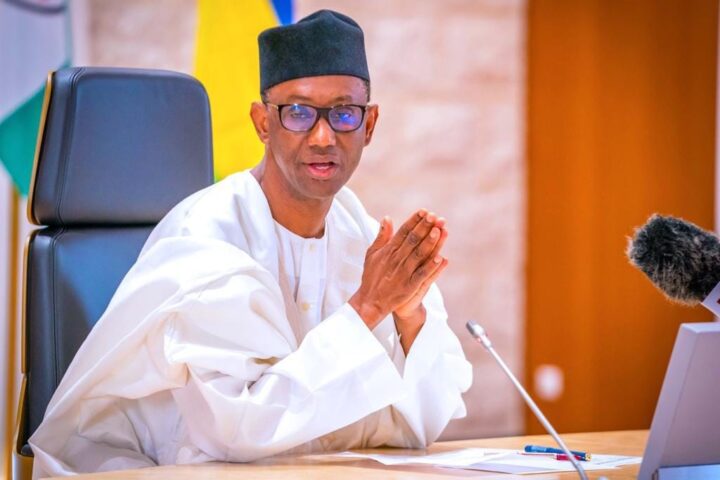
Nuhu Ribadu

Nuhu Ribadu for President 2031?

By Zayyad I. Muhammad

The Nigerian political landscape is never short of intrigue, speculation, and high-stakes maneuvering. The latest storm centers around Mallam Nuhu Ribadu, Nigeria’s National Security Adviser (NSA), and allegations made by his ‘former’ ally and friend, Mallam Nasir El-Rufai, the former governor of Kaduna State.

El-Rufai has accused Ribadu of secretly positioning himself for a presidential bid in 2031, alleging that he is working to eliminate key northern politicians before the elections. In an Arise TV interview, El-Rufai said:

“Somebody wants to destroy my reputation. Why? Nuhu Ribadu wants to be president in 2031. He has to eliminate every northerner that he thinks is on the radar.”

These allegations have sparked intense debate, given Ribadu’s current position as the NSA, one of the most powerful offices in the country. The role demands absolute loyalty to the sitting president, and any sign of personal political ambition would be politically dangerous.

However, Ribadu has vehemently denied the claims, dismissing any suggestion that he is planning a presidential run in 2031. In his response, he stated:

“For the avoidance of doubt, I want to put it on record that I have never discussed running for president in 2031 with anybody.”

Currently, President Bola Ahmed Tinubu is in the second year of his first term and is widely anticipated to run for reelection in 2027. If he wins, his administration would extend until 2031. Considering this timeline, it seems premature for anyone in Tinubu’s inner circle—particularly someone in such a sensitive position as the NSA—to be planning a presidential bid so early.

To be fair to Ribadu, every seasoned political observer knows he is too intelligent and experienced to make such a politically reckless move. Launching a presidential campaign while still serving in a crucial role would create unnecessary distractions, fuel rivalries, and generate deep animosities within the government. It would also call his loyalty to Tinubu into question.

So why is Ribadu being linked to 2031?

First, his close relationship with President Tinubu has earned him the title of Tinubu’s golden boy (Dan Fulani). His reputation as a disciplined, intelligent,  experienced, and competent leader makes him a natural contender in any discussion about potential successors. Any rising political figure will inevitably attract speculation in a political climate where future ambitions are often carefully managed behind closed doors but widely discussed publicly by everyday people.

Second, the political class understands that succession planning is always at play, even when not publicly acknowledged. While Ribadu may not currently campaign for the presidency, political opportunities can arise unexpectedly. Nigerian politicians are known for their ability to seize the moment when the circumstances align, even if it was not originally in their plans.

Politics is unpredictable, and today’s denials can quickly become tomorrow’s declarations. Whether or not Nuhu Ribadu harbors presidential ambitions, the reality is that he possesses the qualities of a strong contender—experience, credibility, and proximity to power. If the opportunity presented itself, would he take it?

Only time will tell. But one thing is sure: The road to 2031 has already begun, and the political maneuvering will only intensify in the coming years.

Zayyad I. Muhammad writes from Abuja via zaymohd@yahoo.com.

A letter to Mallam El-Rufai

I would like to start by expressing my profound admiration for your work. I must admit that I have always been a great fan of yours, appreciating your leadership skills and vision more than any politician in Kaduna State.

Your impressive work ethic, policy foresight, demonstrated competence, and ability to resist criticism and implement what you consider the right thing earned you a place in my heart.

(Un)fortunately, I’m not the kind of fan who always praises his favourites and considers any criticism an attempt to discredit his master.

Sir, your recent actions, remarks, and holier-than-thou attitude have led some to speculate that you are suffering from Out-of-Office syndrome. However, I prefer not to believe them.

In your recent interview with Arise TV,  you said things that, had I not watched the interview, I would have dismissed as typical political propaganda.

Firstly, you defined “friendship” as  “someone that has the fidelity to some ethical and moral standards, and will be there for you when you need him, not when it’s time to party or enjoy.”

Of course, I agree with you to some extent. However, in this context, are you suggesting that you prioritise loyalty over accountability, even if it means ignoring the concerns of those who elected you?

I believe that, by your definition of “friendship,” Uba Sani should prioritise being a “friend “ to the people of Kaduna who are struggling to get a meal due to these “economic reforms “ (which you said you supported and are the right orthodox policies…) rather than showing loyalty to his predecessor.

In your interview with Charles, you mentioned that the Late Yar’adua invited you to join his cabinet, an offer you declined. This remark reminded me of another instance in which you used his death as a mocking tool to brag about your resilience.

Your allegations against Nuhu Ribadu and his subsequent response reveal a lot about your dynamics with him. They raise questions about who has maintained the values of true friendship and who has not. I won’t elaborate further.

Sir, as you are probably approaching the last decade of your active political career, I would advise you to focus on nurturing your private life (considering your frequent references to prioritising it) rather than investing time and energy in making new (or perceived) enemies.

Do not dwell too much on criticism and allegations; do what Kwankwaso did: allow your track record to speak for you.

Lastly, may your famous political slogan — “MURUS” — not be used against you.

Best regards,

Ukasha Sani Idris

Facebook: Ukasha a Kofarnassarawa.

The fractured compass: El-Rufai, Ribadu, and the quest for Nigeria’s “North Star”

By Ibraheem A. Waziri

I am a son of Northern Nigeria, born into the 5th generational cohort—those of us ushered into life between 1968 and 1983, as the civil war’s echoes faded. From here, I’ve watched two giants of the 4th cohort, Nasir El-Rufai and Nuhu Ribadu, shape my homeland’s fate. They’ve lifted it at times, fractured it at others. To me, they’re more than names—they’re lodestars. Their brilliance has guided my hopes and, too often, left them drifting. 

El-Rufai has fueled my writing since 2013; his ideas have been a steady muse. Ribadu entered my life that same year, stepping into my Zaria home during my wedding week celebration, his vision setting my spirit ablaze. Now, in February 2025, their legacies show a compass split—its needle quivering between rival trails. For the North, for Nigeria, their reunion isn’t a wish. It’s a lifeline.

My tie to El-Rufai is ink, not intimacy. We met once, briefly, after he claimed Kaduna’s governorship in 2015—a moment too quick for him to recall. His ideas, though, I’ve known deeply. His 2015 election plans for Kaduna stunned me—clear, ambitious, a reformer’s blueprint. I dissected them as a commentator, later mapping his neoconservative path in my 2019 reflections. 

El-Rufa’i’s nine-page manifesto promised education, security, and infrastructure. He mostly delivered. I saw justice in his 2015 demolition of illegally grabbed lands at Alhudahuda College—even as friends grieved homes I’d known, now dust. El-Rufai is the architect and the systems man. A neoconservative who bets order can revive a stumbling North.

Ribadu came with a handshake and a dream. In my wedding week, through Abdulaziz Abdulaziz and Gimba Kakanda, he arrived at my Zaria doorstep, joining the celebration and seeking my support. Over tea and warmth, he sketched a Nigeria free of corruption’s grip. With my friend Dr. Waziri Garba Dahiru (now a professor), we told him how Dr. Aliyu Tilde’s pre-2011 presidential elections essay about him won us—and many Northerners—to his side over Muhammadu Buhari, the people’s hero then. His EFCC days had already made him a legend—a crusader chasing the mighty with a fire that echoed the North’s heart. He left my home with admiration, hoping that his progressive flame could guide us.

As a commentator, I’ve watched him and El-Rufai since—two men who once moved in harmony under President Olusegun Obasanjo. El-Rufai restored Abuja’s master plan with a surveyor’s eye. Ribadu hunted corrupt titans. Together, they danced a tandem of renewal. Both of the 4th cohort, born amid the civil war’s shadow, inherited a Nigeria of strife and potential. But ambition and ideals broke them apart. By 2011, Ribadu’s Action Congress of Nigeria presidential run clashed with El-Rufai’s loyalty to Buhari’s Congress for Progressive Change. The North’s compass cracked—progressive zeal versus conservative steel. 

El-Rufai’s rise in Kaduna cemented his neoconservative crown. Ribadu’s drift to the PDP and 2015 Adamawa loss dimmed his star. Yet his 2023 ascent as Tinubu’s National Security Adviser reignited it—tackling banditry and Boko Haram with a seasoned hand, though not without stumbles. Now, I see their rift clearly. 

El-Rufai’s Kaduna triumphs in 2015 earned my praise then. Ribadu’s path has shifted over time. Their jabs—subtle or stark—echo a generational clash I explored in my 2023 piece on the 4th cohort overtaking the fading 3rd. El-Rufai’s 2023 attack on Buhari’s inner circle, claiming they sabotaged Tinubu, and Ribadu’s quiet rise in Abuja hint at distance—yet also hope they might align again.

Why does this split haunt me? Northern Nigeria, my home, is a paradox—brimming with promise, torn by poverty, insecurity, and neglect. Bandits mar its forests. Boko Haram stalks its northeast. Education lags despite a proud past. 

As I wrote in 2019, the North’s fate is Nigeria’s pulse; its 19 states beat with the nation’s life. El-Rufai and Ribadu, with their tested mettle, stand among its best shots—but only together. El-Rufai’s Kaduna model—retooling institutions, lifting schools—maps a revival. Ribadu’s anti-corruption past and NSA role could strangle chaos at its source. Alone, they falter. Ribadu’s moral blade needs El-Rufai’s structural frame.

Reconciliation demands humility—something both have shown in fleeting glimpses. Why now? Nigeria’s security bleeds worse in 2025—bandits bolder, insurgents entrenched—while Tinubu’s early presidency offers a window for bold moves. Their Obasanjo-era alliance proves they can align. Back then, they were reform’s twin engines under his steady hand. Obasanjo could call them to the table again, his voice a bridge. 

Tinubu, as Ribadu’s boss and one whom El-Rufai respects, could push them too, melding Ribadu’s security clout with El-Rufai’s administrative spine. Friends like Abdulaziz or Dr. Tilde might spark it, but these giants could seal it. A Northern summit could fuse their strengths: Ribadu choking chaos at its roots, El-Rufai rebuilding what’s left. Nationally, their pact could drive devolution—state police, fiscal federalism—easing the North’s woes and binding Nigeria’s seams.

I’m no bystander. El-Rufai’s policies reshaped the Kaduna streets I walk. Ribadu’s 2013 visit lingers in my home’s walls. Their rift cuts me because I’ve staked my words—hundreds since 2013—on their promise. The compass lies broken but not lost. El-Rufai, the builder; Ribadu, the purifier—two halves of a whole I’ve followed for a decade. Their reunion could heal the North’s scars, pointing it toward hope. 

For Nigeria, it’s a shot at a shared destiny. As a 5th cohort voice, I plead in 2025: Mend the rift, reforge the compass, and let El-Rufai and Ribadu rise as our North Star. The stakes are mine. The hour is now. Our future demands it.

Nigeria must be firm against the ‘Tigrans’

By Zayyad I. Muhammad

Nigeria is one of the most important countries in Africa and a key player in the global Black community. Its economic strength, strategic geographic location, and influence (on its own rights) in international affairs have made it a significant hub for investment and business. Therefore, it is no surprise that Binance and its leadership were drawn to Nigeria, seeing the country as a lucrative market.

However, recent developments involving Binance executive Tigran Gambaryan have raised serious concerns. His wild and unsubstantiated allegations against high-ranking Nigerian officials and lawmakers are not just an insult to the nation but a blatant attempt to blackmail and tarnish Nigeria’s international image. Such reckless accusations should not be ignored, as they undermine the country’s sovereignty and credibility on the global stage.

The Nigerian government must not take this matter lightly. To ensure that such behavior is met with firm consequences, further diplomatic, legal, and economic measures should be pursued against Tigran and his company, Binance. If Nigeria fails to act decisively, it risks setting a dangerous precedent—one where foreign actors can manipulate narratives, evade responsibility for economic crimes, and attempt to pressure the country through international channels.

This situation is not happening in isolation. In early 2024, Binance was accused of operating illegally in Nigeria, manipulating forex, and conducting economic activities that destabilised the Naira. Both Tigran Gambaryan and Nadeem Anjarwalla were arrested and charged with money laundering and illicit financial transactions. While Anjarwalla managed to escape, Tigran was released on diplomatic, health, and compassionate grounds—a gesture of goodwill that is now being repaid with hostility.

Nigeria cannot afford to tolerate individuals like Tigran, who engage in questionable financial practices and resort to baseless and outrageous accusations against the country’s leadership. If strong and unapologetic action is not taken, we will likely witness more figures like Tigran exploiting diplomatic loopholes and using ‘below-the-belt’ tactics to evade accountability for their economic crimes.

The Nigerian government must further explore all available legal options, including international legal action and targeted economic sanctions against Binance, to hold those responsible accountable. Nigeria is not a playground for foreign business entities looking to manipulate its financial system while disrespecting its institutions and high-ranking officials, including lawmakers.

Nigeria has the capacity to defend its interests and safeguard its economic stability. It must act decisively to ensure that those who attempt to undermine its economy and reputation face the full weight of the law. International diplomatic channels should be leveraged to demand a formal apology from Tigran Gambaryan if necessary.

Nigeria’s sovereignty, financial stability, and international standing must be protected at all costs. Any attempt to blackmail or pressure the country must be met with strong resistance, ensuring Nigeria remains in control of its economic and political destiny.

Zayyad I. Muhammad writes from Abuja via zaymohd@gmail.com.

Naja’atu Muhammad refuses to apologise amid Ribadu’s defamation claims

By Hadiza Abdulkadir

National Security Adviser (NSA) Malam Nuhu Ribadu has issued a formal demand for a public apology and retraction from Naja’atu Muhammad, a renowned activist and former director of the All Progressives Congress (APC) Presidential Campaign Council, following allegations she made in a viral TikTok video.

In the video, Muhammad asserted that during Ribadu’s tenure as chairman of the Economic and Financial Crimes Commission (EFCC), he accused President Bola Ahmed Tinubu, Senators George Akume, and Orji Uzor Kalu of being among the most corrupt governors in Nigeria 

Ribadu, through his legal representatives, described the allegations as “false, malicious, and highly defamatory.” He insists that the accusations are an attempt to damage his reputation and discredit him in his role as the NSA. Therefore, hehas demanded an immediate and public retraction of the statements and an apology.

“This is a clear case of character assassination. The allegations are not only baseless but also deeply injurious to my reputation,” Ribadu stated through his lawyers.

However, in a recent development, Naja’atu Muhammad has declared that she will neither apologise nor retract her statements. In a media interview, she maintained her claims and dismissed Ribadu’s demand, asserting that she has the right to express her views.

The dispute has stirred political circles, with analysts emphasizing responsible public discourse. Some warn against spreading unverified claims on social media, as they can lead to serious political and legal consequences repercussions. 

Political commentators have also noted that the unfolding situation underscores the increasing tensions within Nigeria’s political space. Many are watching closely to see whether Ribadu will take further legal action or escalate the situation further.

A Modern Monarch: HRH Sani Ahmadu Ribadu, King of Fufore 

By Lukman Dahiru

In the rich tapestry of Nigerian history, where tradition meets contemporary governance, HRH Sani Ahmadu Ribadu’s appointment as the King of Fufore Emirate stands as a monumental chapter. The Governor of Adamawa State, His Excellency Ahmadu Umaru Fintiri, elevated him to this revered position, not merely acknowledging his royal lineage but affirming his profound dedication, moral integrity, and visionary leadership.

Sani Ahmadu Ribadu, the younger brother of the renowned National Security Adviser, Nuhu Ribadu, brings a blend of heritage and modern dynamism to the throne. His journey to this prestigious role has been marked by a life committed to service, community, and the betterment of society. 

Born into a family known for its integrity and public service, Sani has carved his own path, gaining respect and admiration for his family name and his personal merits. He has proven himself not only as a successful farmer but also as a successful politician, having served as Chairman of Yola South Local Government and as a member representing Yola South in the Adamawa House of Assembly. His impact in these roles has been substantial, focusing on grassroots development, agricultural improvement, and fostering a transparent, people-centric governance. 

The significance of his appointment extends beyond the ceremonial; it symbolizes a new dawn for the Fufore Emirate. As king, Sani Ahmadu Ribadu is poised to bridge the ancient customs of his people with the evolving demands of the modern world. His leadership is anticipated to be a beacon of progress, unity, and peace in a region where traditional roles still play a crucial part in community life. His tenure is expected to be characterised by the following.

Cultural Preservation: Sani Ahmadu Ribadu, who deeply understands his heritage, will safeguard and celebrate Fufore’s cultural identity. He will likely champion initiatives to document, preserve, and promote the emirate’s rich traditions, ensuring they are passed down through generations.

Community Development: He is known for his commitment to his people, and he will leverage his position to drive development projects. From education to infrastructure, from health to economic empowerment, his reign is expected to see significant advancements that uplift the living standards of his subjects.

Social Justice and Peace: His background suggests a leadership style that emphasizes fairness, justice, and reconciliation. In a region that has experienced its share of conflicts, his approach could foster greater social harmony, making Fufore a model for peaceful coexistence.

Youth Engagement: Acknowledging the demographic dividend, Sani Ahmadu Ribadu is expected to concentrate on engaging the youth by offering them opportunities for growth, innovation, and participation in governance, therebyensuring the emirate’s future is as bright as its past.

Security and Stability: With his familial ties to national security, there’s an expectation that he will advocate for and implement strategies that enhance local security, working in tandem with state and federal authorities to maintain peace and order.

His appointment has been received with jubilation and optimism, not only within Fufore but throughout Adamawa State and beyond. The community perceives in him a leader who honours tradition while embracing innovation. His governance is expected to be defined by open dialogue, community engagement, and a strong emphasis on sustainable development.

Sani Ahmadu Ribadu’s reign promises to be an era where the past and the future of the Fufore Emirate walk hand in hand under the wise and compassionate leadership of a king who understands that true sovereignty lies in serving one’s people. His legacy, still in its nascent stages, is already shaping up to be one of transformative leadership, where the throne serves as a seat of power and a platform for enduring positive change. 

Here’s to a reign that will be cherished not only for its duration but for the indelible mark it leaves on the heart of Fufore and the broader canvas of Nigeria’s cultural and social landscape.

Lukman Dahiru wrote from Yola via ldahyu@gmail.com.

Scorecard: What ONSA, DSS, EFCC, others won, lost in 2024

By Haroon Aremu Abiodun

Despite the turbulence of 2024, Nigeria’s intelligence and anti-graft agencies recorded significant achievements. The Department of State Services (DSS), National Intelligence Agency (NIA), Office of the National Security Adviser (ONSA), and anti-corruption bodies like the Economic and Financial Crimes Commission (EFCC) and the Independent Corrupt Practices Commission (ICPC) made notable strides in combating corruption, safeguarding national security, and upholding the rule of law.

However, Emergency Digest reports that pressing challenges persist within these institutions, threatening sustained progress and credibility. This report delves into landmark achievements, systemic lapses, and broader implications for national security, highlighting the contributions of the NSA and other agencies such as the ICPC, DSS, and NIA.

EFCC: Wins Amid Controversies

Under Olukoyede’s leadership, the EFCC made impressive progress in tackling financial crimes. Notable accomplishments include a groundbreaking operation that led to the arrest of 792 individuals involved in cryptocurrency and romance scams in Lagos and the recovery of N230 billion and $105 million within a year. A major victory was the forfeiture of a sprawling Abuja estate valued at billions, reflecting the agency’s commitment to asset recovery.

Nevertheless, high-profile cases, like the delayed arrest of former Kogi State Governor Yahaya Bello and allegations of dropped charges against crossdresser Bobrisky in exchange for bribes, raised concerns about the EFCC’s integrity. Critics have also highlighted the agency’s inaction on prosecuting high-profile figures such as Humanitarian Affairs Minister Betta Edu, despite substantial evidence of corruption.

ICPC: Quiet but Impactful

The ICPC maintained a low profile but achieved commendable results, recovering N52 billion and $966,900 in misappropriated funds in a year. The commission exposed corruption in government contracts, cracked down on job racketeering, and raised concerns about misused funds in constituency projects.

Despite these successes, the ICPC struggles with transparency challenges, understaffing, and limited resources. Addressing these gaps is essential to sustain its fight against systemic corruption.

DSS: Vigilance Amid Criticism

The DSS maintained its critical role, thwarting terrorism plots, dismantling organised crime networks, and protecting vital national assets. However, the agency was criticized for alleged overreach, unlawful detentions, and a lack of transparency.

In a notable clash with the Socio-Economic Rights and Accountability Project (SERAP), the DSS faced backlash for questioning the group’s leaders after they criticized Nigeria’s human rights record. Similarly, unresolved issues surrounding Nnamdi Kanu’s case have cast a shadow over the DSS’s otherwise commendable efforts.

NIA: Expanding Reach, Addressing Gaps

The NIA expanded its global intelligence capabilities, collaborating on transnational crime and cyber threats. However, internal mismanagement and opacity remain significant concerns. With Mohammed Mohammed’s appointment as Director-General, there is hope for renewed efficiency and accountability.

ONSA: Orchestrating National Security

Under Malam Nuhu Ribadu’s leadership, the NSA made strides in combating terrorism and reuniting kidnapping victims with their families. However, controversial policies like the Cyber Security Levy faced opposition from stakeholders, highlighting the need for transparent communication.

To enhance its impact, the NSA must foster better relationships with the media and citizens, ensuring timely and accurate dissemination of information without compromising sensitive intelligence.

Recommendations for Progress

1. Strengthen Institutional Frameworks: Leverage technology and intelligence to prevent crime and enhance efficiency.

2. Enhance Public-Agency Relations: Foster trust through targeted awareness campaigns and transparent communication strategies.

3. Improve Leadership Accountability: Ensure transparent appointments and performance evaluations for agency heads.

4. Foster International Cooperation: Strengthen ties with global intelligence and financial institutions.

5. Address Root Causes: Combat unemployment and poverty to reduce criminal recruitment.

The collective efforts of Nigeria’s intelligence and anti-graft agencies in 2024 have established a solid foundation for a corruption-free society. From the EFCC’s groundbreaking operations to the ICPC’s meticulous investigations, these achievements underscore the potential for lasting change.

Nevertheless, tackling ongoing challenges, including transparency, resource limitations, and inter-agency coordination is essential. A collaborative approach—reinforcing institutions, enhancing public trust, and promoting integrity—will secure a more stable and prosperous Nigeria.

Haroon Aremu Abiodun is a Public Affairs Analyst, Advocate for National Development and Fellow of PRNigeria. He can be reached at exponentumera@gmail.com.

NSA Ribadu refutes Niger’s claims of collaboration with France

By Uzair Adam

Nigeria’s National Security Adviser (NSA), Malam Nuhu Ribadu, has dismissed allegations by Niger’s military leader, General Abdulrahman Tchiani, that Nigeria is aiding France in efforts to destabilize Niger.

General Tchiani alleged that Nigeria was establishing a military camp, codenamed “Canada,” in the Munguno-Baga area of Borno State near the Niger border, where French troops were reportedly stationed.

In an interview with BBC Hausa, Ribadu described the allegations as unfounded, pointing out Nigeria’s history of resisting foreign military presence.

“Even England, which colonized Nigeria, never stationed soldiers here. When France sought to bring troops, we declined. Why would we agree now?” he asked.

He called on Niger’s leadership to resolve its issues with France directly rather than involving Nigeria, emphasizing that Nigeria remains committed to regional unity and cooperation, free from external interference.

Tchiani further accused Nigeria of hosting French forces near Lake Chad and claimed Nigerian officials were training fighters in Sokoto, Zamfara, and Kebbi states to undermine Niger’s stability.

Ribadu vehemently denied these allegations, urging independent verification by journalists and the public.

“Our shared enemy is terrorism, not each other. We must unite to secure our communities and resist external interference,” Ribadu stated.

Tensions between Nigeria and Niger have escalated since the military government in Niamey accused Nigeria of sheltering officials from the former Bazoum administration and collaborating with foreign powers.

Despite repeated denials, the strained relationship between the two nations persists.

Arms proliferation and the Nigerian security forces

By Zayyad I. Muhammad

Mallam Nuhu Ribadu, the Nigerian National Security Adviser, stated during an arms destruction exercise organised by the National Centre for the Control of Small Arms and Light Weapons (NCCSALW) that many of the illicit weapons currently used by terrorists and bandits originally belonged to the Federal Government of Nigeria. 

Ribadu’s revelation may not surprise those familiar with the complexities of Nigeria’s security challenges, but it is both new and alarming to the average Nigerian.  

For many, the realisation that those entrusted with their protection are selling weapons to terrorists, insurgents, and bandits is deeply unsettling. This issue demands a coordinated and strategic response. However, Mallam Nuhu assured us that steps and measures have been taken to resolve this. 

But the big questions remain: Are these measures yielding sustainable results? What motivates or drives a security agent to sell weapons to terrorists and bandits, fully aware that they may become the first target of those very weapons? 

Nuhu Ribadu stated, “The worst human being is a policeman or soldier who takes weapons from his unit and sells them or hides them for criminals to use against his colleagues.” This is true; however, additional measures are needed beyond what the NSA has mentioned to address this issue. These should include improved welfare and salaries for security personnel, enhanced training, and stronger supervision. It’s important to consider that the actions of some security officers may not be solely motivated by money but by radicalisation or frustrations. 

Nigeria must prioritise the use of technology in its fight against insurgency, terrorism, and banditry, as the world has moved beyond relying solely on boots on the ground. It is crucial to employ technology to address these challenges, including implementing chips or inbuilt devices to track and attach every weapon assigned to the officer responsible for it. 

Despite the few rogue elements within the security forces who recklessly jeopardise their lives and those of their colleagues and families by exchanging their weapons for peanuts, we must commend the majority of Nigeria’s dedicated soldiers, police officers, and other personnel who are actively working to recover illicit arms and eliminate corrupt practices within the security forces. 

On the other hand, sabotage by rogue elements within security forces is not unique to Nigeria; many countries have faced situations where insurgency, terrorism, or banditry were exacerbated by these elements selling arms to militant groups.

In Yemen, amid its civil war, there have been instances of arms diversion by corrupt individuals within the security apparatus. Weapons intended for the national army have ended up in the hands of Houthi rebels and various militant groups. 

Similarly, during the conflict with ISIS in Iraq, reports emerged of Iraqi security forces losing control of arms depots or selling weapons to militant groups. Somalia has seen similar issues in its battle against al-Shabaab, where government and security officials were accused of selling or diverting weapons to the very militants they were fighting. 

Another notable example is Libya. Following the fall of Muammar Gaddafi in 2011, the country descended into chaos, with various factions and militias vying for control. Weapons from government stockpiles, as well as arms supplied by international actors, were sold or transferred to militias and insurgent groups, further escalating the violence. In the Democratic Republic of Congo (DRC), armed groups have long been involved in the conflict, with reports indicating that elements within the military and police forces have sold weapons to these groups.

For any country grappling with the involvement of its security forces in the sale of weapons to insurgents, terrorists, and bandits, factors such as selfishness, corruption, and complicity within these forces play a significant role. Additionally, weak institutions and inadequate oversight have further exacerbated the problem. 

 Zayyad I. Muhammad writes from Abuja via zaymohd@yahoo.com.

Shettima, Ribadu, et al., and Tinubu’s eroding goodwill in Northern Nigeria

By Zayyad I. Muhammad

The aftermath of the ten-day “End Bad Governance” protests has conveyed three clear messages: two to President Asiwaju Bola Ahmed Tinubu, and one to the senior members of his administration from the North—notably Vice President Kashim Shettima, National Security Adviser Mallam Nuhu Ribadu, Secretary to the Government of the Federation George Akume, Deputy Senate President Barau Jibrin, Speaker of the House of Representatives Tajudden Abbas, and others.

Firstly, despite the protests in the North escalating into widespread looting, arson, underage participation, and political exploitation and hijacking, they have sent a clear message to President Tinubu. His two key policies—the removal of fuel subsidies and the floating of the naira—are deeply unpopular and have sent many people into prison poverty.

Secondly, the Tinubu administration has squandered crucial political goodwill in the North. Beyond the economic hardships, this loss of political support in the region is significant, as it could impact Tinubu’s prospects for a second term. The Tinubu/Shettima ticket was built on this very foundation. Furthermore, the protests took place nationwide on three unique political faces: they were a form of revolt in the upper North, and the Southeast remained silent. At the same time, the Southwest found itself in a catch-22 situation.

The third message from the aftermath of the protests is directed at the senior members of the Tinubu administration who hail from the North. They now face the Herculean task of restoring the Tinubu government’s lost goodwill in the North. To do so, they must address two critical issues. A deep and unbiased look at the “End Bad Governance” protests in the North reveals not only a message to Abuja but a kind of internal revolt—an uprising against ‘oneself,’ so to speak. 

Furthermore, Yobe, Bauchi, Borno, Jigawa, Katsina, Kano, and Kaduna states experienced the worst violence during the protests. Interestingly, a 2024 report shows that these states are among the top northern states with the highest rates of out-of-school children: Yobe (62.9%), Bauchi (55.7%), Borno (54.2%), Jigawa (51.1%), Katsina (45.9%), Kano (41.6%), and Kaduna (40.6%).

Northerners who are senior members of the Tinubu government must find a way, before 2027, to not only convince but also help Tinubu implement policies that will lift people out of poverty. A quick approach is to leverage the Dangote Refinery and other private and state-owned refineries. Given that Nigeria’s daily fuel consumption hovers around 45–50 million litres, the government should step up its programme to boost crude production specifically for local refineries, allocating it to them in naira and at a lower cost. This would lead to more affordable fuel prices, eliminate the need for imports, and save foreign exchange. 

Furthermore, to be fair to the Tinubu government, it inherited Nigeria’s finances in the ‘red’. Tinubu has two options to get the books into the blue—the hard and the simple options. Tinubu chose the simple option: remove the fuel subsidy and float the naira. The hard way, which is the more sustainable one, involves fixing all the state-owned refineries, increasing crude production to at least 2 million litres per day, supplying local refineries with cheap crude to translate to affordable pump prices, and boosting food production by helping genuine farmers with farm implements, soft financing, and extension services.

The northern elites, both in government and outside, must read between the lines and comprehend them well. For example, the northern members of Tinubu’s government must understand that the government’s public relations (PR) efforts for Northern consumption are currently communicated in a ‘language’ that the masses do not understand. This approach requires not just a revitalisation of strategies but a complete overhaul of its managers and a redesign of its medium.

Zayyad I. Muhammad writes from Abuja via zaymohd@yahoo.com.