NUC

NUC approves 13 new university degrees, including AI, nuclear science

By Abdullahi Mukhtar Algasgaini

The National Universities Commission (NUC) has announced the approval of thirteen new degree programmes for universities across Nigeria.

The move is part of an ongoing effort to modernize the country’s higher education curriculum and align it with global trends.

In an official memo signed by the Executive Secretary, Prof. Abdullahi Yusufu Ribadu, the Commission directed all Vice-Chancellors to circulate the newly approved Core Curriculum and Minimum Academic Standards (CCMAS) documents.

The new programmes reflect a focus on emerging technologies, security, and specialized fields.

The list includes cutting-edge courses such as B.Sc. Artificial Intelligence, B.Sc. Intelligence and Security Studies, and B.Eng. Nuclear Engineering. Also approved were programmes in Geomatics Engineering, Telecommunications Science, and Water Sanitation and Hygiene.

According to the NUC, the programmes were developed with input from experts within the Nigerian University System in March 2025.

The approval is intended to “strengthen quality assurance mechanisms and enhance academic relevance.”

Universities interested in offering these new degrees must develop their own 30% institutional component to complement the NUC’s 70% core curriculum.

The NUC stated that implementation can begin in the 2025-2028 academic session, pending a successful Resource Assessment Visit to the applying institutions.

Al-Qalam University secures full accreditation for 13 programmes

By Muhammad Abubakar

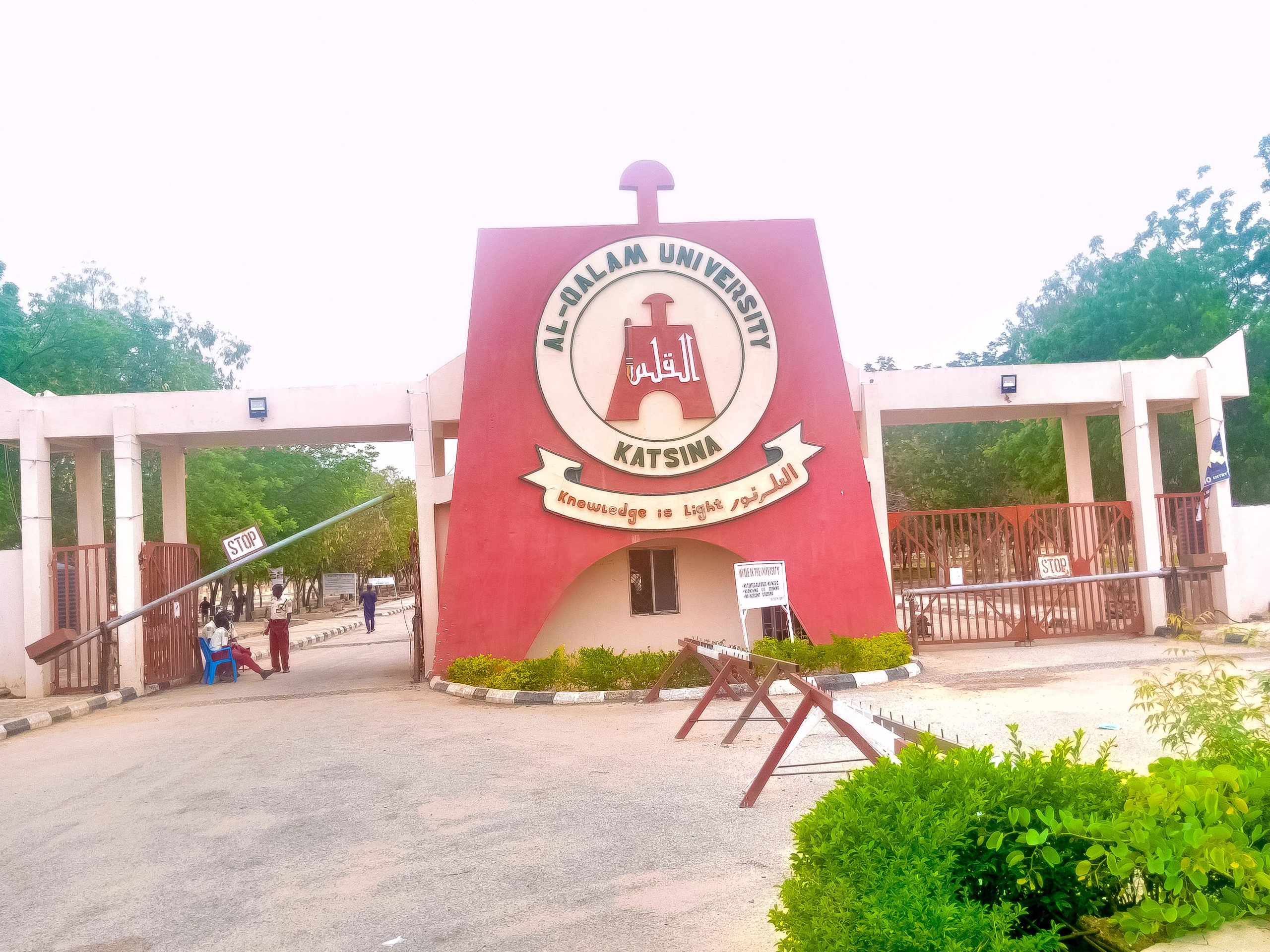
Al-Qalam University Katsina has announced that thirteen of its academic programmes have received full accreditation status from the National Universities Commission (NUC), following a visitation in November 2024.

The accredited programmes span the Colleges of Humanities, Education, and Natural and Applied Sciences. 

According to a report released by the NUC, this development means that all degree programmes offered by the university now enjoy full accreditation.

The university expressed gratitude to the Katsina Islamic Foundation—its founders—as well as its Chancellor, Malam Aminu Alhassan Dantata, and members of the Board of Trustees and Governing Council for their support. 

The statement also appreciated the contributions of staff, students, and parents in achieving this milestone.

“This achievement reflects our collective dedication and the growing confidence in our institution,” the management said.

NERDC seeks to collaborate with NUC to strengthen research in education

By Aisar Fagge

The Nigerian Educational Research and Development Council (NERDC) has called for collaboration with the National Universities Commission (NUC) to enhance and streamline educational research efforts in Nigeria.

Speaking during a visit to the NUC headquarters in Abuja on Tuesday, February 25, 2025, NERDC Executive Secretary, Prof. Salisu Shehu, stated that the visit was both a solidarity gesture and an opportunity to explore potential areas of cooperation.

He stated that through collaboration, both organizations could contribute to national development, particularly in research.

Prof. Shehu noted that NERDC’s responsibilities extend beyond coordinating educational research programs in Nigeria.

He noted that the Council also aims to “identify educational problems in Nigeria in which research is needed and then, establish the order of priority therefrom.”

He further stressed the benefits of NERDC’s role as a repository of groundbreaking research in education, adding that such research should influence public policy.

According to him, “by our mandate, NERDC is supposed to serve as a repository of groundbreaking research in education. Such researches are supposed to inform public policies in the education sector through NERDC as the think tank of the Nigeria education. But this mandate has not been fully activated and critical findings from the faculties of education in our ivory towers are not reckoned with in the process of policy formulation in the education sector.

“I believe that, through an effective collaboration, we can harness the efforts of universities in educational research to improve our educational system. NERDC would want to see how we can work with your Commission to get this operational.”

Prof. Shehu also pointed out that NERDC is the only agency under the Federal Ministry of Education with a mandate that spans all levels of the education sector.

He identified curriculum development as another key area for collaboration and advocated for a platform where NERDC could regularly engage with deans of faculties of education and curriculum planners.

He explained that such engagements would better prepare future teachers by exposing them to curriculum frameworks, structures, philosophies, and implementation strategies.

Lamenting the shortage of qualified teachers for some trade areas, he stated that “in-spite of the implementation of the curriculum which began in 2011, we are still faced with the challenge of lack of qualified teachers in some of the trade areas; that we need the universities to fill this gap for the good of the nation. He added that the Council engages Professors as significant resource persons in our curriculum development, and hence, NUC can plan very strategic roles in this regard.”

Furthermore, he disclosed that the NERDC had developed the National Language Policy to preserve and promote Nigerian languages for economic growth and national development.

He also reiterated the need for collaboration between NERDC and NUC to ensure the effective implementation of the policy’s provisions.

In response, NUC Executive Secretary, Prof. Abdullahi Yusufu Ribadu, acknowledged that it would be beneficial between both organizations, particularly in research for national development.

According to Prof. Ribadu, “NUC, NERDC, TETFUND and NRF need to collaborate in the areas of research, share resources, harness ideas together for efficiency in research delivery in order to avoid duplicity of works and waste of scarce resources.”

He also praised NERDC’s contributions to language development and the preservation of indigenous Nigerian languages, noting that such efforts had helped prevent some languages from going extinct.

Prof. Ribadu assured NERDC of NUC’s readiness to collaborate, stating that he had taken note of the concerns raised and that the commission was committed to supporting the Council in the necessary areas of partnership.

The meeting was attended by senior management officials from both NERDC and NUC.

Breaking through: A PhD holder’s rise from Third-Class to lecturer

By Ishaka Mohammed

Sometime in 2023, I wrote about a PhD holder who couldn’t get a lecturing job because of his third-class bachelor’s degree. Neither his postgraduate qualifications and a significant number of journal articles nor his vast experience in education could override his weak first degree, thanks to supposed standards set by the National Universities Commission (NUC).

A few years after obtaining a third-class Bachelor of Science in Geography, this man started teaching in a government secondary school and, with his diligence, experience, and additional qualification (a postgraduate diploma in education: PGDE), he became a vice-principal. 

He later obtained a postgraduate diploma (PDE) as part of the requirements for a master’s degree (due to his weak first degree), successfully completed an MSc, and was a short while into his PhD program when he lost his job. 

It was a big test, especially for a family man, but he faced everything head-on and acquired his PhD in 2020.

Dr Ali Ameh Danbaba had always wanted to be a university lecturer, so he submitted applications despite having heard of the obstacle (his third-class bachelor’s degree) before him. Two universities had almost employed him when they noticed the class of his bachelor’s degree. I saw the situation as a case of someone being denied admission to tertiary institutions because of their poor primary school results.

However, Dr Ali Ameh Danbaba is perseverance-personified. At the time of his last rejection, he was already doing another bachelor’s degree (though as a part-time student). He spent four more academic sessions and obtained a first-class Bachelor of Science in Geography.

One amazing aspect of his doggedness was the uncertainty of his financial sources. Despite living with his wife and children and being mostly unemployed during his PhD program, Doctor (as he’s fondly called) persisted, majorly freelancing with his academic prowess.

Outside his academic life, he’s famous for his joviality and frequent calls to prayers. His humility could be easily mistaken for timidity. Despite his qualifications and age (with his first child already at university), he is never condescending. He takes my relationship with him like that between age-mates.

I was away from town and on the phone with him when he broke the heart-warming news of his employment to me. This job was his target for years. I’m delighted that he finally got it.

Success has multiple meanings, one of which is the magnitude of one’s wealth, but the meaning I often refer to is the achievement of one’s goal(s). Dr Ali Ameh Danbaba wanted to become a university lecturer, and now he is. I see him as a successful man, and, among other things, I’ve learned much from his life, especially his perseverance and humility.

Until his latest employment, he was the Chairman of the District Education Committee, Kaduna North Local Government Area of Kaduna State.

FUBK secures NUC accreditation for 12 programmes

By Jamilu Mohammed Magaji

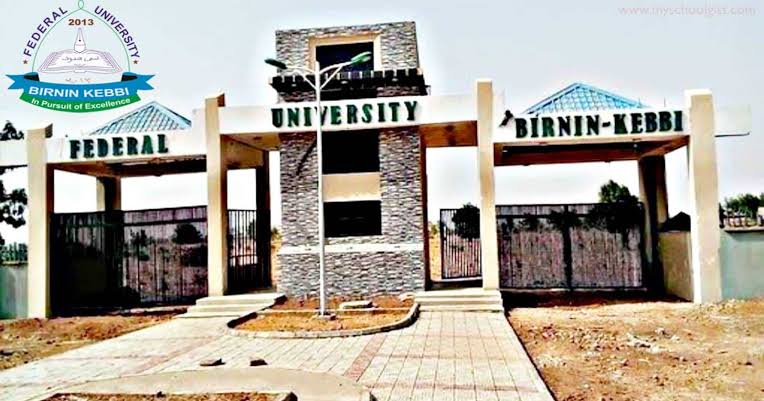
This is to inform the University community and the public that the National Universities Commission (NUC) has accredited 12 undergraduate programmes of the Federal University Birnin Kebbi (FUBK). Out of this number, 11 programmes were fully accredited, while one programme got interim accreditation.

The development is contained in the results of the accreditation exercise conducted by the NUC between November and December, 2023 signed by Ag. Director of Accreditation, Engr. Abraham Chundusu on behalf of the Executive Secretary and issued to the University.

The report disclosed that the accredited programmes cut across Faculties of Arts, Social and Management Sciences, and the Faculty of Science. It also highlighted that while full accreditation status is valid for five years, interim status lasts for two years, after which the programmes would be revisited.

The programmes that secured full accreditation include: Business Administration, History and International Studies, Demogragraphy and Social Statistics, Economics, Political Science and Sociology. The rest are Applied Geophysics, Biochemistry, Computer Science, Mathematics and Statistics. On the other hand, the programme with interim accreditation would be fully accredited in the next two years.

While speaking on the development, the Vice Chancellor of the University, Prof. Muhammad Zaiyan Umar, “expressed delight over the results. He was optimistic that the other programme with interim accreditation would achieve full accreditation in the next two years.”

The Vice Chancellor “expressed gratitude to all stakeholders who participated in the exercise. He thanked the Management of FUBK, Deans, Directors and Heads of Department. He also appreciated staff and students of the University for their support and cooperation which contributed to the success of the exercise.”

FUBK Bulletin reports that the NUC report revealed that “Section 10 (1) of the Education (National Minimum Standard and Establishment of Institutions) Act CAP 3LE3, Laws of the Federation of Nigeria 2004, empowers the NUC to lay down Minimum Academic Standards for all academic programmes taught in Nigerian Universities and also to accredite such programmes.”

“The implementation of the Core Curriculum Minimum Academic Standards (CCMAS) commenced in 2023/2024 academic session. The University is expected to ensure compliance in the utilization of the CCMAS for all programmes.”

“Mine is bigger than yours”, professorial count, that is!

By Prof. Abdalla Uba Adamu

The recent Facebook ribbing about the number of professors from states and localities in various northern cities with universities reminds me of the male adolescent macho posturing of “mine is bigger/thicker than yours” game played behind classrooms! I am even mentioned as a trophy — “yes but WE are the ones with a double professor!” referring to my being from Bayero University, Kano (BUK), in Kano State (Daneji in Kano Municipal).

The whole thing was ignited by an infographic with its origin in ₦airaland Forum where one Zafsy75 posted the graphic. Right away a fierce debate ensured on the forum with many commentors disputing the figure. Zafsy75 themselves did not provide additional scientific methodology on how they arrived at the figures. Nevertheless, they infographic became viral — and started the prideful ‘mine is bigger than yours’ ribbing.

The infographic was from Statisense which uses Generative Artificial Intelligence to generate its data! A search on its site revealed another graphic of “most professors” in Nigerian universities, in September 2023, with the University of Jos leading with 530 professors. BUK had 434 professors which included 10 women. I can personally count more than 20 women professors in BUK in 2021, not 2023! No methodology was provided as to how the figures for the universities were arrived at.

People should be aware that AI generated data is based on what the engine can find — it does not create the data. Thus, it is actually not possible to accurately determine the number of professors per state or local government even based on the much-quoted NUC Directory of Full Professors, 2021 (link to the publication attached below).

This is because the directory lists professors by DISCIPLINE in order to promote research collaboration and networking amongst Nigerian academics. Also, the Directory was not based on official submissions by various universities, but voluntarily by INDIVIDUALS which was synthesized and summarized by NUC. Additional source for the AI was personal websites where a professor proclaims to come from a particular university.

Thus, not EVERY professor agreed to submit their details to be captured. With this, it therefore becomes very difficult to accurately determine the number of professors from each state, as that was not the focus of the Director (or NUC’s intentions).

You can only get the official number of professors from individual universities. As of October 2023, BUK had 381 professors with the largest category being in Medical Sciences. All the professors were, however, not listed by their States or Local Governments, but their DEPARTMENTS or specializations.

So, I can’t see how the game of ‘mine is bigger than yours’ started. I believe; however, it was started by the infographic floating around showing the number of professors per UNIVERSITIES in the various states. The graphic was not providing the number of professors per state of origin, but per the universities IN the state. It made it clear by stating it is “by state where the school is located.”

Thus, if you are from Anambra and are a professor in BUK, this infographic will capture you as being from a university in Kano, but you will not be captured in any university in Anambra. In this way, it does not tell you the number of professors from indigenous to Anambra.

Right away, it is faulty (or fake). As of October 2023, BUK had 381 professors. Last week another 11 were announced bring the total to 392 as of February 2024. So how can Kano have 428 professors in 2022? Granted there are many universities in Kano, but the main prominent ones — Aliko Dangote University of Science and Technology, Yusuf Maitama Sule University — are basically tributaries of BUK. Indeed, most of the others rely on BUK professors as ‘visiting’ to their faculties.

Kaduna State where Ahmadu Bello University is located has at least eight universities — and you want me to believe the entire universities in the State have 62 professors? I am sure Kaduna State University (KASU) alone had either more than or close to that.

While the ribbing was fun while it lasted, at least it wakes us up to the idea of fake data and weaknesses of Generative Artificial intelligence.

As promised, below is the link to the authentic number of professors voluntarily submitted to NUC as of 2021. BTW, yours truly is listed TWICE on page 836. They still pay me single salary, though!

Directory of Full Professors in the Nigerian University System, 2021: https://shorturl.at/yKV34

Neo-liberalism and Cotonou degree alternative

By Dr Kabiru Danladi Lawanti

The whole Cotonou degree is criminal and all those involved need to be fished out and punished. Some people might see us as harsh or maybe insensitive for saying this. 

There are things we cannot say in public, but one needs not to be prophet of doom to predict that Nigeria cannot withstand this onslaught and will eventually crash. 

Our desperate quest for certification through whatever means led us to this situation. Parents are desperate to have their kids in the university, some even underage (we saw 15, 16 and 17 year olds being pushed to universities), whose mental capacity is too elementary to grasp or cope with challenges of university education.

The crises in higher education and the adoption of neo-liberal policies that have no place in a developing country like ours also contributed to this confusion. Consequences of commodification of knowledge is enormous in a country with no strong institutions to checkmate excesses and greed of capitalists. The results is the proliferation of degree mills all over.

Adoption of neo-liberal policies means cutting funding for public services like education, health and sanitation. Nigerian public universities suffer from these policies. Funding was cut, citing many reasons. The results is restrictions in admissions. When you have many applying to enter university and the slots are few, universities have to admit based on quota. Therefore, few can be admitted.

Parents, in their desperate efforts to get their children into universities, started sending their kids to some African countries for bachelor’s degrees – Uganda, Benin Togo, Ghana, Sudan, Niger Republic, etc. 

Another reason is the dichotomy between degree and HND. Many people affected by stagnation in their places of work because of HND opted for a way to have a degree that can help them get promoted. Many went for the Cotonou degree. Since it is acceptable by MDAs or they made it acceptable, most of them started trooping to these mushroom universities to obtain these degrees to get promoted.

Then we have people who can’t cope with rigorous nature of our public university system. I know a lot who not only failed exams, but are withdrawn from diploma programmes, but appear after 6 months with a degree from these degre milling centres. Others could not pass UTME therefore unqualified to enter public universities. Cotonou degree provide an alternative.

The last, in my opinion, are those running from ASUU strike. Many parents justify purchasing the Cotonou degree because of the unending industrial disputes in the public universities.

I don’t want to talk about the “motor park gang” led by former minister of education Adamu Adamu and his National Universities Commission (NUC) executive secretary, who bastardised the university system for only God knows why. They have killed what remained of our public university system.

Lastly, some of our private universities are not any different from the “Cotonou universities”.

President Bola Tinubu needs to do a lot more to rescue the situation. I like how the Minister of Education, Prof. Tahir Mamman, handles the situation. But sincerely, the students of these dubious universities, their agents, officials from Federal Ministry of Education, NUC and the other places need to be rounded up, arrested and punished according to our laws.

Kabiru Danladi Lawanti, PhD, wrote from the Department of Mass Communication, ABU Zaria, via kblondon2003@yahoo.com.

Al-Qalam University holds its 2nd combined convocation

By Abdulrazak Iliyasu Sansani

Barring any last-minute changes, Al-Qalam University will hold its 2nd Combined Convocation on Nov. 25, 2023. The day is what everyone associated with the university eagerly looks forward to seeing. 

Al-Qalam University, Katsina (AUK), hitherto known as Katsina University, Katsina (KUK), is located in Dutsinma Road, Katsina State, and known for the academic aspiration of those who seek knowledge deeply rooted in sound morals. Al-Qalam University was established in 2005 as Nigeria’s first private Islamic university.

The university has gone from strength to strength since its establishment 18 years ago. It presently runs six schools/colleges, which offer assortments of options for the students: The College of Social and Management Sciences, College of Natural and Applied Sciences, College of Education, College of Humanities, College of Post Graduate Studies, and School of Basic and Remedial Studies. It awards 22 undergraduate degrees (among which five courses offer both full-time and part-time programs), 11 master’s programs, and nine PhD programmes, all accredited by the National Universities Commission (NUC) in line with the laws governing university education in Nigeria. 

Recently, some new courses were accredited by the NUC, which brings the total number of programmes to 36 for the 2023/2024 academic session. Despite being a non-profit institution and the difficult economic situation in Nigeria today, the university continues to flourish. However, this is not far-fetched as it is run by an exemplary governing council and administratively headed by an astute academic, economic luminary, and open-minded scholar, Professor Nasiru Musa Yauri, who has not only built on what his predecessors had achieved but also devised different means to take the university forward. He is equally supported by the hard-working team across the various faculties and colleges to actualise the founders’ dreams of the first Islamic University in Nigeria. 

The Programme of the 2nd Combined Convocation is quite extensive. Therefore, I will highlight some of the events for want of space.  The Vice  Chancellor of Al-Qalam University, Professor Nasiru Musa Yauri, disclosed some of the events scheduled for the imminent second combined convocation while briefing journalists in Katsina on Nov. 19, 2023.  

According to the information, 139 postgraduates will be conferred with different honours during the convocation ceremony, including seven Doctor of Philosophy (Ph. D), 125 Masters, and seven postgraduate diplomas (PGD). 

“We are going to honour and celebrate graduates from the 2016 to 2023 sessions, which means on Nov. 25, we are going to confer degrees on graduates for eight sessions. 

“This is to say specifically that we are preparing to ensure that graduates of this 2022/2023 session are also going to be celebrated at the convocation ceremony,” the VC said. 

Apart from this, there is also a Qur’an recitation contest for all interested university students to participate.  This is one of the major events scheduled for the convocation. Winners of the Qur’anic recitation competition, both the female and the male categories, will receive N1 million each. 

A pre-vocation lecture will be delivered on Nov. 24, 2023, by a distinguished scholar, Dr Usman Muhammad Bugaje, on the topic: “The out-of-school-children and the  Conscience of the Nation: A Discourse on the Genesis, Prognosis and Solutions of the Almajirci Phenomenon.” 

A novelty football match between Al-University students (AUK All stars) and its alumni (AUK Legends) is part of the programme, emphasising that all domains of learning: cognitive, affective, and psychomotor are given priority. 

To cap it all, four eminent personalities who have made a tremendous difference in various fields of human endeavour will be conferred with honorary doctorate degrees: including the Emir of Katsina, Alhaji Abdulmumin Kabir Usman; Emir of Kazaure, Alhaji Najib Hussaini Adamu; Alhaji Sani Zangon Daura, and Alhaji Abdulsamad Isiyaka Rabiu. 

Al-Qalam University Katsina is where it is today because of the leadership, who have remained steadfast to the ideals of the founding fathers and have employed transparent methods. The Vice-Chancellor, for example, is accessible, and every Thursday has been set aside for any student with a suggestion or problem to meet the Vice-Chancellor and iron out the issue amicably. This is good leadership and highly remarkable.

I am not writing this piece to pretend we have a flawless system. There is no system without flaws. All systems have their shortcomings in one way or the other. This may not be apparent without meticulous observation. But this we understand as we explore the system or rather utilise the services of the system. Hence, I do not claim a perfect system exists here or advance anything error-free for the public. 

To buttress my points, I was personally affected by one of such fallibilities when I was wrongly accused of committing an offence I didn’t and have always stood against. Herein, Al-Qalam University, especially its College of Education, exercised due diligence by using all the legal instruments to get to the root of the matter and ensure justice was done. In my opinion, the greatness of any system or institution should be measured not by the duration it exists but by how effectively its services are rendered to those in need. This proves where the institution belongs. 

Prof. Nasiru Musa Yauri’s giant strides are evident, from academics and sports to other equally important sectors of this citadel of learning. With time, Insha Allah, this institution can reach the heights its illustrious founding fathers envisioned when they established this university in 2005. May Allah (SWT) help Al-Qalam University to reach its rightful destination for the benefit of Nigeria. 

Abdulrazak Iliyasu Sansani is a student of Al-Qalam University Katsina.

How third-class degree denied PhD holder opportunities

By Ishaka Mohammed

In 2019, the University of Lagos (UNILAG) honoured Oluwaseyi Ajibade as the best PhD graduate of the year. Interestingly, 13 years earlier, he had graduated with a third-class bachelor’s degree in mechanical engineering from Lagos State University (LASU). His story exemplifies persistence.

Although Dr Oluwaseyi Ajibade’s story became news due to his exceptional performance at the PhD level, there are other third-class graduates around who proceed to obtain higher academic degrees. I recently met one, and he discussed his academic journey and an unfortunate situation with me.

His third-class bachelor’s degree necessitated his acquisition of a postgraduate diploma (PGD) before he enrolled in a Master’s programme. He received his PhD in 2020.

In addition to his academic qualifications and publications in reputable journals, he is an experienced teacher who once became vice-principal in a public school.

However, his weak first degree has so far blocked his aspiration to lecture at university. Two Nigerian universities have pointed this out to him, making reference to the minimum requirements set by the National Universities Commission (NUC).

The above revelation is akin to being denied admission to higher institutions because of one’s poor grades in primary school. I understand that a first-class or an upper second-class bachelor’s degree is a requirement for the position of graduate assistant in Nigerian universities, but the man’s case is different. Apart from his PGD and master’s degree, he also holds a PhD, the highest academic degree in Nigeria.

If his rejection is genuinely based on the NUC’s standards, the commission must review its standards. Aspiring lecturers’ previous qualifications should be checked only to ascertain a connection to the latest ones. Nonetheless, the grades in the latest qualifications may be considered a testament to the holders’ intellectual capacity.

2023 Elections: NUC directs closure of tertiary institutions

By Ahmad Deedat Zakari

The National Universities Commission (NUC) has directed that all universities in the country be shut down in order for students to exercise their franchise in the 2023 general election.  

The Deputy Executive Secretary of the Commission, Chris Maiyaki, issued the directives in a letter dated February 3 and addressed to universities’ vice-chancellors and directors.

According to the letter, the security of staff, students and the universities’ properties during the general elections is the reason for the closure. 

Mr Maiyaki also stated that the Minister of Education, Mallam Adamu Adamu, gave the directive following consultation with relevant security agencies.

Part of the letter reads: “As Vice-Chancellors of all Universities and Director/Chief Executive of Inter-University Centres are quite aware the 2023 General Elections have been scheduled to hold on Saturday, February 25, 2023, for the Presidential and National Assembly, and Saturday, March 11, 2023, for Gubernatorial and State Assembly, respectively.

“In view of the foregoing and concerns expressed on the security of staff, students and properties of our respective institutions, the Honourable Minister of Education, Mal. Adama Adamu has, following extensive consultations with the relevant security agencies, directed that all Universities and Inter-University Centres be shut down, and academic activities be suspended between February 22 and March 14, 2023.