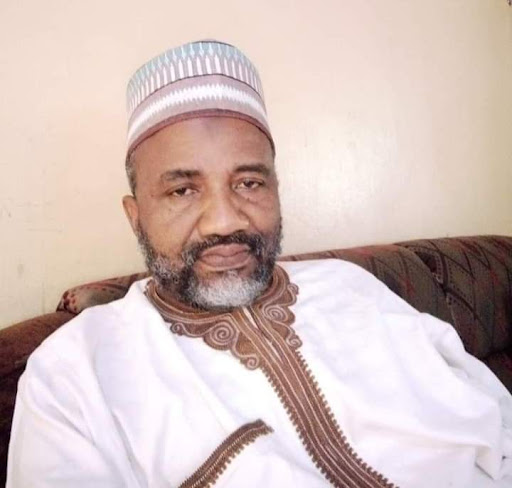
Northwest

How Tinubu should compensate the North West

By Prof. Abdussamad Umar Jibia

It is no longer news that Alhaji Bola Ahmad Tinubu has taken over as the President and Commander-in-Chief of the armed forces of the Federal Republic of Nigeria. Nigerians are always happy when there is a change of leadership because we are a hopeful people. It doesn’t matter that we have been disappointed and had our hopes dashed many times over. Most of us believe that it shall be different this time around. Nigerians believe that the hardship that immediately greeted the inauguration of President Tinubu due to removal of oil subsidy is only temporary. This only shows how optimistic our hope can be.

Party stalwarts who have participated in campaign and are important enough to be remembered by Mr. President are even more hopeful. Offices shall soon be shared. Ministerial appointments, advisors and other aides of the President, Boards membership, headship of Government agencies are some of the ‘gifts’ given to individuals who have shown enough commitment to the project of selling Mr. President and his party to Nigerians.

Another way in which politicians compensate states that gave them a large number of votes is situating infrastructural and empowerment projects. 

To become the President of Nigeria, Asiwaju, a National candidate, polled  8,794,726 votes  to defeat Atiku Abubakar and 16 other candidates, some of whose influence does not transcend their states of origin. Out of this number of votes, more than thirty percent came from the North West. Thus, if political support is important to Tinubu, and of course it is, he has an obligation to thank the people of North West and to practically acknowledge that they are his people.

Now, how is Tinubu supposed to compensate the North West? To answer this question it is important to note that only an insignificant few of the more than two million voters mentioned above are politicians who are expecting contracts or appointment to public offices from President BAT. Thus, while those appointments and contracts may or may not affect commoners in the North West, there are things that affect their lives for which they need the attention of Government.

President Tinubu has taken over at a time when banditry has exhausted and impoverished an average villager in the North Western part of Nigeria. Banditry began as cattle rustling by people who believe that only they have the right to own cattle. It then metamorphosed into full scale armed robbery and occupation. As I m writing this, there are many communities under bandits’ control. Many of them decided to submit willingly out of frustration since their Government has failed to provide them protection.

For communities that have not submitted to the bandits’ authority, the attacks continue.

To rationalize banditry, a number of false narratives have been created and spread by bandits and their sympathizers. For example, it is common to hear people saying that banditry was brought about by the unfair treatment given to nomadic Fulani for decades. Thus, according to this narrative, what we are witnessing today is a backlash of this unfair treatment. Some years ago, I had a reason to write a rejoinder to a group of Islamic scholars who bought into this narrative and, instead of calling on the Government to deal ruthlessly with bandits, were asking for fair treatment of nomads.

I don’t know of any group of Nigerians that is not complaining of unfair treatment. In fact, Nigerians, especially the proletariat, have for long been unfairly treated by the elites and the system they control. Does that mean every Nigerian should acquire arms and become armed robber? Surely no. Injustice does not justify crime. This narrative is thus faulty in every ramification. It is unfortunate that some people in Government have been deceived into accepting it.

Another narrative is that banditry taking place in the North West and North Central geopolitical zones is a fight between Hausa farmers and Fulani cattle-rearers. This is even as we saw travelers who are not Hausas being intercepted and burnt alive. We also saw Fulani cattle rearers  who refused to join criminal gangs being attacked and killed in their homes. Yet, the immediate past central Government bought into this narrative and asked Governors of the affected states to negotiate with bandits. If nothing else, those negotiations exposed the identity of the criminals. They appeared before press cameras and confessed their crimes and gave conditions to Government. They continued with their crimes almost immediately after the 2016 and 2019 peace accords. 

Another false narrative is that banditry is being executed by foreigners from other West African countries. Yet, during the failed peace negotiations all the bandit leaders were Nigerian Fulani whose ancestry is well known. In fact, all the bandits known to be operating in the North are like that. Now that they have occupied many rural communities their identities are even more exposed. 

This is the number one problem of the North Westerner that Tinubu should confront even if it means stepping on some of the biggest toes in this country.  Fortunately he has come at the same time with Governors who are interested in fighting crimes. In particular, the new Governors of Katsina and Kano have shown early signs that they mean business as far as crime-fighting is concerned. Working with them closely would help President Tinubu. Zamfara that has been serving as the hideout of bandits has also a new Governor.

Professor Abdussamad Umar Jibia wrote from Bayero University, Kano. He can be contacted via aujibia@gmail.com.
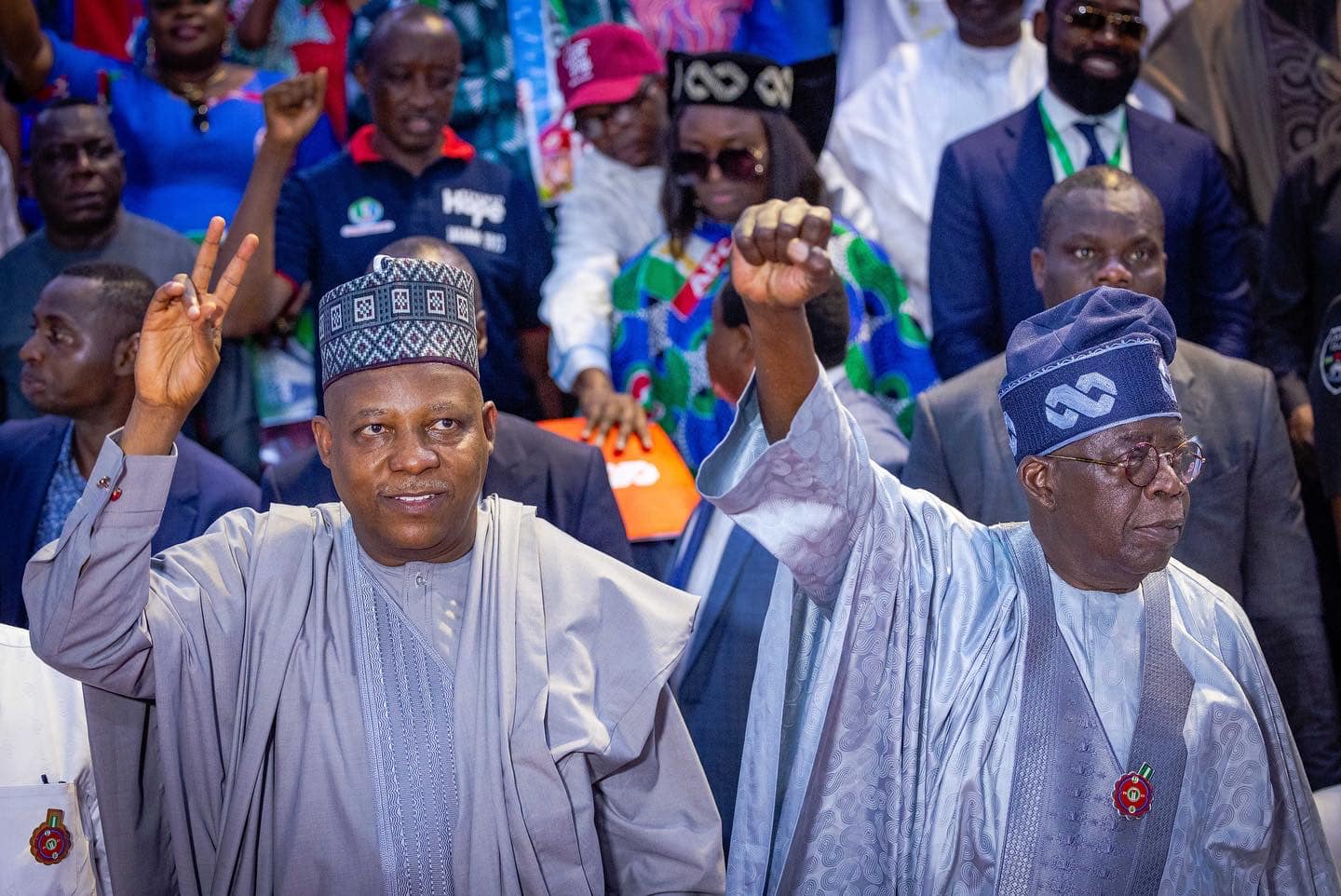
An open letter to the President-elect and APC’s National Working Community

By Mu’azu Ibn Abdallah

Firstly, I would like to begin by congratulating you on the success of the APC in the recently concluded national elections in which the party won the presidency and majority of seats in both the upper and lower chambers of the national assembly, and also the majority of the governorships and state assembly seats in the country. This is indeed a remarkable achievement which, if adequately sustained, would continue to position the party as the ruling party in the country and the largest political party in Africa.

It is obvious that Nigerians voted for the party because they believed in the messages of RENEWED HOPE which our party promised them. They hope for a better life and a prosperous future, which we can only deliver as a party if we adhere to the principles of social justice, equity and social inclusion.

As the party is set to make a formal announcement with regards to the zoning of political leadership in the country and with the President-elect and Vice President-elect already coming from the South-West and North-East geopolitical zones, respectively, I am strongly drawing the attention of the members of the National Working Committee (NWC) of the party, President Muhammad Buhari, the President-elect Asiwaju Bola Ahmad Tinubu and all other critical stakeholders in the party to consider, as a matter of necessity and in the best interest of the party and the spirit of equity and social justice, zoning the Presidency of the 10th Senate to the North-West especially taking into consideration of the following reasons.

First, there is a need for the party to demonstrate clearly that it always appreciates and rewards members’ confidence, support and loyalty by zoning the senate presidency to the North-West where it got the highest votes from. This will pave the way for the emergence of a competitive race among the zones as to who will produce the highest votes for the party in the subsequent elections, which will, in turn, leads to more and more votes for the party.

Moreover, this has been the tradition in the political arrangement of Nigeria since the return of democracy in 1999, where the region that gives the ruling party the highest votes is favoured for such a position. For instance, during the era of President Olusegun Obasanjo, PDP zoned the senate presidency to the South-East fact that the zone overwhelmingly voted for the PDP. Also, during the tenures of Late President Yar Adua and President Jonathan Senate Presidency was zoned to North-Central Zone for the same reason. Therefore, in the present circumstance, the North-West zone, due to its significant contribution to the victory of APC in the presidential election (the highest votes of 2.7 million among the geopolitical zones in the country), deserved to be rewarded with the senate presidency, especially, looking at the fact that the zone has never produced a senate president despite its strategic relevance in the Nigerian politics.

Secondly, as the largest political party in Africa, the party is expected to draw lessons and experiences from the just concluded 2023 general elections and embark on early preparations and strategic planning towards the 2027 elections so as to address some of the challenges faced in the recent elections and to make sure that RENEWED HOPE is extended to 2031 and beyond. The party should do everything humanly possible to avoid the costly mistakes of losing Kano, Kaduna and Katsina, which ideally should have cost the party its success (if not for the disorganisation of the opposition and the confidence of the Nigerians in the party’s candidates).

Historically, these three states are strategic in Nigerian politics just like California in American politics, and the time to start planning for the recovery of the 3Ks (and the entire north-west and Nigeria in general) is now, specifically by zoning the senate presidency to the zone and ensuring a competent and high-profile politician with a record of effective political strategy and the confidence of the electorates is elected into the coveted position. This would help APC to address the existential threats posed by Sen Rabi’u Kwankwaso’s NNPP, which caused the APC significant harm in the recent elections.

Thirdly, the Senate presidency is a sine qua non to the success of every democratic administration, a sensitive office that may make or mar the realisation of the APC’s much anticipated RENEWED HOPE, and the party should try as much as possible to avoid the repeat the circumstances similar to what transpired in the build-up to the inauguration of the 8th senate which subsequently led to the emergence of the leadership against the party aspiration (including some positions going to the opposition party). To avoid this, the party should, as a matter of national interest and social justice, zone the presidency to the North-West zone due to the fact that the zone is still the stronghold of the APC (with the highest number of registered voters, the highest number of APC card-carrying members, five state Governors and many members of the National Assembly). Also, the zone is blessed with high-profile politicians who can network and canvass the support of senators-elect from across the geopolitical zones for whoever emerges as the candidate from the zone.

Coincidentally, the North-West zone is blessed with a wide range of high-ranking law-makers with effective legislative and administrative experience to fit into the job and, if elected and can efficiently and excellently provide the president-elect with the requisite collaboration and support required for synergy and complementarity to deliver his mission of RENEWED HOPE to the Nigerians. Top on this list is Senator Barau I. Jibrin CON, representing Kano North Senatorial district, who recently declared his interest in running for the post.

Senator Jibrin, a third-term law-maker who has demonstrated his political capability by winning the Kano North senatorial seat continuously for three consecutive elections, and more importantly, in the most recent election, despite the threats of annihilation faced by APC he was able to strategically endure the NNPP’s onslaught and return his senatorial district to the APC and as well large proportion of votes for the presidential candidates. Senator Jibrin is a politician with solid experience and impeccable pedigree, a track record of success working both as a lawmaker and administrator but one who has never been involved in any scandal or incidents any corrupt practices by any of the federal government anti-corruption bodies.

Finally, there is no doubt in the fact that the success or otherwise of the president-elect’s administration and its ability to deliver the much celebrated RENEWED HOPE depends largely on the type of legislative leadership he will work with, as such, for the success of his administration, the president-elect needs no other person as the president of the senate than Senator Barau Jibrin.

Barau is a soft-spoken, laid-back, highly motivated and experienced legislator who has the respect and cooperation of his colleagues and has been responsible and successful in every position he has held due to his approachability and humbleness. An experienced law-maker who has held the position of the appropriations committees in both the House of Representatives and the Senate and has been successful in discharging his duties and guaranteeing thorough budget oversight. Senator Barau has also served as the vice-chairman of the Senate’s committee on Petroleum Resources (Downstream) and later as chairperson of the same committee. He has previously held various positions, such as the chairman of the Kano state Investment and Properties Ltd, Kano state commissioner of Science and Technology and a member of a committee Budgetary procedure.

Conclusively, the just concluded elections have further indicated that Nigerians have higher hope for a better Nigeria, they have spoken with their votes on the direction they want the country to advance, and the elections have indicated that Nigerians have confidence in APC. And from his acceptance speech when INEC issued him with the certificate of return, the President-Elect has clearly demonstrated his commitment and motivation to embark on the renewal journey which he promised Nigerians during the campaigns. As such, he needs a committed and motivated President of the Senate with whom they can deliver effectively to Nigerians the better life and prosperity promised in the RENEWED HOPE messages. To achieve this, the President-Elect must work with an equally motivated, experienced and committed President of the Senate. Among all those who are capable and eligible to contest for the senate presidency, no candidate befits such an exalted position more than Senator Barau Jibrin.

Muazu ibn Abdallah wrote from the Department of Sociology, Federal University Dutse and can be reached via muazuabdullahi29@gmail.com.   

Civilian JTF: A remedy the Northwest needs

By Adamu Bello Mai-Bodi

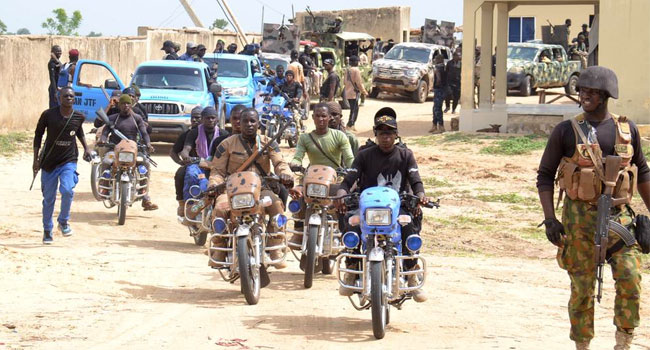
The success stories emanating from the Boko Haram epicentre in Nigeria’s north-eastern states, particularly Borno and Yobe, must not be separated from the combination of unwavering military operations and the assistance given by the tactically planned Civilian Joint Task Force (CJTF). CJTF is a local group founded in 2013 to support the Nigerian military’s operations against extremists and defend local populations from attacks like the ones currently taking place in Kaduna, Niger, Sokoto, Zamfara and Katsina.

Recent events in Nigeria reveal that the region’s indigenes primarily carry out terror activities. The Northwest is no exception. To put an end to this brutality, the authorities in the Northwest should take a page out of Borno State’s book and organize a local militia to work alongside the military. Locals know their communities’ lows and highs, nooks and crannies way better than military personnel. Therefore, involving them would boost the chances of conquering non-state actors and their partners in crime.

The people of Hausa land have a history of bravery and, if given a chance, many will volunteer to work in the task force to bring respite to and rid their community of murderous bandits. On this note, Nigerian authorities should give Northwest people a chance to work with the military and salvage the region. In addition, the loose group should possess basic weapons and must have female members to help with handling women and children. When this is done, I’m optimistic about having Borno-esque results.

The going is now rough in the Northwest, and the people are willing to fight back, but the constituted authorities don’t allow that. This region is densely populated. Every state can recruit at least thirty thousand vigilantes and pay each member a twenty-thousand naira incentive per month. Notwithstanding, authorities should be very observant during the recruitment of this recommended vigilante group to avoid engaging the bandits’ Trojan horses.

Gathering intelligence would be easier with the CJTF in place. The locals hired would quickly identify criminals and their enclaves, resulting in more successful security operations. Apart from increasing security, another positive aspect of the CJTF concept is that it provides people with temporary jobs to keep them occupied and provide food for their families. Instead of governments and individuals paying large sums of money as ransom to bandits, the money could be utilized to pay vigilantes a monthly stipend.

Adamu Bello Mai-Bodi writes from Azare, Bauchi State. He can be reached via admabel86@gmail.com.