Northern Nigeria

FUDMA student wins Sanger Institute Prize

By Muhammad Abdurrahman

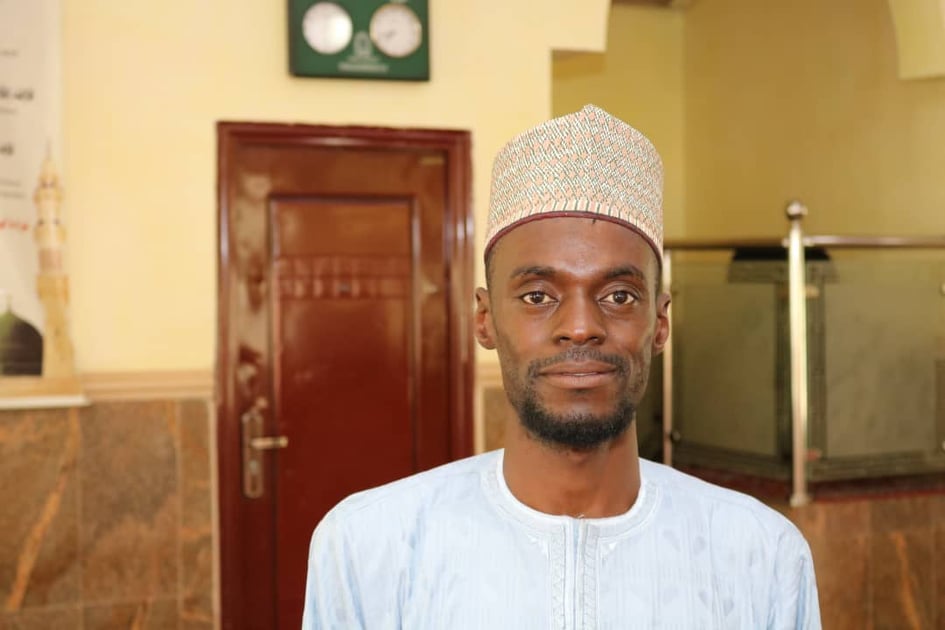
Ibrahim Adamu, a Microbiology student from the Federal University Dutsin-Ma, Katsina, Nigeria, has won the 2022 Wellcome Sanger Institute Prize. Ibrahim, who hailed from Ingawa Local Government of Katsina State, became the second person in Nigeria to win the prize.

The Sanger Prize is an outreach competition aimed at undergraduates studying genomics relevant courses who live and study in low or middle-income countries. This year students from 138 countries of different universities and faculties participated in the competition.

As usual, the winner of the Sanger Institute Prize will be offered a three-month internship with a research group at the Wellcome Sanger Institute, Cambridge, United Kingdom. The internship prize will cover all essential expenses, including travel costs, visa costs, training and research costs, accommodation and reasonable food costs during the three-month internship. The winner will also receive support and mentorship from the Institute, the scientific programme they work with and the team that administers the fund.

When contacted by The Daily Reality on how he knew and applied for the competition, Adamu explained that: “A friend shared a link with me in December 2021. I then contacted my academic advisor, and he encouraged me to apply. He connected me with Dr Adesoji Ayodele Timilehin and Dr Aminu Ado. These two wrote reference letters for me.

“I was also supported and mentored by Dr Adesoji throughout the process. I spent many sleepless nights reading research papers, books and reports to prepare for the essay competition. My Mentor rejected my first essay trial. So I wrote another one, and he suggested some edits for me.

“Anybody willing to apply should have a broad understanding of genomics, read a lot, and seek professional mentorship in all the application processes! Mentorship is the key! Without it, I would not have made it even to the first stage! So be focused and PRAY hard”, Adamu said.

Ibrahim concluded, “I will be available to guide any potential applicant in the future.”

Why are our leaders unable to resign even after failing to deliver?

By Abdulrahman Yunusa 

Upon all the existing factors that are enough to be the reasons for one’s resignation as an elected leader in Nigeria, I don’t know what often shields them from towing on to that path. Despite the gruesome killing, kidnappings, molestation and other unfavourable crimes thriving in our localities, they remain in power.

There is no “Resignation” in the vocabulary of Nigerian leaders. Because you hardly see them making resignations when things tend to go out of their control. Sadly, they prepare to die in power than live outside the power. 

Unlike our shabby mentality, those who have tried and failed in saner climes mostly took the most honourable decision by relieving themselves of the burden threatening their yoke. Some resign for reasons which we might eye as petty ones. Some quit for being unable to deliver the political promises they have made during the campaign. Some leave for failure to secure the lives of their people, which is one of the best reasons for one to vacate.

That silly mentality should be tamed with immediate effect. Else the next generation will suffer at the hands of evil beings who will soon assume the mantle of leadership and keep subjecting the lives of millions of people to excruciating pains. 

Enough is enough. Just tender resignation whenever conditions warrant that. Don’t subject the lives of millions of people to jeopardy for political greediness. Instead, learn to relinquish your position for the sake of your people. Maybe that will be the only positive impact you will ever make for your people.

The social, political and economic vicissitudes we are facing incessantly in Nigeria are the result of our leaders’ greediness. It’s simple to get that when you analyze and evaluate the current scenario in the country. 

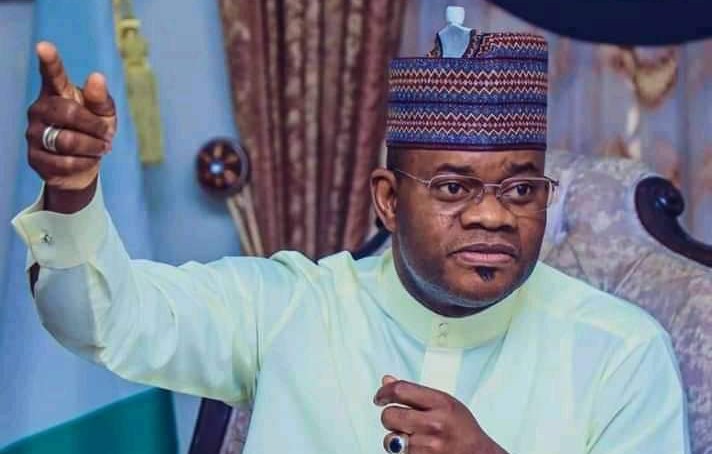
Recently, Zamfara State Governor openly admitted that his govt has failed to discharge its primary responsibility, which is the protection of the lives and properties of its people. He urged them to pick firearms to defend themselves against bandits.

That pathetic scenario is enough to tell you they are more concerned about their political seats than the lives of their people, which are ideally more worthy than their useless thrones. So they can’t tender resignation later to let the better hands have the chance to try their luck. Instead, they rather remain there and keep watching their people dying mercilessly in cold blood. 

No wonder, as the saying goes, “Da na gaba ake koyi“, people learn from their elders. Buhari is the president who enjoys more power than any other person within the polity. He should therefore be the best object of emulation. But, no, he too does not care about the lives of his citizens. Hence, the governors follow suit, despite the sheer incompetence and ineptitude, coupled with the I-don’t-care attitude they exhibit at the extreme. Yet, they don’t mind resigning or taking any proactive measures. God is watching!

Until we console our greedy minds to do away with that uncultured culture of political greediness by learning how to vacate position when things tend to get out of our control, we shall find it difficult to scale through the dark ocean. 

May we scale through the dark ocean soon, amin.

Abdulrahman Yunusa is a social and political affairs analyst. He writes from Bauchi and can be reached via abdulrahmanyunusa10@gmail.com.

Why you should take advantage of free tuition to study in Germany

By Aminu Mohammed

I nurtured my desire to study abroad during my undergraduate days at the Department of Political Science and International Studies, Ahmadu Bello University, Zaria. It was the era when ABU was the hotbed of Marxism and radical thinking in the North, led by the late Marxist historian Dr Bala Usman and others like Dr Bako, Prof. Sadiq and Prof. Ayo Dunmoye. I was fascinated by the writings of Karl Marx and Max Weber, which prompted my desire to study in Germany.

Germany is the wealthiest country in Europe and a global leader in education and research. It is the land of scientists like Albert Einstein, Max Plank and philosophers such as Immanuel Kant, Arthur Schopenhauer, Georg Wilhelm Friedrich Hegel, Friedrich Nietzsche, Karl Marx, Max Weber, and Goethe, among others. The education in Germany is top-notch, especially in medical sciences, natural science and engineering. Studying in Germany is also cheaper and more cost-effective compared to other countries such as the United States, United Kingdom, Canada and Australia.

Many of you may wonder why I choose to write on this topic, considering the high cost of studying abroad. Many of you may still think that only the elite can afford to send their children to foreign universities and others from a humble background are not capable of doing so, probably due to their circumstances.

I want to tell you today that you should perish such thoughts that have limited our people, especially in the northern part of the country, making them doubt their abilities. I want to tell you that there are no limits to where you can go and what you can achieve if you believe in your dreams and work towards them. We live in an era of information technology where you can use your smartphone to search for information that will aid you in improving your life and career. There are many Nigerian students from the Southern part of the country; most do not have wealthy parents and are thriving in this environment.

Studying in German universities is tuition-free for both local and international students. There are two options: you can either study through scholarship or self-sponsorship by taking care of your living expenses on your own through a system called blocked account. The first option is highly competitive and more tedious than the second one. Therefore, I suggest that people without solid financial capacity focus on the first option by applying for a scholarship. You can check the universities’ websites offering your courses and see the requirements for obtaining the scholarship.

The German Academic Exchange Service (DAAD) currently offers scholarships to students from developing countries for the 2023 academic session. The scholarship covers everything, including a monthly stipend of 861 euros for master’s students and 1200 euros for doctorate students. So, you should apply as soon as possible before the deadline. It would help if you had an outstanding grade in your first degree, a minimum of two years of work experience, a good motivation letter, and volunteering experience, among others, to be accepted for the scholarship programme.

The second option, through a blocked account, requires a lot of money, which means that you are on self- sponsorship, hence will cater for your living expenses which include payment for accommodation, health insurance and other costs in Germany. This option is for those who can afford the blocked account stipulated by the German authorities, which is currently 10,332 euros approximately (N6.7 million). You must deposit this money in a German bank after getting admission before securing a study visa. Most students who arrived in Germany for studies used Fintiba bank, a financial institution based in Frankfurt, Germany.

Once you get admission, you can check the website of the German embassy in Abuja or Lagos, look for the requirements for the study visa, and then apply for a visa appointment. I will advise that after getting admission, you check the official website of the German embassy in Nigeria or visit the embassy in Abuja or Lagos to get information on how to deposit the money in Fintiba bank. Don’t give your money to anybody.

You can go to any Nigerian bank to do the international transfer to Fintiba bank once you get the details on how to go about it from the German embassy. The money belongs to you and is for your living expenses here. Once you arrive in Germany and go through a system referred to as legitimization at the bank, Fintiba bank will then transfer 848 Euro monthly to your account for 12 months. The money will not be transferred in bulk to your account but bit by bit.

.Of course, you can work here and earn money to support your living expenses. Students are entitled to 20 hours per week and can work more than 20 hours during holidays, especially when the university is on break. Most international students work here and earn good money. An hourly wage depends on cities, but it is mainly between 10.45 to 16 Euro per hour (N6, 500 to N10, 000) depending on the city and company you work for. Wages in bigger cities like Munich, Frankfurt, Berlin, Hamburg, Cologne and Dusseldorf are higher than in smaller cities like Kiel, Flensburg, Cottbus, Magdeburg, etc.

Public universities do not charge tuition fees in Germany. Depending on the University, you only pay a semester fee (alias social fee) ranging from 200 euros to 380 euros per semester. For instance, students in my university pay 264 Euros per semester. This covers dues for the student union and transportation. In other words, students do not pay whenever they board a bus or train, as the semester ticket covers the fare for buses and trains within the city of Kiel and up to Hamburg. So, our semester ticket covers movement throughout the state of Schleswig Holstein and Hamburg.

Most Nigerian and international students I have met here are on self-sponsorship. Theystudy and also work to take care of their living expenses. There is always a part-time job available for students, especially in big and smaller cities, and you can take advantage of that to earn money for your upkeep. Some students focus on studies only during the semester and only work during holidays, while some attend lectures on weekdays and only work part-time during the weekend. The choice is yours.

I must emphasize that studying in Germany is tough, and you must put much effort to succeed. People fail here quickly, especially students who focus on work without paying much attention to their studies. But the main thing is to strike a balance between your studies and part-time work, if you want to achieve your goals. Of course, many students have been able to secure jobs after their studies here. A lot of Nigerians that I know here work after completing their studies.

Moreover, for those apprehensive about their religion, there is a large population of Muslims in Germany, mainly from Turkey, Syria, and Egypt, among others. There are mosques everywhere. At least we have six mosques in my city, with even a mosque mainly for Africans to perform their prayer.

I still reiterate that you can do everything independently with your computer or laptop. You do not need the help of anybody or an agent to assist you in applying for admission, scholarship or the visa process. Don’t fall for any scammer. You can do this from beginning to end on your own until you find yourself in Germany. You don’t need to know anybody to be able to secure admission, scholarship or visa to Germany. I arrived in Germany in 2018 without knowing anybody or even a friend. My communication was with the University strictly. If I can do it, you too can do it. So, believe in your abilities and go after your goals. I wish you all the best in your endeavour.

Aminu Mohammed is at the School of Sustainability, Christian-Albrechts Universität zu Kiel, Schleswig Holstein, Germany. He can be reached at gravity23n@gmail.com or 219013@mail.uni-kiel.de.

Reflections on inflation and our ineffective population

By Nusaiba Ibrahim Na’abba

The ongoing unexpected outrageous hike in prices of goods and services stringed by inflation is not all new to our survival in Nigeria as we’ve learnt the hard way to navigate through hurdles and thorns to manage our lives. Simply put, things are at the moment not falling apart but in their right places – exactly where we want them to be. And by extension, we are reaping the seeds our predecessors sowed.

Contextualizing the global outrage on inflation unveils how our population crises are highly influential to the inflation catastrophe we are recently experiencing in Nigeria. Conversations around our incapacitated population have always been cumbersome. People keep reproducing to demonstrate their selfish reasons and associating them with religion, even when they’re fully aware of their inability to cater for their needs – a lifetime debate. Due to cultural and religious reasons, overpopulation is always quite a sensitive issue. Religious gatherings, cultural discussions and even governmental activities deliberately skip them to avoid chaotic scenes.

For reasons best known to the Nigerian government, the census that was supposed to take place a year after President Buhari assumed office in 2016 was unfortunately not prioritized in the list of essential development activities. There wasn’t even a convincing explanation for why it did not occur. I buy that the President was out of office as he severely fought to regain sound health. Still, his deputy, Prof. Yemi Osibanjo, was acting President until he recovered. He also didn’t give it the much significance it deserves. The worth of a National Census isn’t that shabby to escape their radar, as it assumes an unchallenged role in catalyzing the development of every society and nation-building.

Well, as it stands, many international sources now place the Nigerian population to have surpassed 200 million. But, referring to our precedents, the past administrations were unwilling to manage rapid population increase by corroborating it with needed economic, financial and health opportunities, among others. Instead, they were more or less obsessed with starting gigantic projects to leave them halfway done when leaving offices. Regrettably, from budgets, policies and programs among myriad activities, the population is often not carefully factored in.

At this point, explaining the statistical representations of our ailing population is almost unnecessary, especially since we are gradually failing to comprehend the magnitude of our plight in statistical terms. Presently, there exists a colossal number of youths that are desperately seeking jobs. Not only that, they are unemployed. Some are drug addicts, miscreants, and even kidnappers and whatnot. Their realm also includes people still hopeful for job opportunities, including a handful employed but in deep struggles, as they continue to shoulder countless responsibilities. This fraction is the largest among the demography of our country and, sadly, the most ineffective.

Then we have children, who contribute a fair share to the general population. A disturbing figure is that of out-of-school children due to their being part of the lower class and a lot who are quadrupling in number as insecurity is not slowing down in forcing them out of their communities. Visibly, most of them embrace street hawking and begging while others aimlessly litter the streets and little girls into forced labour. Picturing our population from a pie sketch, we also have the elderly, many of whom have delivered relentless service to the nation but have only been rewarded unkempt wretched feet as they search for their legitimate hard-earned pensions. And I don’t forget that we have People Living with Disabilities (PLWDs) who wallow in poverty. This is a fair elucidation of Nigeria’s population pie sketch.

Indeed, how inflation is ripping us apart in this country is an incredibly devastating experience. Development activities here have always journeyed long, and even more terrifying is that slow processes in everything aren’t much valued in today’s fast-paced world. As frightening as it appears, the race to the 2023 general elections is already painting a horrible scene for us. The primary elections recently concluded with alleged countless irregularities and corruption aren’t appealing. Hence, it becomes challenging to collate one’s thoughts regarding how life will likely be as we fight to forge ahead.

In a way, this current plight provokes the young minds who are already out of viable options to embark on deadly voyages to Europe. They risk their lives in search of a better life there. It is terrifying to know that the number of youths clamoring for these voyages includes graduates and those earning petty stipends and are well conscious of the dangers involved. However, they aren’t blameworthy for viewing their lives from angles of their responsibilities.

Many optimists, including myself, are hopeful about Nigeria’s transformation for the best. But, until alternative routes to utilizing our teeming population for efficient development are incurred, we’ll keep chasing the uncertain light at the end of the tunnel. Nigeria is behind schedule on capitalizing on effective strategies to breed an efficient population, opposing its self-anointed maxim of “no dey carry last”. We must reinvent this unfortunate wheel of inefficiency by adopting a knowledge-based economy model to harness the enormous potential of our massive population for the best.

Nusaiba Ibrahim Na’abba is a master’s student from the Department of Mass Communication, BUK. She is a freelance writer and researcher. She can be reached via nusaibaibrahim66@gmail.com.

Were you mocked because of your English in school?

By Lawan Bukar Maigana

 I was spoofed when my father changed my school from a public school to a private school. I remember the first class I had. Our teacher, a lady, asked me a question, and I answered it. She asked me again where I got the answer, and I told her that I got it from my brain. She laughed at me, and everyone laughed at me because I spoke poorly. Our school fee was 16,650.

My friends were always laughing at my spoken English because I didn’t know how to speak good English. I still can’t speak good English, but I am working hard to perfect it. That same lady—my teacher—forced me to start reading a novel in class every day, and she mostly asked me to explain what I understood from the book. She corrected me as I explained it to the class, and that was how I started speaking gradually.

My proprietor had always told me that I would become a perfect English speaker one day and encouraged me to ignore my classmates and teachers who made jest of my English. With His mercy on me, I started speaking well with confidence until our graduation. Right now, I speak better English than some of my friends who laughed at me because of my English.

Today, she is proud of me anywhere she sees or hears about me. Had I worried about what my friends did to me then, I wouldn’t have become who I am today because they mocked me well. Some of them are on this platform. They will read this post and laugh at themselves because they know they have done many bad things to me.

Honestly, those days were difficult for me because there were days I didn’t talk from morning to the closing time in school. I didn’t know how to speak good English; English was our school’s only means of communication. So I chose to keep quiet because I didn’t want to be laughed at or mocked by my classmates.

Don’t taunt people with English and don’t laugh at people’s spoken and written English because everyone makes mistakes. No one has a monopoly on English knowledge, including native speakers. Don’t stop learning English because of what people think about you or what they do to you. Continue learning. You will perfect it one day; they can’t laugh or mock you anymore.

The world reads me today. I want to read your articles and watch you talking to a large audience one day. So, don’t stop speaking in public. Those who condemn you today can’t do so tomorrow. They won’t have the opportunity.

Lawan Bukar Maigana writes from Abuja and can be reached via lawanbukarmaigana@gmail.com.

Gov. Matawalle should not open a Pandora’s box

By Mallam Musbahu Magayaki

The Zamfara State Government has officially directed the inhabited communities of the state to carry arms for self-defence as a result of the insurmountable bandit’s attack shattering the state, leading to the destruction of lives and personal possessions of the zone’s commoners. This action, however, would add fuel to the sad development unfolding in the state and beyond by potentially making it unmanageable because everyone would have a gun to protect himself from these foreboding omens. This defensive stance would lead to an offensive.

The government should therefore be conscious that the Ukraine war, which induced President Volodymyr Zelensky to ring up civilians to take up arms in defence of Russia’s invasion of their state, was the result of Russia’s military outmatching Ukraine’s on every level. This implies that the Ukrainian military may be unable to withstand and deter a full-scale invasion.

Mexico should be a case of study as it became a precedent in the past that was destabilised by its innermost citizens when they were constitutionally allowed to hold weapons for self-defence. As such, we need to be thoroughly observing the situations in those developed countries and be capable of identifying those areas where they erred so that we would avoid repeating what they did.

Although Nigeria is one of the biggest African countries with military power, the one million dollar questions are: is our military number insufficient to strike back against these outlaws’ threat? Or are they not functioning effectively in this hazardous assignment? This action would seriously make the efforts of our brave military less appreciative as, in reality, they have been audaciously doing their best to safeguard our lives and properties day-in-day-out.

In a country like Nigeria, where a breach of law has prevalently become the norm, what can be expected to happen devastatingly if a citizen takes up arms? This is a wrong decision that should be changed to a better option. Moreover, what is the essence of creating various security units in the country if they cannot be utilised to defeat those terrorising the country?

Instead of coming up with this irrational idea, why not engage the state vigilantes, empower them with advanced sophisticated weaponry, and train them with military tactics to strengthen our military capacity? Zamfara government should, head over heels, request support from the Federal Government in employing more civilians for this vigilante unit in different angles of the state to fight these law violators.

Simply put, the government has shown its ineptitude in the fight against terrorism. Nonetheless, Borno State has faced more challenges from Boko Haram militias than Zamfara State, but its governor has never come up with the wrong notion of state dwellers carrying arms.

Mallam Musbahu Magayaki wrote from Sabon Fegi, Azare, Bauchi State via musbahumuhammad258@gmail.com.

Muslim-Muslim ticket in APC: North, ethno-religious manipulations and the way forward

By Abdulhaleem Ishaq Ringim

It is the realization that Nigeria’s presidency cannot be won by the sole or combined agencies of personal fame, resources or regional influence that informed the ideation of a merger of political parties that eventually birthed the APC. 

And the essence of this merger, as it were, was the pursuit of a formidable confluence between Nigeria’s most politically active blocs – northern and south-western regional voting blocs. This resulted in the officiation of an alliance through the instrumentality of a transnational political platform capable of displacing the political hegemony of the PDP. And the central representative figures of the two voting blocs were unarguably Muhammadu Buhari and Bola Ahmed Tinubu. 

Evidently, the merger would not have been successful without the uncompromising commitment and consensus of these central figures. Lack of such a consensus was the sole reason why attempts at the merger failed in 2011. And the eventual consensus was what translated into a successful merger that ousted PDP in 2015. One could say both of them are indispensable for as far as the merger is concerned. 

In both instances, the dynamics of running mate selection constituted a major challenge; one that stalled the entire merger process in 2011 and almost jeopardized the efforts again in 2015 if not for last minute compromises. And for the purpose of this article, our referential premise would be the events that characterized the selection of a running mate for Buhari in 2015. 

The resumption of merger talks was principally premised on the assurances of improved mutual understanding and primacy of deliberation and mutual agreement on all issues before implementation. Resultantly, the issue of VP selection was agreeably deferred to the ACN side of the merger. And being the leader of the ACN and a southerner, Bola Tinubu was the first point of call. 

However, such a supposition was put to test by the concern of certain stakeholders largely from the non-ACN merging parties over the feasibility of flying a Muslim-Muslim ticket to victory against the PDP. And based on this singularity of a justification defined strictly on the bases of religious [in]compatibility questions, Tinubu was dropped for Osinbajo whose credentialed affiliation to the leadership of Nigeria’s Christian establishment was seen as a suitable match to Buhari’s perceived religious fanaticism. 

7 years later, the same political platform faces same dilemma. Tinubu, the initial choice of Buhari’s running mate in 2015 and flag-bearer of the APC for 2023 presidential elections is faced with the daunting task of choosing a running mate. The dynamics that defined his emergence was largely characterized by ethnic considerations and the process of choosing his running mate seems to be greatly saturated by the influence of the overbearing conflict of ethno-religious interests. 

Ironically, the hypocritical ultimacy of political convenience as against principle has never been this blatant. Scores of politicians who vehemently opposed the idea of a Muslim-Muslim ticket in 2015 are seen today to be championing the cause. Even more perplexing is the dismissal by some of these supporters of issues of religious affiliation(of the running mate) as irrelevant. This group’s advocacy centers around the supposed primacy of merit and capacity to deliver without deference to ethno-religious considerations. The contradiction here is that same group agitated for a Tinubu presidency in fulfillment of a zoning agreement strictly based on an ethno-regional arrangement. 

As the elite slug it out, they keep deliberately torrenting the conflict down to the level of the masses whose minds have over time fallen victim of manipulative conditioning by the elite. As a result, the Christian establishment and followership, especially in the North demand uncompromisingly that the VP be picked amongst their brethren. While the Northern Muslim establishment and followership in the usual feeling of mutual insecurity and distrust have threatened to actively oppose a ticket with a Northern Christian as VP. 

It sadly almost seems as though whoever clinches the VP slot officially and institutionally enhances the presence and validity of the religion he belongs to. But is that accurate? How is a peasant Muslim farmer going to be better off with a Muslim as VP? And how’s the Christian peasant farmer in the opposite situation? What of security? Buhari is president yet the North suffer from insecurity the most. What of Justice? 

This conflict is largely an in-house Northern conflict. And we’ve consistently been falling victim to these manipulative tendencies because we’ve failed to understand certain political and social realities. But the most important among such realities is the glaring yet often forgotten fact that the allegiance of almost every elite in Nigeria is more to the power superstructure than it is to religion.

“This game of masks!”, as Yusufu Bala Usman, of blessed memory, described it only adopts religion as a manipulative enabler and agency for continued relevance within the power cycle. That is all! Religion should not be a manipulative tool. And it is high time we understand that it is never about religion but about power and the spoils that accompany its acquisition. The Muslim community should also be able to distinguish between manipulation and genuine allegiance to religious interest. 

In his seminal work ‘Leadership and Governance in Nigeria: The Relevance of Values’ whose content is drilled in philosophical and ethical theorization of Sokoto Caliphate’s breed of leadership and public policy with an exposition of the imperative of pillaring contemporary political and social value systems on the pristine belief systems and culture of our people; Mahmud Tukur, of blessed memory, explained that affiliation and allegiance to the Islamic belief system and values formed the foundational basis of community identity during the caliphal era. He puts “working hard in co-operation with fellow members to achieve the higher values of society or service in the interest of the community’s raison d’etre” as the archetypal basis of communal belonging. 

Muhammadu Sanusi II in his review of Tukur’s work deduced Islam – as a corpus of teachings(and values) rather than of actions of persons – to be the definitive basis for identity of the Northern Muslims. To quote his deconstruction of this principle, “… the fact that a “northerner” or a “Muslim” or a “Fulani” is the subject of a political issue is not sufficient to make that issue a “northern”, “Islamic” or “Fulani” one. The bottom line is how consistent is the issue at stake with the teachings of Islam as incorporated in the value-systems underlying the caliphate. In effect, every other identity is subsumed under our Islamic identity, and the Islamic values are the ones worthy of defending. These are not to be sacrificed in the name of “nationalism” or “northern politics” or even “Muslims”.

I find these delineations very instructive for it exposes religious manipulative systems and presents us with the philosophical framework for subjecting our political actions as Northern Muslims to intellectual scrutiny. It provides the basis for validation(or not) and examination of the consistency of our collective actions with the pristine Islamic value-systems. In the context of this article, it affords us the opportunity of examining the consistency of our agitation for VP slot(supposedly in the interest of religion) to our foundational Islamic values; is having a Northern Muslim Vice President fundamentally an Islamic interest? And are the Muslim northerners considered for the slot worthy of supporting strictly based on Islamic affiliations and considerations? Will fielding them in anyway lead to achieving the higher values of the Islamic community? 

These are the fundamental questions that require our dispassionate attention. By answering them, we’d be able to realize whether or not we are yet again falling for religious manipulative machinations. It will also reveal to us those social and political realities of ours that render us susceptible to this manipulative tendencies. However, one thing is clear, that the divarication and fragmentation of the formerly United North (into Muslim and Christian North) is our greatest source of susceptibility to manipulation and even marginalization. Even as the Union was not devoid of internal skirmishes, we were presentable as a United, influential front externally. This dichotomization only weakens our influence and negotiating position of advantage. 

Our collective problems as the North do not respect such bifurcations same way the results of incompetence of both Muslim and Christian political leaders of Northern extraction do not too. And good and ethical leadership are not exclusive preserves of any of the two religions. In fact, there’s a strong convergence of both religions on issues of political values, leadership ethics and principles of good governance. Insecurity; poverty; economic underdevelopment; inefficient educational and healthcare systems; infrastructural inadequacies; etc are our collective challenges and our collective resolve should be of getting competent leaders to reverse the situation. Ours should be geared towards sustaining and consolidating the unmatched northern political negotiating base and influence and leverage that to ensure we force the leadership to stick to their side of the social contract. 

To these manipulative elites, religion is only but an agency for the sustenance of relevance and power for self-aggrandizement. We must rise above such manipulative machinations and focus on building a formidable consensus capable of enforcing on the leadership a Northern agenda for development regardless of who becomes VP. 

Abdulhaleem Ishaq Ringim is a political/public affairs analyst, he writes from Zaria and can be reached via haleemabdul1999@gmail.com.

Kidnapping in Alkaleri: An existential threat to our collective security

By Zahraddeen Mallam Saleh.

The rise of kidnappings in Alakleri is one of the most pressing security issues in Bauchi State, yet underreported. Many villages in Gwana, Duguri, and Pali Districts suffer from the devastating criminal activity of kidnappers and cattle rustlers. As a result, kidnappings for ransom have become more common and a security concern in recent years in those communities.

A few days ago, kidnappers attacked Garin Bono in Maimadi ward and Sabon Gari in Pali ward, along Alkaleri/Futuk road, killing four people and injuring others. Scores of kidnapping incidences have recently occurred in Gwana District, from abducting prominent personalities to the commoners who found it difficult to feed their families. Nowadays, kidnappers target all people, irrespective of whether they are rich or poor, because wealthy individuals from rural areas migrated to urban cities to live in peace and harmony with their families.

Four children were kidnapped at the outskirt of Yalo. Yalo is less than 100 kilometres away from Alkaleri, the council headquarter. In Kargo, Malam Hamza was abducted at his residence in neighbouring Mansur. In addition, three farmers were kidnapped while working on their farms. As I write this piece, information reaching us revealed that four people were abducted today, 23rd June 2022, at Bakin Layi, a suburb of Yalo town.

All these victims cannot pay the ransom or their proxy relatives. Evidence shows that most of today’s victims are poor villagers, a departure from the earlier kidnapping of wealthy individuals. This category of victims loses their lives in the process due to their inability to pay the ransom because of relative poverty.

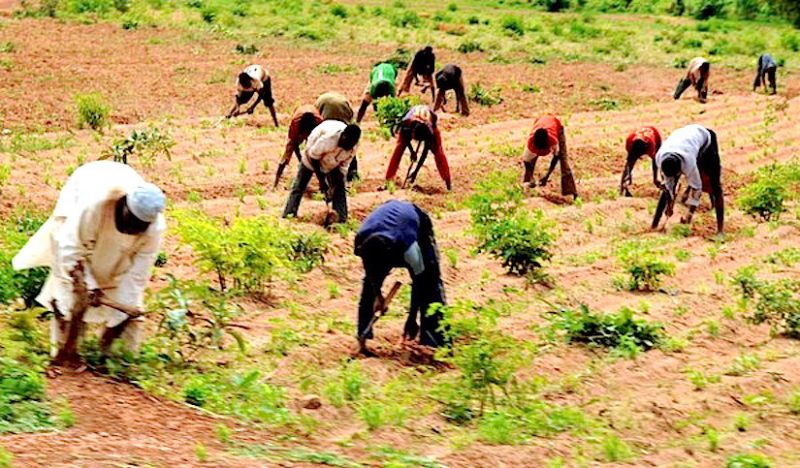
It was estimated that from January 2022 to date, in Gwana District alone, more than one hundred (100) cases of kidnappings were reported to the office of the District head of Gwana, located in Futuk. This depicts the ugly nature of the situation where most armless commoners are indiscriminately taken for ransom. People live in distrust and fear due to this ugly picture of our security situation. Members of different bandit groups have been seen carrying heavy arms around Jada forest in Maimadi ward, a forest that comprises part of Yankari forest, harassing locals and farmers. A development that compelled many farmers to abandon their farms for fear of being kidnapped. For instance, Aliyu Inuwa (Messi), a resident of Futuk, left his maize farm despite spending a considerable amount of money. 

In her effort to curb the menace, the Bauchi state government procured and distributed motorcycles across the affected areas in the state. In addition, Hilux Patron vans were also distributed across all local governments. In Gwana District, in particular, the local security architecture has Patrol Hilux and several motorcycles provided by this administration in order to facilitate security surveillance and end criminal activities in the entire community. Hence, this intervention from the state government is highly commendable and appreciated. However, the situation demands a more formidable security architecture in curtailing this disease.

Equally, the military detachment in Futuk, Digare, and Mansur and the recent deployment of an anti-kidnapping squad in Yalo and Kargo aimed to reduce criminal activities in our areas. But the existing security architectures showcased their professionalism in collecting N20, N30, N50 and N100 from the motorists and motorcycle riders daily than dealing with monsters called bandits/kidnappers. We are not denying or undermining their role in protecting lives and property. I’m just reporting what I saw with my naked eyes on my recent trip from Futuk to Mansur to collect primary data for my postgraduate study.

Bauchi state government should put more effort into securing its people before it metamorphoses into what is happening in Zamfara, Katsina and Sokoto. In addition, the government should encourage and promote education.

Zahraddeen Mallam Saleh wrote from Futuk, Gwana District, Alakleri LG. He can be reached via zahradeenmsaleh@gmail.com.

Corps member empowers widows with sewing machines, donates books to school in Yobe

By Tijani Hassan

A corps member serving at Al-Furqan Learners’ Academy, Potiskum, Yobe State, has trained and empowered twenty widows on fashion design and tailoring skills in an effort to eliminate poverty and unemployment amongst women in the society.

The corps member, Chidimma Atuchukwu Obiageliaku, who hails from Anambra State, said the gesture was born out of her passion and desire to assist the vulnerable and less privileged in society.

The Commissioning and Presentation Ceremony held on Thursday, 30 June 2022, at the school premises,  witnessed the presentation of certificates, wrappers, sewing materials and seven new sewing machines to the trainee widows. This came after 6 six weeks of intensive dress-making training and other entrepreneurial skills.

Other projects initiated by the Corps member included renovating and stocking a 40-seater school library to boost students’ learning capacity. She said, “whenever you read a book, it equips you with the knowledge and power to become whoever you aspire to be”, hence, donating the library to the school to equip the students to become great in the future.

In his welcome address, the School Director, Alhaji Ibrahim Mohammed, represented by Alhaji Suleiman Dauda, commended all the Corps members serving under his watch and specifically the project initiator Chidimma. He added that she was the first of her kind to execute a project of this considerable repute.

The state Coordinator of NYSC Yobe State, Hajiya Hafsat Yerima, represented by the Head of Community Development Service, CDS, Mr Abimbola Akin, expressed her satisfaction with the project carried out by the Corps member and hinted that the state would never forget her in a hurry while urging other Corp members to emulate her good gesture.

In his contribution, the Provost, Federal College of Education (Technical), Potiskum, represented by the Head of Digital and Visual Library of the College, Mallam Abubakar Hassan, explained that education is the bedrock of every meaningful society which deserves the contribution of all stakeholders.

Hassan, on behalf of FCE (T), Potiskum donated a reasonable number of textbooks to the school as part of their contribution to the project.

The benefiting widows, who were highly pleased, thanked the Corps member for the humanitarian support. The leader of the widows, Mrs Ladi, said the training is a lifetime investment that has transformed their lives beyond imagination. She prayed to Almighty God to grant their benefactor success in her future endeavours.

Other attendees included the Commissioner, Basic and Secondary Education, Yobe State, Dr Muhammad Sani Idris, representative of the Emir of Fika, His Royal Highness (Dr.) Muhammadu Idrissa Ibn Abbali, Humanitarian organisations, parents and students.

In his closing remarks, the School Director thanked the initiator of the projects and the sponsors and offered her automatic and pensionable employment with accommodation and other benefits after her National Service.

The Community Development Service is one of the key components of the NYSC, designed to have a beneficial influence on the lives of the host community.

WANTED: The reformation of the Almajiri system in Nigeria

By Kabir Fagge Ali

Almajiri is a system of Islamic education practised primarily in Northern Nigeria. The term is also used to denote a person who is taught or undergoing learning within this system called “Almajiranci.”

Almajiri is derived from the Arabic “Al-Muhajjirun”, an “Emigrant” who migrates from his home to a particular Islamic school in the quest for knowledge.

Over the years, it has been a normal feature, a cultural norm to have seen children roaming the streets in certain parts of (mainly northern) Nigeria, all in the name of seeking Islamic Education through the system of Almajiri.

Before the arrival of British colonial masters, a system of education called ‘Tsangaya’ has since prevailed in the Kanem-Borno Empire. It was established as an organised and comprehensive education system for learning Islamic principles, values, jurisprudence and theology.

Established after madrasahs in other parts of the Muslim world, Tsangaya was primarily funded by the state. Islam traditionally encourages charity, so the community readily supported these Almajiri. In return, he (Almajiri) gives back to society through manual labour.

The system also produced the judges, clerks, and teachers who provided the colonial administration with the needed staff. The Almajiri schools provided the first set of colonial staff in Northern Nigeria.

The Colonial masters abolished state funding of Tsangaya, arguing that they were religious schools. “Karatun Boko”, western education was introduced and funded instead. With this loss of support, the system collapsed.

A 2014 UNICEF report put the number of Almajiri in Nigeria at 9.5 million, or 72 per cent of the country’s 13.2 million out-of-school children. Unfortunately, this is a disaster unfolding before our eyes, as some estimates claim that the number of out-of-school children in the country has risen past the 15 million mark, most of whom originated from the North.

Regrettably, the Almajiri culture has since outlived its purpose and has become a breeding ground for child begging and, in extreme cases, potential materials for recruitment into terrorist groups. Moreover, the pupils who were meant to be trained to become Islamic scholars have now had to struggle to cater for themselves, begging rather than learning under the watch and supervision of some semi-literate Quranic teachers or Mallams who themselves lacked the requisite financial and moral support. Hence, the system runs more as a means of survival rather than a way of life.

This is because the Qur’anic schools became hapless, unable to render any help. After all, the head of the school is not also financially stable. This ultimately leads him to enforce a rule that ensures the students get him food or money. The most annoying part is making it mandatory, as punishment is enforced on anyone who fails to turn in what is expected from him.

Deprived of a normal and decent upbringing, Almajiri children, usually little boys between the ages of 4 and 15, may have been direct products of polygamous marriage or broken homes or simply due to economic challenges that hit the family. They lack adequate family cover as children are sent out to the streets under the guise of Almajiri as soon as the family’s resources are overstretched.

The Almajiri grows up in the streets without their parents’ love, care, and guidance; his struggle for survival exposes him to abuse (homosexuality and paedophilia), used as a slave, brainwashed, and recruited for anti-social activities, and used for destructive and violent activities. This is the picture of the pitiful plight of an Almajiri child in Nigeria.

Additionally, Almajiri culture epitomises child abuse, social exclusion, and chronic poverty in all ramifications. Because the system is believed to be rooted in Islamic religion and Fulani cultural practices, many attempts to reverse the trend or end such abuse of humanity have always hit a brick wall.

The fact that Islamic teaching strongly forbids begging, except in exceptional circumstances, which include a man’s loss of properties or wealth in a disaster or when a man has loaned much of his money for the common good, such as bringing peace between two warring parties already proves that Almajiri system as it is being practised today is unIslamic. A child neglected by his parents is vulnerable to diseases and social crimes. To survive, he often has to beg from ‘dusk to dawn’, after which he returns to the Tsangaya (Almajiri school).

For the past years, the Almajiri system has created a cover for criminally minded individuals to abuse Nigerian children through trafficking and expose them to anti-social behaviours such as forced labour and sex slaves.

Even former President Goodluck Jonathan designed a program under which a few Almajiri Model Boarding schools were established, which was aimed at integrating conventional western education into Islamic education, only turned out to be merely ‘removing a spoonful of water from a filled tank’, it wasn’t enough to adequately address the problem. As a result, less than five per cent of the children were captured by the Federal Government’s program meant to remove the Almajiri off the streets.

Therefore, as urgent, the government should take reasonable measures to address the Almajiri system in Nigeria to take them off the streets, even if it means banning the culture.

Unless it is banned or adequately reformed to meet the modern challenges and realities, the problems of underdevelopment, educational backwardness, and mass poverty in (northern) Nigeria will worsen. People will continue to bear children they do not have the resources to cater for, knowing that they could easily push such children out into the Almajiri system.

To conclude that the Almajiri system has deviated from its original purpose and is currently giving Nigeria a bad image in the international community is to admit the obvious.

This problem is a ticking time bomb waiting to explode at any time. And when it does, it will consume us all. But, it is still not late. So, something can be done to stem the tides.

Fagge is a student of Mass Communication at Skyline University Nigeria. He sent this via faggekabir29@gmail.com.