Northern Nigeria

Unknown gunmen attack Kaduna amidst mourning of mass killing

By Uzair Adam Imam

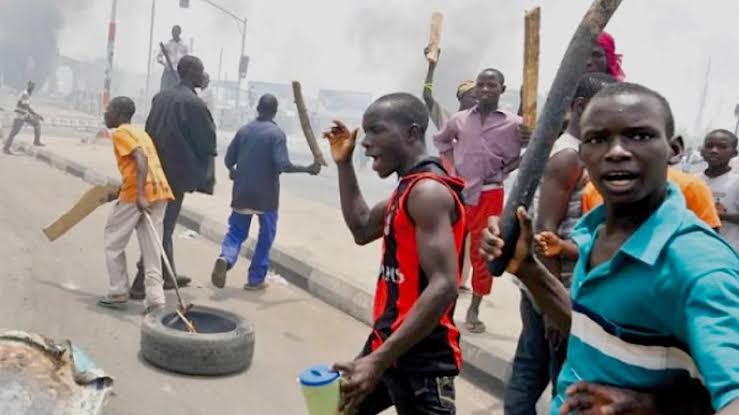
Unknown gunmen Friday launched a fresh attack on Kagoro, a community in Kaduna state, amidst mourning of mass killing in Mallagum-Kagoro, Kaura Local Government Area of the state.

The Daily Reality learned that the incident occurred at night when most people were sleeping.

However, a resident who spoke to the journalists disclosed that the gunmen stormed the community around 9:00 pm.

He added that the gunmen started shooting sporadically immediately as they roamed the community.

A resident who pleaded anonymity said the attackers arrived fully armed and started shooting, forcing people to run for their lives.

He stated, “but thank God there was no loss of life because the military repelled the attackers,” he said.

But no official statement from security agencies or the government has been made when filling this report. 

University Degrees vs Skills debate: A consequence of our purposeless education system?

By Prof. Abdelghaffar Amoka Abdelmalik

A recently published book by Dr Ali Isa Pantami has rekindled the debate between degrees and skills. Even though the book focused on digital skills, “educated” Nigerians are trying hard to separate skills from university degrees (education). That someone graduated in computer science without being able to write a computer code does not mean that all graduates in computer science cannot write computer code.

Public primary and secondary schools have collapsed, and there is no debate on a possible mission to rescue them. The public universities are on the path to the state of the public primary and secondary schools, and all we want is to keep the kids in the class to MILT (manage it like that).

Some of the questions that came to my mind as I watched the debate were: What is skill? Can you truly separate skills from university degrees? What qualified you to receive a degree from a university? What skills do you need to survive in Nigeria? What skills do we need to propel Nigeria to a particular height? Just digital skills? What are the available jobs in high demand in Nigeria? Over the last 20 years, tell me about a job that was advertised, and after all the screening, they could not get a qualified graduate in Nigeria with the appropriate skills for the job.

The debate on degrees and certificates is getting more interesting. It is more interesting to me this time around as the Northern elites champion it. We are growing up.

I did my National Youth Service in a secondary school in Bagwai, Kano state, between 2000 and 2001. One weekend, I went to the market to get some stuff and met the Senior Teacher. I jokingly asked why he was in the market and didn’t let the wife do the shopping. That led to a lengthy discussion where I mentioned the General Hospital, Bichi. As of then, there were 3 Doctors, all male, at the hospital. Two were Yoruba and one Igbo. They were all Christians. There was no female doctor. I told him that they need to encourage their daughters to go to school so that we can have their daughters as Doctors in those hospitals. I guess I was wrong. Degrees are useless.

We are fond of mentioning our iconic automotive designer, Jelani Aliyu, as an example of skills rather than degrees. This is a very interesting example with a missing background. Jelani was a very good student and truly left the university for the polytechnic because he wanted a more practically oriented program. That is what polytechnics are originally meant for. So, after finishing his HND from the polytechnic as the Best All-Round Student, he got a scholarship from the Sokoto state scholarship board to study automotive design at the College for Creative Studies in Detroit, US. They got certificates every step to show that he has acquired the requisite skills. The rest is history.

You see, anyone can write a book on degrees vs skills, especially people at high places whose entire success is based on their degree certificates. But can the book change our reality? Not likely. Only a few Nigerians actually read books. A long post on Facebook is even difficult to read. We prefer to use the time to argue over who is the football G.O.A.T. How do we change that? There are several challenges to deal with to save our system.

But then, by the virtue of your degree certificate, you got a job as a Graduate Assistant at a public university. You built on that to have your Master’s degree in the university. And being a lecturer in a public university, you got a scholarship for PhD in the UK. With a PhD degree from the UK, you got a job offer as an Assistant Professor at a university abroad. Then, a few years later, you got an appointment outside academia. I guess a skill was identified that took you to all these places. There was no record of industry experience. So, all the skills were acquired at the university. So, what is your problem with the university? If you have got all these skills in the university and the necessary skills that your students in your department need to have are missing, then we should blame you for it.

All that you are was built on your degrees, and the same degrees are suddenly no more important but skills? We are supposed to be the light of our society. So, what is skill? What do we do in the universities? Are university environments unskilled environment? Where do you get the skills? Meanwhile, their kids are in university acquiring degrees. My guess is that you need skills, while their kids need degrees to manage your skill.

One of my senior colleagues once told us during an undergraduate lecture in the ’90s that physics makes you think. That’s a skill. He said, whatever you decide to do after graduation, physics will help your thinking. Sometimes back, I had a discussion with one of our graduates who switched from physics to IT after graduation, and he said IT is a piece of cake compared to Physics. He said he finds it easy having studied physics. Of course, let’s preach skills and not degrees while our best graduates are been harvested by the US, Canada, France, Norway, England, Germany, etc.

Recently, there were some trending Master’s graduation lists from UK universities where the graduates were 99% Nigerians. The tuition fee for the master’s program can start a business in Nigeria, but they decided to give the money to the UK university to acquire a certificate that will qualify them to work in the UK. Their first degree from Nigeria got them admission to a Master’s program in the UK. That qualifies them for the two years post-study visa to get a job. They don’t intend to come back, and they will get a job there with a university degree.

Shaquille O’Neal found it offensive when he walked into business meetings, and people would only talk to his representatives. He felt he was lacking something and found it necessary to enrol in a Master’s degree program at the University of Phoenix. He told them that he wanted somebody to teach him in class but was informed that the course he enrolled for was only taught online and that he can’t be taught alone. He asked for the requirements to have a physical class, and he was told that they needed a minimum of 15 students. Shaq paid for 15 of his friends to join him in the Master’s program. There was a gap, and he got a degree to fill it. It is up to you if degrees are skillless.

Barrister Jimoh Ibrahim recently got a Doctor of Business degree from Cambridge Judge Business School, University of Cambridge. He is a billionaire with an MSc in Major Programme Management from Oxford, an MBA from Cambridge, a Certificate in International Tax Law from Harvard, an MPA from Ife, and a Bachelor of Law from Ife. He has been a billionaire. What does he need another degree for?

Our universities are not in the best form, nor are our polytechnics the way they were during Jelani’s days. We watched public educational institutions degrade over the years without any resistance except ASUU. That we have lost some vital components of what made a university a university is not a global case. It’s a peculiarity that we have to deal with to save our system. Our efforts should be towards reviving the lost skills that ought to be acquired at each level of our education, from primary schools to polytechnics and universities. 

Sadly, instead of making efforts to save the education system of the country and direct it toward the developmental needs of the nation, we are arguing over degrees and skills while they are taking the extra steps for the further destruction of public universities. The people telling you to go for skills instead of degrees have got their kids in schools abroad or private universities. What are they acquiring there? Unskilled knowledge? They have systematically destroyed what made the university a university but complained of a lack of skills. Double standard.

Since our brothers are championing the commercialization of public universities and skills rather than degrees, I hope our general hospitals in the North have got enough doctors so that we can close down our degree programs for medical sciences. What about law, finance, etc.? Optic fibre, which has revolutionized medicine and telecommunication, was a product of research from the university. A simple physics concept (total internal reflection in a material) that was engineered. Endoscopy and broadband transmission are not products of questionnaires but skilled thinking.

The World Bank recently said it will take northern states 40 years to catch up with their southern counterparts considering the current growth rates. Meanwhile, northern leaders don’t seem to bother about that but doing politics with the education of the people. I was informed today that grasses have taken over some of the primary schools in a state in the North-central. If we are to stop going to school, we need to start telling them to lead the way on the skills we need to survive in the North and make Nigeria work. Is it farming, as the president advised?

In a recent World Bank report, the Bank stated that “despite its vast natural resources and a young, entrepreneurial population, development in Nigeria has stagnated over the last decade, and the country is failing to keep up with the GDP growth of its peers. Declining private investment and demographic pressure push young Nigerians to pursue opportunities overseas”. Lack of skilled leadership and not a skilled workforce is possibly responsible for this.

It wasn’t a lack of skilled workforce that caused the massive unemployment in the country. There won’t be unemployment if there are jobs. There can’t be jobs if there is no job creation or an enabling environment for job creation. We are quick to forget that every certificate, degree or not, comes with the requisite knowledge and skills. The certificate is to show that you have acquired the prescribed skills. Of course, some find a way to get it without getting the requisite skill. This is Nigeria, where everything is possible. That is a systematic problem. That is why there is an interview.

Are you dealing with incompetent graduates? Blame your hiring process or yourself for not conducting the required interview. That you can’t find a job in Nigeria does not mean you don’t have the skill to get a job. The jobs ain’t just there. Go and study in the UK. If you stay back, you will get a job without any need to know someone that knows somebody. But if you dare return to Nigeria out of that thing called “patriotism” to contribute, you may need to buy a job or know somebody at a high place to get that dream job.

The problem is that we don’t even know what we want. No strategic plans. Everyone is just looking out for his pocket. After seven years, there is no clear education policy for the country. They said there are not enough resources to properly fund education, but they can’t produce a sustainable funding model for education. We are still living and surviving in lamentation mode.

They said a country cannot grow beyond the level of education of the people. Meanwhile, the education system of the country is in a deep mess, and no one is calling for a discussion on the sort of education that we need to aid our development as a developing nation. Every opportunist sits in the comfort of his office to push a policy through our throat, policies that will naturally die after they are out of the office. 

It was entrepreneurship yesterday and that made them introduce entrepreneurship as a compulsory subject in secondary schools and as a general studies course in the universities. But which entrepreneur will go and sit as a secondary teacher in a class to receive slave wages of N40,000 per month? The course is taught at the university by colleagues struggling to get home with their take-home pay.

The subject is taught by people struggling with monthly salaries and doesn’t know what entrepreneurship looks like aside from what they read in the book. The government that introduced the policy, as usual, did not make adequate provisions for it to be taught. But they are happy to have introduced the subject. Not sure of how many entrepreneurs we have produced from the teaching of the courses. Today, it is skill acquisition. Are we confused?

Just like the “entrepreneurship” package of yesterday, “Skills rather than Degrees” seems to be the new gold mine among those in government with different packages for funding from the government. At least we have started spending billions on skill acquisition across states. A report from Vanguard on April 6, 2022, says over N6.2 billion was spent to train and equip 16,820 Bauchi youths in the art of smartphone repairs. That’s about N368,609 per person.

You can write books on skills and get Bill Gates to write the foreword, but that won’t change our situation until we are willing to change it. We are not getting it right with our education system, and we have refused to ask honest questions and find answers to them. Some of the skills needed to be acquired at the university are missing due to system failure, and we pretend that all is well. All that our leaders want is to hear that students are in class and manage it like that. The quality of the teaching is not important to them. After all, their kids ain’t there. Unfortunately, we don’t see anything wrong with the MILT syndrome, and some of the victims even consider questioning/challenging the leaders as insubordination.

A member of this government is championing the “Skills and NOT Degrees” campaign, and he has written a book on it. I did not know that ministers have the luxury of time to write books while in office, despite their tight schedules. Well done, sir. I hope the idea will not die in May 2023 after leaving office.

There is no doubt that all is not well in our universities, from the hiring process to the interference of professional bodies to funding to the strangulation of the system by government agents to the killing of motivation to the localization of the universities to the internal politics to the quest for positions to the loss of a scholarship, etc. But condemning the university system that made us because of our mindset against ASUU won’t solve our problem unless we ask the right questions and find answers to them.

Why did the public primary schools collapse? What is the basic skill requirement at the primary school level? Why are those skills missing? What are the deliverables at the secondary schools? How did we lose it? We had the Government Technical Colleges. What happened to them? Can we restore them? What are the expectations from the polytechnics and the university for national development? What are the obstacles to making the expectations a reality? How do we get rid of the obstacles? The University education system is a universal purposeful system that has not changed. Ours is what we made it to be. We must revive the purposeful educational system towards our developmental needs as a developing nation.

Restoring our universities and other educational institutions to the state they are meant to be needs an honest approach. But window dressing our challenges won’t solve the problems if we don’t tackle them from the root. If we don’t sit to deliberate on the sort of education system we need to aid our development as a developing nation, we’ll keep moving around the clock while our situation keeps deteriorating.

Abdelghaffar Amoka Abdelmalik, PhD, wrote from Ahmadu Bello University, Zaria. He can be reached via aaabdelmalik@gmail.com.

Don’t be deceived, northerners will never reject Atiku

By Mubarak Shuaybu Shelleng

The unprecedented mammoth crowd that welcomed Atiku’s campaign entourage in almost every state they visited is shockingly mind-boggling. The recent one in Katsina, President Muhammad Buhari’s home state, speaks volumes and needs no further political argument that the opposition party has amicably conquered the heart and minds of the northern populace.

Most of the north-eastern electorates feel they now have ample opportunity to produce a president from the region after considering the clear development this has brought to the north-western parts of the country. It’s general knowledge that most of the Federal Government initiatives, such as National Social Investment Schemes, N-power, and other beneficial capital projects, under this current government were enjoyed mainly by in the north-western states. They are making it more developed in politics, infrastructure, and the economy.

The above issue is a welcome development because the region is considered core-north large and more densely populated than the northeastern parts.

But, the northeastern parts, for example, are yearning to produce the first-ever president from the region, which will undoubtedly pave the way for social, political, and infrastructural development. Thus, the hit helps curb the devastating effects of extreme poverty, and hardship occasioned by the Boko Haram Insurgency in some parts of the Borno and Yobe States. And communal, Farmers Herder’s clashes in Adamawa, Taraba, Gombe, and Bauchi States.

Unquestionably, whoever understands the psyche of a typical northerner must agree that it is difficult for one to reject Atiku despite the current circumstances in the country mindfully. Therefore, the northern populace that massively voted for Buhari in the previous elections unopposed should have no regrets about doing the same for the leading People democratic party’s candidate.

Besides, even the elites and the ruling party stalwart knows that are a shot of words on how to stop people, especially from the north, from voting for the Peoples Democratic Party’s candidate in the upcoming general election. Thus, remain with no option but to beat around the bush, able to maintain their political positions and offices.

Atiku may win or lose the election, but undoubtedly, the staunch and unalloyed support Buhari previously enjoyed in the north will certainly be transferred to him and no other.

The northeastern people have never rejected Atiku Abubakar in Nigerian political history but chose Buhari ahead of him due to the political exigencies of the time.

Interestingly, the era of political manipulation has gone. As a result, an average Nigerian from the remote and urban centrist now has a proper knowledge of the game of politics. Consequently, it allowed individuals to amicably exercise their constitutional franchise by considering the most deserving candidate regardless of religion, region, or political party.

Above all, politics, they say, is a game of numbers and interest, and whoever wants to play it should imbibe the culture of flag-waving, unity in diversity, and national Integration.

Mubarak Shuaybu Shelleng writes from Yola.

Story of Abduljabbar

By Sheikh Aminu Aliyu Gusau.

The story of AbdulJabbar is that of fanaticism. 

It is about the feud between the Izala and Darika in Kano and across the nation. AbdulJabbar’s over-zealousness, eventually, landed him into trouble. He is from the Qadiriyyah Sufi order, whose headquarters is in Kano, just as Kano is one of the headquarters of Tijjaniyyah. Lately, Kano also became one of the headquarters of factional Izala group, specifically the Salafiyyah.

AbdulJabbar grew up in the midst of an ongoing harsh and hot arguments between the scholars of Izala and that of Darikah. Thinking that he is knowledgeable enough to wade in, he dived into the arguments. 

The fundamental aspect of the Izala argument, which secluded the title of “Ahlussunnah” to itself, is basing everything on the Qur’an and Sunnah based on the understanding of the first three generations of Islam. But they put more emphasis on hadith (sayings, actions and approvals of the Messenger of Allah) with a pedagogical approach. To display that he has an unmatched prowess in that kind of knowledge, AbdulJabbar ventured into the altercation head on. 

That coincided with the emergence of Kano as one of the headquarters of the Shi’a sect, (with whatever you come to Kano, you will find someone/something better). The Darikah Ulama are divided into two, pertaining engagements with Shi’a. While many of their scholars are suspicious about them, some have embraced them for their (Shi’a) near similar stand on the status of the progenies of the Messengerof Allah. AbdulJabbar is one of those who were influenced by the doctrines of Shi’a. He started to turn to their books, which contained condemnation of the companions of the Messenger of Allah and rejection of what they reported directly from the Messenger of Allah. When he went to Iraq for studies, he met many adherents of Shi’a and, consequently, became influenced by their stand on the companions of the Prophet and Hadith.

Thence, AbdulJabbar decided to wage a war on Izala in an unprecedented way – through the condemnation and destruction of the entire Sunni school of thought- to which Izala held on tightly and proudly. Prior to this, no scholar have ever tried that. In addition, all the Darikah scholars believe that they are Ahlussunah, they have no problem with the sunnah of the Messenger of Allah (PBUH). Their problems with Izala is only that of definition, meaning or translation. The Izala, too, according to some scholars among them, agrees that yes the Darikah adherents are Ahlussunnah, in a “broader meaning”, while they (Izala) are the specific/real Ahlussunnah. 

Another influence of Shi’a, specifically the Zakzaky faction, on AbdulJabbar, is the “heedless” confrontational approach. He decided to confront Izala in a “heedless” manner similar to the Zakzaky faction of Shi’a. He failed to decipher that Zakzaky faction only display “heedlessness” while confronting the government, but when it comes to the Shi’a doctrine, specifically on the companions of the Prophet, they apply the  “Taqiyyah”. AbdulJabbar didn’t learn the wisdom behind Taqiyyah, because he thinks that if if he didn’t disrobe himself from the Sunnah he can’t say anything (to suppress Izala) when it comes to “knowledge driven discussions.”

He started by insisting that most of the Ibadat undertaken by Izala were not based on the Sunnah of the Prophet but based on innovations from his companions. He, then started discussing the “innovations of the Sahaba”, giving more emphasis on the second CalIph, Umar. This exposed how deep he was influenced by the Shi’a. He spent time discussing “the fifty innovations” that were smuggled into Islam by Umar.

The fundamental thing that AbdulJabbar failed to realize, when he started his “heedless” sojourn, was that he was invalidating the whole jurisprudence that were in practice by every Muslim who was not a Shiite. He failed to understand that he was, indeed, attacking every Muslim.

When he started this, the scholars at his home quickly realized where he was heading and the danger that lies ahead if their family is to be identified with what he was spewing. Therefore, they tried to stop him, an action that resulted in bitter disagreements between them. Consequently, he parted ways with them and started his own group for his kind of Da’awa.

The advent of Google search engine gave AbdulJabbar quick access to some writings by atheists, Muslim heretics and orientalists from the Christian scholars who satirize the Prophet and his companions. This emboldened him over his attack on Sunnah.

He immediately embarked into the process of invalidating Hadiths. His most important targets were Sahih Bukhari and Sahih Muslim, to be followed by the rest of Hadith books. His method was to establish that it was the companions who deliberately concocted  those Hadiths in order to destroy Islam after the Prophet. The Prophet didn’t utter those Hadiths. He insisted that those who reported the Hadiths knew that they were lies, concocted by the companions, but they chose to conceal the truth for over a thousand years! This is exactly the stand of Shi’a on the Hadith believed by Ahlussunnah.

To prove that the companions were against the Prophet and that they were trying to destroy his religion, AbdulJabbar decided to quote the utterances of Shi’a scholars, heretics and that of the atheists, (everything said by AbdulJabbar on this subject was copied from elsewhere, he was not the one who discovered or hypothesized them, as he boastfully claims), that asserts that the companions have disrespected and ridiculed the Prophet, or that they (the companions) have invented some things into Islam that could never have been from the Prophet (PBUH).

This is what the scholars termed as challenging the “Dirayah” (the part of knowledge that ascertain whether or not the import or meaning of a hadith is in concurrence with the shari’ah) instead of challenging the Hadith from the angle of its authenticity or not, through observing the chain of reporters (Riwayah). 

AbdulJabbar used both approaches, but he took an opposing stand to that of the scholars of Hadith’s principles that “a hadith couldn’t be faulted on the basis of the companion who reported it, because all the companions are deemed trustworthy and honest (specifically when reporting what the Prophet said)”. He, instead, selected the stand of Shi’a that asserted that the fault of a companion is also the fault of any hadith from him, notwithstanding who followed in the chain of the narrators.

Muslims in this country have been reading these books and other commentaries on them from the day Islam came into this country, they’ve never heard anyone interpreting them with such bizarre meanings as did AbdulJabbar. But he kept misinterpreting them – as the Judge said in his rulings – “without showing or pointing the exact words in the books, and it was not an interpretation with meaning (which is lawful) but that -as he (AbdulJabbar) claimed- it was an interpretation with a “Shubhul “Ma’na.” 

Therefore, to all Muslims in this country, with the exception of the Shi’a, AbdulJabbar’s failure to point the exact offensive words he alleged were uttered by the companions, meant that those reprehensible words were his, and he is the one who invented those words against the Prophet (PBUH). This ignoble act, prompted all the Muslims in Kano that bear the name of Ahlussunnah, even if it is the “broader meaning” of Ahlussunnah, to merge in order to fight this menace which is simply Shiism in the garb of Sunnah.

The merger scholars were victorious in pressuring the government to prosecute AbdulJabbar. The judge sentenced him according to the Malikiyya school of thought, using the verdict from “As-shifa”, a book made famous by the family of AbdulJabbar for reading it always in public. It was disclosed that the stand of Imam Malik is that “anyone who report offensive comments on the person of the Messenger of Allah, and eventually failed to prove it, will be deemed as the one making the offensive statement, and is liable to be sentenced to death.”

When AbdulJabbar came out “heedlessly” to proselytize Shiism using the garb of Sunnah, in order to suppress Izala, he was oblivious of this statement from “As-shifa”. Eventually, the verdicts of the book have consumed him. He had also forgotten that, by so doing he will be fighting every segment of the Muslims who are not Shi’a. Now the merger has consumed him. He had also forgotten that though it is said that in this country everyone can say whatever he likes, due to Freedom of Speech, the shariah law is exercised in Kano. Now he is consumed by Shariah. 

Overzealousness in sectarianism should be avoided by all, please. 

Translated by Muhammad Mahmud.

Blasphemy: Court sentences Kano cleric to death

By Ahmad Deedat Zakari

An Upper Shariah Court sitting at Kano has sentenced the controversial Kano Islamic cleric, Sheikh Abduljabbar Nasiru-Kabara, to death for blasphemy.

Delivering the much-anticipated judgement on Thursday, the presiding judge, Ibrahim Yola, declared the defendant guilty and hereby sentenced him to death by hanging.

The embattled cleric was charged to court by the Kano State Government after making comments deemed blasphemous to the personality of Prophet Muhammad (SAW).

Before delivering the judgement, the presiding judge said he was convinced that the prosecution did their part and had proven their case beyond a reasonable doubt.

He said: “I am convinced that the prosecution counsel has done their part and proven their points beyond a reasonable doubt.”

Before the conviction of the defendant, the embattled cleric had disowned his lawyer, Aminu Abubakar, in court and interjected his plea for mercy. Mr Abubakar had opined the cleric acted in ignorance.

Abduljabbar Nasiru-Kabara stated that he did not know the lawyer nor needed the court’s mercy. He added that he would die a hero.

The Daily Reality learnt that Abduljabbar was quoted as saying: “I don’t know him. This is the first time I am seeing him. He should not be allowed to speak on my behalf. I can and should be allowed to speak for myself,” he said.

Speaking further, Abduljabbar said: “My lord, after I heard how you twisted all my evidence, you turned around all my submissions upside down, you have assigned words to me that I have never uttered.

“Deliver your judgement, and I am not asking for leniency at all. I want all my followers to know that I will die a hero, and I don’t want you (the Judge) Ibrahim Sarki Yola to do me any favour or grant me leniency. This is my last word. Assalamu Alaikum.”

Attacks on Gombe communities leave three dead, buildings razed

By Muhammadu Sabiu

Reports reaching The Daily Reality show that gunmen stormed certain towns in Gombe State on Friday night, leaving three people dead.

Unknown armed individuals assaulted the villages of Amtawalam and Pobaure in the state’s Billiri Local Government Area on Friday night, according to Adamu Kupto Dishi, the commissioner of homeland security for Gombe State.

Dishi confirmed the incident on Saturday following an emergency State Executive Council meeting chaired by Governor Muhammad Inuwa Yahaya of the state.

“We responded immediately to calls about the attack by mobilising security operatives, including the police, the military and our local vigilantes, to the area. So far, the State Emergency Management Agency (SEMA) has carried out assessment for immediate deployment of relief materials,” he said.

Security agents are presently conducting an investigation to identify individuals responsible for the heinous act, the commissioner assured.

The controversy behind oil discovery in the North

By Ibrahim Garba.

Since the announcement of the success of oil discovery by the Muhammad Buhari-led administration through Nigeria National Petroleum Company, NNPC Ltd., people from different parts of the country rejoiced over the milestone achievement.

However, the development came with many controversies by the citizens who are, in one way or another other, have a direct or indirect connection to the development that is from some groups of people and individuals from the host community.

Immediately after the ground-breaking ceremony, which was attended by his Excellency President Muhammad Buhari, Bauchi State Governor Bala Muhammed, the Group Managing Director NNPC Mele Kyari, among other dignitaries in Nigeria, an argument broke between the neighbouring states, Gombe and its mother state Bauchi, about who owns the Kolmani oil well.

Besides, Bauchi may be right to claim the ownership of Kolmani oil because the oil well is located in Barambu, a village under the Alkaleri local government area of Bauchi state. Bauchi cites the presence of their governor at the breaking ceremony as one of the reasons that they own the oil well.

Gombe state, on the other hand, has more than a reason to claim the ownership because of their closeness to the point where the oil was drilled. Therefore oil as liquid stuff cannot just be for Bauchi alone.

Unfortunately, farmers operating within the host community of MaiMadi, Kwaimawa, among the other 7sevencommunities, complained that they were not paid for the damage done to their farmlands during the oil drill.

Among them, one claimed the ownership of the Kolmani oil well, which according to him, was inherited from his father and yet to be compensated. Also, the report indicates that workers who served during the seismic operation were not adequately paid but only promised to be paid on unspecified dates.

Farmers and other people from the host community should be well informed about the operation of that kind to seek entitlement associated with the oil drill operation in their localities.

With the allegations above, one must note with dismay challenging the Public Relations section of that particular for failing the Social responsibility service expected to render to those communities.

Above all, what Nigerians need to know is how much we need to poster national development above our interest to build Nigeria of our dream. We should also learn from the experience of our people down the south. There is a need for cooperation and mutual understanding between the two states, the farmers, and the entire host community to benefit from such a remarkable achievement. 

Ibrahim Garba writes from Bauchi.

In praise of Matawallen Bauchi

By Mukhtar Jarmajo

Surely enough, one of the banes of our society is that, in most cases, whom we have at the helm of affairs, whether in power or at the community level, are rulers, not leaders. There is a clear distinction between rulers and leaders. Rulers do not listen to their people. They rather authoritatively give directives that must be obeyed without any hesitations and whether or not the result of taking such action will be in the best interest of the greater majority.

While leaders are good listeners who walk and work together with their people in the greater interest of society. And as John Quincy Adams, the 6th US President who served between 1825 and 1829, would say: “If your actions inspire others to dream more, learn more, do more and become more, you are a leader.”

Thus, by the words of John Quincy, leaders are motivators who not only reposition the society to greater heights but also make the people become better in themselves. And that is why it is said that one of the functions of a leader is to build more leaders. Thus, if building people is rightly one of the functions of a leader, then Mallam Isa Yuguda is a true leader.

Deliberately, the Matawallen Bauchi has, over the years, built people as he journeyed from the banking sector through the federal executive council to the Bauchi state government house. Without putting much emphasis on how he transformed the defunct Inland Bank from regional to national and indeed his excellent performance at the aviation and transport ministries as well as in Bauchi state when he held sway between 2007-2015, Yuguda is also an excellent team player who coaches the people that work with him. With the needed dose of confidence characterized by conviction and determination, he is humility and modesty personified. This is why Isa Yuguda is imparting positive behaviours to many and, thus, a role model.

Today, Mallam Isa Yuguda stands tall on the ladder of success. But unusually, Yuguda`s success is, among other reasons, simply because of the number of people he has trained and built. He is second to none in Bauchi state in this regard. In the tripod stand, either directly or indirectly, the Matawallen Bauchi has positively impacted the lives of as many people as possible. For instance, including the incumbent governor Bala Muhammed of Bauchi state, Matawallen Bauchi has played essential roles in the lives of almost any shining star in the Pearl of Tourism.

And while his virtues are extolled in appreciation of Isa Yuguda`s immense contributions to the growth of humanity, it is also right to urge other community and political leaders to emulate the Matawallen Bauchi. After all, as Ralph Waldo Emerson, the American philosopher and essayist, would say, the essence “of life is not to be happy. It is to be useful, to be compassionate, to have it make some difference that you have lived and lived well.”

Jarmajo wrote from Wuse 2, Abuja.

The film industry in Nigeria: A two-left-legged maiden

By Zailani Bappa

I read a post by someone who expressed his worry about the lack of unity of purpose (in fact, he said, unity of everything) among the Nigerian people. He was writing about the movie industry. He said Hollywood had been a household name for a country as vast as America. So also Bollywood for a country as big as India. Both countries are bigger and more economically prosperous than Nigeria.

However, despite the existence of Nollywood, we still have the Kannywood in Nigeria. He believes the existence and progression of Kannywood are retrogressive to the Unity of purpose in the industry in Nigeria. I reason with him. However, that is only when the matter is viewed from the surface. Scratch the surface a little, and you’ll see the bigger picture.

Both Nollywood and Kannywood emerged in prominence in the 1990s. Nollywood comes in English, pidgin, Igbo and Yoruba. The Kannywood comes mainly in Hausa and a few times in English. Looking at the Hollywood and Bollywood industries as both business and national projects, both Industries tend to project National Unity, National Pride and National dignity of their respective countries. And the business does not discriminate in the selection of protagonists.

However, in Nigeria, tribal, sectional and religious stereotypes continue to influence the industry, which makes it even more difficult to have a unified industry. To date, egg-heads of the Nollywood industry find it difficult to accept the fact that the industry needed to diversify and be all-inclusive in sourcing for their resource. For instance, African-Americans in the US are arguably the lowliest rated race in the US. However, the Hollywood industry does not believe so. The Industry became all-inclusive and explored for talents instead of being led by stereotypes. Now the negros are almost the best actors in the industry. That is how it grew to excellence.

In Nigeria, however, Nollywood, with the advantage of producing in English first, metamorphosed most of the vernacular protagonists into English productions but unwittingly limited the train to those from the South-East of the Country who saw themselves as the owners of the industry. For instance, the far Northern Nigerian does not deserve more than the role of a gateman in Nollywood films. If at all you hear the name Musa, Usman, or  Bala, then, it’s the guy employed to look after the gate or wash the cars of Obinna, Ifeanyi or Chibuzo. The Lagos-based Industry is not making any genuine efforts to integrate with the Kannywood industry, even as the latter continues to grow in influence and affluence in the North and elsewhere.

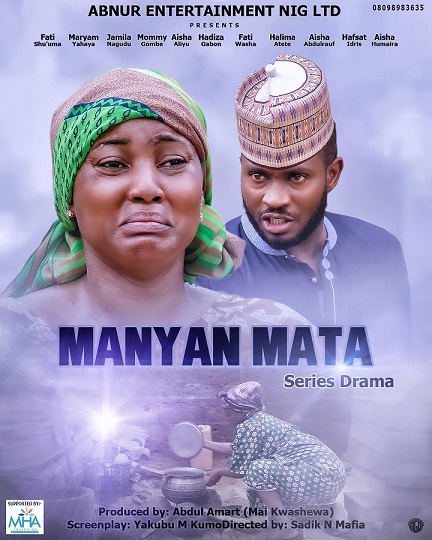
However, the Kannywood, with its vast audience across the Hausa-speaking communities across the globe, also failed to grow in its intellectual capacity. It instead gets stuck to its money-making trash productions in the name of soyayya themes, which, apart from the sheer entertainment it provides, literally promotes empty value to the morale, capacity and quality of lives of the audience, not to even talk of national value, pride and dignity.

In Nigeria, the film industry has no idea or focus on National project but purely exist for business reasons. Hollywood has developed over time to become an agenda setter for the United States policymakers and implementors. It has now become a platform and potent avenue for increasing the influence of the United States over other nations and peoples worldwide. The Indian Industry also helps that country placate the outside world with its numerous internal crises and contradictions by promoting a clean, prosperous and happy India.

In Nigeria, Nollywood promotes less national dignity and unity but corruption, indecency, cultism and disunity. It exposes more of the weak and bad sides of the country, its institutions, leaders and people instead of strengthening their good sides more. Why? Because they make better money doing that since their productions appeal more to the wrong side of humanity in us. The Kannywood, with its empty intellectual value, is simply vain. So, as the two continue to grow side by side like that, we may have to do with the fast growth of a two-left-legged maiden of an industry.

Zailani Bappa wrote from Bauchi State via zailanbappa@gmail.com.

Prof. MZ Umar appointed new VC, FUBK

By Ibrahim Mukhtar

The Governing Council of Federal University, Birnin Kebbi, at its 25th meeting held from Monday, 21st to Thursday, 24th November, 2022, has approved the appointment of Prof. Muhammad Zaiyan Umar as the new Vice Chancellor of the University.

In a press statement sent by Alhaji Jamilu M. Magaji, the
Public Relations Officer,
Federal University Birnin Kebbi, he noted that the Pro-Chancellor and Chairman of Council, Prof. Funmi Togonu-Bickersteth announced the development at a Press Briefing held on Thursday, November 24, 2022 at the Council Chamber, Senate Building, University Main Campus.

The statement received by The Daily Reality states that “the Pro-Chancellor who revealed that the appointment of the new Vice Chancellor was sequel to the advertisement in the Daily Trust and The Punch Newspapers of Saturday, 2nd July, 2022 and subsequent interview by the Governing Council, added that the tenure of the outgoing Vice Chancellor ends on December 3, 2022.

Until his appointment, the new Vice Chancellor was the immediate past Deputy Vice Chancellor, Sokoto State University.

Muhammad Zaiyan Umar, a Professor of Political Science at the Usmanu Danfodiyo University, Sokoto (UDUS), comes with over three (3) decades of professional and administrative experience. He started his professional career at the UDUS as a Graduate Assistant in 1989 and became a Professor in 2009.

The immediate past Deputy Vice Chancellor (Academic), Sokoto State University, Sokoto, Prof. MZ Umar also served as the University’s Ag. Director, TETFund’s Research and Development Centre of Excellence. He is currently the Chairman of the Board of Centre for Open and Distance Education (CODE) at the Usmanu Danfodiyo University, Sokoto. Prof. Umar was, at various times, the Ag. Head of Department of Political Science, Deputy Dean and Dean of the Faculty of Social Sciences, as well as the Dean of Postgraduate School at UDUS.

The new Vice Chancellor served as Resource Person to several organizations including the Institute of Security Studies, Abuja; National Institute for Policy and Strategic Studies (NIPPS), Kuru, Jos; The Electoral Institute of the Independent National Electoral Commission (INEC) and the House Committee on Marine Transport, National Assembly, Abuja.

A Fulbright Fellow, Prof. Umar served at the University of Washington, Seattle, USA between 1988 and 1999. He served as an External Examiner and Assessor for promotion to Reader and Professor for various State and Federal Universities in Nigeria as well as the Council for the Development of Social Science Research in Africa (CODESRIA), in Dakar Senegal. He is a member of the Fulbright Alumni Association of Nigeria, Nigerian Political Science Association (NPSA) and Social Science Academy of Nigeria (SSAN).

Prof. Umar was born on June 12, 1963. He is married with children.”