Northern Nigeria

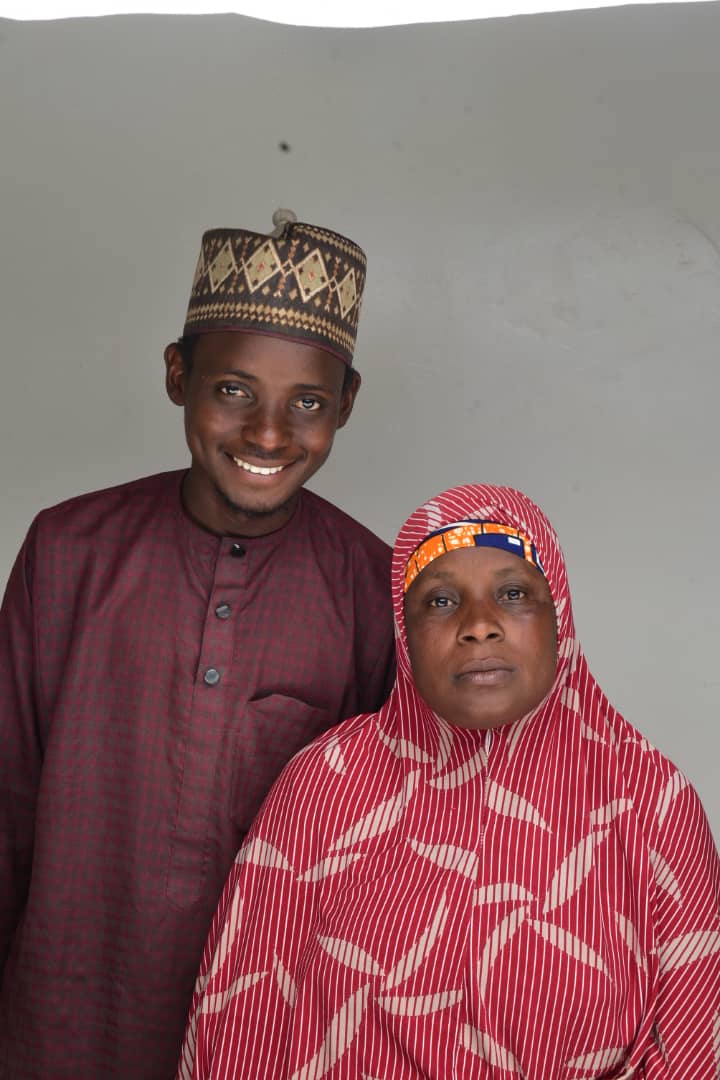
This thing called “Lefe” and its danger to marriages in Arewa

By Lawan Bukar Maigana 

To say that I was bemused reading a story of a young lady whose parents influenced her to reject a guy she truly loved because of “Lefe” (trousseau) would be a gross understatement.

Unsatisfied with what her soon-to-be husband had offered, the lady asked him to change the lefe items with expensive ones or abandon the thought of marrying her. He asked why and she explained that the things he brought were not up to her taste because she was about to graduate and deserved better. Nevertheless, she insisted that he had to come and pick up his boxes. Respectfully, his friend went to her house and picked them up. 

After the above encounter, he stopped calling her. She became worried and asked him why did he stop calling her. He told her there was no point in calling someone who didn’t love him, and that was the end of their conversation. After that, he sold all the boxes, started a business, and happily got married after three years. 

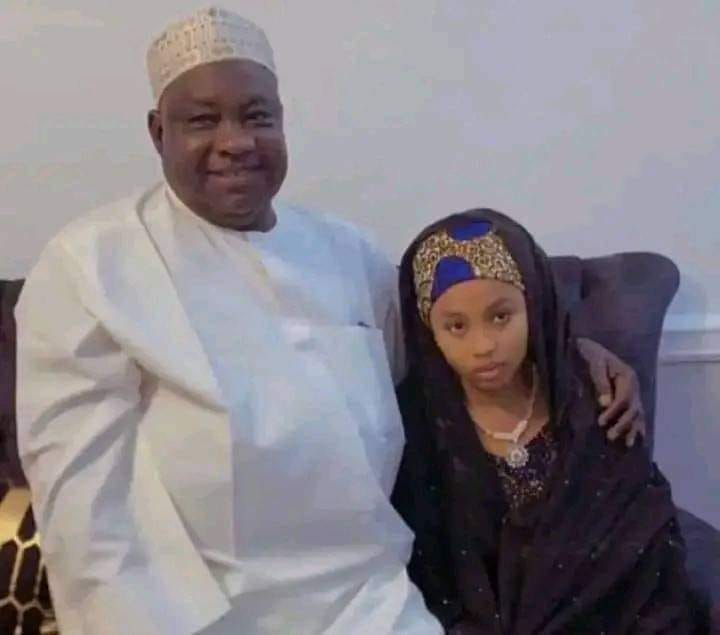
This story happened 13 years ago. The lady is now a graduate and still unmarried. Unfortunately, she came out to share her experience with the public because the same aunties that influenced her to reject the man because of his inability to fill the boxes with pricy things are the same people asking to be the fourth wife to an elderly man who perhaps she doesn’t like. 

She is 32 and regrets her decision to side with her mother and aunties. She desperately wants to know his whereabouts and apologize to him. I think there are a lot of lessons in her story. Her last words: “Ladies, not all that glitters is gold. Lefe isn’t important; dowry isn’t important…”

Even though Islam is not in conflict with our native culture, parents must make it easy for their children to get married to avoid them becoming promiscuous. But, more importantly, now is the time to abolish the culture of offering lefe, as a necessity for our Muslim youths, especially the ones in the North, to become couples. It is one JIHAD that must be fought.

Lawan Bukar Maigana writes from Maiduguri, Borno State, and can be reached via lawanbukarmaigana@gmail.com.

The North and 2023: Honor and truth, or lies and deceit?

By Tahir Ibrahim Tahir Talban Bauchi

In the 21st century of global villages, democracy, and westernisation of ideals and even beliefs, it is certainly difficult to comprehend what Northern Nigeria is, let alone what it stands for. The massively Islamised North, where peace and religious scholarship reigned supreme, has become a savannah of religious extremism and terrorism and almost a ground for legitimised banditry and bloodshed.

Life has become almost worthless, and tens of thousands of lives are lost to terrorism from Boko Haram in the east and kidnappings and banditry from the west yearly. Its traditional institutions of legendary valour and glorious kinship remain emasculated by State Governors who neither know the value and importance of these institutions nor have an iota of respect for them. Its political leadership is so partisan and fragmented, with every ‘Kingpin’ in bed with one political party or the other, or worst still, belonging to one candidate or the other. The North has remained in name and geography but fortuitously in almost all other ramifications. 

This is what has become of the behemoth The North since the democratisation of the Republic in 1999. For the few years that power has resided in the hands of Northerners, what good was it, and what did it bring since 1999? A large following of the North did mortgage the North’s future turn in power and campaigned for the continuity of Southern power. Only providence saved the day from the bastardisation of our nascent democracy. And perhaps a fall off from that pitiful nuance was another truncated term of a Northerner in power.

Present day 2015 to 2023 Northern Presidency has also been continually challenged by Northerners largely, and even though it has survived that onslaught, a moment of truth has come upon the North, where power arguably, and reasonably, is supposed to move to the South. It may not have been constitutionalised, and it perhaps may not be carried by the statutes of Federal Character, but no sane mind would oppose the notion of a power rotation for the peace and unity of the supposed federating units.

The raging debate is as to whether democracy remains whole when elections are based on ideas like rotation and, in other quarters, if the North has been shortchanged in this dispensation and power can be retained Northwards as a balancing equation. But what is a democracy, if not a phenomenon where the people are to decide how they want to be democratic? And what amount of tenure would strike a balance enough if other parts of the Federation are wont to run back the clock to cover previous republics or even military regimes?

While those debates are waged by the elite and the political strategists, The North, in the last eight years of power, has not been cured of poverty nor its un-educatedness. The reigns of power resident in the North as against the gains of power, be the reins resident in the North or not, seem to be mutually exclusive events. 

The North must learn how not to be in power and yet, record economic growth and development. Development that seeks to bridge the gap of education, infrastructure and disposition. Northerners behaving like expectant infants, to be fed and bred by the government, is sorely a thing of the past. Communist ideals are rarely ideal in the 21st century, where techies are building worlds that are driven by knowledge and technology.

Embracing a new world order, where self-reliance is a burgeoning business, is the new deal. The North must cut deals with the ruling party, where it stands to gain agriculturally and infrastructurally. Its size and population make it unbelievably powerful in the say-so of what happens to Nigeria’s politics. The last 8 years have seen so many Northerners in positions of power, but alas, they have not been able to affect the lives of Northerners, not even in simple small ways. The groaning populace, under the clutches of poverty, is miraculously Northern, while their brothers fill the corridors of power. To what use is this power? The North surely needs more lessons of utility in power. 

The history of the North is not borne out of vain glory. The reputation of integrity, honour and glory was carved into the annals of our history by hardworking, honest men who believed they were leaving a legacy of honour. If the North was hitherto shortchanged, it is not in its place to shortchange others and perpetuate a cycle of vengeance and unfair play. For posterity’s sake, the North must honour its political agreements, either written or not. Murmurings of betrayals by Northern leaders/ governors must be dispelled and should not be entertained, not even by the evilest amongst us. 

In the final analysis, PMB is honouring himself and the North by leaving in 2023, just like Jonathan did himself and the South in 2015. The writer is an advocate of justice and fair play, and of course, power rotation. Mistakes of the past cannot be corrected by mistakes of the future. There is no remedy for an anomaly that was created by a selfish few who were not thinking of their regions or their country but of themselves only. We have survived the Nigeria 2015 apocalypse by a far stretch of another 8 years. Plunging our nation into unnecessary crises is selfish and barbaric. Keeping Nigeria one and sane is what our leaders should be thinking of before their separate agendas. May God bless Nigeria.

Tahir is Talban Bauchi

The Kano of my dream

By Rukayya Abdulhadi

A dream has always been a glimpse of the future—yet to happen and fragments of the past or what we thought to be. But, the Kano of my dream is a Salad of both; past and present.

It has always been hard to differentiate between my dreams and fantasies. What I have always dreamt as Kano, my past, present and future, was just a hallucination. The surest way to make your dreams a reality is to live them.

I dream of Kano to be the peaceful city that it once was – where people slept outside the walls of their rooms undaunted.

A Kano where humans are as safe as birds, swirling inside streets ‘Lunguna’ with no phone snatchers or intimidating drinkers.

A Kano where there is no imposing but tolerant of religion and cultures. Where marriage is bound by love, not ethnicity or race. Where schools outnumbered business centres branded as mosques. Where sect ‘Dariqah’ is not a prerequisite for relationships.

I yearn for Kano to be where nobody has to know someone to get their children educated. Where the rich and the poor eat in the same bowl without distinction. A Kano where anyone sitting on the throne of Emir is respected, their counsel duly noted. A Kano where elders are leaders.

I want Kano to be where every father is a father to all, and every child is a child to society. A Kano, which will not only be the centre of commerce but it is also the portrait that speaks the values of Hausa and Islam. A clustered society that doesn’t discriminate.

A Kano with a unique voice of respected command, youngsters, scared to dare elders. A Kano where respect is bounded by deserving.

A Kano where politics and religion will no longer be an instrument of coercion and manipulation.

A Kano free from the insalubrious dependence of pseudo-clerics, religious entrepreneurs and miracles.

A Kano where religion will not take the place of good governance.

A Kano with critical thinking youth, not human—machines for winning elections.

I dream of a Kano without all the cacophony of the ill-mannered and bastardised semi-illiterate politicians.

A Kano where every girl-child deserves an education, her dreams not shattered by the pretence of street hawking and child marriage. A Kano where female nurses and doctors are welcomed, not accused. Where motherhood and carrier peacefully coexist; accepted. Where a woman’s place is beyond the ‘oza room’.

A Kano where givers give without being asked, where takers take without asking. A Kano free from child labour camouflaged as ‘Almajiranci’.

I would love Kano to be a place wallowing in technology and accelerating towards the future, with a promising economy and fertile land. A Kano where poverty is dying while commerce is thriving.

Where leaders are readers, not a collection of nincompoops monopolising power.

A city where for kids, night tales will replace the abracadabra of TV series and an avalanche of technology with no use.

A Kano of my dream is possible.

As Eleanor Roosevelt said, “The future belongs to those who believe in the beauty of their dreams.”

Rukayya Abdulhadi is among the runners-up in the 2022 “The Kano of my dream” writing competition jointly organised by Muhsin Ibrahim, PhD, and The Daily Reality online newspaper. He can be reached via rukayyaabdulhaddi@gmail.com.

The Kano of my dream

By Abdulmajid Mudassir

I dreamt a good dream, a perfect dream about Kano. I consider Kano the best part of myself. Words are indeed scantier than dreams. The Kano of my dream is nearly impossible to describe. It is the Kano that cannot be found elsewhere in a hurry. Dear reader, I will describe it to you. 

The Kano of my dream is a society where education is the most valued treasure. It is where primary and secondary education is free, compulsory and easily accessible in the real—not political—sense of the word. The Kano from whose territories illiteracy has entirely vanished. The Kano, where tertiary education is affordable and accessible by anyone who wishes to pursue it. Education is the bedrock of any thriving society. Education is to a society what fresh water is to thirsty lips. 

People often say: “health is wealth”. In the Kano of my dream, there is the required number of doctors, nurses, midwives, paediatricians, obstetricians and public health officers who are patriotic and caring. There is also an adequate number of hospitals and materials. Listening to people begging for money via radio stations for medical care is horrific. 

Kano has been blessed with seductive fertile lands: there is virtually no farm produce we cannot grow. I dream of Kano growing food in excess. 

Is a just society not the best society? I dream of Kano, where injustice of any kind is zero-tolerated. Where the weak can successfully seek redress with ease. 

I dream of Kano, where good road networks and potable water in rural areas are available. 

I dream of Kano, where there is respect for the values and dignity of women and where the youth are considered the engine of growth. 

It has been said that every limit is a beginning as well as an ending. All that you read above are hopes. How can we achieve all our hopes? George Elliott, the author of the Middlemarch, said: “hopes are often delusive.” But is hope not delusive only when the wrong remedies are applied? If we carefully observe, understand and plan for the solutions to our problems, they are surmountable. 

Although there is a concentration of pupils in rural areas, primary schools in rural areas give very little or no consideration to knowledge, skills and new ideas needed by these pupils to function effectively in their environment (e.g. farming practice and management, community development, fishing, sheep and goat rearing, hygiene, nutrition etc.). Moreover, the teaching focuses more on recitation and repetition instead of thinking and problem-solving. 

The curricula shall be radically reformed. It should incorporate the subjects needed in rural areas. Our primary and secondary schools should not only focus on general but also a family improvement, community development, and occupational education. Failure to do this will cause the youth to drift away from rural areas, eventually leading to more crimes and job lottery in the Kano metropolitan area. 

To achieve the above, the government shall reopen teachers’ training colleges. Furthermore, primary schools should observe and prepare pupils who distinguish themselves in terms of sharp thinking, problem-solving and creativity for those schools. 

Research shows that not more than 35% of the potentially cultivable lands are used in Kano. Therefore, the government shall revivify our dams, provide more irrigation channels, construct road networks, and provide materials for land improvement in preparation for intensive farming by the teeming unemployed labour force willing to participate in farming. 

As a state estimated to have over 15 million people, it is horrific to learn that no manufacturing company produces merely distilled water in the whole state. Government should concentrate more on providing the sophisticated and expensive machines and other materials desperately needed in our hospitals instead of focusing on building new blocks in the existing hospitals where it is unnecessary. 

It is now the time for Kano City to develop vertically instead of horizontally in building construction. What if we have multiple twenty-and-above-storey buildings in Kantin Kwari Market? The urban planning authority should help with ways to encourage people to build multiple storeys instead of making several buildings with one level. 

Waste materials shall be adequately recycled. In addition, there shall be a widespread plantation of trees. 

What seems a foreboding is the emergence of the modern Almajiri system of education. The situation must be handled properly, for it is a time bomb. The system should be reshuffled and incorporated into the modern education system. 

Our lack of trusted leaders pains me the most. But, with good governance, we can achieve something meaningful. It is, therefore, a collective responsibility to make sure we go out en masse on election days to vote for suitable candidates. 

The leaders know everything except what the followers know better. Therefore, public opinion shall matter in all governmental policies. 

All forms of productive competition, such as agricultural produces and writings (such as this), shall be encouraged. 

Happiness and sports are always hands in gloves. The Kano Pillars should utilise the legacy of Golden Stars—a founding member club of Kano Pillars. Golden Stars used to select only players who were squarely passionate about football, not money, fame or anything else. That action made them win 32 out of 36 matches in a football tour they took in the late 1980s across West Africa. 

If we keep it right, other things will keep it right. If we brave all the difficulties, it may cause to make this state great: a thrice-blessed Kano is attainable. But it is an accumulation of trouble to think that making Kano great is not a collective responsibility. We have no right to urge greater change until we have tried as much as possible to alter the wrongs beneath our hands. Let us work together to make Kano a smaller edition of the terrestrial paradise.

Abdulmajid Musassir is among the winners of the 2022 “The Kano of my dream” writing competition jointly organised by Muhsin Ibrahim, PhD, and The Daily Reality online newspaper. He can be reached via abdulmajidmudassir@gmail.com.

The Kano of my dream

By Suhaibu Safiyanu Bagwai

Indeed, one of the most important developmental aspects of modern Nigeria is the growth of public opinion, which, aided by universal education and the mass media, can today keep the government in check as has never happened before. We can still march on through our fastidious conscience and occasional rebellion or our constant prodding of society’s leaders for better things. Even in a perfect world, there will always be men who will dream of other worlds, of better things, since not everyone is likely to be enthused by their current world, let alone someone who lives in Kano, a state that is riddled with corruption, social insecurity and illiteracy, bloated by debts and battered by economic volatility, poorly planned buildings and poor refuse disposal and management, to mention but a few.

Kano is one of the seven ancient Hausa kingdoms, and the principal inhabitants of the state are the Hausa people. A commercial nerve centre of Northern Nigeria, the “Centre of Commerce”, with a population of about 20 million people. The large population of people and the ease of doing business in the state have added to the crowded nature of the state. Nevertheless, it has maintained its commercial status for centuries, although the economy is friable, despite the inconsistent government policies and sporadic electricity supply, which hamper the manufacturing industry. Kano’s economy relies primarily on trade, retail and services.

Over the years, Kano has encountered enormous urbanisation challenges, ranging from rapid population growth, overcrowding, increasing vehicular and industrial pollution, high rates of out-of-school children, and urban poverty resulting in many environmental issues. Compared to its neighbouring states, Kano is faring better; but when put on a realistic scale, it is devastatingly poorer! Thus, every Kano citizen dreams of seeing that the major problems bedevilling the state are properly checked, and I am not an exception.

Looking at the population of Kano, one will find how it grows at a hysterical height. Rural-urban migration is at its peak; the city is overpopulated with people who leave their hometowns for greener pastures. That makes the city dirtier and unhealthy to travel around. But why the rural-urban migration increases every day? This is the question we seldom ask.

Nigeria’s current economy is debilitating; the inflation rate is high. The recent statistics of multi-dimensionally poor Nigerians rise to 65%, and 75% (of this percentage) live in rural areas. This shows that the urban-rural poverty and unemployment margin is wider, hence the rise in rural-urban migration. However, this is something that is not uncontrollable. Job creation and providing basic social amenities will go a long way in solving this problem. Offering loans, fertiliser and seeds to our small-scale rural farmers and making sure they reach the target people and introducing government and private agencies aimed at educating the farmers on how to make a good harvest, storage and sale will boost our agricultural produce, create job opportunities, diversify our economy and reduce the rural-urban migration drastically.

Reading the statistics of the number of out-of-school children in Kano and seeing it myself in my hometown, Bagwai, scares me the most. A society that invests less in education is stagnant and hopeless, with little or no future. Over the years, our government’s educational policies could have been better planned and executed. For instance, the current government’s introduction of the “Free and Compulsory Education Scheme” has, owing to poor planning and execution, ruined the education system. Before the scheme’s introduction, students used to pay 700 naira per term, which was used for the management of the school and pay teachers, mostly volunteers, some tokens. Now that the fee is removed, teachers – that are primarily voluntary – become scarce, and the principals and the head teachers cannot raise the money to pay them or manage the schools. It is the government’s responsibility to look for a way out. Unfortunately, public schools have remained neglected since the law was passed.

Many students drop out of school due to dilapidated buildings, overcrowded classrooms, scarcely qualified teachers, and poor teaching and learning atmosphere and facilities. Therefore, the government should look deeper into this scheme and make immediate improvements. In addition, the sectoral allocation in the education ministry should be increased. We have thousands of well-trained, unemployed education graduates ready for recruitment.

Kano is notoriously known for political thuggery, and it is one issue that perversely mocks my hope of a better Kano. However, I learned that most are either unemployed or school dropouts. Thus the creation of rehabilitation centres, youth empowerment schemes, sporting activities and public enlightenment programs will help reduce it.

Although there has been some development in the road network of the Kano metropolis, the number of vehicles at some road injunctions exceeds the road’s designed capacity. The trading activities along the major roads and inadequate planning obstruct efficient road transportation in urban Kano. Poorly planned buildings in our major markets, mostly built on water passages, blocks the water passages causing water to flood when it rains, which leads to the loss of lives and properties worth billions of naira – as it happens yearly – and obstructs the easy passage of vehicles whenever there is an accident or a fire outbreak in the markets. I dream of seeing some of the major markets relocated from their present locations or their buildings re-planned and trading activities along the roads banned, providing them with space for their businesses. More bus stops and parking spaces should also be provided to prevent indiscriminate parking and to stop at prohibited places.

One of the most disturbing environmental problems we face is refuse dumping on the streets outside our homes and any unused space in our neighbourhood, including open sewers and ponds. We produce almost 2,000 tonnes of garbage daily, but the sanitation workers can only approximately dispose of 800 tonnes. The remaining 1,200 are piling up on the streets and alleyways of the city, posing severe health risks to the inhabitants and blocking water passages. That is why the city is always dirty! Therefore, through REMASAB, the government should provide sufficient equipment for refuse disposal and the general public, who mostly needs a culture of refuse disposal, be enlightened on the dangers of improper refuse disposal and how to control it.

Bringing traditional and religious leaders closer to the government will influence public adherence to some governmental policies since the citizens are religious. The leaders are also influential. There should also be an establishment of a law that will restrict religious leaders from using abusive or provocative language during their sermons and preaching.

The poor supply of electricity and acute dearth of pipe-borne water in Kano can also be reduced if the government were to utilise its resources accordingly. Kano is blessed with almost seven major dams that can generate hydroelectric power, like the ones done at Tiga and Watari dams, providing adequate electricity and water supply for public and industrial usage. The surroundings can also be used for hotels and tourism by building amusement parks which can generate revenue for the state and create jobs.

The agency responsible for revenue collection, KIRS, needs to be redressed and transparent. The government’s spending should also be transparent to the public to know where and how their taxes are spent.

If I were to advise the government and the budgetary committee, I would suggest they determine budget priorities so that resources can be directed to issues of higher priorities and the proposed plans to be in line with the projected range of resources for each government agency. That will also compel the government to make hard choices between using available resources to start new projects or completing the existing ones. For instance, this year’s priority is education; new teachers recruited, buildings renovated, wages increased, teaching and learning facilities provided and so on. Then, next year will be the health sector, followed by commerce, water, electricity, agriculture, and sports…in the subsequent years. This will go a long way in tackling our problems.

Finally, I believe that hopeless as she may seem, Kano is not beyond redemption. We just need the will to do that. This is my dream, and I believe it is everyone else’s!

Suhaibu Safiyanu Bagwai is among the winners of the 2022 “The Kano of my dream” writing competition jointly organised by Muhsin Ibrahim, PhD, and The Daily Reality online newspaper. He can be reached via bagwaisafwan@gmail.com.

The Kano of my dream

By Ayuba Ibrahim Gezawa

Kano, located in northern Nigeria, is a place of great cultural and historical significance. It has a rich history dating back to the 7th century and is known for its strong Islamic influence, vibrant arts and crafts scene and bustling markets. In my dreams, Kano is a thriving metropolis that is modern and progressive while still maintaining its rich cultural heritage.

One thing that makes Kano so unique is its diverse and vibrant culture. It is home to a mix of ethnic groups with unique traditions and customs. In my dreams, Kano celebrates this diversity and promotes cultural exchange and understanding. The city is full of vibrant festivals and events that bring people from all walks of life together to celebrate their cultural traditions and share them with others.

Another aspect of Kano that I admire is its strong sense of community. The city has a strong sense of pride and belonging; its residents are known for their hospitality and generosity. In my dream, Kano is where people come together to support each other and work towards a common goal. Whether it is through volunteering at local charities, participating in community projects or simply being there for a friend in need, the people of Kano are always willing to lend a helping hand.

One of the things I would love to see in my dream Kano is a strong focus on education. Education is the key to a better future, and I would love to see Kano become a hub for learning and innovation. In my dream Kano, top-quality schools and universities provide students with the knowledge and skills they need to succeed in the modern world. There are also numerous research and development facilities where scientists and innovators can work to solve some of the world’s most pressing problems.

Technology is the heart of all developments in the current world. It changes how we interact, do business, entertains ourselves, and understand the world. In Kano of my dreams, technology plays an integral role in its development. It prioritises the training of technically oriented personnel who are to be the initiators, facilitators and implementers of the technological development in the country. Not only that, but it harnesses those technological developments and applies them to the economic, social and environmental challenges.

In the Kano of my dreams, corruption has no place. Corruption is a disease capable of hindering all forms of progression. One way for Kano to tackle corruption is to implement strict penalties for corrupt behaviour and to enforce those penalties consistently. This could include fines, imprisonment, and other consequences for individuals and organisations engaging in corrupt practices. Additionally, the city could increase transparency in its financial and decision-making processes by making budget information and contracts available to the public.

Furthermore, Kano could establish a hotline or other mechanism for citizens to report instances of corruption and take steps to protect those who come forward with information. Finally, the city could invest in education and public awareness campaigns to encourage citizens to speak out against corruption and understand its negative impact on the community.

I would love to see an improvement in the healthcare system in the Kano of my dreams, by hugely investing in the health sector, not just by building world-class hospitals but through proper management and sustainable accountability of those hospitals. A Kano city where the poor, the rich, and our top government officials patronise the local hospitals rather than opting for other alternatives. A Kano where the local hospitals would provide the same quality of healthcare services as the ones in the developed countries. A city with a drastic reduction in infant and maternal mortality due to access to qualitative and world-class healthcare services.

Distinguished and prominently renowned as the centre of commerce as Kano already is, in the Kano of my dreams, I would love to see a city that further promotes exponential growth and development in our businesses. It encourages businesses to start or expand in the city, supports entrepreneurs, creates jobs, and stimulates economic growth. This might include offering tax incentives, providing business development resources or investing in education and training programs to help prepare the local workforce for new job opportunities.

My dream Kano is a place that uses its natural environment to generate electricity so that every place within the rural and urban metropolis will experience an uninterrupted power supply. A city that provides all the basic amenities: good roads, portable water, good rural and urban town planning, sanitation and recreational facilities, among others, to its citizens. A state that puts an end to high levels of poverty, inequality and unemployment, a united, stable and peaceful place. A city that would inspire other northern states and Nigeria as a whole to become important and giant figures in the global community.

Overall, my dream Kano is a place of diversity, community and education. It is a thriving state celebrating its rich cultural heritage while embracing progress and innovation. It is where people from all walks of life come together to support each other and work towards a brighter future for all. I dream of a better Kano, a state with a brighter future, where everyone would work to make these dreams a reality.

Ayuba Ibrahim Gezawa won the 3rd position in the 2022 “The Kano of my dream” writing competition jointly organised by Muhsin Ibrahim, PhD, and The Daily Reality online newspaper. He can be reached via ayubaibrahimgezawa@gmail.com.

The Kano of my dreams

By Ibrahim Abubakar

In the late 1890s, my great-grandfather narrowly escaped the evil claws of the Mahdi’s hostile and belligerent lieutenant, Rabeh Bn Fadlallah, who had invaded Borno to spread the Mahdist ideology. They sacked the empire’s capital of Kukawa, captured and executed Sheikh of Borno, and enslaved many people. This martial excess sent trembles across the land, and many thought it wise to migrate westward into the Sokoto Caliphate for safety. Among those who migrated to the Caliphate was my great-grandfather, Mamadou. Of its two dozen emirates, Mamadou chose Kano as his refuge.

Kano was the jewel of the Sahel, a centre of trade and commerce with walls 50 feet high and immensely thick, surrounded by a deep artificial gully making it an impenetrable fortress; a marvel to behold! It is this sense of security and opportunity, I believe, that made Kano a desirable place for my ancestors.

During colonial times, Kano increased in its majesty. The British administration modernised trade and industry, built hospitals, schools, and railways and improved the justice system by integrating and superbly implementing strategies that supported the rule of law and ameliorated the superficial old system. Kano’s commercial strategies were carefully designed to produce a positive net economic effect. For example, hide, skin, groundnut, animal feeds, meat and textile were exported to Britain. These export plans were supported by long-term government programmes that continued into post-independence Kano.

According to a World Bank report, Kano State’s mainstay is agriculture. It employs about 60% to 70% of the population producing rice, maize, millet, groundnut, beans, etc. Livestock production is another source of income for the farmers. The industrial output is from oil mills, textiles, tanneries, flour mills, and several others.

As the centre of commerce, Kano handles about 75% of finished goods from Lagos, Ogun, and Oyo industries. These are distributed to all the northern states and the neighbouring states of Niger, Cameroon, Chad, etc. From Kano, the following are exported: semi-finished leather, cotton lint, gum, hibiscus, sesame seeds and other minor items. All of the above have immensely contributed to enhancing Kano’s GDP as one of the highest in the country.

Unfortunately, the contemporary situation is rather bleak. Most of the factories have closed or have reduced their production capacity. Kano had about 30 tanneries producing over 45 million goats and sheep skins for export. In addition, over 7 million cattle hides were processed as finished leather for making shoes and other leather goods. However, there are only a dozen tanneries in production today. As for cattle hides, 90% of it is consumed in southwestern Nigeria as Ponmo or Ganda. In addition, cattle hides are imported from neighbouring countries and Mali, CAR, Sudan, and Saudi Arabia. The last textile to close was Angel Spinning and Dyeing Limited.

It is not a hidden fact that education has crumbled in recent years. Many children in Kano are poorly educated (the lucky ones?) and without a solution in sight. Although I am aware that education has exacerbated globally, for example, my father, 48 years older than me, is better educated in most branches of general learning. Kano is in the top five states in the country with substantial numbers of out-of-school children.

Healthcare facilities across the state are in a deplorable state. For example, the last time I visited the A&E department of a general hospital in Kano, I was sickened by the gruesome sight of accident victims on the floor, literally bleeding to death. In addition, there is an enormous disparity in the doctor-to-patient ratio, albeit not the worse in the country. It is, however, in the top ten states lacking doctors, with a ratio of 1 doctor for every 14,123 persons. To put it into perspective, the UN standard doctor-to-patient ratio is 1:600.

Kano used to be safe. Growing up, very few isolated incidences of theft were heard of in the city. Today, people get robbed in broad daylight. Thieves with sharp knives of all shapes and sizes attack people on the streets to rob them of their phones and other belongings; those who refuse to comply are fatally stabbed without remorse. Rape cases are rising exponentially. This year alone, over 1,300 cases of rape were reported. It is sad to see Kano vitiated.

The Kano of my dreams is the Kano my great-grandfather fell in love with. A Kano where there is opportunity and hope for everyone regardless of gender, ethnicity, or religion. A Kano where I feel safe walking any street at any hour of the day or night. A Kano where women can feel comfortable around men without fearing harassment or misogyny. A Kano with subsidised agricultural products such as fertilisers and an established avenue for creating liaisons with agencies that will be responsible for borrowing funds from the banks of industry and agriculture for the benefit of farmers, and this will increase productivity as well as employment.

Similarly, the Kano of my dreams will create an investment agency to secure funds from the Bank of Industry for the closed tanneries/factories and companies at low capacity. This will enhance business activity and employment. Furthermore, the Kano of my dreams will utilise Tiga Dam power generation to supply electricity to the industrial areas of the state and set a good precedence for the future supply of power to the entire state, either through hydroelectricity, solar energy, or thermal power.

The Kano of my dreams is a Kano where children are given quality education regardless of the social and economic status of the family they come from. A Kano where children do not go around begging for food on the streets. The Kano of my dreams is a Kano where hospitals are abundant, and doctors, nurses and other healthcare workers have all the needed equipment to make their jobs easier. A Kano where the large, proposed sports complex at Kofar Na’isa is turned into a colossal state-of-the-art medical centre to cater for the entire country. A Kano where neighbours assist one another.

I dream of a Kano where the rich invest more in local small-scale industries to boost production and employment rather than holidaying abroad and boosting the economy of the colonial order neglecting their brothers and sisters at home languishing in abject poverty. Lastly, the Kano of my dreams will have excellent and selfless leaders that genuinely care about the advancement of the state and will put in their utmost to see to it becoming the gem that it was, if not better than it was in days of yore. In sha Allah!

Ibrahim Abubakar won the 2nd position in the 2022 “The Kano of my dream” writing competition jointly organised by Muhsin Ibrahim, PhD, and The Daily Reality online newspaper. He can be reached via ibrahimabubakhr@gmail.com.

The Kano of my dream

By MA Iliasu

The dilemma with Kano has always been about standards. So, naturally, Kano’s advantages and disadvantages in socioeconomic assets have outgrown everyone’s. The history of Hausa land and much of the Sahel will confirm that assertion.

Kano’s population was approximated in 2022 as the second largest in Nigeria after Lagos and sixth in the Gross Domestic Product (GDP), ranking behind Lagos, Rivers, Delta, Oyo, and Imo. Kano is blessed with more than ten major markets across its rural and urban settlements, with Kantin Kwari and Dawanau serving as the largest textiles and food markets in West Africa, respectively. The state is enriched with the twentieth highest landmass in Nigeria, the biggest part of which is a prosperous arable land, with a favourable temperament that enables consistent rainfall and harmattan during rainy and harmattan seasons, on top of the twenty dams distributed across the rural economies of the state. Kano is one of the largest industrial hubs in West Africa, and the aggregation of these natural and human resources earns the state the title of “Centre of Commerce” in Nigeria.

By the same standard, however, the same factors make Kano an unfavourable environment. The massive population is more neglected than cared for, thus becoming a liability rather than an asset. There is a large number of out-of-school children roaming streets as beggars and hawkers, with many engaging in child labour. Many youths have been reduced to thuggery, thievery, and drug abuse. The economy is overwatched, yet doesn’t reflect in the state’s treasury by how the state rank lower in revenue generation, signifying, among others, the corruption and mismanagement holding its potential backward. The landmass is underutilised, with poor urban planning in the metropolitan areas and primitive agriculture in rural areas.

Consequently, signals of environmental hazards like crime, congestion, and flooding have become significant threats to the Kano metropolis. The dams have been neglected in the rural settlements. The widening gap between the rich and the poor makes the Human Development of the state ranks 28th, according to Human Development Index (HDI) 2019, among the very worst in Nigeria. The income per capita of Kano is among the lowest, with its healthcare being one of the worst in Africa. As of 2021, the state could only hire one medical doctor to tend to the emergency unit of Murtala Muhammad General Hospital during the weekends.

The common factor in both the contrasting pictures is that Kano never does anything in small doses – it’s so-called standard. The Kano of my dream, therefore, is the one in which this standard is retained but only positively to enable the growth and development of the state to measure up to it.

In the Kano of my dream, agriculture and industry are the central focus. A coherent plan which utilises the twenty dams for irrigation farming in forty local governments has been implemented. And courtesy of that, the agricultural output from Kano has outranked every state in Nigeria and equals the capacity of many African countries combined. The landmark is achieved thanks to overwhelming human labour and fertile land, and after the state government widens its thinking beyond small partnerships with regional development banks by reaching out to international agricultural cartels.

A deal has been stroke with India, China, Nepal, and Thailand that sees to it all Kano dams have been utilised in exchange for an uninterrupted supply of agricultural output to the Asian markets. And the reliance on agriculture has paved the way for the flourishing of other farming and manufacturing industries, the rural economy, and infrastructure, which consequently ends rural-urban migration and reduces the pressure on metropolitan areas. Resurgence occurs in food and technology markets, with advanced research in agricultural institutes and massive employment generation for the teeming population. Agriculture is Kano’s largest labour employer for the first time this century. And the problems of unemployment, revenue generation, urban migration and planning, rural negligence, and food security have become negligible.

The multiplier effect of achieving such economic landmarks will, among others, boost the GDP, HDI, Per Capita Income (PI), and general economic buoyancy across all social classes, which in the Kano of my dream, enable investment in education and healthcare. The fantasies of free education and healthcare are now history. The government has seen the truth and intensified its efforts towards achieving a hundred per cent literacy rate and eighty years average life expectancy through massive investment in education and health infrastructure, with more than sixty per cent of its talent pool channelled to study science and technology.

The revolution in the education sector takes place in two dimensions. The first is by reconstructing the state institutions and equipping them with modern learning tools, recruiting more teachers and retraining them, and taking their remunerations to a world-class standard. The second dimension is by reshuffling the curriculum by removing the outdated, less relevant subjects and introducing modern, relevant ones, and rearranging the method of achieving Senior Secondary School Certificates (SSCE) by turning terminal examinations into grade point averages, the cumulative of which will determine whether a student qualifies to take the SSCE or not. Students who excel by having high cumulative grade points from their terminal examinations across six years of Secondary School education will be able to sit for SSCE and secure government scholarships. While those who have yet to excel will have to engage in compulsory remedial studies before they become eligible to write SSCE. That way, the higher institutions will admit students not by chance but by competence, making them more productive intellectual environments. Breakthroughs have since been recorded in research and innovation.

Investment in healthcare starts by providing each local government with a general hospital and enough health workers. Infant and women mortality shall be met with formidable maternal health departments. And health education shall be prevalent, especially among women.

The political culture in Kano of my dream is perceptive and intentional. The fusion of power between state and local governments is abolished, enabling a reformed, energetic, merit-based, transparent, and accountable leadership style of leadership that is appropriately informed by and with the major activities of the clerical, academic and social establishment in the state.

Sports and recreation are engaged with remarkable intensity by establishing sports academies to meet the demands of modern football, basketball, tennis, and boxing. Kids are trained at a young age, adults are funded to do their coaching badges, and sports entrepreneurs are granted smooth platforms to facilitate the transfer of Kano talents to major European and American leagues, revolutionising domestic football to a world-class standard. For the first time in football history, Kano Pillars, an African team from the Nigerian league, has won the Club World Cup, thanks to the formidability of local talents.

In the end, the Kano of my dream isn’t only distinguished with glowing physical features such as roads, schools, hospitals, and recreational facilities but also with a glowing soul, mind, and heart. The spiritual infrastructure is also revolutionised through changing mindsets, attitudes, and beliefs. As a religious society, we have admitted to the supremacy of destiny, one who greatly appreciates the purity of our hard work and ethics. And through the pursuit of this, we turn into reality the endless upward possibilities of our beloved ancient society.

MA Iliasu won the 1st position in the 2022 “The Kano of my dream” writing competition jointly organised by Muhsin Ibrahim, PhD, and The Daily Reality online newspaper. He can be reached via muhada102@gmail.com.

Top 5 Kannywood films of 2022

By Habibu Ma’aruf

The year 2022 has not been great for the Kannywood film industry. There was a substantial decline in feature film production as the popularity of series films soared, piquing the interest of more producers. Cinematic releases were at a premium throughout the year, with just nine films, making it a ratio of less than one release a month. The situation was so severe that no major production was shown at cinemas, even during the Eid ul-Fitr festivities.

However, while some of the few releases fell flat on their faces, others have managed to make it in the trying year. Find below the top 5 Kannywood films of 2022. Please note that only feature films were considered for this list.

  1. Aisha

Directed by Hafizu Bello, the movie, Aisha, is critically and commercially successful. It beats Kayi Nayi (Dir, Gumzak 2021) to become Kannywood’s biggest grosser by earning over ₦5.5 million during its elongated run in two cinemas. This is not surprising as it’s a production of ‘the box-office king’ Abubakar Bashir Mai-Shadda. The story revolves around the eponymous character, Aisha (played by Amal Umar), who dies after being raped, and her parents’ struggle for justice. The plot is uncommonly twisted but perfectly pieced together. The film has a strong message and a realistic narrative. It exposes the grim reality in some higher institutions where students commit serious misconduct. It stars Amal Umar, Nura Hussaini, Adam A. Zango, Sani Danja, and Shamsu Dan Iya, among others.

  1. Lamba

Before the premiere of this Ali Gumzak-directed comedy, there had already been an overwhelming craze for its title song. This has helped the film to rake in ₦1.32 million on the first day, beating the previous record first-day collection of ₦1.25 million by Fanan (Dir. Alolo 2021). Produced by Abubakar Bashir Maishadda, Lamba is a social satire set against the backdrop of ‘Audio money’ (a slang term for the fake display of wealth). It tells how some three young men (Adam A. Zango, Umar M. Sharif and Ado Gwanja) flaunt false riches to impress the classy girls they meet on social media. The unveiling of their true identity is later shown in brilliantly executed, hilarious scenes that get the audience laughing throughout.  The film lacks an innovative script, but it’s an excellent comedy that succeeded in tickling the funny bone. Other casts include Aminu Sharif (Momo), Maryam Booth, Maryam Yahaya, Bilkisu Abdullahi, Aisha Najamu, etc.

  1. Nadeeya

Although the eponymous movie Nadeeya wasn’t initially meant for cinematic release, it still managed to get a large audience while showing on the big screen. The film is an issue-based drama about ‘upbringing’. It depicts how some parents spoil their kids, specifically daughters, and the practical difficulties such children face in life. The story focuses on a pampered daughter, Nadeeya (acted by Rahama Sadau), who faces similar challenges after marriage. The film is hard-hitting and very meaningful. It shows that children’s first learning begins at home, and their personalities and morals depend largely on their upbringing. The actor’s performance is also impressive.  It was produced by the leading actress Rahama Sadau and directed by Yaseen Auwal. Other casts include Umar M. Shareef, Rabi’u Rikadawa, Asma’u Sani, etc.

  1. Hikima

This movie is a murder mystery specially made with a considerable budget to meet the requirements for showing on Netflix. It’s, however, yet to show on the online viewing platform. The film, which premiered in cinemas in late 2021, was released to the wider public in 2022. It tells the story of a philogynist lecturer, Sadiq (Nasir Naba). It begins from a court session with Sadiq being accused of murdering his female student. The film is richly suspenseful, but many audiences criticise it for having a convoluted plot. Moreover, the cinematography and actor’s performance, among others, place it ahead of its peers this year. Hafizu Bello directed it, while Mustapha Ahmad (Alhaji Sheshe) was the producer. It stars Nasir Naba, Ishaq Sidi Ishaq, Sarah Aloysius, Sani Mu’azu, Maryam Yahaya, etc.

  1. A Bikin Suna

A Bikin Suna tells the story of Mustapha (Ali Nuhu) and his wife Ummulkhairi (Mommy Gombe). They have been married for five years without giving birth to a single child. This fact makes Mustapha’s relatives accuse Ummulkhairi of infertility. She becomes pregnant afterwards, and everyone begins to like her. However, a new conflict erupts when the young baby gets missing during the naming ceremony. The film is generally enjoyable. It’s directed by Yasin Auwal and produced by Danjuma Salisu. Other casts include Saratu Daso, Musa Mai-Sana’a, Maryam Yahaya, Shamsu Dan Iya, Rahama MK, etc.

Habibu Ma’aruf Abdu wrote from Kano. He can be reached via habibumaaruf11@gmail.com.

SAS Kano promoted Shari’ah after Jihad – Prof. Naniya

By Ibrahim Mukhtar

The main aim behind the establishment of the famous School for Arabic Studies (SAS) Kano was solely to promote Shari’ah after the conquest of Northern Nigeria by the colonialists.

This was disclosed by Professor TIjjani Naniya of the History Department, Bayero University, Kano, during the SAS day celebrations, which marks the 82nd anniversary of the school.

The History professor went down the history lane and narrated how the school was established and how the then-colonial government wanted to undermine Shariah by promoting their own legal system.

According to the professor, “Sarki Alhaji, who was the first emir of Kano to have performed Hajj, was the one who applied and sought the approval of the colonial masters to establish a school which would cater for the peculiar legal needs of the Northern Muslims.

The colonial masters thought it would be another way to distort and dominate the Islamic legal system, but unknown to them, the School for Arabic Studies would outshine them and their mischief.”

Prof. Naniya narrated how the school admitted only brilliant students based on merit and how a son of a late business tycoon in Kano was expelled as a result of his bad attitude then.

He further talked at length about how the story of the school went high and how the model was copied and established in other states in Nigeria and beyond. Finally, he urged all the attendees to pray for those emirs and leaders who worked very hard to promote Islam and Shariah for all the country to benefit.

The 82nd anniversary took place Monday, December 26, 2022, on the school premises. The event was well-attended by the alumni of the school and other dignitaries.