Northern Nigeria

Four illegal miners killed after site collapsed in Bauchi

By Muhammadu Sabiu

The collapse of a mining site in the hamlet of Kogo Kadage, located in the Yadagungume neighbourhood of the Ningi Local Government Area of Bauchi State, resulted in the deaths of four illegal miners.

The tragedy occurred on Saturday night while the miners dug up lead and attempted to remove it.

According to an anonymous source, they had been mining and excavating lead, one of the local mineral resources, for more than a month when, all of a sudden, one of the holes they had excavated collapsed and buried them beneath.

He noted that as the four miners were taken away from the collapsed site, they passed away instantly.

Ibrahim Zubairu, the chairman of the caretaker committee for the Ningi LGA, described the incident as tragic and sad, stating that three of the four people who were trapped in the pit perished instantly.

According to him, the illegal mining facility is situated seven kilometres from Yadagungume town in the Kogo Kadage forest.

“Yesterday (Saturday), I was informed that four people were trapped in a mining pit, I directed that they should be rescued. Later on, they reported back to me that they recovered three bodies.

“I don’t know about the illegal activities of the locals because we have banned all sorts of illegal mining in the entire local government area, it came to me as a surprise when I got the report of the incidence,” he said.

A socio-religious analysis of Davido’s protege, Logos Olori ‘Jaye Lo’ video

By Hassan Idris

Discussing trending and contentious topics has never been my preferred inclination, not because of a lack of opinions or the ability to articulate them but rather due to the potential conflicts it may engender with those who hold me in high esteem. Nonetheless, today, I shall delve into the trending and contentious subject matter that has generated a whirlwind of discourse on social media, polarising individuals along sectarian, regional, and religious lines and culminating in mutual vilification.

Specifically, I aim to scrutinise the 45-second video released by the Nigerian music sensation David Adeleke, famously known as Davido. In this video, men donned in white jalabia and caps dance boisterously in front of a mosque immediately after partaking in prayers. Adding further intrigue, Logos Olori, Davido’s protege, occupies a prominent spot atop the building’s roof.

Notably, even though the singer makes mention of the phrase ‘Alhamdulillah’ (praise be to God), the video and the accompanying song have been met with severe disapproval from many Nigerians and fans, particularly among the Muslim community, who perceive it as an affront to Islam. They vehemently demand an apology, accusing Davido of disrespecting their religious practices by intermingling sacred rituals with song and dance.

Despite the mounting pressure, Davido finally relents and takes down the video after two days of receiving criticism, opting for a predominantly silent stance and refraining from issuing formal apologies. Notably, Professor Wole Soyinka, in a surprising twist, urges Davido not to apologise for releasing the ‘Jaye Lo’ video, asserting that dancing in front of the mosque does not possess the provocative connotation purported by some.

Among the voices calling for an apology from Davido are prominent Muslim faithful such as Ahmad Ganga, Ali Nuhu, Ashraf Yaman, Ayaat Saeed, Basira Ugochi, and numerous others. Conversely, some Muslims have countered this demand, contending that the singer’s lyrics and actions did not overtly denigrate the Islamic faith. Furthermore, they argue that the video was not intended to ridicule Islam but reflected a cultural norm in Yoruba society.

Additionally, they highlight the existence of Islamic sects, such as the Tijjaniya and Shi’ite, in the northern region, who employ the Mandiri drums as part of their worship practices, thus, indicating that some Muslims themselves engage in similar expressions of religious celebration, with no objections from the community. Before delving into the sociological perspective of religion, it is imperative to recognise the profound significance of religion, particularly in Africa. For many Muslims, it is not merely the song or the jalabiya donned in the video that raises concern, but rather the potential mockery of prayer, a cornerstone of Islam, considered sacred and inviolable. It stands in stark contrast to profanity and warrants utmost respect.

Comparatively, other musicians like Naira Marley may espouse diverse perspectives, yet their words do not evoke similar anxieties. For instance, Naira Marley’s song proclaims, ‘God is the driver, while the Prophet (SAW) is the conductor,’ which, despite its unconventional nature, does not overtly trivialise prayer. Indeed, if Naira Marley had ventured into such territory, he would likely have faced a similar backlash. In response to the contention that some Islamic sects might engage in activities akin to the video’s content, it is essential to discern that while various expressions of worship exist, dancing during prayers remains absent from any Islamic sect. Moreover, the significance of the mosque, as elucidated in the Qur’an, holds paramount importance for Muslims, who regard it as the most sacred and cherished space in their lives. Thus, actions that appear to contradict the mosque’s sanctity are naturally met with vehement objection.

As for Professor Wole Soyinka’s intervention, his failure to fully grasp Nigeria’s religious and multicultural fabric, coupled with his atheistic beliefs, may have influenced his hasty entry into this contentious issue without considering the multifaceted perspectives. Thus, there seems to be an underlying layer of ethnocentrism at play, though it is crucial to clarify that this observation is not intended to belittle Soyinka in any manner.

Turning our attention to Durkheim’s Elementary Forms of Religious Life, the philosopher Charles Taylor’s elucidation of religion as a comprehensive system of beliefs and practices encompassing human existence and its relation to the ultimate conditions of being and other human beings presents a multifaceted framework for analysis.

Durkheim’s seminal work contends that religion is not confined to individual beliefs and practices but rather constitutes a sociological phenomenon that both shapes and is shaped by society. Central to his argument is the concept of ‘collective representations,’ which denotes shared symbols and ideas that foster cohesion among individuals, binding them together in a collective community. Collective effervescence, a cornerstone of religious experience according to Durkheim, entails the shared emotions and sense of unity that emerges when people unite for a common purpose, often manifested in rituals and communal activities.

Furthermore, Durkheim’s delineation of the ‘sacred’ and the ‘profane’ elucidates the fundamental distinction between holy or special elements (the sacred) and the mundane aspects of everyday life (the profane). The video in question seemingly breaches this sacred-profane dichotomy, incorporating elements considered sacred within a context that may trivialise their significance. To elucidate the connection between Durkheim’s ideas of the sacred and the profane, the concept of totemism emerges as an essential component of his thesis.

Totemism encompasses groups of individuals coalescing around a common totem, an emblematic object or animal that symbolises the collective community. The totem, imbued with sacredness, serves as a focal point in rituals and ceremonies, forging a shared sense of identity and unity within the group. By drawing this parallel, the video can be perceived as appropriating religious attire and symbols, potentially attenuating their original sacred import.

Moreover, Durkheim’s concept of ‘mana’ merits consideration of the video’s content. Mana constitutes a spiritual force or energy believed to inhabit sacred objects or spaces. Often linked to animism, the notion that objects and locations possess spirits or souls, ‘mana’ illustrates how the sacred imbue objects and places with special significance. Here, the video’s portrayal of dancing immediately after prayers may be construed as desecrating the sacredness associated with the mosque. As Durkheim transitioned his focus to modern societies, the idea of ‘mechanical solidarity’ comes into play, wherein traditional societies cohere through shared values and beliefs among relatively homogeneous groups.

Comparatively, ‘organic solidarity’ characterises contemporary societies, wherein specialised social bonds form through the division of labour, with various individuals and groups performing distinct functions. The video, juxtaposing modern entertainment (the dance) within the context of a sacred religious space, potentially mirrors the fragmentation and diminished shared values observed in present-day society, evoking notions of anomie.

As a sociologist and poet, I believe some may perceive the Muslim community’s response to Davido’s music video as an overreaction. While concerns are warranted, approaching the issue with knowledge and wisdom, as instructed in the Qur’an, would have been more constructive. Addressing Davido’s actions maturely and knowledgeably could have fostered a more amicable resolution. However, amidst the controversy surrounding the video, it is crucial not to lose sight of the pressing issues in the North, such as kidnapping, terrorism, and poverty, which demand urgent attention and resolution. Calling for uniformity in addressing these challenges alongside the concerns over the music video could have a more significant impact in addressing social issues and fostering a sense of collective responsibility.

Furthermore, it is essential for everyone, regardless of their religious background, to respect and understand the beliefs and cultures of others. Ethnocentrism and a lack of cultural relativity can perpetuate societal misunderstandings and divisions. Respect for all religions, and their sacred practices, should be upheld, emphasising the need for mutual understanding and harmony among diverse communities.

In conclusion, when scrutinising Davido’s music video from a Durkheimian sociological perspective, many potential issues concerning the sacred and the profane in religion emerge. The video’s portrayal of dance immediately after prayers and its use of religious symbols may be perceived as disrespectful and culturally insensitive by some Muslim community members. Moreover, its potential impact on social cohesion and integration in Nigeria’s diverse and multicultural society warrants introspection. Both sociologists and individuals must remain cognizant of religious sensitivities while striving for a profound understanding of different religious practices, fostering mutual respect and harmony within society.

While the controversy surrounding Davido’s music video persists, individuals and communities must engage in constructive dialogue, foster mutual respect, and address societal challenges with collective responsibility. Religion is paramount. It should be treated with reverence, regardless of the particular faith. Let us strive to uphold the principles of knowledge, wisdom, and cultural relativity in our interactions, aiming for a more cohesive and harmonious society. May we all be guided right in our actions and decisions.

Hassan Idris is a Sociologist & Poet and can be contacted via idrishassan25@yahoo.com.

A visit to an ace Hausa ethnomusicologist – Muhammad Kalarawi

By Prof. Abdalla Uba Adamu

In an attempt to gauge the current popular culture market in Kano, I visited my old haunt at Kasuwar Ƙofar Wambai today, 2nd August 2023. It was the place where virtually all Hausa popular culture media products were distributed in the late 1990s to 2000s. It was simply the best in West Africa, as media products from this market – which took over from the Bata market – were distributed to other parts of Hausaphone West Africa.

I was shocked at the fact that there were only three shops selling CDs/DVDs and cassette tapes. The market had been taken over by plastic household items and blouses/football jerseys! It was so sad to see such a vibrant market – the best in West Africa – down on its luck. Discussions with three forlorn merchants reveal two main reasons for this sorry state of affairs of consumptive popular culture media in Kano.

The first was the proliferation of Download Centres. In these places, films were ripped off DVDs or CDs and with a reduced resolution to fit a Smartphone screen – and dozens were packed on a microSD card and sold for peanuts. This denies the content providers of profit from their hard labour. A licensing compromise was agreed between filmmakers and Downloaders to everyone’s satisfaction. Thus, no more CD purchases that require both a CD player, a TV and electricity to play. Downloaders often get their primary source directly from the producers – thus eliminating the media production processes.

Second was the rise of TV series, popularised massively by Arewa24’s Dadin Kowa (although it was not the first). Now almost every producer has jumped on the TV series bandwagon and using YouTube to distribute their programs. With data getting cheaper, it means viewership has migrated to YouTube series dramas – where more money is made with AdSense clicks. Rarely does a producer bother now with a feature film.

Sad as I was with these developments, I perked up when I visited the shop of Alhaji Muhammad Kalarawi. He is quite simply the best ethnomusicologist in the market. His nearest rival, Musa Nasale, passed away some time ago (and no one knows what has happed to his catalogue of unique and rare music field recordings).

Alhaji Muhammad Kalarawi got his name from being the recordist of the late Kano-based Islamic cleric, Alhaji Lawan Kalarawi (d. 1999). The term, “ƙala rawi” means ‘the narrator said’. Kalarawi established himself as a fearless, acerbic preacher in Kano – earning him numerous jail sentences. He was really telling it like it was – bringing his incredible interpretations on leaders (both modern and traditional) and commoners alike. Thanks to modern media technologies, there are hundreds of Lawan Kalarawi’s archival recordings on YouTube and MP3 trawler/caching sites.

Kalarawi’s popularity was enhanced by his street speech mode with jovial, often bawdy commentaries, which made him immensely popular. I personally count three Islamic preachers in Kano as those I avidly listen to: Lawan Kalarawi, Ibrahim Khalil and Aminu Daurawa. All down to earth. Just as it is, without any excess baggage or appendices.

The current Muhammad Kalarawi has almost every incidence of the late preacher’s recordings. That is a huge treasure trove. In addition, he still has stacks of tapes and CDs of traditional Hausa griots, which are simply not found anywhere. I was so elated to know he is still in the game, despite the suffocating pervasive influx of Hausa Afropop in Kano (which studiously avoided the Wambai market). I wish research institutes such as the History and Culture Bureau in Kano, or Arewa House in Kaduna, would license Kalarawi’s priceless catalogue and digitise them for posterity. Once they are lost, they will be gone with the wind.

Boko Haram: Inspiring stories of two resilient girls who became registered midwives

By Lawan Bukar Maigana

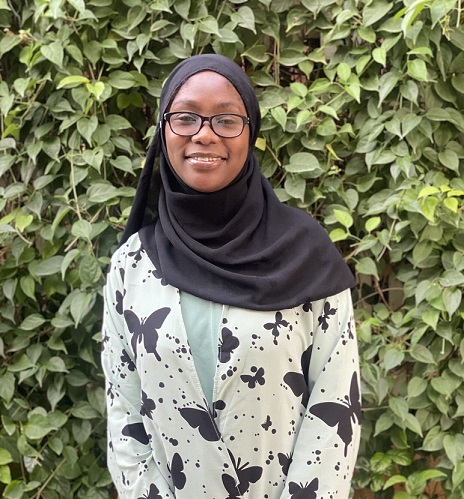
In the war-torn region of Gwoza, two remarkable girls, Mabruka Manu, and Maryam Abubakar Musa, emerged as beacons of hope and resilience. Despite the devastating impact of the Boko Haram insurgency on their lives and education, they defied the odds and became registered midwives. 

Their inspiring journeys from displacement and despair to fulfilling careers are a testament to their unwavering determination and the power of education.

Mabruka Manu was born and raised in Maiduguri, while Maryam was born in Katsina State but raised in Gwoza, Borno State. As with many thousands, both young ladies had their dreams of education shattered by the insurgency. However, an NGO called Girl Child Concerns, GCC, provided them with a lifeline, offering opportunities to realise their full potential. 

In 2018, GCC undertook a remarkable initiative in Borno State with support from MDS’s Merck for Mother selecting and training over 300 adolescent girls from various communities (primarily affected by the Boko Haram insurgency) to become Village Health Workers (VHW). The goal was to address the pressing maternal, newborn, and child health (MNCH) needs in these areas, where many health workers had left due to the Boko Haram insurgency, leaving women and children with limited access to healthcare. 

Among the trained VHWs were Maryam and Mubruka, whose dedication and resilience stood out. With support from Borno State Government, GCC further trained over 500 VHW and equipped them with essential skills, including training as Per Mother’s Support Groups for Infant and Young Children’s Feeding, serving as supportive supervisors, and encouraging them to pursue further studies, leading to their qualification for the Foundation Year Program (FYP) initiated by Women for Health. 

With the support of their loved ones and overcoming financial obstacles, Maryam and Mubruka’s journey eventually led them to gain admission to the prestigious College of Nursing and Midwifery in Maiduguri, where they began their inspiring path toward becoming Registered and Licensed Midwives.

In 2020, GCC continued its mission to empower women in rural communities by organising a training program for health workers, including Maryam and Mubruka, and nearly 100 others, to address the challenges rural women face in providing basic health screening, counselling, and managing common ailments.  

This training taught participants good infant and child feeding, promoted immunisation, and provided referral services. Maryam and Mubruka’s active involvement in this initiative showcased their commitment to their communities’ well-being as they diligently acquired the necessary skills to support and educate mothers on proper infant and child nutrition.

The stories of Maryam and Mubruka exemplify the transformative impact of GCC’s initiatives on the lives of young women and their communities in Borno State. Through their training as Village Health Workers and their subsequent journey to become Registered and Licensed Midwives, they have become invaluable assets to their communities, offering crucial healthcare services and expertise where it was previously lacking. 

Additionally, their involvement in the “Mother Support Group for Infant and Child Nutrition has furthered the cause of empowering rural women and enhancing the health and well-being of their children. 

GCC’s dedication to uplifting and supporting women in the healthcare sector continues to bring positive change to Borno State, fostering a brighter future for its women, children, and communities.

Maryam Abubakar Musa, who faced numerous challenges in her journey, including the horrors of the Boko Haram insurgency, displayed incredible determination and commitment to education. 

Despite setbacks and low exam scores, Maryam pursued her passion for healthcare, eventually graduating with a diploma in Chemistry Education. Her perseverance paid off, and she successfully graduated, landing a job in her chosen field.

These fantastic stories of Mabruka and Maryam are shining examples of resilience, determination, and the pursuit of education against all odds. Their unwavering spirit and commitment to their community exemplify the best of humanity. 

They highlight the importance of providing educational opportunities and support systems to individuals from marginalised areas affected by conflict, proving that resilience and dedication can overcome any obstacle to a brighter future.

The journey of Mabruka and Maryam is a source of inspiration for their community and countless others facing similar challenges. Their triumphs showcase the transformative power of education and the impact of collective efforts from NGOs like GCC and Women For Health. 

These stories remind us that even in the darkest times, hope can prevail, and with the proper support, individuals can overcome adversity and achieve their dreams. Recognition for their remarkable achievements arrived when Mabruka and Maryam were offered jobs at the Ultra Modern Police Hospital in Yobe State. 

Their inspiring narratives, shared through a Girls for Girls phone-in radio program initiated by Girl Child Concern in Collaboration with Education Cannot Wait and UNICEF, caught the attention of a good Samaritan. Their employment solidifies their career paths and serves as a testament to the power of their resilience and the impact of their stories on others.

Mabruka Manu and Maryam Abubakar Musa’s journeys from displacement and adversity to becoming registered midwives are tales of unwavering determination, resilience, and the transformative power of education. Their stories underscore the importance of providing support and opportunities to individuals in conflict-affected regions.

Mabruka and Maryam’s achievements inspire hope, demonstrating that with perseverance and the right support, anyone can overcome obstacles and forge a path toward a brighter future.

Lawan Bukar Maigana is the Communication Officer for Girl Child Concerns, GCC, Borno State, and can be reached via email: lawanbukarmaigana@gmail.com.

The hidden costs of free education in Jigawa state

By Ibrahim Musa

Education is a critical component of a child’s development, and a lack of quality education can have lasting consequences. The Jigawa state government’s “free education” program was intended to improve educational standards and make education more accessible. However, the so-called ‘free education’ program in the state may be doing more harm than good. While it’s true that the program removes the financial burden of education from parents, it also has hidden costs that may outweigh the benefits.

Students in the government’s “free education” program are not motivated to succeed. They know their education is already paid for, so they don’t need to study or work hard. This has led to declining grades and test scores, and students are unprepared for the future. Without motivation, students are less likely to engage with schoolwork and may have difficulty developing skills and knowledge. This can lead to a downward spiral where a lack of motivation leads to poor performance, further decreasing motivation.

Along with a lack of motivation among students, the “free education” program has led to a lack of accountability for teachers. Teachers are not motivated to do their best without the incentive of student performance. They are not held accountable for their student’s progress, which has led to a decline in the quality of teaching, and students may not reach their full potential. Without good teachers, students cannot learn the skills they need to succeed.

In addition to the issues with motivation and accountability among students and teachers, there is also a lack of motivation and accountability among parents. Since parents are not directly paying for their children’s education, they may feel less invested in their child’s success. This lack of investment can hurt the child’s education and the overall quality of education in the area.

In conclusion, the Jigawa state government’s “free education” program has serious hidden costs. It has led to a lack of motivation among students and teachers, leading to a decline in educational standards. This decline has serious implications for the future of the state, including economic decline, social problems, and an overall loss of competitiveness.

The government needs to re-evaluate the program and find a way to improve education without causing these negative consequences.

Ibrahim Musa is a primary school teacher at Egyptian Modern Model schools, Hadejia, Jigawa. He can be reached via imhadejia95@gmail.com.

WAMY to establish Islamic university in Jigawa State

By Uzair Adam Imam

The World Assembly of Muslim Youth (WAMY), a famous Saudi-based non-governmental organisation, has pledged to construct a prestigious Islamic university in Jigawa State.

The Jigawa State Chief Press Secretary, Hamisu Mohammed Gumel, who disclosed this in a statement on Sunday, said the decision was unveiled during a visit by the state governor, Umar A. Namadi, to the WAMY office in Kano on Saturday.

According to the statement, WAMY also plans to construct a mosque with an Imam’s residence in a strategic location within the state.

Gumel stated that Governor Namadi was received by the Director of WAMY, Hashem Mohammed Abdelsalam, who said their purpose was to contribute to the spiritual well-being of the local communities of the state and beyond.

The statement read in part, “In line with their mission to empower communities and promote education, WAMY is now embarking on a monumental project to establish an Islamic university in Jigawa State. 

“Following the success of Alhikmah University in Ilorin, the organisation aims to replicate this model of excellence in Jigawa, fostering educational growth and uplifting the state’s educational landscape.

“Additionally, WAMY plans to construct a mosque with an Imam’s residence in a strategic location within the state, further contributing to the spiritual well-being of the local community,” the statement added.

Muhammad Yusuf was never formally or informally considered Ja’afar’s heir – Dr Ismail Hashim Abubakar

By Muhammad Abdurrahman

In this interview with The Daily Reality, Ismail Hashim Abubakar, who finished his doctoral program at Mohammed V University, Rabat, in the Kingdom of Morocco, gives a synoptic picture of his PhD thesis titled “Contemporary Islamic Thought in Northern Nigeria: Shaykh Ja’far Mahmud Adam as a Case Study”. The thesis, which appears in 4 volumes, was written in both Arabic and English. Enjoy: 

At the beginning and as a background, the reader would like to know what propelled you to embark on academic research in this area and to select this topic with the personality of Shaykh Ja’afar as your case study.

I was propelled to undertake this research by many factors. Perhaps the most current and academically engaging factor was the aftermath of the 2009 Boko Haram uprisings when documentation of the saga started outflowing in different forms, including academic studies and media reportage. I observed that the Boko Haram saga was used by many writers – local and international – to, in the process of researching the evolution, growth, ideological base and all other issues associated with the insurgency, direct their attention on the late Shaykh Ja’afar Mahmud Adam and devote some portions in their works on the relationship between Shaykh Ja’afar and the founder of Boko Haram, Muhammad Yusuf.

While I acknowledge that these writers have relevant information and facts regarding this dynamic, I can confidently assert that many facts have been twisted, distorted and misrepresented. In fact, too much attention on Ja’far’s interaction with the leader of Boko Haram would certainly swerve readers’ attention to the grand reform mission Ja’afar had carried out in his career that spanned about two decades.

Furthermore, some writers made absurd and explicit allegations that should not be allowed to pass without a solid, verifiably intellectual response. Besides, the career of Shaykh Ja’afar was full of captivating and interesting episodes that would add up to the history of postcolonial Islam, contemporary religious movements, the interplay of Ulama with civil society and authorities in northern Nigeria and the Hausa-speaking world in general. In other words, if you like, confining the career of Shaykh Ja’afar to an engagement with an estranged disciple is an act of cruelty and tyranny to history.

If this is the case, how does your work differ from the previous works on Boko Haram, and what do you particularly object in them?

In my thesis, I review the representation of Ja’afar and his engagement with Boko Haram as cited in studies and reportages. I endorse what appears to be true and verifiable, while I counter what is a distortion of facts. For example, I tackle the question of Muhammad Yusuf’s studentship and mentorship under Ja’afar; here, there are two visible opinions. One opinion suggests that Yusuf was the mentee, star, protege and possible successor of Ja’afar, while the other view objects to the point of almost debunking any teacher-student relationship between the two men. I seek to stand in between these positions. Based on fieldwork I carried out in Maiduguri in 2019 and in addition to the literature I consulted, I draw a conclusion that Yusuf had, of course, studied under Ja’afar.

Nonetheless, as confirmed by several informants, Yusuf was never punctual during Ja’afar’s lessons; in fact, he did not study a complete book under Ja’afar. Consequently, I re-examined the assertion of the closeness of the two men; it manifested to me that Yusuf was never formally or informally considered Ja’afar’s heir, nor was he considered intellectually capable of taking over from Ja’afar.

Meanwhile, I make reference to Yusuf’s ideological trajectories and terminals of religious activism, starting as an ambitious young man looking for fame. As such, he took a leading position in Muslim Brotherhood, Jama’atu Tajdid al-Islam, before finally joining the Izala, which he would also break from within a couple of years. Finally, on this point, I compare Ja’afar and Yusuf, what the two figures represent to Nigerians and the legacies each one has left behind. 

What else do you address besides the Boko Haram phenomenon in your project?

Hmmm. Like I said initially, Boko Haram is a small (though most popularised) aspect of Ja’far’s career. I set a background where I give a snapshot of the state of Islam and Muslims in postcolonial Northern Nigeria, highlighting the engagement of Muslims in politics and governance while appraising the debates of Shari’ah implementation and discourse on secularism which characterised the Nigerian public sphere after the turn of the 21st century.

I also look at the relations between Muslims and Christians, pointing to the areas of divergence, which are quite many, but also the few areas where Muslims and Christians united in pursuit of a common goal. I also survey the fragmentation of Islamic society along sectarian lines by first tracing the emergence of major and minor religious sects, groups and movements and their major views and arguments. I also illuminate the interplays between these two groups and what brings/brought them together to speak in one voice. All these are meant to give much insight into the religious and landscape sociopolitical contexts in which the figure of my study lived and conducted his mission. This represents the first significant section of the work, which, as you can see, represents the first epithet in the thesis title. 

I supply a relatively detailed biography of Ja’afar, focusing on his family background, the phases of his knowledge acquisition and the factors that contributed to his public visibility as a young man, all before his sojourn to the Islamic University of Madina. 

The work dwells on Ja’afar’s reunion with the Da’awah arena after his study at Madina and how unlike before, he concentrated on the transmission of knowledge and cultivation of disciples while minimising open-air preaching. In this regard, I supply comprehensive information on the major sites and centres of Da’wah, which used to host and coordinate Ja’far’s public engagement and private study circles.

In Kano, for instance, I reserve sections in which I discuss in detail the majalis of Ja’afar, such as the Triumph Mosque in Fagge, the Beirut Road Mosque, Usman Bin Affan Mosque, Gadon Kaya, Almuntada Mosque in Dorayi and the majlis in Ungogo Road. I explicate all the activities Ja’afar conducted, such as leading prayer, teaching for open and private audiences and presentations of sermons, lectures and seminars.

In Bauchi, I make reference to sites that hosted Ja’far’s mission, such as Gwallaga Jumaat mosque, Shaykh Awaq mosque at Old GRA, Baban Godi Mosque in Mallam Goje Street and Women Centre of Bauchi located at Gombe Road. Moreover, in about thirty pages, the thesis unpacks the mission of Ja’afar in Maiduguri, with a particular reference to the activities he conducted within the Indimi Mosque, hinting at the challenges Ja’afar confronted at the beginning and the strategies he adopted in the process of consolidating his Da’wah. The work here emphasises the Qur’anic interpretation exercise Ja’afar led during Ramadan at the mosque and how it became an annual conference that attracted audiences from different parts of northern Nigeria.

But Ja’far’s mission was also characterised by other features: teaching, presenting lectures and seminars and rigorous engagements in civil and political issues. Does your work take a look at this also?

Yeah, of course. I dedicate a full and lengthy chapter that surveys and appraises Ja’far’s interactions and engagements with some events that affected Nigerian contemporary developments, Islam and Muslims, and Ja’afar’s relations with various government and public figures, religious groups and individuals. It focuses on Ja’afar’s role in the return of Shari’ah in northern Nigeria, how he collaborated with religious leaders of other groups, and how this resulted in the implementation of Shari’ah in some northern states. It also refers to Ja’far’s participation in the implementation of the Shari’ah process in Kano.

The chapter further lays bare Ja’far’s engagement with Nigerian politics, governance, politicians and public figures, taking a look at his criticism of General Obasanjo’s administration and different political and government institutions, including Kano state, his base, but also figures such as Muhammadu Buhari, Atiku Abubakar, Ahmed Yarima, Ibrahim Shekarau, Rabi’u Musa Kwankwaso, Ahmed Adamu Muazu, Ahmed Makarfi, Abubakar Habu Hashidu, Sanusi Lamido Sanusi, Baba Impossible, among others.

The work also relates Ja’afar’s interplay with traditional institutions, which connects to his position on the royal fathers of the northern emirates and how they disagreed with some and collaborated and had cordial relationships with others. Still in the chapter, Ja’afar’s engagement with religious groups is narrated, beginning with Salafi networks to which he belonged, the Sufi brotherhoods with whom he disagreed most of the time and the peripheral groups like the Shia, Boko Haram and others. 

As a complement to a cleric biography, the chapter categorises Ja’far’s disciples and followers into four tabaqat, just as it mentions some of his colleagues, teachers and role models. It also provides insightful information relating to Ja’afar’s assassination, including the events that preceded the tragedy and what followed it, such as the posthumous attraction of the Muslim public toward the legacy and mission of the murdered cleric. 

The final chapter in the thesis extracts the thoughts, ideas and philosophical views and visions of Ja’afar on a plethora of issues such as education, economy, sociocultural topics, marriage and women issues, politics, global politics and international affairs, relations between Muslims and non-Muslims and the prospects of peaceful coexistence. The chapter presents at the end what the researcher believes is the central position of Ja’afar on Jihad, which further unravels the extent to which he conceived violent extremism in a world and time when Islamophobia was rising high.

But how have you encountered all this stuff, which appears to involve huge materials you had to engage?

Yes, I gathered my data through multiple sources. First, I laid my hands on the available recordings of Shaykh Ja’afar, including cassettes and online content. I listened to his entire Tafsir tapes, available Friday sermons, and many of his lectures and public and private lessons on Islamic texts. I also conducted fieldwork where I travelled to many states in Northern Nigeria and met about a hundred informants. Needless to say, I consulted a great deal of literature that ranged from published books, journals, newspapers and magazines, and reliable internet pages.

What challenges did you face while undertaking this research?

A lot of daunting challenges, but a researcher must always be ready to confront them. It suffices to say that one has to be away from family to a distant land to carry out this task. But before then, I faced challenges as regards accessing some informants. For example, although the work discusses Boko Haram, I could not interview any Boko Haram members to hear some things from him directly. But the most appalling of all the challenges was the lack of positive cooperation from some of Ja’afar’s colleagues and disciples. While some of them delayed, procrastinated and even cancelled my appointments with them, some of them even avoided me and refused to give me any audience at all. Paradoxically, I got positive responses and warm accommodation from personalities who might be well counted among Ja’afar’s rivals and competitors, including Sufis and Shiites.

Which plan do you have now for this work after you have been awarded a doctoral degree?

I just remembered that the work is bilingual and in four volumes, or if you like, two volumes in Arabic and two in English. My ambition is to publish it as a book or as two books. I will be glad to edit the Arabic version and publish it in a press in an Arab world like Egypt, Lebanon, Qatar or any other country, while the English version is to be hopefully published by a Western (preferably university) press.

Is there any point you disagree with Shaykh Ja’afar in your work?

Of course, there are. I can count almost ten. 

Can you give an example?

Certainly! During one of his lessons to women at Gadon Kaya, a woman asked if it was permissible for her to make a supplication – a prayer – to ask God to prevent her husband from marrying a second wife. Shaykh Ja’afar answered that it was not permissible since marriage is lawful, and no one has the power to make unlawful something that was made lawful by God. My argument here is that in a situation where women have turned adding a second wife into their earthly hell, so much so that they go to any extent, including dangerously deadly means to thwart their husbands from the second marriage, giving a fatwa with the permissibility of praying against this wish seems to be safer for all the parties involved. If God wishes, he would answer, and if He doesn’t answer, the woman would accept fate like that. 

Are there journal articles that have been published out of this thesis?

Yes, two articles have been published so far. One was published in a journal at an Islamic University in Uganda. I examined the thoughts and ideas of Shaykh Ja’afar on education. It is available here.

The second one was published in an Indonesian journal, and it talks about Ja’far’s views on women, marriage and family institutions. It can be accessed via this link.

I expect to publish two more before the end of the year, in sha Allah. One of them presents a contextual analysis of a sermon that Ja’afar delivered at Almuntada Mosque in Kano in the aftermath of the OPC massacre of northerners in Southwestern Nigeria. In the essay, I argue that the sermon, despite its strident nature and use of highly harsh language, served as one of the rhetorical instruments that calmed frayed nerves and tensions amid the possibility of reprisal attacks. The second essay examines Ja’afar’s engagement with Boko Haram and violent extremism. 

What are your concluding remarks?

I will conclude by stressing that the clerical career of Shaykh Ja’afar has provided one of the most interesting and attractive pages in the history of Islamic activism in contemporary Nigeria and Hausa speaking world. With millions of followers and his ideas circulating within public domains, Ja’afar’s mission is worth reading and researching. I proposed in my work what I call “Jafarology”, which refers to the process of studying the legacies of Ja’afar in different dimensions and from different perspectives.

I will close by expressing my immense gratitude to all the people who supported me in one way or the other. I must thank my parents for putting me through this path early. I thank my mentor Professor Salisu Shehu, to whom I dedicate this work. I still recall his visit to Morocco in June 2022 and consider it a fatherly concern that gave some moral comfort to a son away from home. In the same vein, I thank Professor Alexander Thurston, who read my chapters and offered me invaluable suggestions and recommendations. My success in this work owes greatly to his mentorship. The same gratitude goes to Dr Abdullahi Abubakar Lamido, whose mentorship and frank counsel encouraged and motivated me to delve into this research area. I also thank a colleague of mine here, Osho Iskil Kehinde, who has greatly supported me.

I also use the medium to appreciate the Federal University Gusau management for releasing me to undergo this program. In this vein, I must thank Dr Abubakar Masama, the Dean, Faculty of Arts; Dr Qasim Badamasi, the former HOD, Islamic Studies; Malam Abdallah Bashir Bakori, Dr Ja’far Agaji, the present HOD, and all the colleagues within the Department of Islamic Studies and Faculty of Arts of the University.

Last, I must reiterate my thanks to Dr Anas al-Shaykh Ali, the Director of the IIIT London Office. Sister Shiraz Khan, a coordinator at the Office, the Director of the Institute of Epistemological Studies Europe (IESE) in Brussels, Dr Beddy Ebnou al-Murabity and Dr Naima Daoudi for being of great help to me. It was these institutions that sponsored my entire studies here in Morocco.

Combating thuggery in Kano: What is your contribution?

Najeeb Ibrahim

Peace is not just a state of mind which is personal but also that which could be an inter-personal, inter-communal, inter-regional, and global phenomenon.

Kano State is free from bandits and kidnappers in contrast to other northern states like Zamfara, Sokoto, Katsina, and Kaduna. Thus, the state becomes an asylum for many people from different parts of Nigeria. A single issue that bedevils the tranquillity of the state is thuggery (dabanci).

Thuggery has been a threat to the people of Kano for an extended period. It costs many people’s lives and prompts the distraction of many properties. Recently, the abominable act has arisen, forcing people indoors before dusk.

In parts of Gwale local government, two warring parties from Hausawa quarters and their opponents in Kofar Naisa disrupt our peace. They have been fighting each other for a long time. Very recently, Hausawa thugs ventured into the community of Kofar Naisa around 1 am to take revenge for their brother, who was wounded by one of Naisa’s ruffians.

Police tried to quell the fight. They fired several tear gases. One of the tear gas canisters dropped fell in our neighbourhood. The family of the house, including children and a two-month-old baby, wept; the baby even fainted at night. Many car wind glasses were broken, several kiosks were burgled, and the thugs stole many things.

The Kano State police commissioner has been working hard to ensure that thugs and thuggery have no hidden place in the state. In the last two weeks, the commissioner announced some names of thugs’ leaders to surrender themselves. Otherwise, he resolved to fish them out by himself. We are deeply in debt to the enormous effort of the commissioner.

Civilians also have roles to play to surmount the situation in the state:

First, if anyone is known to be in the dirty business of thuggery, offer a piece of useful advice to him. Cite him some references with those who have long been in the messy business. Ask him whether they achieve anything worthwhile in life or not. Tell him soothingly that most end their lives in misery and sycophancy.

Second, if you have the means, help him go back to school. If it is a financial problem that refrains him from furthering his education and he decides to enrol into the school of thuggery, but apart from you, you are not financially stable to assist him, tell someone whom you know can hepl him. It says, “Knowledge is light, and it guides us to the right path”.

Also, avoid dissociating from him, and advise your friends not to do so. Many thugs decry dissociation from their friends; they neither talk to them nor invite them to events like wedding ceremonies and so on.

A similar case happened in Makasa quarters. A retired thug got frustrated by his friends. They dispersed and left him alone if he joined them in their setting place (majalisa). Nobody showed him an appreciation for his withdrawal from his former self.  He became incommunicado in his society.  In the end, anxiety and depression led him to murder himself.

Second, to last, form a youth organisation in your locality. Assemble at least once in a fortnight. Discuss your problems, and offer solutions and pieces of advice to yourselves. Let everyone feels at home with one another.

And finally, report any thugs’ meeting point you know to the police station near you. Do not hesitate. Because as long as thuggery persists in our society, our lives and properties will never be safe.

May Allah guide us to the right path and guide those who have already gone astray amin.

Najeeb Ibrahim wrote from Kano. He can be reached via inajeeb08@gmal.com.

Hadejia Emirate relieves traditional ruler over drug abuse

By Muhammad Suleiman Yobe

Hadejia Emirate Council in Jigawa State has relieved one of its traditional title holders, Alhaji Abubakar Hussain Abubakar, known as Dan Lawan of Hadejia.

This is contained in a letter sent to The Daily Reality by Muhammad Garba Talaki, a Public Relations Officer of the Council, signed by Council Secretary Alhaji Muhammad Baffale Abbas.

Baffale said the dismissal was due to his engagement with illicit drugs.

He said the council confirmed the matter through a letter from National Drug Law Enforcement Agency (NDLEA) Jigawa State intimating the council on the issue.

He added that the traditional title holder refused to honour an invitation letter sent by the Emirate Council to defend himself, which was found to be disrespectful to the council.

Consequently, Alhaji Abubakar Hussain Abubakar was dismissed and warned to avoid parading himself as Dan Lawan of Hadejia.

Secretary Alhaji Muhammad Baffale advised the general public, especially those interacting with him, to take note.

He said the strict measure was taken to serve as a deterrent to other traditional leaders and urged traditional leaders in the area to be sound moral.

APC’s ineptitude, Nigerians’ suffering: Who is to blame?

By Salisu Uba Kofar Wambai

Atiku Abubakar made campaign promises about tackling border closure which seriously ushered hardships, especially in the North. He equally rolled out plans to liberate Nigeria from the shackles of foreign loans President Muhammadu Buhari immersed it into.

PDP is the party that has formidable and unnerving politicians who fought tooth and nail for democracy to thrive in this country. The party people know the long walk to freedom they walked, and their 16-year dispensation spoke for them. 

PDP mastered campaigns for the creditors to give us waivers, which prevented the country from such loan spells. They ensured Nigeria hadn’t been submitted to total external control like we see today with APC’s inexperienced and heartless dispensation.

PDP has think tanks that guide their foreign relations which made sure we did not accept in toto any development strategy which could undermine the welfare of citizens in the long run. Thanks to their inclusion of technocrats both from home and outside in their socioeconomic and political decision makings 

Atiku was an integral part of all these goodies mentioned; that’s why we suggested northern voters vote for him during the 2023 presidential campaigns. As a northerner who willingly gave power to the South from 1999 to 2015, I thought it was economically stagnant due to the selfish allocation of federal government projects under OBJ and GEJ. The North had expected Buhari to compensate the region for even development of the country.

However, Buhari seemed to have failed and was ignorant of why power was being rotated at the centre. He favoured the South in many aspects of development project allocations like railways, good roads, bridges and electricity. 

Most of the projects Northerners have been clamouring for, like Mumbila Power Plants, Baro Port, Ajakuota Steel Company, KKK gas pipeline projects, and roads linking states of the region, have not seen the lights of the day. And how could North continue to support power-sharing and shift these injustices, shabbiness and iniquity?

The southern PDP governors under Nyesom Wike led a mischievous campaign against their party candidate PDP to work for the southern presidency. They were not a bunch of idiots like some undesirable elements of the northern politicians who selfishly sold out the region for their egocentric notions.

Now that Nigerians are paying the price of what they had bought by bringing APC to power again, we must remind our people how to become politically smart next election season. And many folks from this part of the country cannot still see things as they are. Sad.

Salisu Uba Kofar Wambai writes from Kano State and can be reached via salisunews@gmail.com.