Northern Nigeria

Bridging linguistic worlds

By Abdussamad Yahya Sufi

My Literature teacher cautioned me in secondary school to avoid using Pidgin English during communication. Mr. Ibrahim Bello would always tell me that using pidgin in the infancy of learning English would affect my budding standard English. Since then, I have never used it and always try to avoid it in writing and speaking.

Now that I’m at university, I have met different people from southern Nigeria who always use pidgin. At first, I feared what would happen to my infant English. However, later, I realised that I could still maintain the standard since they all understood standard English; they just chose not to use it.

During my first days at university, the pidgin speakers in my hostel irritated me the most. Everyone used the language, and I didn’t understand 80% of it. When someone talked to me, especially my roommates, I would ask them to translate what they said.

After a few days, many of the guys in the hostel noticed me and began teasing me, thinking I simply chose not to speak the language until they understood that I didn’t understand it. They started calling me ‘English Man,’ which didn’t bother me as I had heard such names before.

Some invited me to their rooms to tell me stories, and I never rejected that opportunity. I knew it would help me improve my English skills. When I told them stories, they paid attention and asked questions in good English, not bad pidgin. 

Honestly, that helped me build my public speaking skills, and I appreciate the guys for understanding me then, unlike before. Even when I meet any of them on campus now, they introduce me as the ‘English Man.’ to their friends, and they all speak good English while exchanging greetings.

I don’t mind being silly while learning; I don’t hide myself when interacting with my schoolmates and friends. They are my laboratory, where I practise what I have learned. Even if they laugh at me or call me names, I use those experiences to practise my learning skills.

Abdussamad Yahya Sufi wrote via abdussamadsufi744@gmail.com.

A reminder and call for Northern Ulama to intervene in the Sudan conflict

By Baba Isa

While reviewing my collection of photographs, I stumbled upon a significant historical image that reminded me of a momentous event during a public lecture in Sudan. It was during this event that distinguished figures such as Prof. Salisu Shehu, Prof. Sagagi, and Prof. Maqari embarked on a special joint visit to Sudan some years ago. Their visit aimed to understand the exceptional approach Sudanese institutions took in providing training to Nigerian students on their soil, enabling them to return to Nigeria as productive individuals.

During this lecture, Prof. Salisu Shehu said, “The educational experience for Nigerian students in Sudan extended beyond academic excellence. These students, who received education in diverse fields, also imbibed qualities of respect, commendable attitudes towards their communities, and a sense of understanding towards various religious doctrines. This was different to their counterparts studying in different foreign nations.

Prof. Added that the Nigerian Sudan-educated students exhibited unmatched expertise and skills compared to their counterparts in Nigeria. Therefore, the Council of Ulama of Nigeria felt compelled to delegate us to come to Sudan and delve deeper into brief research and learn more about strategies employed by Sudanese institutions and their communities to empower these students. So that we can take back reports to Nigeria and put it into practice”.

The lecture was delivered at the International University of Africa (Indimi Hall) during this insightful visit, and I captured the picture.

Regrettably, the Sudan we love, the Sudan we learn from and once held in high esteem, an exemplar of a hygienic educational environment, now stands ravaged by conflict. It’s disheartening that we have not extended a helping hand to a nation from which we have drawn knowledge and inspiration. Sudan, which significantly contributed to the growth and development of our region through its educational support (like its massive Scholarship scheme to everyone in any course without exception)and enlightened Islamic scholars, medical doctors and other professionals, remains in dire need of our attention, prayers, and support.

Northern Nigeria has encountered setbacks in the realm of girls’ education. In the past, we lamented the shortage of female doctors, resulting in inadequate female doctors in healthcare for women in our hospitals. Our parents in the Northern region were hesitant to enrol our sisters in local institutions, let alone consider overseas education, given concerns about religious beliefs, cultural norms and environmental disparities.

These barriers hindered the prospect of sending our sisters abroad for education. This predicament led us to lag in conventional education and the attainment of female medical doctors. Recently, a positive shift has occurred as our parents have become more receptive to sending our sisters to study medicine and various other disciplines, especially in Sudan, due to the conducive educational environment and Islamically oriented. However, it is disheartening to note that challenges mar the current situation in Sudan.

The aftermath of the evacuation of Nigerian students from Sudan – more than 2000 – medical students, primarily females from the north- has left us searching for alternatives that can provide the same nurturing educational environment. Regrettably, no such choice has presented itself, leaving us feeling powerless.

Recent events have highlighted the impactful role that Northern Nigerian scholars have played in resolving crises, as evidenced by their intervention in the unrest following a coup in Niger. Drawing from this, I earnestly beseech our esteemed Northern scholars to extend their benevolent interventions to Sudan. While Sudan may not be a member of ECOWAS, its historical and cultural ties to us cannot be taken away. Just as we stand by Niger, we must stand by Sudan.

In this challenging time, I humbly implore our esteemed Ulama to exert their influence and restore peace and tranquillity in Sudan. Just as they have done in our region and Niger, their intervention could serve as a beacon of hope for a nation that has been an invaluable contributor to our growth and development.

Pharm. Baba Isa, Former President of the National Association of Nigerian Students in Sudan.

An Open Letter to the Governor of Kaduna State 

By Salim Yunusa

Your Excellency,

First and foremost, I extend my heartfelt congratulations on your resounding victory in the recent gubernatorial elections and commend your dedication to advancing the interests of Kaduna State and its esteemed residents. As we stand on the precipice of a new era, I am confident that under your leadership, Kaduna’s fortunes will ascend to unprecedented heights, driven by your wisdom and the guidance of Allah (SWT).

In the wake of a challenging period during which our nation has encountered multifaceted trials, the tenacity and unity displayed by the Nigerian populace stand as a testament to our collective spirit. With an unwavering faith in the leadership of our nation and its states, Nigerians continue to anticipate a future marked by prosperity, peace, and sustainable development.

At this critical juncture, I humbly draw your attention to an alternative avenue that possesses remarkable potential to address the pressing issues of unemployment, revenue generation, and economic diversification. It is my belief that a robust focus on tourism and the creative sector could be the catalyst for the transformation that Kaduna desperately needs. While acknowledging the challenges confronting our nation, it is essential to recognize the untapped reservoir of natural and cultural treasures that can propel Nigeria’s progress, with Kaduna serving as a shining example.

Global success stories such as Qatar, Dubai, Egypt, and Seychelles have demonstrated the exceptional economic rewards reaped from strategic investment in tourism. As seen in Dubai, the travel and tourism sector significantly contributed to the UAE’s economy, comprising nearly 10 per cent of total revenue. Similarly, Qatar witnessed a 70.3% growth in tourism sector revenue, with aspirations to amplify its GDP contribution to 12% by 2030.

I come from Kajuru, a small town in Kaduna state, where I am used to seeing people from all over the country and beyond visit the famous Kajuru Castle. I have also lived in Zaria, where I see thousands of people throng the colourful, eye-catching Zazzau Durbar yearly. These are just two out of many. I firmly believe that our state is endowed with a wealth of potential attractions. From the historical magnificence of the Emir’s palace in Zaria to the ancient Nok Art and civilization, the mesmerizing MatsirgaWaterfalls, and the iconic hills of Queen Amina in Turunku, Kaduna boasts a tapestry of wonders waiting to be unveiled.

Moreover, the state’s potential extends beyond its breathtaking natural, cultural, and traditional sites. Kaduna’s vibrant literary, music, and film scenes are carving their place on the global stage. The annual Kaduna Book and Arts Festival (KABAFEST), Hausa International Book and Arts Festival (HIBAF), Kaduna Music Festival, Afan National Festival, and other cultural events foster unity, diversity, and shared experiences among our youth, transcending ethnic divides.

Beyond the cultural and traditional scene is the vibrant film and fashion industry, with the Critics and Kadahood making and producing movies in Kaduna state, employing hundreds in the process. The Kaduna Fashion and Arts Exhibition also showcases the rich history of fashion in Kaduna state and beyond.

Just like football, music is one of the major unifiers in Kaduna and Nigeria at large. I witnessed, with so much pride, how Kaduna youths united during the 2022 Countdown event at Murtala Square. There was no way one could discern who was what tribe or religion; just young people filled with hope and optimism living in the moment. These are avenues where we can build the Kaduna of our dreams, a Kaduna that is healed from the pains of the past, devoid of all tribal and religious agitations.

One amazing thing about these festivals, funfairs, and events is that they always come with the advantage of a booming local economy of small and medium businesses. Vendors make brisk sales of food, wares, and goods. If properly managed by the Kaduna State Enterprise Development Agency (KADEDA), has a huge potential to bring more entrepreneurs to the fore, just like during the Kaduna Market Trade Fair.

Culture, creativity, and traditions aside, Kaduna, with no doubt, is the heartbeat of Northern Nigeria. It is strategically placed and has served as the administrative headquarters of the region. Therefore, Arewa House, the National Museum in Kaduna, and other historic buildings and monuments serve as archives and a lens to our past. We owe it to future generations to preserve these spaces in order to enlighten and educate the young ones.

Yet, for this vision to materialize, peace and security are imperative. The nurturing of these invaluable tourist destinations requires an unwavering commitment to safety and stability, addressing the root causes of insecurity. Furthermore, investing in robust tourism infrastructure, in collaboration with the private sector through Public Private Partnerships, will pave the way for enhanced accessibility and growth. We have seen how the previous administration was able to make Kaduna the number one state in Nigeria when it comes to the ease of doing business. With a proper tourism development plan that comprises all the events, festivals, tourist destinations, and activities, as well as the connecting transportation routes and servicing facilities together, I assure you that investors will come running to Kaduna. This plan will also include community education as a driving force for tourism.

Your Excellency, the potential of the tourism sector cannot be overstated. It carries within it the promise of economic prosperity, cultural preservation, unity, and local job creation. Other advantages include promoting the image of Kaduna state to the world, healthy migration of Nigerians and international visitors, the establishment of exchange programs, a boost in the local economy, the rapid development of rural areas, and the influx of businesses to the state. By supporting the burgeoning creative talents and providing the necessary infrastructure, Kaduna has the opportunity to become a beacon of progress and international acclaim.

Finally, I implore Your Excellency to consider this call for action, not only for the betterment of Kaduna but also as a stepping stone towards the broader advancement of our beloved Nigeria. Together, we can transform the challenges that beset us into stepping stones for growth, development, and a brighter future.

Salim Yunusa writes from Zaria, Nigeria and can be reached at syunusa@gmail.com.

Gunmen abduct four people in Toro

By Ukasha Rabiu Magama 

At least not fewer than four people were kidnapped yesterday by unknown gunmen in Zalau, Toro, Bauchi state. 

Our source, who pleaded anonymity, narrated that the invaders arrived in Zalau town by 8:30 pm on Sunday, barricaded the town entry and started shooting air sporadically, heading to the village market square. 

Dispersing the marketers, they abducted Aliyu Dahiru Sulaiman, Abdul Hogal, Dokas, and their brother. Also, Shamsudden Garba was shot, and he is now receiving medical treatment at the Abubakar Tabawa Balewa Teaching Hospital in Bauchi. Similarly, the abductors carted away people’s belongings, including phones, provisions, meets and fried yams.

The illegal operation was suspended by 9:30 pm, and shootings were nonstop due to zero security intervention. 

It could be recalled that the gunmen, on Saturday, August 19, 2023, abducted two people and shot a security man in Gumau; the captives regained freedom yesterday, August 20, 2023.

Similarly, the gunmen shot another person in Fishere on Friday, August 18, 2023; the man who refused to follow the kidnappers to the jungle as they commanded him was shot in the head and died immediately. Also, a similar event occurred in Bargan Fulani and Salarma communities.

Since the beginning of this month, August, Toro and Lame districts have been facing a series of attacks from unknown gunmen leading to the loss of lives and properties of citizens.

Recently, in an interview with BBC Hausa, the member representing Toro federal constituency, Hon. Ismail Haruna Dabo, raised the alarm over the incessant event in the area and asked the federal and state governments to deploy security operatives to the site; hence the need is to protect lives and property of the citizens.

An effort was made to reach Toro police command when filing this report, but it was abortive due to undisclosed issues.

Humanitarian crisis grips Nigeria as UNHCR data reveals over 3.5 million internally displaced

By Muhammadu Sabiu

The United Nations High Commissioner for Refugees (UNHCR) has disclosed that Nigeria is grappling with an escalating humanitarian crisis, with over 3.5 million individuals internally displaced due to ongoing crises.

The data sheds light on the dire situation faced by countless Nigerians who have been uprooted from their homes and communities.

The heart-wrenching effects of the insurgency in the northeast have been acutely felt in Borno, Adamawa, and Yobe (BAY) states.

According to the Aid Worker Security Database, the insurgency has exacted a heavy toll, resulting in the tragic deaths of 37 aid workers since 2016.

Additionally, 24 aid workers have been wounded, and 34 others have been kidnapped.

This sobering statistic serves as a sombre reminder of the challenges faced by those working tirelessly to provide assistance to those in need.

The World Humanitarian Day commemoration in Abuja took on a poignant tone this year as stakeholders from the humanitarian sector joined forces for a road walk.

At the event, the Permanent Secretary of the Ministry of Humanitarian Affairs, Nasir Sani Gwarzo, addressed the gathering.

He emphasised the significance of this year’s theme, #NoMatterWhat, which encapsulates the unwavering dedication of humanitarians to extend life-saving aid to individuals, regardless of their identity or geographical location.

The event not only brought attention to the pressing issues at hand but also highlighted the collective commitment of those in the humanitarian sector to alleviate the suffering of affected communities.

As Nigeria navigates these turbulent times, the rallying cry of #NoMatterWhat serves as a reminder that compassion and assistance remain steadfast even in the face of adversity.

Governor Radda appoints 32-year-old Naufal Ahmed as DG ICT Directorate

By Isah Miqdad

The Executive Governor of Katsina State, Malam Dikko Umaru Radda, PhD, has approved the appointment of Naufal Ahmed as Director General (ICT Directorate).

The appointment, which is with effect from 14th August 2023, is based on the conviction that Mr Naufal will serve faithfully, diligently, and in the best interest of the service.

As the visionary founder of the esteemed Kirkira Innovation Hub, Naufal has pioneered the establishment of the first-ever technology hub in the region. This groundbreaking initiative has served as a transformative force, equipping countless young individuals with vital technological skills and providing them with a platform to thrive.

Naufal’s remarkable career as a tech ecosystem builder has been nothing short of extraordinary. With an unwavering passion for innovation and youth empowerment, his impact on the tech landscape of Katsina and Nigeria at large is undeniable.

He has been a sought-after speaker and organiser at numerous conferences across Katsina and the country, sharing his insights and inspiring others to embrace innovation.

In recognition of his outstanding achievements, Naufal has received numerous accolades, including being named among the Opportunities Hub’s 100 Most Influential Youths for his significant contributions to youth development and entrepreneurship.

Education: Empowering divorcées to pursue their dreams

By Kamal Alkasim

For many divorcées, the decision to return to school and pursue their dreams after parting ways with their husbands presents a significant challenge. In this article, we will explore the undeniable transformative power of education and its role in empowering divorcées to build a brighter future for themselves. Through the voices of these resilient women, we will understand the importance of providing them with the opportunity to pursue higher education and break free from the false theories that have hindered their path.

The Transformative Power of Education

Education is a powerful tool that can turn any individual into a star; women are no exception. By prioritising their studies over remarriage, divorcées can equip themselves with knowledge, skills, and confidence to overcome obstacles and shape their destiny. Education serves as the foundation for the development of any society and holds the key to personal and societal growth.

Challenging False Theories

Unfortunately, outdated and false theories surrounding women’s education in tertiary institutions have deterred many from pursuing their dreams. These misconceptions have created barriers for divorcées seeking to return to school. By challenging these beliefs, society can open new opportunities for these women to thrive.

Voices of Empowerment

Through conversations with divorcées who have chosen to pursue their dreams through education, we gain valuable insights into their determination and resilience. One woman shared her regret for not pursuing her studies earlier but expressed optimism about the positive changes education would bring to her future. Another divorcée spoke of her unwavering ambition to gain an education and fulfil her goals despite her challenges.

“If I had known earlier, I would have pursued my studies long ago. But now, this opportunity will bring positive changes to my future. I may have faced some challenges, but with education, I can overcome any obstacle.” – Divorcée.

“My greatest ambition is to gain an education, and after my divorce, I promised myself that I would come back to achieve this goal.” – Divorcée.

“People may judge me based on appearances and talk rubbish, but that won’t deter me. I will mind my own business and study human behaviour. This knowledge will help me solve matrimonial cases and more.” – Divorcée.

Overcoming Judgment and Criticism

Divorcées often encounter judgment and criticism from others, but their determination to succeed remains unshaken. One brave woman acknowledged the judgment she faced but declared her commitment to minding her own business and studying human behaviour to help others in similar situations. These voices exemplify the strength and resolve of divorcées in their pursuit of education.

Empowerment Through Education

Let us join hands in defeating these nonsensical theories and supporting divorcées in their educational journey. By empowering these women with education, we provide them with the tools to overcome obstacles and create a brighter future. Education holds the potential to transform lives and enable divorcées to achieve their dreams without fear or judgment.

Education is a beacon of hope for divorcées seeking to rebuild their lives and pursue their aspirations. By allowing them to learn and grow, society can break down barriers and empower these women to become agents of positive change. Let us recognise the transformative power of education and support divorcées in their quest for knowledge and self-fulfilment. With education as their ally, the future holds boundless opportunities for these strong and determined women.

Kamal Alkasm is writing from Kano.

El-Rufai: MURIC tells Tinubu to save North-West alliance

By Abdurrahman Muhammad

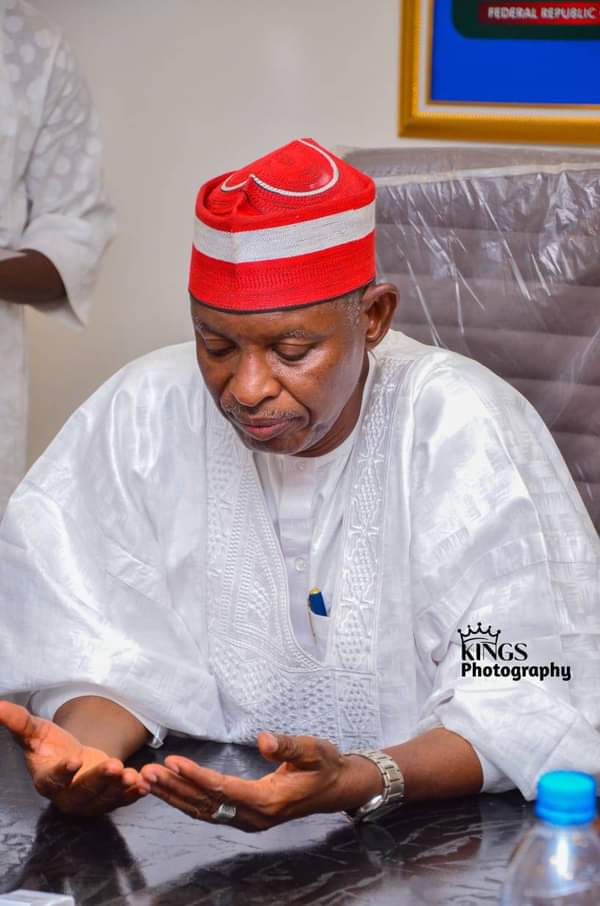
As the failure of the Senate to confirm the ministerial nomination of the former governor of Kaduna State, Mallam Nasir El-Rufai, continues to generate controversy, an Islamic human rights organisation, the Muslim Rights Concern (MURIC), has told President Bola Ahmed Tinubu to save the North-West alliance which gave him victory at the polls by ensuring that El-Rufai gets the ministerial appointment.

MURIC made its stand known on Sunday, 13th August 2023, after an emergency meeting of its Central Think Tank (CTT) held in the evening of the previous day. A statement signed by the Executive Director of MURIC, Professor Ishaq Akintola, after the meeting reads: 

“The Central Think Tank (CTT) of the Muslim Rights Concern (MURIC) met yesterday to consider the circumstances surrounding the failure of the Senate to confirm the nomination of the former governor of Kaduna State, Mallam Nasir El-Rufai, as a minister. 

“CTT considered the issue a major setback to the North-West alliance which gave President Bola Ahmed Tinubu victory during the 2023 presidential election. Furthermore, CTT regards the non-confirmation of Mallam Nasir El-Rufai’s ministerial nomination as a big threat to future alliance between the North and the South-West. The North may not hobnob with the South-West again if the champion of the North-South alliance is shabbily treated.  

“CTT also noted the huge contribution of Mallam Nasir El-Rufai who persuaded the Northern political elite, particularly the twelve Northern governors, to allow power to go to the South. It was observed that the monumental power shift of 2023 was a fulfilment of a 2019 agreement. It was therefore an act of honour while El-Rufai is seen as the icon of Northern integrity. 

“CTT affirms clearly, emphatically and unequivocally that it behoves the South as represented by President Bola Ahmed Tinubu to reciprocate the North’s noble stand by walking his talk, particularly his open offer and public invitation to Mallam El-Rufai to join his cabinet. The story of Tinubu’s invitation to El-Rufai to join his cabinet is already public knowledge.

“It has become necessary to jog the President’s medulla oblongata today because the North has exhibited integrity by keeping its promise on power shift to the South. It therefore behoves the South to reciprocate, to manifest decorum, decency and dignity, particularly with the ‘Omoluabi virtue’ for which the Yoruba are well known.

“Tinubu has a duty to protect the good name of the Yoruba people in particular and the whole South in general. Besides, a promise is a promise in Islam and Tinubu is a Muslim. Allah says in the Glorious Qur’an ‘And fulfill the promise, surely (every) promise shall be questioned about.’ (Qur’an 17:34). Allah also said, ‘O you who believe! Fulfill your pledges.’ (Qur’an 5:1).

“The good relationship and the bond between the North and the South-West must not be allowed to break. 2027 is around the corner. Even 2031 is already knocking and politicians are already doing their calculations. The North supported Tinubu because they found him to be credible. He must not do anything capable of diminishing that credibility.

“El-Rufai is the gem of the collection and everybody knows it. He is a performer. He is cerebral, iconic. If it is true that the president himself already hinted El-Rufai to set the machinery in motion for the energy sector, the president is morally bound to walk his talk regardless of all other encumberances. 

“Records show that there are precedents. Festus Keyamo was cleared in spite of Senate’s earlier objection. Something made Senate change its mind. Ex-President Olusegun Obasanjo got this same El-Rufai cleared despite Senate’s opposition in 2004. El-Rufai withdrew having read between the lines. He will still do it for the sake of Nigeria if the president’s body language conforms.

“Criminality, dishonesty, fraud, impunity, lack of patriotism and other Nigerian problems spring from a wrong mindset. They will all disappear or at least be reduced to the barest minimum if the leadership sets the pace. Islamic scholars North and South who nurtured the North-South alliance are watching. All men and women of conscience are keeping vigil. Nigeria holds its breath and shivers. The buck stops at Mr. President’s table.”

Working women in Islamic perspective: Prohibitory or permissibility

By Omar Muaz

As commonly understood by many people that a working woman only means one that goes outside her matrimonial home or her parents’ house to earn a living [in most cases a salary or an income] isn’t but, as rightly put in different ways by Amina Adamu, in her paper “Balancing the Home and Work: Tales of Working Women” one who has attained a certain level of education and use it as an opportunity to secure jobs. Or the one who earns a living inside her home by engaging in in-door businesses such as fish farming, tailoring, poultry, and even selling clothes and kitchen equipment, or lastly, one who earns a living within the confinement of her house by using their children to hawk and sell for them. Whichever one takes as a definition of a working woman, it’s fine and okay.

I have read many articles claiming modernism to be the root of working women. However, history has it that in traditional African society, women work as much as men [or even more] to sustain the family. They do house chores and look after children and even the man himself — besides cooking for the family, the women wash the man’s clothes and keep his room and the whole house tidy. In addition to all, as affirmed in The Journal of the Islamization of Knowledge and Contemporary Issues, Vol. 1, they go to the farm and cultivate crops to supplement the feeding and economic sustenance of the family. 

By the coming of Islam — a religion that propagates women’s seclusion based on the Quranic provision in Suratul Al-ahzāb, verse 33 “And abide in your houses and do not display yourselves as [was] the display of the times of ignorance.” and some authentic traditions of Rasūl, prophet Muhammad (PBUH) — to Nigeria in the eleventh century (Clerke and Lindern, 1984), women, more especially in the Northern part of the country, were restricted from going out unnecessarily which includes going to farm. They then concentrated on their roles as mothers while the men accepted and carried out their religious responsibilities of providing the basic needs for their family until the introduction of Western education [read: conventional education] to Nigeria in the 19th century.

The early 70s witnessed a large enrolment of girls into conventional schools, which started affecting the status quo of the family system, with women starting to work as civil and public workers in various organisations and parastatals at the attainment of conventional schools. Moreso, the spread of globalisation through the Western media led to the very foundation of the family, which includes respect, love, and trust for each other to start playing the second fiddle. 

From the 90s up to the end of the last century, 20th, many Islamic families subscribed to the global village by connecting the satellite dish to their homes and, of course, the internet. Probably, due to the impact of the Structural Adjustment Programme (SAP) — an ambitious structural adjustment program which was adopted in June 1986 as a result of initial reforms including substantial increases in domestic petroleum prices that were announced in the 1986 budget — in the 80s, the man no longer care and provide the basic facilities needed in their homes. Thus, the man lost his pride and respect as the breadwinner both from the wife and the children. Hence, women were left with the only alternative, which was finding means of supplementing the family income, even outside their homes (Emeagwali in El-Sohli & Mabro, 1994).

It’s worth noting from the above paragraphs women were traditionally working before the advent of Islam, more especially in Northern Nigeria, which abolished the practice with the world turning into a conventional one. Women work to supplement the family income with reasons, of course, varying. There are many women that work, despite their husbands or parents being rich, because they feel bored sitting at home. This category consists of almost 10% of the working Northern Nigerian women. Others go out to work to earn a living, while others, at the death of their husbands, provide shelter for their children. In addition to the mentioned categories, some work to serve humanity in governmental and Non-governmental organisations (NGOs).

Some Muslim husbands and parents, based on one of these cases, allow their wives and daughters to work while others, basing their argument on the Islamic concept of seclusion, keep their women at home. Now, the question is on the concept of women’s seclusion from in Islamic perspective. What is it? Women seclusion is a term referring to various practices designed to protect women from men in traditional Muslim societies, including confining women to the company of other women and close male relatives in their home or in separate female living quarters, veiling, self-effacing mannerisms, and the separation of men and women in public places.

According to the International Institute of Islamic Thought Nigeria Office’s journal, Al-Ijtihād, the issue of women’s seclusion in the Nigerian context, as has been identified, includes (1) complete seclusion — an opinion championed by traditionalists and fundamentalists who strongly believe that women’s role is exclusively restricted to her home only and therefore any other role outside her matrimonial home is forbidden. (2) partial seclusion — that women are allowed to go out when there’s need to go, such as hospital and visiting sick relatives and even attending Islamiyya schools, and (3) voluntary seclusion is seen as a more symbolic seclusion rather than physical.

The third, unlike the complete seclusion which was built on the widely circulated “myth” in some years back, at least in the Hausaland, that a woman has only three outings in her lifetime — that of her being delivered from her mother’s womb, going out to her husband house [being married], and then lastly taken to her grave —, is propagated by those in favour of women going out to work outside her matrimonial homes or parents’ houses and encouraged women who have attained conventional education to work in the civil service and other parastatals.

The existence of these divergent views, even during the lifetime of Usman Ɗan Fodio, triggered him to write a book “Kitabul Irshadul Ikhwān” in which he stated twelve instances where women are allowed to go out in Shari’a: going out in search of knowledge, participating in religious war [Jihād] where there’s need for their assistance, attending congregational prayers in mosques, attending Juma’at prayer, attending Eid prayer, attending prayer for rain [Salatul Istisqa], attending prayer for the dead [Salatul Janaza], going to pilgrimage, going to the court of law to sue or to be sued, visiting their parents and relatives, attending wedding ceremony [especially escorting the bride to her house because Aisha (RA) was reported to have done that] and buying and selling things especially when they don’t have someone to do it on their behalf.

In addition to the above-mentioned twelve occasions where women are allowed to go out, going out to teach isn’t in exclusion. There are instances — according to the prophetic ahādith, which were reported by Abu Dāwud, Ahmad and Imam Hakim — where women went out to teach even the wives of the prophet Muhammad (PBUH). The case of Shafa’a Bint Abda is a glaring example when the prophet (PBUH) not only recommended her for teaching His wife, Hafsa (RA), how to write but advised her to teach the wife how to cure rashes and bugs [Rukhyatul Namla]. Thus, Imam Ghazali, among many other Islamic scholars, emphasised the importance of women’s education, especially in the field of Medicine and Mathematics, with the essence of them specialising in these areas to cure sick Muslims and to teach Muslim children.

It can be concluded that women — even though they are fragile and weak because of them being created from a “crooked rib” of a man — among them are those who are blessed with the strength and energy to participate in even manual labour and, thus, they are not completely restricted, Islamically, to work as related above.

However, in order to have equilibrium in terms of matrimonial stability of the home on one hand and the woman’s pursuit for economic stability on the other, there should be an understanding between the two spouses [which is the man who is the head of the family and the woman under the umbrella and control of the man]. It’s recommendable that a working woman should fear Allah (SWT) in her mind wherever she goes and, when going out, should dress properly according to the dictates of the Shariah.

Allahu A’alam [ Allah knows the best].

Omar Muaz wrote via muazuumar45@gmail.com.

Industrialisation of the North: The future

By Muhammad Sani Usman

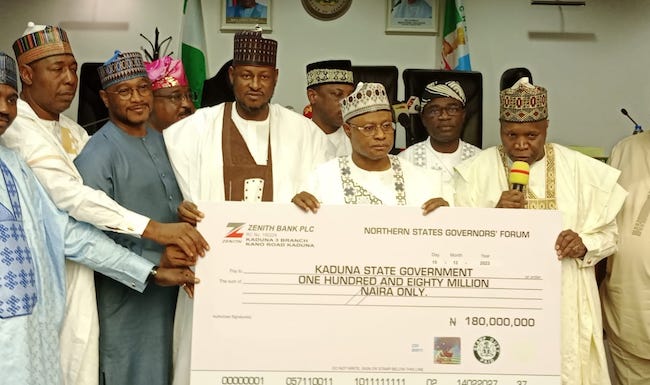
Somebody was shocked that the revenue of Zenith Bank as of 2022, which is N945 billion, is greater than the internally generated revenue of northern states combined. Literally, Zenith Bank alone is more financially buoyant than northern Nigeria. And he was lamenting about the poor inclusion of northerners in such investments in their states.

Kaduna is taking the lead in investments in the North, but her (Kaduna) IGR is not up to one hundred billion Naira; it is half of that. Even the profit after tax of Zenith is bigger than the economic cities of Kano and Kaduna. These two states are not up to N100 billion altogether.

I told him, “Investing in banking is highly industrious. But our northern billionaires have no business with anything “Knowledge-based economy”. What they know is to hoard dollars, buy shares, and run over a baby company/factory, as in acquisition.

Prof Murtala Sagagi of the Economics Department of Bayero University, Kano, told us, “While conducting a survey about the percentage of non-inclusion of Kano people to most of the fine-investments in food and beverages, logistics, and Banking Industries, one manager of one famous company told him, “When they try to recruit graduates for trainee positions; they expect them to be meticulous in training before they think of absorbing them fully as staff.

But you’ll employ someone as an assistant quality control officer or sales personnel, but his/her performance index will shock you unless you change your mindset seriously. Industries require expertise to run; you can’t employ someone you can’t fire or are lazy.”

There was another testimony last week. I was discussing with an auditor of one of the best companies in Northern Nigeria. The guy told me they had recruited a new customer care representative, and he was deployed to that branch, but all the time, the guy was not working; even the invoice that he was supposed to do, he couldn’t.

Unknown to the guy, a letter was sent from the headquarter for monitoring and evaluation of his performance by the senior staff of that organisation. My guy is among the people to vouch for him, i.e., whether he would be retained as permanent staff.

However, this is not limited to banking or the mentioned industries; this is about the lackadaisical attitude of our politicians about not creating factors that will favour industrialisation in the North. The A-K-K gas project is among the hope we have for the future of the North. Let’s wait and see!

Muhammad Sani Usman an industrial chemist who advocates good governance and Sustainable development goals. He writes from Zaria via Muhdusman1999@gmail.com.