Northern Nigeria

Kaduna governor blames northern elites for region’s woes

By Uzair Adam 

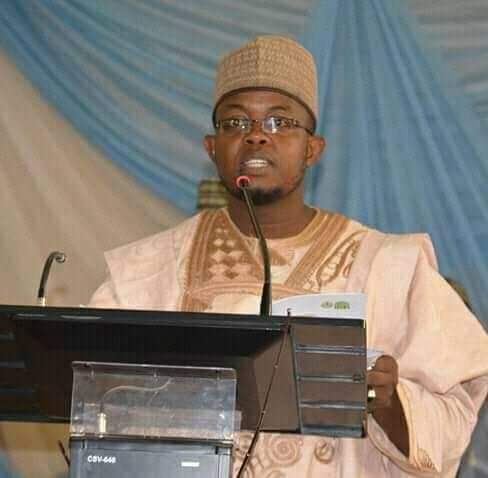
Kaduna State Governor, Uba Sani, has said political leaders from northern Nigeria have failed the region and should collectively apologise to the people for decades of underdevelopment and neglect.

Speaking during an interview with Trust TV, Sani stressed that criticism of government policies should be driven by the genuine interest of the people and not by political ambition.

“Every democracy must allow criticism, but it must be constructive, and in the interest of the Nigerian people. That’s what we did as activists — not because we wanted power,” he said.

He noted that those who have held public office in the last two decades — including himself — bear responsibility for the challenges facing the region.

“Anyone who is from northern Nigeria and held a political office in the last 20 years, we all need to look at ourselves in the mirror and apologise to the people of northern Nigeria. We let them down,” he admitted.

Reflecting on his own time in office, the governor said the region’s problems stem from long-standing structural and economic neglect.

“I’ll say it here today — all of us; I was a senator in this country, and the problems of northern Nigeria didn’t start two years ago,” he added.

Sani also criticised the outcomes of the massive social intervention programmes under former president Muhammadu Buhari, saying they failed to uplift the region due to deep-rooted financial exclusion.

“Buhari spent hundreds of billions on social interventions,” he said. “But the North became poorer even after that because 70% of the population, especially the masses, were completely financially excluded.”

He pointed out that anyone who had served as a senator, minister, governor, or vice-president from the region over the past 20 years shares in the blame.

The governor cautioned politicians against misleading the public and lauded honest critics who maintain integrity and a people-first approach.

“We must not deceive the people of northern Nigeria. We must not mislead them. I’ve no problem with people criticising the government — people like Dan Bello Galadanchi. 

“Those individuals have the moral right to speak. But those who contributed to the rot and now claim to have repented — I think that’s wrong,” he said.

_________________________________

Muhsin Ibrahim, PhD

Institute of African Studies

University of Cologne 

Blogwww.muhsin.in

Rising through the storm: Kashim Shettima triumphs over trials

By Lawan Bukar Maigana 

From the ashes of battle-weary Borno to the powerful corridors of Aso Rock, Vice President Kashim Shettima has consistently defied the odds. His journey has never been one of privilege but of perseverance, grit, and unswerving faith in destiny.

As governor, he governed Borno State at a time when Boko Haram unleashed one of the worst humanitarian crises in Nigeria’s history. While others fled, Shettima stayed. He took bold, calculated risks to keep his people safe, rebuild destroyed communities, and stabilise a state under siege. Many thought Borno would collapse—yet under Shettima’s leadership, it stood.

Transitioning to the Senate, Shettima faced different types of warfare—political manoeuvring, underestimation, and party intrigues. Yet again, he rose above, earning his place as a voice of reason and strength within the APC, known for his eloquence, intellect, and firm grasp of national issues.

Today, as Nigeria’s Vice President, Shettima faces yet another challenge—this time from within. A coordinated campaign has emerged, allegedly pushed by political actors with ambitions for 2027, aiming to sow discord between him and President Bola Ahmed Tinubu. Fake news merchants have been deployed to twist narratives and fabricate rifts. But the facts remain stronger than fiction.

President Tinubu’s trust in Shettima runs deeper than many understand. Tinubu chose Shettima as his running mate—without pressure, without external consultation, and certainly without seeking endorsement from even the most powerful figures like former President Muhammadu Buhari. His decision was based on conviction, not compromise.

Each time the media speculates on a rift, President Tinubu swiftly dispels it, reiterating his confidence and respect for Shettima. This alliance is built on shared vision and mutual respect, not convenience.

Kashim Shettima has emerged stronger, wiser, and more determined through every fire he has walked. History shows us that adversity sharpens his focus. This latest round of animosity, though loud, is fleeting. Just like before, he will rise—not only to prove his critics wrong, but to reaffirm the values of loyalty, resilience, and visionary leadership.

The noise will fade in the end, but Shettima’s legacy—like his rise—will endure.

Lawan Bukar Maigana is an award-winning journalist and humanitarian who can be reached at: lawanbukarmaigana@gmail.com.

No women, no peace: A call for transformation in conflict-prone Northern Nigeria

By Hauwa Mohammed Sani PhD

The phrase “No women, no peace” has become a rallying cry for those who recognise the critical role of women in peacebuilding. Yet, in conflict-prone regions like rural Northern Nigeria, this vision often feels like a distant dream. During my recent visit to communities of displaced women, coinciding with the Ramadan period in March 2025, I witnessed heartbreaking realities. Despite the challenges, I remain convinced that positive change is possible and that women hold the key to it.

My first heartbreak came from witnessing the deplorable conditions in which these women live; hunger, poverty, ignorance, and social exclusion were evident in their lives. 

The second heartbreak occurred when a child fetching water fell into a deep, uncovered well. I have never felt a more profound sense of helplessness. 

Although these women may not be able to read, write, or comprehend my work, this article represents my humble contribution to the society I belong to, with the hope that it will reach the ears and eyes of those it may concern.

As a researcher, I am supported by the Science for Africa (SFA) Foundation in Nairobi, Kenya, and the Carnegie Corporation through the Preparing Outstanding Social Science Investigators to Benefit Lives and Environments in Africa initiative (POSSIBLE Africa) Postdoctoral Fellowship. My research aims to go beyond portraying women as victims to spotlight their potential as active peacebuilders in Northern Nigeria.

The statistics are staggering: In the conflict-prone zones of Northern Nigeria, women and girls suffer disproportionately from conflict, displacement, and violence. They flee their homes, lose their livelihoods, and often face trauma that leaves lasting scars. During my visit, I saw this pain firsthand. The tears I shed were more than emotional; they were a testament to the suffering I witnessed.

It is pathetic to recount that these women’s expectations have shrunk to a single plea: “May the government come to our aid.” When I inquired about their own efforts toward peace, they shared that they engage in regular prayers and fasting. Yet, they feel that their tormentors are always one step ahead because they are often accompanied by clerics. Still, they seek spiritual protection and divine intervention, clinging to faith as their last refuge. 

Some even recounted instances where women, in acts of desperation and courage, pretended to be mentally unstable or “mad”, hoping that such displays might scare off their oppressors, which in many instances worked.

This mindset illustrates the psychological toll of prolonged violence and displacement. Over time, a person’s sense of agency may erode. Many begin to see themselves solely as victims, dependent on external rescue.

But women are not just victims of conflict. They are also agents of change. In some rural Northern Nigeria, women are organising themselves into cooperatives, advocating for their rights, and supporting one another to rebuild their communities and foster peace.

How can we support these women in their quest for peace and development?

Amplify their voices: Provide platforms for storytelling, problem-sharing, and solution-finding, for example, through theatre for development, etc.

Build their capacity: Offer education, psychosocial support, and economic empowerment tools. Address root causes: Confront the structural issues, poverty, injustice, and exclusion that feed cycles of violence.

Healing Collective Traumas: From Erasure to Memory

Violent conflict does not just destroy homes; it scars communities. Healing collective trauma involves:

1. Acknowledgement and Recognition: Validating and recognising the suffering of affected communities.

2. Truth-telling and Documentation: Recording stories and preserving collective memory.

3. Community-Based Initiatives: Promoting healing through solidarity groups and cultural activities.

4. Education and Awareness: Raising understanding to encourage empathy and reconciliation.

Conclusion

“No women, no peace” is more than a slogan. It is a truth we must act upon. Women are essential to peacebuilding, particularly in conflict-prone regions like rural Northern Nigeria. By recognising their voices, supporting their efforts, and addressing the systemic roots of violence, we can build a future where peace is not just possible but sustainable.

Hauwa Mohammed Sani, PhD, is the Deputy Director of the Institute for Development, Research &Training at Ahmadu Bello University, Zaria. She can be reached at hauwamohammedsanim@gmail.com.

Farida Musa Kalla (FMK Duniya Ce): A role model for Hausa women

By Salihi Adamu Takai

Farida Musa Kalla(FMK) should be the exact definition of the Hausa woman in Kano, not as some of themmischievously intend to misrepresent to the world, being a hope of a lavish and luxurious life without a purpose in their matrimonial home. 

FMK, a woman who married her husband in her early years during her university days, uses her courage and ambition to define how women should be. She has steadfastly retained her femininity, contrasting with how others view them. 

Women are not a liability and shouldn’t be seen as such, neither by how “feminists” position them nor through the extremism of “masculinists.”

I was on Facebook, browsing my timelines when I came across a video on the DCL Hausa Page featuring an interview with Farida Musa Kalla, the CEO of FMK Nigerian Ltd. The program is titled “Sirrin Ɗaukaka,” and it invitesindividuals whose names trend in the media. 

In the interview, FMK disclosed how she started the business with a bit of capital of 30k in her matrimonial home. She used the market tactics she’s known for to advertise her business, recording videos for the materials she sells. This was the first time her name started coming to the media—Facebook, X, and YouTube.

As she improved the business, her husband advised her to put 600k in the business, given to her by her mother, to buy a car. According to her, this 600k expanded the business and blessed it in every second. And today she runs the business with hundreds of millions. 

As FMK’s business improves and gains recognition in the market, she poses a threat to prominent marketers in Kano, such as Mudassir & Brothers. They have started to adopt her market strategies — using videos to unveil their faces as the CEOS of their company, as she has been doing.

Interestingly, FMK has not been using immoral activities just to advertise her business, but rather strategies that are not questionable for a married woman. 

FMK should be a challenge to all the women in Hausa land who think that they’re a liability to their husbands, as they “belong to the kitchen,” as propagated by the immediate former President of the Federal Republic of Nigeria, Muhammadu Buhari.

Salihi Adamu Takai wrote via salihiadamu5555@gmail.com.

Kano: My city, my state

By Huzaifa Dokaji

Kano is not a place you reduce to a headline or dismiss with a stereotype. It is a city with too many layers for that—too much memory, too many voices. This is the Kano of Muhammadu Rumfa, the ruler who gave it form and vision, and of Ibrahim Dabo, the scholar-king. The Kano of Kundila and Dangote, where wealth meets ingenuity.

It is the Kano the British once described as the ‘London of Africa,’ the Tripolitans praised as ‘a city like a thousand others’, each one magnificent—and its own people, knowing its complex social and ideological chemistry, named tumbin giwa, the intestine of an elephant: vast, winding, and full of hidden depths.

Kano has always carried many lives at once. It is the home of Shehu Tijjani Na Yan Mota and the sanctuary of Abdullahi dan Fodio when he felt the revolution had been betrayed. It is Madinar Mamman Shata and the home of Aminu Ala, the author of the philosophical Shahara and masterfully composed Bara a Kufai. This is the same Kano that made Dauda Kahutu Rara, the master of invective lyrics, and Rabiu Usman Baba, the Jagaban of Sha’irai.

Here, contradictions do not cancel each other, they coexist. It is the city of yan hakika and yan shari’a, of Izala and Tariqa, of Shaykh Rijiyar Lemo and of Shaykh Turi. It is the Kano where people will argue passionately about doctrine, then share tea afterward. Where silence and speech, mysticism and reform, are all part of the same long interesting yet boring conversation.

This is the Kano of the diplomatic Emir Ado Bayero and combatant Muhammad Sanusi II. Of Rabiu Kwankwaso, the red-cap-wearing jagora, and of the agreeable Ibrahim Shekarau. It is that same Kano of the incorruptible Malam Aminu Kano and Dollar-stuffing Ganduje. The cosmopolitan city of Sabo Wakilin Tauri and of the saintly Malam Ibrahim Natsugune.

If not Kano, then what other city could birth Barau Kwallon Shege, the bard of the profane, and welcome Shaykh Ibrahim Nyass, the towering saint of the mystics? Where else but Kano would you find Shaykh Nasiru Kabara- scholar and Sufi master- sharing the same cityscape with Rashida Yar Daudu and all the remembered and forgotten Magajiyoyin Karuwai? This is the Kano of yan jagaliya and attajirai, of the sacred and the profane, the pulpit and the street. The Salga and of Sanya Olu and Ibedi streets. Kano has never pretended to be a city of one truth, its greatness lies in the multitude it carries.

So when people speak carelessly about Kano, they miss the point. Kano is not a relic. It is alive. It debates itself. It holds its tensions with pride. And like Adamu Adamu said, “the story of this enigmatic city is simple and straight backward – and , in the end one can only say Kano is Kano because Kano is Kano – and that’s all; for; it is its own reason for being.”

You don’t explain Kano. You respect it.

Huzaifa Dokaji is a PhD student and teaching assistant at the Department of History, State University of New York at Sony Brook. He can be reached via huzaifa.dokaji@stonybrook.edu.

Plateau Attacks: What is salient from the silent

By Musa Kalim Gambo

ND Shehu Kanam, a political scientist and son of the soil, offered a searing insight into Governor Caleb Mutfwang’s recent statewide broadcast in a Facebook post following the blood-soaked tragedy that befell some communities in Plateau. In dissecting the speech, he made a remark that has lingered in my conscience like smoke from an unquenched fire:

The governor made reference to previous attacks including Dogo Nahauwa and completely ignored the attack in Garga District of Kanam LGA in 2022 where over 100 lives were killed. At all times, Kanam LGA is being treated as third-class citizens in Plateau State.

And how true that is—how bitter, how brazen. One would expect that in the arithmetic of grief, every loss would count, that memory would not play favourites. But alas, even in mourning, there is politics. Even in death, there are those deemed more worthy of remembrance than others.

Let’s be clear: every act of violence against any group of people is an abomination. It should be met with absolute condemnation. Those who carry out such horrors—burning homes, hacking down the old and the young, silencing lives with the crack of a rifle—are not just criminals. They are monsters in human form, agents of chaos and cruelty, and they must be made to face the full wrath of justice, if justice still has a name.

But then we turn to the governor’s address. Perhaps the speechwriter, weary and burdened, meant no harm. Maybe it was all too much—the urgency, the pressure, the tears behind closed doors. Perhaps grief blurred the pen, and memory failed. But selective memory tells a deeper story, whether by accident or design. It speaks of a hierarchy of pain where some cries echo louder in the chambers of power while others are muffled into silence.

The omission of the Kanam massacre, where bullets and blades buried over a hundred souls in 2022, is not just an editorial oversight. It is a symbolic erasure. It is a painful reminder that suffering is not always seen in some communities in Plateau. The state does not always mourn their dead. Their pain is not always acknowledged. In the cold theatre of political memory, Kanam seems to occupy the balcony—watching, grieving, unheard.

But why? Why must Kanam and others like it constantly beg to be seen?

Maybe the intention of the governor’s speech wasn’t to compile a historical record of tragedies. Perhaps it was just a passing mention meant to stir the ghosts and frame the urgency. But even a passing mention must carry the weight of justice. When invoking past massacres, we must strive for balance, breadth, and truth. We cannot cherry-pick grief.

This is not mere sentimentality—it’s about shaping policy from a place of inclusion. When the memory of a people is consistently erased or ignored, how can they believe in the solutions presented to them?

Interestingly, embedded in the governor’s speech was a subtle but telling reference to the nature of the attacks. The subsequent ban on open grazing and cattle movement at night across the state implies that the perpetrators may be connected to patterns of pastoral violence. Whether these connections are definitive or speculative is for the intelligence community to clarify. Yet, in that policy, one senses that the governor has a working theory of the violence–it is, therefore, expected that this act of violence will be brought to a definite end very soon.

Still, even the most astute policies will fall flat if people feel excluded from the conversation—if they feel like third-class citizens in their own land.

A state cannot heal when its government speaks selectively, and a people cannot move forward when some of their dead are left behind in the narrative. To move forward, we must gather all the names, all the villages, all the cries, and lay them bare—without hierarchy or hesitation.

Governor Mutfwang must do better. Plateau deserves better. Kanam demands no pity—only remembrance, and justice.

Let this not be another footnote in the long, bitter history of the Middle Belt. Let this be a turning point—where silence gives way to truth, and truth gives rise to healing.

Musa Kalim Gambo writes from Barkinladi, Plateau State.

The better future lies on the shoulders of our younger ones

By Musa Idris Panshekara 

Everyone who cares about the future of our society must be terribly worried about some social media users’ behaviours in the name of trendsetting. One of the most trending topics these days is a video clip of a young boy pouring ashes and filthy charcoal over his head.

The youngster vividly states his motive and goal without considering the negative impact of the dust on his health. Earlier this week, another woman appeared, adopting the same style as the young boy. Who copies the other’s style is unbeknownst to me; however, they share the same approach.

Moreover, another young man comes out of the blue – licking a goat’s vagina and uttering his goal of doing the animalistic behaviour. He briskly and shamelessly urged his followers to share it for him to trend. Unfortunately, many people have been sharing and reacting to the post, forgetting that they are indirectly helping to popularise the malicious and extra-moral behaviour contained in the clip.

Nevertheless, setting a goal and working to achieve it is never a sin; rather, the nature of the goal is what matters. Nowadays, youth are desperately seeking popularity blindly, regardless of the means they employ.

Whoever lived in the two or three decades back will undoubtedly know how discipline and moral training are diminishing in our society. By reflecting on the current situation of our youth and the trajectory of their future, if deep thought is given to the scenario, there will be a great challenge in the near future. Our youth lose direction, and they are the so-called leaders of tomorrow. No concrete foundation has been made, yet they are eager for overnight success and popularity.

However, almost no one is safe – as long as there is a smartphone in your house, the moral discipline of your family is at stake of demoralisation. Most children have more interest in comical videos, and many comedians are now pornographising their videos to gain more viewers and followers, which is becoming normal. Thus, everyone can be victimised unknowingly and unintentionally.

How can these bad attitudes be stopped from spreading? Who is responsible for doing so? These two questions can occupy the minds of every good individual who seeks the betterment of society. Thus, if these two important questions were asked, people might have different opinions. But, to me, it is a collective responsibility, while providing individual responsibility remains constant.

We use our phones for personal reasons and have complete control over whom we follow and unfollow on social media. We have the power to decide which posts to like or share. No one besides ourselves has total control over these actions. Therefore, I urge everyone to take immediate action on this issue to shape, clarify, and prepare the future for our born and unborn children.

May Allah guide us to the straight path.

Musa Idris, HND. (Laboratory science technology microbiology), CERT. (Animal production technology), CERT.(Cybersecurity and Digital Forensics investigation), wrote from Panshekara, Kumbotso LGA, Kano.

Bassa Killings: Obi calls for urgent federal action

By Muhammad Abubakar

A devastating attack has claimed the lives of over 50 people in Bassa, Plateau State, triggering national outrage and renewed calls for decisive government intervention. The latest wave of violence occurred just a day after a visit to the region by Peter Obi, the Labour Party’s presidential candidate in Nigeria’s 2023 general election.

Obi, who had praised the resilience of Plateau’s people during his visit, expressed deep sorrow over the killings, calling them “heartbreaking” and “unacceptable.” In a strongly worded statement, he condemned what he described as a “deliberate, systematic pattern of coordinated attacks,” echoing similar concerns raised by Governor Caleb Muftwang.

“This is not the time for press statements,” Obi said. “It is time for concrete, strategic action. The people of Plateau need more than sympathy—they need security.”

He urged the federal government to immediately deploy reinforced security operations and actionable intelligence to identify and dismantle the criminal networks behind the atrocities.

Obi also called for swift justice for the victims, emphasizing that peace and dignity are the rights of every Nigerian citizen.

The incident marks another grim chapter in the ongoing violence plaguing Plateau State and raises urgent questions about the effectiveness of current security measures. Obi extended his condolences to the grieving families and prayed for strength for the people of Plateau and eternal rest for the departed.

Federal University Birnin Kebbi celebrates safe return of abducted student

By Muhammad Abubakar

The Federal University Birnin Kebbi (FUBK) has welcomed back Augustine Madubiya, a final-year student recently rescued unharmed from kidnappers, thanks to local security agencies. This is stated in a press release by Jamilu M. Magaji, Head of Information and Public Relations.

Augustine was officially returned to the university on Thursday in a ceremony held at the Council Chambers. The event was attended by Kebbi State’s Deputy Governor, Sen. Umar Abubakar Tafida, along with the Commissioner of Police Kebbi State Command, CP Bello M Sani, who personally handed over the student to the Vice Chancellor, Prof. Muhammad Zaiyan Umar.

In his remarks, the Deputy Governor attributed the successful rescue to the unwavering commitment of the State Governor, His Excellency Comrade Dr Nasir Idris. He emphasised the importance of the firm directives given to security forces to take urgent action in response to the kidnapping incident.

Augustine is currently receiving medical treatment, after which he will be reunited with his fellow students at the university. The Vice-Chancellor expressed profound gratitude to the state government and security operatives for their prompt response and mobilisation of resources in support of the university during this crisis.

The university community has extended its heartfelt appreciation to Governor Idris for his ongoing commitment to the safety and security of all residents in the state, highlighting a collective effort to safeguard lives and properties.

As the university continues its mission of providing a safe learning environment, this incident serves as a reminder of the challenges faced and the resolve needed to overcome them.

Assessing Ribadu’s claim: Has insecurity reduced by 90% in Nigeria?

By Zayyad I. Muhammad

Nigeria’s National Security Adviser (NSA), Mallam Nuhu Ribadu, recently claimed that the country has recorded over 90% improvement in security under President Bola Ahmed Tinubu’s administration. He made this assertion in Jos, Plateau State, during a press briefing following a strategic meeting with the Commander of Operation Safe Haven, Major General Folusho Oyinlola. The meeting was convened after a deadly gunmen attack on the Bokkos community, which tragically claimed the lives of hundreds of residents.

Given the context of recent violence, Ribadu’s statement sparked mixed reactions from across the political spectrum. Critics argue that the NSA’s comments are aimed at shaping public perception as politicking for the 2027 general elections approaches. They view the remarks as part of a broader political narrative to build confidence in the administration. On the other hand, supporters commend Ribadu for leading an effective national security strategy, asserting that the improvements are tangible and worth acknowledging.

However, beyond partisan sentiments and political interests, it is essential to examine Ribadu’s claim from an objective standpoint grounded in verifiable data and realistic context. Security issues are too critical to be reduced to rhetoric, hey must be measured by real outcomes that affect the lives of everyday Nigerians.

Regardless of our political leanings, there have been undeniable improvements in some of Nigeria’s most dangerous zones. For example, the Birnin Gwari–Lagos highway in Kaduna State, which was shut for nearly a decade due to the menace of armed bandits, has now reopened to motorists, especially heavy-duty vehicles that previously avoided the route. The once-abandoned Birnin Gwari cattle market, inactive for over ten years, is now gradually returning to life with commercial activity.

Similarly, the Abuja–Kaduna highway, previously infamous for rampant kidnappings and ambushes, is now operational 24 hrs under constant military and police surveillance. Other major highways, such as the Kaduna–Kano expressway and the Jos–Akwanga–Lafia–Abuja corridor, now also witness 24-hour vehicular movement, marking a sharp contrast to the fear and hesitation that characterized travel in these areas just a few years ago.

Still, it’s important to remember that security is both delicate and dynamic. A full year of relative peace can be overshadowed by a single horrific incident. Groups like Boko Haram, ISWAP, and various bandit factions, such as the Lakurawa and Ansaru cells, still carry out attacks on soft targets in rural and semi-urban areas. While the overall frequency and scale of these attacks may be decreasing, their sporadic nature continues to pose serious challenges.

Between 2022 and 2024, several Nigerian security and intelligence agencies have reported significant gains. The Defence Intelligence Agency (DIA) indicated a 65% reduction in overall crime and criminality nationwide since May 2023. This figure is based on cumulative data from military operations, police reports, and inter-agency assessments.

The Department of State Services (DSS), particularly in the Federal Capital Territory (FCT), recorded a significant decline in high-profile crimes, including kidnappings, armed robberies, and terrorist threats, through 2023 and into early 2024.

The Nigeria Police Force also published extensive data on its security efforts: between 2023 and early 2024, police operations led to the arrest of 30,313 suspects linked to serious crimes such as kidnapping, armed robbery, cultism, and banditry. In the same period, 1,984 illegal firearms were recovered, along with 23,250 rounds of ammunition. Additionally, 1,581 kidnapped victims were successfully rescued across various states.

The proliferation of small arms and light weapons has long fueled Nigeria’s insecurity. However, between 2022 and 2024, the National Centre for the Control of Small Arms and Light Weapons (NCCSALW) recorded historic achievements. In February 2023, the Centre announced that it had recovered more than 10,000 small arms and light weapons from non-state actors during nationwide disarmament operations. By February 2024, the total number of retrieved weapons had increased to 20,000 firearms and over 60,000 units of ammunition.

Furthermore, in September 2024, the NCCSALW undertook the destruction of 30,132 recovered weapons, ranging from decommissioned and unserviceable arms to illicitly owned firearms.

The Nigerian Armed Forces, particularly the Army, have achieved notable success over the past three years. Between 2022 and 2025, military operations resulted in the neutralization of more than 8,034 terrorists across various theatres of operation, including the North-East, North-West, and North-Central regions. In February 2024 alone, 105 terrorists were eliminated during targeted counterterrorism operations. and 140 capture

A total of 6,376 kidnapped victims were rescued from insurgent enclaves and bandit hideouts in 2024 alone, thanks to joint operations involving the Army, Air Force, and local vigilante groups. These successes have contributed significantly to restoring public confidence in the state’s ability to respond to threats.

Additionally, by December 2024, the Nigerian military had dismantled numerous terrorist camps and degraded the operational capabilities of insurgent groups in several flashpoints. More than 20 high-profile bandit leaders and commanders were eliminated in precision operations, including:

 1. Ali Kachalla (Ƙawaje)

 2. Kachallah Dogo Kwaddi

 3. Lawali Dodo

 4. Ɓoderi

 5. Sani Wala-birki

 6. Kachallah Hana-Zuwa

 7. Damina

 8. Kachalla Sani Dangote

 9. Kachalla Adamu

 10. Halilu Sububu

 11. Baleri

 12. Modi Modi

 13. Kachalla Mai Shayi

 14. Kachalla Tsoho Lulu

 15. Ibrahim Nagure

 16. Kachalla Makore

 17. Bulak

 18. Tukur Sharme

 19. Hassan Ɗantawaye

 20.Ɗan-Isuhu

These names had long terrorised communities, operated illegal taxation systems, and masterminded large-scale abductions. Their deaths signal a turning point in Nigeria’s war against insecurity—at least in the short to medium term.

Critics, supporters, and objective observers alike hold valid perspectives on Ribadu’s claim. Security cannot be judged solely by statistics or isolated incidents—it must be assessed holistically, with a view to sustainability. While it would be inaccurate to declare total victory over insecurity, the data and field reports suggest that Nigeria is making measurable, strategic progress.

As Nigeria continues to grapple with complex internal threats, public expectations remain high. Citizens want not just temporary relief but long-term stability. Ribadu’s statement may be politically timed, but the figures back up his assertion, at least in terms of trend and direction. Whether or not one agrees with the 90% figure, one thing is clear: the tide appears to be gradually turning in favour of the state.

The challenge now is to sustain these gains, institutionalise reforms, and ensure that security is perceived and lived by every Nigerian in every part of the country.

Zayyad I. Muhammad writes from Abuja via zaymohd@yahoo.com.