Northern Nigeria

Buhari: The Last March of a General

By Usman Abdullahi Koli, ANIPR 

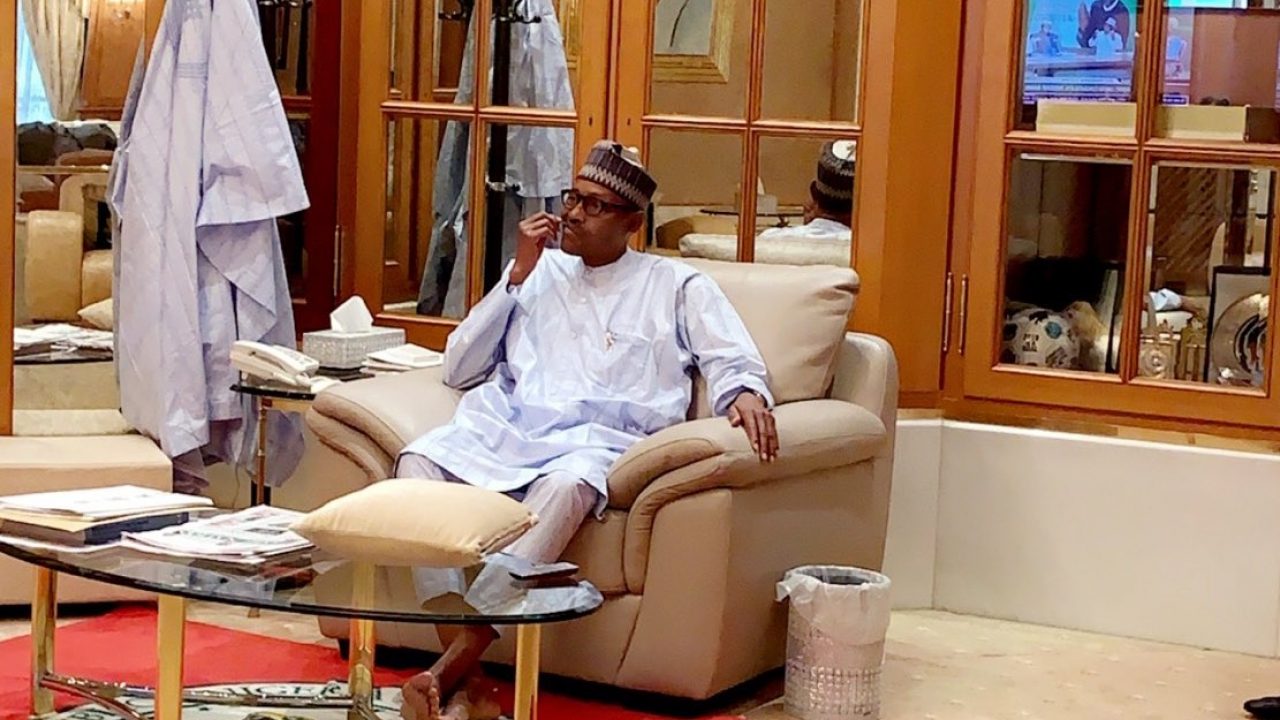
Muhammadu Buhari, former President of Nigeria, is no more. For a moment, I felt very shocked and touched. Not because I expected him to live forever, but because I had never honestly imagined a Nigeria without him somewhere in the background watching, guiding, deciding, or simply being present. I asked myself why the end of some lives feels heavier than others. Perhaps it is because those lives were never ordinary. Buhari’s life was one of service, controversy, silence, and symbolism. Now that the chapter is closed, what remains is the long shadow of his presence, a legacy that will be remembered, questioned, and reflected upon for years to come.

Buhari was never a man you could ignore. You were either with him or against him. I, more often than not, stood in opposition. I challenged his approach to national security, criticised his handling of the education system, and voiced strong concerns about his oversight of Nigeria’s crude oil sector and economy. My criticisms were never born out of malice, but out of conviction. I believed, and still do, that our country deserves better. I thought it was our duty to demand it.

Yet, amid my disagreements, I never lost sight of the man behind the decisions. In 2020, during the #EndSARS movement, when the nation was boiling with fear and fury, I felt compelled to offer a different perspective. I wrote an article titled “Calming the Tide: Buhari’s Antidote.” In that piece, I tried to humanise him. I described him as a lanky man, often caught smiling with his teeth in full view, yet known for the signature frown that defined his public image. Something was striking about how he carried himself in his flowing babban-riga, standing tall and firm like the general he once was, even in the calm of civilian leadership.

Buhari’s story began long before he entered Aso Rock. As a young man, he embraced the uncertainties of military life. He rose through the ranks with grit, ultimately becoming a general in the Nigerian Army. He ruled Nigeria first as a military leader and returned, decades later, as a civilian president. His reemergence was not merely a political move; it was deeply personal. He saw his return as a duty to complete a mission he once began in uniform. Whether he succeeded or fell short, Buhari believed in his cause, and that belief fueled his resolve.

He was undeniably a man of sharp edges. His stubborn adherence to principle often came at a cost. He preferred silence when the nation needed clarity and stood firm when compromise was necessary. His integrity, once lauded, became the subject of scrutiny. Some wounds were self-inflicted; others were inherited from the complexities of leadership. Regardless, they will shape how history remembers him.

Despite it all, Buhari remained anchored in a modest way of life. He never sought extravagance. He governed in the way he understood best—that is, through order, discipline, and restraint. These traits, while admired by some, alienated others. Yet, behind that stoic exterior was a man deeply invested in the idea of service, even if the methods failed to reflect the expectations of many.

The end of a life always casts a different light on it. Legacies are never truly complete until the final chapter has been closed. Buhari’s legacy will be debated in homes, classrooms, and political circles for years to come. But today is not for judgment. Today is for remembrance. For the man, not just the president. For the soldier who once stood on the frontline, and for the leader who walked through the dust of Daura into the marble halls of national power.

At over eighty, he still had something to give. Not in speeches or policy, but in presence, in counsel, in memory. Nigeria needs his wisdom, perhaps now more than ever.

I mourn him, not because I always agreed with him, but because I respected the weight of the burden he carried. He did not lead perfectly. But he led. And in many ways, he led with sincerity.

Now he is gone. But his footprints remain on the battlefield, in the ballot box, and in the hearts of those who watched, waited, and sometimes wept. His story is one of contradictions, courage, convictions, and consequences. But above all, it is a Nigerian story.

Rest in peace, General Muhammadu Buhari. The march is over. The bugle has sounded. And history, in all its fullness, will remember you.

Usman Abdullahi Koli wrote via mernoukoli@gmail.com.

Chasing wealth the proper way: A message to the youth

By Muhammad Umar Shehu


There is this thing that has been baffling me for so long. How on earth can someone knowingly take what does not belong to them and claim to be the rightful owner? Be it a car, a motorcycle, money, or anything valuable, how can a person live with that and still have peace of mind? Just wondering. The rising number of fraudsters, armed robbers, and criminals is sending a red alarm through our society. We need to think about this. 

Where is our sense? How can you feel human after intentionally making someone else suffer by stealing or using power to take what is not yours? Even if you escape in this fleeting world, do you ever think about the hereafter? Honestly, I do not think anyone with a conscience can still feel truly human after that.

In today’s fast-paced society, the pursuit of wealth has become more intense than ever. Young people are under growing pressure to succeed quickly and visibly. Social media has made it worse, constantly showing luxury lifestyles, expensive cars, designer clothes, and dream vacations. Everywhere you look, someone is showing off something new, and this has created a culture where being rich is seen as the only proof of success. With this kind of pressure, it is not surprising that many are tempted to look for shortcuts to riches.

Some youth turn to legal avenues such as starting businesses, learning digital skills, or investing in trades. These are commendable paths that require time, discipline, and consistency. However, others begin to lean toward illegal or dishonest means. Internet fraud, online scams, money rituals, and other shady activities have unfortunately become attractive options for those who want to make it overnight. These choices are dangerous and often come with serious consequences that people do not thoroughly think through until it is too late.

The reality is that there is always a price to pay for fast money, especially when it comes through illegal means. Aside from the risk of arrest, prosecution, and jail time, there is also the emotional burden and shame that follow. Getting caught in criminal activity can destroy your future. It closes doors to real opportunities, stains your reputation, and breaks the trust your family and community have in you. Even if the law does not catch you, people talk. Your name becomes a warning, not an example.

Beyond legal consequences, there is also a personal cost. Living in constant fear of getting caught or exposed takes a toll on your mental health. Many people who appear to be living large are battling anxiety and guilt behind closed doors. They cannot sleep peacefully, they do not feel safe, and deep down, they know that what they are enjoying is temporary. What is the point of having money if you have to keep looking over your shoulder?

It is also important to understand that real wealth takes time to build. There is nothing wrong with starting small. Many successful people started with little, but they stayed consistent. Whether you are learning a skill, starting a side hustle, or working your way through school or a job, what matters is growth. Progress may be slow, but it is real, and over time, it adds up. That kind of wealth gives you confidence and freedom because it was earned the right way.

Young people need to hear this often. There is no shame in taking your time. Not everyone will blow in their twenties, and that is okay. Social media has created false timelines that make people feel like failures if they have not made it early. But life is not a race. Focus on building yourself. Learn, grow, stay curious, and surround yourself with people who push you to do better the right way. Your future should not be built on lies or shortcuts. Let it be built on purpose and with effort.

In the end, it is not just about making money. It is about who you become in the process. Money comes and goes, but your values, your peace of mind, and your name should remain intact. Do not trade your future for temporary pleasure. Stay focused, stay clean, and remember that true success is not just about how much you have but how you earned it.

Muhammad Umar Shehu wrote from Gombe and can be reached via umarmuhammadshehu2@gmail.com

Future generations will understand better: Good night, Baba

By Bilyamin Abdulmumin, PhD

I didn’t feel very emotional when I first heard about the death of Muhammadu Buhari. Until this morning, when I came across one of his speeches from the 2023 campaign. In that speech, he reflected on his life, the approaching end of his tenure, and his return home. He bade farewell and admonished the congress and the Nigerian people with good leadership, honesty, and trustworthiness. Watching that speech now, occasioned by his passing, felt like listening to a wasiyya, a final will, from one of my dying parents. For the first time, I found my eyes welling up over someone’s death. 

The death of the former president shouldn’t come as a surprise. At 82, he had lived a full, ripe, and by many standards, successful life. Yet many of us were caught unprepared by his passing. He was much in the spotlight, with his move from his Daura residence to a renovated home in Kaduna, and visits from opposition figures, leading to the APC’s restlessness and the immediate response from the then APC chairman, “Habu Na Habu”. 

The last time Buhari was in the news, it was due to rumours that he had slipped into a coma and was in critical condition—claims swiftly denied by Garba Shehu. Like many staunch Buharists, I didn’t take those rumours seriously. After all, we had heard many such baseless reports before.

Two key lessons I’ve taken from Buhari’s leadership: one about Buhari himself, and the second about the general society. For Buhari, integrity and honesty, while essential, are not enough on their own to bring about revolutionary change. I’ve followed transformational leaders like Lee Kuan Yew. Like Buhari, he was tough and sincere. But what set him apart was his well-defined economic philosophy and strategic vision. Buhari, by contrast, appeared to rely heavily on the capacity of his advisers and inner circle. 

For Nigerians, even the much-touted Lee Kuan Yew may still not be enough to deliver the revolutionary change. This is because the mindset and orientation of much of Nigerian society are often at odds with the very change they claim to seek. Many did not fully understand the nature or depth of the “change” being clamoured for in the first place. In contrast, a significant portion of Singaporean society shared in Lee Kuan Yew’s vision—or were at least willing to align themselves with a national revolution. That collective readiness made transformation possible. In Nigeria, however, the societal psyche remains a major barrier to meaningful reform.

History is best understood by future generations. Chairman Mao was once seen as merely a rebel, yet he eventually seized power and reshaped global history. How he was perceived a hundred years ago stands in stark contrast to how he’s viewed today. 

President Muhammadu Buhari came, did his part, and has now taken his bow. Time will reveal the full weight of his legacy. Good night, Baba. May your soul rest in Jannatul Firdaus.

Debunking the Claims: A closer look at governance and opposition in Katsina State

By Ahmed Abdulkadir

It was with a mix of curiosity and concern that I came across an article published by The Daily Reality on July 12, 2025, titled “How the Lack of Strong Opposition Masks the Government’s Failures in Katsina.” The write-up was emotionally charged, laced with sweeping generalisations and unverified claims against the administration of Governor Dikko Umar Radda. But beyond the passion and provocative headline lies the need for a more measured and fact-based perspective—one grounded in reality rather than rhetoric.

Let us take a closer look at the major allegations raised in the article and critically examine them with verifiable facts and thoughtful context.

The “Failure” of a PhD Holder? A Misplaced Premise

One of the more glaring assertions in the article is the idea that Governor Radda’s possession of a PhD was oversold during his campaign and that his government has since failed to meet expectations. But such a claim is not only simplistic—it is unfair.

Yes, Governor Radda holds a doctorate degree, a fact that underscores his academic pedigree. However, governance is not a matter of titles or certificates—it is about policies, programs, and political will. The proper question should be: What has he done since assuming office in May 2023?

So far, the Radda administration has rolled out programs in agriculture, healthcare, and security reform. For instance, his data-driven community development model now guides the distribution of fertiliser, agro-support, and loans, ensuring that those who truly need support get it. His collaboration with the Bank of Industry for interest-free loans to MSMEs is unprecedented in the state. His administration has also launched the Health Insurance Scheme for Retirees—the first of its kind in Katsina’s history.

If there are areas needing improvement, no doubt. But to write off the administration as a “failure” just two years into a four-year mandate without a balanced assessment is more political than logical.

Insecurity: Who Really Bears the Blame?

The article devotes significant attention to the security situation in Katsina State. It laments the rising tide of banditry and communal violence, laying the blame squarely on the state government’s shoulders.

There is no denying the pain and fear that many communities in Katsina face. Attacks in places like Yargoje and Faskari are fresh scars in our collective memory. But to understand the security challenge in Katsina, one must first recognise that it is a national crisis, not a localised failure.

Security in Nigeria is under the exclusive control of the Federal Government. The police, the military, and the intelligence agencies all answer to Abuja. Governors, including Dr. Radda, are often described as “chief security officers” in name only—they command no troops, control no weapons, and fund security operations from limited state budgets.

That said, the Radda administration has not folded its arms. It has recruited and trained community vigilantes, equipped local security outfits, and created a Directorate of Humanitarian and Social Support to cater to victims of banditry and displacement. These interventions may not be silver bullets, but they reflect proactive governance in a highly constrained security architecture.

Education: A Long Road, not a Quick Fix

Another issue raised in the article is the high number of out-of-school children in Katsina. On this point, the critics are absolutely right. Katsina ranks among the states with the highest rates of out-of-school children in Nigeria. But what they failed to mention is that this is not a new problem, nor one created by the Radda administration.

The roots of the educational crisis in Katsina go back decades. Years of underfunding, weak infrastructure, socio-cultural barriers, and insecurity have combined to undermine education in the state. What matters now is what the current government is doing to address it.

Governor Radda has begun the process of improving school enrollment, especially for girls. New schools are being built in underserved areas. He has introduced teacher recruitment and training initiatives. And there are plans underway to integrate Qur’anic education with formal curriculum to bridge the gap between Almajiri and Western education.

Is it enough? Not yet. But progress is being made—step by step.

Opposition Politics: Is There Really a Vacuum?

Perhaps the most politically charged claim in the article is that Katsina suffers from a lack of effective opposition, which allows the government to operate without scrutiny. This is an old and recurring lament in Nigerian politics, especially in states where the ruling party dominates.

Yes, the All Progressives Congress (APC) won the 2023 governorship with a comfortable margin. Yes, the party also secured all three Senate seats and most House of Assembly positions. But to interpret this dominance as the death of opposition politics is disingenuous.

The PDP remains active in Katsina. The SDP fields candidates. Civil society voices are alive and well. In fact, the very article in question—published without censorship—is evidence that dissenting voices are being heard.

If opposition parties are underperforming, the responsibility lies with them to reorganise, re-strategise, and connect meaningfully with the grassroots. Democracy is not sustained by the volume of complaints but by the quality of alternatives.

A Balanced View, not a Biased Verdict

In conclusion, while the concerns raised by Daily Reality are important and deserve public discourse, their presentation lacks balance and fails the test of objectivity. The article reads more like a political broadside than a serious critique of governance. It ignores nuance, omits progress, and assumes malice where complexity exists.

Katsina State, like much of Nigeria, is grappling with real challenges—security, education, healthcare, and youth unemployment. But it is also a place where honest efforts are being made to build a better future. The truth, as always, lies somewhere in the middle, not in the extremes of praise or condemnation.

Governor Radda may not have achieved everything yet, but his administration has not been idle, incompetent, or indifferent. Let us hold him accountable, yes—but let us also be fair, factual, and future-minded in our assessments.

Ahmed Abdulkadir is the Board Chairman of Katsina State Radio and Television Services.

Malam Garba Umar Saleh: A teacher with a difference 

By Sani Surajo Abubakar

“Gurubi”, as he was fondly called by his colleagues, the teaching and non-teaching staff of Army Day Secondary School, Bukavu Barracks, Kano, remains a name that resonates in the ears of many who studied in the school in the late 80s, 90s, and years after.

Malam Garba Umar Saleh embodied the spirit of a true teacher. His commitment to education and passion for nurturing young minds were evident in every aspect of his work. 

It is with profound sadness that we reflect on the life and legacy of the late Malam Garba Umar Saleh, a dedicated teacher at Army Day Secondary School and other secondary schools. His passing left an indelible void in the lives of those who knew him, particularly his students, colleagues, and the broader community.

 He approached his role with diligence, patience, and kindness, making him a beloved figure in schools. His dedication to his students went beyond the classroom, as he often took extra time to mentor and guide them, both academically and morally.

The impact of Malam Garba Umar Saleh on his students cannot be overstated. He had a unique ability to make complex concepts accessible and engaging, inspiring a love for learning in countless young minds. His unwavering support and encouragement helped many students overcome challenges and achieve their full potential. His legacy lives on through the countless lives he touched, and his influence will continue to shape the futures of those he taught.

His colleagues at the Army Day Secondary School and other Schools also held him in high regard. His collaborative spirit, professionalism, and positive attitude made him a valued member of the school community. He made significant contributions to the school’s mission, consistently striving for excellence and innovation in education.

While Malam Garba Umar Saleh is no longer with us, his legacy endures. The lessons he imparted, the values he instilled, and the love he showed to his students and colleagues will forever be remembered. His life serves as a powerful reminder of the profound impact one individual can have on the lives of others.

As we remember Malam Garba Umar Saleh, we honour his memory by upholding the values he cherished: dedication, compassion, and a commitment to making a difference in the lives of others. His story is a testament to the enduring power of education and the profound impact one teacher can have.

This tribute serves as a heartfelt acknowledgement of the remarkable life and contributions of Malam Garba Umar Saleh. May it inspire others to follow in his footsteps, dedicating themselves to the noble cause of education and service to humanity. 

A 1982 NCE graduate of the Advanced Teachers College Gumel, the deceased was employed as Master III by the then Kano State Ministry of Education and posted to Government Girls College (GGC) Dala as his first port of service.

In his quest for knowledge, the late Garba Umar Saleh enrolled in a degree programme at Bayero University Kano and graduated with a Bachelor of Arts (BA) in Education/English in 1989.

He spent most of his teaching years, spanning more than three decades, at GGC Dala, Army Day Secondary School (Boys), Bukavu Barracks, and Muhammad Vice Adamu Government Secondary School Kuka (MVAGSS), serving as a classroom teacher, Senior Master, and Vice Principal, respectively.

Towards the tail end of his service period, he was redeployed to the headquarters of the Kano State Senior Secondary Schools Management Board (KSSSSMB) as Deputy Director, Training and Recruitment, a position he held until his last breath, some weeks before his exit from the service. 

  May Almighty Allah, the most Exalted, grant his gentle and innocent soul rest in peace, and Jannatul Fiirdausi be his final abode, the fortitude and solace for all of us to bear the irreplaceable loss. May his legacy continue to inspire future generations? 

Sani was a student at Army Day Secondary School, Bukavu Barracks, Kano, and is currently on the Staff of the Kano State Ministry of Information and Internal Affairs.

Still on El-Rufa’i and Yar’Adua

By Saifullahi Attahir

In his article, titled “Yar’adua: Great Expectation, Disappointing Outcome,” Mallam Nasir El-Rufa’i wrote that the late Umaru Musa Yar’adua graduated from ABU in 1975 and did his youth service (NYSC) at Holy Child College in Lagos as a chemistry teacher.

After the service year, Yar’adua took a government job at the College of Arts, Science and Technology (CAST), Zaria, as a chemistry lecturer. He later obtained his MSc in 1978, while continuing his teaching career at the same CAST until 1983, when he joined his brother’s business after the latter resigned from the National Service as second-in-command to General Olusegun Obasanjo during the handover to civilian rule in 1979.

The above narrative can attest to the clear moral right Yar’adua has over Mallam Nasir, despite the latter’s constant attacks. I’m sure that in the years between 1976 and 1983, the late Umaru could have accessed all the privileges a graduate could have as a brother to a senior military officer and son of the establishment. His service year in the grammar school and his continued lecturing job at CAST Zaria can testify to a great deal about the individual Yar’adua, his brother Shehu, and the regime.

As a young and well-connected chemistry graduate, Umaru Yar’adua could have access to serve in the newly established NNPC, top agricultural firms, top Lagos banks, or even become a legislative aide in the green or red chamber.

Securing a job through connections is a common and sometimes effective method. Networking, which involves leveraging personal and professional relationships, can significantly increase your chances of finding a job. Indeed, many talented and industrious individuals can be harnessed through this process, although it may be perceived as nepotistic. Hadiza Bala Usman got her start at BPE by El Rufa’i through a similar path.

Of course, time has changed; it’s now normal that specific places, such as CBN, FIRS, NPA, BPE, top private firms, and Federal MDAs, are not accessible to ordinary corps members. We can still recall a time when a brother of Nigeria’s second-in-command opted to attend a grammar school and later took a teaching job at a college in Zaria. But still, that doesn’t prevent him from becoming Nigeria’s president.

While the 5th May remembrance has been immortalised in the hearts of Nigerians despite Yar’adua’s short stint as president, Mallam El-Rufa’i was still battling and settling past scores and fights.

Saifullahi Attahir wrote from Federal University Dutse via saifullahiattahir93@gmail.com 

Parental neglect is worsening Nigeria’s crisis

By Muhammad Umar Shehu

Parental care is slowly disappearing in today’s Nigeria, and the consequences of this are evident. The family used to be the first point of training where values were shaped and morals were taught. Now, many homes are broken by the absence of emotional, physical or financial support. 

Parents are either too busy chasing survival or have surrendered their roles to the internet, peer groups and street culture. And the result is right in front of us. Young people with no sense of direction, crime becoming a normal path, and a country overwhelmed by insecurity.

A child not guided at home is more likely to find purpose in the wrong places. We are now dealing with the consequences of that neglect. From cultism to kidnapping, cyber fraud to political thuggery, we are raising a generation that is desperate, angry and emotionally abandoned. You cannot discuss national security without addressing family failure. Every bandit and every drug addict started as someone’s child.

At the same time, some parents do too much of the wrong kind of parenting. They shelter their kids from reality, provide for everything but discipline nothing and expect the schools to build what they have not started. Some parents no longer listen to their children. They demand excellence without showing concern for mental or emotional well-being. That is why depression is rising among young people. That is why suicide, addiction and social vices keep growing silently.

It is true that we no longer have the strong community system that once helped raise children. But there are still ways to rebuild. The society needs to encourage good parenting by example, not just by words or scolding. We need honest conversations between parents and children. We need schools to include real-life education, not just grades, but responsibility, empathy and values. We need religious and traditional leaders to focus less on miracles and more on morality and family life.

It is easy to blame the government, but even if they build roads and power, we will still collapse as a nation if we do not raise humans with a conscience. No law can replace the love and discipline of a present parent. And no society can grow when its children are lost.

If we want to fix this country, we must go back to our roots. Parents need to be present, not just physically, but also emotionally and morally. Being a parent is not just about giving birth or paying school fees. It is about being a guide, a mentor and a strong emotional backbone. Let us not expect society to raise the children we refused to raise. If the home fails, everything else will.

This country needs healing, and it starts in the family.

Muhammad Umar Shehu wrote from Gombe via umarmuhammadshehu2@gmail.com.

Dr Yasir Qadhi pays tribute to Alhaji Aminu Dantata

By Hadiza Abdulkadir

Renowned U.S.-based Islamic scholar Dr. Yasir Qadhi has paid a heartfelt tribute to Nigerian business mogul and philanthropist Alhaji Aminu Alhassan Dantata, who passed away at the age of 94.

In a message shared via his social media platforms, Dr. Qadhi described Dantata as “a shining star and a legendary icon” in Nigeria, praising his humility, honesty, and lifelong commitment to philanthropy.

“He was one of the most successful entrepreneurs and business tycoons in Africa,” Dr. Qadhi wrote. “Yet everyone knew him to be a humble and honest man… ever-ready to help others less fortunate, never greedy for more.”

Recalling a recent meeting with Dantata in Nigeria, Qadhi shared the late businessman’s parting words of wisdom: “Honesty! Always, be truthful and sincere, and leave the rest to Allah.”

Alhaji Dantata, who declined a political appointment, was never involved in a scandal and was laid to rest in the revered Baqi al-Gharqad cemetery in Madinah, Saudi Arabia.

“Such men are very rare indeed,” Qadhi noted, praying for Allah’s mercy upon him and for his legacy to continue through his progeny.

Tinubu’s new tax reforms and the North

By Zayyad I. Muhammad

On Thursday, June 26, 2025, President Bola Tinubu signed into law four landmark tax bills that the National Assembly had recently passed.

Whether one agrees or disagrees with Tinubu’s style of governance, the new tax bills signal a new beginning for Nigerians, businesses, and governments, both at the subnational and federal levels.

Some key  highlights of the Reforms are:

Elimination of Duplication in Tax Collection: One major reform is the establishment of the new Nigeria Revenue Service (NRS), which will now collect revenues that were previously handled by numerous agencies, such as the Nigeria Customs Service, Nigerian Ports Authority (NPA), Nigerian Upstream Petroleum Regulatory Commission (NUPRC), NIMASA, and others.

Tax Exemption for Low-Income Earners: With the new provisions, individuals earning ₦800,000 or less per year are now fully exempt from income tax. This is a masterstroke, especially for many people in the North. It removes a huge burden and creates space for their small and medium-sized businesses to grow and flourish.

New Personal Income Tax Rate: 

Only those earning above ₦50 million annually will be required to pay the new 25% personal income tax rate. This is both fair and reasonable.

Another significant win for the North, which has the highest concentration of impoverished people in Nigeria, is the removal of VAT on essential goods and services, including school fees, medical services, food, pharmaceuticals, and electricity. This is a significant relief for the poor and small to medium-sized businesses.

The corporate tax rate will now be reduced from 30% to 25%, and small businesses will be fully exempt from paying income tax.

The controversial VAT issue has now been ‘fairly’ settled, and again, it’s a big win for the North, which had previously raised concerns. The new revenue-sharing formula is as follows:

Federal Government: 10%

States: 55%

Local Governments: 35%

Even more importantly, the VAT sharing formula has been revised in a way that favours the North. If northern states seize the opportunity to harness and develop their economies and markets, especially in agriculture, they will benefit significantly.

The new sharing criteria are:

50% of VAT is shared equally among all states

20% is based on population

30% is based on where goods/services are consumed

One of the most important features of these tax reforms is how they protect and uplift the poor and small businesses,especially in the North, where:

About 65% of Nigeria’s poorest people live

Over 52% of the country’s states are located

More than 60% of the population resides

Nearly 70% of Nigeria’s landmass is found

And almost 80% of agricultural production takes place

It’s time for northern states to tap into local knowledge and deploy homegrown experts to thoroughly study the four landmark tax laws in line with each state’s peculiarities and needs, yet with the whole North as the unifying objective.

If well studied and strategically implemented, Tinubu’s new tax reforms could be the silver bullet the North has been waiting for.

They offer fiscal justice, decentralisation of revenue, protection for the poor, incentives for businesses, and a practical opportunity to lift millions out of poverty.

However, as always, it will take visionary leadership, technical expertise, and political will to translate policy into meaningful impact. The opportunity is here. The North must not waste it.

Zayyad I. Muhammad writes from Abuja via zaymohd@yahoo.com.

ZABAFEST 2025: How Zaria’s first books and arts festival reimagined legacy and sparked a cultural awakening

By Maryam Shehu

In April 2025, the historic city of Zaria, long hailed as Birnin Ilimi (City of Knowledge), witnessed its first-ever Books and Arts Festival, a groundbreaking literary and cultural event curated by a young visionary determined to rekindle the flames of creativity in Northern Nigeria.

Despite its rich academic tradition, Zaria has often left arts, literature, and creativity feeling orphaned, without the nurturing hands they deserve. It takes a persistent muse to find a home in the hearts of the younger generation. To fill this void, in 2022, driven by passion and a deep desire to engage in literary conversations with like-minded individuals, I founded Pen Warriors. It began as a shade tree for emerging voices to be heard and appreciated.

Later, the initiative was rebranded as Bookish Alchemy, with a bookstore arm, Bookish Alchemy Bookstore, whose profits now partially fund our literary programs. Since then, we’ve hosted programs that have reached over 300 individuals, including poetry competitions, a mentorship session with Abduljalal Musa Aliyu, book chats with authors such as Sani Abdulrazak and Aliyu Danladi, serene Silent Book Reading sessions, and intensive August mentorship weekends on spoken word, short story writing, and public speaking.

Toward the end of 2024, the idea of hosting Zaria’s first Books and Arts Festival took hold of me. At first, I was paralysed by thoughts of funding. Some peers warned that such an event would require thousands of dollars I didn’t have. But the idea felt like a child ready to be born–it refused to be ignored.

I assembled a team of six brilliant minds: Halliru Sani Salihu, Abdurrazak Maiwada, Mardiyya Nura, A’isha Ibrahim Ahmad, Sani Abdulrazak, and Hadiza Isyaku Abdulsalam. We dived headfirst into planning, reaching out to guests, drafting sponsorship proposals, and building the foundation from scratch.

With the generous support of organisations like Duniate Culture (Kaduna), Gidan Dabino (Kano), Creative Corner (Kano), Katsina Times, Poetic Wednesday Initiative, Beyond the Pages, and the Bukar Usman Foundation (Abuja)–though none from Zaria itself–Bookish  Alchemy brought the Zazzau Books and Arts Festival (ZABAFEST) to life.

A FESTIVAL IS BORN

To ensure a smooth and enjoyable experience for guests and attendees, Hadiza and Mardiyya coordinated 10 incredible volunteers. Out of sheer love for the arts, Mahmud Jimada, Abdulmumini Yahuza, Abdullahi Abubakar, Maryam Jalo, Khadija, Hauwa, Asma’u, Fatima, Auwal, and Ibrahim took on various roles, including registration, ushering, stage management, and guest welfare.

On April 26–27, 2025, ZABAFEST debuted at the Sultan Muhammad Sa’ad Abubakar Assembly Hall, Barewa College.

“Maryam, how many times have you cried while putting this together? If you haven’t yet, get ready for more,” said Prof. Audee T. Giwa, a day before the festival, as he submitted his book collections, fully aware of the emotional toll such a project could take.

With the theme “Legacy Reimagined,” the dream came to life.

HIGHLIGHTS OF DAY ONE

Day One opened with the presentation of a Lifetime Achievement Award to Alhaji Ado Ahmad Gidan Dabino, actor, author, filmmaker, and cultural icon. The award was presented by Isma’il Bala, author of Ivory Nights, in a moment of reverent celebration.

Prof. Audee T. Giwa delivered a stirring keynote on The Role of Arts in Preserving Our Culture, emphasising how the arts help conserve heritage and foster unity in Nigeria’s diverse landscape.

Next came a rich Hausa panel titled “Ma’abota Al’adu: Muhimmancin Marubutan Hausa wajen Kiyaye Gadon Mu,”moderated by Mal. Abba Abubakar Yakubu, featuring Prof. Ibrahim Malumfashi, Safiyya Jibril Abubakar, and Gidan Dabino. Together, they explored how Hausa literature sustains cultural identity.

The festival’s literary journey was anchored on four key books: Ivory Nights by Isma’il Bala, ZABBA’U by Prof. Audee T. Giwa, An Abundance of Scorpions by Hadiza El-Rufai, Girls and the Silhouette of Form by Star Zahra (who could not attend due to illness)

A captivating book chat on Ivory Nights, moderated by Abduljalal Musa Aliyu, provided readers with an opportunity to engage with the author and ask questions that had lingered since the book’s release.

After lunch, the session Cultural Amnesia: What Happens When We Forget Our Culture? Brought together Sani Abdulrazak, Isma’il Bala, and moderator Ibrahim Ahmed to reflect on the consequences of cultural neglect.

“It looks like a bird entangled in a cage, but it is worth it. It will pay–not now, but definitely. Just endure the pain,” said Gidan Dabino in an emotional aside to me backstage.

The afternoon wrapped up with Ahmad Mubarak Tanimu’s African Literature Quiz. Guests and attendees were grouped and tested on their knowledge of African books, with the winners showcasing impressive literary awareness.

The day closed with the Abubakar Imam Poetry Slam, named after the legendary author of Magana Jari Ce and Tafiya Mabudin Ilimi. Twelve contestants competed under the theme Al’adunmu: A Window to the Past for a ₦200,000 prize. Judged by Namse Udosen, Nasiba Babale, and Abdulbasit Abubakar Adamu, the session left a lasting impression on the hearts of the attendees.

“It wasn’t easy to choose the winners. They came with fire in their words and metaphorized our hearts,” a judge remarked.

DAY TWO: POWER, PEACE, AND POETRY

Day Two welcomed even more guests. The panel Women, Arts, and Activism: Using Creative Expression to Promote Social Justice featured Aisha Lawan Indabawa, Hadiza El-Rufai, and Nana Sule. Their discussion, from creative writing to activism, highlighted the intersections of creativity and impact.

The next session, “The Role of Arts in Conflict Resolution and Peace Building,” moderated by Aliyu Jalal, gathered Sani Muhammad, Salim Yunusa, Nasiba Babale, and Amir Lukman Haruna to explore how poetry and storytelling can serve as tools for healing.

Nasiba Babale also hosted a moving book chat with Hadiza El-Rufai on An Abundance of Scorpions, a novel that follows a woman’s journey through loss and recovery. It was called one of the festival’s most powerful sessions.

Timely and futuristic, the panel on “Ethics of AI-Generated Arts: Authorship, Ownership, and Creativity,” moderated by Mujaheed Aminu Lilo, featured Namse Udosen, Aliyu Danladi, and Ahmad Mubarak Tanimu, sparking debate and insights into emerging creative technologies.

Prof. Giwa’s novella ZABBA’U took the spotlight next, in a discussion with Ahmad Mubarak Tanimu, drawing philosophical and literary insights from the audience.

Later, Husayn Zuguru gave a mesmerising Afrodervish performance, whirling poetry and movement into a dance of spirit and silence.

The final session, The Poetry Garden, featured open mic performances by Abdulbasit, Hidaya, Aisha Indabawa, and other talented poets. It was a closing tribute soaked in metaphor and soul.

MORE THAN A FESTIVAL

ZABAFEST 2025 welcomed over 30 guest speakers from 7 states and more than 300 attendees from 13 states, uniting people from diverse ethnic and cultural backgrounds through a shared love for literature and the arts.

“Organising a festival isn’t easy, especially with today’s financial climate, but this is a much-needed initiative in Northern Nigeria,” said Hadiza El-Rufai. “I applaud your efforts and promise our support for future editions.”

For a first-time festival in a city that rarely spotlights the arts, the positive feedback far outweighed the challenges. Attendees left inspired, encouraged, and ready to write new chapters in their own lives.

The next edition of ZABAFEST promises to be even more expansive. It will explore themes such as climate change, digital creativity, and social advocacy and feature voices from across Nigeria and beyond.

We’re just getting started. The journey continues.

Maryam Shehu wrote from Zaria via maryamshehu6354@gmail.com.