North Central

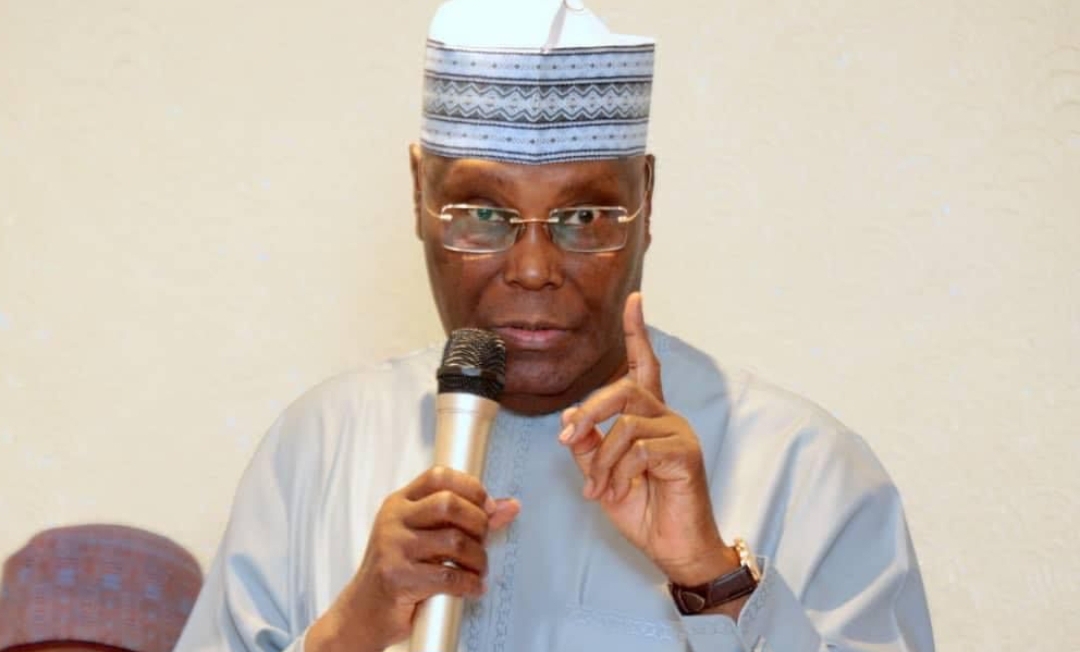
Atiku slams Tinubu administration on insecurity

By Muhammad Abubakar

Former Vice President Atiku Abubakar has launched a sharp attack on President Bola Tinubu’s administration, accusing it of failing to secure the North-Central region of Nigeria. 

Abubakar’s statement claims that the government has abandoned the area, resulting in a “monumental failure” in protecting its citizens.

Abubakar highlighted a dramatic rise in violence, citing Kwara State’s new status as a hotspot for kidnappings and bandit attacks. He also noted continued bloodshed in Niger, Plateau, and Benue states, where thousands have been killed in just two years.

The former Vice President went on to accuse the ruling APC of using thugs to disrupt opposition meetings, with security forces allegedly failing to act.

He warned that violence “is a vicious circle” that will harm those who use it, and called on the Nigeria Police Force to remain neutral and fair, reminding them that taxpayers, not the APC, fund them.

APC North-Central urges Tinubu to retain Shettima as VP

By Anwar Usman

The All Progressive Congress Forum North-Central has advised President Bola Tinubu to retain Vice President Kashim Shettima as his running mate for the 2027 presidential election.

The statement was made by the forum’s Chairman, Alhaji Saleh Zazzaga, in Abuja on Saturday.

In a recent appearance on Channels Television’s Politics Today, the Northern Ethnic Nationality Forum, led by Dominic Alancha, warned Tinubu against a repeat of the Muslim-Muslim ticket, noting that it cost the APC several northern states like Nasarawa, Plateau and the Federal Capital Territory in the 2023 presidential poll.

Alancha further warned that the APC would lose more ground in the North, particularly in the Middle Belt, if the party repeats the Muslim-Muslim ticket in the next presidential election.

However, according to the group, calls for the President to drop the Muslim-Muslim ticket in the next election are unnecessary, insisting that the combination worked for the APC in 2023.

Zazzaga explained that the choice of running mate was a political strategy aimed at ensuring victory for the party and should not be seen as an attempt to sideline any religious group.

He further argued that with key positions in government already occupied by prominent Christians from the Middle Belt, including the APC National Chairman, Prof. Nentawe Yilwatda, and the Secretary to the Government of the Federation, Senator George Akume, the region remains well represented.

 The statement in part read, “The Muslim-Muslim ticket will not affect President Bola Tinubu’s chances in the Middle Belt, which is part of the North-Central, and this is because of the key positions held by Middle Belt Christians in the APC government.

“We can guarantee that Tinubu will get 90 per cent of the votes from the North-Central. Tinubu’s achievements in office will guarantee his reelection, and as a result, there is no need to take the needless risk of changing a winning team.

“Those who are calling on President Bola Tinubu to change Vice President Kashim Shettima, basing their agitation on the Muslim-Muslim ticket, if you check, you will notice that in 2023, most of their communities voted for Peter Obi of the Labour Party.

“Now, if Peter Obi is to come out again in 2027, as expected, what is the guarantee that they will vote for Tinubu even if he drops Shettima and replaces him with a Christian? Does it mean that these people will now leave Peter Obi and vote for Tinubu?”

The Forum maintained that Tinubu’s performance in office would play a decisive role in determining his chances of re-election, adding that the President should focus on consolidating his achievements rather than altering the political structure that brought him victory in 2023.

 The statement concluded, “We advise Mr President not to change what worked in the last election. Maintaining the same team will further strengthen the chances of the APC in 2027″.

Over 1,100 Nigerians killed, 276 abducted in June — Security Report

By Muhammad Abubakar

At least 1,111 Nigerians were killed and 276 abducted by gunmen and other non-state actors across the country in June 2025, according to a new report by Beacon Security and Intelligence Limited.

The chilling figures are contained in the company’s monthly security dossier, which tracks violence and criminal activity nationwide. Despite the high numbers, the report notes that June witnessed a “notable de-escalation” in security breaches compared to May, suggesting a slight dip in the frequency or intensity of attacks.

While the report did not provide a full regional breakdown, sources familiar with the data say many of the killings occurred in the North West and North Central zones, where banditry and communal violence remain rampant. Parts of the South East also continue to grapple with targeted killings and kidnappings by separatist-linked armed groups.

The 276 abductions show the persistent threat of kidnapping-for-ransom, which has plagued Nigeria for years, affecting schoolchildren, commuters, and rural dwellers alike.

Security analysts say the figures, though slightly improved from previous months, still reflect a deepening crisis. They have called for more coordinated action by federal and state authorities to strengthen local intelligence, improve response times, and hold perpetrators accountable.

The government has yet to respond to the latest statistics, but critics argue that repeated assurances of improved security have not translated into meaningful safety for the average Nigerian.

The persecution of Hausa people in Nigeria must stop

By Salisu Uba Kofar Wambai

The safety and dignity of Hausa people in Nigeria are increasingly under threat. The recent spate of brutal killings targeting innocent Hausa travellers across various regions of the country is both alarming and unacceptable. 

Disturbingly, the North Central and Southern parts of Nigeria, in particular, are turning into graveyards for members of the Hausa community, despite the hospitality and freedom non-indigenes continue to enjoy in Hausa land—where people from across the country have settled peacefully, enjoying all rights guaranteed under the Nigerian Constitution, including freedom of movement and residence.

The recent killing of two Hausa tanker drivers in the South-East came as a shock. They were attacked and butchered while trying to repair their broken-down vehicle. Similarly, the horrific massacre of Hausa hunters in an incident that sent shockwaves across Nigeria and beyond speaks volumes about the rising hostility against the Hausa community.

Equally tragic was the killing of Hausa travellers in Plateau State who were on their way to honour a wedding invitation. Their brutal slaughter reflects the growing dehumanisation of Hausa people, treated like cockroaches in a country they call home. In Benue State, two sons of renowned Islamic scholar, Malam Ibrahim Khalil, were also gruesomely murdered, as though their lives meant nothing.

These atrocities raise serious questions: Are we to fold our arms while our people are slaughtered day after day? Where are our political leaders? Where are the Hausa individuals within the security and intelligence networks? Is silence the best they can offer? Or is the Hausa community being pushed to a point where it might be forced to retaliate?

This alarming trend must not be ignored. The examples highlighted are only a fraction of the broader pattern of persecution being endured by Hausa people across the country. Despite being one of the most accommodating and detribalized ethnic groups in Nigeria, the Hausa are being pushed to the wall—and if this continues, the unity of the Nigerian federation could be at serious risk.

Urgent action is required. These barbaric attacks must stop, and those responsible must be brought to justice. The time to act is now.