Normadic Education

A letter to my Fulani brothers and sisters

By Abdallah Jalo Abba

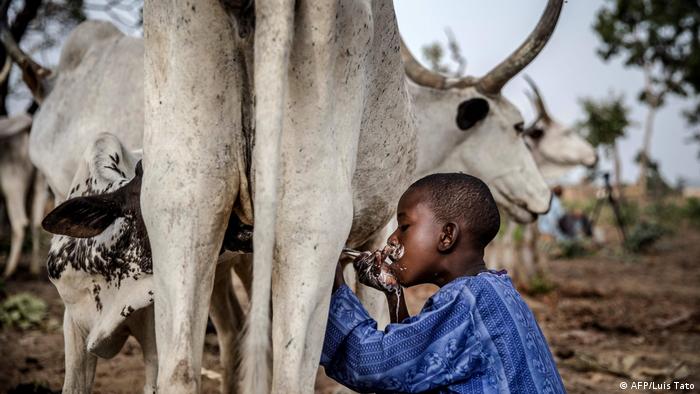
Dear Fulanis, I am writing this fully aware that this might never get to the Fulani herders journeying in forests. That is why I’m precisely writing in English instead of Fulfulde, hoping the educated amongst us will accept my message and join hands as we push to help our nomadic brothers.

Rest assured, I know we like to talk about nomadic cattle herding in glowing nostalgic terms. Still, over the years, this practice has only exposed our nomadic brothers and sisters to agony and a harsh lifestyle in their attempt to live an impossible 17th-century life in the 21st century. Sincerely, this isn’t bravery but naivety. 

Nomadism harms our Fulani cousins more than anyone. I won’t talk about the needless loss of lives this archaic practice has caused since almost everyone is aware of that. I will instead concentrate on the health and socio-economic dangers this primitive practice has brought to our brothers.

As I write this, more than two million of our tribespeople are illiterates and do not own a house due to their lifestyle. However, this isn’t surprising since a nomad cannot own a home or go to school if he’s always on a perpetual journey from Borno to Enugu.

Hitherto, our nomadic brothers die of snakebites, infectious diseases and fever. They live in the rain and under the scorching sun and naturally cannot vote during elections. They sleep out in open areas or in rare situations in thatched makeshift accommodation (for the lucky among them), both of which expose them to tsetse flies and mosquitoes. When they get sick, they lack access to medical care like you and I, thereby risking losing their lives because of their chosen lifestyle.

The nomads drink from polluted water sources contaminated with human faeces; the raw milk they drink carries dangerous bacteria, leading to food poisoning. In addition, they get respiratory diseases because of the dust they inhale while travelling in bushes and unfairly get extorted from security agencies.

Their children are born and raised under impoverished circumstances. They get driven from one place to another by fellow humans or natural forces. Often, this results in the loss of their lives or that of members of their family and/or their cattle.

Selfishly, sedentary Fulanis who live in cities and enjoy housing, electricity, decent water and healthcare like myself are the proponents of nomadic cattle-herding today. How convenient.

So, this same Town-Fulanis who send their kids to school want children of nomads as young as seven years old to continue chasing cows from Sokoto to Enugu and get paid N6000 every month. I know some of you may think this is mere exploitation, but I know slavery whenever I see it.

Obviously, nomadic cattle-herding in Nigeria is impossible. A country with a fast-growing population dependent on farm produce for sustenance cannot accommodate this practice because of the pressure on land and other resources.

A cattle route followed by a herd moving from Northern Nigeria to the South during the dry season is already filled with farmlands come rainy season, making it impossible for the same pack to return to the North via the same route. The problems are too many.

Indeed, it is northern states that have land for cattle grazing. So, it’s astonishing that our brothers choose to travel south where they’re desperately hated and where land is relatively scarce in search of greener pasture they already have in abundance in the North.

Undoubtedly, the land is the most precious of commodities, and land is what the North has and what the South lacks.

Borno state with a surface area of (70,898Km. Sq.) is 11 times the size of Abia state (6,320km. Sq). Niger state with a land area of (76,363km Sq) is 22 times the size of Lagos (3,345 km. Sq). 

The entirety of Ondo state and its forest reserves that Governor Akeredolu has been losing sleep over is only (15,500 Km. Sq), meaning you can remove four Ondo states and four Lagos states in one Niger state. In fact, the entire southeast boasts of only (41,440Km. Sq).

So, can anyone calmly explain to me why cattle herding is more viable in Ondo and not Niger or Borno states? 

This nomadic lifestyle has only brought hardship and suffering, turning our cousins into cheap and easily disposable labour, which has left them in extreme poverty of millennial dimensions and with no access to decent water, electricity, housing and healthcare.

Against this backdrop, the privileged and educated amongst us should advocate for the settlement of nomads, so they and their children can also attend school, watch TV, sleep in a conducive environment like ours and generally achieve economic emancipation. 

Doing that will improve literacy and reduce disease burden among our cousins, thereby freeing up more land to farmers and generally solving the problem of farmer-herder conflicts permanently.

When we do all that,  children of the retired nomads will become doctors in our Medical Centers, Engineers in our factories and lawyers that’ll represent us when people from other social groups seek to malign our loved ones or us.

Like it or not, we cannot disconnect ourselves from the advancement of the 21st century and peacefully coexist with people of this age. So, the earlier we abolish this archaic and primitive practice of chasing cows from pillar to post, the better for everyone – and more so for our landless tribe members.

Abdallah Jalo Abba is a Fulani and Engineer from Yola. He sent this article via hammedadam2@gmail.com.

The fallen heroes of Adamawa: Tributes to Prof. Gidado Tahir

Ahmadu Shehu, PhD.

Like any other place around the world, 2021 has not been easy, and 2022 does not seem to promise anything better. Great people have been lost all over, but Adamawa State has seen its worst for a very long time.

On one of those cold mornings, the world learnt about the transition of one of the bedrocks of the modern Nigerian university system, Dr Mahmud Tukur, the pioneer Vice-Chancellor of what has become Nigeria’s centre of academic excellence, Bayero University, Kano.

Not many weeks passed before death struck again, this time at the heart of the Nigerian civil service veterans, taking away one of the best black-boxes, our father, Baba Ahmed Joda. As if that was not enough loss already, one of the leading public servants, a silent achiever and an erudite scholar, Alh. Abdullahi Danburam Jada left a vast vacuum that cannot be filled in the foreseeable future.

These were first class, first-generation Nigerians who fought for and served this nation in different and various capacities. They built the nation’s civil service, education, military, politics and economy. These were among the people without whom there wouldn’t have been Nigeria. They were the best Adamawa could offer to the world.   

But, today, I have not been as sad for a very long time because the reality of losing an icon, a mentor, has come to a step closer. A piece of unbelievable news surfaced on various platforms that one of the best of the bests in brain and character, a glittering light, a joint of unity among many, an icon of devotion and commitment, one of the most selfless souls, whose humility, sacrifice and gentility are immeasurable has gone to rest.

 Professor Gidado Tahir? No! I couldn’t believe it, for we have so much in stock waiting to be accomplished, none of which was for him or any single soul. Everything has been for his society, Nigeria, humanity. Although already 74, I couldn’t fathom the reality that Prof. has left without seeing some of these things happen.

However, the will of Allah is sacrosanct. Therefore, I accept it. I have come to terms with the reality that Professor Gidado Tahirhas left for good, but not without leaving us behind with the heavy responsibility of actualizing beautiful plans for our society and humanity.    

My relationship with Professor Gidado is a 24-year-old journey full of fascinating stories, exciting experiences and unforgettable lessons. In 1997, my father, Shehu Isa, took me alongside the headmaster of our nomadic primary school, Mamukan, Mal. Ahmed Musa Nyibango, to visit the head of the National Commission for Nomadic Education.

Before the visit, my father had organized a well-attended first graduation ceremony to celebrate the first graduands of the school. Professor Gidado was ably represented but asked that my father visit him for familiarization. I was 12 years old, fresh from primary into junior secondary.

My headmaster introduced me to him as the school prefect and the first in class position during that occasion. Prof. shook my tiny hands and said, “sannu maa Professor”, and while stirring deep into my eyes, he added, “do not leave school because you are the future”.

He then asked my father to “please keep in touch” and not relent in his pursuit for the education of the nomads, who he persuades to settle down with him and enrol their children into school. Indeed, my father kept to these words until the final moment.

The subsequent encounter was when Prof. handed me my Grade II certificate, which I earned from a DFID-sponsored nomadic teacher training program anchored by F.C.E., Yola and NCNE. Once again, Prof. followed this by saying to me, “move on, this is not the bus stop”, and that there is so much ahead to achieve. I heeded this advice and returned to school immediately after completing the two-year mandatory service at my nomadic school of origin. 

In 2004, the year I obtained an N.C.E., someone from the college who knew my modest academic activities had the cause to discuss me with him. I didn’t have a phone at the time, but Prof. ensured that his message got to me. It says, “please further your education to the university and let me know if you need my help. You can reach me on….” I immediately walked to my mentor at the college, Dr Salihi Atiku, and asked him to facilitate my results and application to the university.

There was a slight communication gap since I joined the University of Maiduguri until Dr Nafisatu D. Muhammed – who was instrumental to the survival of the entire nomadic education and my personal progress – mentioned me to him, highlighting my modest first-class degree and seeking his intervention in my application for a teaching job.

As the usual father that he was, Prof. immediately asked to see me, spoke to me regularly, mentored, engaged and supported me during my good and bad times. My last moments with him are unforgettable. He invited me to his house in the Villa on a Friday evening, where I met him undergoing physiotherapy with his doctor. I asked to excuse them, but he said to me, “sit here close to me, my son because you [plural] are our pride.”

More like a pre-planned episode, Prof narrated their struggle at and for NCNE, UBEC and how they helped establish the American University of Nigeria. Among many things, I would like to share his last words with all the young people out there: These legacies are for you to sustain and build upon. I gave him my words and left around 05:50 P.M. Allahu akbar!

Thank you for everything, Professor. May Allah grant you Jannah – until we come.

Dr Ahmadu Shehu writes from Kaduna. He can be reached on ahmadsheehu@gmail.com