NIN

NIN to serve as tax ID for Nigerians from January 2026

By Muhammad Abubakar

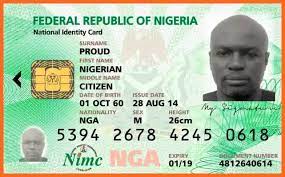
The National Identification Number (NIN) issued by the National Identity Management Commission (NIMC) will automatically function as a Tax Identification Number (Tax ID) for Nigerians starting from January 2026, the Federal Inland Revenue Service (FIRS) has announced.

According to the FIRS, the policy is part of broader efforts to harmonise government databases, improve tax administration, and expand the country’s tax net. By linking tax records directly to the NIN, authorities aim to reduce duplication, enhance compliance, and make it easier for individuals and businesses to fulfil their tax obligations.

Officials said the integration would streamline identification across government services while strengthening transparency and efficiency in revenue collection.

Nigerians are therefore encouraged to ensure their NIN details are accurate and up to date ahead of the January 2026 implementation.

The move aligns with ongoing digital reforms by the Federal Government to modernise public administration and improve service delivery nationwide.

Measuring the impact of strategic stakeholder engagement in the identity ecosystem

By Muhamad Mikail

In today’s interconnected and accountability-driven environment, a stakeholder is anyone who has an interest in or influence over an organisation, ranging from employees, customers, investors, and regulators to local communities and advocacy groups. Stakeholder engagement is a strategic process that involves informing, consulting, collaborating with, and responding to these groups to ensure transparency, secure buy-in, manage risks, and incorporate feedback into project planning and execution. According to the International Association for Public Participation (IAP2), stakeholders are those who are “affected by or can affect the outcome of a decision or project,” making their inclusion vital to successful outcomes.

A 2020 McKinsey & Company report found that organisations that engage stakeholders meaningfully tend to perform better across both financial and social metrics, and are 2.3 times more likely to outperform their peers. The World Bank now requires stakeholder engagement in all funded projects, and frameworks like the Global Reporting Initiative (GRI) emphasise stakeholder inclusiveness as a core principle of sustainable reporting. In this context, stakeholder engagement is no longer a courtesy—it is a strategic imperative for organisations seeking long-term relevance, impact, and resilience.

Since it became effective in December 2021, the Nigeria Digital Identification for Development Project has sought to have a proactive and open relationship with its stakeholders, across public and private institutions, ministries, departments and agencies, the media, Front End Enrolment Partners, Non-governmental organisations, Civil Society Organisations, disability clusters and women’s forums. This consistent stakeholder engagement is viewed as being fundamental to the core development objective of the Project, which is “to increase the number of persons with a national identity number issued by a robust and inclusive foundational ID system that guarantees their access to services”. This is to ensure the provision of a verifiable means of identification (NIN) for all Nigerians and legal residents of Nigeria. 

Thus far, the Project has successfully organised stakeholder consultation workshops annually for critical stakeholders in the ID sector across Nigeria. Importantly, these consultations elicited feedback and synergy on areas of collaboration, building on established networks and structures across communities and ward levels. Reports of these consultation workshops have been published in three national dailies, which serve as a means of reporting back to stakeholders on the progress of implementing their recommendations and suggestions. 

It is worthy of immense applause that the Project, through the Ecosystem Coordination Strategic Unit, (ECSU) in manner yet to be replicated in the country and anywhere else in the world supported the then Nigeria Data Protection Bureau headed by Dr Vincent Olatunji, devised a master stroke strategy of engaging critical stakeholders in the digital economy ecosystem, data protection thought-leaders, cybersecurity experts, policy makers, technocrats, NGOs, CSOs, development partners and even politicians in the drive to the drafting, passage of the data protection bill and eventual assent by President Bola Ahmed Tinubu on the 12th of June 2023 all under one year. This eventually gave rise to what is now known as the Nigeria Data Protection (NDP) Act of 2023, which led to the establishment of the Nigeria Data Protection Commission. 

Furthermore, the Project Coordinator of the Project Implementation Unit, Mrs Tito Ejenavi said in a speech delivered at the opening of training for over 7,157 revalidated Front End Enrolment Partners and agents, that the PIU is part and parcel of  NIMC and has supported the National Identity Management Commission in entering several partnerships that have benefited underserved communities, disability clusters and several women forums including taking enrolment to their communities, test of accountability scorecards and assignment of special enrolment agents to enrol persons with disability, drafting and validation of disability policy, inclusion strategies, incentivisation of enrolment partners using the business model and billing solution, aided by the geo-spatial mapping of all communities and cities in Nigeria.  The NIMC is also collaborating with the National Social Safety Net Coordinating Office to enrol the poorest of the poor into the National Social Register and validate the Social Register using the NIN. 

As a result of this engagement and numerous other initiatives, NIN enrolment figures and data have improved by millions each month. From January 2022 when enrolment for the NIN stood at seventy-two million, seven hundred thousand, three hundred and sixty (72, 700, 360) and May 2025, enrolment currently stands at one hundred and nineteen million, six hundred and twenty-three thousand, two hundred and twenty-nine, a whopping addition of forty-six million, nine hundred and ninety-two thousand, eight hundred and sixty-nine. This accounts for a 48.80% increase in the number of people enrolled and issued a National Identification Number, NIN. 

Establishing and maintaining good relationships requires a long-term horizon, involving taking varied steps and making different, far-reaching decisions. The NIMC through the Project Implementation Unit, PIU of the NDID4D Project have invested heavily and strategically in the training and retraining of grievance redress representatives across the 36 states of Nigeria who across all NIMC centres are to serve as the first points of contact for any aggrieved enrolee, enrolment agent or residents of the host communities especially when such situation is tied to enrolment for the NIN or any other services that the NIMC currently offers.  

Concerted Efforts are being made through CSOs and women’s forums, such as the Federation of Muslim Women Association of Nigeria (FOMWAN), to personalise relationships with communities across the federation. This is achieved by building on their already established structures and networks, and working through their employees to create links with local communities and drive inclusion. Grievance redress has taken centre stage with the establishment and expansion of a NIMC 24/7 toll-free line to address grievances from anywhere in the country. The DG/CEO of NIMC, Engr. Abisoye Coker Odusote has been quoted in several official events stating that NIMC takes grievances seriously and will address them in a reliable and timely manner. 

It is worth noting that strategic stakeholder engagement is a key strategy for governments, organisations, and community groups in developing coherent policies and projects. It is our sincere hope that many more sustainable and people-centred reforms will be pursued in the drive to reposition our digital identity ecosystem, thereby helping to enhance the growth of our digital economy.  I therefore call on the National Assembly to expedite the passage of the amendments to the NIMC Act of 2025, as forward-thinking legal reforms like the NIMC Act amendment hold the key to unlocking the limitless benefits of the Fourth Industrial Revolution.

Muhammad Mikail is a Communications Professional and writes from Abuja. He can be reached via muhammadnmikail.mm@gmail.com.

NIMC confirms seamless NIN-SIM linkage process ahead of deadline

By Uzair Adam

The National Identity Management Commission (NIMC) has assured Nigerians that the enrolment, verification, authentication, and modification of National Identification Number (NIN) data are progressing smoothly, in preparation for the NIN-SIM linkage deadline set for September 14, 2024.

Kayode Adegoke, the Head of Corporate Communications at NIMC, stated that more than 10,000 enrolment centers across Nigeria and the diaspora remain operational to cater to the needs of the public.

He urged Nigerians and legal residents to visit these centers for NIN enrolment and reassured them that the process is free from extortion and unethical practices.

Adegoke also informed the public that those wishing to modify their NIN data can do so via the NIMC Self-Service portal.

The NIMC reaffirmed its dedication to providing top-quality identity management services while maintaining a zero-tolerance policy towards extortion and unethical conduct.

For further enquiries, the commission directed users to its official website.

Mainstreaming marginalised groups in Nigeria’s identification system

By Muhammad Mikail

The World Bank Group’s Identification for Development (ID4D) initiative estimated that 1 billion people were without an officially recognised means of identification (ID), and the majority are women. This problem is particularly acute in Low—and Medium-Income Countries (LMICs), where the 2017 Global Findex survey estimates that 44 per cent of women do not have an ID compared to 28 per cent of men (World Bank Gender Gap Report 2021).

In Nigeria, different studies and surveys have identified many challenges and barriers as the cause of the low National Identification Number (NIN) enrolment by women, children, Persons with Disabilities (PWDs), and other marginalised groups. These groups experience challenges in obtaining ID due to the distance to travel for registration, transport costs, long wait times, and multiple visits. 

Some of the identified barriers to enrolling for the NIN for women, children, and PWDs have emanated from social norms about gender roles that allocate certain household work, responsibilities, and childcare to women, exacerbating their time constraints. Most often, women needing permission from husbands and fathers can be a huge barrier for many, especially in environments where knowledge and awareness about IDs are limited. 

Also, poor facilities combined with long wait times are particularly hard for elderly people, pregnant and nursing mothers, and persons with disabilities. These barriers to registration are even greater for pastoralists and IDPs who are less aware of pertinent registration information such as location, time, and necessary supporting documentation.

Many IDPs have low trust in the government, while people living in camps are further away from service access points. Pastoralists and migrant fisherfolk and farmers also typically have less engagement with the government and are less likely to have IDs, though this varies significantly by region. Women from these communities are likely doubly disadvantaged by their gender and their pastoral identity. Women with disabilities and internally displaced women are also likely to face additional barriers and greater exclusion from society than women without disabilities or women who have not been displaced (World Bank Gender Gap Report 2021)

The United Nations High Commission for Refugees (UNHCR) in July 2023 revealed that Nigeria has over 3 million Internally Displaced Persons (IDPs), about 2 million returnees, and 100 thousand refugees/asylum seekers from 41 countries, with the majority from the Democratic Republic of Congo, Niger, Central Africa Republic, Cameroon, Syria, Turkey, Mali, and 34 other countries. Also documented by UNHCR are over 300,000 Nigerian refugees registered in Cameroon, Chad, and Niger. 

These individuals may have difficulty accessing basic rights such as banking, telephone, education, healthcare, employment, and freedom of movement and may face a lifetime of obstacles and exclusion without access to the National Identification Number (NIN). Aside from creating a huge gap in the database in terms of inclusivity and spread, this leaves behind a very huge number of unidentified underserved persons with the risk of being excluded from government services, restriction in movements, and lack of access to healthcare. It also creates a clog in the federal government’s attempt to commit to the sustainable development goals of providing identities for everyone and “leaving no one behind.”  When you have millions of unidentified persons outside of your country’s identity database, it means your economic planning will fall short and by extension, Nigeria’s socio-economic development will suffer.

In recognition of these challenges and in commitment to achieving universal access to ID and closing the gaps, the Government of Nigeria commissioned a strategic roadmap in 2018 as part of the country’s Economic Recovery and Growth Plan (ERGP) as its overall strategy to drive the country’s economic development. Several reforms were contained in the roadmap. Principally, the country was to adopt the ecosystem approach to NIN enrolment that involved Civil Society Organizations (CSOs), ministries, departments and agencies of government, licensed enrolment partners, international Non-Governmental Organisations, and all relevant stakeholders in the ID space.  

Also, the National Identity Management Commission is working with the Nigeria Digital Identification for Development Project (NDID4D) with support from the World Bank, the French Development Agency (AFD), and the European Investment Bank (EIB) in implementing a series of sustainable and innovative reforms. The goal is to remove all current challenges and difficulties that people face in enrolling for IDs, fostering a robust, seamless, and more inclusive enrolment system where ID is provided for everyone, and no one is left behind.  

As a result, the NDID4D Project established collaboration with the National Commission for Refugees, Migrants, and Internally Displaced Persons (NCFRMI) and their international counterpart, the United Nations High Commission for Refugees (UNHCR). This is aimed at addressing these challenges and removing barriers these vulnerable individuals may face to obtaining the NIN needed to facilitate their rehabilitation, reintegration, and resettlement into society. 

As part of the collaboration, the NCFRMI has agreed to activate its enrolment licence previously issued by NIMC to participate as an enrolment partner targeting refugees, migrants and IDPs in 5 states where there are large clusters of these vulnerable groups. The states are Adamawa, Taraba, Benue, Cross-River, and Akwa-Ibom. Although refugees also live in cities including Lagos, Ijebu, Abuja, Kano, and urban areas in other States, the selected 5 states host the majority of these vulnerable populations and will, therefore, serve as a starting point for this enrolment. 

With support from UNHCR, the refugee commission is planning to procure 6 enrolment devices and nominate 20 of its staff as enrolment agents to support this endeavour. On its part, the NIMC, with support from the NDID4D Project, will onboard these enrolment devices and train all licensed enrolment partners to be deployed to the various states and locations to carry out the enrolment. The NIMC, in collaboration with the NDID4D Project, is fashioning ways to clear the backlog of enrolment fees owed to enrolment partners and has also developed a robust business model to incentivise all partners, particularly those who will be conducting enrolment in remote and hard-to-reach communities and locations.  

In ensuring that the fundamental right of every Nigerian to a verifiable identity is secured, the National Identity Management Commission needs to work overtime in introducing innovative reforms in line with global best practices. Engagements and consultations with critical stakeholders on the amendment of the NIMC Act to ensure it is in consonance with the current digital realities and ease integration with other foundational ID agencies like the NPC should be sustained. Efforts need to be geared to working tirelessly on upgrading the enrolment software and ensuring training and retraining of all licensed enrolment partners on interacting effectively with the people, global best practices in customer service and grievance handling. 

In the same vein, national awareness and information campaigns that use multiple channels inclusive of both conventional and new media to reach diverse groups in raising awareness about NIN enrolment, including information on where and how to enrol, what is required to enrol, and—especially—why enrolling is important for everyone, not just women, children and PWDs should be commissioned. This should be done while equally engaging traditional, community and local leaders especially male leaders, to proactively promote women’s and girl’s registration.

The recent collaboration between the NIMC and the National Social Safety Net Project to extend to streamline enrolment of the poorest of the poor in the national social register while ensuring those on the register are both issued a valid NIN and are captured into the National ID database is a strategic move that deserves commendation.

Enrolment centres and registration points should be located close to communities to reduce travel costs and time, enhance access to ID and adopt culturally appropriate policies to encourage and prioritise enrolment for women and girls and marginalised groups. This may involve Mobile registration centres to bring the enrolment process closer to the people in the rural/hard-reach areas.

The recent workshop held in Abuja to validate the NIMC’s disability inclusion policy represents a critical step forward in ensuring that the National Identity Management System is inclusive and accessible to all citizens, particularly persons with disabilities. Collaboration with the National Commission for Persons with Disability should be sustained.

In the same vein, digital identity can also enhance security and privacy. With robust authentication mechanisms in place and monitored by the Nigeria Data Protection Commission, individuals can rest assured that their personal information is protected from unauthorised access. This is particularly germane in an era and country like ours where data breaches, phishing and identity theft are on a steady rise. This can help bridge the digital divide by enabling greater secured access to services for all citizens and empowering marginalised communities to fully participate in the digital economy

Conclusively, the National Identity Management Commission (NIMC) faces an arduous task of showing Nigerians the value of having a NIN and its relevance in accessing critical services used by both women and men while ensuring non-possession of the ID does not exclude people from services. These will not only help in allaying the fears and resolving the complaints of aggrieved Nigerians and potential enrollees, but they will also help the NIMC win back the trust of the Nation. 

Muhammad Mikail writes from Abuja and can be reached via muhammadnmikail.mm@gmail.com.

Again, FG extends deadline for SIM-NIN linkage

By Muhammad Sabiu

The Nigerian government has extended the deadline for the country’s mobile phone users to link their SIM cards and their National Identity Numbers (NINs).

The announcement of the extension is contained in a joint statement signed by the spokespersons of the National Identity Management Commission (NIMC), Kayode Adegoke and the Nigerian Communications Commission (NCC), Ikechukwu Adinde.

This is not the first time the government has extended the deadline as every mobile phone user “should be able to obtain their NINs and link them with their SIMs before the end of the year.”

According to the statement, the move is due to appeals made by mobile network operators and other stakeholders.

“The decision to extend the deadline was made further to appeals by the Mobile Network Operators and other industry stakeholders, soliciting for a further extension to ensure better compliance with government’s directive and to avoid widening the digital divide.

“The extension would also provide the enabling environment for the registration of Nigerians in remote areas, diaspora, schools, hospitals, worship centres, as well as foreigners, diplomatic missions, those in other areas that were hitherto unreachable, and increase enrolments in countries with a significant number of Nigerians,” the statement read.