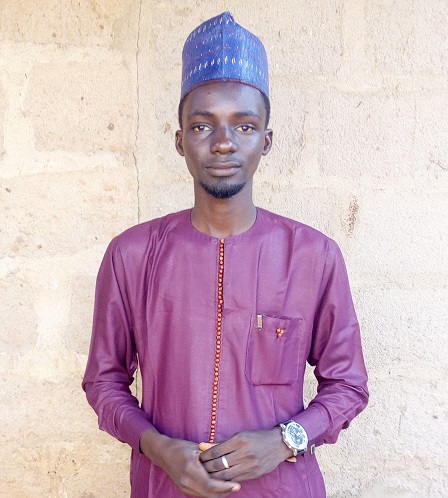
By Nura Jibo
Nigerians living within and staying in the diaspora should start a self-cleansing effort to seek Allah’s forgiveness. Already, the people of the country have wronged God. Unfortunately, the current leadership does not want to agree with this position. However, let me start with the individual failures before I descend to the collective disgrace and abuse of the system.
1. The recent presidential election overtly exposed the INEC chairman’s unpreparedness. He was highly unprofessional and produced a very abysmal and disappointing outcome. In the history of Nigeria’s electoral commission, there has never been a time that a lump sum of money amounting to N335 billion was spent on a presidential election under the pretext of the Bimodal Voter Accreditation System (BVAS) or IReV (portal) or whatever parlance Prof. Mamud Yakubu wants to call it. This guy ended up giving Nigerians the most controversial and expensive presidential election in the entire history of the world. As a professor of history, he went to Chatham House and bragged to Prof. Alex Vines and co. that in his office, “There is one of his engineers that even promised him to design a voting machine that could sense voters’ body odour.” He was telling this open and brazen “invention” to global audiences at Chatham House even when he ended up giving Nigerians the most terrible BVAS and IReV technologies that, up until now, he is struggling to fix by postponing the Guber elections by a week!
2. The N335 billion that Henry Omoru of Vanguard reported that Prof. Mamud asked from the Federal Government to conduct this kind of election was an upshot of the initial INEC budget of N305 billion plus an additional N10 billion. This stupendous amount is enough to build eight state universities in each of the 36 states of the federation, including Abuja, with a take-up grant of N1 billion each!
3. According to Dennis Amata’s analysis of the INEC 2023 election budget that appeared in Dataphyte, “The Federal Government spent N444.5 billion to conduct the country’s last three general elections, and a total of N255 billion was wasted due to the low voter turnout recorded in each of the elections.”
4. And if it is true that Mamud is a first-class historian from Usman Danfodio University, Sokoto, Nigeria, and he used his historical antecedents to brag at Chatham House and, in the end, give Nigerians this BVAS melodrama, then his first-class degree is now subjected to the vagaries of his incompetence and lack of ICT knowledge. And this is why! His poor BVAS and IReV performances had already reduced him to a local champion or, better put, a local history professor overrated in Nigeria.
5. A cursory look at the INEC’s nine (9) key items that it budgeted for the conduct of the 2023 election shows that there was a very depressing procurement of hi-tech/advanced ICT facilities such as BVAS and a hi-tech result storage database that could safeguard the security of online and offline result submittals and transmittals, as Mamud wants us to believe. Indeed, Mamud is not aware of or lacks knowledge about the disadvantages of using BVAS as a voter accreditation system. On the contrary, he was probably carried away by it because INEC was told that it could eliminate electoral malpractices and prevent multiple registrations.
6. But Mamud, as a “first-class” academic and Professor of Political History, ought to have known that using such a biometric voter identification and transmitting apparatus for instant results collation is always problematic for developing countries such as Nigeria because there is no adequate network in African countries that could effectively allow the use of BVAS and IREV portals (transmission). In fact, the incessant network failures in Nigeria and, by extension, Africa are enough to get Mamud informed of the disadvantages of using this failure-prone network facility. Moreover, as a learned history professor, this ought to have informed him how this kind of network failure gave President Yoweri Museveni an advantage to impose an internet blackout that cut off access to news, social media, and messaging services ahead of the Ugandan presidential election.
Seriously, Mamud, as a professor, needs to know better than anybody the calamity in the erratic supply of electricity that could ravage his entire BVAS and IREV efforts. In 2019, I had an international conversation with Volkswagen’s Head of Sustainability in Madrid. I tried to persuade him to patronize African countries by supplying electric cars to Nigeria and other African countries. The Volkswagen giant quickly checked my ideas by saying thus: “There is no constant supply of electricity in Africa that could charge the batteries that will drive the cars”. Therefore, Prof. Mahmud and co. ought to have known this simple arithmetic. They could have visualized that no ample network or electricity in Africa could make BVAS and IReV function well!
Fellow Nigerians, friends, and colleagues of Nigeria, that was Mamud Yakubu’s disgrace to Nigerians!
And one wonders what the likes of Mohammed Haruna are doing at INEC as Resident Commissioners by allowing Mahmud to use Nigeria’s ample resources and, in the end, put the entire country into global shame! Whenever I see Mohammed Haruna sitting beside Prof. Mahmud with his hand akimbo, I know that Nigeria does not have a future. Because if a combination of Mohammed Haruna, who spent a significant part of his life writing long essays about Nigeria’s underdevelopment and democratic misgovernance, and Yakubu could disgrace Nigeria this far in the name of INEC staff, then we need to call it off for Nigeria. Indeed, there are so many Mamud Yakubus and Mohammed Harunas in the land that time and space will not allow us to exemplify most of them in this analysis. Therefore, we can only mention a couple of Mahmud’s similar disgraceful elements that constitute the Nigerian system’s individual failure before narrowing down to the specific scenarios that have thrown the country into a global failure and a pariah state.
7. Therefore, the next individual’s disgrace worth mentioning here is that of Adamu Adamu, the current Nigerian Minister of Education. Adamu took ample time to write his folklore about ASUU and how to make it better. But in the end, he goofs up Nigeria’s education by forcing the entire system to suffer universities’ strike action for over seven months! Courtesy of Adamu’s Taqiyya Amana, which he displayed amidst growing educational tensions that distract Nigeria by throwing it backwards by two-semester backlogs.
We can go on and on! But to cut the story short, the colossal loss to Nigeria on this INEC’s BVAS and IReV drama has successfully reduced its chairman to a local champion who made his country not reap the benefit(s) of the huge monies that he spent on this so-called BVAS without giving Nigerians value for their money. It is a shame that for all the money he asked for, he could not provide Nigerians with an enabling environment to come out en masse and cast their votes. Mamud and co. sincerely deceive themselves by hiding under the pretext that Nigeria’s democracy is the biggest in Africa. He also brags about this point anytime he is given a chance to speak. He doesn’t know that several African countries are fairing better than Nigeria. Unfortunately, Prof. Mamud doesn’t know that his country is lagging behind certain African countries regarding voter turnout and conducting fair elections without BVAS! Here I will conclude by quoting extensively Ray Ekpu’s take on the need for INEC to wake up from its slumber and engage in a serious campaign on voter turnout.
According to Ray Ekpu, “Many African countries have done far better than Nigeria in combating voter apathy. Their voting figures are close to 100%. Look at these: Rwanda’s 2017 presidential election produced a 98.2% voting record; Equatorial Guinea (2016): 92.7%; Angola (2017): 90.4%; Seychelles (2016): 90.1%; Guinea-Bissau (2019): 89.3%; Zimbabwe (2018): 84.2%. For Nigeria to deepen its democracy, the voting figures have to go up drastically. That means that all concerned must work on improving voter education.
Voter education can also help in checking election rigging. Election rigging can only happen when there is collusion among the triumvirate, namely, politicians, INEC officials, and security personnel. Where there is no collusion, no rigging of fundamental significance can take place. There is no perfect election anywhere in the world, but rigging can be substantially reduced once people are interested in ensuring that their votes count. But in Nigeria, poverty is an issue. Many of the people who sell their permanent voters’ cards are poor. For them, those cards mean little or nothing, but a few thousand naira can mean a lot to them. It can mean the difference between a full stomach and an empty one”.
Nura Jibo is a Lifetime Member of the West African Research Association (WARA), African Studies Centre, Boston University, United States. He can be reached via jibonura@yahoo.com.