Nigerian Politics

Wike: The deepening threat to Nigeria’s democratic landscape

By Abba Hikima

It is clear to even the most daft Nigerian that Nyesom Wike, a serving member of President Tinubu’s Federal Executive Council, is only in the PDP to sabotage it and clear the path for his benefactor, the President, come the 2027 elections. What may not, however, be clear is the extent to which Wike’s tactics and antics can undermine Nigeria’s democracy.

Whether you are APC, PDP, ADC or even politically indifferent, Wike’s actions should bother you, as long as you dream of a truly democratic Nigeria where institutions transcend whimsical meddling of the few.

From any angle, one sees a deliberate pattern that systematically seeks to dismantle the country’s main opposition party and tilts the political landscape dangerously toward one-party dominance.

The recent Federal High Court injunction, restraining the PDP from holding its planned November 15 National Convention, issued by Justice J. Omotosho, only reinforces this pattern. It aligns with a string of judicial outcomes and political manoeuvres that have consistently favoured Wike’s factional interests, all at the expense of Nigeria’s fragile democratic balance.

Between 2023 and 2025, Wike’s loyalists seized the PDP’s national secretariat at Wadata Plaza, installed their own acting chairman, and plunged the party into even deeper crisis. Earlier, he had been linked to moves to demolish the PDP headquarters in Port Harcourt and to lawsuits that derailed planned conventions.

These deliberate acts of sabotage are calculated to dismantle opposition structures and weaken the political alternatives that every democracy relies on. In Nigeria today, prominent political opposition actors are crosscarpeting from their political parties to the ruling APC, not because the APC is doing better, but to salvage their seats and realise their aspirations, which appear rather vivid with the APC.

In saner climes, inclusion of opposition figures within ruling governments is a laudable means of promoting national unity and bridging gaps. But in Nigeria’s case, Wike’s dual role, serving as a federal minister while wielding extraordinary control over an opposition party, is clearly a means of manipulation.

It blurs ethical boundaries and deprives citizens of genuine democratic alternatives.

Even more disturbing is Wike’s perceived closeness to certain segments of the judiciary- what Professor Chidi Anselm Odinkalu aptly described as a “pathological fixation.”

From 2019 to 2025, at least five major cases tied directly or indirectly to Wike’s interests have been heard before the same judge, fueling concerns of judicial clientelism —a scenario where powerful litigants can select their forums by proxy.

The danger goes far beyond politics.

If political elites can manipulate opposition parties while simultaneously bending judicial processes to their favour, then democracy becomes mere theatre. A performance that preserves power and erodes accountability.

Having said this, the National Judicial Council should randomise the assignment of politically sensitive cases and ensure that no single judge repeatedly handles matters involving the same litigants. A stronger ethical firewall must also be built between judicial officers and politically exposed persons.

Politically, Nigeria must introduce conflict-of-interest rules that bar sitting ministers or presidential appointees from exerting control over opposition parties. Democracy cannot thrive when the same hand both governs and manipulates its opposition.

Coming this far, we must accept that reform is not optional; it is existential.

Abba Hikima, Esq. wrote from Kano, Nigeria.

The political identity crisis in a “horse” race for power

By Abdulrahman M. Abu-Yaman 

The title race is between two horses and a little horse that needs milk and needs to learn how to jump. –  Jose Mourinho

When the controversial Jose Mourinho made this statement above, it was about football and the race to the Premier League title in 2014, but we never knew a time would come when it would be more suitable to fit into the Nigerian political context as it relates to the switch and frequent change of allegiance from one political party to another.

THE FIRST HORSE

The first horse, being the All Progressives Congress (APC), is the current defending champion in political power and the acclaimed favourite to retain the presidential title going into 2027, based on the power and influence that come with being an incumbent leader in Nigeria. Only once has it occurred since the fourth republic that an incumbent was defeated, and even that took what some have tagged as a miracle when President Jonathan made the famous call to the late former President Muhammadu Buhari (of blessed memory) and conceded. 

This horse has taken on different forms over the years and has been given various names by the political power brokers who have bet on it to win. Part of its defunct origin was the All Nigeria Peoples Party (ANPP), formed in 1998, a year before the fourth republic general elections. However, its popularity was quite limited to the northern part of Nigeria, not as pronounced in other regions of the country. Former President Muhammadu Buhari had contested twice and lost under the ANPP in 2003 and 2007, respectively.

Another major segment of its primordial origins emerged from the Action Congress of Nigeria (ACN), which was formed in 2006. It was formerly known as the Action Congress, which in turn was formed from the merger of its factions with minor political parties, including the Alliance for Democracy (AD), the Justice Party (JP), and the Advanced Congress of Democrats (ACD), among others.

Then came the Congress for Progressive Change (CPC), founded in 2009. It gained significant influence due to the impact of late Muhammadu Buhari and his millions of supporters in the northern part of Nigeria, who contested under the party’s platform in the 2011 elections. 

In 2013, the progressives and congresses in some major political parties with these words present in their acronym merged into one; the Action Congress of Nigeria, Congress for Progressive Change (CPC), a faction of the All Progressive Grand Alliance and finally, the All Nigeria Peoples Party (ANPP) to form the All Progressives Congress (APC) – the most formidable opposition group as a party in Nigeria since the return to democracy in 1999 to unseat any incumbent President in power.

THE SECOND HORSE(S)

The second horse(s) in the race are obviously divided and sharing that position based on recent trajectories and events that had left one of the horses deemed as second favourite to crumble and hanging on a thin thread; speaking of the Peoples’ Democratic Party (PDP), as long as it still has time to regroup and put its house in order, it cannot be ruled out of the race based on its political structure long established that cuts across all states in Nigeria.

The PDP was formed in 1998, in the twilight leading up to the 1999 general elections, by a group of political bigwigs who adopted Chief Olusegun Obasanjo, a former military head of state and a prisoner released from the dungeon after the end of the Abacha era. Obasanjo, coming from the south-west region of the country, was seen by many as the best candidate to step into what would have been Chief MKO Abiola’s rightful position as winner of the annulled June 12 elections if he had lived up to 1999 but for his sad and shocking demise in 1998.

The PDP won the 1999 election by a majority of votes and held a majority of seats in the National Assembly. In 2003, the party continued to dominate the political space in Nigeria, growing in influence and power, albeit under some questionable electioneering processes in 2003, 2007 and 2011, respectively, having spent sixteen years in power as the ruling party. During that period, it became the largest party not only in Nigeria but also on the African continent.

However, unfortunately for the PDP, their dream of achieving the milestone of twenty years in power was cut short in 2015 when the APC, a new, formidable force energised and regrouped, ran them out of control. 

Since then, the PDP has contested twice as an opposition party and lost to the APC in 2019 and 2023, but edged them out in 2015. The PDP has also had to lose some of its members who have decamped to the APC and has since struggled to remain as firm and relevant as it once was. The only reason it occupies the second spot as a favourite is its longevity, structural base, and the influence of some stakeholders behind the corridors of power, who are still salvaging what is left to stand firm.

Moving away from the PDP, the other second favourite only came to fruition and gained traction a few months ago, orchestrated by one man, Mal. Nasir El-Rufai, who initiated the movement that led to the formation of a coalition that later evolved into the political party rebranded as the African Democratic Congress (ADC). The party had been in existence before its formation in 2005 as the Alliance for Democratic Change. 

The formation of the ADC elicited mixed reactions in the Nigerian political space. While some saw it as the long-awaited vibrant opposition to challenge the incumbent party in power, others viewed it as a selfish endeavour created by those who had been bruised and pushed out of the epicentre of power, seeking to make a comeback by any means necessary. This notion was proven to be more relevant when the ADC reached out to past or aggrieved members of the APC and PDP to form part of its board and core membership from the official flag-off. 

Nevertheless, it is still considered the second favourite in the race because if history is anything to go by, just as in the words of Jesse Jackson: 

“In politics, an organised minority is a political majority”

Just as in the case of the APC, which was formed two years short of the 2015 elections and later emerged as the winner, the regrouped ADC party and its influx of new members can’t be underestimated.  

Another reason the ADC could be frontrunners could be their ability to capitalise on the harsh economic realities in the country that have affected the masses and present the party as an alternative to better their welfare, just as the same members of the ADC did way back in 2015 when they were members of the APC, which they now want to substitute out of power. 

THE LITTLE HORSE IN THE RACE

The little horse that needs milk to learn how to jump is the Labour Party (LP). It was also driven and triggered to relevance in the 2023 general elections due to the influence of one man, specifically Peter Obi, who was spoken of as the party’s flag bearer. The LP not only defeated the APC in their own stronghold in Lagos but also defeated the ruling party in the Federal Capital Territory, Nigeria’s capital and centre of governance. It was unprecedented and sent a clear message that the LP did not just come to make up the numbers like some minority parties. 

But be that as it may, their numbers in Lagos and Abuja, coupled with the ones from the east and the Niger Delta region, were not enough to put them in second position in the race. This is why it needs to spread its wings to cover all political nooks and crannies in other regions, especially northern Nigeria, where it is yet to get a solid grip.

The recent involvement of Peter Obi with the ADC could lead to a compromise and weaken the party’s strength, as it revolves around him. One of the LP’s former spokesmen also lamented him for not doing enough as a leader and his inability to resolve the party’s internal crisis. He also raised concerns about his failure to build a strong party base to secure the mandate. 

Still, the only reason the LP is coming in third in the horse race is because of the unexpected stunt it pulled and its potential to do more if, and only if, it can capitalise on its momentum to leap ahead like other horses in the race.

THE EXODUS AND CONVENIENT SWITCH BETWEEN PARTIES 

Nigerian politics and politicians tend to switch sides to any political party that offers them a higher chance of winning. It occurred in 1999, when the PDP was formed and founded by members of various political parties. 

In 2003, as the PDP grew in strength and power, it received more members, and others had to decamp from their prior political platforms to join it. It was beginning to look like the only way to win an election was to join the party that was already winning. 

2007 and 2011 were no different as the PDP retained power in government. However, the only parties that managed to maintain some of their strongest and most popular members were the ANPP in 2003/2007, and the CPC in the 2011 general elections, when they fielded Muhammadu Buhari as their presidential candidate in the respective years.

In the buildup to the 2015 election, a massive exodus of politicians decamped from the ‘umbrella’ that had sheltered them in political office to the newly formed APC, which was gaining immense popularity, especially in the northern and western parts of Nigeria. The presidential flag bearer was a familiar figure who was contesting for the fourth and possibly his last attempt, having been persuaded to do so. The APC, like the PDP in the past, also welcomed all members from other parties, irrespective of their past reputation or allegations while in office. In the end, the party grew from being the strongest opposition to becoming the favourite to win the election, which they eventually did.

LOST OF POLITICAL IDEOLOGIES/IDENTITIES

When we start seeing political players decamping at will, it is time to question whether any of the political parties place a high premium on their criteria for membership in relation to their ideologies before accepting any candidate into their fold. Do politicians care any less if the party they join aligns with their manifestos and visionary blueprint for good governance and leadership?

It is beginning to look like a game of chess, with calculated moves aimed at checkmating the ultimate power in the political positions they crave. The only pawns in this game are the masses who have yet to figure out that changing their clothes to another has nothing to do with the real person behind those clothes. A stained reputation, especially in previous leadership positions, coupled with a proven track record of underperformance and incompetence, cannot be covered by new political platforms.

However, the interesting aspect of all this is the emergence of a solid opposition to keep the ruling parties on their toes. Previously, with the decline and crisis in the PDP, Nigeria was moving towards a single-party state due to the frequent switch of its members to joining the APC. It is well timed that the LED coalition, which has resolved to adopt the ADC as its political platform, includes big names like former Vice President Atiku Abubakar, who is also a former PDP presidential aspirant. Peter Obi, the Labour Party’s presidential candidate, has also been seen and involved in some of their meetings. And for the first time since the APC’s ascension to power, they seem concerned about the growing popularity of the ADC and the threat it may pose to their hold on power. Deja vu?

Conclusively, all the parties involved in the horse race have exhibited similar symptoms of identity and ideological crisis in their consistent switch of allegiance to suit their needs. The thin line between them is getting blurrier in their actions and adoptions. Everyone is welcome to any party at any time. No litmus test, exceptional integrity, or individual evaluation criteria needed. Once you are in, all sins are forgiven, and then you are baptised as a new member. 

The ADC is not only like the APC alphabetically, but also in the content of its members and its contextual existence. The primary concern here is whether some members of the ADC could potentially break away from the party in the future, particularly in the event of any unresolved disagreement or fallout within the party. Are we to brace ourselves for another hypothetical ‘ABC’ party if it comes to that? Time is the ultimate revealer. 
Nigeria at a crossroads: Why the everyday Nigerian matters more than the political elite

By Usman Muhammad Salihu,

In Nigeria today, the loudest voices belong to politicians, policymakers, and power brokers. They dominate the headlines, flood our timelines, and distract us with promises that rarely survive beyond campaign seasons. Yet, the true story of this country isn’t written in the echo chambers of Abuja or the mansions of Lagos. It is written daily in the struggles, resilience, and quiet innovations of ordinary citizens.

Think about the woman who wakes before dawn to fry bean cakes by the roadside, not only to feed her children but also to put other people’s children on the road to school. Or the young graduate who, tired of waiting for white-collar jobs, starts a small business online and employs three others. These stories rarely make the news. Yet, they are the heartbeat of our nation.

But here’s the tragedy: Contemporary Nigeria seems designed to work against these everyday heroes. Power cuts paralyse small businesses. Inflation, now on food items, erodes family savings before the end of the month. Insecurity forces farmers to abandon their fields and traders to fear the road. Meanwhile, most of the political class remains locked in battles over appointments, power-sharing, and personal interests.

The question is not whether Nigeria has potential; we have repeated that mantra for decades. The real question is, when will we begin to prioritise the citizen above the system?

Imagine a Nigeria where governance shifts from elite negotiations to practical solutions: working schools, safe communities, accessible healthcare, and reliable electricity. That’s not fantasy; it is a choice.

The good news is that despite the odds, Nigerians are not waiting. Communities are solving their own problems. Tech-savvy youths are creating digital markets. Women’s cooperatives are building small savings pools. Farmers are collaborating to beat middlemen. These are the silent revolutions we must amplify, not just the failures of the elite.

If the political class won’t prioritise the citizen, then the media, civil society, and Nigerians themselves must. We must shift the spotlight from what politicians promise to what Nigerians are already doing, because that is how change starts – not from the top, but from the people who refuse to give up.

Nigeria stands at a crossroads. One road leads to more political drama, endless debates, and broken promises. The other road leads to a citizen-centred nation where leaders are compelled to serve, not rule.

The choice is ours. But more importantly, the responsibility is theirs.

Usman Muhammad Salihu was among the pioneer fellows of PRNigeria and wrote from Jos, Nigeria. He can be reached via muhammadu5363@gmail.com.

‎Politics: A game of this world for the next

By ‎Sadiq Aliyu Waziri

‎With cliches such as the game of politics, playing politics, the political arena, politics is a dirty game, politics is a game of chess, politics is a game of power, politics is a game of cat and mouse, and many others alike, which metaphorically compare politics to a game, many that participate in it think it is a game-literally. It was Dr. Abdulaziz T. Bako who made the analogy, on Facebook sometime back, of how football fans supported their clubs to how many Nigerians took politics. However, is politics a game? 

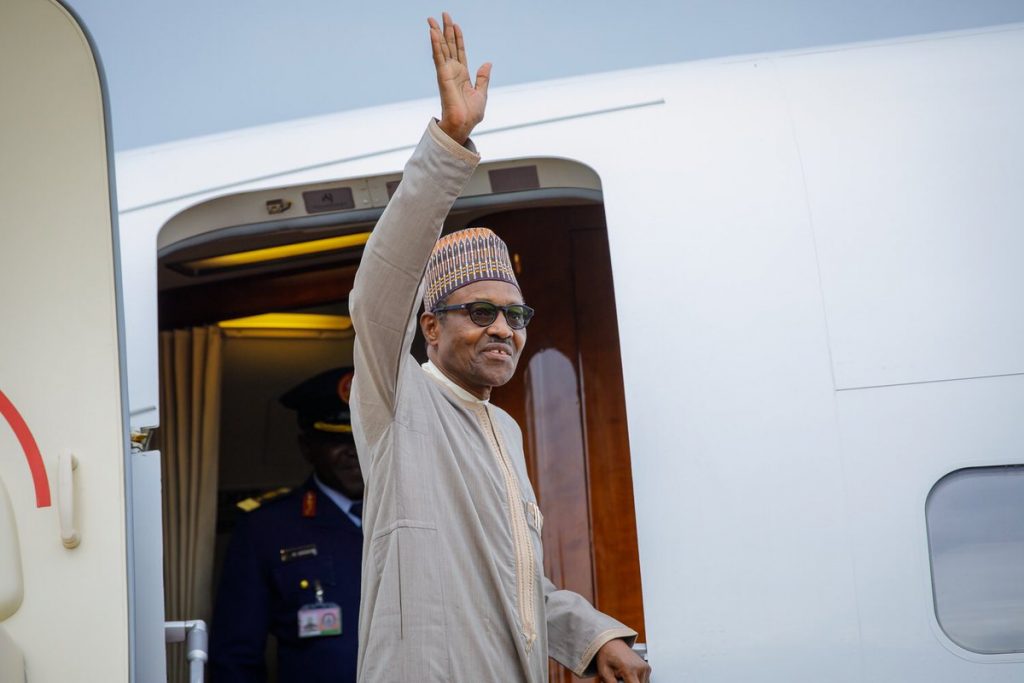
‎The former Nigerian President, General Muhammadu Buhari, passed away two days ago. Moments after the announcement, photos of the widow of the late former President were seen circulating on social media. The images were captioned, stating that the deceased had bequeathed her to seek forgiveness from Nigerians on his behalf. She pleaded with Nigerians to forgive her husband before he was laid to rest. ‎

‎Since the announcement of the passing, followed by Aisha Buhari’s words, people became divided, with a section of them expressing their shock, forgiving and praying for the deceased. In contrast, others reminisce about Buhari’s time in office, voice out their dismay, and even go to the extent of publicising their rejection of the late President’s prayer. Again, there has been another section of people who even publicly celebrate the death. 

‎Let us recall that Buhari, just two years ago, was the most powerful, famous, and arguably the most loved Nigerian politician before he came to power in 2015. Who would have thought then that people would say unkind words about him or even celebrate his death? People idolised him; they fought and died for this man to gain power. 

‎Perhaps seeing Buhari’s widow, who at once felt she could not put up with a teasing statement from an immature university student, at people’s mercy, begging on her husband’s behalf, might make those who “play” the “game” of politics rethink their position, to realise that it is not a game. It never has been and never will be. 

‎To many of the player-participants, politics is merely a game to be played and won, with the ultimate goal of securing leadership positions and staying relevant. To many of the supporter-participants, it serves as an avenue to support and cheer the players, making money, securing appointments in some cases, and engaging in trolling one another. They come out and defend whatever wrong their bosses do and discredit and blemish whatever right their rivals do, simply because it’s all a game to them.‎

‎If they take politics as a game, it is at their own peril. And, it is high time that the people who participate in politics and take it as such understood that politics touches people’s lives. And that they do not have separate lives from their political activities. Every action, decision, cheer, support, defending, discrediting, blemish, etc., will be accounted for. They could view politics as a game, if that is what they choose, but it’s about this world for the next one.   

‎Sadiq Aliyu Waziri wrote via sawaziry@yahoo.com.

The passing of Muhammadu Buhari: A political loss for both APC and ADC

By Zayyad I. Muhammad

The passing of former President Muhammadu Buhari marks not just the end of an era but also a significant political loss for two of the three key political parties in Nigeria, the ruling All Progressives Congress (APC) and the rising coalition force, the African Democratic Congress (ADC).

For both parties, Buhari represented more than just a former head of state; he was a political symbol with immense influence. His mere presence at a campaign rally, no matter how brief, would have carried tremendous weight, particularly among his loyal base, which is estimated to be over 12 million strong. These supporters, often described as a “cult-like” following, have remained fiercely committed to him since his early political days under the Congress for Progressive Change (CPC) and the Buhari Organisation. However, the number may have decreased by now.

In recent times, many former CPC loyalists and Buhari-era political operatives have appeared to find a new home in the ADC, reshaping its structure and lending it a dose of national relevance. This quiet but strategic realignment has positioned the ADC as a potential beneficiary of some of the Buhari political legacy, especially in northern Nigeria, where his influence remains deeply rooted. However, a good number of the CPC bloc and the Buhari Organisation have remained in the APC.

Had Buhari lived to make even a symbolic appearance at an APC campaign event, it would have significantly dampened the ADC’s momentum and reinforced the APC’s claim to his enduring political capital. Conversely, had he chosen to lend his image, even silently, to the ADC, it would have sent shockwaves through the APC, raising questions about its hold over his base.

Now, with his passing, both parties are left in a competitive vacuum, each scrambling to appeal to the millions who revered Buhari for his perceived integrity, simple lifestyle, and northern populist appeal. The political battlefield is wide open, and neither the APC nor the ADC can confidently claim to be the rightful heir to Buhari’s legacy.

However, President Bola Ahmed Tinubu may have gained an early edge. His respectful and dignified handling of Buhari’s death, marked by prompt tributes, state honours, and symbolic gestures, may resonate with many of Buhari’s followers. In Nigerian politics, such symbolic acts are never underestimated. They signal alignment, loyalty, and shared values, all of which matter deeply to a base that is emotional, ideological, and still seeking a new political anchor.

As the 2027 election cycle approaches, the real question becomes: Who will inherit the Buhari political machinery? The answer may shape the future of both the APC and ADC, and by extension, Nigeria’s political landscape.

 Zayyad I. Muhammad writes from Abuja via zaymohd@yahoo.com.

Partisanship undermines trust in Nigerian journalism

By Yakubu Nasiru Khalid

Still, addressing the public’s issues remains challenging in northern Nigeria. Media outlets favour partisanship over accuracy or truth, and the Nigerian media requires a controlling apparatus. 

Media outlets are considered a room where the underprivileged can address their problems to the government or private individuals who breach their rights. However, media outlets are now mainly sponsored and do not act independently or impartially when telling the truth. 

When I was young, I saw journalists as saviours who worked as architects or social engineers to prioritise public interests and solutions over personal or government interests, but now I see the opposite.

This results in the loss of hope that the electronic or printing media cannot serve as a messianic approach to standing against the breaching of the rights of ordinary citizens.

Even though media and journalistic standards attest to and measure a report’s accuracy and truthfulness, the ongoing challenge for media outlets remains their preference for partisanship over impartiality and independence.

For this reason, fact-checking media and journalists are mostly needed in electronic media (online Newspapers). Most media companies are owned and managed by people not equipped with journalism etiquette; they do it for a passion. 

While passion in journalism can often render one unprofessional, incompetent, or unethical in reporting, investigating, or addressing issues, it is essential for those who have not studied media to understand its etiquette, even if it means obtaining a certificate in the field.

It’s known that Nigerian media companies are owned by private individuals and deprived of government-approved control mechanisms or apparatus. They aim to generate income, which leads to sparks of misinformation from various media outlets. 

Lastly, I suggest media companies refrain from favouring personal or political interests over factual or truthful reportingor addressing public issues. I also advise those passionate about journalism to learn its etiquette formally.

Yakubu Nasiru Khalid wrote via yakubunasirukhalid@gmail.com.

Nigerian political class: Flood of lies and the people’s survival through difficult situations

By Nura Jibo

For so long, I abandoned writing on Nigeria and its leadership situation because doing so wastes time, energy, and resources. I avoided discussing its precarious situation because I am still very sceptical and, most of the time, extremely despondent about its progress and development.

But whenever one realizes that certain classes of people in the country, most especially the current Nigerian politicians, are clueless and ignorant about the dynamics of global change in various countries of the world, one has no choice but to waste another day clearing the bushfires or/and the politicians’ colonial hot air historical jargon.

Most of my friends have known my candid view(s) for so long about why Nigeria, and by extension, Africa, is generally not developed and almost 98% of the countries on the continent, including mine, cannot grow!

The stupefaction of colonization historical facts by the Nigerian “political class” and even its military apparatus is entirely unwholesome, very untrue, and most of the time very dangerous to our national savvy! I don’t want to call the current political crooks in Nigeria “leaders” because most of them are perturbed and pathological liars! Indeed, the legendary Bob Robert Nesta Marley had squarely defined the world’s political ruling classes, especially the political presidents and their ruling maladroitness, in one of the songs that he dubbed “Real Situation.” Marley and his honourable Wailers explained succinctly through music the political mentality of the local and international politicians.

Hear the legendary Marley and the Wailers:

“Check out the real situation.
Nations war against nation.
Where did it all begin?
When will it end?
Well, it seems like total destruction is the only solution.
And there isn’t any use; no one can stop them now.
Nobody can stop them now.
Give them an inch; they take a yard!
Give them a yard; they take a mile (ooh).
Well, it seems like total destruction is the only solution.
And there ain’t no use; nobody can stop them now.
Check out the real situation. Check it out.
Nation fights against nation…
Everybody is struggling. There’s no use in you even trying. Got to say ‘bye-bye!” (Emphasis mine).

I quoted this legendary musical maestro of all time to make a case in point over Nigeria’s political class’s incomprehensible incompetence and distorted Western colonization historical accounts. They fabricated and are still fabricating lots of lies by blaming the Western world for the country’s political and military underdevelopment. They always point accusing fingers at the colonial masters, and, very recently, they are “perfecting” their scheme by throwing their “leadership” lacklustre truncheon at foreign countries’ influence!

You may accuse Bob Marley by calling him names for being an Apocynum cannabinum (Indian hemp) chain smoker. However, one thing you can never take away from him is his mastery of the English language through music. He concluded that global politicians, especially the Nigerian brand (emphasis mine), are generally “devils and corrupt.” May Allah give Marley relief for advocating the nicest words via philosophical lyrics!

According to Bob, ninety per cent of what politicians say is untrue. Therefore, one should think twice before taking them seriously.

The real Nigeria’s situation 15 to 20 years after independence

Both the Nigerian military “elites” and the political class are too economical with the truth nowadays. They shamelessly accuse Western countries such as America, Britain, and France of intervening or meddling in their leadership affairs! They blame these countries for Nigeria’s lack of economic development and prosperity because they think everybody will believe what they say. 

With due respect, I beg all Nigerians, whether army or civilian, to sincerely disagree on the veracity of Nigerian politicians and even its military leaders’ blame for Western influence, interference, or blame game. Why does the Nigerian political class, including its military, resort to this unfounded ideology to ruin our people, make them highly impoverished and pauperized, and, in the end, make the entire citizenry appear inferior to the political class subjugation and their cantankerous posture? One hasn’t the vaguest idea!

Twenty years after the country’s independence, Nigeria’s situation was by far the best in Africa and, by extension, more than certain countries in Europe and the Americas (both North and South).

Many foreign nations were present in Nigeria, doing business with grandeur, style, and passion for their businesses in Nigeria. Canada and its companies were here in Nigeria in the 1980s, with their businesses thriving remarkably. Italy and Italians came to Nigeria and did serious business with FIAT Coy. They competed very seriously with Steyr Motor Company in Bauchi State, Nigeria. 

Britain, our colonizer, and its companies were here in Nigeria in the 1970s and 1980s, flourishing their grand businesses in Nigeria. Indeed, Italy and its companies were here in Kano, Nigeria, in the 1970s and 1980s, doing their business generally in the country. France and its companies were here in Nigeria in the 1970s and 1980s, doing their business diligently with respect for the Nigerian people.

Let’s start with Canada! The Canadians were interested in investing in Nigeria. They came with their renowned company, Steyr, founded by its farmer, Mr. Leopold Heide. They sought a partnership with the Nigerian government. Canada convinced Nigeria of the reputation of the Steyr motor company, which was performing remarkably in Steinbach. It entered into a partnership business with Nigeria and established an assembly plant in Bauchi State. It supported the Nigerian government to employ hardworking Nigerians. 

Canada trained and taught Nigerians how to assemble Steyr tractors, trucks, and buses in Bauchi. Within a year, Nigerians could produce 5,000 tractors, 2,000 trucks, and 2,000 buses inside the Steyr quarters, located just a little bit on the outskirts of Bauchi State. This Canadian company was performing remarkably. At that time, Nigeria was not purchasing trucks or tractors from China or anywhere else. 

Then Nigeria produces its farming tractors and trucks! It did not matter to look anywhere else the way its current president is busy wasting his time globetrotting to Qatar and France to beg their leaders to come and invest in an atmosphere that is no longer passionate!

Steyr tractors and buses were all over Nigeria until the company met its Waterloo in the hands of Nigeria’s military government. The military privatized it and sold it to individuals. The remnant of the company is now grappling with the issues of its old workers who spent well over six years without salaries as of 2002. The rest is history! But I shall come back to this point and advise on how it could be revived and salvaged for the Nigerian farmers. So that they no longer look up to China to have agricultural success.

Fabrica Italian Automobili Torino, popularly called FIAT Company, was here in Kano State, Nigeria! They came from Turin, Italy, and established FIAT IVECO, which Giovanni Agnelli originally founded. Indeed, the actual English translation of FIAT is not roughly far-fetched from the Italian Automobiles Factory, Turin (FIAT). 

Then, Kano produced amazing tractors for farmers who farmed large hectares of land and produced groundnut pyramids that were second to none globally! Kano, Nigeria, was a hub and a beehive of groundnut activities worldwide. Kano imported groundnuts to most parts of Europe and other African developing nations. 

Courtesy of Torino Italiano! Where our politicians got the notion to accuse the white people of killing Nigeria, and Nigerians are just trying to tell half-truths or untruths about the reality of Nigeria’s situation.

11. The British and their companies were visibly doing great business to elevate Nigeria to the loftiest heights. And I will tell you how! I will explain in clear terms to the corrupt Nigeria’s political class that the majority of them are either not educated, half-educated, or even ignorant about what colonialism and colonial or external inference stand for, especially in this modern world.

The British came from Nottingham, England, and established their Raleigh Bicycle Company in various places in Nigeria, including Kano State. My dad bought a Raleigh for my elder brother around 1982–1983! I cannot remember the year, but I was busy stealing a show of Brother Abubakar’s mastery. Anytime he was cycling on his brand-new Raleigh, it was amazing! One day, he gave me an idea of how to ride a bicycle! 

In 1984, our dad was posted to the local government of Hadejia in old Kano State. We were housed at Site Quarters along Birniwa Road! Our staff quarters were a few kilometres from a village called Gandun Sarki in Hadejia local government. Our daddy’s neighbour and a father to our two friends, Sani Bello and Abubakar Bello, bought them a Raleigh Chopper! I still remember Sani giving me a ride on his beautiful Raleigh Chopper. And lest you forget, Raleigh was initially founded by Sir Frank Bowden. 

Frank discovered himself and his high penchant for cycling on Raleigh after experiencing its health benefits firsthand after he had a spell of bad health. But unlike Frank’s, Sani Bello’s Raleigh Chopper and Abubakar’s Raleigh Bicycles sincerely made our days feel like we were on top of the world! We were, of course, busy cycling and dreaming of growing up in Britain so that we could have our Raleighs! 

Contrary to our terrible political leaders, who are bereft of ideas and don’t know what to do to salvage the city’s public transportation systems, they refuse to revive the Raleigh Companies or to go and beg Nottingham to come back to Kano and construct a new brand of Raleigh Company and Bicycle Roads’ network to alleviate mass transit in petrol cars and buses.

The French Michelin Company and its people were in Lagos and Port Harcourt! The Michelin Group of Companies, headquartered in Clermont Ferrand, France, felt very comfortable leaving their comfort zones to come and invest in Michelin tyres in Nigeria! Then, the Michelin Group provides excellent-quality tyres to Nigerian motorists and over 170 countries at a very cheap and affordable price! 

Today, these political crooks in governance are trying to fix Nigerian roads in a very crooked way, using trillions of naira that ordinarily were supposed to have been utilized in other areas to build a world-class transportation system in Nigeria. The French also had their Peugeot assembly plant in Kaduna State, Nigeria. 

Every government senior staff member in either local, state, or federal civil service was officially provided with a brand new Peugeot car and a driver! Then, Nigeria was doing excellently in terms of staff welfare and human capital development. One hasn’t the slightest idea how our modern-day and broad daylight political thieves got the notion of always pointing accusing fingers at the Western world over the current national predicament.

To be continued!

Nura Jibo, MRICS, wrote in from Marriot Marquis. Contact Nura at jibonura@yahoo.com.

Nigeria politics and the Stockholm Syndrome effect

By Muhammad Salisu

In 1973, there was a bank robbery in Stockholm, Sweden. The robbery turned into hostage-taking. The hostages, however, later became sympathetic defenders of the perpetrators. This incident and its aftermath would later lead to the coinage of the psychological disorder known as Stockholm Syndrome.

A similar incident happened in which an American named Patty Hearst was kidnapped by a terrorist organisation called Symbiotic Liberation Army. Ms Hearst became sympathetic to the organisation and joined them in bank robberies.

Recently, in Nigeria, a train was attacked by bandits, and many of the train’s occupants were kidnapped. One pregnant victim was later released. However, in an interview, she defended the kidnappers’ actions. She literally became their mouthpiece.

Kidnapped victims may defend their kidnappers due to so many reasons. For example, it may be out of fear and so on.

Turning to the Nigerian political parlance, the Nigerian political class has, since time immemorial, held their masses hostage. The rulers loot public treasures; people are enslaved and impoverished. The ruling class enrich themselves and their families at the mercy of the masses. However, you find the masses who are the victims supporting the rulers.

In Nigeria, there are many reasons why people glorify those who enslave them. It may be to get what to eat; it may be because the ruler is from one’s family, religion, political party, region, or tribe. It may also be a clear case of Stockholm Syndrome!

Muhammad Muhammad Salisu wrote via muhdibnmuhd@gmail.com.

Nigeria’s failure is a combination of the individual and collective disgrace of the system

By Nura Jibo

Nigerians living within and staying in the diaspora should start a self-cleansing effort to seek Allah’s forgiveness. Already, the people of the country have wronged God. Unfortunately, the current leadership does not want to agree with this position. However, let me start with the individual failures before I descend to the collective disgrace and abuse of the system.

1. The recent presidential election overtly exposed the INEC chairman’s unpreparedness. He was highly unprofessional and produced a very abysmal and disappointing outcome. In the history of Nigeria’s electoral commission, there has never been a time that a lump sum of money amounting to N335 billion was spent on a presidential election under the pretext of the Bimodal Voter Accreditation System (BVAS) or IReV (portal) or whatever parlance Prof. Mamud Yakubu wants to call it. This guy ended up giving Nigerians the most controversial and expensive presidential election in the entire history of the world. As a professor of history, he went to Chatham House and bragged to Prof. Alex Vines and co. that in his office, “There is one of his engineers that even promised him to design a voting machine that could sense voters’ body odour.” He was telling this open and brazen “invention” to global audiences at Chatham House even when he ended up giving Nigerians the most terrible BVAS and IReV technologies that, up until now, he is struggling to fix by postponing the Guber elections by a week!

2. The N335 billion that Henry Omoru of Vanguard reported that Prof. Mamud asked from the Federal Government to conduct this kind of election was an upshot of the initial INEC budget of N305 billion plus an additional N10 billion. This stupendous amount is enough to build eight state universities in each of the 36 states of the federation, including Abuja, with a take-up grant of N1 billion each!

3. According to Dennis Amata’s analysis of the INEC 2023 election budget that appeared in Dataphyte, “The Federal Government spent N444.5 billion to conduct the country’s last three general elections, and a total of N255 billion was wasted due to the low voter turnout recorded in each of the elections.”

4. And if it is true that Mamud is a first-class historian from Usman Danfodio University, Sokoto, Nigeria, and he used his historical antecedents to brag at Chatham House and, in the end, give Nigerians this BVAS melodrama, then his first-class degree is now subjected to the vagaries of his incompetence and lack of ICT knowledge. And this is why! His poor BVAS and IReV performances had already reduced him to a local champion or, better put, a local history professor overrated in Nigeria.

5. A cursory look at the INEC’s nine (9) key items that it budgeted for the conduct of the 2023 election shows that there was a very depressing procurement of hi-tech/advanced ICT facilities such as BVAS and a hi-tech result storage database that could safeguard the security of online and offline result submittals and transmittals, as Mamud wants us to believe. Indeed, Mamud is not aware of or lacks knowledge about the disadvantages of using BVAS as a voter accreditation system. On the contrary, he was probably carried away by it because INEC was told that it could eliminate electoral malpractices and prevent multiple registrations.

6. But Mamud, as a “first-class” academic and Professor of Political History, ought to have known that using such a biometric voter identification and transmitting apparatus for instant results collation is always problematic for developing countries such as Nigeria because there is no adequate network in African countries that could effectively allow the use of BVAS and IREV portals (transmission). In fact, the incessant network failures in Nigeria and, by extension, Africa are enough to get Mamud informed of the disadvantages of using this failure-prone network facility. Moreover, as a learned history professor, this ought to have informed him how this kind of network failure gave President Yoweri Museveni an advantage to impose an internet blackout that cut off access to news, social media, and messaging services ahead of the Ugandan presidential election.

Seriously, Mamud, as a professor, needs to know better than anybody the calamity in the erratic supply of electricity that could ravage his entire BVAS and IREV efforts. In 2019, I had an international conversation with Volkswagen’s Head of Sustainability in Madrid. I tried to persuade him to patronize African countries by supplying electric cars to Nigeria and other African countries. The Volkswagen giant quickly checked my ideas by saying thus: “There is no constant supply of electricity in Africa that could charge the batteries that will drive the cars”. Therefore, Prof. Mahmud and co. ought to have known this simple arithmetic. They could have visualized that no ample network or electricity in Africa could make BVAS and IReV function well!

Fellow Nigerians, friends, and colleagues of Nigeria, that was Mamud Yakubu’s disgrace to Nigerians!

And one wonders what the likes of Mohammed Haruna are doing at INEC as Resident Commissioners by allowing Mahmud to use Nigeria’s ample resources and, in the end, put the entire country into global shame! Whenever I see Mohammed Haruna sitting beside Prof. Mahmud with his hand akimbo, I know that Nigeria does not have a future. Because if a combination of Mohammed Haruna, who spent a significant part of his life writing long essays about Nigeria’s underdevelopment and democratic misgovernance, and Yakubu could disgrace Nigeria this far in the name of INEC staff, then we need to call it off for Nigeria. Indeed, there are so many Mamud Yakubus and Mohammed Harunas in the land that time and space will not allow us to exemplify most of them in this analysis. Therefore, we can only mention a couple of Mahmud’s similar disgraceful elements that constitute the Nigerian system’s individual failure before narrowing down to the specific scenarios that have thrown the country into a global failure and a pariah state.

7. Therefore, the next individual’s disgrace worth mentioning here is that of Adamu Adamu, the current Nigerian Minister of Education. Adamu took ample time to write his folklore about ASUU and how to make it better. But in the end, he goofs up Nigeria’s education by forcing the entire system to suffer universities’ strike action for over seven months! Courtesy of Adamu’s Taqiyya Amana, which he displayed amidst growing educational tensions that distract Nigeria by throwing it backwards by two-semester backlogs.

We can go on and on! But to cut the story short, the colossal loss to Nigeria on this INEC’s BVAS and IReV drama has successfully reduced its chairman to a local champion who made his country not reap the benefit(s) of the huge monies that he spent on this so-called BVAS without giving Nigerians value for their money. It is a shame that for all the money he asked for, he could not provide Nigerians with an enabling environment to come out en masse and cast their votes. Mamud and co. sincerely deceive themselves by hiding under the pretext that Nigeria’s democracy is the biggest in Africa. He also brags about this point anytime he is given a chance to speak. He doesn’t know that several African countries are fairing better than Nigeria. Unfortunately, Prof. Mamud doesn’t know that his country is lagging behind certain African countries regarding voter turnout and conducting fair elections without BVAS! Here I will conclude by quoting extensively Ray Ekpu’s take on the need for INEC to wake up from its slumber and engage in a serious campaign on voter turnout.

According to Ray Ekpu, “Many African countries have done far better than Nigeria in combating voter apathy. Their voting figures are close to 100%. Look at these: Rwanda’s 2017 presidential election produced a 98.2% voting record; Equatorial Guinea (2016): 92.7%; Angola (2017): 90.4%; Seychelles (2016): 90.1%; Guinea-Bissau (2019): 89.3%; Zimbabwe (2018): 84.2%. For Nigeria to deepen its democracy, the voting figures have to go up drastically. That means that all concerned must work on improving voter education.

Voter education can also help in checking election rigging. Election rigging can only happen when there is collusion among the triumvirate, namely, politicians, INEC officials, and security personnel. Where there is no collusion, no rigging of fundamental significance can take place. There is no perfect election anywhere in the world, but rigging can be substantially reduced once people are interested in ensuring that their votes count. But in Nigeria, poverty is an issue. Many of the people who sell their permanent voters’ cards are poor. For them, those cards mean little or nothing, but a few thousand naira can mean a lot to them. It can mean the difference between a full stomach and an empty one”.

Nura Jibo is a Lifetime Member of the West African Research Association (WARA), African Studies Centre, Boston University, United States. He can be reached via jibonura@yahoo.com.

On political indoctrination of the Nigerian masses

By Zaharaddeen Muhammad Azare

Being that political leadership share some characteristics with business partnerships where many shareholders come together to own and run a business, politicians, especially in developing worlds like Nigeria, connive with the prominent and respected members of societies for the maximum profitability of their business of maintaining themselves in power for their personal benefits.

In Nigeria, politicians use poverty and ignorance as instruments of achieving; loyalty, support and even votes during elections from the masses, this is regardless of how they treated these masses while in power or before the declaration of interest in political leadership. It’s a belief that “The strong is never strong enough to maintain himself in power unless he utilises trusted and well-respected members of the lower class.”

It’s apparent in Nigeria that whenever elections draw nearer, politicians recruit trusted members of societies to manipulate people’s beliefs and perceptions about politics, and sadly, this time around, the recruited personalities include; journalists, religious scholars, traditional rulers and even the hungry educated class who teach in higher institutions of learning.

Mass quality education being a core instrument of achieving progressive Democratic leadership as it gives citizens insight as regards whom to vote for or not and also empowers citizens to say no to anti-people policies of the government, is neglected and often considered valueless.

Everyone is aware of how politicians these days inject nonpartisan and impartial journalists who are known for doing justice to their profession of finding out facts and communicating them to the public and as well as holding politicians accountable into politics by appointing them as; Media aids, members of campaign committees or their social media forums’ handlers.

Religious scholars also, instead of guiding people on how to strengthen their relationship with the Almighty God, engage in advertising some politicians while criticising others in their public gatherings, which is an embezzlement of trust people bestowed to them.

The worse part of it is when these politicians get into power; they develop authoritarian and oppressive tactics to subjugate and antagonise all and sundry irrespective of whether one supported them during an election or not, and even advice, their arrogance will not allow them even to seek not to think of utilising them from the categories of people that worked for their success.

To conclude, I suggest that we have knowledge and experience about how these politicians ruled before and their capacities, let’s use it as a barometer for choosing whom to vote for, not on the basis of other people’s opinions.

Zaharaddeen Muhammad Azare writes from Bauchi state and can be reached at zahmuhaza@gmail.com.