Nigerian Medical Association

He wanted to stay until housemanship happened

By Oladoja M.O

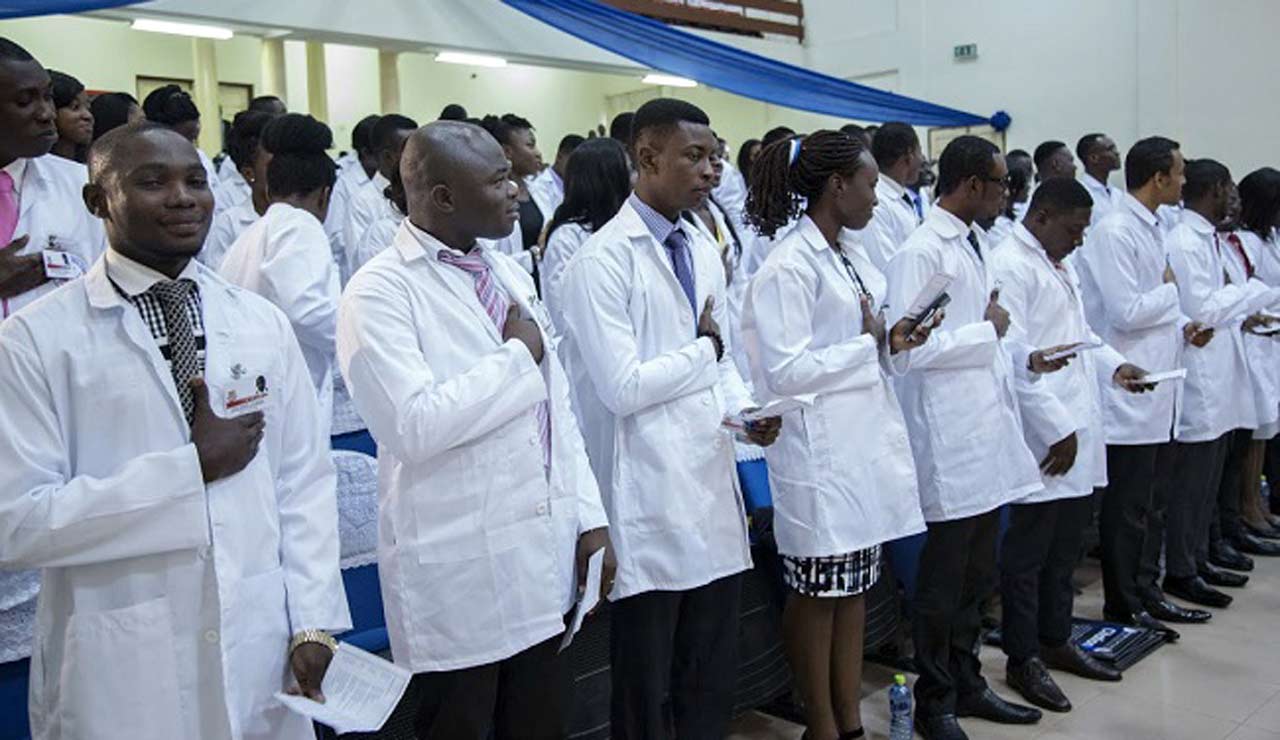
Adeoye Hussain Chukwuebuka came in glowing, the kind of glow that only pure purpose can give. Fresh from the furnace of medical college, his results bore the scent of brilliance, his stride the rhythm of someone born to heal. His white coat shimmered in the sterile hallway lights, worn not just as a uniform, but as a covenant. His stethoscope draped around his neck like the bronze serpent lifted in the wilderness, signalling a promise of life to those on the brink of death.

He truly came in, not seeking escape or greener pastures. He came with a fire. A fire to serve, to make an impact, to stay.

But then… housemanship happened.

In just two weeks to the new life, Chukwuebuka’s glow began to dim. Not metaphorically, but literally. His cheeks, once full, shrank. His eyes, once bright, dulled. He was fatter before — not just in body, but in dreams. He came with life. The system began to drain it, slowly, ruthlessly.

At first, sleep became a luxury, unaffordable anymore. Then his sanity. Later, his joy.

Adeoye found himself in a loop of exhaustion so grave it warped reality. He would resume by 8 a.m., and wouldn’t see sleep again for 48 hours — not once, not twice, but repeatedly. As soon as he thought he could breathe, just for a minute, a call would come in — “Come to the ward”, “There’s an emergency”, “You’re needed in theatre.” Again. And again… and again.

His personal life? Hussain could see it walk off him without his approval. Even his relationship that survived the inferno of medical school was broken off simply because there was nothing left of him to give. Not even text messages. Not even voice notes. Nothing. Just like that, a life he already had in play, joyful about, phased off.

Oh! Could he even shake off one of the haunting experiences he forever wished he could have helped with? Adeoye had already been on duty for over 24 hours when an emergency struck. A baby. Not breathing. Even at his lowest point, he could not stand not doing anything to save the situation. His body moved on instinct… he rushed, assessed, and started resuscitation. But five minutes in, the rush wore off. His hands gave up. He couldn’t even lift his arms. His fingers couldn’t form pressure. His own pulse felt faint. And the baby…. The baby slipped away. Left. Not just into death, but into the cracks of a broken system.

And on the report, he had to write the truth — “Could not complete resuscitation due to extreme personal exhaustion.”

That sentence continues to haunt him.

It wasn’t just a failure of strength. It was a failure of structure. And his friends across other hospitals? They were fainting. Collapsing mid-shift. Crying in toilet stalls. Living like machines with rusting gears.

And you would think, with this superhuman sacrifice, the reward would be more than a room could contain.

But no.

The pay was barely enough to survive. But Adeoye said, and meant it — he would take less if it meant he could have a piece of his soul back. If he could breathe. If he could be human. This isn’t about money alone, but about dignity. About survival. About choosing between saving lives and watching his own slip away.

And even if he summons all the strength left in his marrow, there’s still this: no equipment. Oxygen runs out. Monitors don’t beep. Gloves tear. Syringes are blunt. Catheters are scarce. The barest minimum? A luxury. And in that darkness, they still whisper: “Do your best.”

What best? With what tools? With what strength?

Even those who still carry passion like a torch are now shivering in the cold winds of burnout. The system is crushing the very shoulders it leans on.

Why?

The answer is bitter: a workforce too thin to carry a country.

How many doctors are produced yearly? Nowhere near enough. And even among those, only a fraction secure placement for housemanship. Why? Because merit is suffocated by political interference. Only about 20% of placements are based on merit. The rest are claimed by sons of power, daughters of connections, and family friends of politicians. Many brilliant minds, like Adeoye once was, remain stranded, waiting, and wasting.

And yet, those lucky enough to be placed are punished for it. Overworked. Underequipped. Undervalued.

And Adeoye? He really didn’t want to leave. He honestly was determined to stay. He actually wanted to believe. But now? He would give anything to go.

Not for luxury.
Not for pride.
Just to survive.

This is the irony: Nigeria’s housemanship year, which is supposed to be a bridge from classroom to clinic, has become a crucible. Rather than refine, it breaks. Becomes a trapdoor instead of a launchpad. 

And this is not just about Adeoye Hussain Chukwuebuka.
It’s about hundreds. Thousands.
Many of whom came in glowing. Now walking corpses — souls intact, bodies crumbling.

They didn’t want to leave. They really didn’t.
Until housemanship happened.

Oladoja M.O writes from Abuja and can be reached at: mayokunmark@gmail.com
Modern Slavery or missed strategy? A second look at the controversial Hon. Ganiyu Johnson’s medical retention bill

By Oladoja M.O

In recent years, the word “Japa” has become an emblem of escape, a chant of hope, and sadly, a whistle of despair. Particularly in Nigeria’s healthcare sector, the mass exodus of young, vibrant medical professionals has left our system gasping for air. What we face is not just a brain drain—it’s a heart drain. And in the middle of this haemorrhage lies a controversial bill, once proposed by Honourable Ganiyu Abiodun Johnson, now buried under the backlash of public outrage.

But was the bill completely out of line, or was it simply unfinished thinking?

It is no longer news that Nigeria’s doctor-to-patient ratio falls miserably short of the World Health Organisation’s recommendation. Yet what may not be so widely understood is that the stressful, overburdening conditions often cited as a reason to “Japa” are partly the consequences of those who have already left. One person’s departure makes another’s stay unbearable. The domino effect deepens.

While the most effective and lasting solutions lie in long-term efforts—revamping the economy, tackling insecurity, and fixing systemic rot—we must also admit that time is of the essence. The house is on fire, and we need water now, even if the fire truck is on its way.

There’s this question of “can patriotism be stirred in a broken system?”

Critics often point to a profound lack of patriotism among the youth, and it’s not unfounded. But when young Nigerians have watched corruption erode public trust, when they are owed salaries, and when survival is a struggle, can we honestly ask for blind loyalty? Still, the bitter truth remains: if patriotism isn’t growing naturally in this climate, maybe it needs to be carefully engineered, not through coercion, but through incentivised responsibility. 

The original bill proposed tying Nigerian-trained doctors and dentists to a mandatory five-year practice before granting full licensure. It sparked nationwide uproar, accused of being coercive, discriminatory, and even unconstitutional. The medical council body argued that such a condition could only apply to those whose education was publicly funded. And frankly, they had a point.

However, what if the bill didn’t force, but inspired commitment instead? Clearly, the strategy to curb this heartbreaking issue lies between the government and the various governing councils of these professions. After an extensive and wide brainstorming, it is my opinion that the following recommendations should be weighed and given consideration;

Let the Medical and Dental Council adopt a digital licensing model that is highly secure and tamper-proof, implement a differential licensing fee, where those practising within Nigeria pay subsidised rates (e.g., ₦50,000).

In contrast, those seeking international practice pay a premium (e.g., ₦250,000). Substantial penalties for forgeries should be introduced, ranging from travel bans to long-term suspension from practice. Also, full international licensing should probably be accessible only after 5 – 8 years of verified practice in Nigeria, but with allowances for truly and genuinely exceptional circumstances.

Each Local Government Area (LGA) can be mandated to sponsor at least two candidates annually for critical medical professions, especially medicine and nursing. This would ensure that the selection is need-based and done after national admission lists are released to prevent misuse by those already financially capable. Aside from other ongoing state or philanthropic sponsorships, this alone could inject an extra 1,500–2,000 health professionals yearly into the system.

Beyond the Medical Residency Training Fund (MRTF), the government can introduce provisions for payment of residency program fees, subsidies for first and second fellowship exams, partner with international and local equipment companies to provide cutting-edge residency exposure, and full sponsorship for mandatory travel during training with conditions of local practice attached. More importantly, it should be to the core interest of the government to streamline the bureaucracy around MRTF disbursements to reduce frustration and improve compliance.

For these health professionals committed to staying, the government can introduce affordable credit schemes for cars and home ownership. This strategy speaks not just of comfort but dignity and hope, ensuring these professionals see a future here. A doctor with a home loan and a dependable car is more likely to stay and build a life.

Relatively, in a bid to arrest some unnecessary uproar from various other professions, the government can broaden the application of similar strategies to other key professions facing mass emigration, like pharmacy, engineering, and IT. Let emphasis be on this is a quick-response initiative and not a substitute for long-term development, and also communicate clearly that staying doesn’t mean stagnation but service with reward.

No one can deny that Nigeria’s system is in a broken state, and no young professionals should be intentionally shackled to that broken system. It is also true that patriotism cannot be forced, but it can be nurtured. These professionals can, however, be valued, supported, and invited into a new contract of service, not as slaves to a nation, but as partners in rebuilding her.

Therefore, before we completely dismiss the Hon. Ganiyu Johnson Bill as modern slavery, perhaps we should ask: did it simply lack the right lens? With the right blend of compassion, policy, and investment, could it become a promise and not a prison?

Oladoja M.O writes from Abuja and can be reached at mayokunmark@gmail.com

NMA offers free surgeries to 200 patients in Toro 

By Ukasha Rabiu Magama

Preparations are underway as the Bauchi state chapter of the Nigerian Medical Association (NMA) prepares to offer free surgical procedures to more than 200 patients afflicted with various ailments across the Toro local government area.

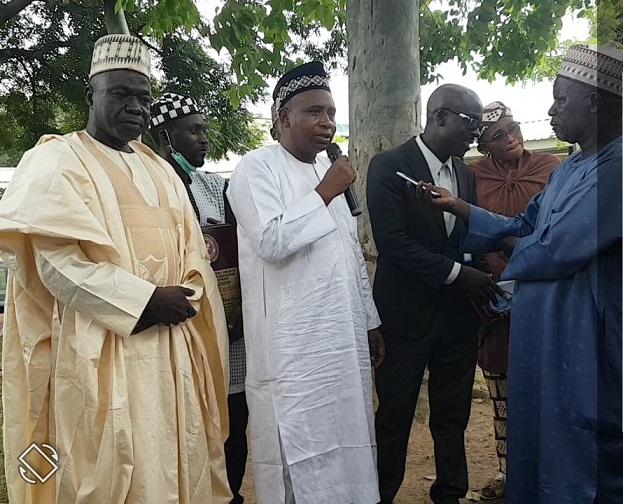
Dr Adamu Umar Sambo, the recently appointed Commissioner of Health in Bauchi, announced the initiative during a ceremonial event hosted by the Islamic Medical Association of Nigeria (IMAN) at the Toro chapter. 

“The Medical Association of Nigeria, NMA, will soon offer free surgery to over 200 patients suffering from various diseases across Toro local government. The association will do this to express its happiness and to thank His Excellency Bala Muhammad Abdulkadir for appointing one of them as Bauchi health commissioner.” 

The free surgeries are a gesture of appreciation for Dr Sambo’s appointment as the new Commissioner of Health and a tribute to Governor Bala Muhammad Abdulkadir for recognising Dr Sambo’s contributions to the medical field.

Dr Sambo, who formerly held the position of Chief Medical Officer at Toro General Hospital Toro and currently serves as the Bauchi Commissioner of Health, urging his successor, Dr Maryam Ahmad Abubakar, to build upon his achievements and collaborate closely with hospital unit officials to align with Bauchi state’s health sector objectives.

Similarly, Dan’zumi Abdulhamid, Chief Nursing Officer at Toro General Hospital, praised Dr Sambo’s accomplishments as the former Chief Medical Officer, highlighting advancements such as upgrading the hospital to a real general facility, provision of essential equipment including generators and X-ray machines, establishing a Covid-19 centre, a new theatre room, and the renovation of facilities including staff quarters and the Juma’at mosque.

On his part, Alhaji Aliyu Yakubu Lame, the district head of Lame, encouraged the Commissioner to work selflessly to drive development in the state. He equally commended the Governor for appointing two key commissioners from Toro and urged Dr Maryam Ahmad Abubakar to carry on Dr Sambo’s legacy.

The event was graced by the presence of the district heads of Toro, representatives from the Nigerian Medical Association, members of the Islamic Medical Association of Nigeria – Toro chapter, and other esteemed dignitaries.

Doctors’ anti-migration bill and nurturing greener pasture

By Lawal Dahiru Mamman

Brain drain in Nigeria has lingered for some time now. In the medical profession, it is the most dominant issue occupying the mind of physicians and other health personnel. This may not be unconnected to the fact that human life is sacrosanct.

It goes without saying that the incessant brain drain of medical personnel in Nigeria will slow the attainment of Universal Health Coverage (UHC), that all people have access to the full range of quality health services, they need, when and where they need them, without financial hardship, in this part of the world.

Mainly, the mass exodus of doctors out of the country is caused by poor welfare of medical practitioners, lack of or insufficient working equipment, and poor working environment leading to the need for seeking a more sumptuous alternative – greener pasture as it is called.

This is purely a reflection of the theory which argued that “…… if wages rose above subsistence, the number of workers would increase ….” By implication, wherever our medical brains are sprinting to have a more luscious wage or salary for the profession. This would increase the country’s workforce while wearing out our dear nation.

Discussions have sprung over time on how to salvage the situation. Experts have suggested an increment in the welfare of doctors. In contrast, others have voted for ending medical tourism, especially public officeholders, to enable them to pay more attention to funding health facilities at home.

The most recent attempt to curb the mortal exodus of medical practitioners is to shackle them with the power of the law. This is through a bill sponsored by Ganiyu Johnson, a lawmaker from Lagos. The bill seeks to amend the Medical and Dental Practitioners Act 2004 to address the brain drain in the health sector. According to the lawmaker, it is only fair for medical doctors who enjoy taxpayer subsidies on their training to give back to society.

The legislation is titled, ‘A Bill for an Act to Amend the Medical and Dental Practitioners Act, Cap. M379, Laws of the Federation of Nigeria, 2004 to Mandate Any Nigeria Trained Medical or Dental Practitioner to Practice in Nigeria for a Minimum of Five Years Before being Granted a Full License by the Council to Make Quality Health Services Available to Nigeria; and for Related Matters.’

While the above is more restricted to medical and dental practitioners, the same lawmaker said on Friday, April 14, 2023, that he would be presenting a similar bill on nurses and pharmacists; when he intends to do that, time will tell.

With different medical associations reacting in negation by stating that the bill has the propensity to trample on the rights of doctors, the Minister of Health, Dr Osagie Ehanire, said the bill is in order especially looking at the fees paid by the government to subsidise their training at universities, and the service which they render before travelling overseas. However, the minister said the service does not make up for the cost of training.

The Nigerian Medical Association (NMA) has said the bill will not see the light of the day because it impedes the constitutional right to freedom of movement of doctors and violates international labour law, chiefly since the government has subsidised students from all other professions.

The Nigerian Medical Students Association (NiMSA) and the World Medical Association (WMA) have vehemently disapproved of it, too, because the bill, according to the latter, is “not only outlandish but totally retrogressive, unresearched and very ill-informed.”

The bill that intends to give health workers full license only after five years of working in Nigeria has passed the second reading in the House of Representatives. While this may have come out of benevolence, it may not be the piece we search for to solve the puzzle of brain drain in the health sector.

If the bill sees the light of day, after five years, doctors will still have the freedom to travel out, in my opinion even more experienced. So, could this be the solution we yawn for? Instead, a more lasting solution should involve doctors and government officials meeting halfway to save Nigeria’s crumbling health sector.

I want to firmly believe that Nigeria has what it takes to cultivate the soil for growing ‘greener pasture’ our medical professionals continue to voyage foreign lands for. But only leaders fuelled with altruism can summon the political will to do the needful.

Lawal Dahiru Mamman writes from Abuja and can be reached via dahirulawal90@gmail.com.