Nigeria

Tribute to stammerers in academia

By Abdelghaffar Amoka, PhD.

Have you ever wondered why I blink rapidly while talking to you sometimes? Welcome to my world, the world of stammerers. I realised I was a stammerer while growing up, and I tried to devise ways to handle it. It is there, but I think mine is not very chronic. I tried to adopt some steps to cope with it. For example, while in primary and secondary schools, I avoided asking questions in class. Though, considered a good student, I avoided getting involved in school debate competitions, etc. Until recently, I do not ask questions in large meetings and gatherings; I instead keep quiet. Sometimes, I wondered how my voice sounds to the hearing of the people. I was afraid of listening to my voice for fear of losing my words while talking, I tried to talk fast, and I got used to it.

I was in a lecture theatre teaching Physics sometime in 2007 or so and trying to explain a concept. Then I observed something strange after talking for a while, and I stopped. Everyone was looking at me. I was like, what is the problem? Then, one of the students said, “Sir! You can rap.” And, the students and I started laughing. I honestly didn’t realise I was talking that fast, and I was glad the student was bold enough to point that out.

I didn’t realise the challenges of stammering till sometime in 1986 (I was in Primary 6) when I had an issue with my classmate, who was also a family friend. We were called to narrate what happened, and I was so angry that I lost my words. The words got stuck and refused to come, so I could not tell my own side of the story. I opened my mouth several times, and the words refused to come. I find myself smiling each time I thought of that incident. I still find it unbelievable.

Stammerers in childhood are very concerned with other people’s opinions about them. In some cases, they fight to free themselves from bullying. They have difficulty in letting go of their speech. That introduces emotion into their character. Emotional responses to situations and events exist in most humans, but they are triggered more easily in stammerers. They have a great deal of misinformation about what constitutes acceptable speaking behaviour. It is seen as okay for someone else to speak forcefully and dynamically. Still, when the stammerer speaks with any aliveness in their voice, they are perceived as coming off too strong and too overpowering.

I have this colleague who always judges me before listening to me. He is always like: “Abdel, your problem is that you are too emotional”. To him, it is always my fault even though he was not there and emotions were not involved. Even at this, the passionate ones fight the frustrations and still want to be heard at all costs. 

Stammerers see life as a performance. This is related to their need to please others. They are afraid to make mistakes because of how they might be judged. That made it difficult for them to take up responsibility. Just like me, they run away from it. Even with all the emotions surrounding stammering, I hate to pick up a fight. Not for fear of getting beaten but as a child, I don’t want to get into a fight because I do not want to get into my dad’s trouble. As an adult, I don’t want to get into a row being a bodybuilder. I am not sure of what the built arm could do! So I express the way I feel, air my opinion, and it ends there.

Academia is a place that brings about all classes of people, and among them are stammerers. It is one unique society that brings together great minds. The beauty of academia is that there is always an idea to discuss with the great minds around you. While I was at NTNU, Trondheim as a research fellow, the research group members (Elkraft) come out to eat together during (lunch) break. The Professors, Research Fellows, and the PhD students of the research group eat together at the same table.

I initially don’t join them because I was not used to having lunch by 11 am, their lunch break. They expressed their displeasure not seeing me at the table, and I had to join their 11 am lunch. I use to make pancakes that I take out for lunch. I found eating together fun. That is the only time they discuss topics outside academic and research. And there is always something new to take away after lunch. That is the power of associating with great minds.

This quote is commonly attributed to Eleanor Roosevelt: “Great minds discuss ideas, average minds discuss events, and small minds discuss people. While the academia in Nigeria is blessed with some great minds, small minds also found their way to that society meant for great minds. Rather than discussing ideas, they make their colleagues their subjects of discussion.

For example, I know I am a stammerer, and I know I am naturally emotional. I know I talk forcefully with an accompanied facial expression. It is OK if you don’t like it. As a matter of fact, you don’t have to like it. But we should talk about it as colleagues if you don’t like it rather than making it a subject of discussion elsewhere. We also have cases of lecturers blackmailing their colleagues to younger colleagues and students. They find reasons to demonise them. Why getting involved in character assassination when you can easily reach out to the colleague to engage him. Your perception and what you heard about him maybe a misconception.

Dear colleagues in academia, you are working with people of various backgrounds and characteristics to pursue truth. We don’t have to like each other. We don’t have to be friends. But we must respect each other and work together to achieve the mission and vision of the university. That is the ultimate goal. Let’s engage ourselves with an open mind; society looks up to us to shape the world. Try to know a bit about your colleagues. Stammerers have difficulty in letting go, not just in their words but across the board. They have difficulty in letting go of what they feel and in what they are willing to risk. There are other people around you with other specific characteristics. You need to understand them.

To colleagues and friends with unique characteristics like stammerers, don’t give in to bullying and blackmailing at the workplace and everywhere. Believe in yourself and your capabilities. Side talks in a place like academia are disappointing, but never let it bother you. Please take it as a part of life. Don’t join words with small minds. Be the great mind that you are supposed to be.

Dr Abdelghaffar Amoka is a lecturer from the Department of Physics, Ahmadu Bello University, Zaria, Nigeria.
Nigeria shuts UK High Commission as official test positive for COVID-19

By Muhammadu Sabiu

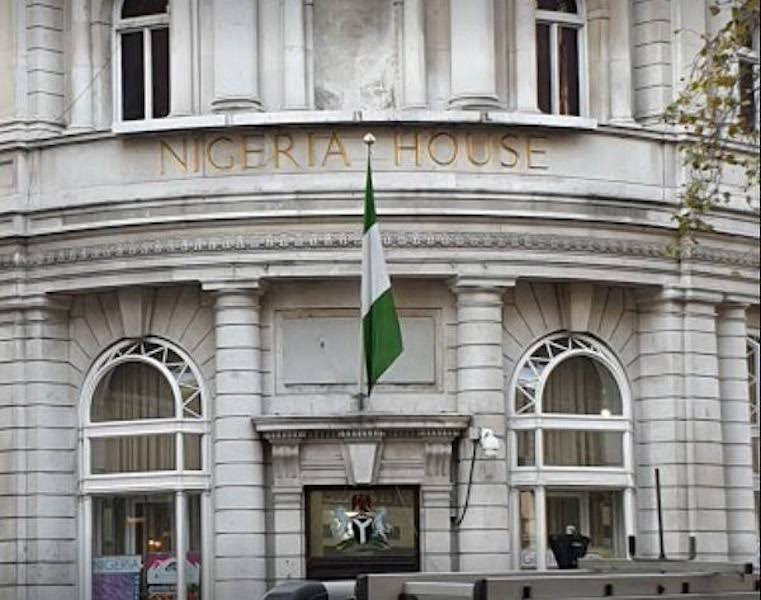
The office of the Nigerian High Commission in the United Kingdom has been shut following suspected cases of coronavirus infection at the building.

In a statement released on Thursday by the Commission, the office would be closed for ten working days.

“The Head of Immigration Section and two other officials went for a meeting at the Home Office.

“At the entrance, Coronavirus test was administered on them, and one of them tested positive to COVID-19. The affected officer immediately isolated while the other officials, who tested negative, will also isolate for the next 10 days.”

The Commission further indicated that all officials of the Mission would be compulsorily tested for COVID-19.

In the statement, it added, “In line with COVID-19 regulation and the need to adhere to the rules and regulation of the host country, the Mission will close down for the next 10 days, in order to observe the mandatory isolation of those who were in contact with the affected officials.”

Skills Beyond School (I)

By Najib Ahmad, PhD

Thanks to the existing curriculum in Nigerian schools (its directions, objectives, and preferences), students who wholly rely on this system hardly possess any tangible skill, which would prepare them to become self-directed or independent or job providers. They can also barely avoid queueing the assembly of youths whose over-dependence on the government-provided jobs is noticeable countrywide. Any thoughtful country that cannot provide jobs for its youth population knows the gravity of its future, which may be bleak. Fortunately, this is not a lonesome fight for Nigeria. It is a common challenge bedevilling the world today from the Far East, West to the far South Mediterranean countries, including developed and developing parts of the world.

There is a lack of adequate jobs everywhere, possibly for several divergent reasons. It is shared treachery, especially with the continuing world’s economic meltdown due to many seen and unseen factors. So, as a Nigerian, please do not take it hard or shudder; imbibe water and relax a trifle because we are not alone in this mess. There may be an advantage to every saddle moment.

Since the beginning of Covid-19, some countries have imposed total or partial lockdown–longer or shorter. These changes in our lives have handicapped the economy of nations and shattered peoples’ economic stability. On and off, many countries are still struggling with lockdown, which eventually forces people to work from home. From reports, you can say that the pandemic exposes the profound weaknesses and causes alarming panic in many countries previously seen as organised and the superpowers (aka God’s own nations). As a result, many people lost their jobs even in those powerful countries. Schools, universities, laboratories, markets, factories, and businesses were all closed, places of work and worship across the world were abruptly shut.

Consequently, different governments and policymakers have realised how vulnerable conventional job systems are. Thus, they are implementing strategies and gradually understanding the need for robust, better approaches to tackle these unprecedented changes. Policymakers have recommended and implemented novel ideas to impact schools, business owners, and entrepreneurs in countries affected by this negative development to make the economy viable and uphold the economic stability of their citizens.

For instance, several schools and universities have switched to remote instruction, in other words, digital learning. Due to the compelling need for endurance, human beings are social creatures who resiliently adapt and quickly learn to familiarise themselves with any given circumstances. People with different essential skills grabbed advantages from the emergent changes. They include but are not limited to computer skills that allow you to carry out remote jobs–working from non-typical office space. Besides, they are the kinds of do-it-yourself skills; they are not the specific skills you can learn from the traditional vocational training school. Suppose the government has plans to train people in such specialisation through vocational training school. In that case, it is a potential task and could easily invigorate people’s economic stability and prepare youth for the path of independence.

Here are a few examples of remote jobs that you can do from any place: (a) Computer programming/Coding; (b) Web development/design and Android or iOS developer; (c) Data science; (d) Content writing, copywriting, copyediting, transcription, and translation; (e) Graphic design; (f) Digital marketing; (g) Video editing; and Virtual assistant, and so forth. Of course, these jobs existed before COVID-19. However, they took a new turn and became enormously popular since the onset of the outbreak, thanks to their necessity and worth in our everyday lives. Thus, the everlasting need cannot be trammelled.

And every person who has no prior computer science/technology diploma or degree can master these skills. It does not matter whether or not one is from science or non-science-based disciplines. All you need is an android/iOS phone, while some require a desktop or laptop computer. Above all, you also require determination in learning and mastering any of these skills. And the good thing is, they are now taught in many online learning platforms for free or for a cost as either certified short courses or nano-degree programs.

The paid access courses are not very expensive if you compare them with the value of what you will learn and its advantages afterwards. Sponsored by the tech giant companies and other government sectors like Microsoft, Google, European Commission, and Universities, platforms such as Udacity, Udemy, FutureLearn, and Coursera offer massive open online courses (free).

YouTube is similarly often graded as the best platform for learning anything; you can use the platform to learn any skill you wish. So if you are a book person, look for the best ones in your field, learn, and practice. Even some establishments from Nigeria are taking part in this skills acquisition training program for the youths, but you hardly see these opportunities discussed in northern Nigeria’s cyberspace. Recently, I encountered another scholarship announcement for a Nanodegree scholarship in many essential skills in varieties of disciplines, which Access Bank, Nigeria will sponsor.

Dr Najib Ahmad is a Postdoctoral Researcher at Shandong University, China. He can be contacted via namuhammad03@gmail.com.

What Nigerian government should do about blasphemy

By Abdul-Hamid Abubakar Zubair

The ungovernability, which is crystal clear, toward the act of showing contempt and lack of reverence to sacred religious deity/deities is imminent and very alarming. If not seriously challenged and tackled by the constituted authorities, especially at the federal level, that may, unfortunately, aggravate severe tension even to the dogmatical secular democratic doctrine, believed to be a workable formula that has an answer to all national issues. 

It holds true, you like it or not, the fact that religion matters in Nigeria. Most people are firmly bound to one of the two major faiths, Islam or Christianity, and thus, it is a duty call for any person in power to uphold, respect, and support people’s various beliefs. The people have the right to practice their religion. Blasphemy is unacceptable and is punishable even according to national laws in the criminal codes as enshrined by both customary and Shariah laws. You can’t shift secularism to this place – at least, it is not yet the time.

Observing closely how cascades of blasphemous thoughtlessness and rashness have been unravelling in recent times, you can sense new dimensions and order of hidden treacherous agenda, purportedly insinuated by servile demonic elements. It is not by mere serendipity but a carefully thought out and planned memorandum.

In the North, there are more than four blasphemy suits filed in courts. The two trending cases include Yahaya Shariff Aminu, 22, a musician, and Umar Faruk, 16, both in Kano. The latter has been overturned and acquitted, and the former has been sent for a retrial by the Court of Appeal.

Another classic take-away example was the just concluded dialogue that features the controversial Shiite scholar, Abdul-Jabbar Nasiru Kabara, following his deliberate inciteful utterances and wrong interpretation and exegesis of Sunnatic traditions (Hadith), and after his request to the Kano State government to do justice and convene a physical dialogue with other Kano Islamic Clerics from the Salaf, Tijjaniya and Qadiriyya Sects. The aftermath of the conversation proved the bitter truth that was heavy and unfavourable to the eccentric Shiite cleric. 

I heard of a similar ordeal from Sokoto. A man allegedly made similar blasphemous utterances against the Prophet Muhammad (PBUH). However, we were supposed to be brainwashed by the excuse that he was suffering from temporal madness. Meanwhile, dementia was his alibi.

Taking a close look at these, one may ruminate over some questions and conclude that all these are not coincidental but planned.

Insecurity is a current social issue at hand. It has perturbed the entire nation. A lot of societal menaces are happening.  This trending problem of blasphemy coupled with insecurity will produce a severe stale. If it finds a place to stay, it will add salt to an injury, and the pain will be intolerably excruciating. 

There should be no room for apology for a deliberate blasphemous act. Anyone found guilty must be seriously punished and his actions thoroughly condemned. The same thing goes for all media outfits. Through that only, peace can prevail. 

Some personalities and deities are insurmountable, untouchable in major religions that should be demarcated by the power authorities and declared as a “no-go” zone. In strong terms, it should be stipulated that anything the Christians, Muslims, or any other religion recognised by the authority; within the Nigerian Province, which is considered alien or goes against the standard teachings – especially blasphemous utterances must be punishable. The government should get a grip on these with a strong and clenched fist.

The government should seize the day while it’s still dawn and make hay while the sun shines before things turned out of hand.

Abdul-Hamid Abubakar Zubair
Federal University Gashua, Nigeria.
E-mail: ibntaimiyya@fugashua.edu.ng
Phone no.: +2348138171001

Let’s avoid reckless driving in wet weather

It is no longer news that ghastly car accidents have led to the death of innumerable people, which could be attributed to improper driving in the rainy season. However, you may find out that the primary factor that caused some accidents is driving in wet weather without abiding by safety precautions like exceeding the speed limit in the rain.

However, driving in the rain, whether a sprinkle or a heavy downpour, can be one of the most challenging driving situations which some, if not all, drivers encounter. Rainy conditions are directly associated with higher accidents rates. No matter what part of the country you live in, it is almost certain that you would be required to drive your vehicle in the rain at some point. Knowing how wet roads and reduced visibility affects how your vehicle handles will help you drive safely in rainy conditions.

More so, drivers should be reminded that reducing their speed limit and turning on their headlamps are two of the simplest and most effective ways of reducing the chances and prospects of an accident caused by wet weather. Likewise, maintaining a safe distance between your vehicle and the car in front of you. Stopping your vehicle will be more difficult when driving in the rain. Therefore, maintain a distance of several car lengths between your car and another.

Regarding car equipment, make sure that your car’s equipment is in working order before encountering rainy weather. For example, check your headlights, taillights, and windshield wipers to ensure that they will work well when needed. Also, check the tread of your vehicle’s tires. Balding tires can severely reduce traction on wet roadways.

Furthermore, most states require drivers to turn on their vehicles’ lights while driving in the rain. Even if it is only misting, turning on your vehicle’s headlights will increase both your visibility and other drivers’ ability to see your car on the road.

Conclusively, concerning the above driving etiquettes, while raining, private and commercial drivers should whack their possible best to meticulously ensure that they follow all driving instructions provided to them to prevent the risk of being crushed.

Staying safe while driving in the rain is simple if you make a conscious effort to employ these safety precautions.


Mallam Musbahu Magayaki writes from Sabon Fegi, Azare.Bauchi State. He can be contacted via musbahumuhammad258@gmail.com.

The North, the Media and the Way Out

By Ahmad Shehu, PhD.

In recent years, Nigeria, particularly the northern part of the country, has gone through a series of debilitating crises that have become existential threats to the region and the entire country and even the West African sub-region to some extent. The Boko Haram insurgency in the northeast, the herder/farmer crises in the north-central, the kidnapping and banditry in the northwest, the ethnic clashes in the middle-belt have all spilt over across other regions of the country, causing chaos, social instability and economic devastation.

Governments at all levels have tried hard to contain these menaces through conflicting policies, strategies and approaches. But, evidently, none of these has succeeded, yet, as these crises grow and engulf more Nigerian lives and properties daily. With the troubles raging, the regional economic and social fabrics go down the slope. Farmers have abandoned their farmlands; herders are on the run, business people are on a massive exodus to urban centres. Schools, hospitals, and other social services are no longer obtainable in many places across the region. These are serious but not insurmountable challenges.

Despite its effects on livelihoods, physical destruction can easily be reversed in a relatively short period. The political history around the world teaches us this basic fact, with Germany, Poland, Russia and even Rwanda as cases in point. Left in rumbles decades ago, these countries provide development models for the world to follow today.

On the contrary, a society whose social fabrics are destroyed is more difficult to rebuild, for a nation grows in and flourishes from the minds of its citizens – their beliefs, dispositions, attitudes, education, etc. Sadly, the proud, significant historical antecedents of northern Nigeria are maliciously challenged on all fronts, with destructive narratives, or what my friend Dr Samaila Yandaki calls “falsification of history” being pushed against the people, culture and sociopolitical freedom of the region. This, as far as statecraft is concerned, is more dangerous to the corporate existence of the area and indeed Nigeria in the long run than the physical challenges we are currently battling. Here is why.  

For many decades, northern Nigeria and its people have endured a consistent assault on their historiography, heritage and sociopolitical status. At the expense of sounding conspiratorial, I believe it is safe to state that the constant ethnic and regional profiling of the North and its people is a deliberate, well-planned assault aimed at breaking the very social fabric that held people together. The orchestrators fully understand the natural advantages and disadvantages of the region at equal proportions.

In today’s Nigeria, the North has been stereotyped in the most dangerous way. In the Nigerian sociopolitical scheme, northern leaders have been systematically stigmatised, with all the evils and ills of the country being falsely but persistently attributed to the failures of the North, even though history proves to the contrary. Some people propagate this antagonism without equal acknowledgement of the good tidings, sacrifices, patriotism and contributions of northern leaders and northerners in the Nigerian project. The bitter, unbiased truth is that the problems and prospects of the Nigerian state are Nigerian, with all regions, ethnicities and religious identities contribute their fair share in making or marring the country.

Similarly, the Nigerian media has worked hard to regionalise or ethnicise all kinds of human criminalities against the North. The media ascribe all sorts of criminal acts to northern folks or, precisely, Fulani, without recourse to the dangers these kinds of ethnic and regional profiling pose to the ordinary northerner. Conversely, criminal gangs, armed robbers in all southern states, notorious kidnappers, internet fraudsters and corrupt public officials would pass as mere criminals if, at all, they get reported. There won’t be a mention of the regional, ethnic or religious identities of those criminals. Unlike the former, we all share the criminal’s misdemeanour as humans and Nigerians. They are now “Nigerians”, not southerners, Igbo, Yoruba, Ijaw, etc. The hypocrisy is stinking.

Furthermore, today’s public discourse in, about and on Nigeria is a mere comparison between a supposedly ‘wealthy, educated’ south versus a supposedly ‘poor, illiterate’ north. This narrative gained traction by consistent and persistent reportage, which went unchallenged for too long. It is indeed true that all you need to validate a narrative is to keep saying it. While the ills caused by the utterly disgusting failure of the Nigerian leadership obtained in the North are reported or tagged as northern, the similar or worse scenarios obtained in the south will not belong to the southern region but the Nigerian federation. For the common audience, this kind of deliberate misrepresentation of information has caused deep-rooted mischief and hatred against northerners.

The dangers this stereotyping portend for the region’s future is, in the long run, worse than its current physical challenges. For one, the political leadership required to solve the physical problems will be entirely messed up in ways never seen before. Secondly, the communal consensus that gave the region the upper hand in the political scheme of the country will be dismantled, leading to distrust, disharmony and possible internal disintegration. Thirdly, young Nigerians constantly fed these venomous, hate-filled narratives are prepared to antagonise their northern counterparts, a situation that will affect their participation in the Nigerian project. The tail end of this debacle is not a story I would like to predict. We have seen examples in Nazi Germany and Rwanda.

The good news, however, is that the solutions to this seemingly intractable problem are not farfetched. It has been said that if you want to use a mirror, buy your own. People are made by their history; their minds are shaped by their stories; while their future is dependent on their world views, their dignity and respect depend on how others view them.

Indeed, the animosity and distrust between the major ethnic and religious groups in Nigeria are as old as the country itself. Among the major culprits in fanning the embers of this powerful but devilish attempt to demonise the North is the Nigerian media which has deliberately and consistently pushed stereotypical narratives against the region.

However, one of the reasons the campaign is succeeding is the total lack of counter-narratives that would eventually challenge the misinformation churned out by the Nigerian media against the region. If this is the case, then the only way out for the North is to speak out, provide content and information, counter-narratives and reliable, factual evidence that will eventually challenge the calculated attempts to demonise its history and hamper its progress. To do this, the region’s intelligentsia, political and economic leaders must be dedicated to and invest heavily in the media. It is only then that the North and its people will be fairly represented.

PS:

I celebrate the courage and dedication of the young men and women who started this medium, The Daily Reality. It is indeed one of the success stories of the North in 2021. Congratulations.

Ahmadu Shehu is an Assistant Professor at the American University of Nigeria, Yola. He writes from Yola, the capital of Adamawa State.

Bauchi payroll scam: Please, name, shame and jail them

By Sulaiman Maijama’a


Reading the report of the disheartening revelation that the Bauchi state government has uncovered over 7000 ghost workers and pensioners from its payroll, which will enable it to realise over 500 Million Naira savings monthly, has given me sleepless nights this week. This is one of the terrible experiences I have had in recent times. I did not know when I was engulfed by raw, unadulterated pain, thinking about how the state’s governor, Bala Mohammed, is taking bold steps to sanitise civil service and block all leakages, other ungodly and unpatriotic people are sabotaging his efforts. If the government is to employ fresh graduates on the N50,000 salary scale, 500 million is equivalent to 10,000 employees.


 When the global economy is ravaged, and governments all over are trying to cushion the effect. Bauchi State is not an exception; these people fail to have the conscience, unleash their cruelty on the resources of the poor masses. And while these fraudulent people, whom I describe as “demons in human structure”, are benefiting illegally from this organised financial scam, the Governor is unjustifiably being criticised for being seen at fault, and the civil servants are in difficulty. This is, indeed, more than double jeopardy. However, if justice is to prevail, one cannot point an accusing finger at the citizens of the state who have been registering their discontent and throwing a barrage of questions to the State Governor, Sen. Bala Mohammed, seeking clarification on why are the salaries of some workers not paid as at when due. Those who think to seek clarification on issues of this nature is a crime know nothing about the Constitution because every citizen is entitled to ask questions on any public issue, except for classified matters, as by law established.


For a couple of months ago, there have been concerns by the Bauchi State citizens, especially civil servants, as regards the hitches that result in delay of the payment of some workers’ salaries in the State. Because Bauchi State is a civil service state, the problem appears to be the greatest concern of the people these days. The opponents of the PDP led administration take that to their advantage by crashing in, posing questions to the Government in power as to why the delay and why despite death, retirement and record of no employment, there has been an exponential rise in the wage bill?


This fraud in civil service started long before Senator Bala Mohammed came on board as the executive governor of Bauchi state. Though his approach to bringing it to a halt is extraordinary, It appears we have a long way to go as the efforts have always proven to be an exercise in futility.


To address the challenges on the issue in September 2020, Governor Bala hosted a Media Parley with civil servants, labour leaders, Government’s officials, elder statesmen, stakeholders and the Media where massive corruption in the system was exposed. A financial consulting firm, DYNATECH Solutions Limited, contracted by the State Government to sanitise its payroll and nominal roll, had revealed that ghost pensioners had been paid over N700 million within one year. While addressing the government, DYNATECH said the sum of N744,000,000 had been siphoned out of the state treasury.


I was then happy when the Governor resolved not to spare anyone found behind the organised financial crime on the Government’s payroll. Unfortunately, however, less than one year down the line, some people could be brave enough to summon the courage and orchestrate their devilish act, just a replay of last year. Something then is wrong!  For Senator Bala to find a lasting solution to this, he must begin to speak to those found to be involved in collecting undeserved salaries and pensions “in a language that they understand”. What language do they understand?


I remember a couple of months ago when some crooks found to be behind financial scams on the state’s payroll were publicised; their names published on national dailies along with pictures and their places of work. Please, your Excellency, sustain this. Whoever is found indulging in such a shameful act, regardless of his social status, should be breaking news for the day on national dailies, radio and television stations. Their names should make the banner headlines, and their pictures take the front pages of the newspaper. This is the best way to embarrass them, just like they embarrass the responsibility they are entrusted with. It will also serve as a deterrent to others.


Since these people do not mean and wish well for the society as their actions result in general affliction in the society with public institutions being grounded to a halt, please, your Excellency, we want to see them facing the fullest wrath of the law, being chased to jail, for they are nothing but calamity to our journey to promised land.


Maijama’a writes from the Faculty of Mass Communication, Bayero University, Kano. He can be contacted via sulaimanmaija@gmail.com.

Kyari isn’t a saint, but let’s reason as Nigerians — Salisu Uba Kofar Wambai

Abba Kyari’s predicament will evoke, in some manner, watertight interpretation by the conspiracy theorists. They can have a soft landing and safe haven to drive their points homes. The US recently denied Nigeria access to purchase helicopters that would aid adequately in fighting the Boko Haram terrorists, bandits, and kidnappers who become a sharp thorn in the country’s flesh. The US scuttled the arms deal with Nigeria, citing the human rights abuses and violations, among others, as its reasons. Is the accusation valid? No! The Information minister falsifies it. 

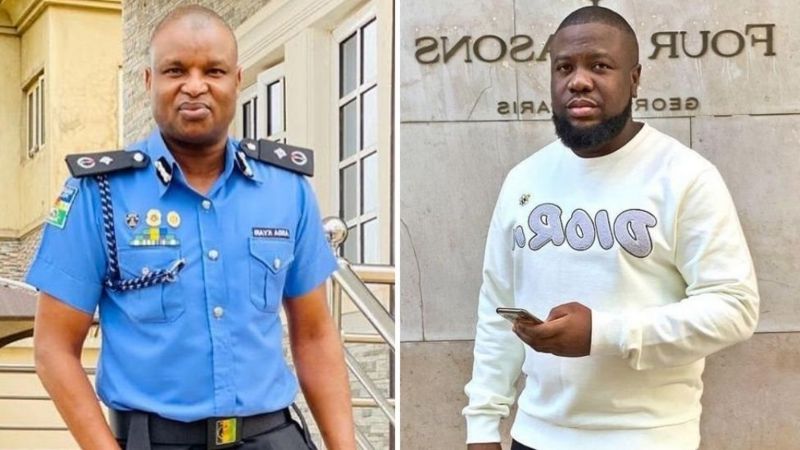
Before Nigeria heal, recuperate, and move on, the shocking revelation of FBI reports that squarely and directly without evasion indicted the super cop Abba Kyari who has been vibrantly a leading figure in battling those violent crimes are gravelling the peace of the country. Though this isn’t the first time the Federal Bureau of Investigation (FBI), a federal law enforcement agency that’s principal investigator of the Justice Department in the US, accuse Nigeria’s top official.

The current speaker of the House of Representatives was once charged until it was proved that the accusation was baseless, unfounded. The same happened to the late Senator Buruji Kashimu, who was accused of drug trafficking. His extradition to the US failed due to intricacies and involution associated with that international law. The chairman of Air Peace, Allen Onyema, was equally indicted by the FBI and the Americans demanded him to be extradited. It was later discovered that he’s ingenuously sinless. He was vindicated as innocent. Therefore,  the FBI isn’t always correct and voracious, as many Nigerians assumed.


However, even if the alleged report of Kyari’s indictment proved to be flawless and accurate, Nigeria must borrow or take up an American approach. I said so because it will be a lame decision for the country to get rid of such an adept and proficient police officer in these trying moments. Forget about Kperogis and Ochonus, who are not within reach of kidnappers and bandits, who write from their comfort zones in the US, calling for the super cop’s head. Don’t be prey to their flakes.


When former American President, Bill Clinton, was indicted for having an illicit sexual relationship with his secretary within the sacred white house, Monica Kalawesky, the indictment was proved beyond a reasonable doubt. Yet, the US assembly was sagacious in its judgement. They weighed Clinton’s advantage as well as his shortcomings. They had prioritised his advantages and didn’t impeach him, and he later continued to become one of the finest and successful presidents in American history. 

However, in this present critical moment of insecurity eating deep into Nigeria’s flesh, such as dreaded terrorists of Boko Haram in the northeast, bandits and kidnappers in the north-west and north-central and secessionists in the entire south, to get rid of Kyari for his alleged accomplice offence with the notorious Yahoo Boy — Hushpuppi — will come with consequences. Therefore, Nigeria must prioritise its National interest.

The US let go of the culpability of Saudi Arabia when Jamal Khashoggi was butchered in Turkey for the simple reason that they had wanted to pursue their billions of dollars deal (arms purchase) with Saudis. National interest always comes first.


Kyari has, in his two decades of service, done a superb and groundbreaking job in bringing the level of violent crimes in Nigeria down. His record is today the top desirable one in the police force. Notably, the Nigerian Government and all its institutions have never found him wanting in all these two decades of service. Kyari has been consistent with his career and currently heading a formidable team that has become criminals’ nightmare. It will be uncanny and suicidal to let him go for the funny accusation of a Yahoo Boy having telephone communication with him outside Nigeria. I urge the Nigeria Police Force to review the report of the FBI about the super cop.


Nevertheless, the FBI report is right or wrong; the officer should be given a top security operation to lead to “fatigue” for the mere mention of his name in the indictment report. After all, Kyari should try to eschew any nexus with people that can easily make others see him as a dissenter. His recent public appearance with Obi Cubana can be a massive slap on his personality.


One lesson Nigerians will learn from this saga is that our culture of highhandedness with the public office should be dropped. Public servants used to be like emperors, especially when they proved to be worthy and successful. It happened with Bank chiefs, politicians etc. Let us have strong institutions.

Salisu Uba Kofar-Wambai is a PhD student at the Department of Mass Communication, Bayero University, Kano. He can be reached via salisunews@gmail.com.

Nigeria should shop for weaponry elsewhere

By Tajuddeen Ahmad Tijjani

Various reports revealed that US senators are planning to halt the agreed sales of warplanes to the Federal Republic of Nigeria on human rights concerns. This unpopular decision leaves many Nigerians in awe, wondering why would the so-called peace-loving United States do that to a nation bedevilled by security challenges, ranging from violent secessionists, killer herdsmen, banditry, kidnapping and Boko Haram — an insurgency that consumes more than 36,000 lives from 2009 to date. 


The number one enemy of Nigeria is insecurity, as the country’s security agencies are having difficulty in surmounting the problem over the years. No doubt, the government of the federation is trying everything humanly possible to end the ugly trend. However, the challenge continues to prove insurmountable, mainly due to the lack of state-of-art weaponry in the country’s arsenal. Understanding this particular shortcoming forces the Buhari administration to shop for sophisticated armouries from the United States of America – a perceived important ally of the Nigerian state. Unfortunately, the bilateral relationship that exists for decades between the US and Nigeria that is expected to play a significant role in facilitating the arms deals and intelligence sharing has been disregarded by these US senators.


Suffice to say; this is not the first time the US turns down Nigeria’s demand for war gadgets on the purported account of human rights records. Denying Nigeria’s request during the Jonathan administration was undoubtedly one of the significant factors that made Nigerian forces deficient in combating Boko Haram, hence leaving the insurgency to prevail then. Now we are faced with many other terrorist acts; we cannot afford to experience the repetition of what happened before. Therefore, to accomplish this task of securing the territorial integrity of our nation, we must think outside the box and source alternatives to acquire sophisticated war gadgets that would help us eliminate terrorists and terrorism in the African most populace nation.


Ostensibly, America is not helping matters in our war against insurgency. No good ally would deny Nigeria a purchase of weapons at this challenging moment of turmoil. As a matter of urgency, the federal government should leave America and shop for the needed warplanes elsewhere. We can try the likes of Russia, China, Japan, South Korea or Germany to have expeditious delivery and usage because they are best with sophisticated ware fare all over the world.  

It’s high time for Nigeria and Africa to realise that some Western countries are not interested or concerned about our peaceful coexistence. It’s, therefore, significant to give priority to research and development to find ways to save ourselves from such last hour denials. Relying on the US to help us address the multiple security challenges in Nigeria and Africa is becoming suicidal. We must find some better allies that would be ever willing to help us out of any predicament unconditionally.


Tajuddeen Ahmad Tijjani writes from Galadima Mahmud Street K/Kaji Azare, Bauchi State.

Mr President, please, let them go!

By Muhammad Tsaure

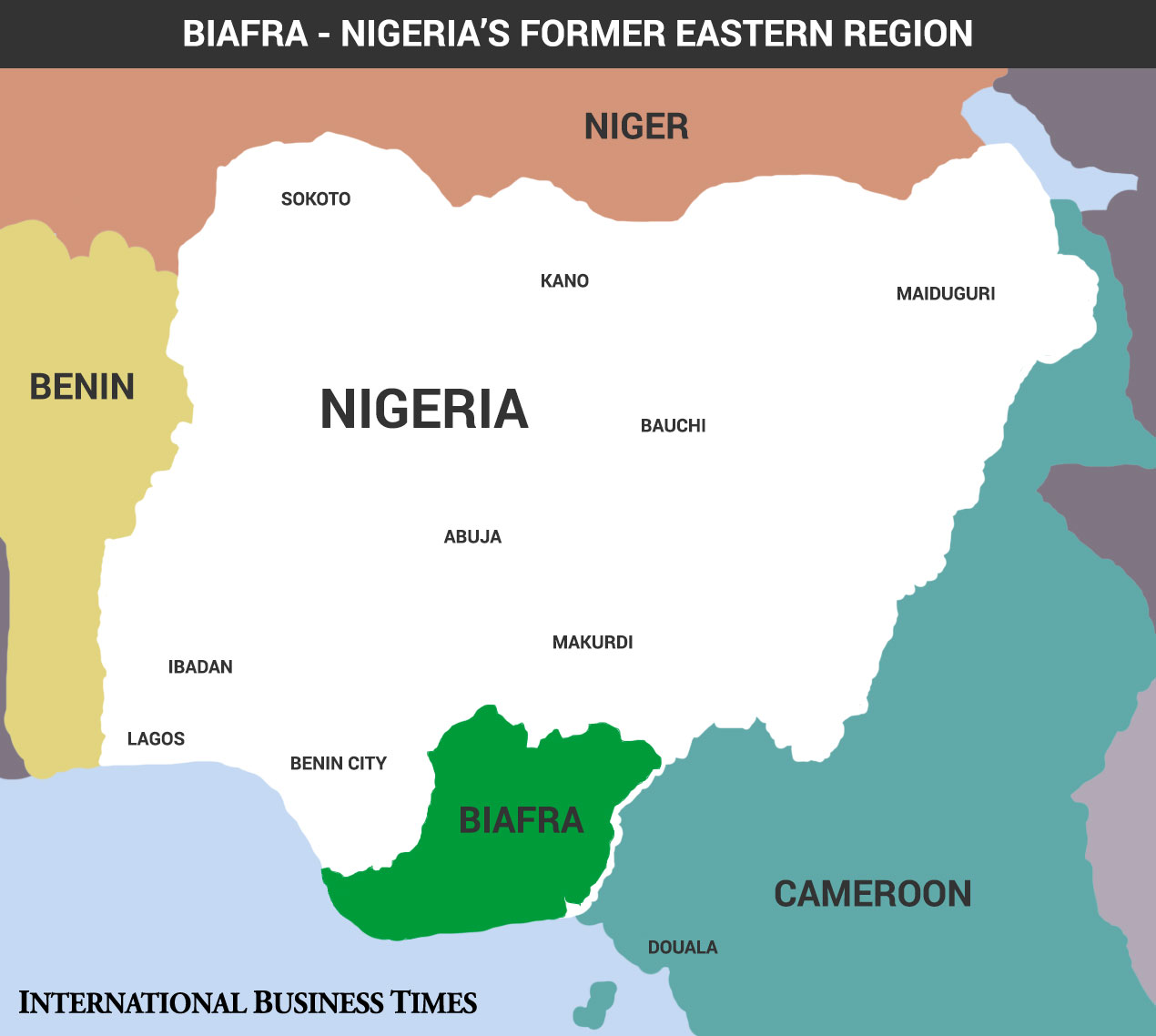
The Biafra saga is no longer South East or South-South issue; instead, it has culminated into something more devastating and absolute hatred to Buhari in particular and Northern Nigeria in general.  I garnered series of experiences primarily based on the discussion I held with a significant number of people from the southeastern region. I learned from them that they mainly think the North doesn’t want them to leave the union because the proportionate percentage of the country’s GDP comes from their region. Thus, if they secede, the North will be left bankrupt and nowhere to turn to.

Unknown to many of those people, this thought is nothing short of ignorance about the exact nature of Northern Nigeria. The North is endowed with whatever a country needs to survive, prosper and develop. We are not parasites, as they claim. But, if they want to go, please, let them go in peace. Nigeria doesn’t necessarily need Igbos to survive.

The North has come of age now; we can fend for ourselves and don’t need any region to live and survive as a country. Whoever wants to go, let them go. The North has treated Igbo people with dignity, love and leniency. The entire Biafra States are not up to Kaduna State in terms of population as well as geography.

In 2015 I was at the Niger-Delta University (NDU) at Wilberforce Island for a conference organised by the Literary Society of Nigeria. After presenting my research paper entitled “Diaspora Literature: A Protest Literature or Romanticism?” We went along with other colleagues to Yenagoa (the capital city of Bayelsa State) to explore or otherwise become a group of tourists. But, to my amazement, the entire Bayelsa State is not up to Bichi local government area in Kano or Funtua local government of Katsina State. Yet, they have three Senators; representing Bayelsa Central, Bayelsa West and Bayelsa East and five Members House of Representatives, and one minister of State on Petroleum.

The conference lasted for six days, and I visited the entire eight (8) local government areas of Bayelsa State. You hardly believe whether or not people are living in some of these local governments. Houses scattered, each community has its language or dialect.

The same week I came back home, I went to Bichi local government of Kano state to verify my assumption or guess. On reaching there, the conclusion I had to make was that Bichi local government is far larger in terms of population, buildings, and whatever one could think of than Bayelsa State. And nobody in the North ever complains about that.

Muhammad Tsaure is the Principal of Government Secondary School, Tsaure. He can be reached via 76muhammadtsaure@gmail.com.