Nigeria

ASUU Strike: Students protest in Kano, other cities

By Uzair Adam Imam

The National Association of Nigerian Students (NANS) has stormed Kano State roads to protest against the ongoing nationwide strike by the Academic Staff Union of Universities (ASUU).

The association that has frowned upon the incessant strike in the country is protesting to tell the world the situation they are facing in the country regarding their education.

The students who converged on the Kofar Nassarawa bridge in Kano City decried over delays in academics.

Singing solidarity songs against ASUU’s action with their hands clinking placards, the students said the menacing issue of the strike should by now be put to an end.

They also called on the federal government to intervene and call off the strike.

Recall that the Vice President of the Union, Comrade Yazid Tanko Muhammad, disclosed their intention to protest on Monday.

Comrade Yazid added, “So, it is a protest which, if we start, will not stop until the issues are resolved, and the lecturers resume work.

Character and strategy: The nutritive requirements for Nigerian leadership

By Mubarak Shu’aibu Hardawa

Nigeria is on borrowed time at the moment and not just because of an awful leadership it is experiencing, but for having that ‘onerous’ task of finding the marquee leader that would be her saviour. This arduous mission has become inevitable after many years of failed attempts that defied belief, much less explanation.

The leadership problems in Nigeria are structural and systematic, while the crisis at hand is long-lasting and accelerating. The system has become so overwhelmed by anger and frustrations that even the most basic task of any government, which is securing the lives of its citizens, is becoming increasingly impossible.

While good leadership is essential – especially in a country the size of Nigeria- the anticipation, grit, and determination to inspire the citizens to be there, unfortunately, that looks like a distant hope. Despite the arrays of potentials and the abundance of resources, which, if properly harnessed, would transform Nigeria into an unmatchable place, this runs contrary to reality. The result obtained is a satiric giggle. The reason may not be unconnected to the fact that our leadership group lack the requisite qualities to take Nigeria to a greater level of ceaseless progress and prosperity.

To put it simply, Nigeria has the capacity and nous to be as rich as the United Arab Emirates. Still, due to its poor choice of leaders, it is now as filthy as pigsty moving on India in the pecking order of countries with the highest number of citizens living in extreme poverty. This situation is avoidable. How? By not allowing ethnicity, religion, region and party affiliation to cloud our judgment when choosing the right leader.  

Thus, by eschewing leaders of a good character, grand ideas and strategy, we are restricted only to a bunch of clowns whose leadership style cannot inspire even a cheap hope in anyone. And what is obtainable from such leaders is a failure that we are now seeing as it has metamorphosed to a greater extent that most Nigerians no longer have faith in the government. 

As it is now, it will only take the starriest eyed optimist to make a case for believing in Nigeria at the moment. The dailiness of wanton killings, kidnapping, stealing of public funds, the meteoric rise in poverty index, corruption, and so on say everything about the kind of leaders Nigeria has. With what is obtained today, Nostradamus himself will hesitate to bet that wrecked Nigeria will be great in the near future. (I’m optimistic, though! As optimism oils the wheels of everyday living.) But such a level of demoralisation and crestfallen require a strong antidote whose composition is character and strategy combined to turn things around.

Since the return of democracy in 1999 to date, those touted with the leadership of this country come with asterisks—either of corruption, poor economic management, health challenges, ethnicity, ageing, nepotism, etcetera. Although there were numerous pros with President Yar’adua’s short shelf-life, the hopes were soon taken away by the inevitable finality which laid him and his famous anthem of “7 Points Agenda” to rest. The rest doesn’t have much to write home about.

The point where Nigeria looked set to hit the proper course was in 2015 when President Buhari came with his ‘Change’ mantra, but that ultimately goes to show that he is not the finished article based on his sheer lack of strategy. This imbalance left Nigeria without a vertebra in her spine for a couple of years. Although we had the chance to change the narratives in the 2019 election, with character (Buhari) coming up against strategy (Atiku Abubakar), Nigerians failed to the wisdom in the saying “A leopard never changes its spot” thus persisted with Buhari thinking that things will change in the second term. The majority of Nigerians at that material time held the view that his character, which fetched him the public appraisal of “Mai Gaskiya”, would wave wands and make things magically better. A dogma that is fruitless at best and hazardous at worst.

Some Nigerians even went vigorously beyond delimitation and common sense, arguing that Atiku was plotting to sell Nigeria (NNPC). While some purported that President of the Senate Bukola Saraki, Speaker House of Reps Yakubu Dogara, Senator Dino Melaye and co are the saboteurs of Buhari’s government in the NASS and must therefore be cleared off the deck to allow Buhari an enabling environment. These are publicly sold opinions and thus became very hard to change even when most of the evidence suggests that they should.

This premature decision under predicated conditions of illusionary belief backfired heavily as his weakness for lack of strategy has been laid bare even in the second term, with Nigerians paying the premium price to date.

Today’s Nigeria is unrecognisable from halcyon days, and her golden generation passes. However, some ethos is sacrosanct, such as having the leadership group to look up to, such as Tafawa Balewa, Dr Nmandi Azikiwe and Ahmadu Bello (the Sardauna of Sokoto). Even without the crude oil, they left Nigerians every reason to be optimists. That was a sheer display of character and strategy.

While you would hope to see a similar Nigeria sooner rather than later, the choice to be made should be factored into character and strategy. Nigeria is in a store for hectic decisions to make. However, the cold, hard reality is that Nigeria, like never before, needs a leader whose character will help unify the country through healing, dialogues and not by polarising the recent past. 

A strategic leader will find a way to midwife the return of peace to Nigeria, grow and maintain our economy, asphyxiate corruption, fix our education to be able to stand on our own, and cut down the unnecessary government expenditure all the recklessness we are known for. Meanwhile, a character will help that leader follow the right path in seeing through the above tasks.  All these sound plausible, right? Theoretically, it does. However, in reality, given the constraints of apparent options, debates were ignited on whether we could find such a man in our political arena (that’s a pulsating debate!). 

Nigerians must challenge and X-ray anyone who throws his hat in the ring to avoid falling foul of past mistakes. 

Finally, I insist on a person who embodies these invaluable assets (character & strategy). We hope our leaders and Nigeria itself are going to be alright! And reeling out the rationale for pitching tent behind such a person, Prof Zulum of Borno will suffice.

Mubarak Shu’aibu Hardawa wrote from Bauchi State via naisabur83@gmail.com.

Ukraine-Russia crisis: What should Nigeria do?

By Salisu Uba Kofar-Wambai

Nigeria’s foreign policy of nonalignment is on the right track. Thus, I commend how we keep mute and only call for peace in this ongoing face-off and altercation between Ukraine (backed by Western powers) and almighty Russia under President Putin.

Nevertheless, any attempt to side with one of the warring parties can be a big blow to the international relations prowess we have been displaying over decades. History had it that Russia supported Nigeria during the Biafra civil war. Reportedly, Malam Aminu Kano served as a bridge and intermediary embodiment between the Nigerian government and Russia in arms purchase, which positively impacted winning that war.

Aminu Kano’s Communist stance captivated Russia. Therefore, he successfully had that bilateral thing with them. It was a critical moment for Nigeria when France was solidly behind Biafrans.

However, even our much-talked-about project expected to shoot Nigeria into the league of technologically oriented countries – Ajakuota Steel project – was Russian technology. As a result, many of our technocrats were and continue to be trained in Russia.

Despite the shift in our foreign policy from the East to the West and now to Asia, Russia still maintains fantastic and fine bilateral relations with Nigeria. So supporting Ukraine to please Western powers will not do us better.

We better keep to our callings for peace and leverage primarily on this soaring of oil prices in the international oil market, evacuate Nigerians caught up there. We shall continue to run with the hare and hunt with the hounds.

Salisu Kofar-Wambai wrote from Kano. He can be reached via salisunews@gmail.com.

Buhari signs Electoral Amendment Bill into law

By Ahmad Deedat Zakari

President Muhammadu Buhari on Friday, February 25, signed the Electoral Amendment Bill into law.

The President signed the Bill at the Presidential Villa on Friday in the presence of the Vice-President, Professor Yemi Osinbajo; President of the Senate, Ahmad Lawan; Speaker of the House of Representatives, Femi Gbajabiamila and others.

In the president’s address, he said, in line with traditions, he received input from different ministries and relevant departments and agencies of government after thorough reviews of the bill and the implications it will have on democratic processes in Nigeria.

He said, “It is gratifying to note that the current Bill comes with great deal of improvement from the previous Electoral Bill 2021. There are salient and praiseworthy provisions that could positively revolutionize election in Nigeria through the introduction of new technological innovations. These innovations would guarantee the constitutional rights of citizens to vote and do so effectively”

Many political commentators have argued that the new law will define the incoming general election in diverse ways.

Nigeria’s border closure and its socio-economic hangover

By Salisu Yusuf

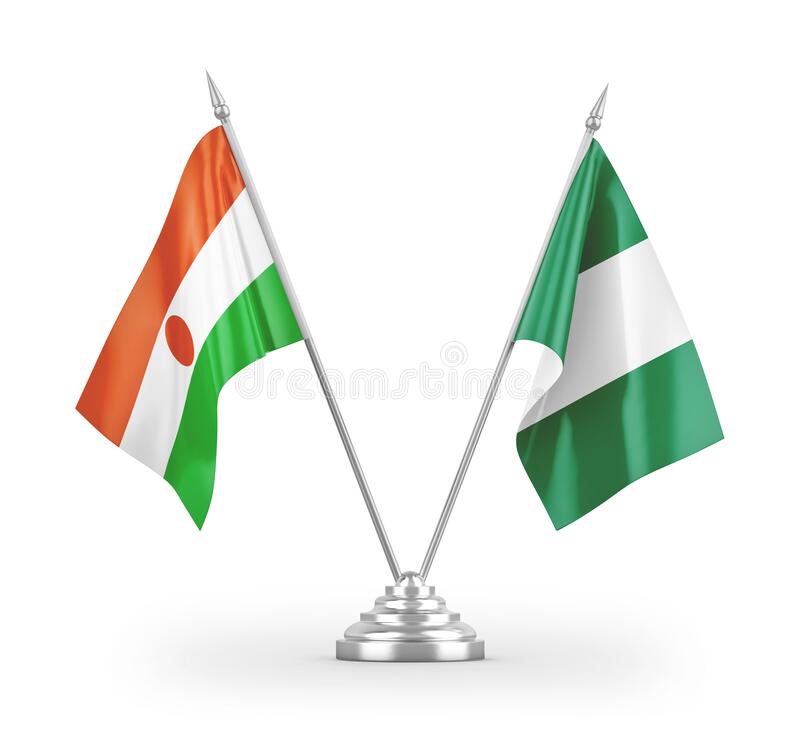
Since August 2019, when Nigeria decided to close its border with neighbouring Benin, Cameroon, Chad and Niger, the Nigeria-Niger border has become a boundary for smuggling of especially arms and massive adornment of corruption. Officials of the Federal Government have turned the borderline into a business venture where collecting and giving unearned rewards are the order of the day.

A haulier recently told me that from Maigatari (in Jigawa State), Babban Mutum and Kongolam (in Katsina), there are no fewer than 30 border outposts where officers wave down passing motorists to collect kickbacks. This has resulted in creating more alternate routes where hauliers circumvent border posts.

To fully understand the level of corruption in our border guards, go to the length and width of the borderline between, say, Daura and Babban Mutum. You will easily see bits of laterite earth inlets going north, where these illegal hauliers transport goods in cars and trucks to avoid sandy earth on their way to Magaria in the Niger Republic.

In the midst of this, the new Nigeriene President, Bazoum Mohammed, introduced a free trade route-policy for the teeming youth. Formerly, Niger operated a protectionist economic policy under former President Tandja Muhammadu. Then, importing goods, especially petroleum products, was prohibited, and culprits were duly punished under strict laws. But, don’t forget that Niger, like its counterpart, also exports petroleum products.

Mr Bazoum, I think, implements his free trade policy, where youth are allowed to import goods from Nigeria due mainly to socio-political issues in the neighbouring countries; the raging civil war in Libya and insurgency in Nigeria and Mali. The President wants crime-free youth. Moreover, issues surrounding his election. He was labelled a Western stooge before his election. His policy might have changed that perception.

The free trade policy has given thousands of youth free access to illegally enter Nigeria, buy these products at a subsidized price as we buy, and export them on motorbikes to sell at a higher price. It’s indeed a gain. 

You see them in our filling stations with jerricans queuing for the products daily. The spectre from the filling station to their convoy with a load of jerricans inside huge sacks, their high-velocity speed is so chaotic. They create a scene. Cases of collisions among motorcyclists, knocking down passersby, especially children, result in massive injuries and deaths. Wàllahi, there’s nothing like a border in those areas, only passages!

In addition, daily cases of traversing over the people’s farmlands by these marauding smugglers (because they don’t tread normal paths) pose a threat to possible tillage erosion. Their constant comings and goings leave no hope for agricultural sustainability. 

Recently, smuggling has reached another dimension. Gendarmes in Niger have apprehended smugglers with huge caches of armaments trying to cross the border. Villagers discovered a cache of arms near Daɗin Sarki in Niger. Those who had kept the cache were possibly waiting for the cover of night to take it into Nigeria – a dumping ground for every malfeasance.

The clip of the arms is still viral on the WhatsApp application. Now I retrospectively see sense in former President Trump’s border wall with Mexico in order to evade criminals. Likewise, it’s high time Nigeria erected a border wall with Niger because their leaders, like their French counterparts, stocked in an international conspiracy, are after their country’s survival than the stability of Nigeria.

 Nigeria misses millions of Naira in revenue from closing its borders and the hauliers’ ploys. When you tell the government this sad reality, some government economic mouthpieces put forward classroom economic theories to defend their economic policies. To understand this point, visit an excise office in the outskirts of Magaria in the Niger Republic and see lines of cars and trucks with loads of Nigerian goods. You will swear they all pass through the sky – alas, they pass through alternate routes that are discovered and explored by Nigeriene motorists and their local guides after the border closure.

The recent surge in kidnappings in Gumel and Suletankarkar in Jigawa State is a pointer to a grim future. However, there’s more to this border issue than meets the eye. It’s high time authorities in Nigeria nipped it in the bud before the Nigeria-Niger border becomes a threat not only to Nigeria but Africa. May we see a better Nigeria.

Salisu Yusuf wrote from Katsina via salisuyusuf111@gmail.com.

A whirlwind of change

By Lawi Auwal Yusuf

So great are the expectations. Some people believe it to be long overdue, and others are immensely surprised. But, to those who understand, the Infallible Saints Party (as they call themselves) and its government are much to be anticipated. Probably, it seems like coming with strong whims of making a revolution.  

Is it a one change whirl like that championed by the ANC in South Africa under its propellant, Nelson Mandela? Or the CCP in China contrived by its mastermind, Mao Zedong or the PAP in Singapore with the engineering of its leading figure, Lee Kuan Yew? But, as the change charlatans are about to leave office, people have realized that their revolution is nothing but a trick, deception and betrayal. Thus, the malignant political parties of old crooks and the treacherous ISP of the self-righteous saints are but the two sides of a coin. 

As the stormy wind of politics swept across the country in 2015, people were in a dilemma because the incumbent party had taken the nation to the verge of absolute rot. Hence, it was necessary for a vibrant new captain to take over so as to save the capsizing ship on the muddy, turbulent and already disturbed ocean. ISP and its leading forces, the messiah, who promised a miraculous change, were our last hope for survival. Therefore, we undoubtedly reposed the trust, firmly believing that the mess would be cleared once and for all, come what may. 

For over a decade, people sacrificed their wealth, resources and lives for the success of the so-called “jagoran talakawa” (masses emancipator). Today, what is the gain earned? An excoriating economic hardship, an avoidable but seemingly inevitable mass killings and abductions. Sadly, he campaigned unwaveringly for the big office for more than a decade. However, he practically lacks any blueprint for the motherland’s development. 

They violated the faithful confidence and trust of compatriots for personal gain. It was a deliberate and calculated disregard for trust and faith, failing to understand that change requires tireless efforts, sacrifice and effective policies. 

Contrarily, the head of the government remains aloof. As a result, the government’s obsolete and unrealistic policies aggravate the people’s misery. They make life worse, more challenging and make the poor poorer. Moreover, they deepen the crises rather than resolve them. 

ISP has assured people that they are the masters of ineptitude and mediocrity by engaging dirty incapacitated politicians to do the job. This is why they are making the project uglier than ever before. 

The sanctimonious Mai Gaskiya (The Truthful One) and the die-hard cohorts of the ISP boastfully brag that the administration performs better than the preceding regimes since the inception of democracy. This is a gaffe and a baseless argument to fool the psych of those who are gullible. If the ISP believes this to be true, it’s a self-guile at its most deceitful form. This evidently shows that they are only specialized in the game of political wangling and finagling. Indeed, this is the worst government in the history of the modern motherland. And expecting them to do better is like kicking a dead horse.

On account of this, people are in deep regret as frustration is boldly written on their faces. This is the worst decision and mistake they have ever made. Consequently, they have fallen from the frying pan into the fire. 

At last,  they will leave next year as ones who promised a better life but made it more grievous. Those that vowed for a quintessential change instead come with an illusionary one. They can not save innocent souls being murdered in cold blood daily, ones who couldn’t save us from woes. Those saviours have turned into disappointment.  

Lawi Auwal Yusuf wrote from Kano, Nigeria, via laymaikanawa@gmail.com.

For Nigeria’s foreign policy and international security goals

By Mukhtar Ya’u Madobi

Nigeria is referred to as the “Giant of Africa”, largely owing to its strong economy and large population among other African countries. Nigeria has therefore continued to maintain this position by demonstrating good and quality leadership aimed at fast-tracking progress for the entire continent.

Nigeria’s goal is not only to ensure and maintain peace and security within its territory, but having the sole aim to ensure that appropriate security architecture is also mounted throughout the region for peace, development and stability to reign.

Through bilateral and multilateral agreement with other nations within the region and beyond, Nigeria was able to contribute immensely to providing sanity and solidity across various institutions both at home and between its sister countries.

During conflict situations, especially in the African continent, Nigeria had always stood to be the largest contributor of military personnel and other forms of technical assistance in the affected countries so as to restore normalcy. Professional military engagement of Nigeria was clearly demonstrated when they led the twin peace missions that returned stability in Liberia and Sierra Leone, just to mention but few. 

Recently, in early February, Nigerian National Security Adviser (NSA), Babagana Monguno has engaged his United Kingdom counterpart, Stephen Lovegrove, in a dialogue bordering on a range of issues including counter-terrorism, serious and organised crime, civilian policing and human rights. The three days long dialogue is the first of its kind since the formation of the ‘UK-Nigeria Security and Defence Partnership’ in 2018.

The latest version of National Security Strategy (NSS, 2019) released by the Office of the National Security Adviser (ONSA), retired Major General Babagana Monguno, has apparently captured and elucidated the contribution of Nigeria to international security by saying:

“Active participation in UN peacekeeping missions remains a fundamental pillar of our foreign policy. Nigeria has been a major contributor of troops and police to the UN since 1960. We have deployed military contingents, unarmed military observers, staff officers, police formed units and advisers to more than 25 missions globally.”

“Our troops constituted the military backbone of peacekeeping efforts in Liberia and Sierra Leone; initially as part of ECOWAS Monitoring Group (ECOMOG) and later under UN peacekeeping operation – UN Mission in Liberia (UNMIL) and UN Assistance Mission in Sierra Leone (UNAMSIL). We will continue to promote global peace and international security through our commitment and deployment to peacekeeping efforts.”

With the spate of military coups currently ongoing across African countries, Nigeria has been rendering diplomatic assistance through regional organisations including African Union (AU) and Economic Community of West African States (ECOWAS). This is to ensure that the affected nations return to the path of democracy and that the respect for the rule of law is equally safeguarded.

Recall that, a number of African countries are currently under the control of Juntas who have seized power after ousting the democratically-elected Presidents in various coup d’états. The countries are Mali, Guinea, and Sudan as well as Burkina Faso that recently joined the list. Meanwhile, the military also took over in Chad after the late President Idris Deby died due to injuries sustained in the battlefield.

Up to now, the regional organizations and other international communities have been working in collaborations with Nigeria to ensure a successful transition from military to democratic government in these countries.

Nigeria’s engagement on the African continent towards international security is not only restricted to peacekeeping operations, but also entails mediation in crisis situations. This is cognizant of the fact that mediation is an increasingly popular dispute resolution mechanism throughout the world as it provides a more cost-effective alternative.

As a result of this status, the ECOWAS has appointed Nigeria’s ex-president, Goodluck Ebele Jonathan as special envoy to Mali in order to head its mediation mission. The aim is to focus on facilitating dialogue with all Malian parties including the opposition leaders, religious organizations and civil societies to resolve the worsening socio-political situation in the country. 

Apart from military support, Nigeria has also been giving interventions to African countries across various imperative institutions. Nigeria provides succor to education, health and judiciary systems of many countries in the region through Technical Aid Corps.

“Nigeria’s development assistance to our neighbours and other countries in sub Saharan Africa is part of fostering mutual peace and security in the region. We will continue to extend development assistance not only to our neighbours, but other countries. We will also strengthen the Technical Aid Corps (TAC), a programme under which Nigeria deploys experts in education, health and other human endeavours to render developmental services and capacity building in the receiving countries.”

“We will equally sustain deployment of judicial officers to other countries to strengthen their judiciaries and promote the rule of law. On good governance, we will continue to offer strategic level training assistance through our strategic institutions to African countries and other allies. This will foster collaboration and strengthen democracy in the region. We will also support countries conducting elections by deploying election monitors to observe and assess the conduct of the elections as part of democratic consolidation,” NSS said.

During the 2014 Ebola outbreak, Nigeria’s approach to containing the situation was a watershed and highly commended by WHO. The country was able to train and deploy 250 volunteer personnel to Liberia to help fight the diseases. Additionally, in January 2020, Nigeria had also handed over TAC medical practitioners to the Sierra Leone Ministry of Health and Sanitation to work in various health facilities across the country. Still, Nigeria is also gearing up toward sending about 74 medical doctors to Guinea Bissau to help the country’s health sector as well.

Therefore, Nigeria must continue deepening her relationship with regional and global partners, strengthen regional and global institutions, thereby achieving national interest, foreign policy objectives and maintaining regional influence.

Mukhtar wrote from Kano via ymukhtar944@gmail.com

Niger Republic, Kano to strengthen students exchange programme

By Uzair Adam Imam

Niger Republic has sought greater cooperation through the strengthening of students’ exchange programmes and other related issues on collaborations with tertiary institutions between the country and Kano State.

The Niger Republic Minister of Vocational training, Kassoum Mamane Moctar and his counterpart of Education and Scientific research, Dr Mamadou Djibo from the same neighbouring West African country, made the proposal.

The Chief Press Secretary to the Deputy Governor of Kano State, Hassan Musa Fagge, in a statement signed Thursday, disclosed.

The minister said many years back, students from Niger Republic came to Nigeria, particularly Kano, to study in various tertiary institutions.

He said, “now we want that students exchange programme to be revived and sustained”.

“Through the partnership, we will promote quality of education and research in both our tertiary institutions, which will be of benefit to all of us,” he stated.

Responding on behalf of the Governor, his Deputy Dr Nasiru Yusuf Gawuna said Kano State is ready to collaborate with Niger Republic in areas of interest and benefit.

Gawuna thanked the delegation from Niger Republic for the visit and assured them of cooperation.

Again, Nigerian man murdered in South Africa

By Muhammad Sabiu

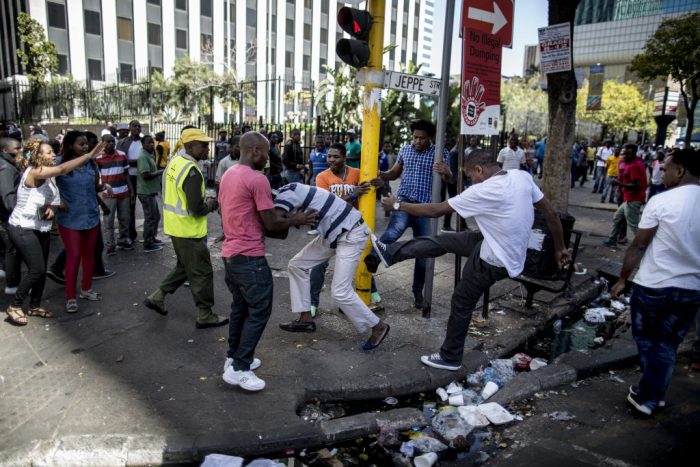
Following a horrific attack on foreigners by criminals, the Nigeria Union South Africa (NUSA) confirmed the death of another Nigerian, Nicholas John, in South Africa on Thursday.

Mr. Collins Mgbo, the President of NUSA, disclosed John’s death in a statement to NAN on Thursday.

On February 12, a mob allegedly attacked John, an Ogun State native, at his shop in Kimberly, Northern Cape, South Africa.

Many young Nigerians who immigrated to South Africa to find work have continued to perish.

According to NAN, at least 128 Nigerians have been slain in the erstwhile Rainbow Nation since the beginning of 2019.

On December 12, 2021, a man named Olusola Solarin died after hoodlums attacked him and stole his money.

Mgbo revealed that John’s South African wife had just been married for three months.

On the circumstances surrounding Nicholas’ death on Tuesday, the NUSA president stated that a South African gang assaulted him on February 11 for allegedly purchasing a stolen laptop.

Fuel scarcity worsens in Kaduna

By Sumayyah Auwal Usman

The worsening fuel scarcity that hit Kaduna State has forced several motorists to abandon their vehicles in queues at many filling stations when petrol was not available to go back home.

The Daily Reality visited some filling stations and observed that long queues have risen exponentially. Motorists were seen in the early hours, precisely, 6.30 am, queueing at Mobil Fuel Station, Independence Way, Kaduna, where PMS was dispensed via only one nozzle point with four orders inactive.

Also, at the filling stations on Constitution Road, Ali Akilu Road, Yakowa Way, among others, fuel attendants were seen turning back motorists.

The development came almost one week after the import of millions of dirty PMS from Europe into Nigeria disrupted the fuel supply system of the country, leading to long queues nationwide. The situation has resulted in total confusion and long lines of vehicles at various filling stations in the metropolis.