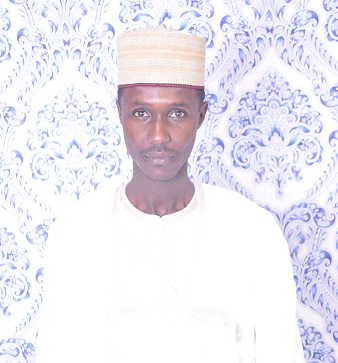
By Ismail Hashim Abubakar
A few days ago, while at our university campus here in Rabat, I heard shouts outside the premises resembling a public demonstration – something quite unusual and often carried out orderly in Morocco, without the slightest chance of being hijacked by hoodlums. I could not understand what people were saying because they spoke in Darija, the local, broken Arabic dialect spoken colloquially in Morocco. I tend to pick some sentences in normal circumstances, especially when spoken to me directly.
So, I asked my Moroccan friend what was going on, and he answered that people were chanting pro-Palestinian songs and shouting anti-Israeli slogans. I found that interesting given the special place of Jews in Morocco, who, according to Aomar Boum, the author of Memories of Absence: How Muslims Remember Jews in Morocco (and translated into Arabic as “Yahud al-Maghrib wa Hadith al-Dhakirah” by Khalid Saghir) used to number more than 200, 000 before the creation of Israel and up tp around 1950s, but in post-independence Morocco, their number slashed to less than 5000, as they engaged in gradual exodus to their newfound state. But I noticed that the small protest was officially unwelcome when suddenly security guards of the university closed its gates and prevented the intrusion of protesters, who were mostly, if not entirely, students of the university. I would only come to know the exact cause of the protest a few minutes later when, together with my Moroccan friend, we were encouraged and directed by some officials of the university to follow a way that led us to one beautified public lecture hall to participate in a conference, about which we were neither aware nor essentially prepared to attend.
I went straight to the front row in the hall and found a seat where I could watch and listen with much attention, while my friend preferred to sit at the back. It quickly dawned on me that the conference themed “al-Diyanat al-Samawiyah Hamilat Risalat al-Salam” (Heavenly Religions Carrying the Message of Peace) was, besides, a few delegates from a Moroccan council of Islamic knowledge, hosting the Archbishop of Rabat, Cardinal Cristobal Lopez Romero and a Jewish Rabbi, Rabbin Mardekhai Chriqui, coming all the way from Jerusalem.
I started enjoying the proceeding when the MC made her introduction in Arabic and coalesced it with the famous verse of Surat al-Hujurat upholding the spirit of humanity and emphasizing racial and ethnic diversity as a distinct human property. And I did not bother much when she switched to French, which I assumed was the translation of what she said in Arabic, though I do not understand. When I looked at my phone, as the audience awaited the Jewish speaker to take over the stage, I just clicked on my WhatsApp and saw my friend’s message, telling me that he had gone out and we might meet in the mosque. I would have also gone out, but I was lured to stay to listen to the heavily bearded Israeli Rabbi, perhaps because that was my first time to see a real, self-identifying Jew physically and, in fact, a religious authority for that matter. When the man took over the podium, he spoke briefly in Darija, which I luckily understood as he minced his words slowly as if lamenting that he had to do that before switching to French. In the Darija, the Rabbi just excused that although he spent about 40 years in Morocco, he was not good at Arabic, so he informed his audience that he would prefer to switch to French, which he then did without any ado. At this juncture, I also decided to exit, without knowing if his speech would be interpreted in Arabic or not, and without bothering if too many speakers would speak in Arabic later. (A link to the conference is https://m.youtube.com/watch?v=fY6eoZ6RObA&t=703s).
The most relevant part of this story is that there are indeed initiatives of interfaith dialogue worldwide, and this seems to have come to define interreligious relations among members of heavenly religions. But it is also a fact, as this anecdote demonstrates, that some actors in the interfaith program may be unwelcome, detested or rejected. This is precisely what reminds me to offer my humble thoughts on the current brouhaha about the interfaith issue, which has just become a topic of discussion, at least in northern Nigeria.
Perhaps a few people will disagree that the matter was dragged to the public domain by the removal of Shaykh Nuru Khalid, the chief Imam of the Friday mosque at Apo Legislators’ Quarters, less than two weeks ago. That happened over a sermon he delivered on the collapsing security situation in Nigeria. The Imam would have been hailed as a hero and a champion that deserved accolades by the entire northern Muslims, but for his flirtation with the controversial phenomenon of interfaith. After all, distinguished scholars who have become a sort of religious canons in Nigeria like the late Shaykh Ja’far Mahmud Adam, the late Shaykh Muhammad Auwal Albani Zaria and the few ones alive like Shaykh Bello Yabo, Shaykh Murtala Asada Sokoto, Shaykh Idris Abdulaziz Bauchi and a few others are known to be showing impatience toward any untoward development that affects (affected) the poor Nigerian masses. These scholars have uttered bitter homilies and persistent tirades against governments over neglect of their primary responsibilities, particularly protecting lives and properties. Their prominence and public acceptance are partly glued to their decision to maintain a frugal life, remote from the corridors of power, hence capable of speaking truth to power, no matter whose ox is gored.
Naturally, by siding with the masses, Imam Nuru Khalid, who was psychologically martyred when fired from his job, should have been catapulted to such a prestigious clerical position. But in his case, this was impeded by his affiliation to interfaith organizations, often seen with Christian groups who, it seems, trust him as one of the symbols of moderation and tolerance, which may not be entirely untrue. The attention of the Muslim public was recently attracted by his unpopular view when in the aftermath of Abduljabbar Nasiru Kabara’s blasphemy saga and the ensuing arguments, Nuru Khalid voiced views that did not go well with the majority of enthusiasts, particularly on the shortlived misunderstanding between Prof Ibrahim Maqary and Dr Abdallah Gadon Kaya, two rising scholars in northern Nigeria.
At that time, Nuru Khalid was exposed as an advocate of interfaith, which in Hausa people wrongly render as wahdatul adyan (unification of religions), thanks to the widely circulated clips of Shaykh Albani, which popularized this view and mentioned Nuru Khalid as one of its agents. Hence, when Nuru Khalid was removed from his imam position, many commentators in the North merely clung to his affiliation to the interfaith group to further endorse, celebrate or justify his removal. But the mosque did not cite that as a cause for his sack or regard it as a fundamental problem of the Imam. However, Nuru Khalid’s sudden transformation as a hero in the milieu of Nigerian Christians, some of who might not have known him before, his public revelation about some international groups proposing to finance a mosque project for him and his more open hobnobbing with Christians have further thrown him into disrepute among Muslims, who still sense that this interfaith phenomenon is nothing but attempts to eclipse the teachings of Islam and collapse all religions into one new faith.
Another figure, also seen as a vital organ in the interfaith dialogue program, coincidentally also bearing the name Shaykh Nuru Lemu. Although sounding calm and soft-spoken unlike his namesake, Nura Lemu has taken it up to himself to clear what he thought are misconceptions being circulated about the interfaith dialogue initiative. In an audio clip shared via social media, Nuru Lemu claimed that interfaith is never a new invention nor devoid of a rudimentary religious basis, tracing it to the time of Prophet Muhammad when he designed a pact of peaceful coexistence with Jews as citizens of Madinah, and when he entered into a truce with Quraysh polytheists in the famous treaty that would be known as Hudabiyyah. Nuru could have cited the pre-Islamic treaty known as Hilf al-Fudul, which the Prophet participated in, and pledged to partake in a similar one if a need for that would arise. In fact, Nuru would have cited numerous Quranic verses upholding peaceful coexistence and dialogue between Muslims and members of other faiths, as can be discerned in chapters like Surat Ali-Imran, Surat al-Ma’idah, Surat al-Mumtahanah, etc. Since the second biggest religion after Islam in Nigeria is Christianity, it is interesting to make a case with the verse that says:
“You shall certainly find the Jews and those who associate partners with Allah the most vehement of the people in enmity against those who believe, and you shall certainly find those who say, `We are Christians,’ the nearest in friendship towards those who believe. That is so because there are savants and monks amongst them and because they are not haughty ” [Surat al-Ma’idah verse 82].
Nuru Lemu, who is one of the heads of a mega religious and educational centre in Niger State, a neighbour to Abuja, where his sacked namesake is based, added that the dialogue would also concentrate on intra-Muslim relations. Thus, it will work out ways to dent and lessen the growing discords and animosities among Muslims occasioned by ideological rivalry and sectarian division.
From this viewpoint, it is not hard to convince Muslims that the interfaith issue is a healthy, innocuous mission that Muslims would warmly welcome as a process of living up to the expectation of their scripture and broader Islamic vision.
However, it must be clarified that interfaith dialogue may have a unique interpretation for Christians different from what Muslims may be ready to accept. Muslims do not appear prepared to assimilate the neo-liberal interpretation of Islam in such a way that they would compromise established Islamic values and fundamental teachings. Muslims may fail to implement specific injunctions of Islam based on human weakness, but they will hardly portray them as outmoded, irrelevant and unsuitable for the modern situation.
Christians, for instance, as evinced by the obsession of Mathew Kukah in his anti-Islam columns and public discourses, may conjure that interfaith dialogue would henceforth guarantee them an institutional legitimacy of marrying a Muslim woman, or it may make Muslims feel reluctant in missionary work while they (Christians) continue to win converts either directly by luring pockets of northern animists or through the new atheism phenomenon that trend mainly in the virtual world and cyberspace. Christians may conjecture that Muslim females, especially in Yorubaland, where the controversy keeps erupting, will relinquish their fundamental right of wearing hijab. In fact, many Christians would wrongly assume that interfaith dialogue, when successfully embraced, will encourage Muslims to keep mute on tragic instances befalling their fellows, such as the series of ethno-religious crises that broke out in places like Jos, Tafawa Balewa, Southern Kaduna, Lagos Sagamu, etc.
In retrospect, to what extent are Nigerian Christians ready to accept Prophet Muhammad as God’s apostle just as Muslims uphold Jesus as Prophet as a fundamental condition of being a Muslim, without which one will be outside the fold of Islam? Or at least, are Nigerian Christians ready to reserve some respect for Prophet Muhammad so that they will shun all utterances and actions that may be considered blasphemous, which, needless to say, fuels religious crisis and further strains relations between Muslims and Christians?
Nigerian Muslims would be very willing to uphold peace initiatives. Still, they will be very unlikely to accept any interfaith interpretation that warrants silence and reprisals in situations where their fellows are innocently attacked and persecuted anywhere on Nigerian soil. Muslims will invoke the same scripture which warns them not to ally with their enemies – whoever they might be, which enjoins them not to give in to treachery, which cautions them on prospects of being bamboozled and hoodwinked by their enemies and which reminds them to be prepared for self-defence. Therefore, the interfaith initiative appears to be a neutral concept that can be applied positively or negatively and can be abused or misinterpreted disproportionately. But, clearly, its application goes hand in hand with contexts and real-life experiences.
Ismail wrote from Rabat and can be reached via ismailiiit18@gmail.com.