Nigeria

Police Hijab: Ignore Adegboruwa’s razzmatazz – MURIC

Mr. Ebun-Olu Adegboruwa (SAN) has declared the recently approved hijab by the Nigerian Police as illegal. The legal luminary made the declaration in a public statement issued yesterday, March 5, 2022. However, the Muslim Rights Concern (MURIC) has responded by telling the Nigerian Police to ignore Adegboruwa’s comment.

MURIC spoke on Sunday, March 6, 2022, through its chairman in Akwa Ibom State, Ustadh Jibril Ayu-Akpanim.

The statement reads :

“Mr Ebun-Olu Adegboruwa (SAN) yesterday declared the recently approved hijab by the Nigerian Police as illegal. Of course, we know his antecedents. He has never shown any support for the civil rights struggles of Nigerian Muslims. His opposition to the approval of the hijab in the police force is therefore understandable. Adegboruwa is simply staying in character. Our considered opinion is that the Nigerian Police should ignore his razzmatazz.

“How can a whole SAN oppose a matter of fundamental human rights? It is paradoxical that those who know the law are the ones who adopt prejudice against civil rights matters. Adegboruwa’s vituperation sprang from personal acrobatic religiosity. His articles and comments on the hijab crisis in Kwara and other places symptomize bias, intolerance and pathological hatred for Muslims.

“Is this the same senior lawyer who has been articulate on human rights in Nigeria all these years? We are appalled that he has elected selective justice. It means Adegboruwa’s definition of human rights is exclusive. Muslims must not enjoy human rights. Muslims have no place in his concept of equal rights, freedom and justice. Adegboruwa has exposed himself as a Muslim-hater nulli secundus.

“Adegboruwa should be stripped of his SAN title. A senior lawyer who ignored the tyranny of school principals and teachers who have been persecuting innocent school girls over an ordinary headscarf for decades but jumps up within 24 hours to oppose a window of liberty for them does not deserve the highest decoration in his profession.

“The SAN is asking how Catholics and Anglican women police should dress now that their Muslim colleagues have been allowed to use hijab. He should tell us how catholic and Anglican policewomen dress in Britain, America, Canada, etc. By the way, is Adegoruwa telling us that he has never seen pictures of Mary, the mother of Jesus (peace be upon him)? Has he ever seen Mary without a hijab on her head? Bigotry is indeed an almost incurable disease.

“Adegboruwa should ask catholic and Anglican policewomen to demand their own form of dress code if such a thing exists in real life. He will be surprised to see that Nigerian Muslims will not oppose their demand. Islam condemns pettiness and selfishness. It teaches Muslims to live and let others live. Anyway, Adegboruwa may advise Catholic and Anglican policewomen to dress like Mary, the much-honoured mother of Jesus (peace be upon him).

“Adegboruwa should know that the current uniform of the police satisfies Nigerian Christians because it was designed ab initio by the British colonialists who, essentially, were Christians. That is why Nigerian Christians have never complained about uniforms in schools and security agencies.

“Muslim interest was not taken into consideration by the colonialists when they were designing uniforms for schools and the security agencies. Justice and the need for inclusiveness demand that the design should be reviewed in the post-independence period. That is why even the recent approval must be seen as belated.

“Quarter-finally, has Adegboruwa forgotten the outcome of the hocus pocus created in Osun State when the court approved hijab and the Christian Association of Nigeria (CAN) incited Christian students to wear ridiculous garbs like a church choir, Sango, Oya and masquerade dresses to school? How long did it last? He should go to the state today to see how the female Muslim students shine with their hijab. No matter how fast falsehood runs and for how long, the truth will catch up with it in a single day.

“Semi-finally, we advise Adegboruwa to go to court if he feels so strongly that Muslim female policewomen have no right to use hijab. He may also want to go further by approaching the international court at the Hagues to stop British, American and Canadian policewomen and soldiers from using the same. Islamophobia in the legal profession is not new to us. The Amasa Firdaus matter on our minds. The learned silk may do well to consult his colleagues at the highly esteemed Council of Legal Education and the Body of Benchers before plunging into his prejudiced, ill-advised, ill-fated and anti-Muslim adventure.

“Finally, we congratulate all female Muslim policewomen in Nigeria on their newly won freedom. Nigerians have seen many of them on the streets wearing the hijab with their uniform in the past few days. They look awesome, fantabulous, fantasmagoric and fantaslamic. We urge them to continue using it. Without a court pronouncement, no lawyer from anywhere can force them to remove it. Not even a SAN.”

Nigeria drops to sixth position in Global Terrorism Index

By Muhammad Sabiu

Nigeria is now ranked sixth in the Global Terrorism Index, as the country’s struggle against Boko Haram insurgents gains more victories.

According to the report, Nigeria fell two spots from fourth place, which it had held since 2017.

Nigeria, Syria, and Somalia are the only countries among the ten countries most hit by terrorism to increase their scores from 2020 to 2021, according to the Global Terrorism Index (GTI) issued by the Institute for Economics and Peace (IEP), an independent and non-profit think tank.

The report reads, “Total deaths from terrorism in Nigeria fell to 448 in 2021, the lowest level since 2011. Terror-related casualties dropped by almost half compared with the previous year.

“However, the number of terrorist attacks increased by 49 per cent between 2020 and 2021. 36 per cent of attacks were claimed by ISWAP, Boko Haram being responsible for eight percent and 44 percent not attributed to any group.”

Nigeria sets to evacuate citizens from Ukraine

By Ahmad Deedat Zakari.

President Muhammadu Buhari has approved $8.5m dollars for the evacuation of Nigerians stranded in Ukraine.

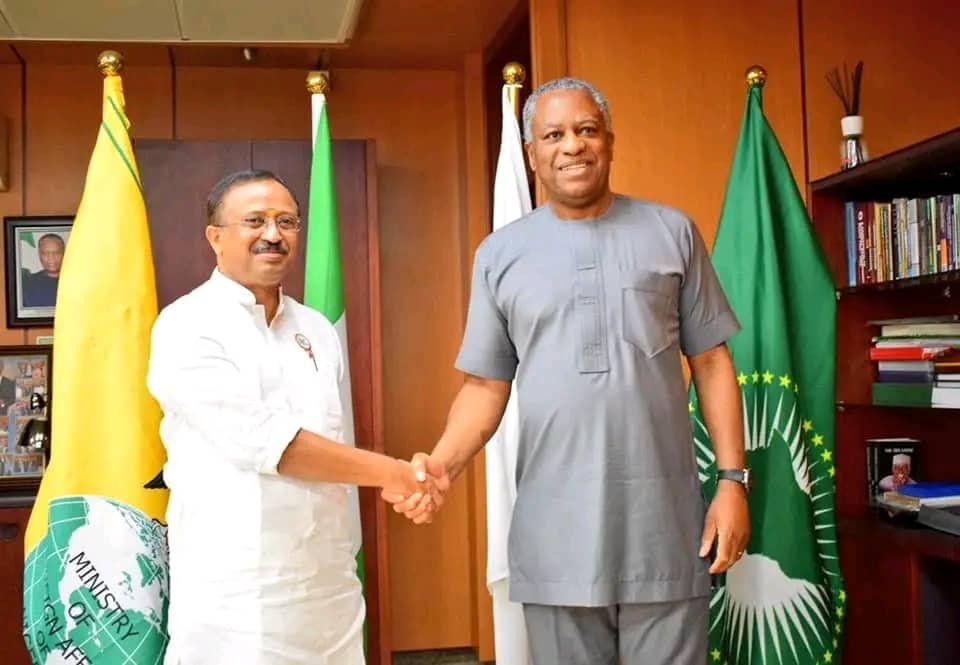
This was disclosed by the Minister of State for Foreign affairs, Zubairu Dada on Wednesday, March 2 shortly after the weekly Federal Executive Council (FEC) meeting presided over by the Vice President, Professor Yemi Osibanjo at the Council Chambers of the Presidential Villa, Abuja.

Addressing State House correspondents after the meeting, he said the president approved $8.5 million for the evacuation exercise.

” The Ministry of Humanitarian Affairs wrote a memo to the president seeking funding to enable us conduct this exercise. The memo was to the tune of $8.5 million which Mr President has graciously approved. That Provision entails an arrangement to evacuate no less than 5,000 Nigerians” he said.

According to him, the pickup flights would be headed to four countries, which are : Poland, Hungary, Slovakia and Romania.

Nigeria’s abuse of creativity and intellectuality

By Sabo Ibrahim Hassan

The seemingly endless abuse of creativity and intellectuality in Nigeria is exponentially becoming pervasive. Perhaps this is one of the primary reasons we are yet to be promoted from the developing class to developed countries. Aside from other countless resources Nigeria is blessed with, humans’ can never be overemphasized. I am not more concerned about the figure; I am rather concerned about the productive aspect of the figure, capable of portraying our competing capacity as a nation.

An endowed nation like Nigeria should not have been where it is if things were managed appropriately. We are so blessed that an average Nigerian can do the unbelievable in terms of intellectual display. Still, because of our disregard for this special gift and lack of governmental support, we ended up losing our best brains to other countries.

Creativity means the use of imagination or original ideas to create something. On the other hand, intellectuality refers to the state or quality of being intellectual, whereas, according to Wikipedia, an intellectual is a person who engages in critical thinking, research, and reflection about the reality of society, and who proposes solutions for the normative problems of society. Only a head with no brain will argue how endowed my country is in this regard. In fact, it is not hyperbolic that an average Nigerian comparatively performs excellently.

Apart from the regrettable failure of the country to identify and tap from the potentials of its citizens, the way our leaders abandon several talented Nigerians is quite irksome. Take, for instance, the report of a boy by Channels TV, who built Nigeria’s first locally-made drone. Another young Nigerian made an electric transformer, another young man from Delta invented a mini flying aircraft without a school degree. Another report is of another young Nigerian by CCT, who built an electric-powered car.

Additionally, a 16-year-old Nigerian who converted his bicycle to a motorcycle as reported by the BBC, will not be left untold. These and many other examples will prove how blessed this nation is with brains. But, does the government empower and support these talents? I will leave this as an open question. Where are these innovative young guys? Don’t be surprised to hear that they are in their various communities wrapped by idleness since the government has no spirit of willingness, let alone be ready to support and promote them.

Another perspective on how the country abuses creativity and intellectuality is how countless dreams have been shattered by our unfavorable, challenging, and careless education system. Many graduates are not the very products of what they aspired to be. On the contrary, the system forced most Nigerians to study what they had never dreamt of or desired. This, in turn, has drastically affected our productivity, where many passionless and zestless graduates are continually added to the already super-saturated labour market.

For instance, ask many graduates about their initial dreams and listen to the wonders that will flow out of their hearts. The issue of requirements regarding a course of choice is an imperative factor contributing to this effect. But, notwithstanding, since our country is not the only nation with a requirements policy. Think about the creativity and enthusiasm of a person whose dream has been shattered.

Elsewhere around the world, custodians are working relentlessly to identify where the talent of its individuals lies, provide them with everything necessary and force their spirit to go along the most appropriate direction. The story is sadly different in my country. If we had utilized our manpower judiciously by doing all necessary to keep them, Nigeria would not have been the giant of Africa nominally, nor would it have been a superpower without power.

More lamentably is how Nigerian medical doctors keep increasing the workforce of countries such as the UK, USA, Canada and many more. Moreover, they are found to be among the best brains over there. The ‘Women and Men report 2021’ by the National Bureau of Statistics revealed that 39,912 doctors were available in Nigeria as of 2017. The number of doctors increased to 44,021 in 2018. But this number reduced drastically to 24,640 in 2019. Again, the president of the Nigerian medical association, Dr Francis Faduyile, also noted that the high rate of insecurity, unemployment, low remuneration, bad roads, and poor healthcare system are some of the reasons doctors are leaving the country in search of greener pastures. He noted that 75,000 Nigerian doctors were registered with the Nigerian Medical Association (NMA), but over 33,000 have left the country.  

It is needless to dwell on the causes of the emigration of these intellectuals. I will instead concentrate on the effects of this negligence and unwillingness by the government to support these brains through providing a healthy environment empowered with cutting-edge technology have on our development as a nation. For instance, a research report by the World Bank revealed that in the Human Capital Index, Nigeria ranks 150 out of 157 countries in the year 2020. Moreover, income inequality and disparity in economic opportunities remain high and have consequently affected the government’s efforts on poverty reduction.

Where on earth will a country that is blessed like mine will remain where my country is? Therefore, we need to stop this dragging attitude. It’s even mandatory if the country is seriously serious about its development. Until our government and other authorities do their work well, we will keep going irreversibly directionless.

Sabo Ibrahim Hassan sent this article via Ibrahimsabohaassan60@gmail.com.

ASUU Strike: Students protest in Kano, other cities

By Uzair Adam Imam

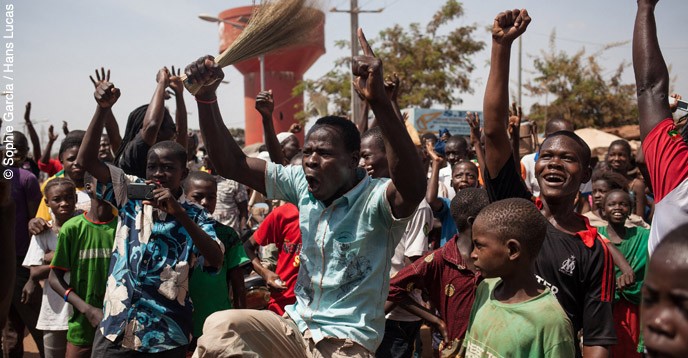
The National Association of Nigerian Students (NANS) has stormed Kano State roads to protest against the ongoing nationwide strike by the Academic Staff Union of Universities (ASUU).

The association that has frowned upon the incessant strike in the country is protesting to tell the world the situation they are facing in the country regarding their education.

The students who converged on the Kofar Nassarawa bridge in Kano City decried over delays in academics.

Singing solidarity songs against ASUU’s action with their hands clinking placards, the students said the menacing issue of the strike should by now be put to an end.

They also called on the federal government to intervene and call off the strike.

Recall that the Vice President of the Union, Comrade Yazid Tanko Muhammad, disclosed their intention to protest on Monday.

Comrade Yazid added, “So, it is a protest which, if we start, will not stop until the issues are resolved, and the lecturers resume work.

Character and strategy: The nutritive requirements for Nigerian leadership

By Mubarak Shu’aibu Hardawa

Nigeria is on borrowed time at the moment and not just because of an awful leadership it is experiencing, but for having that ‘onerous’ task of finding the marquee leader that would be her saviour. This arduous mission has become inevitable after many years of failed attempts that defied belief, much less explanation.

The leadership problems in Nigeria are structural and systematic, while the crisis at hand is long-lasting and accelerating. The system has become so overwhelmed by anger and frustrations that even the most basic task of any government, which is securing the lives of its citizens, is becoming increasingly impossible.

While good leadership is essential – especially in a country the size of Nigeria- the anticipation, grit, and determination to inspire the citizens to be there, unfortunately, that looks like a distant hope. Despite the arrays of potentials and the abundance of resources, which, if properly harnessed, would transform Nigeria into an unmatchable place, this runs contrary to reality. The result obtained is a satiric giggle. The reason may not be unconnected to the fact that our leadership group lack the requisite qualities to take Nigeria to a greater level of ceaseless progress and prosperity.

To put it simply, Nigeria has the capacity and nous to be as rich as the United Arab Emirates. Still, due to its poor choice of leaders, it is now as filthy as pigsty moving on India in the pecking order of countries with the highest number of citizens living in extreme poverty. This situation is avoidable. How? By not allowing ethnicity, religion, region and party affiliation to cloud our judgment when choosing the right leader.  

Thus, by eschewing leaders of a good character, grand ideas and strategy, we are restricted only to a bunch of clowns whose leadership style cannot inspire even a cheap hope in anyone. And what is obtainable from such leaders is a failure that we are now seeing as it has metamorphosed to a greater extent that most Nigerians no longer have faith in the government. 

As it is now, it will only take the starriest eyed optimist to make a case for believing in Nigeria at the moment. The dailiness of wanton killings, kidnapping, stealing of public funds, the meteoric rise in poverty index, corruption, and so on say everything about the kind of leaders Nigeria has. With what is obtained today, Nostradamus himself will hesitate to bet that wrecked Nigeria will be great in the near future. (I’m optimistic, though! As optimism oils the wheels of everyday living.) But such a level of demoralisation and crestfallen require a strong antidote whose composition is character and strategy combined to turn things around.

Since the return of democracy in 1999 to date, those touted with the leadership of this country come with asterisks—either of corruption, poor economic management, health challenges, ethnicity, ageing, nepotism, etcetera. Although there were numerous pros with President Yar’adua’s short shelf-life, the hopes were soon taken away by the inevitable finality which laid him and his famous anthem of “7 Points Agenda” to rest. The rest doesn’t have much to write home about.

The point where Nigeria looked set to hit the proper course was in 2015 when President Buhari came with his ‘Change’ mantra, but that ultimately goes to show that he is not the finished article based on his sheer lack of strategy. This imbalance left Nigeria without a vertebra in her spine for a couple of years. Although we had the chance to change the narratives in the 2019 election, with character (Buhari) coming up against strategy (Atiku Abubakar), Nigerians failed to the wisdom in the saying “A leopard never changes its spot” thus persisted with Buhari thinking that things will change in the second term. The majority of Nigerians at that material time held the view that his character, which fetched him the public appraisal of “Mai Gaskiya”, would wave wands and make things magically better. A dogma that is fruitless at best and hazardous at worst.

Some Nigerians even went vigorously beyond delimitation and common sense, arguing that Atiku was plotting to sell Nigeria (NNPC). While some purported that President of the Senate Bukola Saraki, Speaker House of Reps Yakubu Dogara, Senator Dino Melaye and co are the saboteurs of Buhari’s government in the NASS and must therefore be cleared off the deck to allow Buhari an enabling environment. These are publicly sold opinions and thus became very hard to change even when most of the evidence suggests that they should.

This premature decision under predicated conditions of illusionary belief backfired heavily as his weakness for lack of strategy has been laid bare even in the second term, with Nigerians paying the premium price to date.

Today’s Nigeria is unrecognisable from halcyon days, and her golden generation passes. However, some ethos is sacrosanct, such as having the leadership group to look up to, such as Tafawa Balewa, Dr Nmandi Azikiwe and Ahmadu Bello (the Sardauna of Sokoto). Even without the crude oil, they left Nigerians every reason to be optimists. That was a sheer display of character and strategy.

While you would hope to see a similar Nigeria sooner rather than later, the choice to be made should be factored into character and strategy. Nigeria is in a store for hectic decisions to make. However, the cold, hard reality is that Nigeria, like never before, needs a leader whose character will help unify the country through healing, dialogues and not by polarising the recent past. 

A strategic leader will find a way to midwife the return of peace to Nigeria, grow and maintain our economy, asphyxiate corruption, fix our education to be able to stand on our own, and cut down the unnecessary government expenditure all the recklessness we are known for. Meanwhile, a character will help that leader follow the right path in seeing through the above tasks.  All these sound plausible, right? Theoretically, it does. However, in reality, given the constraints of apparent options, debates were ignited on whether we could find such a man in our political arena (that’s a pulsating debate!). 

Nigerians must challenge and X-ray anyone who throws his hat in the ring to avoid falling foul of past mistakes. 

Finally, I insist on a person who embodies these invaluable assets (character & strategy). We hope our leaders and Nigeria itself are going to be alright! And reeling out the rationale for pitching tent behind such a person, Prof Zulum of Borno will suffice.

Mubarak Shu’aibu Hardawa wrote from Bauchi State via naisabur83@gmail.com.

Ukraine-Russia crisis: What should Nigeria do?

By Salisu Uba Kofar-Wambai

Nigeria’s foreign policy of nonalignment is on the right track. Thus, I commend how we keep mute and only call for peace in this ongoing face-off and altercation between Ukraine (backed by Western powers) and almighty Russia under President Putin.

Nevertheless, any attempt to side with one of the warring parties can be a big blow to the international relations prowess we have been displaying over decades. History had it that Russia supported Nigeria during the Biafra civil war. Reportedly, Malam Aminu Kano served as a bridge and intermediary embodiment between the Nigerian government and Russia in arms purchase, which positively impacted winning that war.

Aminu Kano’s Communist stance captivated Russia. Therefore, he successfully had that bilateral thing with them. It was a critical moment for Nigeria when France was solidly behind Biafrans.

However, even our much-talked-about project expected to shoot Nigeria into the league of technologically oriented countries – Ajakuota Steel project – was Russian technology. As a result, many of our technocrats were and continue to be trained in Russia.

Despite the shift in our foreign policy from the East to the West and now to Asia, Russia still maintains fantastic and fine bilateral relations with Nigeria. So supporting Ukraine to please Western powers will not do us better.

We better keep to our callings for peace and leverage primarily on this soaring of oil prices in the international oil market, evacuate Nigerians caught up there. We shall continue to run with the hare and hunt with the hounds.

Salisu Kofar-Wambai wrote from Kano. He can be reached via salisunews@gmail.com.

Buhari signs Electoral Amendment Bill into law

By Ahmad Deedat Zakari

President Muhammadu Buhari on Friday, February 25, signed the Electoral Amendment Bill into law.

The President signed the Bill at the Presidential Villa on Friday in the presence of the Vice-President, Professor Yemi Osinbajo; President of the Senate, Ahmad Lawan; Speaker of the House of Representatives, Femi Gbajabiamila and others.

In the president’s address, he said, in line with traditions, he received input from different ministries and relevant departments and agencies of government after thorough reviews of the bill and the implications it will have on democratic processes in Nigeria.

He said, “It is gratifying to note that the current Bill comes with great deal of improvement from the previous Electoral Bill 2021. There are salient and praiseworthy provisions that could positively revolutionize election in Nigeria through the introduction of new technological innovations. These innovations would guarantee the constitutional rights of citizens to vote and do so effectively”

Many political commentators have argued that the new law will define the incoming general election in diverse ways.

Nigeria’s border closure and its socio-economic hangover

By Salisu Yusuf

Since August 2019, when Nigeria decided to close its border with neighbouring Benin, Cameroon, Chad and Niger, the Nigeria-Niger border has become a boundary for smuggling of especially arms and massive adornment of corruption. Officials of the Federal Government have turned the borderline into a business venture where collecting and giving unearned rewards are the order of the day.

A haulier recently told me that from Maigatari (in Jigawa State), Babban Mutum and Kongolam (in Katsina), there are no fewer than 30 border outposts where officers wave down passing motorists to collect kickbacks. This has resulted in creating more alternate routes where hauliers circumvent border posts.

To fully understand the level of corruption in our border guards, go to the length and width of the borderline between, say, Daura and Babban Mutum. You will easily see bits of laterite earth inlets going north, where these illegal hauliers transport goods in cars and trucks to avoid sandy earth on their way to Magaria in the Niger Republic.

In the midst of this, the new Nigeriene President, Bazoum Mohammed, introduced a free trade route-policy for the teeming youth. Formerly, Niger operated a protectionist economic policy under former President Tandja Muhammadu. Then, importing goods, especially petroleum products, was prohibited, and culprits were duly punished under strict laws. But, don’t forget that Niger, like its counterpart, also exports petroleum products.

Mr Bazoum, I think, implements his free trade policy, where youth are allowed to import goods from Nigeria due mainly to socio-political issues in the neighbouring countries; the raging civil war in Libya and insurgency in Nigeria and Mali. The President wants crime-free youth. Moreover, issues surrounding his election. He was labelled a Western stooge before his election. His policy might have changed that perception.

The free trade policy has given thousands of youth free access to illegally enter Nigeria, buy these products at a subsidized price as we buy, and export them on motorbikes to sell at a higher price. It’s indeed a gain. 

You see them in our filling stations with jerricans queuing for the products daily. The spectre from the filling station to their convoy with a load of jerricans inside huge sacks, their high-velocity speed is so chaotic. They create a scene. Cases of collisions among motorcyclists, knocking down passersby, especially children, result in massive injuries and deaths. Wàllahi, there’s nothing like a border in those areas, only passages!

In addition, daily cases of traversing over the people’s farmlands by these marauding smugglers (because they don’t tread normal paths) pose a threat to possible tillage erosion. Their constant comings and goings leave no hope for agricultural sustainability. 

Recently, smuggling has reached another dimension. Gendarmes in Niger have apprehended smugglers with huge caches of armaments trying to cross the border. Villagers discovered a cache of arms near Daɗin Sarki in Niger. Those who had kept the cache were possibly waiting for the cover of night to take it into Nigeria – a dumping ground for every malfeasance.

The clip of the arms is still viral on the WhatsApp application. Now I retrospectively see sense in former President Trump’s border wall with Mexico in order to evade criminals. Likewise, it’s high time Nigeria erected a border wall with Niger because their leaders, like their French counterparts, stocked in an international conspiracy, are after their country’s survival than the stability of Nigeria.

 Nigeria misses millions of Naira in revenue from closing its borders and the hauliers’ ploys. When you tell the government this sad reality, some government economic mouthpieces put forward classroom economic theories to defend their economic policies. To understand this point, visit an excise office in the outskirts of Magaria in the Niger Republic and see lines of cars and trucks with loads of Nigerian goods. You will swear they all pass through the sky – alas, they pass through alternate routes that are discovered and explored by Nigeriene motorists and their local guides after the border closure.

The recent surge in kidnappings in Gumel and Suletankarkar in Jigawa State is a pointer to a grim future. However, there’s more to this border issue than meets the eye. It’s high time authorities in Nigeria nipped it in the bud before the Nigeria-Niger border becomes a threat not only to Nigeria but Africa. May we see a better Nigeria.

Salisu Yusuf wrote from Katsina via salisuyusuf111@gmail.com.

A whirlwind of change

By Lawi Auwal Yusuf

So great are the expectations. Some people believe it to be long overdue, and others are immensely surprised. But, to those who understand, the Infallible Saints Party (as they call themselves) and its government are much to be anticipated. Probably, it seems like coming with strong whims of making a revolution.  

Is it a one change whirl like that championed by the ANC in South Africa under its propellant, Nelson Mandela? Or the CCP in China contrived by its mastermind, Mao Zedong or the PAP in Singapore with the engineering of its leading figure, Lee Kuan Yew? But, as the change charlatans are about to leave office, people have realized that their revolution is nothing but a trick, deception and betrayal. Thus, the malignant political parties of old crooks and the treacherous ISP of the self-righteous saints are but the two sides of a coin. 

As the stormy wind of politics swept across the country in 2015, people were in a dilemma because the incumbent party had taken the nation to the verge of absolute rot. Hence, it was necessary for a vibrant new captain to take over so as to save the capsizing ship on the muddy, turbulent and already disturbed ocean. ISP and its leading forces, the messiah, who promised a miraculous change, were our last hope for survival. Therefore, we undoubtedly reposed the trust, firmly believing that the mess would be cleared once and for all, come what may. 

For over a decade, people sacrificed their wealth, resources and lives for the success of the so-called “jagoran talakawa” (masses emancipator). Today, what is the gain earned? An excoriating economic hardship, an avoidable but seemingly inevitable mass killings and abductions. Sadly, he campaigned unwaveringly for the big office for more than a decade. However, he practically lacks any blueprint for the motherland’s development. 

They violated the faithful confidence and trust of compatriots for personal gain. It was a deliberate and calculated disregard for trust and faith, failing to understand that change requires tireless efforts, sacrifice and effective policies. 

Contrarily, the head of the government remains aloof. As a result, the government’s obsolete and unrealistic policies aggravate the people’s misery. They make life worse, more challenging and make the poor poorer. Moreover, they deepen the crises rather than resolve them. 

ISP has assured people that they are the masters of ineptitude and mediocrity by engaging dirty incapacitated politicians to do the job. This is why they are making the project uglier than ever before. 

The sanctimonious Mai Gaskiya (The Truthful One) and the die-hard cohorts of the ISP boastfully brag that the administration performs better than the preceding regimes since the inception of democracy. This is a gaffe and a baseless argument to fool the psych of those who are gullible. If the ISP believes this to be true, it’s a self-guile at its most deceitful form. This evidently shows that they are only specialized in the game of political wangling and finagling. Indeed, this is the worst government in the history of the modern motherland. And expecting them to do better is like kicking a dead horse.

On account of this, people are in deep regret as frustration is boldly written on their faces. This is the worst decision and mistake they have ever made. Consequently, they have fallen from the frying pan into the fire. 

At last,  they will leave next year as ones who promised a better life but made it more grievous. Those that vowed for a quintessential change instead come with an illusionary one. They can not save innocent souls being murdered in cold blood daily, ones who couldn’t save us from woes. Those saviours have turned into disappointment.  

Lawi Auwal Yusuf wrote from Kano, Nigeria, via laymaikanawa@gmail.com.