Nigeria

Nigeria lost $1.5bn to oil theft in 3 months – NNPC GMD

By Farid Suleiman

The Group Managing Director of the Nigerian National Petroleum Corporation (NNPC), Mele Kyari, has revealed that from January to date, Nigeria has lost a total of N623BN worth of crude oil to the activities of oil vandals and operators of illegal refineries.

Reports indicate that the GMD  made the revelation when he appeared before the House of Representative committee on petroleum (upstream) that invited him to ascertain the cause of Nigeria’s low crude oil output.

Kyari said oil thieves steal an average of 250,000 barrels per day. This situation has limited Nigeria’s crude oil output to only 1.49 million barrels per day, against its OPEC quota of 1.753 million barrels per day.

“What is going on has nothing to do with the PIA. It is purely an act of thieves; acts of vandals which have rendered the industry unworkable and taken us to the level where today, our production is around 1.49 million barrels per day.”

“When you lose about 200,000 barrels per day, even at an average price of 65 dollars per barrel, we lost close to 1 billion dollars between January and March. 

“From January to date, we lost an average of 250,000 barrels per day, and at the current price of about 100 dollars to the barrel, even within this short period, we have lost close to 1.5 billion dollars.

“This situation deteriorated to the extent that by March 7, 2022, it came to zero, and so, we shut down the line and declared force majeure. Even on our most reliable pipeline, which is the Forcados pipeline, we still lose about 7000 barrels per day. Needless to say that this is all coming as a result of the acts of vandals and oil thieves,” he said.

However, the GMB assured the lawmakers that massive joint security operations among agencies were ongoing to address the situation.

Nation-building involves the combined efforts of everyone

By Aliyu Muhammad Aliyu

Nation-building and community development require the involvement of all stakeholders from all walks of life. The fairs of knowledge and experience from the elderly and zeal and energy from the youth are necessary to achieve any goal. The two categories of patriotic citizens have one thing in common: their and dear ones’ future.

The elderly used to be like the youth with all sorts of dreams, but through experience, they experimented in life to differentiate between what worked from unrealistic emotions. They belong to and master the second industrial revolution powered by crude oil, which replaced the first industrial revolution powered by coal, and is still relevant although in its twilight. Their presence is necessary for effective policy implementation since we did not yet change much. Their generation is still relevant, especially for guiding and checking the excesses of what their youth counterpart would bring with the hope to be realized.

Likewise, the youths’ presence is necessary because of their eagerness to see their world as a better place to enjoy as it used to be for the elderly, having had enough stories of the good old days they never witnessed and long for. Moreover, they are the masters of the third industrial revolution of renewable energy and data the world is turning towards. Therefore, they should be mainly involved in the legislation of all policies because they generally see the future more vividly and better.

To think of getting rid of the elderly and replacing them with the youth is very dangerous. Youth never made it alone in history. An example of young leaders like Alexander the Great shouldn’t delude anyone. At his time, life expectancy was about thirty-five years. Leading at around thirty years of age meant that he was in the category of elderly persons with the required experience of his time to govern.

Unpatriotic elderly leaders, despite what the nation did for them, were ungrateful. They destroyed its future leaders by denying them the basics of what it takes to be productive citizens by looting and amassing wealth allocated for their descendants that could not exhaust under regular human consumption. Despite that, they act like parasites, harming the nation in a way it will remain in existence for them to continue milking, probably due to their tactical foresight and limited exposure to globalization.

On the other hand, young people have great energy, hopes and dreams, exposure and highest order hedonists and showy. Power in the hand of those with such potentiality without orientation will undoubtedly be catastrophic that will probably bring an end to the great home of black man, just like how virulent pathogens destroy. Moreover, they might squander the whole treasury on exorbitant trademarks of designer clothes, cars, mobile phones, hotels and girls for their pleasure. Therefore, we must avoid both for the betterment of the country.

Division of labour is as necessary for success as the involvement of the two categories of patriotic citizens in good leadership. Of course, a certain amount of all the categories should be present everywhere. Still, more youth should be in designing policies that will tie the present for the future prospects while more elderly should be in supervision of their feasibility and regulation and ensure their effective implementation.                  

Aliyu Muhammad Aliyu wrote from Kano via amabaffa@yahoo.com.

Worsening Insecurity: Our lives latter 

By Najeeb Maigatari 

The recent attack on travellers along the Abuja-Kaduna road is shocking. The fact that those ‘terrorists’ could now detonate explosives before killing and kidnapping innocent people is damming and quite alarming. It says a lot about our security system. 

It also sends a clear message to everyone that no one is safe. We are all in this mess together; the ordinary people and the ‘elites’ alike. No transportation system is secure in the country. One could now be attacked when travelling by road, railway or even by air. 

The unfortunate train attack is not the first of its kind- and will seemingly not be the last unless the needful is done. The only difference is that this time around, unlike other attacks before, the ‘terrorists’ appear well-armed, more audacious with the hunger to kill, which shows their daunting strength. 

Those terrorists have been attacking villages and killing people, especially in the northern part of the country, where such attacks have become the order of the day. They have established themselves as an authority with several villages under their control. Some of their brutal attacks and heinous crimes are underreported in the news media. 

According to the Nigeria Security Tracker (NST), in a report published from January to February, at least 1761 people lost their lives across the country in incidents related to insecurity and protracted armed violence. 

Under our noses, our beloved country, once a nation of peace and tranquillity, is gradually turning into the likes of Somalia, Libya, and Afghanistan or worse; today’s Nigeria has become a slaughterhouse, and its citizens turned into walking corpses. 

Even worse, most of those killed are people trying to make a living for themselves and their families. People are killed in their homes, offices, markets, on roads, and virtually everywhere. It’s practically killings everywhere at every turn under every circumstance. 

It suffices to conclude at the moment that there’s seemingly the creation of ‘a state within another’. On the one hand, there’s almighty sovereign Nigeria – that continually fails to protect its citizens – and on the other hand, the hypothetical terror nation ruled by such terrorists as Boko Haram, bandits, kidnappers and the likes. 

The government is evidently failing – woefully so – in its fundamental responsibility of securing the lives of citizens, as they swore to do before taking over from the previous administration. 

Therefore all hands must now be on deck to nip in the bud this issue that threatens our existence irrespective of gender, ethnicity, religious or political affiliations. 

To begin with, the government should be bold enough to fish out and address the ultimate cause of all these crises, such as answer the question as to the genesis of the terror groups, their sponsors, financial channels, sources of arms and weaponry, contacts in the community, etc. 

In addition, such factors that tend to inflame the situation as poverty, social injustice, illiteracy, etc., should also be proactively addressed by devising measures to assuage people’s suffering and displeasure. 

Furthermore, the security forces should be well equipped with state-of-the-art weapons to take the war to the terrorists’ camp. They should also engage the public as people. If people can get trained, they can be utilized for intelligence gathering, informant tracing, reporting suspicious activities, etcetera. 

In conclusion, the people should also cooperate and work hand-in-hand with security forces and other relevant government agencies in every way legally possible in order to curtail the worsening insecurity crisis ravaging the country once and for all. 

Our lives must matter as long as we continue to call this our homeland. We should not allow those ‘terrorists’ to take over our homes and rule our lives in perpetual fear. If those in authority cannot secure our lives, they should honourably step aside and let competent individuals take over the helm of affairs in the country. Enough is enough! 

Najeeb Maigatari writes from Jigawa State and could be reached via maigatari313@gmail.com.

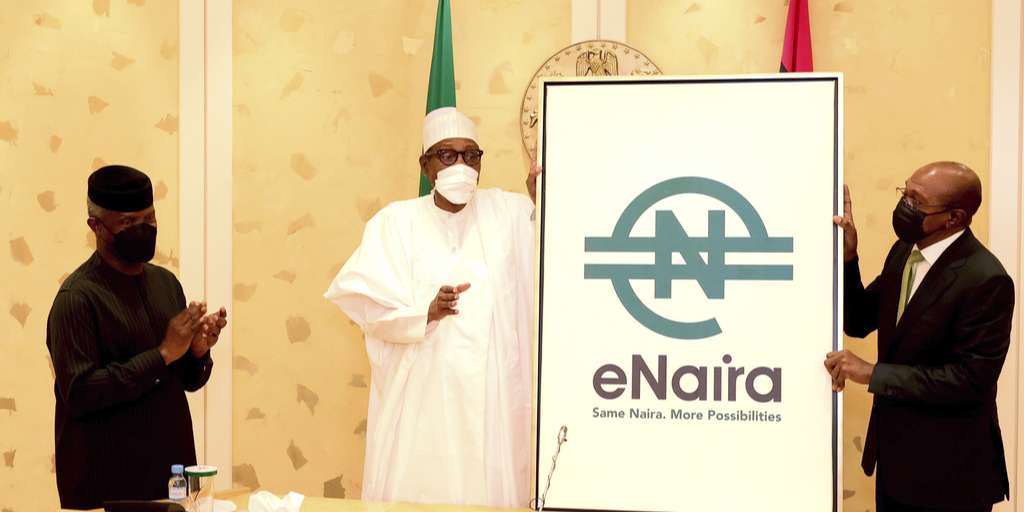
CBN vows to punish banks over deposit of mutilated naira notes

By Ahmad Deedat Zakari

The Central Bank of Nigeria, CBN, has announced a plan to punish banks for depositing mutilated naira notes. 

This was made known to the public in Abuja through a circular signed by CBN’s Director of Currency Operations, Mr Ahmed Umar, over the weekend.

According to Mr Umar, the warning to the banks to stop depositing mutilated and composed banknotes will take effect from Friday, April 1, 2022.

“The management of the CBN observed with concern the increase in the number of composed banknotes deposited by DMBs and request for replacement of such banknotes by members of the public.

“The existence of composed banknotes in the economy falsifies the true value of currency in circulation, and can also be avenue for fraudulent activities.

Consequently, any composed banknote discovered in the deposit of DMBs shall attract penalty of 400 per cent of the value,” The circular reads.

Composed banknotes or mutilated Naira notes usually comprise several parts of different banknotes of the same denomination.

Drivers: Insecurity is killing our business

By Uzair Adam Imam 

Drivers in Nigeria decried the current security challenges bedevilling particularly the northwestern part of the country, saying the situation is gradually killing their business.

The Daily Reality report that bandits activity has claimed thousands of lives, destroyed property worth millions of naira and sacked many villages.

Some analysts believe that the incessant security challenges are politically motivated.

The recent Abuja-Kaduna train attack is one of many bloody attacks by bandits that forced the citizens to remain deeply pessimistic, not to mention commercial drivers plying roads in the restive region.

Our correspondent gathered that those abducted during the infamous train attack were taken to nearby bushes by the notorious, heartless bandits. 

Twenty-four hours later, bandits blocked the Kaduna-Abuja highway and abducted dozens of travellers.

Drivers who spoke to The Daily Realty said the situation had done significant damage to their business, saying they are still in the business because they do not have an option.

A driver, Haruna Lawan Ahmad, recounted his bitter experience in dismay, saying sometimes they had to descend and run for their dear life on sighting the bandits. 

Ahmad said, “We used to see terrible things on our way. Sometimes we have to alight and run away to save our lives after sighting bandits and come back later to take our vehicles after they finished their operations and abducted the ill-fated individuals.”

“There are roads that we can no longer follow, such as Birni Gwari of Kaduna State. Before, the drivers used to team up with the security personnel escorting them.”

“But sadly enough, even the security personnel stranded and accelerated their vehicle at high speed and run away from bandits.”

“Many of my colleagues and I remain in the business not because we are still passionate about it, but because we don’t have anything to do other than this driving,” he recounted. 

Another driver, Idris Bamba, urged the government to come to their aid as the situation was getting out of hand.

He said, “Insecurity in the country is worsening day by day. We usually drive with uneasiness of mind. Before, I used to leave Abuja for Kano by 5 am and arrived around 11 am. But due to security issues, I no longer do that. Some of my friends have even moved to other businesses.”

‘Insecurity sponsored’

A lecturer at the Department of Business Administration and Entrepreneurship, Bayero University, Kano, Dr Mu’az Hassan Mu’az, said the incessant security challenge in Nigeria is quite unfortunate and sponsored by some scrupulous elements. 

He said, “It’s quite unfortunate that these things are happening to the most peaceful and hospitable people in this country. Words cannot express how saddened our people are by the recent experience of attacks on innocent Nigerians.”

“The continued insecurity situation in this part of the country, mastered by people who are illiterates (Islamic and Western) and is sponsored by some scrupulous elements in our society who are selfish and never cared about their people, who worship money and have given up on the hereafter.”

“It’s quite unfortunate that the situation is getting worse day by day in spite of the huge investment in security by the federal government.” 

“Many people see the train as the last resort and safe haven for the common people. He thought the warning attack on the train was treated with glove hands, and security was beefed up on the train operations to prevent subsequent attacks.”

“But it happened again, in a very terrible manner. Painfully, the minister of transport was quoted to have said he envisaged the attack but Federal Government did nothing to prevent it from happening. Our leaders should come back to their right senses.”

Dr Mu’azu added that the leadership of Nigeria is responsible for every Nigerian’s life. They must come back to their senses to face the problem squarely to the end. 

He urged the authority concerned to provide aerial surveillance of the train routes from Kaduna to Abuja, engage every security stakeholder in the discourse of solutions to the menace of banditry n kidnapping, negotiate with the culprits and later deal with them silently, declare war against their residency in Nigeria and kill them all.

He said, “Let the authority concerned track and block their supplies of weapons, send a few security personnel on a secret mission, i.e. to be amongst them for some time, recruit locals to join in the fight against the bandits and block all their food supplies and medications.”

Breaking: Ramadan crescent sighted in Saudi Arabia

By Muhammadu Sabiu

The crescent, which signifies the beginning of the month of Ramadan, has been sighted in Saudi Arabia, Haramain Sharifain confirmed in a statement on its verified Facebook page today.

“Crescent was SEEN in Saudi Arabia today. Subsequently, the month of Sha’ban completes 29 days today and tomorrow, i.e. Saturday, 2nd April 2022, will be the first day of Ramadan 1443,” the statement read.

This marks the beginning of the Muslims’ act of fasting for 29 or 30 days, not only in Saudi Arabia but across the world.

It can be recalled that even in Nigeria, the Sultan of Sokoto, Alhaji Abubakar Sa’ad III, has urged the Muslim faithful to come out today in search of the Ramadan crescent.

Is prayer genuinely worthless? 

By Usama Abdullahi

I came across a post from a supposedly intelligent person in which he foolishly stated that prayer is worthless and doesn’t count. What surprises me more is that he’s a practising Sufi Muslim. It’s hard to believe that Sufism teaches people to utter things or act contrary to the teachings of Islam. Even though I’m neither a pro-Sufism nor share similar ideologies with any of them, I still don’t think Sufism teaches people to behave and write irrationally as that self-deluded person. 

He believes that being realistic or pragmatic is the only solution to the everyday security challenges troubling this country. While I agree with him that being practical is one of the surest ways that could help bring such age-long challenges into a state of discontinuity, yet, on the other hand, I disagree with him that our prayers are usually obsolete and worthless. Perhaps unknown to him, prayer is but a spiritual tool that fends, heals and grants the guided people some peace of mind.

Prayer is a beautiful and easiest way of expressing our deeply felt gratitude to God for his mercies upon our dear lives. It describes how thankful, devoted and religious we are towards our creator. The problem with that person is that he’s shifted his focus on God and thinks that his so-called realistic mind provides him with the answers to all the lingering security threats we are experiencing in this country. Well, that’s the biggest blunder one could ever make. 

When we stray or rather deviate from the right course, our minds often tell us things differently. Our minds would make us feel liberal and lure us into acting in the wrong way. Sometimes it makes us view things narrowly, which is not how they seem in reality. It simply corrupts and deceives us. The manner we reason speaks volumes about how we often tend to foresee the future.

As humans, we are capable of being wrong at any time. But it is funnily unrealistic to believe that your ideology is always appropriate and should be followed. Over the years, I have come to terms with the belief that one with higher academic qualifications doesn’t mean they are the most knowledgeable among people. I respect people’s opinions, but only when they appear rational. Abusive and persuasive views are sure to be avoided because they can instigate hostile disagreement among people like this.

I don’t see prayer as a worthless thing. Even if I feel it doesn’t count, I will keep on praying. Indeed, I believe in the miracle of prayers. I know God answers prayer. He has told us in the Holy book that we should supplicate and call on him whenever we get into trouble or need something. My or your prayers might be delayed but not rejected. When this happens, the Holy book always reminds us to be patient because patience pays. 

And prayer is also an act of worship. Moreover, it shows the level of one’s faith in God. I know we cannot pray all of our problems away without being pragmatic in confronting and dealing with them. Yet that shouldn’t give us the green light to decidedly underestimate the power of prayer, for it’s a natural remedy on its own. 

Prayer saved Prophet Isa (Jesus) from the brink of crucifixion. Prayer protected  Prophet Muhammad (S.A.W) and his companions against their ruthless foes. Prayer saved Prophet Abraham when thrown into the fire by his people and prayer attracted God’s sympathy and mercy over Prophet Yunusa (Jonah) when he got drown and swallowed by a whale. Despite going through hell, Yunusa still prayed to God and was happily rescued afterwards. So, how would you expect me to buy into your notion that prayer is worthless?

Usama Abdullahi wrote from Abuja, Nigeria. He can be reached via usamagayyi@gmail.com.

World Cup Qualifier: Federal civil servants close from work at 1 pm ahead of Nigeria vs Ghana clash

By MMuhammad Sabiu

Office of the Head of Service of the Federation has announced to civil servants that work would Tuesday be closed at 1:00 am so as “to mobilise support for the Nigerian Team [Super Eagles]” ahead of its World Cup Qualifier against Ghana.

This is contained in a circular signed by Dr. Ngozi Onwudiwe, Permanent Secretary (Service Welfare Office), on behalf of the Head of the Civil Service of the Federation.

The circular reads, “As you are aware, the Super Eagles of Nigeria will be meeting the Black Stars of Ghana in continuation of the 2022 FIFA World-Cup Qualifier, Playoff, (Return Leg).

“Consequently, I am directed to inform you that all offices will be closed at 1:00 pm on Tuesday, 29th March 2022.”

Dr. Ngozi also urged Permanent Secretaries to disseminate the information contained in the circular more widely.

Dear diasporans, stay where you are: Nigeria is at its worst

By Sadiya Abubakar Isa, PhD

It is precisely one year since we returned to Nigeria from Malaysia. My experience has been a roller-coaster ride since my return. I’ve seen the good, the bad and the ugly. 

Alhamdulillah for the gift of life and a loving family. The primary reason why we chose to return was that I missed my family so much. My son would always request to see his cousins – “I want to go to ‘Naijilia’, I want to see grandma”, he cried – until my neighbours once pled with us to take him to Nigeria. He has never been there. He just wants to meet his grandparents and cousins as he has only met them via video calls. I responded.

I thought about the consequences of extending my stay abroad; what if my parents also die (like my husband’s)? Does that mean my kids would never see any of their grannies? I pondered and discussed it with my husband. Maybe we should just return home after my viva. We thought it through thoroughly, and home it is. We finalised our decision.

Of course, there were other reasons. Our scholarship tenures ended towards the end of 2020, so if we had chosen to stay back, we would have to work extra hard to manage our finances. Additionally, the world was fighting a pandemic, a not-so-good time to job-hunt. So rather than being stranded abroad, we got additional reasons to fly back home. 

Many people, mainly family and close friends, tried hard to dissuade us from returning, but what do you do with homesickness? Or the fear of losing loved ones (again) without meeting them after seven years of being away? We overlooked all the negative news. We thought we could make a difference. We felt that we could directly contribute our quota to bettering our dear country by returning to Nigeria. We discussed, planned and strategised lots of projects to do when we return, but Nigerians aren’t ready – we realised. 

On that fateful day, we arrived in Nigeria on the 19th of March 2021. From the airport in Abuja down to Kano airport, the manners of the airport officials and the treatment of our luggage, we knew we were ‘home’. 

Sometimes I’m glad I’m home, but I often regret this decision. I have tried to settle down since, but I’m still in the process. Truth be told, if one is entrepreneurial, there are many business opportunities in Nigeria, but its challenges wouldn’t let you achieve the desired results in time. Even if you have a good-paying job, your salary is hardly enough this time, thanks to the inflation everywhere and the devaluation of the Naira. Moreover, with the overwhelming decline in Nigeria’s energy sector, things can only worsen over time. 

The vulnerability of an ordinary citizen in Nigeria is very discouraging, thanks to the exacerbating insecurity in our region. You can’t travel around peacefully. You can’t trust your neighbours, not to mention strangers. You can’t even take off your attention from the kids. So we are always living in fear – fear of the unknown. 

Basic amenities are still not basic in Nigeria. The first time my son experienced a light-out, he asked, “Mama, what happened? Please, put on the light, Mama I can’t see”. It was funny, and we all laughed, but it hit me very hard. 

Adopting has been quite tricky for my kids. We are all Nigerians, but my husband and I are more Nigerian than the kids are. Till today when writing this, they quickly have diarrhoea resulting from food poisoning and difficulties in eating local foods. The worst is when you don’t have good enough hospitals around, and It’s tiring. I can’t count how many times we have been down due to malaria or thyroid fever; watching your child suffer from illnesses that would have otherwise been avoided is appalling. It’s exhausting and sometimes frustrating.

We were mugged at Kofar Danagundi in Kano; we have escaped a series of phone snatching scenes. I have been duped and cheated by people I tried to help out of poverty. I still cannot explain the concept of almajiri to my son. He asked, “where is the ‘almadiri’s [almajiri] mother? Why does he have to beg for food?” I still haven’t answered his questions satisfactorily.

While travelling to Borno in mid-January, I experienced what it really means to be in a war zone after slightly escaping a Boko Haram attack. By the grace of God, we are surviving in this country. When we look back at life, we see how far Nigeria is from the developed and developing world. Even India, which is still struggling with all forms of corruption, offers a better life experience than Nigeria. 

I will not advise anyone to return to Nigeria if you ask me. Nigeria is currently at its worst. So don’t relocate to Nigeria if not for very tangible reasons. If you have a good job in your country of residence, please don’t come back. If you have a scholarship, do your best to prove your worth to be retained there. If you have a valid visa, look for a job; keep searching, make yourself useful in any way possible. If you can afford to stay there, don’t even think of returning. Yes, living abroad is expensive but also efficient.

It could also be exhaustive, but the basic necessities are available and accessible. You may pay too much tax but drive on good roads with cameras. You get to eat good food and sleep without battling mosquitoes. 

So if you choose to return, think about the future of your kids here, think about their safety and think about the opportunities they may be missing because of your decision. But then, Alhamdulillah for everything! 

Dr Sadiya Abubakar Isa can be reached via haleesad@gmail.com.

Yoruba land: The effects of discord among Muslims and the way forward

By Olorunkemi Barokah

The conflict between the southwest Islamic clerics has become something anomaly that needs to be addressed before it goes out of hand. I am on the ball on the clash of interest between those clerics that could be classified under ideological differences. 

The fact that one is practising Sufism or belongs to other Islamic religious denominations does not make them deserve being open to ridicule and other forms of abuse.

I’ve seen people ridiculing themselves on social media through verbal abuse and other forms of defamation. Well! I could assume that it’s not normal because it’s causing more harm to society than expected. 

From the logical point of view, I could assume that there is no saint among the religious folks causing confusion and distractions to the Islamic community in the Yoruba land. Instead, they are birds of a feather that flock together. They are not practising the so-called religious precepts they are preaching to society.

Islamic clerics are the ones who have brought misconceptions, confusion, and division into our midst by regressing the progress of Islam in the entire Yoruba territory. Their disagreement, ideological difference, lack of unity lack of maturity have brought nothing good to the progress of the Muslim community in the Western region. That threatens the future of the Muslim generations in the entire Yoruba race.

Typically, everyone has sects since diverse ideological views dominate the world.  Everyone cannot go in the same direction. Since our beliefs, aspirations, philosophies, and perceptions cannot be equal, we are all enhanced with different uniqueness. That’s why it is likely to have different schools of thought on the same course of studies. And the fact that there are different views does not make the notions of others irrelevant. Everyone will select their preferred theories based on their preference and the evidence that each theory assumes.

However, I guess morality should be the primary element of any sectarian credo since morality is the standard by which individuals are justified. That morality is based on kindness and the state of being responsible. 

It would have been better to promote Islamic consciousness to earn unity. Promoting moral duties would be better than promoting hate, superiority complex, and ideological difference, which will never help grow the progress of the so-called religious values and precepts preached.

Furthermore, in logic, there’s likely to have an argument raised to have a logical conclusion or fact about the subject involved. But, one sure thing is that there must be fact, an affirmative fact to conclude on, and if the truth is not within the premises, the conclusion would be probable. So, in this case, one cannot force the fact. Instead, the evidence on the hypotheses will make people accept the truth.

Nevertheless, I consider many of these religious sects and their self-acclaimed scholars irresponsible. They are only forcing their ideologies on people without setting a legacy, a pace, and values that will make people accept their claimed religious righteousness. Many scholars mentioned above and sects lack logical thinking, justice, beneficence, equity, finality, tolerance veracity, and even respect for persons. In their hands is where humanity is dying.

Nonetheless, in my opinion, it is a navel-gazing and anomaly act to terrorize others to accept one perception or belief. But on the contrary, those sects have seen crucifying and denouncing those who could not concur with their views as a diabolical enemy who should be subjected to verbal abuse and ridicule.

There are many ways of convincing others to believe or accept one’s standpoint without nagging on them. And it can be done without force or verbal abuse or exposing one another to ridicule. Dialogue remains the most veritable weapon in achieving that. Even if dialogue fails, visual/physical values would never fail. Since seeing is said to be believing.

Some of the notable scholars among the most populous ones doing better in promoting Islamic values are Imam Offa, the new Grand Mufti of Yoruba Land, Sheik Muheeden Bello, Mallam Yusuff Adepoju and others. I have never seen them abusing anyone or criticizing others.

The one I will ever respect is Imaam Offa for his contributions to the progress of Islam in the region. He’s the first acclaimed scholar to build a public library that will be available for anyone irrespective of their denominations and ideology. In addition, he’s currently building a top-notch Islamic hospital for Muslim benefit. This is what should always be promoted rather than fighting on General Islamic ethics obligations and particularistic obligations.

Moreover, if all these religious sects could demonstrate unity, I believe the various issues facing Islam today in western Nigeria will be reduced and deciphered! Issues like poverty, inequality in participation, and others.

These sects have all it takes to establish free Islamic schools, hospitals, libraries, a fort that could shelter the homeless Muslims. They could also set up law firms that will help get justice for vulnerable Muslims and even provide empowerment to the Young Muslims. 

Islam in this region needs more than fighting Sufists, Hamadiyyist, Salafiyyist, etc. Islam requires the collective efforts of all those scholars to help in all the areas above. So be united and stop your terroristic approach.  Enough of this quasi-intellectualism in a self-centred manner.

Olorunkemi Barokah wrote this article via olorunkemibarokah20@gmail.com.