Nigeria

The Kano of my dream

By Suhaibu Safiyanu Bagwai

Indeed, one of the most important developmental aspects of modern Nigeria is the growth of public opinion, which, aided by universal education and the mass media, can today keep the government in check as has never happened before. We can still march on through our fastidious conscience and occasional rebellion or our constant prodding of society’s leaders for better things. Even in a perfect world, there will always be men who will dream of other worlds, of better things, since not everyone is likely to be enthused by their current world, let alone someone who lives in Kano, a state that is riddled with corruption, social insecurity and illiteracy, bloated by debts and battered by economic volatility, poorly planned buildings and poor refuse disposal and management, to mention but a few.

Kano is one of the seven ancient Hausa kingdoms, and the principal inhabitants of the state are the Hausa people. A commercial nerve centre of Northern Nigeria, the “Centre of Commerce”, with a population of about 20 million people. The large population of people and the ease of doing business in the state have added to the crowded nature of the state. Nevertheless, it has maintained its commercial status for centuries, although the economy is friable, despite the inconsistent government policies and sporadic electricity supply, which hamper the manufacturing industry. Kano’s economy relies primarily on trade, retail and services.

Over the years, Kano has encountered enormous urbanisation challenges, ranging from rapid population growth, overcrowding, increasing vehicular and industrial pollution, high rates of out-of-school children, and urban poverty resulting in many environmental issues. Compared to its neighbouring states, Kano is faring better; but when put on a realistic scale, it is devastatingly poorer! Thus, every Kano citizen dreams of seeing that the major problems bedevilling the state are properly checked, and I am not an exception.

Looking at the population of Kano, one will find how it grows at a hysterical height. Rural-urban migration is at its peak; the city is overpopulated with people who leave their hometowns for greener pastures. That makes the city dirtier and unhealthy to travel around. But why the rural-urban migration increases every day? This is the question we seldom ask.

Nigeria’s current economy is debilitating; the inflation rate is high. The recent statistics of multi-dimensionally poor Nigerians rise to 65%, and 75% (of this percentage) live in rural areas. This shows that the urban-rural poverty and unemployment margin is wider, hence the rise in rural-urban migration. However, this is something that is not uncontrollable. Job creation and providing basic social amenities will go a long way in solving this problem. Offering loans, fertiliser and seeds to our small-scale rural farmers and making sure they reach the target people and introducing government and private agencies aimed at educating the farmers on how to make a good harvest, storage and sale will boost our agricultural produce, create job opportunities, diversify our economy and reduce the rural-urban migration drastically.

Reading the statistics of the number of out-of-school children in Kano and seeing it myself in my hometown, Bagwai, scares me the most. A society that invests less in education is stagnant and hopeless, with little or no future. Over the years, our government’s educational policies could have been better planned and executed. For instance, the current government’s introduction of the “Free and Compulsory Education Scheme” has, owing to poor planning and execution, ruined the education system. Before the scheme’s introduction, students used to pay 700 naira per term, which was used for the management of the school and pay teachers, mostly volunteers, some tokens. Now that the fee is removed, teachers – that are primarily voluntary – become scarce, and the principals and the head teachers cannot raise the money to pay them or manage the schools. It is the government’s responsibility to look for a way out. Unfortunately, public schools have remained neglected since the law was passed.

Many students drop out of school due to dilapidated buildings, overcrowded classrooms, scarcely qualified teachers, and poor teaching and learning atmosphere and facilities. Therefore, the government should look deeper into this scheme and make immediate improvements. In addition, the sectoral allocation in the education ministry should be increased. We have thousands of well-trained, unemployed education graduates ready for recruitment.

Kano is notoriously known for political thuggery, and it is one issue that perversely mocks my hope of a better Kano. However, I learned that most are either unemployed or school dropouts. Thus the creation of rehabilitation centres, youth empowerment schemes, sporting activities and public enlightenment programs will help reduce it.

Although there has been some development in the road network of the Kano metropolis, the number of vehicles at some road injunctions exceeds the road’s designed capacity. The trading activities along the major roads and inadequate planning obstruct efficient road transportation in urban Kano. Poorly planned buildings in our major markets, mostly built on water passages, blocks the water passages causing water to flood when it rains, which leads to the loss of lives and properties worth billions of naira – as it happens yearly – and obstructs the easy passage of vehicles whenever there is an accident or a fire outbreak in the markets. I dream of seeing some of the major markets relocated from their present locations or their buildings re-planned and trading activities along the roads banned, providing them with space for their businesses. More bus stops and parking spaces should also be provided to prevent indiscriminate parking and to stop at prohibited places.

One of the most disturbing environmental problems we face is refuse dumping on the streets outside our homes and any unused space in our neighbourhood, including open sewers and ponds. We produce almost 2,000 tonnes of garbage daily, but the sanitation workers can only approximately dispose of 800 tonnes. The remaining 1,200 are piling up on the streets and alleyways of the city, posing severe health risks to the inhabitants and blocking water passages. That is why the city is always dirty! Therefore, through REMASAB, the government should provide sufficient equipment for refuse disposal and the general public, who mostly needs a culture of refuse disposal, be enlightened on the dangers of improper refuse disposal and how to control it.

Bringing traditional and religious leaders closer to the government will influence public adherence to some governmental policies since the citizens are religious. The leaders are also influential. There should also be an establishment of a law that will restrict religious leaders from using abusive or provocative language during their sermons and preaching.

The poor supply of electricity and acute dearth of pipe-borne water in Kano can also be reduced if the government were to utilise its resources accordingly. Kano is blessed with almost seven major dams that can generate hydroelectric power, like the ones done at Tiga and Watari dams, providing adequate electricity and water supply for public and industrial usage. The surroundings can also be used for hotels and tourism by building amusement parks which can generate revenue for the state and create jobs.

The agency responsible for revenue collection, KIRS, needs to be redressed and transparent. The government’s spending should also be transparent to the public to know where and how their taxes are spent.

If I were to advise the government and the budgetary committee, I would suggest they determine budget priorities so that resources can be directed to issues of higher priorities and the proposed plans to be in line with the projected range of resources for each government agency. That will also compel the government to make hard choices between using available resources to start new projects or completing the existing ones. For instance, this year’s priority is education; new teachers recruited, buildings renovated, wages increased, teaching and learning facilities provided and so on. Then, next year will be the health sector, followed by commerce, water, electricity, agriculture, and sports…in the subsequent years. This will go a long way in tackling our problems.

Finally, I believe that hopeless as she may seem, Kano is not beyond redemption. We just need the will to do that. This is my dream, and I believe it is everyone else’s!

Suhaibu Safiyanu Bagwai is among the winners of the 2022 “The Kano of my dream” writing competition jointly organised by Muhsin Ibrahim, PhD, and The Daily Reality online newspaper. He can be reached via bagwaisafwan@gmail.com.

The Kano of my dream

By Ayuba Ibrahim Gezawa

Kano, located in northern Nigeria, is a place of great cultural and historical significance. It has a rich history dating back to the 7th century and is known for its strong Islamic influence, vibrant arts and crafts scene and bustling markets. In my dreams, Kano is a thriving metropolis that is modern and progressive while still maintaining its rich cultural heritage.

One thing that makes Kano so unique is its diverse and vibrant culture. It is home to a mix of ethnic groups with unique traditions and customs. In my dreams, Kano celebrates this diversity and promotes cultural exchange and understanding. The city is full of vibrant festivals and events that bring people from all walks of life together to celebrate their cultural traditions and share them with others.

Another aspect of Kano that I admire is its strong sense of community. The city has a strong sense of pride and belonging; its residents are known for their hospitality and generosity. In my dream, Kano is where people come together to support each other and work towards a common goal. Whether it is through volunteering at local charities, participating in community projects or simply being there for a friend in need, the people of Kano are always willing to lend a helping hand.

One of the things I would love to see in my dream Kano is a strong focus on education. Education is the key to a better future, and I would love to see Kano become a hub for learning and innovation. In my dream Kano, top-quality schools and universities provide students with the knowledge and skills they need to succeed in the modern world. There are also numerous research and development facilities where scientists and innovators can work to solve some of the world’s most pressing problems.

Technology is the heart of all developments in the current world. It changes how we interact, do business, entertains ourselves, and understand the world. In Kano of my dreams, technology plays an integral role in its development. It prioritises the training of technically oriented personnel who are to be the initiators, facilitators and implementers of the technological development in the country. Not only that, but it harnesses those technological developments and applies them to the economic, social and environmental challenges.

In the Kano of my dreams, corruption has no place. Corruption is a disease capable of hindering all forms of progression. One way for Kano to tackle corruption is to implement strict penalties for corrupt behaviour and to enforce those penalties consistently. This could include fines, imprisonment, and other consequences for individuals and organisations engaging in corrupt practices. Additionally, the city could increase transparency in its financial and decision-making processes by making budget information and contracts available to the public.

Furthermore, Kano could establish a hotline or other mechanism for citizens to report instances of corruption and take steps to protect those who come forward with information. Finally, the city could invest in education and public awareness campaigns to encourage citizens to speak out against corruption and understand its negative impact on the community.

I would love to see an improvement in the healthcare system in the Kano of my dreams, by hugely investing in the health sector, not just by building world-class hospitals but through proper management and sustainable accountability of those hospitals. A Kano city where the poor, the rich, and our top government officials patronise the local hospitals rather than opting for other alternatives. A Kano where the local hospitals would provide the same quality of healthcare services as the ones in the developed countries. A city with a drastic reduction in infant and maternal mortality due to access to qualitative and world-class healthcare services.

Distinguished and prominently renowned as the centre of commerce as Kano already is, in the Kano of my dreams, I would love to see a city that further promotes exponential growth and development in our businesses. It encourages businesses to start or expand in the city, supports entrepreneurs, creates jobs, and stimulates economic growth. This might include offering tax incentives, providing business development resources or investing in education and training programs to help prepare the local workforce for new job opportunities.

My dream Kano is a place that uses its natural environment to generate electricity so that every place within the rural and urban metropolis will experience an uninterrupted power supply. A city that provides all the basic amenities: good roads, portable water, good rural and urban town planning, sanitation and recreational facilities, among others, to its citizens. A state that puts an end to high levels of poverty, inequality and unemployment, a united, stable and peaceful place. A city that would inspire other northern states and Nigeria as a whole to become important and giant figures in the global community.

Overall, my dream Kano is a place of diversity, community and education. It is a thriving state celebrating its rich cultural heritage while embracing progress and innovation. It is where people from all walks of life come together to support each other and work towards a brighter future for all. I dream of a better Kano, a state with a brighter future, where everyone would work to make these dreams a reality.

Ayuba Ibrahim Gezawa won the 3rd position in the 2022 “The Kano of my dream” writing competition jointly organised by Muhsin Ibrahim, PhD, and The Daily Reality online newspaper. He can be reached via ayubaibrahimgezawa@gmail.com.

You can now easily get tax clearance certificate—FIRS

By Muhammadu Sabiu 
 
The Federal Inland Revenue Service (FIRS) has announced that by using its flagship taxpro max solution, taxpayers may now easily receive their Tax Clearance Certificate.
 
The solution, which consists of a tax administration module unveiled by the top tax authority in June 2021, provides a quick way for activities including taxpayer registration, tax return filing, tax payment, and getting a tax clearance certificate.
 
According to a statement released yesterday and signed by Mr. Johannes Wojuola, Special Assistant to the Executive Chairman, FIRS (Media & Communication), the taxpayer can now generate a Tax Clearance Certificate with just one click, as opposed to the two weeks it previously took to do so.
 
This technical advancement follows extensive technological improvements that the Service undertook in an effort to fully automate its tax administration activities.
 
Commenting on the development, Muhammad Namu, the Executive Chairman of the FIRS, said, “One of our objectives as a service is to build a Customer-Centric institution.
 
“That means an institution that has the customer at the heart of its innovations and solutions. It is for this reason that we have tuned the operations of our TaxPro Max solution to be able to deliver Tax Clearance Certificates in the shortest possible time to taxpayers.
 
“At the click of a button, a taxpayer will get their Tax Clearance Certificates, as long as they have no outstanding liabilities.
 
“This would impact in no small measure on the ease of doing business in Nigeria.”

LPPC calls for applications for the award of SAN

By Ahmad Deedat Zakari

The Legal Practitioners’ Privileges Committee (LPPC), has requested that legal practitioners in Nigeria, who desire the attainment of the rank of Senior Advocate of Nigeria (SAN), should submit applications online.

This was disclosed by the Chief Registrar of the Supreme Court and Secretary of the Legal Practitioners’ Privileges Committee, Hajo Sarki Bello in a memoir on Monday, January 2, 2022.

Bello said this year application is online and lawyers who desire the award of the rank of SAN should submit relevant documents to the LPPC’s portal.

He added that all applicants must pay a non-refundable processing fee of one million naira and upload evidence of the payment online.

Part of the memoir reads: “By the combined provisions of Section 5(2) of the Legal Practitioners’ Act Cap 11 Laws of the Federation of Nigeria of Nigeria 2004 and the Regulation 10 (1) – (4) of the Guidelines for the Conferment of the Rank of Senior Advocate of Nigeria 2022. (“The Guidelines”) the Legal Practitioners’Privileges Committee ( “the LPPC or the Committee “) hereby makes a formal call for applications preparatory to the rank of the year 2023. Commencing with the year’s exercise applications shall only be made online and prospective applicants are directed to visit www. lppconline.com to make their application.”

The rank of Senior Advocates of Nigeria is the highest rank in the Nigerian Bar. It is the equivalent of the rank of the Queen’s Counsel in the United Kingdom. The rank of SAN is yearly awarded to legal practitioners that have distinguished themselves in character and advocacy.

Cashless policy is too early for corrupt nations

By Lawan Bukar Maigana

I keep telling people that it is too early for us in Nigeria as a whole to adopt a cashless policy. It is just obviously too early. Yesterday, I read a post by Prof. Abdelghaffar Amoka of the Ahmadu Bello University, Zaria, in Kaduna State, about his experience with a Point of Sale, PoS, agent.

He had gone to refill his gas cylinders at the cost of 19k+ and he used a PoS machine to pay for it. Though he was debited, the money wasn’t credited to the PoS agent’s account. Rather than waste his time there, he transferred another money to someone’s account to pay for refilling. He would have become helpless if he was moneyless.

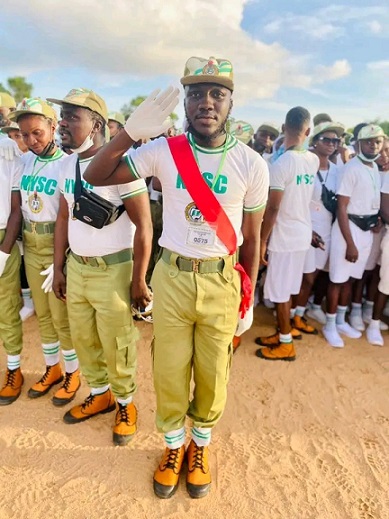
Some weeks back, I experienced a similar thing in Abuja. I went to withdraw 5k using a PoS from a woman at the NYSC parade ground. I was debited but she didn’t receive the money. She then told me that she won’t give me the money until she receives an alert. Luckily, I had a paltry sum left in my account. I then withdrew the money using a different PoS. It took my bank nearly ten days to refund me.

Before then, and about three years ago, I had the same experience with UBA. I used my father’s card to withdraw N100,000. I tried six times, but all of the transactions didn’t dispense cash, and he was debited five times. My dad only knew it after a week. He complained to the bank but they denied it, without carefully checking whether the transactions were successful or not.

They had to call me to come from school. I quickly got to the bank because it involved my father. I had to help them understand that the transactions failed. Only then they rechecked and discovered that I was right. That was indeed an issue bordering on unprofessionalism.

If not because of my father I would have sued the bank, because they threatened me with a police arrest, saying it was a criminal case. My father asked me to accept their apology else I would have sought compensation for making me look like a criminal, while they were at fault.

Before going ahead with its cashless policy, another factual and excusable factor the Apex Bank should consider is the fact that most of our businesses are done in cash, especially those trading in rural communities and towns and other remote areas where there are no banks, no network, no internet, no electricity, no education, and these people form a large portion of the Nigerian populace.

The questions I keep asking myself regarding this policy are: Did the Central Bank of Nigeria build banks in those areas? Would the people be traveling from their various villages to cities to transfer, withdraw or deposit money? What did the government do in place of these challenges? Does CBN have enough manpower to do this job even if they have built banks? Did CBN mistake Abuja, Kano, Lagos, Port Harcourt, and a few cities for Nigeria?

These, among other reasons, are the factors I want the CBN Governor to consider. Before they present this policy, they need to put all these things in place and educate people about it so that people will evaluate its strengths and weaknesses, and decide to either oppose or support it. The CBN didn’t do that. It just woke up from its slumber and served it to the Nigerians a la carte. Time will however tell if Nigerians will embrace it, warts and all.

Lawan Bukar Maigana is a social analyst. He writes from Abuja and can be reached via email: lawanbukarmaigana@gmail.com

The Kano of my dreams

By Ibrahim Abubakar

In the late 1890s, my great-grandfather narrowly escaped the evil claws of the Mahdi’s hostile and belligerent lieutenant, Rabeh Bn Fadlallah, who had invaded Borno to spread the Mahdist ideology. They sacked the empire’s capital of Kukawa, captured and executed Sheikh of Borno, and enslaved many people. This martial excess sent trembles across the land, and many thought it wise to migrate westward into the Sokoto Caliphate for safety. Among those who migrated to the Caliphate was my great-grandfather, Mamadou. Of its two dozen emirates, Mamadou chose Kano as his refuge.

Kano was the jewel of the Sahel, a centre of trade and commerce with walls 50 feet high and immensely thick, surrounded by a deep artificial gully making it an impenetrable fortress; a marvel to behold! It is this sense of security and opportunity, I believe, that made Kano a desirable place for my ancestors.

During colonial times, Kano increased in its majesty. The British administration modernised trade and industry, built hospitals, schools, and railways and improved the justice system by integrating and superbly implementing strategies that supported the rule of law and ameliorated the superficial old system. Kano’s commercial strategies were carefully designed to produce a positive net economic effect. For example, hide, skin, groundnut, animal feeds, meat and textile were exported to Britain. These export plans were supported by long-term government programmes that continued into post-independence Kano.

According to a World Bank report, Kano State’s mainstay is agriculture. It employs about 60% to 70% of the population producing rice, maize, millet, groundnut, beans, etc. Livestock production is another source of income for the farmers. The industrial output is from oil mills, textiles, tanneries, flour mills, and several others.

As the centre of commerce, Kano handles about 75% of finished goods from Lagos, Ogun, and Oyo industries. These are distributed to all the northern states and the neighbouring states of Niger, Cameroon, Chad, etc. From Kano, the following are exported: semi-finished leather, cotton lint, gum, hibiscus, sesame seeds and other minor items. All of the above have immensely contributed to enhancing Kano’s GDP as one of the highest in the country.

Unfortunately, the contemporary situation is rather bleak. Most of the factories have closed or have reduced their production capacity. Kano had about 30 tanneries producing over 45 million goats and sheep skins for export. In addition, over 7 million cattle hides were processed as finished leather for making shoes and other leather goods. However, there are only a dozen tanneries in production today. As for cattle hides, 90% of it is consumed in southwestern Nigeria as Ponmo or Ganda. In addition, cattle hides are imported from neighbouring countries and Mali, CAR, Sudan, and Saudi Arabia. The last textile to close was Angel Spinning and Dyeing Limited.

It is not a hidden fact that education has crumbled in recent years. Many children in Kano are poorly educated (the lucky ones?) and without a solution in sight. Although I am aware that education has exacerbated globally, for example, my father, 48 years older than me, is better educated in most branches of general learning. Kano is in the top five states in the country with substantial numbers of out-of-school children.

Healthcare facilities across the state are in a deplorable state. For example, the last time I visited the A&E department of a general hospital in Kano, I was sickened by the gruesome sight of accident victims on the floor, literally bleeding to death. In addition, there is an enormous disparity in the doctor-to-patient ratio, albeit not the worse in the country. It is, however, in the top ten states lacking doctors, with a ratio of 1 doctor for every 14,123 persons. To put it into perspective, the UN standard doctor-to-patient ratio is 1:600.

Kano used to be safe. Growing up, very few isolated incidences of theft were heard of in the city. Today, people get robbed in broad daylight. Thieves with sharp knives of all shapes and sizes attack people on the streets to rob them of their phones and other belongings; those who refuse to comply are fatally stabbed without remorse. Rape cases are rising exponentially. This year alone, over 1,300 cases of rape were reported. It is sad to see Kano vitiated.

The Kano of my dreams is the Kano my great-grandfather fell in love with. A Kano where there is opportunity and hope for everyone regardless of gender, ethnicity, or religion. A Kano where I feel safe walking any street at any hour of the day or night. A Kano where women can feel comfortable around men without fearing harassment or misogyny. A Kano with subsidised agricultural products such as fertilisers and an established avenue for creating liaisons with agencies that will be responsible for borrowing funds from the banks of industry and agriculture for the benefit of farmers, and this will increase productivity as well as employment.

Similarly, the Kano of my dreams will create an investment agency to secure funds from the Bank of Industry for the closed tanneries/factories and companies at low capacity. This will enhance business activity and employment. Furthermore, the Kano of my dreams will utilise Tiga Dam power generation to supply electricity to the industrial areas of the state and set a good precedence for the future supply of power to the entire state, either through hydroelectricity, solar energy, or thermal power.

The Kano of my dreams is a Kano where children are given quality education regardless of the social and economic status of the family they come from. A Kano where children do not go around begging for food on the streets. The Kano of my dreams is a Kano where hospitals are abundant, and doctors, nurses and other healthcare workers have all the needed equipment to make their jobs easier. A Kano where the large, proposed sports complex at Kofar Na’isa is turned into a colossal state-of-the-art medical centre to cater for the entire country. A Kano where neighbours assist one another.

I dream of a Kano where the rich invest more in local small-scale industries to boost production and employment rather than holidaying abroad and boosting the economy of the colonial order neglecting their brothers and sisters at home languishing in abject poverty. Lastly, the Kano of my dreams will have excellent and selfless leaders that genuinely care about the advancement of the state and will put in their utmost to see to it becoming the gem that it was, if not better than it was in days of yore. In sha Allah!

Ibrahim Abubakar won the 2nd position in the 2022 “The Kano of my dream” writing competition jointly organised by Muhsin Ibrahim, PhD, and The Daily Reality online newspaper. He can be reached via ibrahimabubakhr@gmail.com.

The Kano of my dream

By MA Iliasu

The dilemma with Kano has always been about standards. So, naturally, Kano’s advantages and disadvantages in socioeconomic assets have outgrown everyone’s. The history of Hausa land and much of the Sahel will confirm that assertion.

Kano’s population was approximated in 2022 as the second largest in Nigeria after Lagos and sixth in the Gross Domestic Product (GDP), ranking behind Lagos, Rivers, Delta, Oyo, and Imo. Kano is blessed with more than ten major markets across its rural and urban settlements, with Kantin Kwari and Dawanau serving as the largest textiles and food markets in West Africa, respectively. The state is enriched with the twentieth highest landmass in Nigeria, the biggest part of which is a prosperous arable land, with a favourable temperament that enables consistent rainfall and harmattan during rainy and harmattan seasons, on top of the twenty dams distributed across the rural economies of the state. Kano is one of the largest industrial hubs in West Africa, and the aggregation of these natural and human resources earns the state the title of “Centre of Commerce” in Nigeria.

By the same standard, however, the same factors make Kano an unfavourable environment. The massive population is more neglected than cared for, thus becoming a liability rather than an asset. There is a large number of out-of-school children roaming streets as beggars and hawkers, with many engaging in child labour. Many youths have been reduced to thuggery, thievery, and drug abuse. The economy is overwatched, yet doesn’t reflect in the state’s treasury by how the state rank lower in revenue generation, signifying, among others, the corruption and mismanagement holding its potential backward. The landmass is underutilised, with poor urban planning in the metropolitan areas and primitive agriculture in rural areas.

Consequently, signals of environmental hazards like crime, congestion, and flooding have become significant threats to the Kano metropolis. The dams have been neglected in the rural settlements. The widening gap between the rich and the poor makes the Human Development of the state ranks 28th, according to Human Development Index (HDI) 2019, among the very worst in Nigeria. The income per capita of Kano is among the lowest, with its healthcare being one of the worst in Africa. As of 2021, the state could only hire one medical doctor to tend to the emergency unit of Murtala Muhammad General Hospital during the weekends.

The common factor in both the contrasting pictures is that Kano never does anything in small doses – it’s so-called standard. The Kano of my dream, therefore, is the one in which this standard is retained but only positively to enable the growth and development of the state to measure up to it.

In the Kano of my dream, agriculture and industry are the central focus. A coherent plan which utilises the twenty dams for irrigation farming in forty local governments has been implemented. And courtesy of that, the agricultural output from Kano has outranked every state in Nigeria and equals the capacity of many African countries combined. The landmark is achieved thanks to overwhelming human labour and fertile land, and after the state government widens its thinking beyond small partnerships with regional development banks by reaching out to international agricultural cartels.

A deal has been stroke with India, China, Nepal, and Thailand that sees to it all Kano dams have been utilised in exchange for an uninterrupted supply of agricultural output to the Asian markets. And the reliance on agriculture has paved the way for the flourishing of other farming and manufacturing industries, the rural economy, and infrastructure, which consequently ends rural-urban migration and reduces the pressure on metropolitan areas. Resurgence occurs in food and technology markets, with advanced research in agricultural institutes and massive employment generation for the teeming population. Agriculture is Kano’s largest labour employer for the first time this century. And the problems of unemployment, revenue generation, urban migration and planning, rural negligence, and food security have become negligible.

The multiplier effect of achieving such economic landmarks will, among others, boost the GDP, HDI, Per Capita Income (PI), and general economic buoyancy across all social classes, which in the Kano of my dream, enable investment in education and healthcare. The fantasies of free education and healthcare are now history. The government has seen the truth and intensified its efforts towards achieving a hundred per cent literacy rate and eighty years average life expectancy through massive investment in education and health infrastructure, with more than sixty per cent of its talent pool channelled to study science and technology.

The revolution in the education sector takes place in two dimensions. The first is by reconstructing the state institutions and equipping them with modern learning tools, recruiting more teachers and retraining them, and taking their remunerations to a world-class standard. The second dimension is by reshuffling the curriculum by removing the outdated, less relevant subjects and introducing modern, relevant ones, and rearranging the method of achieving Senior Secondary School Certificates (SSCE) by turning terminal examinations into grade point averages, the cumulative of which will determine whether a student qualifies to take the SSCE or not. Students who excel by having high cumulative grade points from their terminal examinations across six years of Secondary School education will be able to sit for SSCE and secure government scholarships. While those who have yet to excel will have to engage in compulsory remedial studies before they become eligible to write SSCE. That way, the higher institutions will admit students not by chance but by competence, making them more productive intellectual environments. Breakthroughs have since been recorded in research and innovation.

Investment in healthcare starts by providing each local government with a general hospital and enough health workers. Infant and women mortality shall be met with formidable maternal health departments. And health education shall be prevalent, especially among women.

The political culture in Kano of my dream is perceptive and intentional. The fusion of power between state and local governments is abolished, enabling a reformed, energetic, merit-based, transparent, and accountable leadership style of leadership that is appropriately informed by and with the major activities of the clerical, academic and social establishment in the state.

Sports and recreation are engaged with remarkable intensity by establishing sports academies to meet the demands of modern football, basketball, tennis, and boxing. Kids are trained at a young age, adults are funded to do their coaching badges, and sports entrepreneurs are granted smooth platforms to facilitate the transfer of Kano talents to major European and American leagues, revolutionising domestic football to a world-class standard. For the first time in football history, Kano Pillars, an African team from the Nigerian league, has won the Club World Cup, thanks to the formidability of local talents.

In the end, the Kano of my dream isn’t only distinguished with glowing physical features such as roads, schools, hospitals, and recreational facilities but also with a glowing soul, mind, and heart. The spiritual infrastructure is also revolutionised through changing mindsets, attitudes, and beliefs. As a religious society, we have admitted to the supremacy of destiny, one who greatly appreciates the purity of our hard work and ethics. And through the pursuit of this, we turn into reality the endless upward possibilities of our beloved ancient society.

MA Iliasu won the 1st position in the 2022 “The Kano of my dream” writing competition jointly organised by Muhsin Ibrahim, PhD, and The Daily Reality online newspaper. He can be reached via muhada102@gmail.com.

Three ways that help Nigeria in alleviating her poverty

By Dansaleh Aliyu Yahya

Nigeria, as a country of more than two hundred million people, must get some or many ways to eradicate poverty from both angles. There is no poverty, so almost everybody in the country is employed. As a result, we will be free from hunger, with good health and well-being. For that, I’m going to point out some points that might end poverty in our blessed country of Nigeria.

They are as follows:

1. Voting for good leaders: This is the essential part of all the ways I thought of because we all have in our minds that leaders can make every impossible possible in their respective regions. Without their help, no one could do anything. The work of advisors and analysts is to tell them “this” and “that” should be done in such ways and places. Leaders are responsible for making it happen attractively. If they don’t want to do it, it will never happen. You know!

Good leaders might be the only leaders that will help give their citizens a happy atmosphere that will be good for them to live in by creating awareness, employment, and bringing out important activities close to their people. Else, the people will be maltreated. For that reason and more, we need them to take in eradicating poverty from our country.

2. Creating awareness on the importance of skills and small businesses: It is a good response for the government, educators, and entrepreneurs to help their country in bringing an end to poverty by fixing a time and date to lecture the citizens, especially the youths.

This awareness method will give people enough knowledge to understand that they need to learn some skills and start something new, to earn and live in a good conditions. From there, they will improve their lives, fight hunger, and have good health. In addition, the government should invest in giving the attendees working tools or capital so that they start immediately after they leave. To prevent losing the ideas they learned in the place, due to a long time.

3. Providing centres that will teach technical skills to people: this method will help fight poverty in our country. People will learn hand skills that will help them in building their businesses. If they have this, they will not stand redundantly without anything. I am sure that they will use the skills learned from the centres and even be able to employ others in the community.

In addition, the government can build good relationships with companies so that the companies will help them by employing some part of the community in such a way that they will put hand in hand in fighting poverty together.

These ways and many more could alleviate poverty, resulting in the sustainable development of zero hunger, good health, and well-being.

May we have peace and tranquillity in our minds, stomachs, and pockets,  amin.

Dansaleh Aliyu Yahya wrote via dansalealiyu@gmail.com.

Bandits abduct Fulani leader after attending security meeting

By Uzair Adam Imam

A Fulani leader, Alh. Aliyu Abdullahi, in Maganda village near Kagarko town in Kaduna state, was abducted by unknown gunmen on Monday.

It was reported that the leader, also known as Ardon Maganda, was going back home on his motorcycle after attending a meeting with other village chiefs on security issues bedevilling their communities.

The Daily Reality reported how handits raided three communities and abducted 37 villagers in Kaduna communities just recently.

A source from Janjala community, simply identified as Ishaq, said, “This morning (Tuesday), someone from Maganda who was coming to Janjala saw Ardo’s motorcycle abandoned by the roadside and suspected that he has been kidnapped.”

He added that the victim earlier visited the families of some of his konsmen to sympathise with them over the recent attacks by bandits which led to the abduction of some of his family members.

As of the time of filing this report, there was no official report from the police in the area.

We’ll support Nigeria in fight against illicit drugs—US

By Muhammadu Sabiu 

The government of the United States has unveiled a scheme that will help Nigeria’s fight against illegal drugs.

The National Drug Law Enforcement Agency’s (NDLEA) capacity for forensic and chemical analysis, intelligence gathering, and prosecution will be strengthened by the support.

The intervention is being coordinated by the Bureau of International Narcotics and Law Enforcement Affairs (INL) of the U.S. Department of State.

The announcement was made in a statement released on Monday by Femi Babafemi, Director of Media for NDLEA.

The chairman of the anti-drugs agency, Brig. Gen. Mohamed Buba Marwa (ret. ), made the requests after meeting with American representatives in Abuja and Washington, D.C.

The project will be carried out in Nigeria by the United Nations Office on Drugs and Crime (UNODC).

The assistance will strengthen NDLEA’s intelligence-driven inquiries using various tools, including legal texts, an e-library for prosecution, and others.

Babafemi stated that by adopting enhanced collection, handling, and custody practices, the agency would be able to prosecute cases with solid evidence.

The initiative “will be a vital step in furthering our shared objective of a united, peaceful, and stable Nigeria,” the U.S. government stated in its message.