Nigeria

Short-term gain, long-term pain

By Dr Raji Bello

Nigerians are not known for their ability to figure out the long-term consequences of their actions. This is a major national handicap since some choices which produce short-term gain could lead to long-term pain. For instance, in 1999, the governor of Zamfara state introduced a new social order in the state in defiance of the authority of the Federal Government of Nigeria. The new order spread across the northern states along with a strong wave of triumphalism. 

In the years that followed, groups of non-state actors across the country learnt something from what happened in Zamfara – that a group of determined people within a defined geographical area could defy the Federal Government and impose their will without any consequences. Inspired by this knowledge, a new Islamic militant group soon appeared somewhere in Yobe state, which later grew into Boko Haram – and the rest is now history.

Militants in the Niger Delta, who were also observing developments in the North, concluded that the Federal Government was indeed weak and its authority could be challenged without consequences. An insurgency soon took firm roots in the area. Many years later, young herdsmen around the country and secessionists in the Southeast also decided that it was time to take on the government and Nigerian society. Over 20 years later, long after the triumph of 1999/2000 has faded, we are still living with the pain of the chain of developments that it had sparked.

Once again, there is palpable triumphalism in the land. Our newly-elected Muslim-Muslim presidency has elicited exuberance in the Muslim community and foreboding on the Christian side. Prominent Muslims are already lining up to claim ownership of the president-elect and his religious identity. The Muslims are glad that the apparent consolidated Christian vote for Mr Obi has failed to achieve its aim. Christians, on the other hand, see their voting preference as justified because of the sheer brazenness of the APC in coming up with a Muslim-Muslim ticket right at the end of the two terms of a Muslim president who was not even known for respecting diversity in his appointments.

The 2023 elections will mark the time when the religious cleavage in Nigeria deepened to dangerous levels. In fact, the frontlines of the religious battle have already shifted to some upcoming gubernatorial contests. In Taraba state, the CAN has allegedly circulated a statement alerting Christians in the state of the impending battle while Muslim clerics all over the North have united in charging Taraba Muslims for the solemn task ahead.

Also, in Nasarawa state, there is a fear that the Labour Party could repeat its earlier presidential election feat and elect a Christian governor for the state. Other states like Plateau, Gombe, Adamawa, Kaduna, Niger etc, may also witness more hardening of intercommunal attitudes going forward. 

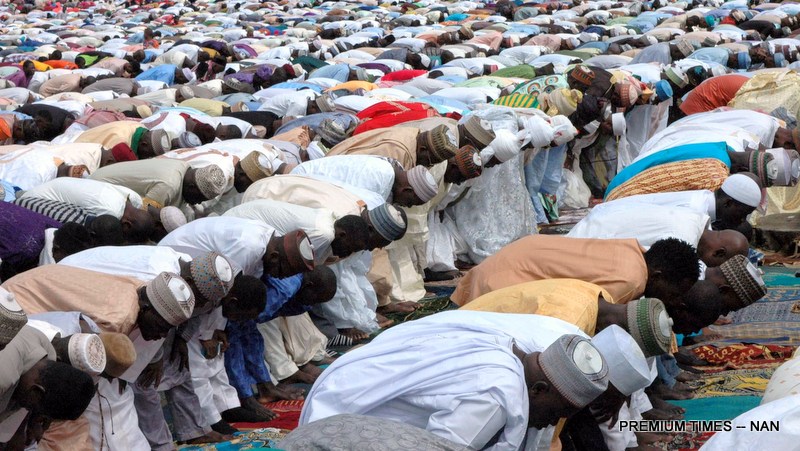
There will be even more foreboding on the Christian side when the practical elements of the Muslim-Muslim presidency begin to manifest. For example, media coverage will show both the president and vice-president of Nigeria at Eid prayer grounds while only the SGF or senate president will be left to lead the celebrations of Christmas and Easter.

The other multiplier effects of this new paradigm can’t even be fully imagined now. I expect that in the fullness of time when all the predictable consequences are playing out, the few discerning ones among us will ask, was Bola Tinubu’s Muslim-Muslim ticket really worth it in the long run?

Raji Bello writes from Yola, Adamawa State.

Olusegun Obasanjo: Enough is Enough

By Muhammed Tukur Gwarzo

After all the series of controversial letters you wrote, which almost all Nigerians have lost count as well as interest, you have now unveiled your personal agenda towards the whole country. You have for long turned into more of a comedian than a real Statesman.

You do not seem to love Nigeria Sir! And this is a fact! You did all your best to kill everything during your tenure, every good work initiated by our Heroes Past, you either damaged, manipulated, changed or even destroyed it completely. You don’t have anything to tell Nigerians. Therefore, it would not be surprising when someone who is drowning and totally oblivious of the current realities of the country, perhaps due to old age, motive or both, displays such divisive comments at this critical moment in the history of the country. We are not surprised. If you don’t know, now you should know that you have lost all the Moral Rights of an Elder/Statesman, to even think of coming out to advise anyone. You are already partisan. You publicly supported a candidate. Why would you now turn and act as if you are neutral? The respected statesmen of your caliber did not openly support any of the four leading candidates, but you did. Many Nigerians believe that you are acting a script of a hidden agenda.
History will be just to list you as someone who meddles into the affairs of each government since Shagari Administration to date. There is no Nigerian leader you didn’t belittle in the eyes of Nigerians and the International Community, in order to make them look bad, including those that brought you out of jail. They have really made a mistake of taking you out of prison. Their biggest mistake was how they promoted and supported you to be President. And instead of being grateful, you became disrespectful and rude to all of them.

One thing that you think that Nigerians haven’t noticed from you is your attitude of arrogating to yourself a messianic charisma. You always portray yourself as someone who has the full grasp of Nigeria’s problem, not knowing that YOU are the problem! You are among the top three problems of Nigeria and you should know that. You look down upon all the
Nigerian leaders, past and present, simply because you wrongly feel you are better than them all.

Furthermore, it is obvious that you are envious of even someone from your tribal and ancestral extraction. Then who do you think you Obasanjo can spare? Now that Bola Ahmed Tinubu, a fellow Yoruba Man from the South West is accepted by Nigeria to be its President, you feel that you are now seconded. You feel: why should Tinubu second you? This is the reason you started spewing divisive commentaries and calls for cancellations of the election, so that another Yoruba cannot be sworn in.

You want it to be on record that you are the only Yoruba man who made that record.
You are even lucky that due to the Esprit de Corps known within the military, most of the well-meaning gentlemen of the military respect you. You mistake that as fear and you do not reciprocate that respect to even General Gowon and likes, who happen to be your seniors.

Another point which you are wrong is on the issue of this public show of self-importance, which is part of you. As someone who studied Theology up to PhD level, you ought to have known that it is religiously wrong to advise a leader in such an open manner. You have direct access to all the leaders but you always choose to tar them in the market place.

As a citizen, and more so a former leader, you have the right, 100%, to make appeals and give advice to government and citizens alike, provided they are unbiased and do not infringe on the unity and stability of the country as you always do.

The way you think that the 2023 general elections results are manipulated defies logic. Lagos was taken by LP, Buhari’s Katsina went to PDP, and many other PDP/APC states were lost to LP. Serving and former APC Governors lost their bids for senate seats; Kano is lost to NNPP; but still, you questioned the results.
During your semi-dictatorial reign, you supervised the most rigged and questionable elections, especially in 2007 when Maurice Iwu was the Chairman of the Independent National Electoral Commission (INEC). Even the elected President, the late ‘Yar’adua of blessed memory, accepted and admitted that the process was flawed. Before then, you were widely suspected to have sought for a third term, which was unconstitutional. When that attempt failed, you then almost truncated the electoral process through a “do or die” politics.

When you were in power, nobody dared advise you for a better cause since you arrogate to yourself wisdom, and never accepted whatever was not from you, even from those that made the mistake of bringing you back to power. They brought you back not because you were the most qualified, but in order to appease the South West over Abiola’s June 12 saga. By then, Olu Falae, a politician and a tested technocrat would have been a better choice but you still cannot reason and remember all these. You are now clearly bereft of ideas in the polemics you wanted to present during your latest presentation. You look like someone entering into a boxing ring, very certain of your defeat. You know that Nigerians will never fall into your trap again. You should not have talked at all!

Sir, you should know that Nigerians are wiser now. They have known all your antics and antecedents through your utterances. What you did can cause an uprising and breakdown of law and order. It is something that borders on National Security, which should not be taken lightly by any serous government.
I advise the present and future governments not to allow such a situation of national security breach from you again and you should be tamed. But if you continue, the government should have an ideal way of dealing with you and your likes decisively!!!

Muhammed Tukur Gwarzo write from Kano, Nigeria.

Conversations we must have with the President-elect

By Abubakar Suleiman

The period preceding the presidential elections was greeted with intense and unrestrained emotions, outright bigotries and zingers from political opponents and supporters alike, so much that discussing issues that really matter was out of the table.

Public pundits who tend to raise their voices or pen down their thoughts on the challenges ahead got their ideas or pressing questions drowned amidst fierce online arguments. Discussing the manifestoes of the parties of the major contenders took the back seat while bickering on variables like the contestants’ age, health, religion, region, and ethnicity became the front burner across many platforms.

As the wave of the electioneering is beginning to disappear and the elections have been won and lost, I think we can start to ask the president-elect, where do we go from here? His job has been well cut out for him. And it will definitely not be an easy ride, and we need to be realistic.

Contextually, should subsidy finally go or stay? Should education at tertiary institutions be subsidised or commercialised? How do we push the country towards a knowledge-based economy? How will the poor access quality basic and tertiary education? How do we fund deficits in the power sector to make industries wake up? Can we change the security architecture? Should state police be created? Should we continue to maintain two chambers in the National Assembly? And how do we source the fund to run the government? To what extent should we play politics with governance? Can all these and many more be done in 8 years? The questions are many.

The election and its aftermath exposed the fragile unity between the regions and religions that made up this geographical space called Nigeria. Therefore, as a matter of urgency, the President-elect should hit the ground running by reaching out to aggrieved regions and their leaders by assuaging their real or imagined fears and grievances.

The problems of the country are too enormous to be dragged back by agitations and the feelings of being left out. Therefore, an inclusive government and approach to governance have never been this necessary.

Security

Just when President Muhammadu Buhari was about to claim victory over Boko Haram and insecurity in the North East, unprecedented spates of killings, kidnappings and banditry reared their ugly heads in Northwestern Nigeria.

A huge swathe of land became inaccessible, many major roads were deserted, farming nosedived, and a humanitarian crisis ensued. With these problems, many people found themselves in the yolk of poverty. Others became homeless, and fangs of hunger rendered many others dead.

The security structure is in dire need of an overhaul. Community policing, intelligence gathering, using a non-kinetic approach and the continued procuring of more weapons cannot be over-emphasised. The procuring process of these weapons should be monitored to evade financial abuse by unpatriotic elements in security management.

Personnel on the front line serving the country should also be motivated. A situation where underperforming service chiefs are rewarded with tenure extensions or a slap on the wrist should end with President Buhari.

Furthermore, I think decentralising the Police Force is necessary to curb the spread of insecurity across the country. State police is an idea that could be floated and established while strong laws preventing sub-national governments from abusing it should accompany such establishment.

Successive governments have failed to face and address the epileptic power supply problem headlong. A humongous amount of public funds have been infused into the power sector only to purchase more darkness for Nigerians. We had intermittent national grid failure with President Buhari. Many Small and Medium Enterprises (SMEs) depend on the power supply to fester as many others have yet to recover from the COVID-19 pandemic and cashless policy shocks and effects.

The state of the economy is scary. Unemployment has increasingly become high; inflation rates are biting hard; economic growth is sluggish; the country’s debt burden upsurged; the gap between the poor and rich has widened; and the conservatism of the Central Bank was thrown to the dogs by Governor Emefiele thereby making monetary and fiscal policies blurred.

These indices have been detrimental to the security and well-being of the citizens and their businesses. Therefore, the President-elect has a considerable responsibility to close the gap between the rich and poor through job creation, effective wealth distribution, social protection programs with measured outcomes and strengthened fiscal policies.

Subsidy

Only a few among the unlettered in Nigeria don’t know this word. Even those who cannot speak English have a name for it in their language. It is obviously no longer sustainable, as we even borrow to close budget deficits. However, oil is the most critical ‘social safety net’ for the poor in Nigeria; a tweak in its price is greeted with snag, suspicion and impoverishment.

The distrust between the leaders and the led has reached a crescendo, and the oil sector is marred with irregularities so much that we are not even sure of the amount of our domestic oil consumption. Therefore, critical infrastructure needs the money channelled into the subsidy to enhance economic diversification and gradual departure from over-reliance on oil.

And an excellent way to allay the masses’ fears that the money derived from the lack of subsidy might be squandered is through involving vital stakeholders like the Nigeria Labour Congress, Trade Union Congress, civil societies, sub-national governments, community leaders, and other relevant bodies. A comprehensive Key Performance Indicator or milestone should be developed and tracked by these stakeholders, and a project implementation and result delivery unit on the side of the Federal Government.

ASUU-FG Debacle

Another problem the President-elect will carry forward from President Buhari and even presidents before him is the ASUU-FG debacle that has refused to succumb to any pragmatic solution. Fake promises and insincerity on the side of the Federal Government and dogmatic or unbending approach on the side of the Academic Staff Union of Universities have made it impossible for the two to reach a sincere, realistic and practicable solution on the way forward.

Corruption

Plus, we are still battling corruption. Padding in the budget, red tape in the civil service, inflation of contracts and other forms of abuse of public office for personal gain are still with us. Corruption has basically been cancer eating up the already meagre and dwindling resources meant for economic growth, nation building and stability.

Corruption will not disappear overnight, but with the help of technology, building strong institutions and strengthening existing ones like the Judiciary will go a long way in minimising it.

The issues mentioned above and many more are parts of the conversations we should naggingly keep having with the President-elect, who will be sworn in as the President come May 29, 2023.

We should be less tendentious in doing so, but we should never relent in holding our leaders — presidents, governors and other elected or appointed public officers —accountable as humanly possible. The era of lack of communication and the body language that being our President is like doing us a favour should end with President Buhari.

I wish the President-elect, Asiwaju Bola Ahmed Tinubu, successful days in office. May Allah grant him firm political will and a competent team to drive good policies and push the country towards greatness. Let the conversations continue.

Abubakar Suleiman writes from Kaduna and can be reached via abusuleiman06@yahoo.com

NSCIA cautions politicians against dragging the country into anarchy

By Ahmad Deedat Zakari

The Nigerian Supreme Council of Islamic Affairs, NSCIA, has cautioned political actors not to drag Nigeria into anarchy. 

On Tuesday, the apex Islamic organisation gave the warning in a press statement jointly signed by the organisation’s Secretary General, Prof Salisu Shehu and the Director of Administration, Arch Zubairu Haruna Usman-Ugwu. 

The NSCIA warned political actors to refrain from making unguarded and provocative utterances.

Part of the statement reads, “While reckless statements from inconsequential individuals can be easily ignored, this is not so of those from respected political leaders.”

“It is important that patriotic and well-meaning Nigerian leaders should support unrelenting adherence to process and procedure in the ongoing electoral process. This is because any inclination to unprocedural decision or action at this critical time is a direct call for anarchy which will not yield any positive outcome to the Nation.”

Journalist’s role in tackling Nigeria’s security and humanitarian challenges

By Ibrahim Nura Aliyu

Nigeria is one of the most populous countries in Africa, with over 200 million people. It is also one of the most diverse countries. Its rich and varied cultural landscape comprises various languages, religions, and ethnic groups. Nigeria is also an essential global player in commerce and industry. In addition, the country’s abundant natural resources and strategic location make it an important economic hub in West Africa.

However, its recent history has been challenging. The country has faced several security challenges, including the Boko Haram insurgency, cross-border terrorist attacks, and regional rebellions. In 2017, the country faced a major humanitarian crisis due to extreme weather conditions.

Nigeria has many problems with security and helping people, and journalism has played a big part in solving these problems. The media plays a significant role in informing the public and raising awareness of these issues. They also play a crucial role in reporting the government’s response to these challenges. This has assisted in ensuring that the public has a better understanding of the challenges faced by the country and the measures taken to address them.

Journalists have done more than just report on what the government is doing. They have also worked to bring attention to the humanitarian crisis. This has helped get more people behind the efforts to deal with the problem. It has also ensured that the humanitarian situation is given adequate attention.

Journalism has been critical in tackling Nigeria’s security and humanitarian challenges. It has helped ensure that the public has a better understanding of the challenges faced by the country and the measures being taken to address them. Nigeria’s security and humanitarian challenges are among the many issues that urgently need attention from the Nigerian government and the international community.

Also, because the old naira notes can no longer be used, there is a need for cash and food in the country. This has led to widespread hunger and illness and placed the lives of many Nigerians at risk.

Another urgent humanitarian problem is that there aren’t enough naira notes to go around, hurting the economy.

Most of Nigeria’s population is poor, relying on cash transactions for necessary household goods and services. This has caused great hardship for the family budget and has pushed millions into poverty. The recent ban on using naira notes has made it harder for millions of Nigerians to buy food and has led to widespread malnutrition.

Nigeria’s struggling economy has only the naira note as a form of currency inefficiency, which worsens the situation.

The challenges faced by Nigeria’s humanitarian crisis are several. This includes the lack of quality education, healthcare, food, water supply, and access to basic sanitation. Journalism has been one of the key players in helping to require accountability and prevent the spread of terror.

Journalists have been able to get the latest information and give essential perspectives on the conflict by doing their jobs. They have also been able to shed light on many issues that are causing the humanitarian crisis.

Ibrahim Nura Aliyu can be contacted via khalilnuradeen@gmail.com.

Religion and the 2023 presidential election: A quick take

By Muhsin Ibrahim

Religion was central to Bola Tinubu’s emergence as the APC’s candidate for the 2023 presidential election. We discussed the issue as if it would not end. Since the 1993 annulled election of Abiola/Kingibe (both Muslims), no major candidate and his running mate have ever come from the same religion until now: Tinubu/Shettima (both Muslims). But, as the election approaches (we are, in fact, counting hours), only a few people talk about that. However, religion will play a significant role in the voting pattern.

The wild popularity of Labour Party’s Peter Obi on social media and his appeal to foreign media has something to do with his religion. I know this may sound controversial, but it is so. The three other front candidates are Muslims, while Obi is Christian. Besides this, I can’t see a glaring difference between him and NNPP’s Engr. Rabiu Musa Kwankwaso per se.

Tinubu and PDP’s Atiku Abubakar are in their 70s, while Kwankwaso and Obi are in their 60s. The four leading candidates are stinking rich and belong to 1% of the Nigerian elite. Interestingly, the candidates represent Nigeria’s so-called major ethnolinguistic groups of Yoruba, Hausa and Igbo, alias WAZOBIA.

Though, there is a parallel between Obi and Tinubu. Many people will vote for them because of their religious identities. I learned that many churches, especially in the North, had ordered their members to vote for Obi. Likewise, the faith-based civil liberties organisation Muslim Rights Concern (MURIC) recently “reminded Northern Muslims of their promise to support a Southern Muslim [i.e. Tinubu] in the 2023 presidential election”.

Given the above, I agree with some observers and analysts that Obi may surprise his critics, such as myself, in the upcoming election. The votes from his Christian brethren and others supporting him for other reasons will make a difference. However, Tinubu has many more advantages – being APC the ruling party and his decades-old political footprints, among others.

Anyway, we hope for the best and pray for peaceful elections. But, please, stay away from violence. Your safety should be your most treasured possession. No politician or political party is worth dying for.

With love from a disenfranchised Nigerian citizen.

Muhsin Ibrahim works and lives in Cologne, Germany and can be reached via muhsin2008@gmail.com.

Synopsis of the legal perspective between patients and healthcare providers in Nigeria

By  Abdullahi Yusuf

Globally, the health care system is governed by ethical principles guiding the professional conduct of different professions within the coordinated body of health care delivery. Those ethical principles regulate service delivery in every profession and safeguard the well-being of the patients handled by those professionals within the scope of their professional practice.

Nigeria, with no exception, has its own healthcare system encompassing three delivery levels, ranging from primary, secondary and tertiary healthcare. Each level has personnel that are professionally trained in the various fields of health practice to take care of patients according to their expertise and professional boundaries.

The relationship between a healthcare provider and his patients from a legal perspective is contractual. The healthcare provider owes his patient a duty of care, and the patient owes the healthcare provider a token as payment for the service rendered. A contract is known to be an agreement between two or more parties that is legally binding, but in some cases, the relationship between the health care provider and the patient is not mutual, as the patient might not be in the right state of mind to make decisions. Regardless, the relationship is contractual, as implied by law.

In every contractual relationship between parties, there is a legal obligation that is to be fulfilled. Failure to fulfil the obligation will be regarded as a breach of contract. Breach of contract, according to law, generally attracts damages and, in some exceptions, can attract restitution, quantum meruit or specific performance, as the case may be. Inadequate knowledge of the law leads to the exploitation of many patients by some healthcare providers, which usually slides without punishing the offenders.

A healthcare provider can exploit his patient through breach of contract, medical negligence that could give rise to tortious liability, violation of some specific fundamental rights or violation of the patient’s rights under the National Health Act 2014. A healthcare provider can be punished when he/she commits any action under the aforementioned through specific disciplinary mechanisms set aside by the law.

The disciplinary mechanisms could be a civil or tortious liability, where the offender will be required to pay for damages by the court; criminal liability, where the offender will be punished based on the intensity of his crime according to the penal code of the state; and professional punishment can be served by the professional body that the offender belongs to by demotion, revoking of license or dismissal as the case may be.

There are instances where the management of a health facility could be held responsible for an accident that occurred to the patient in the facility—it is referred to as “Occupier’s liability” in law. In this regard, the accident must be a result of the negligence of the management, caused by failure to provide something necessary in which its absence resulted in the accident, or there may be a lack of maintenance of some equipment or devices that might have led to an accident.

Vicarious liability is also a situation where the management of a health facility can be held responsible for an act committed by their employee. When a patient is maltreated in a health facility by any member of staff, be it a violation of the right, tortuous act or breach of contract, the patient can sue the whole management of the facility in court for justice to prevail.

Any health consumer in Nigeria that once in a while visits a health facility to patronise health care services should know his rights as stipulated under the National Health Act 2014.

Part III of the National Health Act 2014 (Rights and obligation of users and health care personnel) encompasses eleven sections, starting from section 20 to section 30. Eight of those sections (sections 20, 23, 24, 25, 26, 27, 29 and 30) directly state the right of patients in relation to the health care provider.

Section 20 is about “emergency treatment”, where the section mandates any healthcare provider on duty to attend to a patient in an emergency without any hesitation or formality.  Contravening the section can attract a fine of ₦100,000 or imprisonment of not more than six months, or even two, as the case may be.

“User (Patient) to have full knowledge” is what section 23 is all about. It explained the right of a patient to be well informed of his condition and the possible treatment that will be administered to him/her, unless in the case where informing the patient will cause more harm. Section 24 expatiates the “duty to disseminate information” by federal, state or local government health authorities. Facilities should make such information visible at the entrance. The information should include the services provided by the facility, operating schedule and visiting hours, processes for making complaints and the rights of the patients as well as the health care providers.

Section 25 explained the “obligation to keep records”. This record involves the demography, treatment as well as medical history of the patients. It is mandatory for any health facility to keep records of their patients for future reference. “Confidentiality” of the patients must be a priority for any health facility and its personnel, as stated in section 26 of the National Health Act 2014. Disclosure of a patient’s information without a genuine reason is an offence that can attract punishment if reported.

The health record of the patient can be disclosed in some cases where the disclosure is in the best interest of the patient or is required by the court of law for judgement. It is stated as “Assess Health Record” under section 27 of the National Health Act 2014. “Protection of health record” is stated under section 29. Negligence in handling the record of a patient or deliberately tampering with any information without legitimate authorisation is an offence that can attract conviction to imprisonment for not more than two years or a fine of ₦250,000.

The last section with respect to patient’s rights under the National Health Act 2014 is section 30, which expatiates on the “Laying of complaints”. Any patient that is maltreated by any health personnel has the right to complain. The complaint should be in accordance with procedures provided by the federal or state ministry of health.

As a citizen of Nigeria, knowledge of fundamental and specific rights is necessary regardless of one’s level of education. People are being oppressed and maltreated on a daily basis due to ignorance of their rights and how to seek justice. To have a just and egalitarian society, people need to be aware of their rights and what should be considered a violation of those rights.

Conclusively, the law is set aside for justice to prevail, and nobody has the authority to deprive you of your right to justice. To get justice, you have to find it by going through the right channel. Albert Einstein said, “In matters of truth and justice, there is no difference between large and small problems, for issues concerning the treatment of people are all the same”.

Abdullahi Yusuf wrote is a final year student of Health Education, Department of Human Kinetics and Health Education, Bayero University Kano. He can be contacted via abdoolphd@gmail.com.

Is Buhari paying them back in their own coins?

By Tijjani Muhammad Musa

To become President, they made him publicly cry, swallowed his pride, compromised his principles, made him have dinner with the devil, and almost sold his soul to the accursed. If it’s the only way, he walked the shameful path.

When he emerged as the President, the underlying wounds of aye were opened afresh, with many calling him a former dictator, military General, GMB, not a Democrat and many other hurting labels. He took it in his strides and refused to bear his fangs. In fact, he went and got his incisors removed.

Then he was taken ill and had to fly abroad for the required medical attention, which wasn’t available in the country. Something he had used in his campaign and had no option but to swallow up his vomit. Speculations and rumours followed that he had died, but the news of his death was being censored.

Many of his party bigwigs welcomed the development and even started reassigning and sharing positions in the government, only for him to return back in one piece. An alarm was raised that a cabal existed in the presidency and were the ones running his government, but he didn’t fret or say a word about that.

His family was used to expose his weakness and humiliate his stance as a man of principles and strong resolve. Concerted efforts were made to break up his marriage and disgrace him before the world. He barely managed to escape that plot. That, too, he bore with utmost patience.

Several palliatives he approved, employment and empowerment of youths, monies he signed to be disbursed to the populace, and grants he endorsed to be released for the public benefits were mostly stashed away by the greedy Governors, making him look like a supporter of corruption, even if he himself was not.

The Boko Haram insurgency he inherited from the previous government he subdued, only for Banditry, Kidnapping, Extortions and so on to rear their heads and be used by politicians and some of the traditional ruling class to tarnish the achievements of his government with regards to security and good governance. Here too, he hurt in silence.

Many of his staunch supporters like yours truly were utterly stripped of all their fighting tools, points of defence and arguments in debates, their pride as diehard Buharists quashed, so much so that the Buharists Movement and Ideology ended up as almost nothing, but a stillbirth. The man showed no public annoyance but cried for them within.

The so-called “cabal”, along with his kitchen cabinet, had a field day running the affairs of government as they deemed fit. They made his government such a disappointment to the poor people who donated their meagre earnings, stood in the harsh sun and voted for him twice to be their President, all in the hope of a new and better Nigeria, which has yet to see the light of the day.

The opposition, along with the judiciary and legislative arms of government, left no stone unturned to frustrate his fight against corruption, thereby ensuring that his stance against reigning in the criminality of many embezzlers and criminals came to an embarrassing caricature of purpose. At a point in time, he became a laughing stock of those who thought of him as a champion of the fight to annihilate the looting of the treasury.

Meanwhile, the chess master player and military strategist that he is, Buhari waited until the right moment to checkmate his opponents by making his winning move! For a moment, when he allowed Emefiele to stay on as CBN Governor despite all the corruption allegations levelled against him, some analysts thought President Buhari was the “nonchalant” H.E. as usual. Only for him to surprise all with the aces up his sleeve.

The new Naira redesign shocked them all. And with that single master stroke, the stash accumulated over time to be used in continuing the corruption flight by politicians heading to Elections 2023 was instantly crushed. Those who used to make his government look evil by collecting several billion in ransom for kidnapping and banditry are also left with no cash but trash.

A cashless policy, by the way, is not a Buhari government’s call but a new global agenda. His government is just following orders to implement it, and probably as requested now by the puppet masters pulling the strings. Buhari or no Buhari, this policy has been designed to come to pass. In fact, it has been long overdue as India towed that line since 2016. 

It is just the way that the policy is being implemented that seems to be the problem, as the poor masses are becoming the collateral damage of the project, though the process is being used, possibly unintentionally, to crash out the government in power. This is because the ones bearing the brunt of the implementation, the populace who happen to be the voters, would want to take their pound of flesh at the upcoming polls. The irony of it all is that Buhari is the one implementing it.

And this is what is making some Governors who have prepared to use the money to influence the outcome of the eventual elections lose their calm, cool and composure. Suddenly, they realise their folly that they have been taken to the cleaners by the old fox they grossly and unfortunately underestimated.

We, core and genuine Buharists, often surprise many when we reaffirm that was the old war horse still eligible to run for the presidency of this nation Nigeria. We would have lined up, bore the scorching sun and cast our votes wholeheartedly once again for him despite all said and done. 

Why? Because we know for certain in our heart of hearts his good intentions and strive to make Nigeria great was pursued with all the vigour and sincerity on his part. It was the saboteurs of our national progression that made all efforts to see that Nigeria did not emerge out of her countless doldrums.

As someone said, the problems of Nigeria are the means through which many of its citizens (Nigerians) are making their money, getting their means of livelihood and earning a living. Take any sector of the economy, for example, finance, education, health, security, oil sector, housing, civil service, politics, agriculture and many more. It is all the same, systemic corruption!

And there are many other non-citizens and even certain countries whose economies partly depend upon Nigeria’s lack of headway to consolidate their earnings. Thus, how can they allow their means of survival, i.e. Nigerian problems be solved? They will do all they can to ensure it never gets sorted out! And that is why we have not been able to solve Nigeria’s limitless quagmires. 

Therefore, for us true Buharists, the chant and slogan “Sai Baba!!!” are my as dear to our hearts and still ring from Sokoto to Bayelsa, Maiduguri to Lagos. He has not failed Nigerians, but rather Nigerians have failed themselves.

Tijjani Muhammad Musa, alias Poetic Tee, is the Chairman of the Association of Nigerian Authors (ANA) Kano Chapter. He can be reached via mmtijjani@gmail.com.

Nigerians and mass migration: Addressing the Japa syndrome

By Umar Yahaya Dan’inu

Mass migration is a complex and multifaceted phenomenon that affects individuals, communities, and entire countries. It is driven by factors such as economic opportunity, political instability and natural disasters as people seek to improve their lives.

In Nigerians, many people are driven to migrate for better lives, education and healthcare, and job prospects. Political instability, such as conflict, insurgency and human rights abuses, also contributes to a mass migration of Nigerians.

The term “Japa” refers to the migration of Nigerians to foreign countries, especially Western ones, in search of a better life. A lack of quality leadership in the country at all levels often causes this phenomenon. Several reports and writing has shown that despite their love for their home country, many Nigerians have lost trust in their leaders and feel compelled to leave in search of a better future. Moreover, the decay in leadership has caused division within the polity; every tribe or region is suspicious of one another, and there is fear of domination and marginalisation.

In the 60’s and late ’70s, Nigeria was a country that commanded respect in the global arena. Our passport is a thing of pride at any entries and departure level. The Nigerian currency and economy were in good shape. However, the challenges facing Nigeria, such as insecurity, kidnapping, banditry, corruption and political violence, have led to the decline of the country’s economy and international standing. This decline has driven many young people, skilled and unskilled, to leave in search of a better life.

In Northern Nigeria, where Islam dominates the culture, people prefer to migrate to Middle Eastern countries, such as Saudi Arabia and recently Dubai and Qatar, where they share the same religion and beliefs. In contrast, Southern Nigeria is the centre of migrants, as people seek to escape bad governance and poor leadership. Despite the differences between the North and South in terms of access to education, quality of life, job prospects and economic opportunities, many young people still feel compelled to leave.  

However, the skilled and unskilled knows what they can do to navigate their way to leaving Nigeria. In Benin, the state of Edo, people are trafficked in the name of migration to get a better life, and they mostly end up enslaved and sold to work without regard for the dignity and respect they left in their country.  

Furthermore, some skilled migrants bring positive changes to Nigeria; they are doing wonders in their new countries, such as setting up companies that employ Nigerians, impacting the economy positively. In addition, statistics have shown that Nigerians are highly skilled people in the UK and the US, contributing to the economies of the host countries.

The migrations of these groups affected Nigeria negatively because Nigeria is among the world countries with the highest numbers of out-of-school children and increased maternal mortality rates. Nigerian-trained Doctors, Engineers, Scientists, Musicians and filmmakers are all over the world doing great work. Nigerian government needed their services and contribution to help in reducing the numbers of maternal mortality and to help in actualising effective education take place at all levels.     

To address the Japa syndrome, a multi-faceted approach is needed that addresses the root causes of migration and its challenges. These involved improving economic opportunities, promoting stability and security, and increasing access to education, healthcare, and employment opportunities can help reduce migration. In addition, strengthening the democratic process, improving wages and salaries, and enhancing the country’s security architecture are also important steps that need to be taken.

Nigeria is ours, and our responsibility is to ensure a bright future for our nation and youth. We must take action to address the Japa syndrome and create a future that is worth staying for.

Umar Yahaya Dan’inu wrote from Hausari Ward, Nguru, Yobe State. He can be contacted via umarnguru2015@gmail.com.

Mainstreaming mental health in Nigeria

Bello Hussein Adoto

The signing of the Mental Health Bill into law presents a renewed imperative to rewrite the mental health narrative in Nigeria. Here is how Nigeria can do better.

‘All diseases are equal, but some are more equal than others’. Although Nigeria is not George Orwell’s Animal Farm, the country has a glaring disparity in the kinds of diseases it considers a priority, but the recent signing of the Mental Health Bill into law can help us to rewrite the narrative.

At the mention of infectious diseases like HIV, tuberculosis, and malaria, or non-infectious diseases like diabetes, hypertension, and cancer, one could point to tangible, nationwide, and sustained initiatives to promote public health and reduce their impact on individuals and communities. But very few such initiatives are available, if any, for anxiety, depression, or Alzheimer’s disease. 

While anxiety and depression do not kill as regularly as untreated malaria, HIV, tuberculosis, and uncontrolled diabetes and hypertension – diseases that received far more attention, these mental illnesses are nonetheless deadly.

Anxiety and depression, for instance, reduce our quality of life and living, undermining our productive capacity, while depression increases a person’s risk of suicide. This reality makes diseases that affect moods and behaviour as relevant as those that affect tissues and organ systems.

Mental health disorders are a huge challenge in Nigeria. A recent report puts the number of people living with one mental illness or the other in the country at 60 million. According to a World Health Organization report, Nigeria has more than seven million people living with depression. This value doubles the number of people living with depression in South Africa and Ghana combined. A similar story plays out in the estimate for people with anxiety in the continent.

Nevertheless, the signing of the Mental Health Bill offers a renewed imperative for stakeholders to harness the several opportunities that could rewrite the narrative of mental health in the country.

The first opportunity is an extensive network of primary, albeit underfunded and underutilized, healthcare centres across the country. Nigeria has more than 33,000 primary health centres with a potential capacity to provide mental health first aid services to Nigerians. The government can expand these facilities to provide mental health care services.

The centres have community health officers (CHOs), community health extension workers (CHEWs), registered nurses, and midwives. Specialists can train these non-specialist healthcare workers to provide basic mental healthcare services nationwide, especially in rural areas, in a task-sharing, task-shifting policy.

Nigeria has applied this policy to provide malaria and family health services, and a 2015 study shows that integrating mental health into primary healthcare in Nigeria could follow a similar model. Such integration will buffer the shortage of mental health specialists in the country and improve care coverage for underserved populations.

Secondly, the digital era is here. Digital channels such as social media, webinars, SMS, and tools such as smartphones and software, provide an exciting, affordable, and sustainable opportunity to reach many people. The government could harness these channels to support non-specialist care delivery, educate the public about the fundamentals of mental health, reduce ignorance about mental health, and eliminate the stigma and dangerous practices associated with mental health disorders in the country.

Beyond helping to raise awareness, the government and other relevant stakeholders should harness digital channels to deliver e-health to people with mental health disorders and bypass the barriers to accessing traditional care. Such digital interventions have been shown to improve mental illnesses among students and could be helpful in care delivery to a larger population.

A third opportunity is the existence of non-governmental organizations, such as the Mentally Aware Nigeria Initiative (MANI) and Asido Foundation, that champion mental health causes in the country.

NGOs are paramount to health promotion because they supplement public efforts to promote health. Some NGOs operate helplines for mental first aid; others, like the Asido foundation, run the Unashamed campaign to increase mental health awareness and reduce stigma in the country. The government can partner with these NGOs to sensitize the public and provide the much-needed care and support that millions of Nigerians need.

Finally, a special insurance package should be instituted for people with mental health disorders, so they can access essential care without worrying about the cost. Awareness about health insurance has increased over the years, and more Nigerians are enrolling in their numbers. The number of enrollees in the Nigerian Health Insurance Scheme [(NHIS), mow National Health Insurance Authority (NHIA)] has nearly doubled between 2007 and 2013. Stakeholders can expand current social health insurance packages for insurance owners to include mental health conditions and give Nigerians a new lease to access proper mental health care whenever needed.

Bello Hussein Adoto, a researcher, writer, and journalist, writes via bellohussein210@gmail.com.