Nigeria

This is the time for women to be financially independent

By Aisha Mahmud Yusuf

A few days ago, Dr Muhsin Ibrahim shared a story about a divorcee whose ex-husband refused to pay her medical bills. This is a familiar story as it happens to many people in our society.

I know of a divorced woman with three kids who has nowhere to go. Another woman was in an abusive marriage. When asked why she wouldn’t leave her husband, she said that he took care of her financial needs.

There’s also this woman whose husband was a serial womaniser and a drunkard, yet she couldn’t leave him because she has no means to sustain herself as her parents are dead.

In this society, a woman will be married off with no skill or education. Then get divorced and be left to start from scratch, thanks to the stigma attached to divorcees. No woman should be in an abusive marriage or miserable because she lacks financial independence.

Parents should let their girls finish at least secondary school and ensure they learn a skill. Those who finished higher institutions should be allowed to work or engage in business. The time to stay idle for women has passed. We should not let this poverty and misery cycle continue.

A woman should be financially independent regardless of her marital status. In case of divorce or the husband’s death, she should be able to care for herself and her children at least.

There’s no denying that our marriage institution needs reform, and the time to do so is now. Alhamdulillah, our scholars are now discussing it, but we need action. There is a need for sensitisation across rural as well as urban communities.

Girl-child education should be supported. There are many opportunities for learning that women can learn in the comfort of their homes, and they should be encouraged to do so.

 Aisha Mahmud Yusuf wrote via aishatyusuf63@gmail.com.

‘Change Begins with Me’: The power of citizen participation in governance

By Aliyu Bugaje

Many of us have been quick to criticise the government for a long time about certain policies and decisions that we feel are not in our best interest. We voice our frustrations to anyone who cares to listen, and often, we do nothing more than that. But what if we could do more? What if we could participate in the governance process and influence key decisions that affect our lives and the lives of those around us? The truth is that change begins with us.

Recently, I was invited to participate in the APC campaign council in the Dikko/Jobe Call Centre Katsina and subsequently in the APC Situation Room. This opportunity allowed me to understand the workings of the party, the workings of the state government, and how elections are won. In addition, I was allowed room to influence key decisions of the party, was trusted with confidential party documents, and sat down with the gubernatorial candidate and other key figures. This experience has forever changed how I view governance and politics in general.

As citizens, we often complain about the government’s inability to deliver on its promises, but what are we doing to ensure those promises are kept? Are we actively participating in the governance process, or are we content with being mere spectators? The truth is, if we want to see real change in our communities, we must be willing to roll up our sleeves and get involved.

Citizen participation is the bedrock of any democratic society. It is the foundation upon which governments are built and the driving force behind meaningful change. Moreover, when citizens participate in the governance process, they bring knowledge, experience, and ideas to help shape policies and decisions in people’s best interests.

Participation can take many forms, from joining political parties and volunteering for political campaigns to attending town hall meetings and engaging with elected officials. It can also mean organising and mobilising communities around critical issues affecting their lives and holding government officials accountable.

One of the benefits of citizen participation is that it can help bridge the gap between the government and the people. When citizens actively participate in the governance process, they become more invested in decisions. As a result, they are more likely to support policies and programs that benefit the community. It also helps to build trust and confidence in the government, which is essential for a functioning democracy.

Another benefit of citizen participation is that it can help to create a culture of transparency and accountability. When citizens are actively engaged in the governance process, they are more likely to demand transparency from their elected officials and hold them accountable for their actions. This can help to prevent corruption and ensure that government resources are being used for the benefit of the people.

The power to bring about meaningful change in our communities lies within us. As citizens, we must be willing to step up and actively participate in the governance process. We must hold our elected officials accountable for their actions, demand transparency and accountability, and work together to build a better future for ourselves and our children. Change begins with us, and it is up to us to make it happen.

Aliyu Bugaje wrote via aliyukb@gmail.com.

The consequences of religious politics in Nigeria

By Usman Muhammad Salihu.

Religion has been a part of Nigeria’s political landscape for decades. The country has a diverse population with multiple religions, such as Christianity, Islam, and traditional faiths.

The influence of religion on Nigerian politics cannot be overemphasised, as it plays a significant role in shaping political decisions and outcomes. However, the involvement of religion in politics in Nigeria has come with both positive and negative consequences.

One of the positive consequences of involving religion in Nigeria’s politics is the promotion of moral values. Religion teaches moral values such as honesty, integrity, and justice, which are crucial for a stable and just society. Religious leaders can use their platforms to advocate for these values and hold politicians accountable for their actions. Additionally, religion can inspire people to participate in politics and contribute to the development of their communities.

On the other hand, the involvement of religion in Nigeria’s politics has also led to negative consequences. One of the most significant adverse consequences is the proliferation of religious extremism and intolerance. The politicisation of religion has fuelled religious conflicts and violence, leading to the loss of lives and property. The Boko Haram insurgency, which began in 2009, is an example of the consequences of religious extremism in Nigeria.

Another negative consequence of involving religion in Nigeria’s politics is the erosion of the country’s secularism. Nigeria is a secular state, but the involvement of religion in politics has led to the blurring of lines between religion and state. This has resulted in the adoption of policies that favour one religion over the other and the exclusion of minorities from political processes.

Furthermore, the involvement of religion in politics has also resulted in the emergence of religious leaders as political power brokers. This has led to the entrenchment of corruption in the political system, as religious leaders often use their positions to secure political appointments and contracts for their followers.

In conclusion, the involvement of religion in Nigeria’s politics has both positive and negative consequences. While religion can promote moral values and inspire people to participate in politics, it can also fuel religious conflicts and lead to the erosion of secularism.

Therefore, it is essential to strike a balance between religion and politics to ensure that the positive consequences of faith are maximised while minimising the negative effects. This can be achieved by promoting interfaith dialogue, adopting policies that promote equality and inclusivity, and establishing effective mechanisms to hold politicians accountable for their actions.

Usman Muhammad Salihu writes from Mass Communication Department, Abubakar Tatari Ali Polytechnic, Bauchi, Bauchi state. He can be reached via muhammadu5363@gmail.com.

On Naira note redesign: tale of a University student

By Abdulbasit Toriola

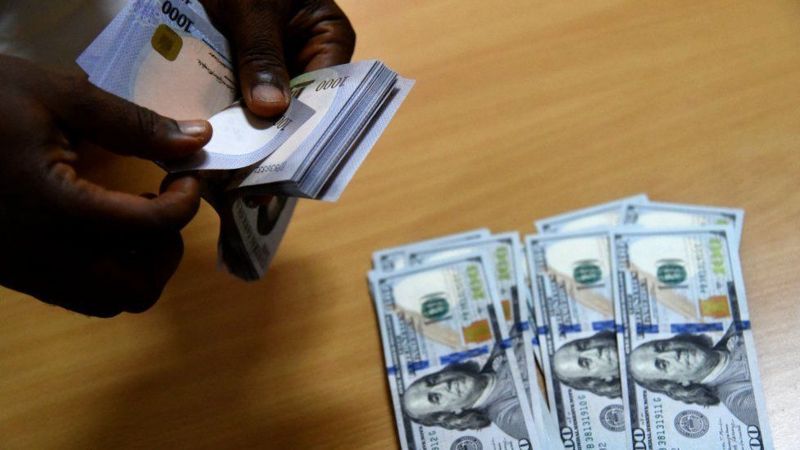
I am Abdulbasit – an undergraduate student at the University of Lagos. I first heard about the CBN’s plan to redesign Naira from a hostel mate while returning from the mosque one evening. Soon, the news went all over. The boys of Biobaku Hall, my hostel, quickly picked up on it. It became a good subject for late-night arguments in a few rooms (after Messi-Ronaldo debates). I suppose the arguing parties, like me, were wondering how a change in currency design would help augment Naira’s depleting value against the US’ Dollar and other strong currencies. The Central Bank’s motive, however, was different. According to a CBN handbook I read, the redesigned notes were to help check counterfeiting, straighten the economy, reduce the expenditure on cash management, promote financial inclusion, and enhance the CBN’s visibility of money supply. These – are good benefits, anyone would say.

It was not until January 31st that we started bearing the brunt of a new cash policy. Prior to this, immediately after its launch, we had seen from a viral BBC post what the new notes were like. Some of us said the notes were a bleached version of the old. Others said the CBN only dyed the monies, our monies. Our currency had become more of a joke. Apparently, things were unfolding in the background. CBN had given directives that all old banknotes be deposited on or before January 31, while encouraging Nigerians to explore other payment channels. The CBN, literally, put us on a thin, experimental line.

Soon, banks got filled, stacked up like they were market squares. In order to avoid hiccups, they kept their customers queued outside their premises in very long and rowdy queues that almost never moved. They kept their gates shut, too, till noon or afternoon; especially after some branches reported cases of violent protests. It was hard and perplexing. But as young students, we quickly adapted to the virtual alternatives CBN had left us with.

Still, it was hard. Perplexing. But we knew – judging from what we see or hear – that the pain we feel paled in comparison to that felt by those living beyond the walls of a campus. Sometimes, I lay still on my bed imagining what it would be like for market women, for school children, for drivers, for commuters. I remember, again, our hostel coordinator saying this was Buhari’s final ingenious gift to Nigeria and Nigerians. He says the President’s plan, like in 1984, is to checkmate politicians who have stockpiled Nairas ahead of the 2023 General Elections. I nod.

For us, hostel occupants, the deal breaker was an announcement – coming from the VC – ordering everyone to vacate school hostels for the election break. It was the last straw that broke the camel’s back. In the past few weeks, we witnessed the FG shift the deadline to February 8; various NGOs beseeching them for an even longer extension. We also saw the case brought before the Supreme Court. We saw the Court gives an order; we saw them adjourn the court case.

On February 15, the Supreme Court validated their previous order – that the old Naira notes remain acceptable as legal tender. The following day, we woke up to a nationwide broadcast, by the President, stating that only old N200 notes will remain valid till a due date. It was hard. Some of us left the hostel as early as 6:00am to join queues in front of the Nigerian banks. We had to pay commercial drivers in cash or nothing. Many of us stopped attending lectures, and sat/squat in front of bank ATMs instead. Cash was scarcer than ever. Outside campus, POS outlets had their places shut. Those that opened, literally, sold us the new Naira – they were charging exorbitantly. We looked everywhere for a way. And when we finally found one, we packed our bags, hoping silently that home would be good to us.

Teens, social media and mental health

By Muhsin Ibrahim

Social media has a double-edged function. It can uplift you or do the exact opposite. It largely depends on the people and pages you interact with. Worried about their teens’ mental health, Utah became the first US state to regulate teen social media access this week.

According to a BBC report, “under the measures enacted on Thursday, a parent or guardian’s explicit consent will be needed before children can create accounts on apps such [as] Instagram, Facebook and TikTok.”

People of all ages can have their mental health wrecked on social media if they aren’t cautious. Some of us crave attention or other’s validation. Thus, people do crazy things to get more “likes” or ensure what they do gets their friends’ applause. That is one thing some of your social media ‘friends’ will never grant you because they are not your friends in the true sense of the word. So, the earlier you understand this, the better.

Of course, you should not be carefree. Each culture has its codes, and so on. So, consider these etiquettes but worry not about people’s attention or endorsement. Social media friendship is primarily fake. Folks, especially teens, can’t understand this. Thus, trolling push them to lose self-esteem, hate themselves, and some take their lives!

I salute the government of Utah. I am sure more states in the US and elsewhere will do the same. However, as ours (in Nigeria) will likely not do the same anytime soon, parents and guardians should do more. As it’s very challenging to deny your kids access to social media, monitor whom they interact with and the pages they visit.

Muhsin Ibrahim lives and works in Cologne, Germany. He can be contacted via muhsin2008@gmail.com.

Is the University of Maiduguri witnessing one of its worst administrations?

By Salim Toro

A mistake repeated more than once is not a mistake anymore. It is a decision. – Paulo Coelho

I am not sure if this write-up will reach the appropriate authorities. But, anyway, if it reaches them, they should please consider and solve all the problems facing students of this great learning environment.

This question keeps coming to my mind. I can say that most of the University of Maiduguri students recall that the school commenced its 2022/2023 academic session on 3rd January 2023 for its new students and 16th January 2023 for returning students. However, I can see that no one is talking about it, although it’s already getting to two months, and no proper academic activities have commenced yet. 

Firstly, I’m not sure if this happens at a few universities. Still, it’s not proper to commence an academic session without placing your students’ results/academic statuses. But the case is different at the University of Maiduguri, and no effort is put into changing it. This same mistake happened last year, resulting in massive failure the following semester for those carrying over previous level courses, especially first-semester courses, because tests had already been conducted before the placement of the academic status. 

It’s tragic to know that the University of Maiduguri, a university created in 1985, doesn’t have any active student portal for registration, hostel registration, etc. They always come up with a new portal at the beginning of each session, with many difficulties for students when registering. Many students could not apply for hostel last year due to such challenges, and the management is still not ready to sort out this problem. 

Moreover, the university management doesn’t listen to students’ pleas on issues such as electricity, hostel maintenance and water supply. Sadly, students stayed in total blackout for weeks during the last examination session, which might result in massive failure in the semester examinations. Unfortunately, neither the school management nor the Student Union Government (SUG) takes serious action to solve the problem.

It’s sad to say that when the student representative met with the Vice Chancellor of the university, he boldly told them that the students should focus on their primary assignment and should not bother about anything other than that, which is impertinent. 

Although the SUG is supposed to be a channel between us and the management and a representative when any matter arises, I think they were appointed without minding to know the exact duty of the student union, and at last, they failed woefully. Aliyu Fannami’s administration is the worst SUG administration the university has ever had. 

Lastly, I’m calling on the JAGABAN of this administration to please put things into order. There’s still time to leave good legacies that will write your name with a golden pen in the university’s history, sir, because going down like this will only write your name as one of the worst JAGABAN the university ever had. 

Best wishes, Sir!

Salim Toro writes from Toro and is a 400l student from the Faculty of Agriculture, University of Maiduguri. He can be contacted via salimabdulhamid0909@gmail.com.

Ramadan starts Thursday, says Sultan

By Muhammadu Sabiu 

The Nigerian Supreme Council of Islamic Affairs has confirmed that the Ramadan crescent has been sighted in different locations in Nigeria.

This announcement was made by the Islamic Council in a statement on its official Facebook page on Wednesday night.

The statement reads, “His Eminence has received positive sighting reports of the Ramadan crescent from various locations nationwide. Thursday, 23rd March, is the first day of Ramadan.”

It added that an official statement would follow afterwards.

The sighting of the crescent marks the beginning of the ninth month of the Islamic calendar, in which Muslims fast for twenty-nine of thirty days before observing Eid al-Fitr.

Chinua Achebe’s Man of the People: A story more than a fiction

By Saifullahi Attahir

It’s not surprising that nowadays you see my post regularly. I’m always looking forward to moments like this where  I get released from the yolk of sleep-inducing medical books. Once again, I’m lucky to be surrounded by my favourite literature I  enjoy which serves as a source of enlightenment, happiness, experience, and loyal and non-disturbing companionship.

This week I luckily came across a 362 pages novel written by a great and rare literary icon, Chinua Achebe, who needs no introduction. Dr Achebe was born around the 1930s in pre-independence Nigeria. He witnessed the early struggle of our nation with colonial amalgamation, premature political activities, and half-baked western knowledge. He was also blessed to witness the coup and the counter-coups, the civil war, the many long military juntas, and various democratic regimes. He died around 2013. what a long journey!

My respect for Achebe began when I discovered his early taste in Medicine (MBBS) at the University before switching to the Humanities. This is obvious in his surgical approach to writing and his simple use of words to convey a powerful message resembling a patient-doctor relationship in a way that no other can. Achebe is a political philosopher with all the tools to delve into politics (being famous, a great orator, experienced, a historian, and knowledgeable, of course, without the money) but decided to steer himself away from remaining a true nationalist.

The book, Man of the people, was so captivating that I couldn’t stop reading it until I was done in less than three days. How it related events in the early 1950s political arena to how it is in the present moment shows me that history is often a cyclical process with only names and dates that tend to change a little. This struck me with a reality that humans, despite our self-acclaim superior intelligence, are sometimes unfortunate gullible creatures that hardly learnt lessons from their past mistakes or the mistakes of others. This is more so true as today we rarely like to read history. Below is my take off from the book:

Chief Honourable Nanga is regarded in our settings as a wise and lucky few who was previously a low waged primary school teacher before finding his way into politics in the newly independent country. He was elected as a parliamentarian to represent his local people, who were mostly less literate in books than he was. Before his political adventure, Nanga was simple, intelligent, respectful, and friendly. All the mentioned attributes earned him the automatic approval of his people to represent them.

Of course, they weren’t wrong. Chief Nanga continues to be available to his people because he was a person you could describe as ‘let us eat together’. The main concern of his people was to bring them something to their mouths, not tangible and economically sustained programs. This automatically makes Chief Nanga the person whose main concern was to butcher the ‘national cake’ to satisfy his people and at least secure their approval for the next election round.

Chief Nanga was nominated a National Minister of Culture by the Prime Minister for his unquestionable ‘loyalty’ to the party and its leadership. The loyalty was nothing more than his ability to see wrongdoings and remains silent. Transgressions include high inflation, dashing money to party members, over-estimated contracts, sub-optimal road projects, conspicuous import duties, debt-ridden economic policies, debilitating educational reform, and countless more.

In exchange for his loyalty Chief Nanga was assured 10% of every project he was given, a 7-bedroom self-contained house, ten newly designed buses for his next election campaign, a  newly 2-storey mansion in his village hometown Anata, a new Cadillac car, and four security bodyguards. Remember that this was 1960’s politics!

In the story, there was an incident of some members of Parliaments who were not loyal to this dirty scheme of ‘party politics’ and stood their ground to expose all these scandalous affairs. Their fate was that the newspapers, magazines, and media outlets were being bought up (bribed) to write news regarding a coup plot arranged by those patriotic citizens who were later dismissed and imprisoned. At this juncture, I noticed that it’s true that news from some media outlets sometimes has some aspects of interest, either being compromised financially or for personal benefit. This required a separate article on its own.

It’s a rule of life that such activities can never continue unnoticed. Therefore a group of young, overzealous, and enlightened University graduates, some of whom were already practising in various sectors, including lawyers, doctors, teachers, and engineers led by  Max (a lawyer) and Odili (a teacher)  gathered to form a political party or rather a revolutionary movement to counter the activities of Chief Nanga’s Government. After various arrangements and meetings, they began launching their campaign. They were able to display every tactic to draw the attention of the common men and women in the country.

To cut the story short, these zealous young men were, to some level, unsuccessful in their mission; as the system began to unfold, it seemed a very complex situation where the very people they were shouting to rescue were the very culprit supporting the corruption. Those masses see the politician as saviours whose role is to go and bring them their share of the ‘national cake’ bounty because they do not view it as their right or National asset that deserves preservation up to their unborn generation.

The problem is that the same common masses are responsible for encouraging the leaders to do the vices. The common masses are the vanguards (‘yan jangaliya), the bodyguards, the local party chairman, and the man who complained of Kola-nut for his daughter’s marriage. The same masses would first laugh at him (elected politician)  after one year when he resigned from office without amassing something. Then, they would laugh at him that now he had become a  pauper, so this automatically creates the intrinsic urge to loot.

During the election campaign, Max lost his life after being attacked by those unfortunate vanguards, and  Odili sustained injuries, while his nomination paper didn’t even reach the electoral office as it was confiscated by corrupt Police. Chief Nanga’s party were ‘elected’ unopposed through massive ballot rigging and political hullabaloo. Fortunately, the country was saved by a military coup that overthrew Chief Nanga’s government.

The rest is history.

Saifullahi Attahir wrote from Dutse wrote via saifullahiattahir93@gmail.com.
CBN hikes interest rates to 18%

By Muhammadu Sabiu 

The benchmark interest rate will rise by 50 basis points to 18% following a vote by the Monetary Policy Committee (MPC) of the Central Bank of Nigeria (CBN).

Godwin Emefiele, the governor of the Central Bank of Nigeria, revealed this while reading the communiqué from the second MPC meeting of the year on Tuesday in Abuja.

In a statement to the media following the two-day meeting, Emefiele stated that the committee had decided to maintain the asymmetrical corridor around the MPR at +100 and -500 basis points.

According to the governor, the small increase is intended to lessen the impact of inflation and other economic problems.

Since April 2022, when it was 11.50%, the MPR has been increasing.

The rate affects lending and inflation rates, which, when raised, have an adverse effect on the rise in the cost of goods and services.

Child sexual abuse: An effective solution

By Ishaka Mohammed

Children smile when they are happy and cry or weep when they are hurting. They see you (an adult) as a loved one and guardian, so they hold your clothes, allow you to touch them and accept your gifts. Kids believe that everyone is innocent like them. Little do they know that some of their “loved” ones are child sexual abusers looking for opportunities to steal their innocence.

From relatives and friends to neighbours and teachers, we see people who derive pleasure from destroying poor kids. We live with people whom we consider as lovely friends and guardians of innocent children, unknown to us that they are monsters who see the innocent kids as sex objects. What a wicked world!

Although male children are also victims, sexual violence or abuse disproportionately affects female children. At a tender age, the girl-child suffers sexual abuse from people she’s supposed to trust. While at home, her mother tends to be indifferent when a man starts his subliminal seduction by touching her and calling her “my wife”. And at school, some of her male teachers use their bare hands to smack her—not as a punishment. These unscrupulous men abuse the girl-child while smiling and making her do the same, taking advantage of her naivety. 

I recently read a disturbing story about the arrest of a teacher who allegedly defiled four underaged sisters within ten weeks. It’s even shocking that the eldest of those girls is just 14 years old. I initially wondered how the suspect got a one-to-one meeting with the girls. I later realised that some parents are utterly irresponsible.

While listening to a Muslim cleric a couple of weeks ago, a man rebutted the claim that the religious orientation of children (especially girls) is a collective responsibility. According to him (a supposed father), parents had done their part by enrolling their wards and paying school fees, so the rest should be on Islamiyya schools. I was disappointed to hear such from someone who sometimes leads us in prayer. With this kind of man as a parent, it might be easy for a male teacher to even invite a female student to his house for a special (one-to-one) session.

Many parents trivialise the care of the girl-child nowadays. Maybe they are oblivious to her vulnerability, so they leave her to the mercy of people they tend to trust. Call it suspicion or being overprotective; I insist that it can be disastrous for a girl to be with a man (except her husband) in seclusion, regardless of their biological or social relationship. 

While searching the incidence of incest in Nigeria some time ago, I found an enormous volume of reports. The findings shocked me because I grew up in a society where almost every family protected its name by keeping such nasty stories from the public. Besides, I never imagined sexual activities between parents and their children. Although I’ve read a few stories involving mothers, this unthinkable act happens mostly between fathers and daughters. If poor kids could be abused by their biological fathers, I doubt if they’d be safer anywhere else. So, what’s the way out?

Here’s my take. To protect the girl-child, we must shun emotional blackmail and take rigid measures. Members of every family should unanimously agree that any man (father, uncle, brother, teacher, etc.) that wants to talk to a female member should do so in the presence of other people. However, in the case of something seemingly private, they can be given a gap but must be visible to another member of the family.

You may think my position is absurd, but I’m sure you’d change your mind after reading some of the reports I’ve accessed. Child sexual abuse and incest in Nigeria cut across all regions and religions, so we must deny one another the chance to engage in this heinous act.

I once saw a quote that reads, “Virginity isn’t dignity; it’s lack of opportunity.” Although I disagree with the first part, I find the last one meaningful. A lot of people are innocent because they have no chance to commit certain sins.

I know a man in his late 30s who used to be angry with his dad because he had no personal room to copulate with girls, but this fellow is grateful today for the opportunity he didn’t have years ago. Indeed, a lack of something might just be a blessing in disguise. Dear men, let’s fight child sexual abuse by denying one another a one-to-one meeting with any girl.