Nigeria

Hausa: Hantsi leƙa gidan kowa

By Muhammad Muhammad Salisu

Meet Professor Rudolf Gaudio (he has adopted a Hausa name, Sani), a professor of anthropology at the State University of New York, who started learning Hausa in the US in 1986. He had never visited any African country, not to mention any Hausaland, when he started speaking Hausa. His first contact with the Hausa people was in 1991 in Sudan before coming to Nigeria. He started learning Hausa alongside Swahili.

This reminds me of an Igbo girl at Nigerian Law School, Yenagoa campus. She was awestruck when she saw me speaking Hausa with another Igbo girl. She retorted, “So you can speak that ‘thing’?” From her tune, I could see that she thought it an abomination for the person I was speaking to speak the ‘Aboki language’. The person I was talking to speaks the Hausa language fluently, though was born and raised in Bauchi.

Another incident was when I took a tricycle in Yenagoa. The driver told me the fare, which I bargained for. He told me, “Ka cika son banza.” I was surprised at how an Igbo man (he later told me he was Igbo) could speak Hausa, though with a heavy accent.

One day, I was at a restaurant alone at the Yenagoa campus. Another co-student was sitting by himself and three other female students from the northern part of Nigeria were at another corner gossiping. They, along the line, turned their gossip on the other lad. They were making jest of him, believing he couldn’t speak Hausa. When it was time for him to leave, he bade farewell to them in Hausa, saying, “Na gode [probably for making jest of him], sai an jima.” (Meaning, “Thank you, goodbye.”)

Muhammad Muhammad Salisu wrote via muhdibnmuhd@gmail.com.

BUK dismisses rumours of increased registration fees

By Uzair Adam Imam

The news making the round about the increment in school fees by the management of Bayero University, Kano (BUK), has dragged many students into a sheer panic while others fear the increment would be the end of their academic journey.

However, the school management debunked the circulated news on Wednesday and described it as fake news meant to startle students.

Malam Lamara Garba, the school Deputy Registrar, Public Affairs, told The Daily Reality that the story was baseless, urging the general public to reject it as “there is no official disclosure on that effect”.

The Daily Reality recalled that the news about the increment in the school fees to N170,000, initially said to be leaked information, has gone viral since the beginning of the last week.

The Students Union Government (SUG) claimed to have made several attempts to highlight the negative consequences the increment would have on students and subsequently held two meetings on the process with the school management.

Auwal Lawal Nadabo, the school acting SUG President, stated that all their efforts were in vain as the school management remained firmly on its stands after all the meetings.

Nadabo, who relayed this on a Facebook post, said, “The school management, after all consultations and finalizing the proposed fees, called for a second meeting where it was confirmed to the student leaders that the new range of school fees would be N97,000 to N170,000, as the case may be.

However, asked whether what the SUG President said was true, Garba denied knowledge of the meetings, saying, “I don’t even know when they had the said meeting with the management.”

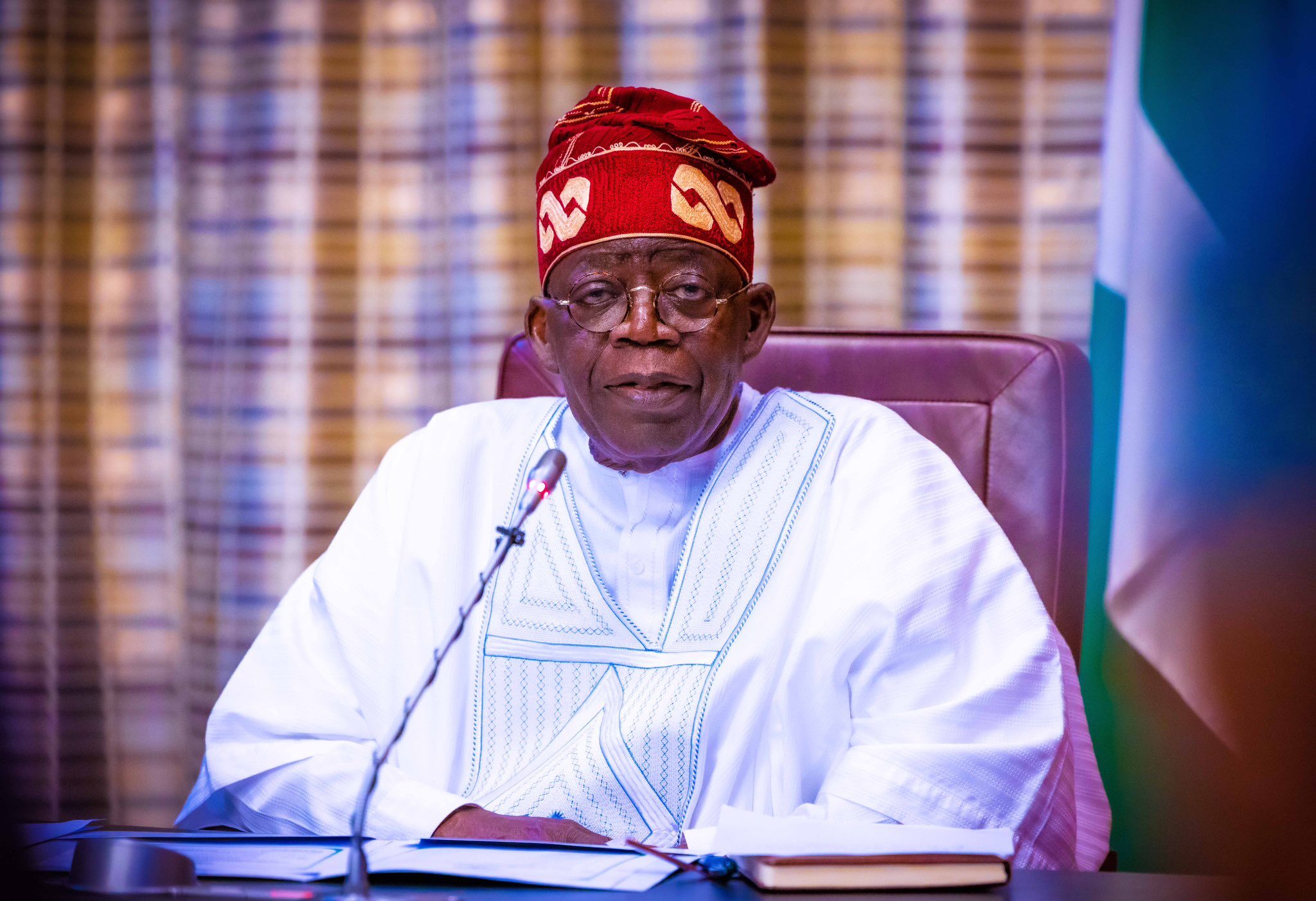
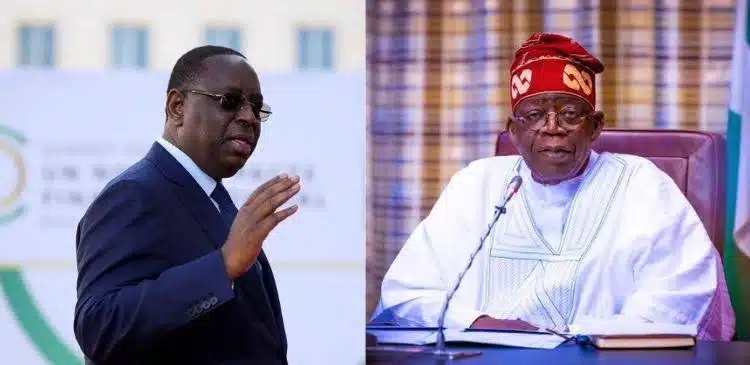
Tinubu makes maiden official visit to France

By Ahmad Deedat Zakari

Nigerian President Bola Ahmad Tinubu is set to make his first international trip to France. 

The Special Adviser to the President on Special Duties, Communication and Strategy, Dele Alake, disclosed the maiden trip of the President in a statement on Monday. 

According to Mr Alake, the President will join other world leaders to review and sign a New Global Financial Pact that places vulnerable countries on the priority list for support and investment, sequel to the devastating aftermath of the COVID-19 pandemic. 

The two-day summit also aims at mobilizing innovative financing for countries prone to climate disruptions, fostering development in developing nations and addressing other diplomatic concerns.

The Summit will be hosted by President Emmanuel Macron of France and will be held at Palais Brongniat.

The Special Adviser also disclosed that the President will return on Saturday.

Climate Crisis: Challenges for Nigeria’s new administration

By Nusaiba Ibrahim Na’abba

There are so many things on the table awaiting the newly inaugurated administration. With insecurity topping the list, there is a great task of realising viable and sustainable economic alternatives, developing a solid healthcare structure, and battling an ever-evolving overwhelming climate reality. The just-inaugurated administration will undoubtedly be challenged by many of what its predecessors fought. Addressing these issues of high public priority is an invaluable facet of the success of Bola Tinubu’s administration.

Unifying the country after a rigorously contested election is another challenge the incoming administration will face. The recently held elections have unveiled another dimension of disunity in this country. Unity is always an essential asset in any country’s development, which is why it is a pillar upon which societies thrive. Even before the new president was elected, the Muslim-Muslim ticket that filled the air was refuted by opposition parties.

Environmental challenges have dreaded many plans to succeed in Nigeria. Recently, because they are primarily multi-faceted. In 2022, they brought an unprecedented climate crisis in Nigeria and the world. Floods have devastated communities in Southern parts of the country, and many of the communities in the North were displaced. The inherent consequences of climate-related problems in our country are truly worrisome.

Over 12,000 farmlands across 14 local government areas were destroyed in Kano State due to heavy and torrential rainfalls. These figures were pronounced by the Kano State Emergency Management Agency (SEMA). In addition, several families were forcefully displaced from their homes.

In Jigawa State, many homes were destroyed by heavy rains and floods. Numerous families had to be dispersed across schools, serving as relief camps for the displaced. Some innocent lives were lost after being buried by the building, an effect of heavy rainfall. A substantial number of farmlands were said to have been destroyed too. These issues occurred while the President Buhari administration was nearing its end and political campaigns heightened.

The federal and state governments rushed to cushion the effects by sharing palliatives with affected communities. Philanthropists also played an essential role in supporting the victims affected. Many families had lost everything, including their only source of livelihood, farming. This challenge intensified living conditions for average Nigerians in these parts of the country as prices of commodities hiked and the cost of living rose significantly.

Now after a year, we’re back at it again. The Nigerian Meteorological Agency (NIMET) has started highlighting forecasts of what we would expect during this year’s rainfall season, and indicators are frightening; heavy rains and thunderstorms are the pointers. And because the foresight comes as a warning signal, many families in these areas are already baffled with unimaginable thoughts, picturing last year’s experiences.

Apart from heavy floods, the inconsistency of rainfall in the Northern part of the country is another climate wrinkle. If not managed with the right agricultural methodologies, the inconsistency of rain will only worsen access to food supplies. Policies of the just concluded government in terms of border closure and later ban on importing products like foreign rice have hit hard a large percentage of Nigeria’s population. Most average Nigerians have long relied on these foreign food supplies for survival. Even with the supposed increase in agricultural activities as the alternative induced by the Buhari administration, the prices are unbearable.

Heat is now persistent with the cut down of trees in the North. The severe effect has been felt by people, unlike heat seasons before. This year’s Ramadan season was barely scaled through because of excessive heat. By now, many are starting to realise the importance of building trees and the ills of cutting them down. Federal and state government initiatives at this stage in our lives must prioritise replanting of new and resilient breeds of trees in places set for infrastructural activities. Our experiences have highlighted that prior climate change initiatives in this respect are not enough.

Health problems are also being exacerbated as climate change continues to unravel. Continuous pollution consistently exposed Nigerians to various health hazards. Gigantic pyramids of waste in cities have polluted healthy air. In areas where the waste pyramids are later burnt down, people are forced to breathe in harmful substances that have long-lasting effects. More so, manufacturing companies in, for instance, Kano, have been hit with several allegations of releasing toxic substances after their production processes.

According to Wasteaid (2021), with no access to waste management services, one in 3 people worldwide have no choice but to dump or burn their waste. Open waste burning is a significant emitter of black carbon, CO2, carbon monoxide, and other harmful toxins. This explains the risks attached to indiscriminate waste generation and management.

The findings are vindicated by United Nations Environment Program (UNEP) 2021 in a study which identified that Nigeria produces more than 3 million tonnes of waste annually, and only 20 to 30 per cent is collected and disposed of. Uncontrolled wasted burning, which is one of the practices, contributes to deteriorating air quality in Urban centres.

In their recent publication this year, UNEP also states that in Nigeria, sachets have become increasingly widespread, especially in fast-growing cities like Lagos. Research shows that about 50 to 60 million used water sachets are thrown into the streets daily”. When you picture the whole of Nigeria in terms of this indiscriminate act, you know a bigger problem lies ahead unless necessary measures are implored. I have not forgotten about e-wastes that have found dwelling places in Nigerian cities.

I cannot possibly explore all the existential climate challenges within this single piece. On the one hand, the federal government is currently overwhelmed with subsidy removal, dollar instability and making appointments. On the other hand, at state/local levels, some governments a busy investigating the ills of just concluded administrations while others are trying to get a hold of the affairs of the states. Unfortunately, all these aren’t slow down the speech of climate-induced consequences.

In the southern part of the country, Nigeria has been fighting oil exploration problems which have disrupted livelihood. Floods have been a major occurrence in areas where oil is not being extracted. These challenges have to be creatively and carefully addressed.

Nigeria is blessed with enormous human resources capable of producing excellent ideas to combat some of these issues. As part of the government’s obligation to serve, it must consider accepting solutions from communities, creative youths, and start-ups. Many ideas can be supported with considerable investment to help the fight against climate-induced calamities.

Nusaiba Ibrahim Na’abba is a master’s student from the Department of Mass Communication, BUK. She is a freelance writer and researcher. She can be reached via nusaibaibrahim66@gmail.com.

Majma’al Bahrain: Arabs in Kano II – the sequel

By Prof. Abdalla Uba Adamu

My posting about MU Adamu’s 1968 paper on the influence of Arabs on Kano culture, economy and religious practices has ignited a few responses of personal nature from some readers interested in their own interconnected life stories. This is a follow-up and update.

I think it is wonderful that we begin to interrogate our past so that we can appreciate our present in order to make better plans for the future. We were all besotted with this implausible concept of ‘Hausa-Fulani’ that we tend to ignore other genetic tributaries that constitute the Hausa genetic pool, especially in Kano. Such Majma’al Bahrain is either unknown to many or ignored. Bringing it out means that the ethnic picture of the Hausa is more than the mingling of the Fulani genes with the Hausa – there were dashes of Arab in there thrown for good measure.

For the most part, the Arab voices had been silent. I think it is time for them to voice out their life histories in conversations with their elders. Not to further divide a monolithic Hausa society but demonstrate how the Hausa have been developing into distinct, absorptive people. Clearly, then Hausa is not a language but a people. Ask any individual in Kano with ‘Fulani’ or ‘Arab’ ancestorial roots, and they will tell you they are Hausa, ‘even though my grandmother is Fulani/Arab/Russian/Greek, etc.’

Let’s split hairs here. Having different languages but the same skin colour – whether you are black, white, brown, yellow or (if an alien) green, and submitting to the same central, national governing authority makes you ‘ethnic’. Having the same attributes but without recognition of national authority, only blood and kinship ties make you ‘tribal’. Separation across skin colour is a race, not an ethnic issue. Arabs are a separate race from Africans. So, what happens when the racial divide is crossed (bred)? Will a new ‘race’ emerge?

The Arabs’ contributions to the economy and culture of Kano are far more than any other ethnic group, including the Fulani. Consider the Yemeni alone and their massive contributions to the animal skin trade in northern Nigeria. Initially ‘imported’ as Italian trade agents from Yemen in the early 20th century, they have now become domesticated to the Hausa society. Yes, they are light-skinned, and quite a few speak Arabic; but the mid-generations have lost the Arabic language. As a ‘minority’ group, they intermarried with local African women and their offspring contributed to the sustainable development of culture and life in Hausa societies without the consciousness of being ‘the other’. What are then the cultural specificities that tie them to the Arab world? Can it be in dress, language, food, existential rites and rituals (birth, living, death)? How do theirs – if at all present – differ from those of the Hausa?

Then consider the Lebanese and their input into the goods and products found in various Kano markets – including their influence all over West Africa. They are less integrative with their African hosts but have been linguistically domesticated, and for all intents and purposes, many self-identify as Hausa and retain some living rituals (e.g., food habits). This is an area initially mapped out by Sabo Albasu’s monumental groundbreaking research, “The Lebanese in Kano” (which is based on his 1989 doctoral thesis), and unfortunately, not much else was done on such a scale by other people. I wish he could update and re-print it, as now, more than ever, is the time for it.

The Sudanese, more than the other Arabs, had integrated more effectively into northern Nigerian Hausa communities, perhaps due to the gradation in their skin colours – from extremely dark to extremely light – than either the Tripolitanians, Yemeni, Lebanese or Syrians/Jordanians, whose clearly light skins made them stand out in any group. Establishing themselves in the city of Kano at Sudawa (Sudanese settlement), they formed part of the identity of the Kano city populace.

The Sudanese influence was also more intellectual. While they were instrumental in trade, their main contribution was in education. For instance, when the School for Arabic Studies – undoubtedly the Oxford of Arabic Studies in Nigeria – was established in 1934, it was to Sudan that inspiration was sought, including the teachers. Even what later became Bayero University Kano was first headed by Abdullahi el-Tayyeb, a Sudanese. No talk of Sudan itself being a destination for studies at all levels by northern Nigerians. You don’t see such rush for education in Lebanon or Yemen.

While rummaging through the caverns of an old abandoned hard drive, I came across a booklet that Kantoma (Muhammad Uba Adamu) had asked me to extract from his “Confluences and Influences” as a standalone paper (presented in 1998) and later with additional material, as a booklet. We named it “The Presence of Arabs in Kano”. Lack of funding prevented its publication, but I was able to get it published as a paper in a book project. A link to the paper is given at the end of this posting.

For those interested, I have included the table (from the paper attached) of the 25 Arab-dominated Kano inner city wards. I did this because not many would have the time to read 43 pages of the paper!

Adamu, Abdalla Uba. 2014. The presence of Arabs in Kano. In A.I. Tanko & S. B. Momole (Eds.). Kano: Environment, Society and Development (pp. 125-164). London & Abuja: Adonis & Abbey Publishers.

Or: https://shorturl.at/dgzW0

Late Haruna Kundila: The pre-colonial wealthiest person in Kano

By Jamilu Uba Adamu

Late Mallam Sa’adu Zungur (1915 – 1958) in his song Arewa Mulukiya ko Jamhuriya said;

“Ya Sarki Alhaji Bayero,

Ga Yan birni da Kanawiya.

Tun Bagauda na saran Kano, Suka fara fataucin dukiya.”

Kano State has been a trading and crucial commercial centre throughout its history.  History has shown that Kano has produced several wealthy individuals whose names will always be there in the annals of history.

The ability of Kano and its people (Kanawa) to create wealthy individuals did not start in this modern era. The likes of Madugu Indo Adakawa, Muhammadu Dan Agigi, Madugu Dangomba, Umaru Sharubutu, Mai Kano Agogo, Alhasasan Dantata, Adamu Jakada, Muhammad Nagoda and many others were among the wealthy individuals that Kano produced.

Late Alhaji Haruna Kundila (1810-1901) was known for his great wealth and fortune in the pre-colonial Kano during the reign of Emir Abdullahi Maje Karofi and his successor Emir Bello Ibrahim Dabo.

This popular Hausa saying attributed to him, “Ba na siyarwa ba ne; ya gagari Kundila”, means that there is nothing Kundila can’t afford to buy unless it is not for sale because of his massive wealth and purchasing power.

Haruna Kundila was born in 1810 at Makwarari Quarters in Kano city. 

The story about his source of wealth says that “one day when he came out from the house, he met Mallam Sidi (according to the story, Mallam Sidi is a pious, God-fearing Islamic teacher, and many people believe that he is a “Waliyyi” ). Mallam Sidi asked Kundila how he could help him get those that could evacuate his sewer pit. Kundila answered him positively.  When he checked and couldn’t find anyone to do the job, he decided to do it himself. When the Mallam returned and asked whether he had seen the people? He told him that the people had already come and done the work; Mallam Sidi asked him again, “How much were they supposed to be paid for the work? But suddenly, someone who witnessed how Kundila did the work alone intercedes and tells Mallam that Kundila did the work alone. When the Mallam heard that, he shook his head and said; To , Insha Allahu, duk inda warin masan nan ya buga gabas da yamma, kudu da arewa, sai ka yi suna, ka shahara an san ka “

History tells us that Haruna Kundila, who was a slave trader in those days, had trade relations with traders coming to Kano from foreign countries such as Mali, Sudan, Libya, Senegal, Damagaram, Agadas, Garwa, Duwala, Bamyo and Fallomi. 

In his heyday, no one in Kano has Kundila’s wealth. Kundila was rich and had estates by each city gate (Kofofi). It was said that he owned more than one thousand enslaved people. He was the wealthiest trader in nineteen century Kano. 

The name Kundila is because Haruna has a younger sister named Binta, who follows him at birth. After she grew up, one day, Haruna went home and found his sister in their mother’s room. He said to her, “Please, Binta, miko min kundina”. The sister started repeating the words “Ina kundina? Ina kundina? Since then, Kundila has followed him for the rest of his life. Until today, some government housing estates in Kano, such as Kundilar Zaria Road, bear the name.

It was said that when he died in 1901 (two years before the British conquest of Kano), Kano was shaken by the loss of one of the greatest wealthiest individuals in its history.

Jamilu Uba Adamu wrote from Kano via jamiluuba856@gmail.com.

Malam Saidu Jibrin Kwani: A case study of a strong man vs strong institution debate

By Nasiru Manga

Anytime Nigeria’s myriad problems and challenges are raised in a discussion which also involves how to turn around the country’s fortune, it more often than not leads to a fascinating argument among intellectuals as to which is more important between establishing a solid institution which produces successive good leadership or having a leadership of strong men to engender strong institutions. In that instant, I find myself vacillating between the two opinions. I find both of them valid and very difficult to be disputed. It’s a case of a chick and an egg dilemma regarding which must have existed first, the chick which laid the egg or the egg from which the chick was hatched.

Reasoning with either of the points, I reflected on my teenage experience in secondary school more than two decades ago. I then relate the arguments with the leadership of five or six successive principals in my secondary school, Government Arabic College, Gombe. How these principals managed the school was a practical example of the validity of the two arguments depending on the side one takes.

One of the principals, in particular, stood out. He is Malam Saidu Jibrin Kwami. His exemplary leadership during his stint as the school’s principal afforded me the feeling of what good leadership can do, even in a small school environment. Before him, his predecessors couldn’t make any difference. The principal who succeeded him couldn’t equally build on his achievements. It’s also proof that without a vital institution, a strong leader’s efforts come to nought if he leaves the stage and succeeds by a weakling. For my readers to deeply appreciate why Malam Saidu Jibrin Kwami’s exemplary leadership towered above the rest of the principals, let me take you down memory lane of what was obtainable in the school.

The system was, and until we left the boarding secondary school in 2002, the principal, in addition to the daily management of the school, was in charge of students feeding. I didn’t know whether the funds for the feeding were released to the principal directly from the state ministry of education or the ministry provided the school with all foodstuffs. It released some funds to the principal for the daily running of the school and buying groceries. But I did know that the school store was getting restocked regularly.

The three square meals day in and day out consisted of mostly pap with sometimes two pieces of ƙosai served as breakfast. The pap had no sugar, and perhaps, due to how it was prepared, it had a sedative effect on students during school hours. Black tea with rumpled tiny bread was served as breakfast once a week. The lunch and supper were either tuwo made from processed maize, mostly half-done, called gabza by students or eba made from gari, served alternately for lunch and supper. The soup for the gabza or eba, mostly miyar kuka, was prepared with little to no spices and bereft of any accompanying protein in the form of meat. Rice which one couldn’t tell whether it was a jollof rice or simply white rice without soup, was served on Thursdays. The meat was served only once in a blue moon.

It is needless to say that the rations were not enough for students. Worse of it, many students used to end up not having their rations as what was given to the cooks to prepare was barely enough to go around. The service was, therefore, on a first-come-first-served basis, excluding senior students who needed not join queues. If one missed his share, that was all, and he would be told “ka bi Yerima“, an expression meaning “you have missed, there is nothing for you.” It was said that the cliché “ka bi Yerima” has its historical origin in one of the Gombe princes who sought and lost his father’s throne to then Emir of Gombe, Alhaji Shehu Abubakar. So “ka bi Yerima” means one followed in the footsteps of the prince, a loser. Ask me not about its authenticity.

To be fair to the principals of my secondary school, the situation was almost the same in all boarding public secondary schools, at least in Gombe and Bauchi states, around that time and even some years before that, as confirmed by those who attended the boarding schools before us. There were, of course, slight differences here and there occasioned by changes of different school administrators depending on their level of prudence and management of resources.

One incident I can’t forget during my first year was a riot in the school. The then-principal was unbelievably niggardly. Students’ rations which were, to start with, too little, only enough to feed a three-year-old baby, became so frequently inadequate to go around. Kun bi Yerima became the order of the day as more and more students started missing their rations at the dining hall. This was exacerbated by the fact that it was towards the end of a term when the foodstuffs brought from home by students and some money given to them by their parents to complement the school feeding programme had finished, thereby forcing many to rely on the food provided by the school which was not enough. There was also a shortage of water in the school.

So, one morning, some senior students from SS 2 and 3 woke up and said they had had enough. They took to the school’s streets chanting slogans that the principal should go and that he was a thief. After gathering, they headed to the school’s staff houses, where the principal lived. They started pelting stones at his house. He escaped by a whisker, and the school got shut down for a few weeks.

Upon resumption, we met a new principal and were informed that about seven (7) students, leaders of the protest, were expelled from the school. But still, there was no significant improvement in school feeding or academics. We only had three to four subjects maximum, out of the nine subjects we were supposed to have daily. The only exception was when we had teaching practice students from the Federal College of Education. And during that time, permanent teachers virtually abdicated their responsibilities, leaving everything to the student-teachers. Another two principals we had afterwards couldn’t effect any change. Their priorities were neither students’ academic nor their nutritional well-being.

Then came the revolutionary principal, Malam Saidu Jibrin Kwami. We were in SS 3, about five years after that principal against whom students revolted, and the fourth in the succession of principals since we enrolled in JSS 1.

The first thing he undertook was an improvement in our academics. He frowned at some teachers habits of sitting and chit-chatting in staff rooms without attending classes. He declared that he wouldn’t condone their flagrant negligence of duty. He insisted that every teacher must not miss his lesson twice weekly without a genuine reason. We then started having completed nine lessons on an unprecedented day.

How did he achieve that? He gave all class monitors notebooks to use as registers where each teacher would write their name and append their signatures at the end of their period. At the end of the class every day, the class monitors would queue up at his office, where he checked the register of each class to see if there was an absentee teacher. He also told us in the assembly that we should report any teacher we observed wasting away their period of 30 minutes or 45 minutes blabbering instead of teaching.

Malam Jibrin Kwami also introduced extra evening classes (which we called prep) daily, save weekends. Before him, there was not much importance attached to it by his predecessors. Only junior students used to attend it, and it wasn’t daily. But during his time, he supervised the evening classes himself; and he would personally go around hostels to chase out stubborn senior students who would rather stay put in the hostels while the prep was ongoing. If he sighted a student loitering about, he would shout from afar, “Who is that gardi?” He also ensured that all the classrooms and all the streets from students’ dormitories leading to the classes were fully lit so that students wouldn’t complain of darkness. There were no Discos then, and NEPA was genuinely faithful. How he achieved that, beat me.

You may be wondering what happened to our food, right? Suffice it to say that during his short period as the school’s principal, we also saw what our parents enjoyed in public schools in the ‘70s and ‘80s. He told us that he also finished in the same school in 1982, and it was unfortunate that things had deteriorated to that level.

Most days of the week, our breakfast became tea (not just black tea, but with milk) and bread as against pap. And we started feeling the taste of sugar in our pap too. White rice and stew, tuwo and eba started competing as our lunch and supper, with rice winning most times. Pieces of meat suddenly appeared in our daily meals, and the soup started having condiments.

One day, he summoned us as the school’s prefects, informed us that we would notice a change in our meal the next day, and urged us to survey and feed him about the change.  He told us the meat price was high, so he decided to alternate the meat with fish. So he wanted us to sample students’ general opinions on the fish substitute as he knew some people didn’t like fish. Such a thoughtful leader!

Unfortunately, as they say, good things hardly last; his tenure as a principal was short-lived. No sooner had we started enjoying his good leadership than he got elevated and appointed as the secretary of our state’s pilgrim board. The school was literally thrown into mourning upon hearing the news.

The man who succeeded him couldn’t properly step into his shoes. Things started deteriorating very fast. Before you know it, we were back to square one. This is the case of having a strong man without a strong institution. And the strong institution doesn’t exist in a vacuum; it has to be built by strong men.

Nasiru Manga can be reached via nasmang@gmail.com.

EFCC presents profile of its Acting Chairman Abdulkarim Chukkol

News Desk

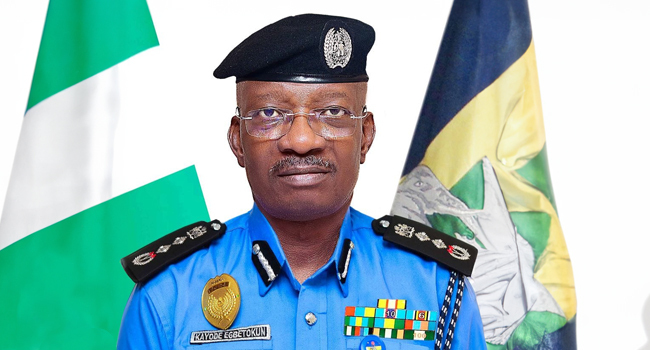
Following Tuesday, June 14, 2023, suspension of Mr. Abdulrasheed Bawa, as Executive Chairman of the Economic and Financial Crimes Commission by the Federal Government, Mr. Abdulkarim Chukkol has stepped in as Acting Chairman of the Commission.

Until this new role, he was the Director of Operations of the Commission.

A pioneer staff of the Commission and an illustrious member of the EFCC Cadet Course One, Mr. Chukkol is a consummate and vastly experienced investigator with speciality in cybercrime and money laundering.

His Command appointments in the Commission include spells as Head of the Advance Fee Fraud and Cybercrime Sections of the Lagos and Abuja Zonal Commands between 2011 -2016, pioneer Commander of the Uyo Zonal Command in 2017 and Commander of Port Harcourt Zonal Command in 2020.

Chukkol has participated in several special operations with international law enforcement organizations and maintains close relationships with Law enforcement agencies such as the FBI, UK National Crime Agency, United States Postal Inspection Service (USPIS), United States Secret Service, Australian Federal Police, Dutch Police, German Police, South African Police etc.

The acting EFCC Boss has worked closely with other Governments to develop law and infrastructure for carrying out law enforcement actions. He is Nigeria’s Contact person at the International Mass Marketing Fraud Working Group representing key Government regulatory, law enforcement, prosecution, immigration and customs, financial intelligence, and consumer protection agencies as well as trade and competition bureaus dealing with mass marketing-related issues from Spain, Nigeria, Belgium, Europol, Canada, United Kingdom and the United States.

He has attended several courses, seminars and workshops on Public Corruption, Advance Fee Fraud and other economic and financial crimes both locally and internationally, including the Oxford University, United Kingdom, in 2022.

His work and initiatives over the years have earned him several awards and commendations both locally and internationally, including “the Most Outstanding Award in Operations” by the EFCC and the “Outstanding Performance Award” by the United States Department of Justice, among others.

The acting EFCC Chairman holds a bachelor’s degree in Agricultural Economics from the University of Maiduguri (2000) and Post Graduate Certificate in Criminal Justice Education from the University of Virginia, United States as well as Graduate Diploma in Cybersecurity and Spectrum Management from the United States Telecommunication Training Institute, Washington DC, United States.

He is also an alumnus of the FBI National Academy, Quantico; European Center of Security Studies, Germany and a Fellow of the War College, Nigeria.

When we thought we produced our best

By Muhammad Sulaiman Abdullahi, PhD

President Muhammadu Buhari has come and gone. It is believed that many Nigerians thought Buhari would be the best president of their lifetime. Even Baba Buhari himself assumed and pretended that he was the best. And he did his best; only that his best was not enough for Nigeria.

Baba accused all those before him, directly or indirectly, of mismanaging Nigeria. However, with all the accusations he heaped on others, Nigeria was technically and practically raped under his watch. It is even alleged that most of the suffering inflicted upon Nigeria and its innocent citizens was the handiwork of some of the closest associates of Buhari, including his family members. Some supporters claimed that his style was the best way to govern. They boasted that Buhari assigned competent hands to govern, and he never interfered. This assertion has many troubles, and I will mention only two.

First, it is wrong for any leader to assume that his workers or those he assigns to do a specific job for him are perfect. They are not, and no one is. And even if assuming they are, he is responsible for watching, gauging, supporting and assessing them. Buhari didn’t do that. He was just there sitting, flossing and picking his teeth.

Second, some of those assigned some responsibilities and some ministries during the Buhari era were not competent. Look at what Adamu Adamu and Ngige and some of their close allies did to education. Look at what Hadi Sirika did to aviation. Look at what Godwin Emifele did at the Central Bank of Nigeria. These are just a few among many. One would wonder how did that happen under Buhari’s watch.

When Nigerians voted for Buhari in 2015, most believed Nigeria’s worries of 1960 downwards would just vanish. There is a widely circulated story of someone who sold his generator, considering that the electricity would be fixed and that the generator would be a nuisance to him and occupy space. Buhari disappointed him and all other Nigerians in the energy sector. The electricity tariff was hiked unprecedentedly, to the corrupt extent of not even giving notice. They hiked it at their will without recourse to anything or fear of anyone. This was Buhari’s era.

Furthermore, according to what many Nigerians believe, had Buhari not become a president, many fools and even non-foolish among Nigerians would have tagged him “The best president that never is”! He came and went, and his performance shows he isn’t the best.

However, no one will occupy that seat without doing good, willy-nilly. Buhari did some things, but I don’t think he did it consciously. His undoing and the power of the seat made it happen, as Baba didn’t seem to care then. I can’t mention a lot, but I know he tried not to influence the 2023 elections in favour of his party. That single action should be emulated by all those who come after him.

Also, some of our airports look majestic but at the expense of our roads. Some think that it happened due to his excessive love of foreign trips. He couldn’t bear the sinister looks of our airports as he happens to be a constant, consistent and regular customer there.

The health sector received almost total neglect during Baba’s era. He knew about it very well as he shunned all Nigerian hospitals because his government abandoned them. The former president enjoyed robust, healthy and developed foreign medical healthcare when Nigerians died in Malaysia and lack of genuine Capenol. He didn’t care, and neither did he ever talk about it.

Wallahi Nigerians suffered a lot under his leadership. Inflation has never been bad, like how it grew big during Baba. Another thing that Nigerians may live to regret is their high hopes for Buhari’s government, which became a curse on them. The ordinary people with whom Buhari sided and dined when he looked for the seat lost him completely. He later started accusing them of laziness.

His non-strategic accusations to all classes of people in Nigeria started in phases and kept on changing based on the position he found himself. 

The first phase was when he was aspiring to be the President. Then, he tactically sided with the masses and openly demonstrated with them on the streets. He yelled at the PDP government and accused them of various things, and his government multiplied all the suffering. The second phase was when he became the president, accused all the Nigerian politicians, and painted them bad in the eyes of all Nigerians and the world.

Lastly, in the final phase, when he consolidated his grip on the leadership, he turned and accused all Nigerians, especially the youth and the masses he sided with and voted for him. He accused them of being lazy and full of enjoyment as if he didn’t want to see anyone enjoying and smiling!

He governed as if he was doing Nigerians a favour while most of those who supported him were either dying of hunger, kidnapped or wholly disoriented.

Nigerians from the North and South graciously excused many of Buhari’s excesses, thinking he would do wonders. Today is only a few days of President Bola Tinubu’s government, but he has taken some decisive actions which Buhari’s eight years couldn’t do.

We didn’t have high hopes for Tinubu initially, but we foresee and pray that his government will be better and more beneficial to Nigerians than the I-don’t-care government of Baba Buhari.

Dr Muhammad can be reached via @muhammadunfagge (Twitter) or email: muhammadunfagge@yahoo.com.

Revisiting a Classic: M.U. Adamu’s notes on North African traders in Kano

By Prof. Abdalla Uba Adamu 

In 1968 I was a twelve-year-old whippersnapper and found solace in my father’s library (hate football and games anyway!). A journal, Kano Studies of the year, caught my attention because of the way my Dad held on to it. I fixed my sights on it, eventually opening it and trying to read it. Oh, I did, quite all right, but I did not understand half of what was written! However, I did not give up and continued perusing the journal. 

Eventually, during high school years, a couple of years down the road, I discovered what glued my late father, Muhammadu Uba Adamu, alias Kantoma, to that specific issue – his article. The article was titled “Some Notes on the Influence of North African Traders in Kano”. This time when I read it, it made sense. I found it fascinating, and I can genuinely say it planted the roots of historical interest in me. However, I was keener on race, culture and identity, and in particular, how new racial identities emerge as a result of what Kantoma himself later referred to as ‘confluence and influences.’

“Some Notes on the Influence of North African Traders in Kano”, as I was to discover later, was based on the methodology of what Victor Turner referred to as “the anthropology of experience”. Kantoma embedded himself in the Arab community (a bit easy to do, with an Agadesian grandmother) in the Alfindiki community in the heart of the city and close to his traditional family homestead at Daneji. It was through extremely loose focus group discussions that he was able to gather as much data as he could. And he was then a student of Political History at Ahmadu Bello University Kano (via Abdullahi Bayero College). 

Years later, I had the chance to befriend one of Kantoma’s teachers, John Lavers. He glowingly told me how excited he was with Kantoma’s initial paper and how he made a series of suggestions that eventually turned the paper into a classic. John Lavers was one of the founders and editors of Kano Studies. 

The paper was extensively revised by Kantoma as “Further notes on the influence of North African traders in Kano”. It was presented at the International Conference on Cultural Interaction and Integration Between North and Sub-Saharan Africa, Bayero University Kano, 4th–6th March 1998 – some thirty years after the original. Unfortunately, despite being the person who typed it up for him, I could not locate a copy (remember, we were using floppy drive storage in those ancient days!).

Some notes planted in me an interest in race, culture and identity and the interrogation of the specific gravity of racial identity in Africa. For instance, take a community of Tripolitanian Arabs who settled in Dandalin Turawa, Kano, right on the edge of the Kurmi market. Years later, they were no longer ‘Turawa’ but African – at least in colour and language, as most have also lost the Arabic language of their forebears. So, what exactly are they? Arabs? Hausa? Or do they create a crazy hyphenated identity – Hausa Arabs (like the ridiculous ‘Hausa Fulani’)?

So, I started my own anthropological trajectory by writing a proposal for a Stanford University (US) residency on Race, Culture and Identity. I wanted to map the six groups of Arab residents in Kano to determine how they self-identify – language or genes. These are Shuwa, Sudanese, Tripolitanians, Syrians, Lebanese, and the Yemeni. Again, Kantoma had much data on especially the Yemeni, in addition to his earlier Tripolitanian engagements.

For a few years, I worked with him to flesh out the project and even got some of the Yemeni elders interested in proper documentation of their community (as was done by S.U. Albasu in “The Lebanese in Kano”). I did not get the Stanford residency, and other things about the daily grind kept me away from the project, so I put it on hold! I can’t even locate the original proposal now. But who knows? Once I have a free year or so, I might rummage through some forgotten hard drives and see what lurks there and, if possible, get back into the race (pun intended!). 

Here, for your archival pleasure, is a gift from Kantoma pending a full-blown site that will have all his writings much later in the year (hopefully by Fall). Download from here:  https://bit.ly/3p2LeOx.