Nigeria

Minister defends directives asking permanent secretaries to bow to Tinubu

By Sabiu Abdullahi

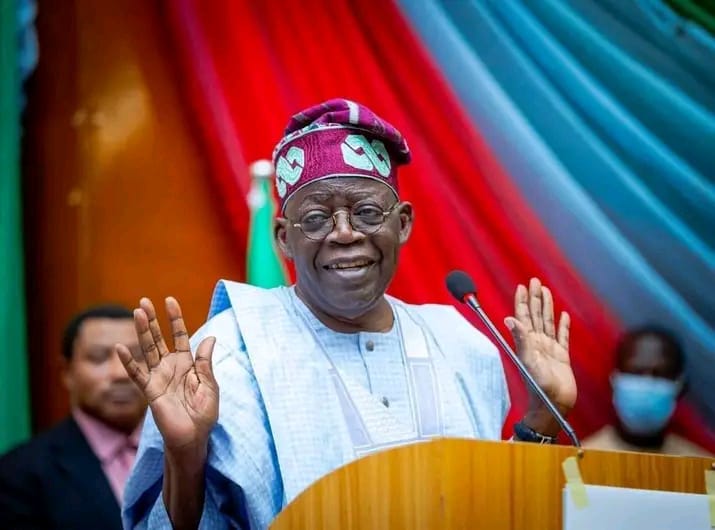
The Minister of the Federal Capital Territory (FCT), Nyesom Wike, has defended his decision to ask Permanent Secretaries of the FCT administration to publicly bow before President Bola Tinubu. 

Wike had come under criticism for his action, which many Nigerians described as “sycophancy taken too far”.

However, the minister explained that the gesture was meant to show appreciation to the president for approving the appointment of the permanent secretaries. 

“Two days ago, when the president came, we tried to thank him for what he did in making sure that those who had already lost hope in their career progression got to the peak of their career,” Wike said. 

He added that the president’s approval had given hope to the permanent secretaries, who had previously lost hope in their career progression. 

“Mr. President granted that, and then I called out the permanent secretaries who are the beneficiaries to come out and take a bow and thank Mr. President,” Wike explained. 

The minister condemned those criticizing him, saying they lacked anything good to say.

“It is an honour to be called out to take a bow, but some human beings can never see anything good.

Instead, they are criticising, saying, ‘How will you call people who are permanent secretaries and ask them to take a bow?” Wike added, “Instead of you to commend Mr. President for doing well, for giving hope to those that didn’t have hope before.” 

The minister’s defense comes after widespread condemnation of his action, with many Nigerians describing it as an act of sycophancy.

Senate approves 300% pay raise for judicial officers

By Sabiu Abdullahi

The Nigerian Senate has given the green light to a bill that would substantially increase the salaries of judicial officers across the country.

The proposed legislation, which was forwarded by President Bola Tinubu, aims to improve the remuneration of judges and other judicial personnel at both federal and state levels. 

The Senate’s approval of the bill is a major boost for the judiciary, recognizing the critical role that judicial officers play in upholding justice and the rule of law.

The proposed pay increase is expected to enhance the attractiveness of careers in the judiciary, enabling the sector to retain and attract top talent. 

The Attorney General of the Federation (AGF) has thrown his weight behind the president’s proposal, urging the Senate to pass the bill.

The move is seen as a significant step towards recognizing the valuable contributions of judicial officers to the country’s justice system. 

The approval of the bill is a positive development that is expected to have a positive impact on the judiciary and the country as a whole.

Is STEM-based Nigerian university curriculum obsolete?

By Dr. Hamisu Adamu Dandajeh

It is not a conundrum that Nigerian STEM-based postgraduate students often perform incredibly well when they find themselves in foreign universities despite going through an “obsolete” curriculum. Nigerians are mostly on top of their classes abroad and compete favourably with other best students from all around the world who were taught with the so-called “up-to-date” curriculum. Some of us are witnesses to this anomaly, and the reason for this is simple! 

The Fundamental Principles of Engineering Science, such as gravity, thermodynamics, and fluid mechanics in most curricula in the world are inherently similar. What is markedly different are not only the methods, areas, and propensities of cutting-edge applications but also the relative mastery, tools, delivery, understanding and environment of the instructor. The key concepts are meant for you to think about. When these concepts are fully truly understood, one can solve any complex problem from one’s domain of expertise, starting from the first principle.

I have worked with the Mechanical Engineering curriculum of University College London (UCL), Massachusetts Institute of Technology (MIT) and some modules at Cambridge University. These are the best universities in the world. I audited and developed curriculums in two MIT courses (2.005 Thermal Fluids Engineering and 2.60 Fundamentals of Advanced Energy Conversions), engaged 2nd and 3rd year UCL undergraduates in thermodynamic laboratories and developed engine laboratories similar to that of Cambridge. My experience is that because all the resources needed were readily available and the pedagogical learning outcomes were clear and student-centred, these fundamental concepts were used to derive and solve unbelievably sophisticated equations whose physical meanings and applications were well intended. I always call these universal, natural, and settled concepts, but their usage and applications depend on the goal they are meant to achieve.

Cambridge University has an integrated “Department” of Engineering, NOT ‘Faculty” for a reason. Undergraduate students are required to study general engineering in their 1st and 2nd years and then specialise in their preferred engineering discipline in their 3rd year. The first two years are expected to groom students with most engineering science principles for interdisciplinary problem-solving capabilities. My MSc project supervisor (Emeritus Prof. Chris Lawn) at Queen Mary University of London was a Cambridge graduate. I marvelled at how he developed, from first principles, thermo-fluid equations representing instantaneous mesoscale combustion processes.

A typical Nigerian Engineering curriculum is diverse, rich, and multi-disciplinary. For example, a graduate of Mechanical Engineering at Ahmadu Bello University is expected to take courses like Communication, History, Development Economics, Law of Contracts, Moral Philosophy, Financial Management, Statistics, Quality Control, Linear, complex, and Applied Mathematics. These are in addition to the core courses of thermodynamics, Control, Strength of Materials, Fluid-Mechanics, Hydrodynamics, Aerodynamics, Machine Design, Heat Transfer etc. The mathematics-heavy curriculum has the necessary analytical rigour to prepare and adapt candidates to any academic climate. This is why a third-class graduate from a Nigerian would successfully graduate with a First Class (Hons) in a TOP-UP degree from a UK University.

The fact that students from these global best institutions excel and are industry-ready, despite the common key fundamental principles with the Nigerian curriculum, is not surprising. These institutions further advance fundamental concepts with contemporary grant-ready research, and they establish a vibrant ecosystem that fosters innovation and growth, hence easily attracting the best minds (students and staff) from all corners of the world. Meritocracy is their criteria for admission and employment of manpower. No wonder Boston, Massachusetts, where MIT is situated, is an attractive centre for start-ups and scale-up Biotech companies. 

Nigerian universities can also translate these fundamental concepts to meaningful research and innovation, and for this to happen, the quadruple helix of Academia-Industry-Government-Society should not continue to stand on only one leg of the theoretical “academia” as the status quo. We should refrain our students from memorising and regurgitation of facts via testing “book knowledge” only; instead, we should produce thinkers and re-skilled graduates who would use these fundamental concepts to solve local and global problems.

My prior idea after my Fellowship at MIT was for the current STEM courses to be decentralised to produce the programs of the future. For example, instead of studying the bulk of “Renewable Energy” as a sub-course of an Engineering program, courses like “Wind Engineering”, “Solar Engineering”, and “Science & Engineering of Climate Change” should be redeveloped as separate programs. 

Computer Science could be split into minor courses such as “Data Science”, “Artificial Intelligence”, “Cybersecurity”, “Computational Linguistics”, and “Drone Technology”. Mechanical, Electrical, Biology and Electronics can produce courses on “Robotics and Biomedical Engineering”. 

Based on our experience with COVID-19, “Epidemiology” can also be developed as an independent program. We must all recognise that however excellent these suggestions may be, their success story would also rely heavily on the understanding and delivery of the fundamental principles of STEM.

Dr. Hamisu Adamu Dandajeh is currently a Senior Lecturer in Energy, Thermo-Fluid and Climate Change at the Ahmadu Bello University Zaria. He can be reached at hadandajeh@gmail.com.

Unlocking career opportunities with a fisheries degree 

By MD Aminu, PhD 

Yesterday, I met a young lady who graduated with a degree in fisheries from the University of Port Harcourt. She was hesitant to tell me about her field of study because she often encountered scepticism about its prospects. Initially, she had wanted to pursue engineering but was assigned to fisheries. Many of her classmates transferred to other departments after their first year, driven by the belief that fisheries lacked career opportunities. 

The lady shared her concerns that people often looked down on her course of study, assuming it had no potential for a sustainable livelihood or a great career. However, I assured her that a fisheries degree holds significant promise and began to outline various opportunities, although our conversation was cut short. 

If I had pursued a degree in fisheries, here is the approach I would take to maximize its potential. With a good first degree in fisheries, I would utilize my national service year to study diligently for the GRE, preparing for graduate school in the United States or Canada. Prior to graduation, I would research the top researchers in fisheries globally and identify the institutions they belong to. By examining their research trends over the years, particularly focusing on the last five years, I would gain insights into the latest advancements and focal areas in the field. 

I would then reach out to these researchers, discussing my plans for graduate school and exploring potential funding opportunities within their departments. This proactive approach would demonstrate my interest and alignment with their work. 

Additionally, I would investigate the practical applications of these research trends beyond academia, specifically looking at what employers of fisheries graduates, such as FAO, IFAD, and the World Fish Centre, are currently focused on. Understanding that these organizations emphasize sustainability in their programs, I would delve into the major issues concerning sustainable livelihoods and fisheries management. 

As an African, I would pay particular attention to sustainability challenges relevant to African fisheries. This would ensure that my studies and future research remain pertinent and impactful within my regional context. Additionally, I would explore what researchers in sustainable fisheries in the tropics are identifying as future problems, aiming to stay ahead by addressing medium- and long-term challenges. 

Securing admission to a reputable university under leading fisheries researchers would be a significant milestone. My goal would be to produce a doctoral thesis that is futuristic, globally relevant, and applicable to Africa. I would aim to publish at least three research papers in leading fisheries journals, establishing my expertise and credibility in the field. Throughout my graduate studies, attending leading conferences where fisheries experts convene would be essential. Presenting my research at these events would enhance my visibility and allow me to network with professionals from both industry and academia.

 As I near the completion of my research, I will actively seek positions at global organizations like FAO, IFAD, and the World Fish Centre. Additionally, I would monitor the activities of institutions like the African Development Bank and other UN organizations involved in fisheries and food security in Africa, aiming to identify relevant vacancies. 

Securing a position in a global organization would provide not only an exciting career opportunity but also a platform to make a significant impact. My work would contribute to global initiatives in fisheries management and sustainability, and my expertise would be recognized internationally. 

By strategically planning my education and career path, networking with top researchers, understanding industry trends, and focusing on sustainability, I would be able to carve out a successful and impactful career in fisheries. By leveraging available resources, staying informed about industry trends, and aligning my studies with global and regional sustainability challenges, I would ensure that my fisheries degree opens doors to a fulfilling and globally influential profession. 

The young lady I met need not worry about the perceived limitations of her degree. With determination and strategic planning, she can transform her fisheries education into a thriving career with significant impact.

MD Aminu can be reached via mohd.aminu@gmail.com.

I’ve no regrets handing over to civilian government – Gen. Abdulsalami

By Uzair Adam Imam 

Former Head of State General Abdulsalami Abubakar expressed his satisfaction with handing power over to a democratically elected president in 1999.

Abubakar made this disclosure during an interview with journalists over the weekend. 

He stated, “Not at all! Not at all! Not at all! I am happy with what is going on. Yes, everything is not perfect, but here we are today, celebrating 25 years of unbroken democracy.”

Abdulsalami, who handed over power to former President Olusegun Obasanjo, acknowledged that while there are still challenges, Nigeria has made significant progress since 1999.

“We are not yet there but have come a long way since 1999. The only drawback we have in the system is people still sell their votes, and they do all types of things; they allow the politicians to use them in ballot box snatching here and there – unnecessary things that we should have overcome at this age.”

He emphasised the importance of voters holding elected officials accountable and lamented that some individuals still engage in vote-buying.

“Unfortunately, I still maintain, there are some very few people who abuse the process and they allow their votes to be bought. 

“And if they are buying these votes, certainly they cannot be called to be accountable, the people who are being so elected.”

Despite these challenges, Abdulsalami expressed optimism about Nigeria’s democratic progress and the growing awareness among citizens that their votes matter.

Super cop Abba Kyari regains freedom after 27 months in detention

Suspended Deputy Commissioner of Police, Abba Kyari, has been released from the Kuje Custodial Centre after spending almost two years in detention. 

Kyari’s release was confirmed by the Nigerian Correctional Service spokesperson, Adamu Duza, who said the former police chief had met his bail conditions. 

The Federal High Court in Abuja had granted Kyari bail on May 22, 2024, to enable him to bury his mother, Yachilla Kyari, who died on May 5. 

Kyari was arrested in February 2022 by the National Drug Law Enforcement Agency (NDLEA) for alleged involvement in international drug trafficking.

He was arraigned in court alongside four other police officers and two suspected drug traffickers. 

The case is still ongoing, with the next hearing scheduled for May 31, 2024. 

Kyari’s release has sparked mixed reactions, with some calling for his reinstatement and others demanding that he face justice for his alleged crimes.

ACG Yusuf takes over Zone A leadership as ACG Swomen retires

By Sabiu Abdullahi

Assistant Comptroller-General of Customs Saidu Yusuf has assumed leadership of Nigeria Customs Service Zone A Headquarters, succeeding ACG Hammi Swomen who retired after 35 years of service.

The handover ceremony took place at the Federal Operations Unit, Zone A, Headquarters on May 29, 2024. 

Outgoing ACG Swomen expressed gratitude to God, the Comptroller-General of Customs, Adewale Adeniyi, and the management team for their support.

He also commended the Area Controllers within the Zone, saying, “I’m leaving Zone A in good hands. I believe in your competence, and I know we will celebrate a better result than last year.” 

Incoming Zonal Coordinator ACG Yusuf praised his predecessor as “principled, hardworking, and intelligent.”

He sought cooperation from officers within the zone, saying, “Let us engage stakeholders and ourselves to move this service forward. We have one goal: to succeed and leave Nigeria Customs Service better than we met it.” 

Customs Area Controllers within the zone hailed the outgoing ACG as a “thoroughbred professional” who shared his experience generously.

They pledged support to the incoming zonal coordinator, ACG Yusuf, as he begins his tenure.

Dear FG, why has there not been Udoji since 1974?

By Bilyamin Abdulmumin

To commemorate Workers’ Day on May 1st, FG announced the long-awaited salary increase from 25% to 35 %. However, hours later, the NLC president, Joe Ajaero, kicked against the increase and instead stuck to the 615,000 they proposed as minimum wage.

Although this total figure looks astronomical, it suddenly looks normal, putting the breakdown that Ajaero gave into perspective, especially with the current high inflation. At least that amount should reflect the salary of anyone receiving 100k or more before Tinubu came to power. In other words, the breakdown might be exaggerated to the bottom-line salary earners but not the middle ones.

When several pundits shared their analysis on National Assembly wages, the Ajaero recommendation suddenly became realistic again. The National Assembly’s daily take-home is more than the recommended minimum monthly take-home. So, the argument is that if NA daily wages are so high, the minimum monthly salary asked by NLC should not be too much. This is quite plausible.

But from the interview Abdulaziz Abdulaziz gave, it could be discerned that the highest minimum wage the government is ready to pay is double the current minimum. Abdulaziz first clarified that the current salary increase is temporary, pending when the tripartite committee under the former head of service concluded their assignment. However, as a committee member, he said unlike the 25 to 35% increase, the minimum wage may go up to 50 to 60k. He also emphasised that the federal government is bidding for the highest among the three parties: federal, state, and private.

An argument accompanying the discussion of salary increases is the plight of non-governmental citizens. The argument is that if FG increases government workers’ salaries, what about the rest of the citizens? To buttress this point, government workers are said to be just about 10% of the total population. This argument appears to carry substance, but it is misleading by flipping the coin because the more money on the government workers, the more money on every one.

The people who should be rather pitied are the state and LG workers. Because some of these tiers of government still receive the 1999 salaries benchmark. A friend who works with the local government health sector summarises their predicament. He said a decade ago, when he married, a mudu of foreign rice was 450 naira, and they only used half of it. Now the mudu costs five times, and because their family has increased, they need the whole mudu, but the pathetic part is that the salary hasn’t only increased since, but several bogus deductions have eaten deep into it.

At this time when the FG and labour are arguing about high salary increases to meet public expectations due to high inflation, there is no better time to remind ourselves of the famous “Udoji award” than now.

As a fan of Dan Anache, I heard one of his songs mention “Udoji.” I understood that he was mocking someone, but I didn’t know what it meant, so I took it at face value and enjoyed the song. The lyrics read: “Kai baka soja, kai baka dan sanda, kattsaya jiran Udoji. To Udoji in dai sadaka ce muma araba abamu.” It wasn’t until I came across Mahmud Juga’s article titled “UPE, WAI and Udoji” that I realised what it meant. 

In the article, Jega concluded, “Why has there been no Adebo and no Udoji in this country since 1974? Any young person who does not know what that means should please ask the elders.” So, with the right name in hand, I did what everyone does when faced with a burning question—I turned to search engines.

The Middle East, the world’s oil bank, is known for conflicts and unrest, so anytime one arises, just like the current one is on the card, the global oil price experiences a meteorological rise. One of the most popular oil price rises occurred during the Arab-Israeli War and the Iranian revolution in the 1970s. This was when Nigeria had had an oil boom, and there appeared to be no idea what to do with excess money, so the Udoji Award was. 

Jerome Udoji chaired the committee focused on the effectiveness of public service. One of the committee’s recommendations was to increase the salary twofold, which was implemented by the military head of state, Yakubu Gowon. The salary increase was so popular that it became known after Udoji. Please, someone should tag the current chairman of the minimum wage committee, Bukar Goni Aji.

There is no oil boom now, but there is a subsidy removal boom. So, to paraphrase Jega, Please FG, why has there not been a Udoji Award since 1974?

Political dynamics in Kano State: A reflection on the emirate controversy

By Dr. Mansur Hassan

In recent years, Kano State has been a focal point of political intrigue and traditional authority upheaval. This period of tension can be traced back to the administration of Governor Abdullahi Umar Ganduje, who, in 2019, made the contentious decision to create five new emirates: Kano, Gaya, Karaye, Bichi, and Rano. This move significantly altered the traditional power structure within the state.

The catalyst for this decision was an alleged accusation that the then Emir of Kano, His Royal Highness Muhammad Sanusi II, was supporting the opposition party and not endorsing Ganduje’s re-election bid in 2019. In an effort to diminish the influence of Emir Sanusi, Ganduje went as far as removing him from his position. Subsequently, HRH Alhaji Aminu Ado Bayero was appointed as the new Emir of Kano.

This drastic change sparked debates and criticisms, particularly because it was executed despite a court order against it. However, the opposition, notably the Kwankwasiyya movement, chose not to incite unrest, highlighting their commitment to peace despite the significant political provocation.

The creation of the new emirates was perceived by many as a strategy to dilute the power and influence of the traditional emirate system. This move arguably undermined the dignity and historical significance of the Kano Emirate, not just within Nigeria but across the continent.

In a turn of events, the Kano State House of Assembly in 2024 decided to review and reverse the law that led to the creation of the five emirates. The Kano State Emirate Council (Repeal) Bill 2024 (1445 A.H) was enacted, aiming to restore the traditional structure to its former status:

Title and Commencement: This bill, officially cited as the Kano State Emirates Councils (Repeal) Bill, 2024 (1445 A.H), outlines the legislative intent and its commencement.

Repeal of Previous Laws: It repeals the Kano State Emirates Council Law, 2019 (1441 A.H), and all amendments made thereafter.

Abrogation of New Emirates: All offices created under the repealed law are abolished, and appointments made under the law are set aside.

Restoration of Traditional Titles: Traditional office holders and title holders elevated under the repealed law will revert to their previous positions based on recognized customs and traditions.

Governor’s Authority: The Governor is empowered to take necessary measures to restore the status of the Kano Emirate System as it was before the enactment of the repealed law.

Commissioner’s Role: The Commissioner responsible for Local Government will oversee transitional arrangements concerning assets and liabilities of the abolished emirates.

Key Questions and Concerns:

Legislative Reversal: Can the state House of Assembly reverse a law passed and assented to by the executive governor? Legally, a state assembly has the authority to repeal or amend existing laws, provided due legislative process is followed and the bill receives the governor’s assent.

Federal Intervention: Concerns arise about external influences, particularly from Abuja, creating unnecessary tension by attempting to reinstate the deposed emir through federal power and security agencies.

A Call for Unity:

To the people of Kano State, it is imperative not to allow external forces or individuals, who have lost the people’s trust, to manipulate the situation for political gains. The matter of the emirate is deeply rooted in tradition and should remain an internal affair. Both the reappointed Emir Muhammad Sunusi II and the deposed Emir Aminu Ado Bayero are brothers, and resolving this issue amicably is crucial for maintaining peace and dignity within Kano.

In conclusion, the political and traditional landscape of Kano State is at a crossroads. It is a time for reflection and careful consideration of actions that uphold the integrity and historical heritage of the Kano Emirate. The recent legislative changes signify a potential return to stability and respect for traditional structures, but it requires collective effort and respect for due process.

Mansur Hassan, PhD wrote the article and can be reached via mhassan@yumsuk.edu.ng

We don’t need change in Hadejia

By Garba Sidi 

Patriotism is something any good citizen of a particular society must practice. Anyone who has no interest in the development of where they were born knows nothing. If we all care more about where we came from and do whatever we can to benefit our society, our lives would be on a great path. That wouldn’t happen without loving society and its people.

As it has been said many times, Hadejia has witnessed the leadership of many politicians as local government chairmen. Still, no one has seen half of what the current chairman, Honourable Abdulkadir Bala Umar, has put on the ground for the development of the people and the town.

Sadly, since the beginning of His Excellency Muhammad Namadi (Dan Modi), the current Governor who won the primary election for the APC and beat his running mate after the secondary election from the PDP, Mustapha Sule Lamido, rumours have circulated that he’s going to step down all chairmen and replace them with his allies, even though the law has already been verified to allow three-year terms, unlike before. Before the end of the reign of former Governor Muhammad Badaru, a bill was signed for an additional year for chairmen’s terms, for which all processes were completed and assigned.

We, the people of Hadejia, don’t support that idea. That’s why I want to bring attention to His Excellency and think deeply before taking that action. If, as you have said many times, you came to get what’s needed for the state and the development of the state is what’s on your agenda, prove it by letting Honourable Abdulkadir Bala Umar rule for a second term because he’s the one Hadejians need to continue developing the town.

They gave you one hundred per cent support during the campaign. They spent their wealth, time, and effort just for you to secure the position. Who could do that to someone they see as a rival? Only those close to you are trying to lead you down the wrong path, which may not bring you anything good in the end. He’s ruling us, and we like his ways, and it is not against anything if you let him rule for a second term.

We don’t need change in Hadejia.

Garba Sidi wrote via sidihadejia@gmail.com.