Nigeria

Fuel Subsidy: Another alternative

By Zayyad I. Muhammad 

There is a massive call for President Bola Ahmed Tinubu to restore the petroleum subsidy. The ongoing 10-day “End Bad Governance” protest and the high prices of commodities and services are the result of the removal of fuel subsidies.

If President Ahmed Bola Tinubu does not plan to restore petroleum subsidies, the government must find another way to reduce the price of petroleum products, especially premium motor spirit (PMS), popularly called petrol. Petrol is the lifeblood of any nation. The social problems arising from the aftermath of petroleum subsidy removal are purely local issues that require theoretical and practical solutions. 

Sometimes, the government relies solely on experts who understand the problem from a theoretical perspective, forgetting the real players in the petroleum industry who understand the problem from all its angles: importation, depot loading, haulage, retailing, and manpower management.

Apart from the subsidy, there are other ways to drastically reduce the price of petrol. Tinubu should critically consider restoring the Petroleum Equalisation Fund (PEF). Since it is a contributory fund, its source is principally the net surplus revenue recovered from oil marketing companies. The bridging claims paid to petroleum marketers automatically equalise petroleum prices throughout Nigeria while maintaining affordability.

Aquila’s innovative electronic business solution has eliminated any irregular distribution and claims of bridged regulated petroleum products. The Aquila project is an excellent electronic business solution designed to track the movement of petroleum products throughout Nigeria.

Though the Petroleum Industry Act (PIA), budgetary provisions, and some economic reasons were the guiding principles that led Tinubu to remove subsidies and float the naira, sometimes national interests—security, economic, and social order—must be paramount. It’s purely a local problem that requires purely home-grown solutions.

Some countries painstakingly control the prices of petrol for national security. These countries often have uniform prices for petrol across the entire country. For example, Saudi Arabia, the United Arab Emirates, India, Malaysia, Iran, and Venezuela. In most countries, national security overrides other considerations; the government has significant control over fuel pricing and distribution, often through subsidies or state-owned oil companies.

Take India, for instance. India controls petrol prices through market dynamics and government policies, such as daily price adjustments based on the international price of crude oil. The Indian government sometimes provides subsidies to control the prices of petroleum products. This helps keep the prices within a certain range and makes them more affordable for the general public.

The Indian government achieves this through the national oil companies Bharat Petroleum Corporation Limited (BPCL) and Hindustan Petroleum Corporation Limited (HPCL). Another mechanism India uses in the price control measures to address inflation concerns, freight, and logistics is that the government can intervene directly by adjusting excise duties or providing relief to the oil marketers.

The Tinubu government should critically consider reintroducing the Petroleum Equalisation Fund. It would sharply reduce petrol prices, bring uniformity in prices throughout Nigeria, bring the 21 NNPC depots to life, restore many lost jobs, and double-check product quality.

Zayyad I. Muhammad writes from Abuja via zaymohd@yahoo.com.

How bandits force Niger locals into slave labour on their farms

By Uzair Adam  

Residents of Shiroro Local Government Area in Niger State, affected by ongoing security challenges, have reported that terrorists are compelling locals to work on their farms.  

In an interview with Daily Trust, the residents recounted how the bandits are forcing the locals into hard labour on their farms.  

It was gathered that a terrorist leader reportedly seized over 20 bags of soybeans from farms in Allawa and nearby communities this year. 

During an emergency media briefing in Minna, Saidu Salihu, the Secretary of the Coalition of Shiroro Associations, called for the re-deployment of military forces to Allawa and surrounding areas.  

This, he said, would allow displaced residents to return to their farms.  Salihu explained that various terrorist groups have controlled these communities since soldiers withdrew from the area three months ago.  

He urged both federal and state governments to support local vigilante groups to protect the affected residents. 

He also requested compensation for those displaced and who have lost homes and livelihoods due to the continued attacks. Salihu also revealed that bandits have initiated negotiations with the local communities to facilitate their return.  

However, both the federal and state governments have not responded to these developments.

Abdullah Suleiman Erena, another resident, noted that insecurity in the area extends beyond banditry, involving groups such as Boko Haram, ISWAP, and Ansaru.  

He warned that if the government does not act urgently, these groups could create a more entrenched terrorist presence in the region. 

He described the situation as a growing terrorist ecosystem, noting how these groups force locals to farm and sell their produce on their behalf.  

Erena also highlighted the proximity of Shiroro to the Federal Capital Territory (FCT), which puts the FCT at increased risk. 

Sani Abubakar Yusuf Kokki expressed disappointment with the state government’s response, stressing the need for more decisive action.  

Also, Babangida Kudodo of the Lakpma Youth Forum mentioned that previous reports to the state government had led to little or no action, allowing the situation to worsen. 

Both men called for immediate steps to be taken to dislodge the terrorists from Shiroro LGA and protect the affected communities.

NEC appoints Governor Inuwa as Polio Mitigation Committee chair

By Abdullahi Mukhtar Algasgaini

The Governor of Gombe State, Muhammadu Inuwa Yahaya, has been appointed Chairman of the Committee on Polio Recurrence Mitigation in several states across the country.

This was announced during the National Economic Council (NEC) meeting, chaired by Vice President Kashim Shettima at the Presidential Villa, where key national issues were deliberated.

Briefing reporters after the meeting, the Deputy Governor of Gombe State, Dr. Manassah Daniel Jatau, Ph.D., who represented Governor Inuwa Yahaya, stated that the governor’s appointment was driven by his leadership as the Chairman of the Northern Governors’ Forum and his remarkable achievements in the health sector, particularly in vaccination efforts.

Dr. Jatau explained, “During the NEC meeting, chaired by Vice President Kashim Shettima, we addressed critical issues affecting the states and the nation, including the resurgence of polio in five states—Kano, Katsina, Sokoto, Zamfara, and Kebbi. With Bill Gates and Aliko Dangote in attendance, the gravity of the situation was recognized, and it was decided to establish a polio committee, with the Governor of Gombe State appointed as chairman.”

He added that the meeting also tackled the destruction of roads and bridges caused by recent flooding.

The Vice President directed states to submit detailed reports of the damages, including photographs, by Monday next week.

Dr. Jatau used the opportunity to share insights from Gombe’s inclusive governance approach, where traditional, religious, and community leaders, alongside stakeholders, play active roles in decision-making and implementation to ensure more efficient and effective outcomes.

“When the discussion on vaccines arose, I highlighted our commitment in Gombe, where we apply a system theory approach by involving traditional rulers, religious and community leaders in healthcare efforts to achieve comprehensive coverage. Engaging these leaders builds public trust, leading to stronger support for health programs,” he noted.

He also addressed the challenges posed by “socially hard-to-reach groups,” where cultural, philosophical, and ideological barriers limit access to vaccination.

The Deputy Governor emphasized the importance of addressing these barriers to ensure optimal vaccine coverage and called for research into local herbal remedies as a pathway to affordable healthcare.

“I urged donor agencies to sponsor research into the production of vaccines and medicines from indigenous plants. Since many imported medicines are derived from plant and animal products, and we have similar resources in abundance, tapping into our local potential would be a better solution.”

On nutrition, the meeting emphasized identifying local food sources that can provide balanced diets to reduce malnutrition. Dr. Jatau stressed that proper nutrition is vital to public health, which in turn supports the growth of other sectors of the economy.

Army hands over suspected killer of FUNAAB student to police

By Uzair Adam

The Nigerian Army has apprehended 23-year-old Adeleye Ayomide, suspected of being the killer of Christiana Idowu, a 300-level student of the Federal University of Agriculture, Abeokuta (FUNAAB), who was abducted in Lagos State.

The Lagos State Police Command confirmed the handover of the suspect on Thursday, following an investigation into the incident.

According to Lagos Police spokesperson Benjamin Hundeyin, Ayomide was handed over by the Nigerian Army’s 9 Brigade at about 2 p.m. on September 5.

The late Christiana was kidnapped along the Ikorodu-Yaba Road on August 19, sparking public outrage, especially on social media.

The hashtag #JusticeForChristianah has gained traction, with many Nigerians calling for justice.

A user on social media, going by “Man of Letters,” shared details of how the suspect, who was reportedly in a close relationship with Christiana based on their interactions on Instagram, was tracked down.

Security operatives traced Ayomide through his mobile phone, leading to his arrest at his parents’ house in Ikorodu.

Among the evidence recovered from the suspect was the victim’s blue ITEL A56 phone.

The investigation is ongoing as authorities work to bring justice for the slain student.

Neocolonized Nigeria

By Sunusi Abubakar

With a growing prime working-age population, considerable natural resources endowment, good economic potentials, large labour forces, highly motivated entrepreneurs, vast domestic market, strategic coastal locations, large and fragile agricultural land, and developing ICT sector, Nigeria has favourable economic potential which could lead her to be among the top 20 economies in the world. 

But problems like corruption, nepotism, political instability, inadequate infrastructures and poor economic management are failing its journey to greatness. Unfortunately, all the aforementioned regressive factors are not natural but a breed of artificial additive called colonialism.

Colonialism was first practised by empires such as Ancient Greece, Ancient Rome, Ancient Egypt, and Phoenicia. From about 1550 B.C. onward, these civilisations all extended their borders into surrounding and non-contiguous areas and established colonies that used the physical and population resources of the people they conquered to increase their own power. This resulted in capitalism and imperialism and metamorphosed into neo-colonialism. 

Ancient colonialism is seen worldwide as the origin of capitalism, which is said to be the source of the power and accumulation of Western countries. 

Capitalism is said to emanate from the Cambridge School, a group of economic philosophers. The group was led by the neoclassical economist Alfred Marshall, with Walras, Merger, and British economist John Maynard Keynes on the board. The system always accepts the market system as the best way to organise economic activities in society. They believed in allocating resources through the market forces of demand and supply. 

For them, the commodity is said to be a thing when it is produced to make money. They maintained that the source of their capital accumulation is through profit gained and plough back for future profit, but many people are against this idea. They were cautioned by German economist and human rights lawyer Karl Marx, who described the process as primitive. 

Marx argued that their capital is wherever in the world, made initially through the enclosure movement, dislocation of feudal agrarian productions, huge price inflation, monopolies of trade, acquisition of colonies, extortion enslavement, entombment in the mines of the aboriginal population, looting of indie and Africa as well as hunting of black skins. 

However, capitalism is seen worldwide as the maceration of the proletariat, a low class in society. Capitalism always favoured the bourgeoisie, the owners of the means of production. Moreover, the history of capitalism can only be completed by mentioning the name of the Italian philosopher Machiavelli. 

Machiavelli was the founder of the theory of Mercantilism and a major contributor to the development of capitalism. Mercantilism is an economic system which supports the development of capitalism and the exploitation of the proletariat through the accumulation of monetary reserves by positive balance using the import and export of finished goods. 

Shortly after some economic revolutions that emancipated some countries in Europe, Africa, and Asia, the colonial masters, who were the champions of capitalism, veered to continue their colonial agenda through imperialism. They came up with an idea that saw the integration of world financial institutions like the IMF and World Bank to recolonise former colonies through debt conditionalities. Many African countries fall into their trap. Some managed to escape while others were still bedevilled by it.  

As imperialism seemed ineffective, those colonial masters changed their sinister agenda to neocolonialism. Neocolonialism is also a system that is aimed at giving developed economies indirect control over their former colonies and access to their system of economy, politics, militarism, idealism and other policies to achieve two objectives:

1. Keeping those colonies within the world capitalism system.

2. Preserving the condition of exploitation and unequal exchange between developed and developing economies. 

Like other developing economies, Nigeria is also suffering from the problems of neo-colonialisation.

Neocolonialism paved the way for the developed economies to wage a silent war on Nigeria’s industrial sector indirectly through the development of manufacturing industries and technological advancement. They electrified, mechanised, and chemicalised our agricultural sector. Their dominance mandated our farmers to use pesticides, insecticides, and other agrochemicals mainly produced in their countries. 

Moreover, education is also a victim of neo-colonialisation in Nigeria. The educational sector in Nigeria is neocolonialized through privatization. The government has intentionally neglected our educational sector, leading citizens to enrol their children in private schools at home and abroad. 

Neocolonialisation has also victimised Nigeria’s political landscape. It also affects our system of administration, military,and foreign policy. Western countries have an indirect involvement in Nigeria’s electoral processes through this. They use observation to interfere cunningly in the choice of our leadership. 

However, the ongoing insecurity problems affecting Nigeria are another form of neocolonialism. It is through which Western countries exploit our economy and enjoy the remaining in the name of peacekeeping, intelligence assistance and arms procurement.

With these problems on trend, this is a healing time. It is a time for reflection on what can be done to help Nigeria cunningly harness its economic potential. It is a time to preach against government policies that align with a neocolonialist agenda through dialogue and moral suasion. 

If we fail to reflect as a nation, Nigeria is bound to go back into the decades of direct subjugation, economic exploitation and brutality.

Sunusi Abubakar wrote via muhammadsunusi29@gmail.com.

Bandit leader Bello Turji makes surprise call for peace 

By Sabiu Abdullahi

Notorious bandit leader Bello Turji has released a video message urging an end to the violence between Fulani and Hausa communities.

Turji, who has been linked to various criminal activities, including kidnapping and armed robbery, appealed to his fellow Fulani and Hausa people to lay down their arms and work towards peace. 

The video message, obtained and translated by PRNigeria, reveals Turji’s concerns about the ongoing conflict, which he believes is unwinnable and will only lead to further bloodshed.

He claims that the violence has resulted in the loss of many lives, including those of his own relatives, and that his group had taken up arms in self-defence. 

Turji also criticised the government and security forces for failing to protect Fulani people, alleging that they have been targeted and killed.

He warned that his group would continue to fight if the killing of Fulani people does not stop. 

Turji also called on community and religious leaders to facilitate peace talks, stating, “We need peace, and we need it now.”

This unexpected plea for peace comes amidst ongoing violence and insecurity in the region, with many calling for an end to the bloodshed and a peaceful resolution to the conflict.

Borno govt forms committee to implement N70,000 minimum wage

By Uzair Adam

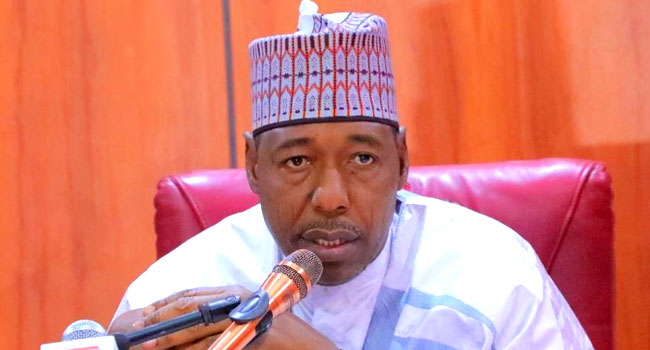
The Borno State Government, under the leadership of Governor Babagana Zulum, has established a 12-member committee to oversee the implementation of the new N70,000 minimum wage.

This development was announced in a statement issued by the Secretary to the State Government, Mr. Bukar Tijani, on Wednesday in Maiduguri.

According to the statement, the committee will be chaired by the State Commissioner for Budget and Planning, Mr. Babagana Mallumbe, with the Head of Service, Mallam Fannami, serving as Co-chairman.

The Permanent Secretary of the Ministry of Establishment, Mr. Sadiq Mohammed, has been appointed as the committee’s Secretary.

The committee is tasked with analyzing the federal-level consequential salary adjustments to determine how they can be applied, either fully or partially, in Borno State.

It will also work on devising a sustainable salary adjustment plan that considers the unique circumstances of the state.

Other members of the committee include the state Attorney-General and Commissioner for Justice, the Accountant-General, the Auditor-General, and the chairmen of both the Nigeria Labour Congress (NLC) and the Trade Union Congress (TUC).

It was also gathered that the committee’s efforts will be crucial in ensuring a fair and realistic wage structure for civil servants in the state.

President Tinubu condoles with Yobe over killings, promises to bring perpetrators to justice

By Abdullahi Mukhtar Algasgaini

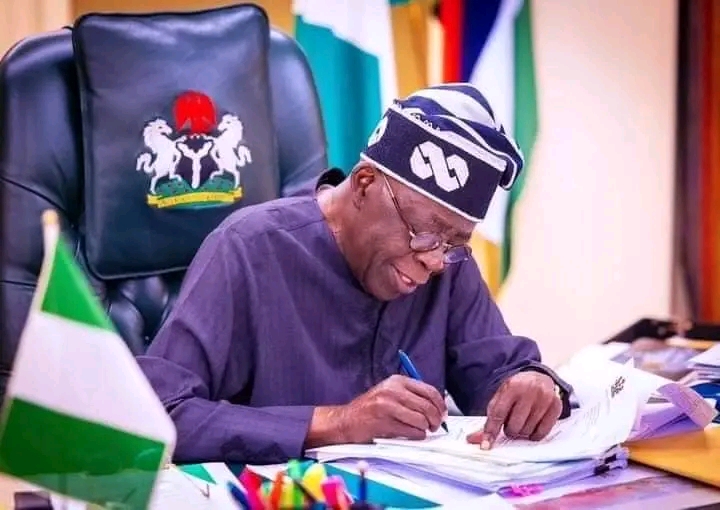
President Bola Ahmed Tinubu commiserates with the government and the people of Yobe over the tragic loss of lives at Mafa in Tarmuwa Local Government Area of the state.

President Tinubu also extends his condolences to bereaved families, and condemns the killings as an atrocious and cowardly act of terror by a degraded group of criminals.

He prays for the repose of the souls of the deceased, speedy recovery for the wounded, and assures the people of Yobe State that the perpetrators of this sinister act will have an inevitable encounter with justice.

Grade matters!

By Abdurrazak Muktar

Grades play a crucial role in determining academic and professional opportunities, particularly in Nigeria. The importance of graduating with high grades, such as a 2:1 or a First Class, cannot be overstated. These distinctions not only reflect a high level of academic achievement but also significantly influence career prospects and societal perceptions.

In Nigeria, a First Class degree is often seen as a mark of exceptional capability and dedication. Graduates with such distinctions frequently find themselves in advantageous positions, receiving more attention from employers and academic institutions. This respect is not merely symbolic; it often translates into tangible benefits, such as better job opportunities and career advancement.

The significance of high academic grades is underscored by how people’s attitudes shift upon learning of one’s academic achievements. A First Class graduate, for example, can command immediate respect and open doors that might otherwise remain closed. This is not just about the prestige associated with such grades but also about the perceived reliability and potential of the individual.

The connection between academic success and professional opportunities is evident in real-world scenarios. For instance, prominent individuals in various fields often inquire about a candidate’s degree classification during recruitment or networking conversations. This highlights the weight that academic performance carries in shaping career trajectories.

Moreover, discussing school grades has become a notable topic in the Arewa media space. This debate is one of the region’s most engaging and influential trends, reflecting how deeply academic success is intertwined with personal and professional development. 

The discussion around grades not only fosters a competitive academic environment but also serves as a catalyst for broader conversations about educational standards and career prospects.

In conclusion, while opportunities exist for all graduates, those with higher academic achievements often have enhanced prospects. The debate around school grades, especially within the Arewa media, underscores the critical role that academic performance plays in shaping futures. Thus, striving for excellence in one’s academic pursuits is a matter of personal pride and a strategic advantage in the competitive landscape of career opportunities.

Abdurrazak Muktar (Makarfi) wrote via prof4true1@gmail.com.

NNPCL raises petrol price to N904 per litre in Kano

By Uzair Adam

The Nigerian National Petroleum Company Limited (NNPCL) has increased the pump price of Premium Motor Spirit, commonly known as petrol, across the country.

In Kano, the price has risen to N904 per litre at NNPCL filling stations.

Contrary to some reports, the Federal Government has denied instructing NNPCL to sell petrol at ₦1,000 per litre.

This clarification was made in a statement issued by Nnemaka Okafor, the Special Adviser on Media and Communication to the Minister for Petroleum Resources (Oil), Heineken Lokpobiri, on Tuesday.

The statement dismissed the report as false and intended to cause confusion in the oil industry.

Despite this, an internal message circulating allegedly from NNPCL suggested a different price point.

The message indicated an upward review of the petrol pump price from N617 per litre to N897 per litre, effective September 3, 2024.

The Daily Reality on Tuesday gathered that NNPCL is now officially selling fuel at N904 per litre.

However, the correspondent noted that the station in Hotoro, Nasarawa local government area, was not dispensing fuel to the public, except to familiar individuals, resulting in long queues.

One motorist expressed frustration over the situation, stating, “This is unfortunate; even with the price hike to N904 per litre, only those they know are being allowed to buy fuel. We have been here for over two hours.”

An anonymous staff member at the station revealed that the directive to increase the pump price came from NNPCL on Tuesday.