Gombe State Governor, Muhammadu Inuwa Yahaya, CON, has called on the Muslim Ummah to draw inspiration and lessons from the virtues of Prophet Muhammad (PBUH) as they celebrate this year’s Eid-el-Maulud today.
The Governor, who is also the Chairman of the Northern States Governors’ Forum, encouraged Muslims to imbibe the Prophet’s qualities of tolerance, humility, modesty, and honesty in their daily lives.
He stated the importance of reflecting on the teachings of the Prophet and integrating his legacy of unity, integrity, peaceful coexistence, and love for one’s neighbor into the fabric of society.
He stated, “As we commemorate this great and epochal day, I enjoin us to continue to demonstrate in our lives what the noble messenger of Allah bequeathed to humanity in ethos, manners, and relationships for the good of the society.”
He highlighted the need for Nigerians to uphold these teachings as a foundation for national unity and development, saying “the teachings of Prophet Muhammad (SAW) are indispensable in the quest for meaningful development and the good management of Nigeria’s diversity.”
The NSGF Chairman urged that the celebration of the Prophet’s birth should serve as a moment for spiritual rejuvenation and as a reminder for Nigerians to come together in prayer for unity, stability, and progress, particularly during these challenging times.
He noted that collective faith in God and sustained prayers for peace across the nation would help achieve the aspirations of Nigeria’s founding fathers.
The Governor also called on citizens to continue being law-abiding and to protect the peace and tranquility that Gombe State currently enjoys, urging them to shun any actions that could threaten the state’s harmonious environment.
Department of State Services (DSS) operatives have arrested Omoyele Sowore, convener of the #RevolutionNow protest.
According to SaharaReporters, Sowore was arrested on Sunday at the Murtala Muhammed International Airport in Lagos upon his arrival in Nigeria.
Sowore’s arrest may be connected to the 10-day #EndBadGovernance protest held across the country in August.
The Take-It-Back Movement and several other civil society organisations spearheaded the protest.
Sowore is also the convener of the movement.
Another protest is being planned by organisers of the #EndBadGovernance protest — scheduled for October 1.
In a post via his X page, Sowore said he was detained by the Nigerian Immigration Service (NIS) and his passport was seized.
“I had just arrived in Nigeria from the USA to the MMIA in Lagos; upon reaching Nigerian Immigration, my passport was seized, and they told me they had orders to detain me,” he wrote.
“This is not unexpected because I have always known that It is part of the broader clampdown by the fascist Bola Ahmed Tinubu regime on dissent and their fear of the upcoming #FearlessINOctober revolt.
“In case this becomes another prolonged and protracted detention, I urge our citizens to ensure they ALL stop tyranny by all means acceptable and necessary by engaging in the planned series of direct actions slated for October 1st and beyond.”
By Uzair Adam President Bola Tinubu has praised the military for their successful operations against security threats in the North-West, reaffirming the nation’s confidence in the security forces’ ability to maintain peace.
According to Bayo Onanuga, Special Adviser to the President on Information and Strategy, the President’s commendation followed the recent neutralization of notorious bandit leader Halilu Sububu by troops of Operation Hadarin Daji.
Sububu had long terrorized communities in Zamfara, Sokoto, and other regions in the North-West.
In addition, security forces eliminated another high-profile terrorist, Sani Wala Burki, in a joint operation in Katsina, while dismantling a terrorist enclave in Kaduna, where 13 kidnapped students were rescued.
President Tinubu credited the military high command, intelligence agencies, and troops for their coordination, courage, and perseverance, leading to these significant breakthroughs.
He urged them to remain committed until all threats, both immediate and potential, are eradicated.“The President reassures security agencies of his continued support in achieving the goal of safeguarding the nation,” Onanuga stated.
The Chief of Defence Staff, General Christopher Musa, has announced a cash reward of N1 million for the troops involved in a recent operation in Zamfara State that resulted in the elimination of notorious bandit leader Halilu Sububu Buzu.
The operation, carried out by troops from the Joint Task Force Northwest Operation Hadarin Daji (OPHD), was a significant success, with the troops displaying bravery and precision in neutralizing Buzu and several of his fighters.
The operation also resulted in the recovery of weapons and motorcycles. General Musa praised the troops for their dedication and excellence, stating that the reward was a way to honor their service.
The operation is seen as a major blow to the bandit group’s operational capabilities and underscores the Nigerian military’s efforts to combat terrorism in the region.
This success comes on the heels of a recent attack by the same group, which blocked the Gusau-Funtua highway in Zamfara State and abducted several travelers. The police are still working to determine the exact number of those kidnapped.
The Organization of Petroleum Exporting Countries (OPEC) has extended its deepest gratitude to the Federal Government of Nigeria as it celebrates its 64th anniversary.
Speaking on the occasion, the OPEC Secretary-General Haitham Al Ghais acknowledged the significant role Nigeria has played in the organization since its membership began in 1971.
He commended Nigeria for its unwavering support in maintaining a stable and balanced global oil market.
Reflecting on the historic meeting in Baghdad 64 years ago, Al Ghais emphasized the foundational agreement signed by the five original members: Iran, Iraq, Kuwait, Saudi Arabia, and Venezuela.
He stated that, “This event marked the inception of OPEC and a new era of international energy collaboration.”
Al Ghais recognized the leadership of Nigerian officials, including President Bola Ahmed Tinubu, Minister of State for Petroleum Resources Heineken Lokpobiri, Ambassador Gabriel Tanimu Aduda, and National Representative Mele Kyari.
He also highlighted the contributions of all OPEC member countries, past and present, including heads of state, ministers, governors, and the dedicated staff at the Secretariat.
As September 14, designated as OPEC Day, is observed, Al Ghais called for reflection on OPEC’s journey and anticipation of its future prospects.
He expressed confidence that the organization’s most significant achievements are yet to come and encouraged continued participation in shaping its future.
The message concluded with a heartfelt wish for a happy OPEC Day to all members and partners.
The Federal Government has announced that petrol supply from Dangote Refinery will commence on Sunday, September 15, 2024, following a pricing and supply agreement reached between both parties.
During a press briefing in Abuja, Zacch Adedeji, a member of the Presidential Committee on the Sale of Crude Oil and Refined Products and Chairman of the Federal Inland Revenue Service (FIRS), revealed that the Nigerian National Petroleum Company Limited (NNPC) will serve as the sole buyer of petrol from the refinery.
Other marketers will purchase the product from NNPC.The agreement stipulates that starting October 1, 2024, NNPC will supply 385,000 barrels of crude oil per day to Dangote Refinery, with payments to be made in Naira.
In return, Dangote Refinery will provide petrol and diesel to the domestic market, with diesel available for purchase by any interested buyer, while petrol will be reserved exclusively for NNPC.
The deal is expected to alleviate the ongoing petrol shortages across the country and ensure continued subsidy payments on the product.
The Presidential Committee confirmed that the first batch of petrol from Dangote Refinery will be ready for loading on Sunday.
Yelwa Zangam is a gridlocked, rural area located in Jos North Local Government, Plateau State, North-Central, Nigeria. It has an estimated population of over 10,000 inhabitants and its nearest villages. The hinterland is just 21 minutes’ drive from the University of Jos, main campus. Most of the people are agrarian farmers and living below a minimal income.
Nigeria operates a three tier system of government, consist the federal, the state and the local government. Similarly, the Nigerian health system functions along such relations. Primary health care is at the local government stage, Secondary health care is managed by the state and the tertiary health system by maintained by the Federal.
Primary Health care is known for intervening, caring and controlling communicable diseases and non-communicable diseases, taking care of antenatal and post-natal, observing child growth, dispensing vaccines to children and Health Education and Community Mobilization.
According to the National Primary Health Care Development Agency (NPHCDA), a body oversees, coordinates and regulates the standard of Primary Health Care in Nigeria. The minimum infrastructural requirements for such a health centre; are as follows; a least 13 rooms in good condition with functional doors and netted windows, separated female and male words toilets, water supply (borehole), electricity (or alternative source of power), sanitary waste collection spot, waste disposal site and staff accommodation. However, it has a staff station, two consulting rooms, two delivery rooms (labour rooms), maternity sections, and a laboratory and the building must be fenced.
The United Nations, Refugee Agency (UNCHR) stated in its ‘Emergency Handbook the primary healthcare workforce is composed of a wide range of health professionals, including medical doctors, nurses, midwives, clinical officers or physician assistants, laboratory technicians, pharmacists, community health workers, managerial and supporting staff.
Yelwan Zangam’s Primary Health care began 31 years ago and was built by the local government in 2001 through direct allocations from federation funds. Global Alliance for Vaccine and Immunization, an international organisation under a sub-body ‘GAVI FUNDS’ partnered with the National Primary Health Care Development Agency (NPHCDA) for the renovating the centre in 2011.
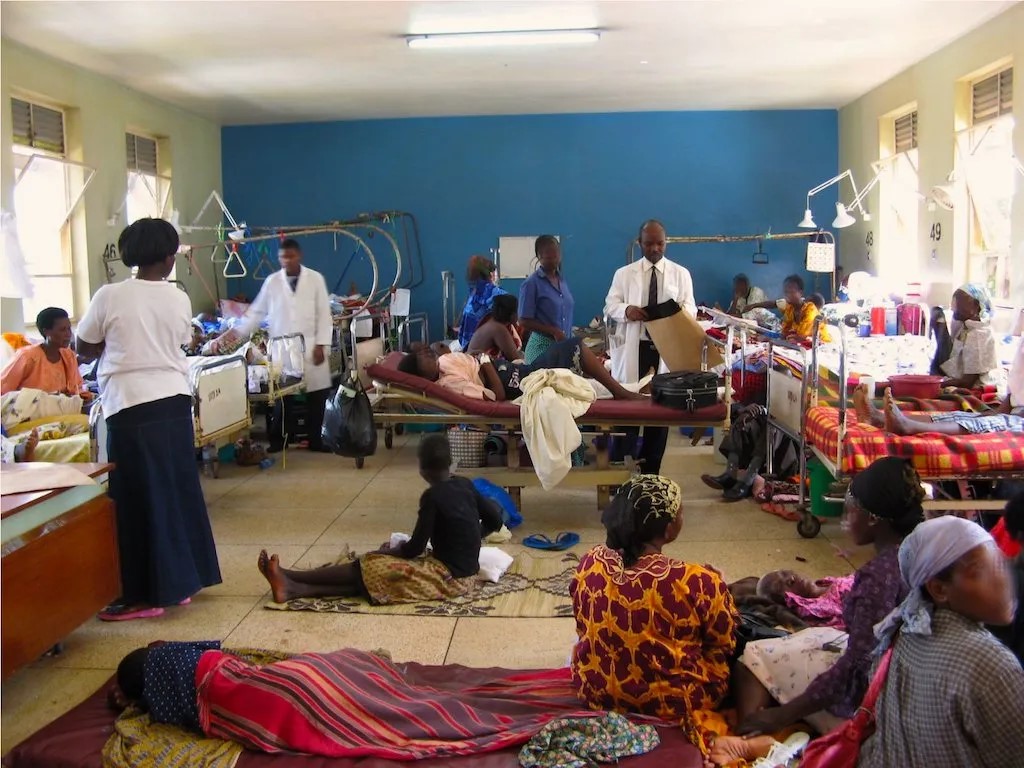
Now, the unfenced facility faced a series of challenges; a leak roofing with only 6 rooms apart from the labour room, unkempt rooms in shambles conditions, single working toilets, no water supply, shortage of mattresses, obsolete medical equipment, dearth of medical personnel and constants insufficiency of drugs supply problems. Since its existence, the hospital has not been connected to an electric power source.
Fali Emmanuel John is a Health Officer in primary health care. He narrates a dire condition “We are facing a lot of problems in maintaining the hospital. Firstly, non-availability of electricity and solar systems for the storage of children’s vaccines, even if there is electricity. It’s compulsory to have a solar system. Due to power instability in Nigeria, so that we can render vaccination daily. Lack of electricity is a big setback to the community and the hospital. Secondly, our personnel need staff quarters. Primary health care is established for 24-hour services. Definitely, staff accommodation should be within the vicinity”.
He reiterates “The community starts building a staff quarters. But they are overstrained. The building is uncompleted”.
Mr. John lamented “The hospital is supposed to have 10 to 20 medical staff. According to medical ethics, working hours range from three shifts; morning, afternoon and evening (night). The deficiency of personnel here is too bad. We only have 3 medical doctors. Sometimes 1 medical doctor works for 24 hours, which is unprofessional and painful to us”.
“Issues concerning drugs, the government are making a little effort. We urged for more. Before the community donated money for drugs and other essentials”, he added.
Fauziya Musa Abdullahi is a nursing mother, who visits the hospital often for antenatal services and delivers her 6-month son to primary health care. She expresses “The most difficulty, women encounter is during night hours. For example, if a woman came to give birth. On certain occasions, there is no doctor available”.
She added “Sometimes, drugs are not available. It’s for patients to buy from the city. During, my last admission here. I wait for a long moment. Before drugs, injections and intravenous drips were bought. If authorities get involved and provide drugs in a hospital. It will be good for the patient to have treatment in any given situation”.
Usman Garba Danladi, an assistant sectary to the community and for years among the people work in progress of Yelwa Zangam community, says “For now, a local agency, Plateau State Contributory Health Care Management Agency (PLASCHEMA), supplies drugs”.
He shared “30 years ago, local government authority grants a fund under a scheme ‘REVOLVING FUNDS’, it was used to supply drugs and other necessary items. The drugs were sold to patients at affordable prices”.
“Financial challenges for buying drugs. Some patients run away with complicated health issues”, he cried out.
Nigeria’s highest court, on 11 July passed a judgement for local government to have full autonomy. Henceforth, the allocation from the federation account is to be funded directly into the local government, not through the state government ‘Joint account’. Mr. Danladi chip in “I am dreamt for local government to be independent. In the past, primary health care was managed from local government funds, not state government. Certainly, with this development electricity will be installed, more workforce and enough drugs to the patients and the facility will be improved”.
Mr John remarks “I am grateful to Almighty God for the Supreme Court’s verdict to allow local government to use their money for local affairs. Local government autonomy is a great success to health sectors”.
Abdullahi D. Hassan writes from Jos in Plateau State and can be reached via +234 803 323 7977.
The Nigeria Customs Service (NCS) Operation Whirlwind has announced a major seizure of over 20,000 litres of Premium Motor Spirit (PMS), with a Duty Paid Value (DPV) of N18 million, during a seven-day operation in the Zone ‘A’ area.
According to Comptroller Hussein Ejibunu, National Coordinator of Operation Whirlwind, “These seizures were made at strategic locations in Ogun State, including Ere River, Imeko, and Idiroko, where smugglers attempted to illegally transport fuel. The operation also led to the confiscation of five vehicles used for smuggling.”
Ejibunu stated the need for a collective effort to tackle the illegal exportation of PMS to neighbouring countries, stating that such activities pose a threat to Nigeria’s economic stability.
He assured that his team will intensify efforts to protect Nigeria’s petroleum resources and bring economic saboteurs to justice, warning smugglers to desist from their actions and embrace legitimate trade.
“There is no hiding place for those involved in illicit trade. Their only option is to embrace legitimate business,” he said.
In aggressive, offensive operations against terrorism and insurgency, Nigerian Army troops have obliterated yet another terrorist stronghold, successfully rescuing kidnapped students and seizing a significant cache of arms and ammunition. Troops also eliminated some insurgents, while some others were captured alive.
On 12 September 2024, acting on reliable intelligence, troops stationed in Kaduna State launched a highly coordinated operation aimed at rescuing abducted persons from violent extremist camps. Engaging in an intense firefight at Chigbolu village, Kachia Local Government Area, the troops overpowered the terrorists, forcing them to flee and abandoning their captives.
A thorough sweep of the area led to the rescue of 13 victims, comprising six males and seven females, as well as the recovery of one AK-47 rifle, 87 rounds of 7.63mm ammunition, four magazines, a locally fabricated rifle and the sum of ₦192,220.00.
Five solar panels, five mobile phones, dry rations, and clothing items were also recovered. The rescued victims have been evacuated to 1 Division Medical Services and Hospital for medical attention.
In another decisive operation, troops in Kachia Local Government Area have intercepted two notorious terrorist logistics suppliers, Mallam Usman Waikili and Salisu Idris, at Kagarko village. The troops confiscated the sum of ₦1,306,700.00, three SIM cards, two mobile phones, three national identity cards, 8 ATM cards, 2 Moniepoint POS machines, an MTN MiFi and other items from the suspects.
In a separate operation in Suleja, Niger State, troops stormed a terrorist hideout, triggering a fierce exchange of gunfire. The troops’ overwhelming firepower led to the neutralization of 3 terrorists, while three others, identified as Mallam Halalu, Mallam Suleiman, and Mr. Musa, were captured alive. The suspects led the troops to a hidden armoury, where 3 AK-47 rifles, 121 rounds of 7.62mm.
President Bola Tinubu has welcomed the National Bureau of Statistics (NBS) ‘s new report on the country’s trade balance.
According to the report, Nigeria recorded another trade surplus in the second quarter of 2024, hitting N6.95 trillion.
The current surplus is 6.60% higher than the N6.52 trillion surplus recorded in the first quarter.
Just days after the country recorded almost 100 percent oversubscription of its first $500 million domestic bond and half-year revenue of N9.1 trillion, the latest report underscores the increasing positive shifts in the economy over the last year.
President Tinubu expresses confidence in the reforms his administration is pursuing and believes they will create a more robust economy that will usher in a new era of prosperity for Nigerians.
The NBS report reflects the country’s strong export performance in the second quarter.
Although total merchandise trade in Q2 2024 stood at N31.89 trillion, a 3.76% decline compared to the preceding quarter (Q1 2024), it marked a 150.39% rise from the corresponding period in 2023.
The NBS reported that the Q2 surplus was essentially driven by exports to Europe, the United States and Asia.
Total exports stood at N19.42 trillion, accounting for 60.89% of the country’s total trade. This represents a 1.31% increase from N19.17 trillion in the first quarter and a 201.76% surge from N6.44 trillion recorded in Q2 2023.
The dominance of crude oil exports remains a key factor in this performance, contributing N14.56 trillion, or 74.98% of total exports.
Non-crude oil exports, valued at N4.86 trillion, comprised 25.02% of the total export value, with non-oil products contributing N1.94 trillion.
The strong export performance, particularly in crude oil, ensured Nigeria maintained a favourable trade balance.
In Q2 2024, European and American countries dominated Nigeria’s top export destinations. Spain emerged as the largest export partner, receiving goods valued at N2.01 trillion, accounting for 10.34% of Nigeria’s total exports.
The United States followed closely with N1.86 trillion (9.56%), while France imported N1.82 trillion of Nigerian goods, representing 9.37% of total exports.Nigeria’s other major export partners include India (N1.65 trillion or 8.50%) and the Netherlands (N1.38 trillion).
Generally, the economic indicators, which were very low when President Tinubu assumed office last year, are turning positive.
The government will continue to consolidate on the gains of the reforms as more fiscal and tax policy reforms already embarked upon by the administration come to fruition.
President Tinubu is determined to confront the inhibitions that have stunted the growth and development necessary to unlock the country’s full potential.