Niger State

Army nabs suspected arms dealer, rescues kidnapped victim as troops hit terror networks

By Uzair Adam 

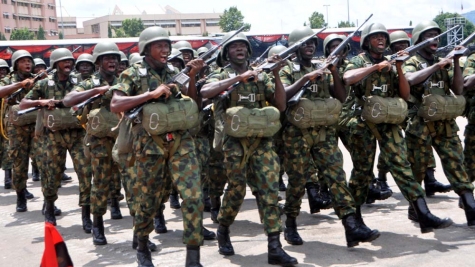
The Nigerian Army has apprehended a suspected arms dealer, rescued a kidnapped victim, and disrupted terrorist logistics networks within the last 24 hours.

A credible source at the Army Headquarters reportedly disclosed that the troops of Operation FANSAN YAMMA, on Thursday, apprehended a suspected terrorist informant during an ambush at Ungwan Gombawa in Kontagora Local Government Area (LGA) of Niger State.

The source said troops of 1 Brigade also arrested an alleged major terrorist logistics supplier and arms dealer at Danjigba in Bukkuyum LGA.

According to him, preliminary investigations reportedly linked the suspect to two coordinators in Anka LGA, believed to be responsible for storing weapons sourced from the Niger Republic.

He said the troops recovered military uniforms, a helmet, boots, financial receipts amounting to about N4 million, and audio evidence linked to arms transactions.

The source added that troops responding to intelligence on the recent abduction of students of GGSS Maga in Kebbi State stormed a terrorist camp in the Gando–Sunke Forest, which belongs to a kingpin known as Bello Kaura.

He said the attackers fled the location, allowing troops to destroy the camp and its support facilities.

The source explained that another suspected informant travelling from Sokoto was arrested at Augie, where troops recovered five ATM cards, clothing, and N78,900.

In another development, he said troops survived an ambush along the Kaiga–Mara road in Katsina State, forcing the attackers to flee.

He added that an operation carried out in Shinkafi and Zurmi LGAs also resulted in a firefight during which troops captured two AK-47 rifles, ammunition and two motorcycles.

Under Operation Enduring Peace in Plateau State, troops foiled a kidnap attempt in Jos South, rescuing a victim who sustained gunshot wounds.

The source also confirmed that eight suspected criminal herders were arrested in a separate raid in the same LGA.

Similarly, troops of Operation Whirl Stroke responded to a road incident in Nasarawa State, where three passengers were reportedly kidnapped and a driver was injured. Efforts to rescue the victims are ongoing.

He added that troops arrested two herders accused of destroying crops in Guma LGA of Benue State.

According to him, the Chief of Army Staff, Lt.-Gen. Waidi Shaibu recently undertook operational visits to Borno, Kaduna, and Zamfara, during which he assessed ongoing operations and urged troops to remain disciplined, alert, and committed to the fight against terrorism.

Pupils’ abduction: Niger State Gov’t blames St. Mary’s School

By Ibrahim Yunusa

An unidentified number of pupils and staff of St. Mary’s School in Papiri community of Agwara Local Government of Niger State were abducted by terrorists in the early hours of today, Friday.

The terrorists raided the school between 2:00 am to 3:00 am and kidnapped a number of pupils that yet to be identified by authorities.

While condemning the attack, the Niger State Government blames the school of not complying with the directives of closure of boarding schools issued by the state government.

Statement issued by the Office of the Secretary of the State Government, Alhaji Abubakar Usman, disclosed that prior intelligence report received by the government alarming an increased threat level in parts of Niger North Senatorial District, the state government in response to the credible security alerts issued a clear directive suspending all construction activities and also ordering the temporary closure of all boarding schools within the affected areas as a precautionary measure.

“Regrettably, St. Mary’s School proceeded to reopen and resume academic activities without notifying or seeking clearance from the State Government, thereby exposing pupils and the staff to avoidable risk.” the statement added.

This incident comes days after 25 students were kidnapped in Maga of Kebbi state resulting a height tension and deteriorating of security of educational institutions across the region.

All Babies deepens collaboration to strengthen vaccine delivery across northern Nigeria

By Muhammad Abubakar

Efforts to strengthen vaccine delivery systems across northern Nigeria received a major boost as the All Babies program, implemented by New Incentives – All Babies Are Equal (NI-ABAE), convened a two-day Roundtable Meeting of Cold Chain Stakeholders in Kano.

Held at Tahir Guest Palace from October 24 to 25, the meeting brought together 35 participants from state and zonal cold chain offices, development partners, and the Kano State Primary Health Care Board. The focus was on improving coordination, data management, and logistics in vaccine distribution across 14 northern states.

During the technical session, program officials presented encouraging results from the third quarter of 2025. Katsina and Zamfara states recorded the sharpest declines in zero-dose infants, each achieving a 40-percentage-point reduction, while Kaduna saw a 15-point drop. So far, All Babies has enrolled over 5.6 million infants, supported 7,128 clinics, and facilitated more than 85 million vaccinations through conditional cash transfers to caregivers.

Stakeholders at the meeting resolved to improve real-time vaccine data reporting through Nigeria’s OpenLMIS platform, enhance coordination between state and local levels, and push for increased transportation funding via the Association of Local Governments of Nigeria (ALGON) to ease vaccine movement to remote areas.

Niger State’s Cold Chain Officer, Abubakar Hussaini, praised the program’s impact, saying, “All Babies has done a great job increasing vaccination awareness and turnout. We hope the program expands nationwide so every child benefits from these life-saving vaccines.

The roundtable ended with a joint communiqué reaffirming partners’ commitment to ensure that every child, regardless of location, receives timely and essential vaccines.

Niger State orders early-resuming private schools to shut down

By Abdullahi Mukhtar Algasgaini

The Niger State Ministry of Basic and Secondary Education has issued a stern directive to all private schools that have resumed academic activities prematurely, ordering them to close their doors immediately.

In a circular dated August 10th, 2025, and signed by the Permanent Secretary, Hajiya Akhatu Nuhu Yarwa, the Ministry reaffirmed that the official resumption date for the 2025/2026 academic session for all public and private schools remains September 22, 2025.

This date is stated to be in strict compliance with a directive from the Federal Ministry of Education.

The government explicitly acknowledged it is aware that some private institutions have already begun the new session ahead of the approved calendar.

The circular contained a clear warning, stating that any school failing to comply with the order to halt operations until the official date will face “appropriate sanctions,” though the specific penalties were not detailed.

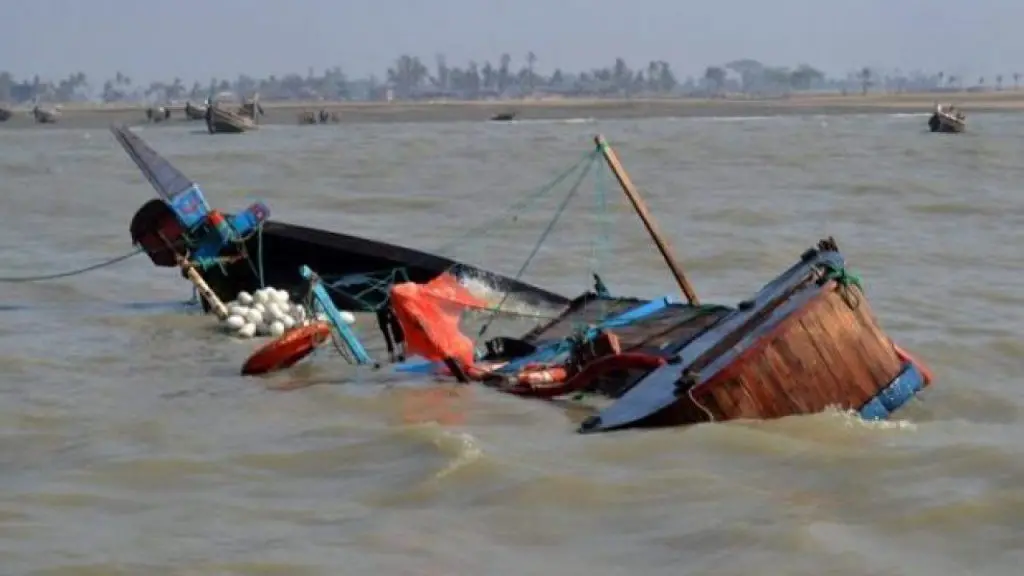
27 people die in Kwara boat accident

By Uzair Adam 

A devastating boat accident has reportedly claimed the lives of 27 passengers in Kwara State. 

The victims were said to be returning from a market trip in neighbouring Niger State when the incident occurred three days ago.

Eyewitnesses and a survivor of the mishap blamed the tragedy on overloading and a sudden heavy storm that struck at night. 

The boat, according to sources, was built to carry about 100 people but often ferries up to 300 passengers during both dry and rainy seasons.

This latest mishap comes just seven months after over 100 villagers died in a similar incident in the Gbajibo community, Kaiama Local Government Area.

Chairman of Kaiama LGA, Abdullah Danladi, confirmed the incident and led a government delegation to sympathise with the bereaved families. 

He warned that the government would no longer tolerate the recurring loss of lives on local waterways and revealed plans to establish a committee to enforce the use of life jackets and ban nighttime boat operations.

Also responding to the tragedy, the Emir of Kaiama, His Royal Highness Muazu Umar, vowed to step up awareness campaigns aimed at promoting safe practices among boat operators and passengers.

Husband laments negligence in death of wife at Minna hospital

By Hadiza Abdulkadir

A grieving husband has alleged gross negligence and unprofessional conduct at Jummai Babangida Aliyu Maternal and Neonatal Hospital, Minna, following the death of his wife, Ramatu, after a surgical procedure on April 24, 2025.

UB Shehu, who shared a detailed account of the events leading up to his wife’s death, claimed that his wife was the last of nine patients to undergo surgery that day. During the procedure, an unstable power supply reportedly forced staff to switch from the main source to a smaller backup generator, which Shehu emphasized was not a diesel-powered unit but a basic household generator.

According to Shehu, Ramatu showed signs of critical distress immediately after surgery. While other patients were reportedly stable, his wife began bleeding excessively due to a drainage bag not being properly attached — a task he claimed the attending nurse was unqualified to perform.

“She told me she didn’t know how to plug the bag,” Shehu stated, expressing frustration that a doctor did not attend to the situation until five hours later. Even then, she only gave brief instructions without examining the patient.

Shehu described a harrowing night in which his wife’s condition worsened, alleging that she was repeatedly denied water and food and that his pleas for medical assistance were ignored or delayed. As her condition deteriorated, he said senior nurses refused to help, citing departmental responsibilities.

By 7:04 a.m., his wife began gasping for air. Despite his cries for help, Shehu said the ward lacked oxygen, prompting a rushed transfer to the ICU, where attempts to administer oxygen reportedly failed due to ill-fitting equipment. Ramatu was pronounced dead at 7:24 a.m.

The hospital has yet to respond to the allegations. The account has sparked conversations online about healthcare standards and the need for reform in patient care practices across public hospitals in Nigeria.

Niger governor orders crackdown on dreadlocks, imposes strict security measures

By Abdullahi Mukhtar Algasgaini

Governor Umar Bago has directed security agencies to arrest individuals with dreadlocks in Minna, the state capital, as part of a broader clampdown on crime.  

During a high-level security meeting on Tuesday, Governor Bago ordered that those with dreadlocks be arrested, forcibly shaved, and fined. “We will have zero tolerance for rascality. Anybody found with dreadlocks should be arrested, their hair barbed, and fined,” he declared.  

The governor also banned commercial motorcycles and tricycles from operating between 6 p.m. and 6 a.m., except in cases of medical emergencies. Additionally, he warned parents to caution their children, vowing a “fire-for-fire” approach to crime.  

Traditional rulers were instructed to document all residents in their domains, while houses harbouring criminals faced demolition. “Niger State is not for useless people,” Bago stated.

The measures aim to curb rising criminality and restore order in the state.

Police officer takes own life in Niger State

By Abdullahi Mukhtar Algasgaini

Shafi’u Bawa, an Assistant Superintendent of Police (ASP) attached to the 61 Police Mobile Force in Kontagora, Niger State, has reportedly taken his own life.  

The incident occurred on Saturday afternoon, 8 February 2025, when the officer was found hanging from the ceiling of his room. His father, Mallam Usman Bawa, alerted the authorities after discovering the tragic scene.  

The Niger State Police Command spokesperson, SP Wasiu Abiodun, confirmed the incident, stating that the deceased’s body has been released to his family for burial.  

“The reason behind his action is yet to be determined, and the matter is under investigation,” Abiodun stated.  

Further details will be provided as the investigation progresses.

Niger fuel tanker tragedy: A lesson yet to be learned

By Abubakar Musa Idris 

Tragedy struck again in Nigeria on Saturday as a devastating fuel tanker explosion claimed lives and left others injured, highlighting the alarming reoccurrence of such disasters.

Just last year, specifically on 15 October 2024, a fuel tanker in Majiya town, Jigawa State, erupted in flames after residents rushed out to scoop petrol from it. This tragic incident claimed the lives of over 150 people, leaving countless others injured and traumatised. Sadly, this year, we have witnessed another devastating fuel tanker accident in the Dikko area of Niger State, resulting in the loss of over 80 lives.

The frequency of these accidents raises a troubling question: Why do Nigerians continue to risk their lives by scooping fuel from tankers, despite the clear dangers? Is it a lack of awareness regarding the associated risks, or is it the harsh economic situation that compels people to take such drastic measures?

According to the Federal Road Safety Corps (FRSC), Nigeria recorded over 300 fuel tanker accidents between 2020 and 2022. Alarmingly, the FRSC listed fuel tanker accidents as one of the leading causes of road crashes in 2020, resulting in more than 535 fatalities.

Experts attribute the persistence of fuel scooping to a combination of factors, including poverty, unemployment, and a lack of access to affordable fuel. “Many Nigerians are forced to scoop fuel due to economic necessity,” says Dr. Afolabi, a safety expert. “However, this practice is not only hazardous but also perpetuates a culture of recklessness.”

Regrettably, the recent fuel tanker accident in Nigeria is not an isolated incident. Just last year, a fuel tanker accident in Minna, Niger State, claimed the lives of over 50 individuals. In 2022, a fuel tanker crashed on the Lagos-Ibadan Expressway, resulting in 12 fatalities. Comparable incidents have taken place in Kaduna, leading to substantial loss of life and property. These recurring tragedies underscore the urgent need for action to tackle the root causes of fuel tanker accidents in Nigeria.

The dangers of fuel scooping are genuine and severe. The risks of explosions, fires, and spills are always present, and the consequences can be devastating.

The government and relevant stakeholders must take concrete steps to address this issue. One way to combat the menace of fuel scooping and ensure road safety is to launch targeted public education and awareness campaigns. 

 It is essential to launch targeted public education and awareness campaigns. These campaigns should concentrate on informing the public about the dangers of fuel scooping, the significance of road safety, and the repercussions of reckless behaviour. Raising awareness and fostering a culture of safety are vital steps towards reducing the frequency of fuel tanker accidents and saving lives.

Enhancing safety regulations is another critical strategy for preventing fuel scooping and ensuring accountability. Strengthening existing laws and regulations and enforcing stricter safety standards for fuel transportation, storage, and handling can help prevent accidents. This, in turn, reduces the risk of fuel tanker accidents and protects lives and property.

Investing in enhanced road infrastructure and fuel storage facilities is crucial for minimising the risk of accidents and spills. Upgrading roads to alleviate congestion and enhance safety, alongside constructing modern fuel storage facilities that comply with international safety standards, are vital measures to consider. Such investments not only mitigate the risk of fuel tanker accidents but also safeguard lives and property, whilst fostering economic growth and development.

As Nigerians mourn the lives lost in these tragic accidents, we must also recognize the need for collective action. The government, stakeholders, and individuals must join forces to address the root causes of fuel scooping and ensure a safer future for all Nigerians.

These fuel tanker tragedies represent more than just statistics; they serve as a stark reminder of the human cost of systemic failures. While immediate actions like public education and stricter regulations are crucial, the real test lies in Nigeria’s ability to create an environment where citizens no longer feel compelled to risk their lives for fuel. Until we achieve this fundamental change, we will continue to count losses instead of progress.

Abubakar Musa Idris is a PRNigeria fellow and wrote via abkidris99@gmail.com.

Fuel tanker explosion: One incident too many

By Salim Yunusa

Days ago, a fuel tanker explosion took the lives of over 70 people at the well-known Dikko Junction, located along the Kaduna-Abuja highway in Niger State. This incident follows closely after another fuel tanker explosion in Jigawa in October 2024, which resulted in the deaths of more than 200 people.

At this point, one begins to sound like a broken record: the recurring incessant pleas for regulation, caution, and prayers. Enough with the “Allah shi kare”, or the performative prayers for the deceased. It has to stop. Now.

In a country with barely motorable roads disguised as highways, these tankers—dangerously overloaded, evidently faulty, and disturbingly manned by the worst drivers—sway and saunter, damaging the roads and bridges due to overload, causing accidents, and, in recent times, overturning their contents, spilling highly inflammable fuel on the road. This leads to disastrous fire incidents, causing devastating loss of lives and properties.

What usually follows are photo ops by government officials who do little to nothing to prevent these incidents from reoccurring. These are followed by visits to the hospitals and donations of a paltry sum of money to the victims’ families. This has to stop. Now.

Many issues cause the loss of lives of this magnitude. We must address them through regulations and stringent fines for erring drivers and their employers. We must also properly deploy state and federal might in enforcing adequate commercial and residential setbacks from highways. We must embark on massive enlightenment and sensitisation against the dangers of highly inflammable substances and, above all, poverty, which would make one desperate enough to go scooping up spilt gas on a highway! 

Nonetheless, enforcement has to be done on people themselves because repeated tragedies don’t serve as lessons against future occurrences. People have to learn and understand that you run away from danger, not into it, for mere fuel scoops or to record yourself to get a few clicks on social media. This is where the National Orientation Agency comes into the picture, partnering with social media influencers, radio and TV stations, among other important stakeholders in the society, to enlighten and educate the public on the dangers surrounding looting of overturned items from trucks, be it Spaghetti, rice or fuel.

We must reconsider using pipelines to transport petroleum products in this country. The alarming number of tankers on our roads poses significant risks. Furthermore, it’s crucial to raise awareness that looting or stealing from accident scenes is a serious offence punishable by law and God.

It is tiring at this point: the rinse-and-repeat incidents, the performative grief, the prayers and promises to address issues—all to be forgotten in three business days. How many more people have to die before the government acts? Thoughts and prayers over unavoidable incidents are a most, but choosing thoughts and prayers over avoidable incidents is a clear choice. The government should act, and it should act now—swiftly, decisively.

May the Almighty save us from us and give us the strength to do the right thing–no matter whose ox is gored!

Salim Yunusa writes from Abuja, Nigeria, and can be reached via syunusa@gmail.com