Niger State

COP30 and Niger’s turn to shine on climate action

By Abdulsalam Mahmud

Across the world today, governments are recalibrating their economies to fit a green and sustainable future. From Brazil’s vast reforestation drive in the Amazon to Morocco’s solar revolution in Ouarzazate, nations are realising that the path to prosperity now runs through the low-carbon economy. 

The green transition has become more than an environmental necessity; it is the new global economy in the making — one that rewards innovation, resilience and foresight. For Africa, this transition is both an urgent challenge and a rare opportunity. 

As the continent most vulnerable to climate change, Africa stands to lose the most from inaction. Yet, it also possesses immense natural capital — sunlight, land, biodiversity and youthful human potential — that can power a sustainable transformation. Countries that act early and boldly will not only build resilience but also attract the finance, partnerships and technologies shaping the next century.

In this global context, Niger State, under the visionary leadership of His Excellency, Farmer Governor Mohammed Umaru Bago, has chosen to define its future differently. Over the last two years, the state has pursued one of the most ambitious subnational green economy transformations in Nigeria’s history. 

By linking local realities to global climate ambitions, Niger is steadily positioning itself as a hub for climate-smart agriculture, clean energy, and green industrial development. Governor Bago’s administration began by recognising an undeniable truth: climate change is not just an environmental issue but an economic one. 

Desertification, flooding and deforestation have long undermined livelihoods across the state. To confront these threats, Niger launched its “Green Economy Blueprint”, an integrated strategy designed to build resilience while creating green jobs and sustainable prosperity. From that moment, the state’s engagement with the world deepened. 

At COP28 in Dubai, Niger presented its blueprint before international partners, and by COP29 in Baku, it had become a recognisable name in subnational climate leadership. These appearances were not symbolic. They yielded partnerships that have since defined the core of Niger’s transition agenda.

One of the most transformative was the Memorandum of Understanding with Blue Carbon, a UAE-based company committed to developing sustainable climate solutions. The agreement to plant one billion economic trees across one million hectares in Niger State is among the largest private–public reforestation programmes on the African continent. 

Beyond ecological restoration, the initiative promises rural employment, carbon credit generation and long-term economic dividends from timber, fruit and non-timber forest products. Equally significant was the partnership with FutureCamp Germany, a globally renowned firm in carbon markets. This collaboration aims to unlock over ₦1 trillion in climate investments and build the technical framework for Niger’s carbon market activation.

For a subnational entity, this is pioneering work — one that could see Niger emerge as the first Nigerian state to fully participate in voluntary carbon trading, attracting new revenue streams while promoting transparency in climate finance. The MoU with the NNPC Limited extends Niger’s climate action to the energy frontier. 

It covers a suite of renewable and low-carbon projects, including a Greenfield hydroelectric power plant, mega solar parks for institutions and home solar systems targeting 250,000 households. The agreement also envisions an ethanol plant capable of producing 500 million litres annually, powered by crops cultivated across 100,000 hectares — a project that will create value chains, empower farmers and reduce dependence on fossil fuels.

Meanwhile, the collaboration with ECOWAS Bank for Development and the Environment for an $11 million Madalla Green Economic Market promises to turn commerce itself into a model of sustainability—blending trade, recycling, and renewable energy into a single modern ecosystem. Similarly, Niger’s partnership with the Turkish firm Direkci Camp is reshaping agribusiness through smart agriculture, irrigated soya cultivation and export-oriented value chains.

These developments are not isolated. They are coordinated through the Niger State Agency for Green Initiatives (NG-SAGI), the institutional anchor established two years ago and now led by Dr Habila Daniel Galadima. Beyond a doubt, NG-SAGI is more than a bureaucracy; it is a policy engine designed to harmonise the state’s environmental, agricultural, and energy programmes into a coherent climate-resilience framework.

Under this framework, Niger hosted Nigeria’s first-ever subnational Green Economy Summit in 2023, attracting investors and development partners from across the globe. The summit’s outcomes validated the Governor’s approach: local action can be globally relevant if guided by a clear vision and credible governance. The pledges and partnerships secured there continue to serve as foundations for current projects — from afforestation to renewable energy and sustainable agriculture.

Another milestone was the creation of the Niger State Agriculture Development Fund, with ₦3.5 billion in startup capital from the state and local governments. The fund is enabling 1,000 young farmers to access ₦1 million in grants, along with hectares of land for nurseries across all 25 local governments. This initiative has quietly triggered an agricultural mechanisation revolution, empowering a new generation to view farming as a business —and sustainability as a strategy.

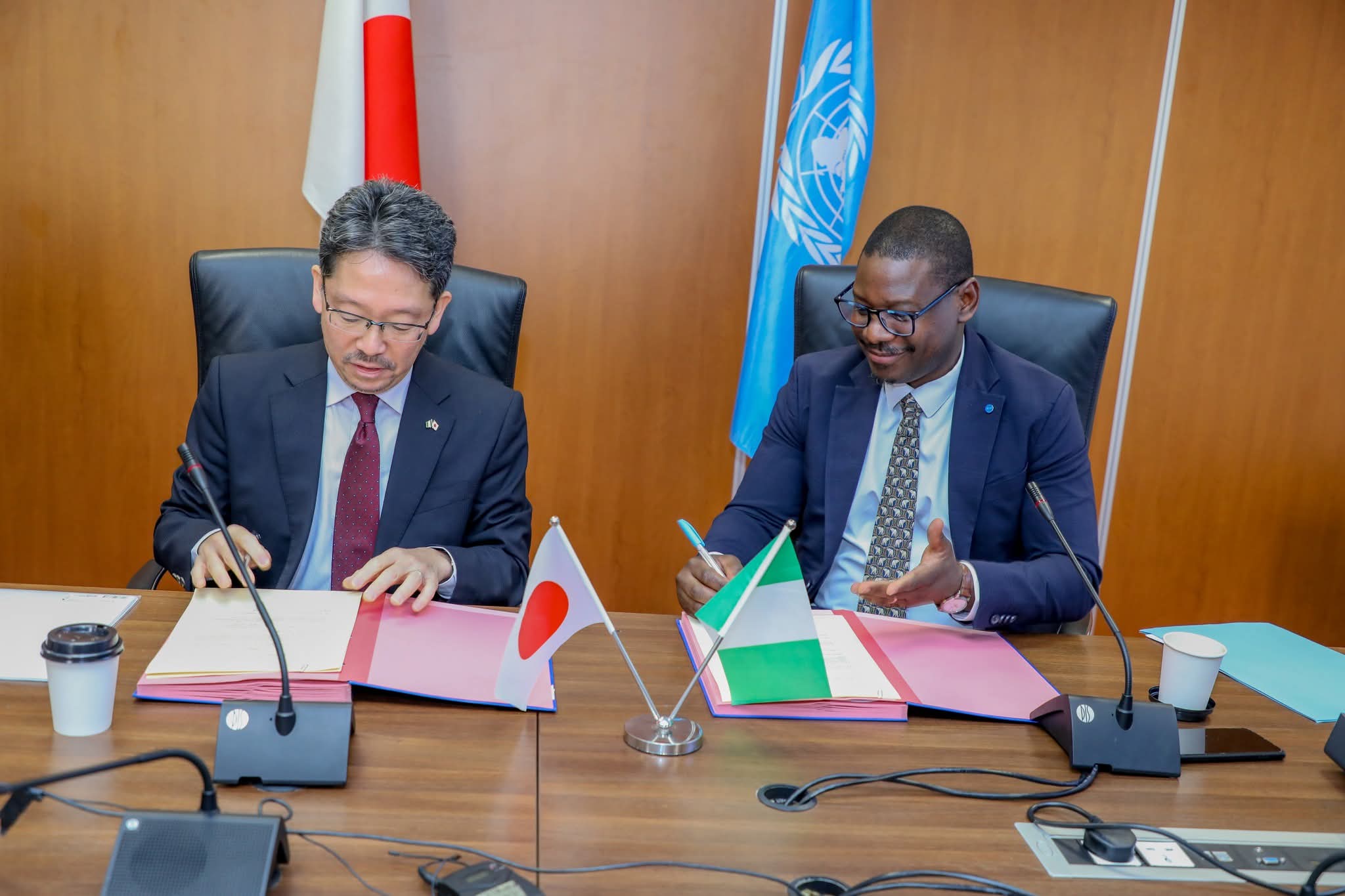
Partnerships with the United Nations Industrial Development Organisation (UNIDO), the Energy Commission of Nigeria, and the Global World Energy Council are driving new frontiers in wind energy and industrial decarbonization. Niger’s growing alignment with UNIDO is already yielding plans for circular-economy models within the agro-processing free trade zone, blending job creation with environmental responsibility.

And while some of these projects are at different stages of implementation, the direction is unmistakable: Niger State is building a green identity anchored on innovation, inclusion and international collaboration. Even modest steps, like installing solar-powered streetlights across Minna, tell a larger story — one of a government deliberately moving toward a future powered by clean energy and driven by public safety and climate consciousness.

As the world prepares for COP30 in Brazil next month, Niger State’s delegation is expected to present these achievements not as isolated efforts, but as part of a coherent subnational climate narrative. It will highlight how a state, once challenged by deforestation and poverty, is now leading a structured march toward carbon neutrality and green prosperity. 

The focus this time will be on climate-smart agriculture, renewable energy expansion, youth inclusion, and green finance innovation—key pillars aligned with the global call for just and equitable transitions. At COP30, Niger’s voice will also speak for Nigeria’s broader subnational climate movement — demonstrating how state-level leadership can accelerate the nation’s commitments under the Paris Agreement. 

The lessons from Niger are clear: climate action must be localised, data-driven and economically beneficial. Beyond the conference halls of Brazil, Niger’s agenda carries deep human meaning. Every hectare reforested, every solar panel installed, every youth trained in sustainable agriculture is a statement of faith in a livable future. 

Climate action here is not an abstract ambition; it is a lived policy that transforms communities, restores hope and redefines governance as stewardship. If properly amplified, Niger’s story could inspire other states to view climate change not as a threat but as an opportunity—a chance to create industries, attract green finance, and protect generations unborn. 

That is the broader promise Governor Bago’s vision now represents: that sustainability is not an aspiration for rich nations alone, but a shared moral and developmental duty for all. As COP30 draws near, Niger’s turn to shine on climate action is not just about showcasing progress; it is about reinforcing possibility. 

For a state once defined by its rivers and farmlands, the journey toward a green economy may well become its most enduring legacy — one that proves that in Africa’s heartland, the seeds of a sustainable future are already being sown

Mahmud, Deputy Editor of PRNigeria and a rapporteur at the maiden Niger State Green Economy Summit, writes via  babasalam1989@gmail.com.
Nigeria secures release of 100 kidnapped schoolchildren

By Hadiza Abdulkadir

The Nigerian government has secured the release of 100 schoolchildren abducted last month from St. Mary’s School, a Catholic boarding institution in the Papiri community of Niger State.

The attack, which occurred on November 21, saw armed men take 303 students and 12 teachers hostage. In the days following the abduction, 50 pupils managed to escape and were reunited with their families.

According to officials, the rescued children are expected to be handed over to Niger State authorities for medical and psychological evaluation. Government sources confirmed the release but did not disclose whether it resulted from negotiations, military operations, or other interventions.

Despite the successful rescue, concerns remain high. More than 160 students and staff members are still unaccounted for, leaving many families anxiously awaiting news of their loved ones.

Child-protection advocates and community leaders have renewed calls for stronger security measures around schools, stressing that the safety of students must be a national priority as mass abductions continue to plague parts of the country.

NAF jet crashes in Niger State, pilots eject safely

By Abdullahi Mukhtar Algasgaini

A Nigerian Air Force Alpha Jet has crashed near Karabonde in Niger State’s Borgu Local Government Area.

The incident was said to have occurred around 4:10 p.m. on Saturday.

Local sources and online reports confirm that the two pilots aboard the aircraft successfully ejected before the jet went down.

An eyewitness, Lukman Sulaiman, stated the aircraft landed close to a town after a “noisy landing crash,” causing initial alarm among villagers.

Preliminary reports suggest the jet may have originated from the Kainji Air Force Base. The Nigerian Air Force is reportedly mobilizing personnel to the crash site.

While the cause of the crash remains unknown, authorities have yet to issue an official statement.

The condition of the pilots is currently unconfirmed, though initial accounts indicate they survived the ejection.

50 abducted Niger pupils escape as 253 pupils, 12 staff still in captivity

By Sabiu Abdullahi

Fifty pupils abducted from St. Mary’s Private Catholic Primary and Secondary Schools, Papiri, Niger State, have escaped from their captors and reunited with their families. School authorities confirmed the development on Sunday.

The escape happened days after gunmen attacked the school and abducted 303 pupils and students.

The pupils fled between Friday and Saturday but were unable to return to the school. The administration later confirmed their safety after contacting and visiting their parents.

The proprietor of the school and Chairman of the Christian Association of Nigeria (CAN) in Niger State, Most Rev. Bulus Dauwa Yohanna, described the development as a sign of hope but urged that efforts must continue for the rest of the victims.

He said: “As much as we receive the return of these 50 children that escaped with some sigh of relief, I urge you all to continue in your prayers for the rescue and safe return of the remaining victims.”

The update came in a statement signed electronically by his media aide, Daniel Atori. The statement also clarified the situation of those still in captivity.

It read:“For the records, we now have 251 primary pupils, 14 secondary students and 12 teachers still with their abductors.”The cleric further explained the composition of the school population.

He said:“In the primary section, out of the total number of 430 pupils we have in the school, 377 of them are boarders and the remaining 53 others are non-boarders.”

Giving a breakdown of those affected, he added:“Currently, aside the 50 pupils that escaped and have returned home, we have 141 pupils who were not carried away. As it stands now, we have 236 pupils, another 3 children who belong to our staff, 14 secondary students making a total 253 children including 12 members of staff with the abductors.”

Rev. Yohanna appealed to the public to remain calm and prayerful. He said the school and church authorities are working with security agencies, community leaders and government officials to secure the release of the remaining captives.

He said:“As much as we receive the return of these 50 children that escaped with some sigh of relief, I urge you all to continue in your prayers for the rescue and safe return of the remaining victims.”

He also added:“I want to call on everyone to remain calm and prayerful as we will continue to actively collaborate with security operatives, community leaders, government and relevant authorities for the safe and quick return of all abductees.”

He ended with a prayer:“May the Lord grant quick release to those abducted and continue to protect his people from all dangers.”

Security agencies have not yet released an official statement on their operations or progress made so far in tracking down the abductors.

Pope Leo XIV calls for immediate release of abducted Niger students, staff

By Sabiu Abdullahi

Pope Leo XIV has appealed for the prompt release of 315 students, teachers and other members of St. Mary’s Catholic Primary and Secondary Schools in Papiri, Agwarra Local Government Area of Niger State, who were recently abducted by armed men.

The Pontiff spoke on Sunday. He expressed deep concern over the incident, which involved students, teachers, priests and other members of the Catholic community.

In his words: “I received with profound sorrow the news of the abduction of priests, faithful, and schoolchildren. I make a heartfelt plea for the swift and unconditional release of all those being held.”

The attack reportedly took place in the early hours of Friday. Armed men invaded the private Catholic school during the operation.

Local sources said the attackers arrived in large numbers. They were said to be on more than 60 motorcycles and had a van with them. They forced their way into the school premises before carrying out the abduction.

During the assault, the school gatekeeper was shot. He was left in critical condition.A resident of Agwarra confirmed that the incident happened between 3 a.m. and 4 a.m.

He added that the exact number of abducted students had not yet been fully verified.

As he put it: “It happened between 3 a.m. and 4 a.m.. The number of students taken is still unclear.”

Another community source said several teachers were also taken during the raid. He said this has increased fears over the scale of the attack and the safety of those abducted.

Army nabs suspected arms dealer, rescues kidnapped victim as troops hit terror networks

By Uzair Adam 

The Nigerian Army has apprehended a suspected arms dealer, rescued a kidnapped victim, and disrupted terrorist logistics networks within the last 24 hours.

A credible source at the Army Headquarters reportedly disclosed that the troops of Operation FANSAN YAMMA, on Thursday, apprehended a suspected terrorist informant during an ambush at Ungwan Gombawa in Kontagora Local Government Area (LGA) of Niger State.

The source said troops of 1 Brigade also arrested an alleged major terrorist logistics supplier and arms dealer at Danjigba in Bukkuyum LGA.

According to him, preliminary investigations reportedly linked the suspect to two coordinators in Anka LGA, believed to be responsible for storing weapons sourced from the Niger Republic.

He said the troops recovered military uniforms, a helmet, boots, financial receipts amounting to about N4 million, and audio evidence linked to arms transactions.

The source added that troops responding to intelligence on the recent abduction of students of GGSS Maga in Kebbi State stormed a terrorist camp in the Gando–Sunke Forest, which belongs to a kingpin known as Bello Kaura.

He said the attackers fled the location, allowing troops to destroy the camp and its support facilities.

The source explained that another suspected informant travelling from Sokoto was arrested at Augie, where troops recovered five ATM cards, clothing, and N78,900.

In another development, he said troops survived an ambush along the Kaiga–Mara road in Katsina State, forcing the attackers to flee.

He added that an operation carried out in Shinkafi and Zurmi LGAs also resulted in a firefight during which troops captured two AK-47 rifles, ammunition and two motorcycles.

Under Operation Enduring Peace in Plateau State, troops foiled a kidnap attempt in Jos South, rescuing a victim who sustained gunshot wounds.

The source also confirmed that eight suspected criminal herders were arrested in a separate raid in the same LGA.

Similarly, troops of Operation Whirl Stroke responded to a road incident in Nasarawa State, where three passengers were reportedly kidnapped and a driver was injured. Efforts to rescue the victims are ongoing.

He added that troops arrested two herders accused of destroying crops in Guma LGA of Benue State.

According to him, the Chief of Army Staff, Lt.-Gen. Waidi Shaibu recently undertook operational visits to Borno, Kaduna, and Zamfara, during which he assessed ongoing operations and urged troops to remain disciplined, alert, and committed to the fight against terrorism.

Pupils’ abduction: Niger State Gov’t blames St. Mary’s School

By Ibrahim Yunusa

An unidentified number of pupils and staff of St. Mary’s School in Papiri community of Agwara Local Government of Niger State were abducted by terrorists in the early hours of today, Friday.

The terrorists raided the school between 2:00 am to 3:00 am and kidnapped a number of pupils that yet to be identified by authorities.

While condemning the attack, the Niger State Government blames the school of not complying with the directives of closure of boarding schools issued by the state government.

Statement issued by the Office of the Secretary of the State Government, Alhaji Abubakar Usman, disclosed that prior intelligence report received by the government alarming an increased threat level in parts of Niger North Senatorial District, the state government in response to the credible security alerts issued a clear directive suspending all construction activities and also ordering the temporary closure of all boarding schools within the affected areas as a precautionary measure.

“Regrettably, St. Mary’s School proceeded to reopen and resume academic activities without notifying or seeking clearance from the State Government, thereby exposing pupils and the staff to avoidable risk.” the statement added.

This incident comes days after 25 students were kidnapped in Maga of Kebbi state resulting a height tension and deteriorating of security of educational institutions across the region.

All Babies deepens collaboration to strengthen vaccine delivery across northern Nigeria

By Muhammad Abubakar

Efforts to strengthen vaccine delivery systems across northern Nigeria received a major boost as the All Babies program, implemented by New Incentives – All Babies Are Equal (NI-ABAE), convened a two-day Roundtable Meeting of Cold Chain Stakeholders in Kano.

Held at Tahir Guest Palace from October 24 to 25, the meeting brought together 35 participants from state and zonal cold chain offices, development partners, and the Kano State Primary Health Care Board. The focus was on improving coordination, data management, and logistics in vaccine distribution across 14 northern states.

During the technical session, program officials presented encouraging results from the third quarter of 2025. Katsina and Zamfara states recorded the sharpest declines in zero-dose infants, each achieving a 40-percentage-point reduction, while Kaduna saw a 15-point drop. So far, All Babies has enrolled over 5.6 million infants, supported 7,128 clinics, and facilitated more than 85 million vaccinations through conditional cash transfers to caregivers.

Stakeholders at the meeting resolved to improve real-time vaccine data reporting through Nigeria’s OpenLMIS platform, enhance coordination between state and local levels, and push for increased transportation funding via the Association of Local Governments of Nigeria (ALGON) to ease vaccine movement to remote areas.

Niger State’s Cold Chain Officer, Abubakar Hussaini, praised the program’s impact, saying, “All Babies has done a great job increasing vaccination awareness and turnout. We hope the program expands nationwide so every child benefits from these life-saving vaccines.

The roundtable ended with a joint communiqué reaffirming partners’ commitment to ensure that every child, regardless of location, receives timely and essential vaccines.

Niger State orders early-resuming private schools to shut down

By Abdullahi Mukhtar Algasgaini

The Niger State Ministry of Basic and Secondary Education has issued a stern directive to all private schools that have resumed academic activities prematurely, ordering them to close their doors immediately.

In a circular dated August 10th, 2025, and signed by the Permanent Secretary, Hajiya Akhatu Nuhu Yarwa, the Ministry reaffirmed that the official resumption date for the 2025/2026 academic session for all public and private schools remains September 22, 2025.

This date is stated to be in strict compliance with a directive from the Federal Ministry of Education.

The government explicitly acknowledged it is aware that some private institutions have already begun the new session ahead of the approved calendar.

The circular contained a clear warning, stating that any school failing to comply with the order to halt operations until the official date will face “appropriate sanctions,” though the specific penalties were not detailed.

27 people die in Kwara boat accident

By Uzair Adam 

A devastating boat accident has reportedly claimed the lives of 27 passengers in Kwara State. 

The victims were said to be returning from a market trip in neighbouring Niger State when the incident occurred three days ago.

Eyewitnesses and a survivor of the mishap blamed the tragedy on overloading and a sudden heavy storm that struck at night. 

The boat, according to sources, was built to carry about 100 people but often ferries up to 300 passengers during both dry and rainy seasons.

This latest mishap comes just seven months after over 100 villagers died in a similar incident in the Gbajibo community, Kaiama Local Government Area.

Chairman of Kaiama LGA, Abdullah Danladi, confirmed the incident and led a government delegation to sympathise with the bereaved families. 

He warned that the government would no longer tolerate the recurring loss of lives on local waterways and revealed plans to establish a committee to enforce the use of life jackets and ban nighttime boat operations.

Also responding to the tragedy, the Emir of Kaiama, His Royal Highness Muazu Umar, vowed to step up awareness campaigns aimed at promoting safe practices among boat operators and passengers.