National Assembly

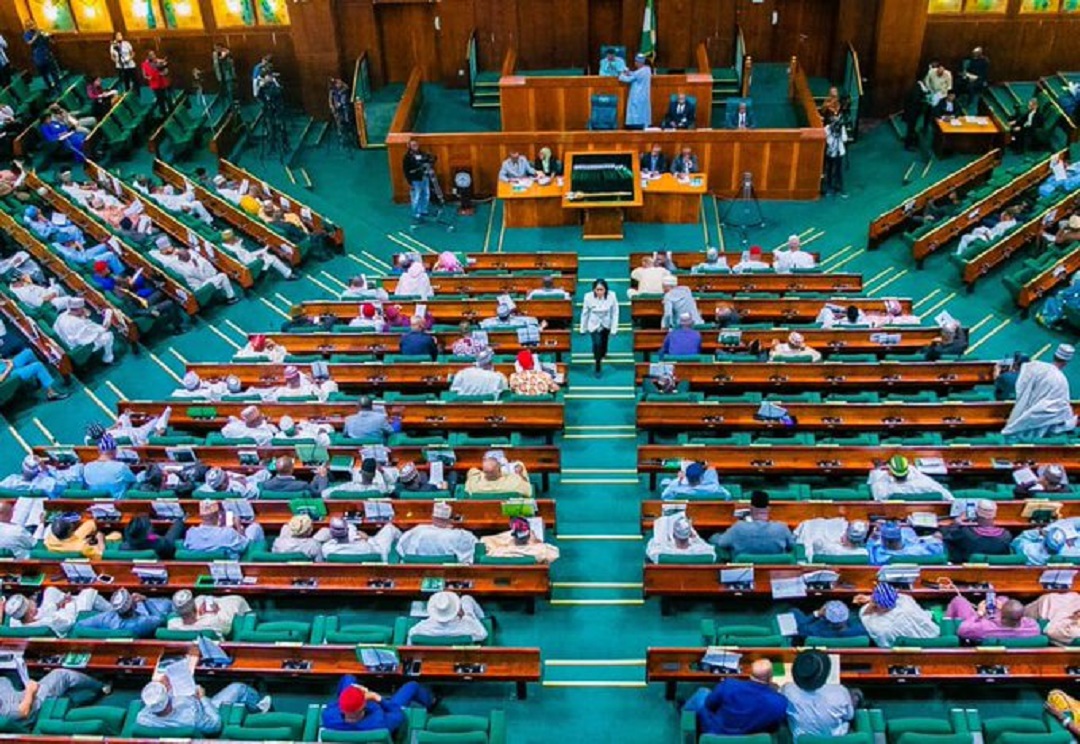
A case for women’s special seats in National Assembly

By Rabi Ummi Umar

When asked whether the move to provide special seats for women in the National Assembly is worth celebrating, my answer is an emphatic yes. This milestone is long overdue, yet deeply heartwarming. 

It is one Nigerian woman who has waited for it with hope and tenacity, far too long for it to come. First introduced in the 9th National Assembly as one of five gender-related constitutional reform bills, the proposal failed spectacularly when it came up for voting in March 2022. 

At the time, it was among the five “gender bills” put forward during the fifth constitutional amendment process, all intended to address women’s issues in governance and representation.

Initially, the bill proposed 111 additional seats in the federal legislature – three special seats for women in each state and one in the FCT, spread across the Senate and House of Representatives. The current bill, however, scales this number down to 74 seats under HB 1349, addressing concerns about over-expansion of the legislature. 

Notably, it also includes a review clause, allowing for termination after 16 years. Now passed through its second reading in the House of Representatives and referred to the Committee on Constitution Review for further legislative action, the bill has gained real momentum. 

It enjoys strong backing from the Speaker of the House, Abbas Tajudeen, women’s groups, the United Nations, the United Kingdom, the European Union, and several other key stakeholders. President Bola Tinubu, in his 2023 campaign manifesto, pledged to prioritise women’s inclusion. 

The advancement of this bill is thus heartening to see, a concrete step toward keeping that pledge. It is also a step in the right direction for Nigeria, opening doors for more women to participate in leadership and decision-making processes that shape the nation.

When this bill is finally actualised, Nigeria may only regret not taking the step earlier. Women have increasingly sought meaningful opportunities to prove their worth and play an active role in the country’s development. 

The aphorism goes, “Only a woman truly knows the pain of another woman.” With more women in parliament, issues that directly affect women and children will no longer be treated superficially or dismissed as “emotional.”

Beyond that, women deserve equal rights with men, including the right to participate fully in politics and lawmaking. Their presence in the National Assembly will not only bring balance but also a sense of belonging and pride. Issues like menstrual health, rape, child abuse, female genital mutilation, and femicide would find stronger voices and greater empathy in a more inclusive legislature.

As leaders and mothers, women bring perspectives grounded in lived experience. Their contributions would enrich debates, restore balance, and deepen gender equality—paving the way for a more prosperous and equitable Nigeria.

The case for women’s representation is not an empty one. Nigerian women have already shown what is possible when given opportunities. Dr Ngozi Okonjo-Iweala, former Minister of Finance and current Director-General of the World Trade Organisation (WTO), remains a shining example of excellence on the global stage. 

Obiageli Ezekwesili, who served as Minister of Solid Minerals and later Minister of Education, earned the enduring title of “Madam Due Process” for her tireless efforts in implementing reforms. And today, young women like Maryam Hassan Bukar, a poet and the UN’s first Global Advocate for Peace and Security, are inspiring the world with their brilliance and courage.

For these reasons and more, the case for women’s special seats in the National Assembly is both urgent and undeniable. Let us continue to support women, acknowledge their contributions, and provide them with opportunities to lead and advance. 

To those fighting for the bill’s passage, thank you for your courage and resilience. And to those who will one day occupy these seats, may you excel and bring pride to Nigeria.

Rabi Ummi Umar can be reached at rabiumar058@gmail.com.

Local government autonomy or new states: Which way for Nigeria? 

By Lawal Dahiru Mamman

There are times when the stars seem to be aligning. All trouble appears to be disappearing, awaiting only what happens when those stars fall into line. But then, unexpectedly, things take a different turn, and the trouble assumes a different shape, sometimes with an additional burden. Such is the irony of Nigeria.

Governance was generally out of reach for the common man, especially those at the grassroots level who lacked the basic necessities required to live a decent life. To address this, there has been a clamour for local government autonomy. Successive governments have attempted to do so, but it was only the current administration that secured this victory in July 2024.

Since then, bureaucracies and political “manoeuvring have clogged up full implementation. Enforcement faced a delay in August when the federal and state governments negotiated a three-month moratorium, due to concerns about council workers’ salary payments and the need to conduct LG elections in certain states, alongside other pressing matters.

Just as progress seemed imminent, another hurdle emerged. The Central Bank of Nigeria (CBN) directed LGs to submit at least two years’ worth of audited financial reports as a prerequisite for receiving direct allocation. Key stakeholders, including the Association of Local Governments of Nigeria (ALGON), condemned the directive as perceived delay tactics. 

While we are at it, the long-standing call for the creation of more states has resurfaced. In February, the House of Representatives’ Committee on Constitution Review threw a spanner in the works by proposing the creation of 31 additional states across Nigeria. If this comes to fruition, it would swell the number of states to 67, with some quipping that this would leave Nigeria with more states than “the Almighty United States”.

The proposed distribution of the new states is as follows: six to the North Central, four to the North-East, five to the North-West, five to the South-East, four to the South-South, and seven to the South-West. 

The proposed new states are New Kaduna and Gujarat from Kaduna State, FCT State, Tiga and Ari from Kano, Kainji from Kebbi State, and Etiti, Orashi, Adada, and Orlu from the South-East.

Others are Okun, Okura, and Confluence states from Kogi; Benue Ala and Apa states from Benue; Amana state from Adamawa; Katagum from Bauchi state; Savannah state from Borno; and Muri State from Taraba.

Also included are Lagoon from Lagos, Ogun, Ijebu from Ogun State, as well as Oke Ogun/Ijesha from Oyo/Ogun/Osun States, Ogoja from Cross River State, Warri from Delta, Ori and Obolo from Rivers, Torumbe from Ondo, and Ibadan from Oyo State.

Some proponents interestingly argue that these new states possess abundant mineral and natural resources, which would be harnessed post-creation for the benefit of their people. One is forced to question the logic behind such reasoning and then wonder, are these not already entities within existing states, or would these new states be conjured out of thin air to perform this economic magic?

One would also need to educate Nigerians on a little bit of history and the processes required to achieve state creation in the country. The last time Nigeria created new states was in 1996, under the late General Sani Abacha. The only time a civilian government created a federating unit in the form of a state, rather than a local government area, was in 1963, and it was reportedly done without good faith. 

The Northern People’s Congress (NPC) was the ruling party at the centre, and it was in alliance with the National Council of Nigeria and the Cameroons (NCNC), which was the ruling party in the Eastern Region. The ruling party in the Western Region was the Action Group (AG), while the opposition party was at the centre. There were other smaller parties, but only the NPC, NCNC, and AG were well-known. The alliance at the centre wanted to counter the growing influence of the Action Group, so a region was created from it. 

That region was named the Midwest Region, which later became Bendel state (derived from Benin and Delta). Bendel later became the Edo and Delta states.

Since then, only military regimes have created states in Nigeria. The Gowon administration, on May 27, 1967, abolished the regional system and created 12 states – North-Western, North-Central, North-Eastern, Kano, Benue-Plateau, Kwara, Western, Lagos, Mid-Western, East-Central, South-Eastern, and Rivers States – as part of the strategies to weaken Col. Odumegwu Ojukwu and prevent the civil war. 

Creation of states continued under subsequent military regimes. General Murtala Mohammed created an additional seven states (Bauchi, Benue, Borno, Imo, Niger, Ogun, and Ondo) in 1976, bringing the total to 19. 

General Babangida created Akwa Ibom and Katsina states in 1987, and nine more states (Abia, Delta, Enugu, Jigawa, Kebbi, Kogi, Osun, Taraba, and Yobe) in 1991, bringing the total to 30. General Sani Abacha sealed it in 1996 by creating six more states – Bayelsa, Ebonyi, Ekiti, Gombe, Nasarawa, and Zamfara.

Conditions for state creation in a democratic setting are stringent and cumbersome, making it unlikely to happen. Military governments created states by decree, but in a democracy, it is a different ball game.

Before anyone advocates for the creation of a new state, they should study the provisions required to do so. Two-thirds of the National Assembly, as well as endorsements from State Houses of Assembly and Local Government Councils,must be achieved. This requirement makes it challenging to create new states in Nigeria. 

In accordance with Section 8 of the Nigerian Constitution, any new state creation must be preceded by the approval of citizens from the area in question through a referendum conducted by the Independent National Electoral Commission (INEC). For the referendum to be successful, a two-thirds majority of the people in question must consent to the creation of the new state.

Then comes resubmission of proposals in line with the prescribed guidelines, which includes submitting hard copies and electronic copies of memoranda to the committee’s secretariat, among other things. 

At a time we all advocate for a cut in governance costs, what would creating new states mean for the economy? What about the scarce resources consumed in holding meetings to contest whether or not to create new states? And what about the cost required to set up additional administrative units, the elections to be conducted, or the SUVs that would need to be purchased for 31 new brand governors and deputies, as well as principal officers in the House of Assembly? 

The stars seem to be aligning in favour of local government autonomy, and hope is on the horizon for meaningful governance at the grassroots level, which will lead to national development. The movement towards state creation,therefore, appears to be an unnecessary and costly distraction.

Lawal Dahiru Mamman writes from Abuja and can be reached via: dahirulawal90@gmail.com.

Rethinking commercial surrogacy in Nigeria

By Arita Oluoma Alih

Medical science has evolved significantly over the centuries. One of the most remarkable breakthroughs in this journey is the art and science of surrogacy, a practice where a woman carries a child in utero (in the womb) on behalf of another woman or couple, whose egg and sperm are fertilised in a laboratory to form an embryo before being implanted into the surrogate mother.

The choice to become a surrogate mother is bestowed upon a woman who undergoes the implantation process, a complex journey that undoubtedly results in experiencing discomfort, physical and emotional pain.

Regardless of the outcome, these pains persist as the foetus develops during the nine-month gestation period, which comes with its own set of challenges, including hormonal imbalances and resultant body changes.

Becoming a surrogate mother is not a knee-jerk decision. Financial challenges, especially in developing societies like ours, and sympathy – a woman wanting to help another woman who has been struggling to conceive or whose womb has been certified unfit to carry a child by a medical professional – are often underlying motivations.

Intended parents also do not jump into surrogacy headfirst; they may have tried other means before settling for such a tedious process. Others, however, would opt for it due to tokophobia – the fear of childbirth. For this group, it is a case of better safe than sorry. 

Other phobias that make couples consider surrogacy include the fear of losing the baby inside the womb, medically known as stillbirth; fear of dying during childbirth; fear of excessive weight gain and other bodily and hormonal changes; fear of mom brain; and baby blues, among others. 

With all these factors in mind, it is mind-boggling that a woman should go the extra mile to carry and birth another person’s child, only to be left high and dry without any form of compensation!

On May 26, 2025, the House of Representatives initiated legislative action to prohibit commercial surrogacy in Nigeria and establish a framework to regulate the practice solely for non-commercial, altruistic purposes. This move follows the introduction of “A Bill for an Act to Protect the Health and Well-being of Women, Particularly in Relation to Surrogacy and for Related Matters”.

The provisions in the Bill that stipulate ‘explicit protection against coercion or forced surrogacy arrangements’ and ‘mandating counselling for both surrogate mothers and intended parents’ are highly commendable. This is particularly important given instances where intended parents reject babies based on gender preferences; counselling would help them understand that they must accept the child wholeheartedly, regardless of gender.

Another twist that underscores the importance of counselling is that, in some cases, surrogate mothers have fought for and claimed ownership of the child, despite prior agreements.

Secondly, the “endorsement of only altruistic surrogacy, where no financial profit is involved except for reimbursing medical and pregnancy-related matters” is a point of contention. Surrogate mothers should be fairly compensated financially for their role, based on mutually agreed-upon terms and conditions between both parties.

While the bill in itself may be altruistic, it should consider monetary compensation for women who render such a difficult and time-consuming service, thereby providing them with the necessary tools to maintain proper mental and physical well-being after childbirth.

Since the bill seeks to protect the rights of women involved in surrogacy and other parties, the legislators should consider several key factors: What happens if a surrogate mother loses her life? What if a stillbirth occurs? What provisions are made for aftercare? What if the pregnancy leaves the surrogate mother with long-lasting health issues, such as hypertension or diabetes? Addressing these questions will provide balance and add depth to the Bill.

The monetary compensation should be seen as a form of consolation for these surrogate mothers when all is said and done. However, Senator Uchenna Okonkwo, who represents the Idemili North/Idemili South Federal Constituency of Anambra State and sponsored the bill, may have his reasons, which I won’t speculate about. Nevertheless, the bill warrants a second look to make it more comprehensive.

Lastly, it is no news that baby farms are hotbeds for illicit activities, including human trafficking. Criminalising commercial surrogacy might inadvertently fuel these underground enterprises, whereas a more critical look at the bill to include compensating surrogate mothers could nip the problem in the bud.

Arita Oluoma Alih is a student of the International Institute of Journalism. She writes from Abuja and can be reached at aritaarit118@gmail.com.

Reps to investigate mass failure in 2025 UTME

By Uzair Adam 

The House of Representatives has resolved to investigate the technical error that resulted in the mass failure recorded during the 2025 Unified Tertiary Matriculation Examination (UTME).

This decision was made following the adoption of a motion of urgent public importance moved by a lawmaker from Osun State, Adewale Adebayo, during Thursday’s plenary session.

The Joint Admissions and Matriculation Board (JAMB) released the results of the 2025 UTME on May 9, revealing that over 78 per cent of candidates scored below 200 out of a possible 400 marks. 

An early review by the board indicated a significant technical error had occurred.

At a press briefing in Abuja, JAMB Registrar Prof. Ishaq Oloyede disclosed that server-related issues affected the results of 379,997 candidates. 

He explained that updates to servers in Lagos and South-East zones disrupted the upload of responses during the first three days of the examination. 

The issue, caused by one of JAMB’s two technical service providers, went undetected before the results were initially released.

To remedy the situation, the board announced that affected candidates would be allowed to retake the examination between May 16 and 19, 2025.

While presenting the motion, Adebayo emphasised the hardship many candidates and their families endured, travelling long distances only to face disappointing outcomes. 

He called for a thorough investigation to ensure such lapses do not recur.

In his contribution, Sada Soli from Katsina praised the JAMB Registrar for admitting the error and publicly apologising. 

He also commended Oloyede’s efforts in boosting the board’s revenue since taking office.

However, House Speaker Tajudeen Abbas said it would be up to the investigating committee to determine whether the Registrar deserves an official commendation.

The motion was unanimously adopted through a voice vote.

The House further called on the Federal Government to establish Computer-Based Test (CBT) centres in all Local Government Areas across the country to make exam centres more accessible. 

It also urged JAMB to release the withheld results of candidates below the age of 16.

Nigeria’s porn ban: A distraction from real issues

By Abdulhamid Abdullahi Aliyu

The Nigerian House of Representatives has directed the Nigerian Communications Commission (NCC) to block all pornography websites, arguing that adult content is fueling moral decay in the country.

Lawmakers behind the move claim it is necessary to protect societal values, but many Nigerians are asking: With all the pressing challenges facing the nation, is this the priority?

At a time when the cost of living is unbearable, insecurity is rampant, and unemployment continues to frustrate millions, banning pornography feels like a classic case of misplaced focus.

There is no doubt that pornography is a controversial topic, especially in a country as religious and conservative as Nigeria. Many believe it is a moral threat, linking it to addiction, broken homes, and declining values among the youth. But is an outright ban the solution?

If the government is genuinely concerned about morality, should it not focus on improving education, strengthening family values, and addressing the root causes of social vices? What about the rising cases of drug abuse, internet fraud, and sexual exploitation—issues that demand urgent action?

It is often easier for politicians to push symbolic laws than to tackle society’s deeper problems. But morality cannot be legislated; it is shaped by economic stability, good governance, and proper education.

Even if we assume the government is serious about this ban, another question arises: Can it actually be enforced? Countries like India, Indonesia, and China have attempted similar restrictions, only for people to bypass them with VPNs and other simple workarounds.

Nigeria, with its millions of tech-savvy youths, will be no different. At best, this ban will be a temporary roadblock; at worst, it will push the industry underground, making regulation even more difficult.

What is most concerning is the potential for this move to set a dangerous precedent for internet censorship in Nigeria. Today, it is pornography. Tomorrow, it could be news websites, social media platforms, or even political activism.

If the government can dictate what people access online, what stops it from controlling other forms of content? Where does it end?

Beyond the moral and censorship debates, an outright ban could also have unintended economic consequences. Nigeria’s creative and tech industries thrive on the internet’s openness.

Restrictions like this could discourage investment in the digital space. Besides, history has shown that banning something does not eliminate demand—it simply drives it underground.

This move may just create a bigger mess instead of solving anything. If the real concern is protecting children and upholding values, there are smarter ways to achieve this.

Many developed countries regulate adult content through strict age verification, parental control mechanisms, and public awareness campaigns. A more effective approach would involve educating young people about digital responsibility, empowering parents with monitoring tools, and addressing the economic and social conditions that contribute to moral decline.

With the economy in crisis, insecurity worsening, and corruption still unchecked, is banning pornography really what Nigerians need right now?

This is not to suggest that pornography is beneficial or free of consequences. However, governance revolves around priorities. A country that is struggling to feed its people should not waste energy on internet policing.

Nigeria’s progress will not depend on what it bans but rather on how effectively it addresses the fundamental issues that hold it back.

And unfortunately, a porn ban does nothing to fix them.

Abdulhamid Abdullahi Aliyu, an NYSC serving corps member, writes from the Center for Crisis Communication (CCC) in Abuja. 

Kwankwaso condemns state of emergency in Rivers State

By Hadiza Abdulkadir

Following a prolonged silence and social media appeals urging NNPP chieftain and former governor of Kano State, Rabi’u Musa Kwankwaso, to address the ongoing political situation in Nigeria, Kwankwaso issued a statement to the press through his social media accounts.

Kwankwaso strongly criticized President Bola Tinubu’s recent declaration of a state of emergency in Rivers State. The proclamation includes the suspension of Governor Similayi Fubara and all elected state legislators, a move Kwankwaso deems unconstitutional and dangerous for Nigeria’s democracy.

Reflecting on past political lessons, he expressed concern over the National Assembly’s rapid ratification of the president’s decision, calling it a deviation from proper legislative procedures. “This 10th Assembly has become more rubberstamp than any of its predecessors,” he stated.

Kwankwaso also condemned the involvement of military leadership in a civilian power structure, warning that such actions could lead to chaos and erode public trust in democratic institutions. He emphasized the risks of permitting military influence over civilian governance, recalling the need to keep military forces away from political power.

As the situation unfolds, the implications for democracy in Rivers State and across Nigeria remain uncertain, highlighting the necessity for political and judicial bodies to uphold the rule of law.

Tinubu defies critics, declares tax reforms unstoppable

By Uzair Adam

President Bola Ahmed Tinubu has reiterated his administration’s unwavering commitment to implementing tax reforms, emphasizing their importance for Nigeria’s economic transformation.

The Daily Reality reports that the president made this assertion during his first presidential media chat on Monday night in Lagos State.

The proposed reforms, encapsulated in several bills before the National Assembly, include the Nigeria Tax Bill, Nigeria Tax Administration Bill, Nigeria Revenue Service Establishment Bill, and the Joint Revenue Board Establishment Bill.

Despite facing backlash, particularly from Northern leaders, and prompting calls for further consultation, Tinubu defended the reforms as being pro-poor and aimed at restructuring outdated colonial tax structures.

“Tax reform is here to stay,” Tinubu stated, adding, “In today’s economy, we cannot continue to rely on outdated systems.

“The essence of these reforms is to eliminate colonial-based assumptions in our tax environment. The vulnerable will not be subjected to taxation.”

Addressing concerns about the controversial Value-Added Tax sharing model, the President expressed his willingness to engage in negotiations but insisted that the reforms would proceed.

“Tax matters are subjects of debate, reviews, and negotiations until consensus is reached,” he said.

Tinubu also remarked that good leadership requires decisive actions at critical moments.

“The hallmark of a good leader is the ability to do what you have to do when it needs to be done. That is my philosophy,” he added.

The proposed tax reforms aim to create a fairer tax system, though Tinubu acknowledged that they might not be universally accepted.

Tinubu: No regrets over fuel subsidy removal—it was a must-do reform

By Uzair Adam

President Bola Ahmed Tinubu has reaffirmed the necessity of his administration’s decision to remove the fuel subsidy, describing it as an unavoidable step to secure Nigeria’s economic stability.

During his first presidential media chat on Monday night, Tinubu maintained, “I have no regrets whatever removing subsidies. It was necessary.”

The President explained that the subsidy system was unsustainable and akin to jeopardizing the nation’s future for immediate gratification.

“We were not investing; we were just deceiving ourselves. The reform was necessary. We cannot have expenditures we don’t have revenue for,” he stated, urging Nigerians to embrace fiscal discipline and prudent financial management.

“Cut your coat according to your size,” Tinubu advised, adding that the removal was imperative to ensure a sustainable future for upcoming generations.

He acknowledged the challenges posed by the reform, including resistance from smugglers, and emphasized the need for stringent enforcement and structural adjustments.

“I can see smugglers fighting back,” Tinubu remarked, vowing to address these challenges through necessary reforms and strong measures.

The President also extended his condolences to the families of victims of recent stampede incidents at a charity event, calling for improved organization and contingency planning to avoid similar tragedies.

“It is sad that people are not respected or are abused in situations like this. If you don’t have enough to give, don’t publicise it,” he said, urging event organisers to prioritise safety and crowd control.

Tinubu reiterated his administration’s commitment to making difficult but essential decisions, asserting, “No matter how you phase it, you still have to meet the bill.”

Lawmakers to make INEC responsibe for LG elections

By Sabiu Abdullahi

Senator Sunday Karimi, Chairman of the Senate Services Committee, has announced that the National Assembly plans to pass legislation transferring the responsibility of conducting local government elections from state electoral bodies to the Independent National Electoral Commission (INEC). 

Senator Karimi commended President Tinubu for his courage in returning power to the people, stating, “Since 1999, the third tier of government has been nonexistent. State governments treated them as appendages. No president has been able to change that, but President Tinubu has returned the local government to the owners – the masses.” 

He lamented potential resistance from state governors but expressed confidence in the President’s commitment to ensuring the judiciary’s independence.

Senator Karimi aligned himself with the President’s stance, praising his courage and understanding of the people’s needs. 

The Senator said it good if capable individuals manage local government funds effectively and prioritise grassroots development. He also highlighted the need for proper allocation of funds, citing past instances of mismanagement or embezzlement. Senator Karimi concluded by assuring that the National Assembly will ensure the legislation is passed and that President Tinubu’s achievement will be remembered, securing his second term.

NIGERIA: It’s the impunity, actually

By Dr Raji Bello

Our high-maintenance and strangely imaginative federal legislators have embarked on another fancy idea for solving our country’s problems – a single six-year term for federal and state chief executives. I have since realised that Nigerians would suggest anything as a way out of our problems other than the most pertinent one: defeating impunity. At the current rate that our National Assembly is moving, we will wake up one day to hear a motion to return the country to using miles instead of kilometres as a way to improve efficiency. 

Although I advocate for replacing our current system with a more centralised one, I have never doubted that the country’s most important problem is that its citizens can conduct themselves without any fear of consequences.

The fear of consequences has always moderated human behaviour and has brought peace, order, stability and prosperity to human societies. Even the most sophisticated countries in the world today have never thought of lifting the threat of consequences for law-breaking on their citizens. But Nigeria has decided that applying consequences for breaking the law is unkind and should be done away with. 

We are always unwilling to punish wrongdoing while also being unable to do so. As a result, we keep moving from chaos to dysfunction and back to chaos again. And each time we sit and ponder over potential solutions, we always look away from impunity – we feel that some cosmetic changes could rescue us while we allow our personally profitable culture of impunity to remain.

When our electoral system is not working, we think of changing electoral laws but without punishing those who broke the existing laws. Hardly anyone is in jail at the moment in Nigeria for sponsoring or perpetrating electoral violence, and the infamous former Adamawa INEC commissioner has still not been punished one year after he wilfully infused chaos into the state’s governorship election. 

We are incapable of punishing corruption by our VIPs; our most celebrated cases—Abacha loot, Alamieyeseigha, and Ibori—only happened because foreign countries assisted us. The Halliburton and Siemens bribery scandals were never punished in Nigeria, although both companies were prosecuted in their home countries for the crimes that they committed in Nigeria. 

It took the determination of the UAE and the US, not Nigeria, to finally put scammer Hushpuppi away. We have managed to convict kidnapper Evans after several years of trial, but there are now fresh attempts to arrange a plea bargain for him. As big as the problem of oil theft is in our country, only foreigners and other minor individuals have ever been convicted of the offence. 

A notorious bandit, who could not be arrested in Nigeria, was intercepted recently when he crossed the border into the Republic of Niger. If not for the help from the same Niger, we would also not have Abdulrashid Maina in prison by now. Nnamdi Kanu jumped bail and left Nigeria while our security looked the other way and it took the cooperation of Kenya to get him back. 

In the Boko Haram theatre, terrorist kingpins only die from infighting among their factions, not by getting killed by the authorities. Any terrorists that we actually capture are given a pardon and ‘rehabilitated’ in camps in our towns, where they end up living side-by-side with their terrified former victims. Over a dozen soldiers were killed on active duty in Delta State without any accountability by the culprits in that act, but we were surprised when five were killed yet again in Abia State. 

The few VIPs that we have managed to jail for corruption after long trials were given official pardons by the former president of Nigeria, whose pardon list also included ‘common criminals’ jailed for offences like the 419 scam. Donald Trump and Hunter Biden have just been convicted of, guess what, lying, but Nigeria could not as much as arrest and arraign Yahaya Bello for looting public funds and the famous case of our former Accountant-General Ahmed Idris has not taken off yet. 

Senator Omo-Agege was fingered by the police for the theft of the Senate’s mace but he got promoted to deputy senate president soon after. Ahmed Lawan has regained his senate seat without really participating in a valid electoral contest. He did not contest in the original primary but got his party to stage another one for him after he had decided that he wanted to be a senator again, not president. With his ‘victory’ in the arranged primary, he got the Supreme Court to support him via a 3-2 split decision. The same individual spoke to the BBC Hausa a few days ago as an elder statesman, where he proffered solutions to the problems of Nigerian democracy. There is no way that a country with such brazen industrial-scale duplicity would make any headway.

Open incitement is largely consequence-free in the country, and the perpetrators know that. Our Islamic clerics who went to foreign countries to study must have seen how public preaching is highly regulated in these countries. All Friday sermons are written by the state, and Imams get fired for merely letting substitute Imams deliver their government-authored sermons. But the same clerics return to Nigeria to assert their freedom to speak publicly in any way that they choose. For Nigerians, democracy is the same thing as lawlessness.

Well, there are no new laws or new political systems that could work side-by-side with impunity. We must defeat impunity first before anything else would work. Impunity begets even more impunity, unleashing a catastrophic loop. As long as the average Nigerian does not fear possible consequences for their actions, we will never be a normal country.