Naira

Nigerian Senate moves to ban use of foreign currencies

By Sabiu Abdullahi

The Nigerian Senate has taken the first step towards banning the use of foreign currencies in the country.

A bill seeking to prohibit the use of foreign currency in Nigeria has scaled first reading in the House of Senate.

The proposed legislation, sponsored by Senator Ned Nwoko, aims to ensure that all payments, including salaries and transactions, are made using the local currency, the naira.

According to Senator Nwoko, the widespread use of foreign currencies in Nigeria’s financial system undermines the value of the naira.

He described the use of foreign currencies like the dollar and pound sterling as a “colonial relic” that hinders Nigeria’s economic independence.

The bill, titled “A Bill for an Act to Alter the Central Bank of Nigeria Act, 2007, No. 7, to Prohibit the Use of Foreign Currencies for Remuneration and Other Related Matters,” seeks to amend the Central Bank of Nigeria Act, 2007.

This development has sparked mixed reactions, with some Nigerians expressing support for the move, while others have raised concerns about its potential impact on the economy.

Naira slips to N1,585 in parallel market

By Anas Abbas

The Naira has declined in value within the parallel market, trading at N1,585 per dollar compared to N1,550 per dollar on Monday. In contrast, the official foreign exchange market reported an appreciation of the Naira, with rates improving to N1,525 per dollar, up from N1,538 per dollar earlier this week.

According to the latest data from the Central Bank of Nigeria (CBN) published in the Daily Nigerian Foreign Exchange Market (NFEM), the indicative exchange rate for the Naira has strengthened by N13, reflecting a notable shift in the official market.

Figures from FMDQ reveal a significant increase in dollar transactions on the Nigerian Autonomous Foreign Exchange Market (NAFEM). Trading volume surged by 129 per cent to $401.17 million, up from $175.15 million on Monday.

The surge has resulted in a widening gap between the parallel market and the NFEM rate, which has expanded to N60 per dollar from just N12 per dollar at the start of the week.

Salary increase or stronger Naira: My appeal to the President

By Sani Bello Hamza

Mr. President, before I delve into my concerns, it is indeed important to lay a proper foundation. As an aspiring lawyer and an opinion leader in my own capacity, I am not unaware of the challenges and intricacies of leadership. The stress, strain, and challenges are sometimes daunting and discouraging.

However, Mr. President, even your enemies and those from the opposition party can not doubt your capacity to lead and your unique style of leadership. Your ability to lead and manage successful politicians, industry men and academics leaves us in awe and surprise.

Your ability to understand and provide lasting solutions to national issues ought to be given careful consideration and serve as an exercise for students at various levels. Your unique style of leadership is indeed worthy of emulation and study. The Asiwaju school of thought!

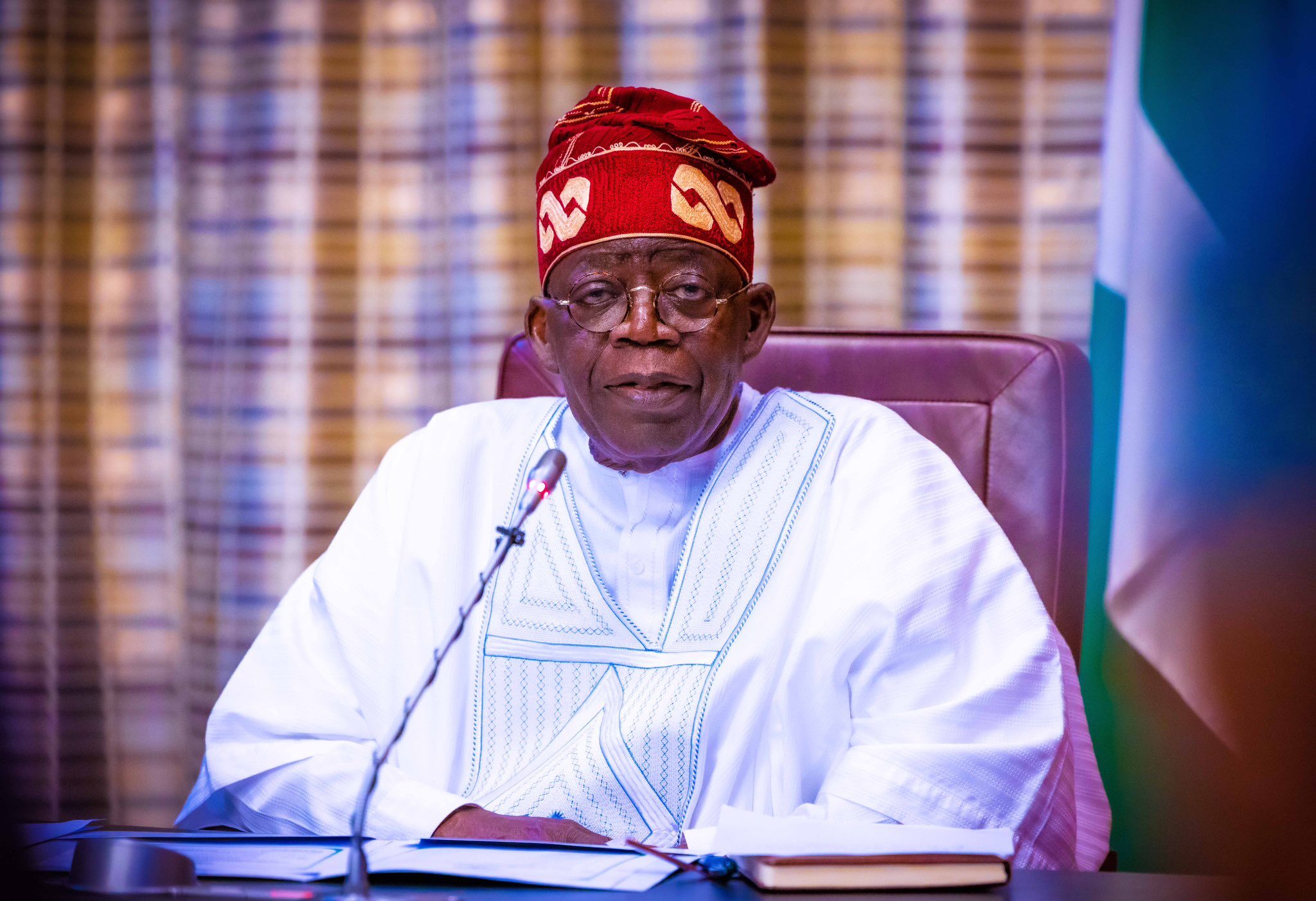
Dear President Bola Ahmed Tinubu, It has been a year since Nigerians qued in mass to support you and the renewed hope agenda. They voted for you and supported your candidacy. Nigerians, from every nook and cranny of the country, shun the nay-sayers and triumph to support you and the APC to make sure you make it to the Villa. It has now become history and forms a special part of the Asiwaju school of thought! 

Mr. President, sir, Before you declared your intention to run for president in early 2022, Nigerians were lost in search of a trusted and reliable leader, a qualified politician capable of steering them to the promised land. The APC seems to be falling after eight years of sheer disappointing tenure, and the PDP was not an option to be considered, given its 16-year tenure.

The resurgence and emergence of the renewed hope agenda and the “emilokan” slogan gave Nigerians a sigh of relief and hope that the table would turn around. That is, it’s time to reap what they sow and enjoy the fruit of their labour and hard work. 

Mr. President, I wish I could write this letter and deliver it directly to your mail or doorstep. Sadly, it’s not possible. I still wish I could be featured on national television to address you and beg you for one thing, yes, just one thing, Mr. President. 

If I were given the opportunity to meet you, the president, in a one-on-one conversation, I wouldn’t talk much. I promise to make the conversation short, brief, and succinct. Who will give me this golden opportunity? 

Anyway, the popular Hausa adage; “guntun gatarin ka ya fi sari ka bani” meaning your short axe is better than cut and give me” is what kept resounding in my skull. I will use the little I have to achieve what I don’t have. I will send this letter out, hoping that one day it’ll reach you, Mr. President. In a one-on-one meeting with the president, I will tell him to put aside anything that has to do with salary increases for the working class and concentrate on bringing back to life the already dead Naira. A stronger Naira is the only option.

Okay, back to the subject matter: Nigeria is indeed a blessed country with abundant natural resources (Minerals and Humans). Yet, our economy keeps dilapidating day in and day out. It always seems that yesterday was better than today, last month was better than the current month, and we wish to be taken back to the previous administrations. 

Why is this happening? What is the problem with Nigeria?

I was tempted to share a post on my Facebook timeline from March 2015 (nine years ago) in which the writer lamented how the prices of commodities skyrocketed during the fasting period. The only price that caught my attention was the price of spaghetti, which rose from 60 – 70 naira. Man! How much are you buying spaghetti now? They’ll say the dollar has risen.

Mr. President, back then, in 2014, the exchange rate of dollar to naira was 60-70 per dollar. The minimum wage then was 18,000 naira, which is enough for an average Nigerian to buy a bag of rice and other commodities to sustain himself throughout the month.

Fast forward to 2024, 10 years later, the Naira hit an all-time record of 1900 to a dollar, and the minimum wage has graciously increased from 18,000 to 30,000. The 30k will not be enough for the average Nigerian to buy half a bag of rice, not to talk of other daily life struggles.

Mr. President, I strongly believe a salary increase will only increase the amount of money in circulation, thereby making inflation the front seat of our economic discourse. They say more money, more problems. 

Mr President, sir, a good road network connecting rural to urban areas spiced up with increased exports will benefit the country more than an increased salary for less than five per cent of the country’s population. 

Dear President Bola Ahmed Tinubu, I equally believe the renowned economists in your midst understand the intricacies of our economy and where it’s heading to. With your continuous support, dedication and unwavering commitment to the progress of our nation, Nigerians will one day smile and say Alhamdulillah!

Sani Bello Hamza is a Law Student at Ahmadu Bello University Zaria. He writes from Zaria and can be reached via sanibellohamza@gmail.com.


EFCC apprehends Bobrisky over alleged naira notes abuse

By Sabiu Abdullahi 

The Economic and Financial Crimes Commission (EFCC) has arrested Idris Okuneye, better known as Bobrisky, on charges related to the alleged mutilation and misuse of naira notes. 

Bobrisky was reportedly apprehended in Lagos during the evening hours of Wednesday and is currently being held at the EFCC’s Lagos Office as investigations proceed, according to statements made by EFCC spokesperson Dele Oyewale in a conversation with newsmen. 

This development comes amidst a flurry of controversies surrounding the social media personality, notably his recent controversial win of the “Best Dressed Female” Award at a movie premiere on March 25, 2024, which sparked widespread criticism from various sectors of the entertainment industry. 

However, in response to the public outcry, Force Spokesman Muyiwa Adejobi noted that while cross-dressing itself isn’t illegal under Nigerian law, allegations of involvement in other illicit activities could warrant legal action. 

“I have not read anywhere that cross-dressing is an offence in Nigeria,” Adejobi affirmed during an appearance on Channels Television’s Politics Today program on April 2, 2024.

“Let us be reasonable, you cannot arrest somebody you want to prosecute without having credible evidence, and as such, cross-dressing is not yet a crime in Nigeria.” 

Adejobi clarified that while cross-dressing may not be punishable, allegations of engaging in unlawful activities could lead to legal consequences.

“Some of them that are into cross-dressing, the allegation is that they are into something else, that’s where the problem lies. We need enough proof that they are actually into ‘that’. All those offences are natural in Nigeria and punishable under our laws,” he stated.

Atiku calls out Tinubu over hardships in Nigeria

By Muhammad Abdurrahman

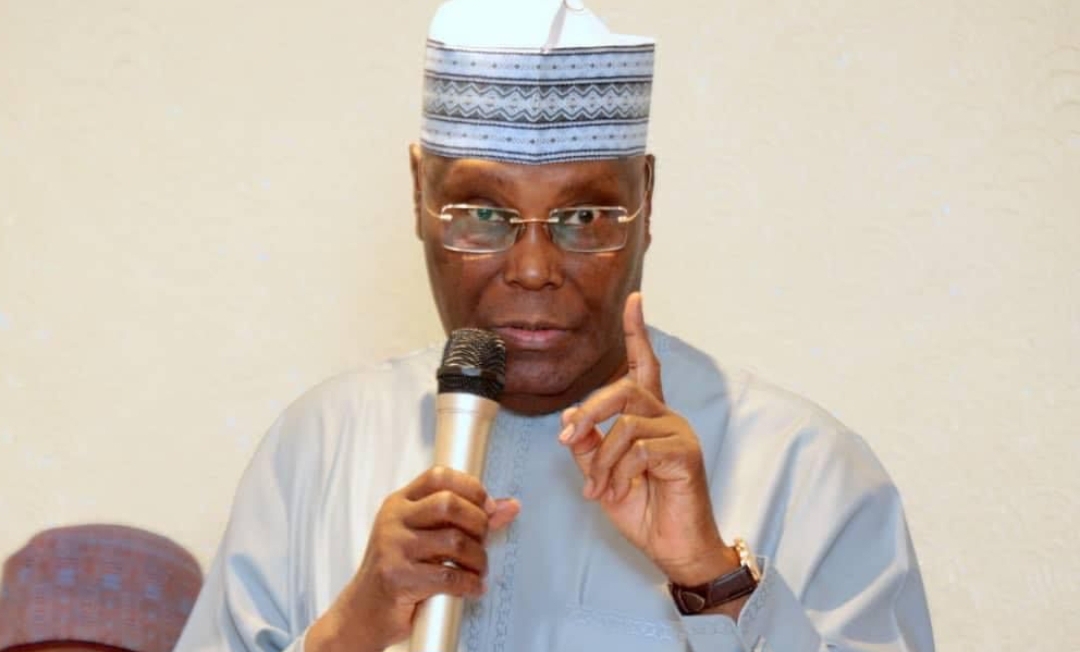
Former Vice President, Alhaji Atiku Abubakar, tackles President Bola Ahmed Tinubu over the hardships caused by the latter’s policies since assuming office as President in May 2023.

In a post on his verified social media handles, Atiku calls out Tinubu, calling the steps taken by his administration to contain the crises of currency fluctuation and poverty many people face in Nigeria “failures.”

The statement reads:

At a meeting called at his instance on Thursday to address the Foreign Exchange crisis and the problem of economic downturn, among others, Bola Tinubu failed, yet again, to showcase any concrete policy steps that his administration is taking to contain the crises of currency fluctuation and poverty that face the country.

Rather, he told the country and experts who have been offering ideas on how to resolve the crisis that he and his team should not be distracted and allowed time to continue cooking their cocktail that has brought untold hardship to the people of Nigeria.

I don’t agree with that.

The wrong policies of the Tinubu administration continue to cause untold pain and distress on the economy and the rest of us cannot keep quiet when, clearly, the government has demonstrated sufficient poverty of ideas to redeem the situation.

If the government will not hold on to their usual hubris, there are ways that the country can walk out of the current crisis.

After a careful assessment of the state of our economy at the twilights of the last administration, I knew full well that the economy of the country was heading for the ditch and came up with a number of policy prescriptions that would rescue the country from getting into the mess that we are currently in.

Those ideas, encapsulated in my policy document titled: My Covenant With Nigerians made the following prescriptions:

1. I had signed on to a commitment to reform the operation of the foreign exchange market. Specifically, there was a commitment to eliminate multiple exchange rate windows. The system only served to enrich opportunists, rent-seekers, middlemen, arbitrageurs, and fraudsters.

2. A fixed exchange rate system would be out of the question. First, it would not be in line with our philosophy of running an open, private sector friendly economy. Secondly, operating a successful fixed-exchange rate system would require sufficient FX reserves to defend the domestic currency at all times. But as is well known, Nigeria’s major challenge is the persistent FX illiquidity occasioned by limited foreign exchange inflows to the country. Without sufficient FX reserves, confidence in the Nigerian economy will remain low, and Naira will remain under pressure. The economy will have no firepower to support its currency. Besides, a fixed-exchange rate system is akin to running a subsidy regime!

3. On the other hand, given Nigeria’s underlying economic conditions, adopting a floating exchange rate system would be an overkill. We would have encouraged the Central Bank of Nigeria to adopt a gradualist approach to FX management. A managed-floating system would have been a preferred option. In simple terms, in such a system, the Naira may fluctuate daily, but the CBN will step in to control and stabilize its value. Such control will be exercised judiciously and responsibly, especially to curve speculative activities.

4. Why control, you may ask.

(i). Nigeria has insufficient, unstable, and precarious foreign reserves to support a free-floating rate regime. Nigeria’s reserves did not have enough foreign exchange that can be sold freely at fair market prices during crises.

(ii). Nigeria is not earning enough US$ from its sales of crude oil because its production of oil has been declining. And,

(iii). Nigeria is not attracting foreign investment in appreciable quantities.

These are enough reasons for Nigeria to seek to have a greater control of the market, at least in the short to medium term when convergence is expected to be achieved.

Tinubu’s new policy FX management policy was hurriedly put together without proper plans and consultations with stakeholders. The government failed to anticipate or downplayed the potential and real negative consequences of its actions.

The Government did not allow the CBN the independence to design and implement a sound FX Management Policy that would have dealt with such issues as increasing liquidity, curtailing/regulating demand, dealing with FX backlogs and rate convergence.

I firmly believe that if and when the Government is ready to open itself to sound counsels, as well as control internal bleedings occasioned by corruption and poorly negotiated foreign loans, the Nigerian economy would begin to find a footing again. – AA

Dollar-Naira exchange rate and the life of Nigerian civil servants 

By Ismail Namadi 

In 2014, $1 was equivalent to ₦200. At that time, one bag of 50kg rice was around ₦8,000 ($40), and the minimum wage was N18,000 ($90). 

Comparably, in January 2024 (10 years apart), $1 is around ₦1,500. The Minimum wage is ₦30,000. A simple calculation is 18000/200 = $90; 30,000/1,500 = $20.

What does this simple calculation mean? In real terms, over the past ten years, despite the increase in the minimum wage from ₦18,000 to ₦30,000 per month, purchasing power has decreased by over 75%.

However, in 2014, the PMS pump price per litre was 87 Naira, while the current price in 2024 is ₦700 per litre. 

The Nigerian budget in 2014 was ₦4.962 trillion, while in 2024, the budget is ₦28.77 trillion. These variables are paramount when considering minimum wage simply because they directly affect the lives of people in the country. 

For example, the federal government removed the subsidy on petroleum products, which led to a skyrocketing price of general goods and services, making the lives of citizens, especially low-income earners, difficult to manage.

In addition, the dollar plays a significant role in our economy because we depend on foreign importation for consumable goods. The dollar is the only legal tender that we use to patronize foreign goods.

My advice to the federal government is that when it decides to review the minimum wage, it should consider the purchasing power of the naira so that the standard of living of Nigerian workers is improved.

Ismail Namadi wrote from Paderborn, Germany, via Ismailnamadi2006@gmail.com. 

CBN issues stern warning amidst circulation of counterfeit naira banknotes

By Sabiu Abdullahi 

The Central Bank of Nigeria (CBN) has issued a strong caution to the public regarding the surge in illegal Naira banknotes circulating in the country.

CBN’s Acting Director of Corporate Communications, Hakama Sidi Ali, noted the gravity of the issue in a statement released on Friday, particularly highlighting the prevalence of counterfeit higher denominations. 

“The CBN has observed the circulation of counterfeit banknotes, especially higher denominations by some individuals,” warned Mr. Sidi Ali. 

These fake Naira notes are reportedly being used for transactions in food markets and commercial centres across major cities in Nigeria.

The CBN expressed its commitment to collaborating with relevant security and financial agencies to combat the circulation of counterfeit currency. 

“The law provides severe sanctions, including a term of imprisonment of not less than five years, for any person found culpable of counterfeiting Naira notes or any other legal tender in Nigeria,” stated Sidi Ali. 

The public is urged to report suspected cases of counterfeit Naira notes to the nearest police station, CBN branch, or via email at contactcbn@cbn.gov.ng.

In response to the rising concerns, financial institutions and the general public are advised to exercise increased vigilance and adopt precautionary measures to prevent the acceptance and distribution of counterfeit notes.

Naira-Dollar crisis: Some takeaways

By Baffa Kabiru Gwadabe

Over the past few months, Nigeria has been suffering from continuous depreciation of its currency, the naira. The naira has depreciated from barely ₦600/$ in the last three months to ₦1,300/$ today, the 27th of October 2023. This is enormous, considering the loss of value by more than 120%. Many are worried, including my little self, about this development. But the recent propositions of solutions by many provoke such a write-up.

It is good to start with some questions concerning the crisis. What is happening? What went wrong? Who is to blame? What are the ways out? What will be the lasting solutions?

The above questions may not be provided with answers, as many out there know the answers already. The focus should remain on some best practices or exchange rate regimes to hinge on. Let me start with some highlights on the developments in Nigeria’s foreign exchange market.

In 1971, when the Gold Standard was abolished under the Bretton Woods System, several foreign exchange rate management regimes were pursued in Nigeria and other parts of the world. These include the independently adjustable peg, crawling peg, independent peg, collective exchange arrangement, dual exchange and floating regimes. IMF member countries practice six (6) other exchange rate regimes, which were later compressed into three (3) regimes to include pegs, limited flexibility, and great flexibility. These were later decomposed into fifteen (15) regimes, mainly from 1975 to 1998 (see Mishkin, 2007).

All those regimes were adopted unevenly by the IMF countries. This means they practice one or more of the regimes based on their choices and persuasions. By 1999, the IMF proposed eight (8) different exchange rate regimes. They include separate legal tender, currency boards, conventional fixed (pegged against a single currency or basket of currencies or other commodities like gold), pegged within horizontal bands, crawling pegs, crawling bands, managed floating and independent floating (see Mishkin, 2007).

Still, these interchanging regimes continued in Nigeria depending on the available foreign reserves, capital inflows and current account balances. Nigeria’s forex crisis worsened in the 1980s when the US economy pursued Nigeria to devalue its currency by 10% and other scenarios. However, some attention will be given to the last ten years or so, particularly the administration of President Muhammadu Buhari or the reign of Godwin Emefiele as the CBN Governor (2014 – 2023). Some reflections would also be made on earlier antecedents before the Buhari’s and current administrations.

Nigeria has pursued two dominant exchange rate regimes: the Retail Dutch Auction System (RDAS) and the Wholesale Dutch Auction System (WDAS). The RDAS is an exchange rate regime introduced in Nigeria in 1987. It focuses on buyers (end-users or customers) of Forex (USD) to bid for the prices, and the marginal bidder is supplied with the quantities by the CBN through authorized dealers. Under the RDAS, the inept dealers are supplied less, while the highest bidders are penalized for rent-seeking and invitation for depreciation. 

The WDAS, on the other hand, is an exchange rate regime targeted at maintaining the gains of the RDAS and the continued liberalization of the forex market. The WDAS came into operation in Nigeria in February 2006 and allows authorized dealers to buy forex on their accounts rather than on behalf of end-users. Also, the authorized dealers are carefully watched by the CBN, and the dealers are also allowed to trade in the interbank forex market. During that time, the CBN pursued other special interventions of forex sales to Deposit Money Banks (DMBs) and direct sales to licensed Bureau de Change (BDCs). The CBN further mandated that DMBs increase Business Travel Allowance (BTA) and Personal Travel Allowance (PTA) from $2,500 and $2,000 to $5,000 and $4,000 per quarter, respectively. All these policies were sustained in positive directions as the naira continued to appreciate by 2.6%, 8.7% and 5.8% for 2006, 2007 and 2008, respectively.

However, at the beginning of 2009, there was an observed forex policy reversal and the reintroduction of RDAS to reduce capital outflows and depletion of foreign reserves. The interbank trading segment was suspended. This was followed by sales restriction of forex to oil companies and government agencies and sales of forex to BDCs. But towards the end of 2009, the CBN called for recapitalization of BDCs in what they call ‘Class A’, while those that did not recapitalize are called ‘Class B’ BDCs. Both ‘Class A’ and ‘Class B’ BDCs can bid a maximum of $1 million and $250,000 respectively.

Similarly, by 2016, Nigeria’s forex market was further liberalized. During the period, the average naira-dollar exchange rate was N197/$ at the interbank window, representing a depreciation of 18.7% (as the exchange rate was N160/$ before 2016). However, one worrying thing remains: the premium between the interbank and BDC sections was about 41.5%. After this, some other forex regimes were still embraced under the administration of President Buhari and Godwin Emefiele. For instance, forex primary dealers (FXPDS) and non-FXPDS were introduced into the forex market in 2017.

In addition, longer-term derivatives like forwards trading from 1 to 3 months tenor and up to 2 years were introduced. The exchange rate was relatively stabilized at averages of N231.76/$ and N351.82/$ at interbank and BDCs, respectively. This has created many arbitrage opportunities for those with access to the interbank rates to continue to worsen the forex market. Such a trend continued for 2020, 2021, 2022 and until 2023. For instance, as of March 2023, the official rate was N462/$, while in the black market, it was an average of N750/$. 

The sacking of Emefiele as the CBN Governor and the appointment of the acting CBN Governor, Mr Shunobi, in June 2023, where the latter tried to close the gap and arbitrage opportunities, moved the official rate from N474/$ to N664/$. With the appointment of substantive CBN Governor in September 2023, Mr Cardoso, the apex Bank, moved on with complete deregulation of the forex market, and this has led to incessant depreciation of the naira to a historic level of N1,300/$. However, it now appreciates an average rate of N1,000/$ and other rates depending on information and locations.

The next thing to talk about is the proposed solutions to the lingering naira-dollar crisis. However, it is important to note that the CBN’s recent and previous exchange rate policies are floating in nature or simply deregulating the forex market, and this is counterproductive as it has not provided the desired results, especially recently. This is because floating regimes are usually for export-dominant countries such as China, the United States, Japan, Germany, India, Russia and Saudi Arabia, among others, as argued by the Mundell-Fleming model. Nigeria is a predominantly import-dependent economy. As such, depreciations affect inflationary levels in the first round (exchange rate pass-through to inflation) and at the ‘second-round’, popularly known in the current literature as the ‘second-round effect’.

To end this submission, the CBN needs to do one or two things to exit from the naira-dollar crisis, and these include:

(1) Invite a small but huge ‘Conference of the Parties’ (COP) to deliberate and take appropriate decisions for implementation immediately;

(2) Under the COP, dollarization with its components; official dollarization, unofficial dollarization, partial dollarization, etc should be reviewed;

(3) Hard-peg exchange rate regime should be deliberated;

(4) Managed-floating regime should be discussed;   

(5) Most importantly, sources of the forex demand pressures must be exposed.

Baffa Kabiru Gwadabe wrote from Bayero University, Kano, via bkabirugwadabe@gmail.com.

CBN debunks rumours of naira redenomination

By Sabiu Abdullahi 

The Central Bank of Nigeria (CBN) has debunked rumors of a naira redenomination in the near future. 

In a statement, which was signed by the bank’s Director of Corporate Communications, Isa AbdulMumin, on October 31, 2023, the apex bank states that the contents of a text message circulating widely suggesting that the CBN plans to redenominate the naira in January 2024 are “misleading.” 

It further states that the authors of the text message “modified text eked from an old policy move by a previous CBN Governor in 2007 to make it appear recent.”  

The CBN advised the public to ignore the rumors, as they are “speculative and calculated to cause panic in the polity.”

The bank also stated that any reforms to the naira would be subject to “laid down procedures in line with the provisions of the CBN Act, 2007.”

Defending the Naira: A political perspective

By Ibrahim Isa Wada

When the current administration was advised by some economic experts to withdraw the subsidy on fuel and allow the Nigerian Naira to find its own value in the international arena, I got so much worried for fears of what would be the outcome. Being a nonexpert on economics, banking or finance, but only a bloody retired broadcast regulator with a fair understanding of day to day current issues, I decided to drop this piece and I hope it will be carefully considered by the experts. All I know is that, life is so hard for all of us since the Naira decided to take a flung and the fuel prices shoot up.

Sadly, some of the experts disappeared while others started to blame the past administration and/or their village people for making our lives so miserable.

Defending the value of the Naira amounts to defending the Tinubu/Kashim administration, and surely the interest of the Nigerian people.

How can any government, businesses or persons successfully plan and execute meaningful projects; how can Nigeria join economic groups, like the BRICS, with such a rickety currency?

I understand that the value of the Nigerian Naira is a function of her balance of trade. That is for the Naira to be strong and stable, the total value of goods and services Nigeria imports must be the same or less than the value of goods and services Nigeria exports over the period of time.

In the present circumstances, we tend to import almost everything including PMS, and even charcoal for smoking Shisha! While we export gold and dollars in cash etc, to safe havens. To be frank, any Nigerian leadership that wants to succeed must have a strong and stable Naira to begin with, which can be achieved by taking the following measures, among others:

1) Bring back the policy of Export Promotion and Import Substitution of the late 70’s.

This should be done with vigour. Any product that could be manufactured in Nigeria shall not be easily imported into the country, while all products that can be exported should receive a boost from the government.

There are means and ways to manuver around international trade politics, like the WTO, to achieve that.

2) Formalise all international transactions, including our transborder trade with ECOWAS and other African countries. Currently the Nigerian Central Bank serves as the unofficial African Central Bank, providing the foreign exchange requirements for many African countries that route their trade through Nigeria.

The trade formalization entails the systemic deployment of adequate personnel and infrastructure that would make international trade between Nigeria and other countries smooth, yet documented.

3) The CBN, Commercial Banks and Bureau De Change operations should have a joint universal forex transactions software that will ease, unify and speed up forex trading.

4) From 3 above, all foreign currency transfers including PTA above $250 must be in digital form.

5) Also from 3 above, the commercial banks and BDC Forex Operator window should capture a basket of about seven major foreign currencies that Nigeria transacts in, i.e Dollar, Yuan, Euro, Pound, CFA, Saudi Riyal and Dirham.

Therefore the BDC operators should have multiple currency accounts with their banks to receive and transfer funds in digital form.

6) The Nigerian government should be bold enough to block all foreign exchange leakages, in form of waivers and favours to individuals and institutions.

7) Develop key institutions targeted towards the elimination of Forex Guzzlers thus:

a) Establish more private universities to reduce students high foreign exchange remittances.

b) Establish more world class hospitals to save foreign exchange from medical tourism.

c) Establish companies for the local fabrication of low technology agricultural and industrial machinery to reduce foreign exchange outflow.

d) Fuel imports should stop at the shortest possible time, by developing more modular refineries, privatising existing ones and ensuring the early take up of the Dangote refinery.

8) In line with the Export Promotion and Import Substitution Strategy, invest heavily in agriculture to reduce food and dairy products import, as well as encourage the exports of cocoa, cashew nuts, sesame seeds, beef, etc.

This is my political perspective of the basic economic issue, because if the politicians fail to defend the value of the Naira and the poor, they will fail utterly in politics.

Ibrahim Isa Wada, writes from Kano, Nigeria. He can be reached via; ibrahimisawada@gmail.com