Muslims

Preserving the sanctity of the Qur’an: Why “Festival” is the incorrect term

By Abubakar Aminu Ibrahim

Language is a powerful tool. It shapes how we think, communicate, and understand our beliefs. In the Islamic faith, words carry immense weight, for they are tied to sacred meanings and spiritual truths. This is why using the term “Qur’anic festival” to describe any event associated with the Qur’an is both misplaced and misleading. While the word “festival” may seem innocuous, its implications are incompatible with the spiritual essence of the Qur’an and the traditions it upholds.

A festival is often marked by joy, festivities, and entertainment. While it can sometimes carry religious undertones, its modern usage is predominantly cultural or secular. On the other hand, the Qur’an is a divine revelation—a book of guidance, wisdom, and moral discipline. It is meant to elevate the soul, inspire reflection, and connect individuals to their Creator. Associating the Qur’an with a “festival” risks reducing its sacredness to something casual, even trivial.

Consider the Islamic celebrations of Eid al-Fitr and Eid al-Adha. These are joyous occasions deeply rooted in worship, gratitude, and submission to Allah. Their joy is spiritual and reflective, not superficial. To call these occasions “festivals” would diminish their profound meanings. Similarly, attaching the word “festival” to the Qur’an creates a disconnect between its sacred purpose and the secular image that the term often evokes.

Moreover, using the term “Qur’anic festival” opens the door to misinterpretation. To the uninformed, it might conjure images of parades, loud music, or revelry—activities that Islam often cautions against when taken to excess. For instance, a Qur’anic recitation event might aim to deepen one’s connection to Allah, but labelling it a “festival” could unintentionally attract a crowd expecting entertainment rather than spiritual enlightenment. Precision in language is vital in Islamic traditions, and terms like “gathering” or “symposium” better preserve the solemnity of such occasions.

The Qur’an is not just a book; it is Allah’s final message to humanity, and its recitation, study, and understanding are acts of worship. To frame these sacred practices as part of a “festival” undermines the dignity of the Qur’an and the reverence Muslims owe to it. Imagine referring to a gathering for tahajjud (night prayers) or a Qur’anic competition as a “festival.” Such terminology strips the event of its spiritual depth and misrepresents its purpose.

It is also important to, with all sense of humility, caution scholars and traditional leaders against carelessly inventing new terms or traditions on a whim. If some have historically criticised the celebration of Maulud (the Prophet’s birthday) as an innovation, why then should the term “Qur’anic festival” be any less scrutinised? This is not to argue the correctness or incorrectness of the concept of Maulud, Qur’anic events or similar practices but to highlight the inconsistency in applying principles of linguistic and theological precision. The issue is, first and foremost, with the choice of the word “festival” attached to the Qur’an.

The Qur’an deserves words that uplift its message, preserve its sanctity, and reflect its divine status. It is a guidance for humanity, a light for those in darkness, and a connection to Allah that transcends worldly pleasures. Let us honour its dignity by rejecting terms that fail to encapsulate its sacred purpose.

Abubakar Aminu Ibrahim (AbuMuhd) can be reached via matazu247@gmail.com.

Navigating interfaith marriages: Some points for consideration for Muslim men

By Ibrahyim A. El-Caleel

Muslim men who have an interest in interfaith marriages (marriage to non-Muslim wives) seem to be looking at the matter only at the surface. They do not look deeply into the injunctions around the whole marriage. 

Yes, Islam permits a Muslim man to marry a non-Muslim wife, but the reverse case is prohibited. Some of the few things you must think deeply about and seek explanations from scholars over are:

1.It is not permissible for the Muslim husband to force his non-Muslim wife to accept Islam. This is not permissible in Islam. 

2. To what degree can you ensure that your children from the wife remain upon the fitrah – remain as Muslims? A large number of children from this form of marriage end up as non-Muslims. Some of them leave the fold of Islam after their Muslim fathers die. Some of the fathers don’t even care. They actually make it a “democracy” sort of thing. “You boys and girls can just choose what you think you are okay with- my religion or your mother’s”. 

3. How do you reconcile specific differences between the injunctions in your religion and hers? An example here is that a Muslim wife must take her janabah bath after menstruating. Equally, there is no intercourse during that period. Are you aware of what is the provision for a non-Muslim wife? From where do you start, especially since there is even a niyyah (intention) component in the janabah bath? Have you thought about this before?

4. You must allow her to practice her religion if she is genuinely committed to it. If, for example, she must hang a symbol of her religion, let’s say ✝️, in her living room, would you be okay with it? Okay, let’s assume you have no problem with that. Have you asked what the Islamic injunction on praying is for any of your five compulsory prayers in a room with such a symbol inside it? 

Both Muslim men and non-Muslim women must seek clarification on some of these things before getting married. They should not just look at the permissibility at the surface. What are the other injunctions within such a marriage? Islam is full of injunctions as a religion based on knowledge of the Qur’an and Hadith. 

There are many injunctions even in a marriage between a Muslim man and a Muslim woman. Therefore, intending couples in interfaith marriages must better know what they are getting into. It is not always about getting a flight ticket and a visa to Rome. You must think ahead—what happens after you land in Rome?

Don’t let your social media feeds corrupt your Deen

By Musab Isah Mafara, PhD

As you regularly use social media, it’s important to understand that many individuals post misguided or controversial opinions, images, and videos with specific intentions. They seek attention and engagement, aiming to drive traffic and, subsequently, revenue to their profiles.

Social media monetisation has become an attainable goal for all. In pursuing fame and financial gain, some users compromise their dignity and reputation–assuming these were valued in the first place–by posting provocative content meant to ignite heated debates.

For example, people might post movie reviews/clip without captions, prompting viewers to ask for the movie’s name, thereby increasing comment counts. Others might upload videos criticizing a religious group, knowing it will provoke members of that group to share the video, thus boosting its reach and view count. The opposition might watch to refute these criticisms, further amplifying the content.

And then you have the annoying ones who share harmful content they claim not to agree with, under the guise of correcting misinformation. You also have celebrities and influencers who post videos of themselves doing or saying things specifically designed to get people talking about them.

Unfortunately, even some ‘Shaikhs’–or their handlers–have been drawn into this trend of attention-seeking posts aimed at drawing crowds and potentially monetising in the long run. While there’s nothing inherently wrong with scholars monetising their social media presence–indeed, it could offer financial independence and protection from undue influence by sects, benefactors, or governments–they must tread carefully.

Managing a page, especially if done personally by an Islamic scholar, poses the risk of succumbing to vanity or showmanship. Although only Allah truly knows one’s intentions, people can sometimes infer motives from the content of posts, which might damage a scholar’s credibility among followers or, worse, lead to ‘Riya‘ (showing off for praise). May Allah guide our intentions to be sincere and protect us from ‘Riya‘.

There is nothing wrong with using social media to gain followers and earn from what you share on your profile, but the content should align with what is permissible (halal). Although halal content might not ‘sell’ well online, as Muslims, we cannot justify the means by the ends and post whatever we like just to make it.

Focus on sharing religious teachings, educational materials, skills, recipes, analysis of issues, and any useful knowledge relevant to people’s daily lives. Share what will benefit people in their everyday interactions or what will bring them closer to Allah. Your actions could lead to one of these outcomes:

1. A reward from Allah alone.

2. Financial rewards from platforms like Facebook, TikTok, or others.

3. Both a reward from Allah and financial compensation.

4. Neither a reward nor financial benefit, if the intention is not right and you couldn’t meet the requirements of the platform, but likely no sin incurred.

However, if you promote impermissible (haram) content, you must understand the consequences. You’ll be accountable for the sin not just for yourself but for everyone who encounters that content through you, directly or indirectly, until the end of time. The Prophet (SAW) said:

ومن سنَّ في الإسلام سنَّة سيئة فعليه وزرها ووزر من عمل بها من بعده من غير أن ينقص من أوزارهم شيء

“And whoever introduces a bad practice in Islam that is followed after him, there is upon him the sin of it and the sin of those who act upon it after him, without that diminishing their sins in any way.”

Don’t be a means to a sinful act.

Furthermore, even if you’re not directly sharing harmful content, you can help reduce its spread by not engaging with it. Unfollow pages that offer nothing but this kind of material. When necessary, address issues on your own wall without linking back to the harmful content or commenting on the page where it was posted. Additionally, hide or unfollow accounts that thrive on harmful materials. Often, it only takes a click of the 3 dots against a post and choosing ‘Not Interested.’

Celebrating Excellence: Prof. Muhammad Sani Umar Rijiyar Lemo’s well-deserved promotion

By Muhammad Ibrahim

Muhammad Sani Umar Rijiyar Lemo’s recent promotion to professor at Bayero University, Kano (BUK), is a moment of pride not only for the institution but also for the broader academic and Islamic scholarly communities in Nigeria. This achievement is a testament to his unwavering dedication, intellectual rigour, and remarkable contributions to education, scholarship, and the Muslim community.

Prof. Rijiyar Lemo is a scholar of exceptional depth and influence, particularly in the fields of Islamic studies, particularly Hadith and the Qur’an. Over the years, he has distinguished himself through insightful research and community engagement. His ability to bridge the gap between traditional Islamic knowledge and contemporary educational practices has earned him admiration from colleagues and students.

His excellence extends way beyond academia. In recognition of his contributions to education, religious scholarship, and national development, Prof. Rijiyar Lemo was conferred with a prestigious national honour, the Officer of the Order of the Niger (OON), by former Nigerian President Muhammadu Buhari. This honour highlights his role as an academic and as a figure of influence and positive change in the wider Nigerian society.

Prof. Rijiyar Lemo’s contributions to the Muslim community are equally remarkable. He has been a prominent voice in promoting peaceful coexistence, understanding, and moral reawakening among Muslims.

As a preacher, he has delivered lectures across Nigeria and beyond, addressing contemporary issues facing the Muslim ummah. His emphasis on theology, education and ethical leadership has left a lasting impact on communities outside the university.

This promotion is also significant because it underscores BUK’s commitment to recognising and rewarding academic excellence. In an era where other pursuits sometimes overshadow the value of the scholarship, such acknowledgement serves as a beacon of hope for aspiring academics and students, reminding them that hard work and integrity do not go unnoticed.

Moreover, Prof. Rijiyar Lemo’s rise to this esteemed position inspires younger generations, particularly those from his home state of Kano. It demonstrates that one can attain great heights while making meaningful contributions to society with perseverance, dedication, and a genuine passion for learning.

Professor Muhammad Sani Umar Rijiyar Lemo is set to impact his field, mentor future scholars, and advance knowledge at Bayero University. His promotion symbolises personal achievement and a celebration of academic excellence for all.

May Allah continue to guide and protect Malam for us, amin.

Muhammad Ibrahim wrote from Kano, Nigeria.

Islam, modern Jihad, and democracy: A short reflection and appeal

By Ibraheem A. Waziri

Lately, I have been reflecting deeply on Islam and its legacies, particularly in light of the growing rhetoric against democracy by some Northern Nigerian Islamists. Among them are both young and experienced clerics, such as the recently banned Muhammad Muhammad of Niger State and Shaykh Dr Idris of Bauchi, who appeared to endorse the same ideals. 

My reflections have led me to conclude that there is little justification for condemning democracy and the freedoms it provides, nor for advocating or mobilising for physical jihad in today’s world.  

When we examine the origins of Islam, we find that during the early days of Prophet Muhammad’s (peace be upon him) mission in Mecca, his primary focus was the establishment of a peaceful society where his message could be conveyed freely. Allah states in the Qur’an:  

So remind, [O Muhammad]; you are only a reminder. You are not over them a controller.” (Qur’an 88:21-22).  

This underscores that Islam flourishes in environments of peace and freedom, where individuals can practice their faith openly without coercion. Such conditions allow Allah’s promise to manifest naturally:

Indeed, Allah will fulfil His purpose. Allah has set a measure for all things.” (Qur’an 65:3).  

The first instances of physical jihad in Islamic history were acts of self-defence prompted by aggression against the early Muslim community. Even the campaigns against the Persian and Roman Empires were primarily preemptive, aimed at securing the survival of the nascent Muslim polity against formidable adversaries.  

Closer to home, the renowned 19th-century jihad of Shaykh Uthman Bin Fodio in Hausaland was not launched until his students faced severe threats and persecution from the rulers, who sought to prevent them from freely practising their religion. This historical context highlights that jihad has historically been reactive, not offensive, and born out of necessity rather than choice.  

Similarly, the historical example of the Mongol Empire, which conquered large parts of the Muslim world, demonstrates Islam’s transformative power. Despite the initial devastation, peace was eventually restored. As the Mongols settled and engaged with Islamic teachings, they embraced Islam. This illustrates the enduring strength of Islam’s principles when conveyed in a peaceful and conducive environment.  

In contemporary times, a comparable trend is evident. While the colonial era brought conquest and turbulence, democracy and freedom of choice have facilitated a relatively peaceful global environment. This peace has enabled a surge in the appreciation of Islam’s teachings, as seen in the increasing number of reverts worldwide. Allah reminds us:

When the victory of Allah has come, and the conquest and you see the people entering into the religion of Allah in multitudes, then exalt [Him] with praise of your Lord and ask forgiveness of Him. Indeed, He is ever Accepting of repentance.” (Qur’an 110:1-3).  

Today, Islam is the fastest-growing religion worldwide, a testament to its universal appeal and the truth of Allah’s promise. In light of these realities, is there any justification for militant jihadist movements in the modern era? Especially now, with social media and other platforms offering unparalleled opportunities to spread knowledge, values, and Islamic teachings globally?  

I firmly believe that the focus of our time should be on intellectual and spiritual jihad — investing in research, education, and content creation that addresses the challenges and opportunities of our era. Allah emphasises the power of wisdom and thoughtful persuasion in spreading His message:  

Invite to the way of your Lord with wisdom and good instruction, and argue with them in a way that is best. Indeed, your Lord is most knowing of who has strayed from His way, and He is most knowing of who is [rightly] guided.” (Qur’an 16:125).  

This is the jihad of our age: to understand and teach Islam in ways that resonate with the modern world, using peaceful means to inspire hearts and minds toward the truth. 

May Allah guide us on the best paths and strengthen our resolve in this noble endeavour, amin.

Governor Mallam Umar Namadi loses mother

By Muhammad Sulaiman

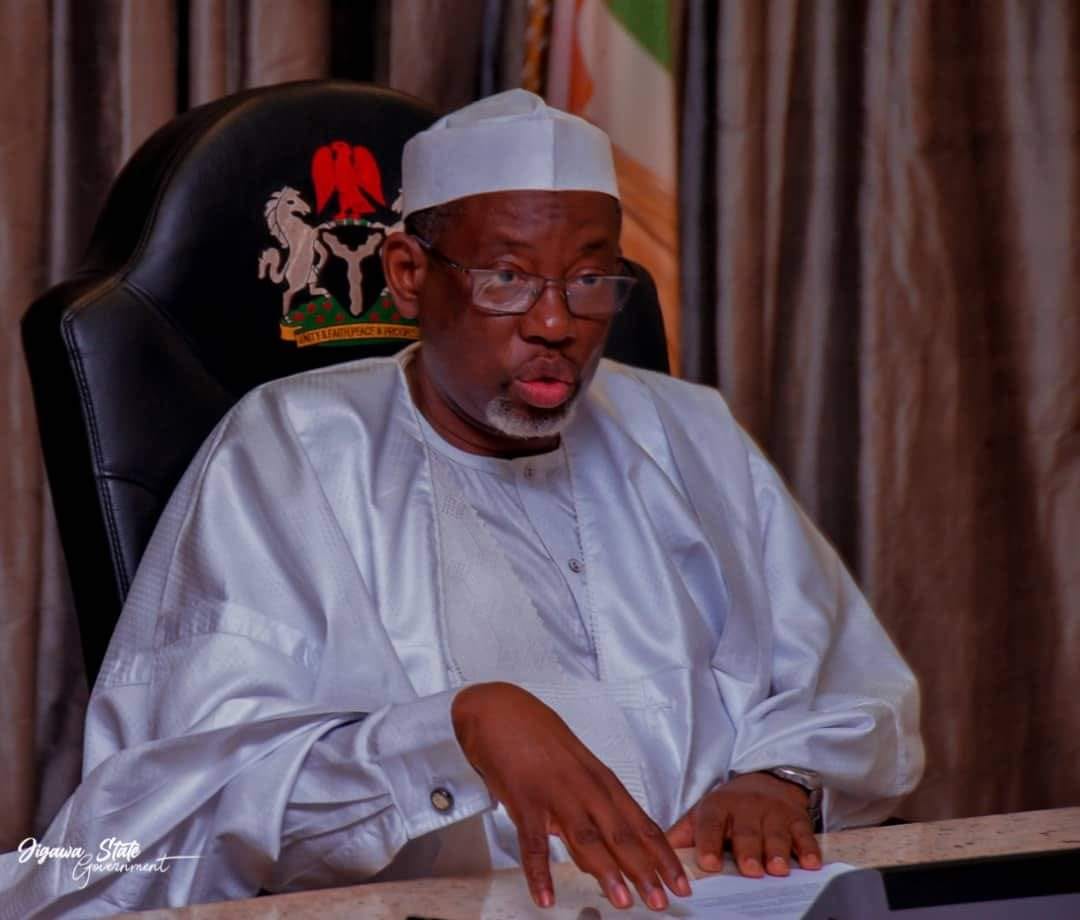
The Governor of Jigawa State, Mallam Umar Namadi, mourns the loss of his mother, Hajiya Maryam Namadi Umar, who died in the early hours of Wednesday, December 25 2024.

The late Hajiya Maryam was a respected matriarch known for her compassion and dedication to her family and community. Her passing has left a significant void in the lives of her loved ones and the people of Jigawa State.

Under Islamic traditions, the burial rites are scheduled to take place later today at 4:30 PM in her hometown of Kafin Hausa. The family has called on well-wishers to join them in offering prayers for her eternal peace.

In a statement from his Chief Press Secretary, Hamisu Mohammed Gumel, the Governor prayed for Allah’s mercy to grant his mother eternal rest in Jannah and comfort the bereaved family.

The people of Jigawa State stand united with the Governor in mourning, reflecting on the cherished memories and legacy of Hajiya Maryam Namadi Umar.

May her soul rest in peace.

Save your wedding: Early genotype testing matters

By Usman Muhammad Salihu

Genotype incompatibility continues to disrupt lives and relationships across northern Nigeria, where premarital medical testing is not yet mandatory. The emotional and financial toll it takes on couples, families, and communities cannot be overstated. 

I recently encountered two striking reminders of its devastating impact. First, I came across a trending wedding invitation card on Facebook. What stood out wasn’t the design or details but the heartbreaking update: the wedding had been cancelled due to genotype incompatibility. 

Shortly after, while scrolling through WhatsApp statuses, I saw my sister and classmate, Ummu Kulsum, express her frustration in just a few words: “Ya Allah, why does all this genotype matter?” Her lament instantly reminded me of my brother’s ordeal, where his marriage was called off barely two days before the wedding for the same reason.

These instances are not isolated. They represent a growing crisis fueled by a lack of awareness and delayed action. Many couples only undergo genotype testing at the final stages of their wedding preparations, often when financial and emotional investments are at their peak. 

Discovering genetic incompatibility at such a late stage forces painful decisions: risk the health of future children or cancel the union altogether. In northern Nigeria, where premarital testing is not yet compulsory, such stories are alarmingly common. 

While no religion or culture explicitly prioritises marriage over health, societal practices and insufficient awareness often lead to preventable heartbreaks. Religious and cultural leaders uniquely advocate for early genotype testing as an essential part of marriage preparations.

Sickle cell disease (SCD), prevalent in Nigeria, is one of the most severe outcomes of incompatible genotypes. Couples with AS-AS or AS-SS combinations risk passing this life-altering condition to their children. Living with SCD involves chronic pain, frequent hospital visits, and significant financial strain—all of which could be avoided through proper testing and awareness.

The time has come for a societal shift. Policymakers must work towards making premarital genotype testing compulsory in all northern states. Religious and traditional leaders should advocate for such measures and integrate genotype counselling into premarital counselling sessions.

Healthcare providers and educational institutions must also increase efforts to educate the public on genetic compatibility. Awareness campaigns can normalise discussions about genotype testing, emphasising its role in building healthy families and preventing avoidable heartbreaks.

For families like mine, the trauma of cancelled weddings due to genotype incompatibility is a painful memory. The financial losses and emotional distress are entirely avoidable with early testing and informed decisions. My brother’s experience and countless others highlight the urgent need for collective action.

Love is an essential foundation for marriage, but so is the responsibility to ensure a healthy future for one’s family. By prioritising early genotype testing and raising awareness, we can prevent the heartbreak of cancelled weddings and the lifelong struggles associated with genetic disorders.

The solution is in our hands. We must act now—for love, health, and future generations.

Usman Muhammad Salihu is a PRNigeria Fellow and wrote in from Jos, Nigeria. He can be reached at muhammadu5363@gmail.com.

Kemi Badenoch on the cross of ignorance: A rejoinder to her misrepresentation of British and Northern Nigeria’s history

By Sanusi Maikudi 

In her recent remarks, Rt. Hon. Kemi Badenoch, the leader of the UK Conservative Party, reportedly dismissed associations with Nigeria beyond her Yoruba heritage. She distanced herself from Northern Nigeria and associated it narrowly with Islamism. These comments, replete with historical ignorance and political misjudgement, reflect poorly on her understanding of the intertwined histories of Britain and Nigeria and, by extension, her role as a leader in one of the world’s oldest democracies.

It is troubling that Badenoch, a figure who aspires to statesmanship, would exhibit such a parochial view of her heritage and the complex relationship between the United Kingdom and Northern Nigeria. Her remarks not only betray an ignorance of British colonial history but also reflect a failure to grasp the significance of global citizenship—an essential quality for anyone seeking to lead in a post-imperial world.

Misunderstanding History

Badenoch’s attempt to disassociate herself from Northern Nigeria exposes a glaring lack of awareness about the region’s rich and diverse history. Long before colonialism, Northern Nigeria boasted a sophisticated socio-political structure exemplified by the Sokoto Caliphate and other emirates. These entities maintained written records, produced scholarly works in Arabic, and upheld organised governance systems.

British colonial explorers and missionaries documented these structures extensively. Figures like Hugh Clapperton, Mungo Park, and Frederick Lugard not only travelled through Northern Nigeria but also admired its governance systems. The British colonial administration, recognising the efficacy of Northern Nigeria’s traditional leadership, adopted the system of indirect rule to govern the region. This is a testament to the historical and administrative depth of the region—a depth Badenoch seems to have overlooked.

Furthermore, the Christian missionaries who ventured into Northern Nigeria risked their lives not to trivialise or divide but to understand and engage with its people. Their contributions are preserved in archives that form part of Britain’s collective memory. Denying or dismissing this history is ignorant and disrespectful to the legacy of British-Nigerian relations.

A Failure of Diplomacy

As a leader in a global power, Badenoch is expected to demonstrate diplomatic acumen and cultural sensitivity. Her dismissive remarks, however, suggest a narrow worldview that is unbecoming of someone in her position. Britain’s legacy as the patron of the Commonwealth—a union of diverse nations shaped by shared history—requires its leaders to embody inclusivity and understanding.

Badenoch undermines her credibility by distancing herself from Northern Nigeria in such a derogatory manner. Her comments seem less like the musings of a seasoned statesperson and more like pandering to fringe nationalist sentiments. Was she addressing British society, which has long recognised and documented the importance of Northern Nigeria? Or was she appealing to a clandestine audience of Yoruba nationalist agitators? Either way, her remarks reveal a political novice more concerned with short-term rhetoric than long-term statesmanship.

The Irony of Her Position

Badenoch’s position as a British politician of Nigerian descent is itself a product of the historical forces she now dismisses. Like many others from former colonies, her parents benefited from the opportunities created by Britain’s imperial legacy. She was born in London, a city shaped by centuries of global migration and colonial history. Ironically, the very system she now seeks to lead is a product of the multiculturalism and interconnectedness she seems to reject.

It is also worth noting that Badenoch’s rise to prominence coincides with the UK’s struggles with political leadership. The Conservative Party’s internal crises have eroded its cadre of charismatic leaders, paving the way for figures like Badenoch. Yet her divisive rhetoric and lack of historical understanding alienate mature voters and diminish her standing as a potential statesperson.

Populism and the Far-Right Trap

While Badenoch may be tempted to align herself with the growing populist and far-right ideologies in Europe, she is ultimately a victim of these movements, not a beneficiary. The same far-right ideologies that demonise immigrants and minorities would not spare someone of her background. Her attempts to position herself as “more Catholic than the Pope” by demonising others only highlight her vulnerability within such spaces.

Conclusion

Rt. Hon. Kemi Badenoch’s recent remarks reveal a troubling ignorance of British and Nigerian history. Her attempt to distance herself from Northern Nigeria not only disrespects the region’s rich heritage but also undermines her credibility as a leader in a globalised world. Her rhetoric, steeped in parochialism and divisiveness, starkly contrasts the qualities of diplomacy, wisdom, and inclusivity required of a true statesperson.

Rather than deriding others, Badenoch would reflect on the interconnected histories of the nations she represents and aspire to a leadership style that unites rather than divides. As history has shown, those who fail to learn from the past are often relegated to its margins. Let her words serve as a reminder of the perils of ignorance and the importance of informed leadership in a complex, interconnected world.

Sanusi Maikudi wrote from the Network for Justice, Kaduna, Nigeria, via sanusihmaikudi@yahoo.com.

Kano scholar wins prestigious Doctoral Dissertation Award in Chicago

By Muhsin Ibrahim

Kano-born historian Dr Abdullahi Hamisu Shehu has been awarded the 2023 African Studies Review/Cambridge University Press Award for Best Africa-Based Doctoral Dissertation at the 67th ASA Annual Meeting held in Chicago, United States of America, from December 12 to 14, 2024.

The recognition celebrates Dr Shehu’s groundbreaking research, titled “Procession, Pilgrimage, and Protest: A Historical Study of the Qadiriyya-Nasiriyya and Islamic Movement in Nigeria Public Religiosity in Northern Nigeria, 1952-2021.”

Dr Shehu, a faculty member at the Department of History, Bayero University, Kano, earned his PhD from Stellenbosch University in South Africa. His dissertation examines the dynamic interplay between public religiosity and identity formation in northern Nigeria, focusing on two key movements: the Qadiriyya-Nasiriyya, a reformed Sufi order, and the Islamic Movement in Nigeria (IMN), a Shia revivalist group.

His research explores the historical, social, and religious aspects of public demonstrations, such as the Maukibi (Sufi processions) and the Muzahara and Tattaki (Shia protests and symbolic journeys). According to Dr Shehu, these practices represent a unique contest for public space and visibility between competing religious identities in the post-colonial northern Nigerian landscape.

An accomplished scholar, Dr. Shehu is also a Fellow of the Next Generation Social Sciences in Africa (Social Science Research Council, New York) and a Lisa Maskell Fellow (Gerda Henkel Foundation, Germany). Over his career, he has participated in numerous academic conferences and workshops worldwide.

His work sheds new light on the role of public space in shaping religious identity and offers fresh perspectives on the sociopolitical complexities of northern Nigeria. Dr. Shehu’s achievement highlights his academic excellence and underscores the growing impact of African scholarship on global discourse.

NAHCON allocates over 1,500 Hajj slots to Jigawa state 

By Uzair Adam 

The National Hajj Commission of Nigeria (NAHCON) has allocated 1,518 slots to Jigawa State for the 2025 Hajj.  

Alhaji Ahmad Labbo, Director-General of the Jigawa State Pilgrims Welfare Board, disclosed this to the News Agency of Nigeria (NAN) on Saturday in Dutse.  

Labbo stated that 70 percent of the allocated slots have been distributed to the 27 local government areas in the state for sale to interested pilgrims. 

The remaining 30 percent is held in reserve until the initial allocation to each local government is fully utilized.  

He further revealed that intending pilgrims are required to pay a deposit of N8.4 million while awaiting NAHCON’s official announcement of the Hajj fare.  

Labbo urged prospective pilgrims to make early payments to enable the board to complete preparations for the pilgrimage.  

The Hajj, one of Islam’s five pillars, is an annual pilgrimage to Mecca undertaken by Muslims worldwide.