Minimum wage

BREAKING: FG, labour reach agreement on minimum wage

By Uzair Adam Imam

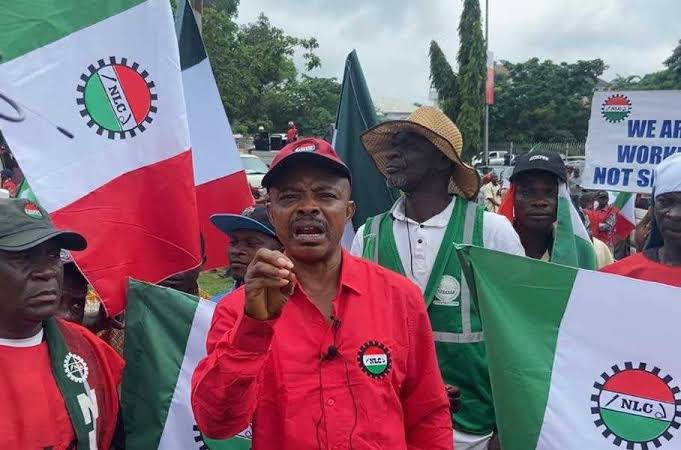
The Federal Government and the organised labour have reached an agreement on the minimum wage, ending the strike action that started on June 3, 2024.

The agreement was signed on Monday night after a meeting that started at 5:00 pm and ended at 11:00 pm.

Although the details of the agreement are not yet public, the Secretary to the Government of the Federation, George Akume, confirmed that the government is committed to paying a minimum wage higher than N60,000.

He also assured that no worker would be victimized for participating in the strike.

The national tripartite committee on minimum wage will meet daily for the next week to finalize the details of the agreement.

The labour leaders and government officials expressed optimism that the agreement would bring an end to the strike and restore normalcy to the country.

The strike, which started on June 3, had paralyzed economic activities in the country, with many businesses forced to shut down.

The agreement is seen as a positive development, and many are hoping that it would bring an end to the strike and restore normalcy to the country.

FG rejects labour’s demand for N494,000 minimum wage

By Uzair Adam Imam

The Federal Government has stated that it cannot meet the labour unions’ demand to increase the national minimum wage from N30,000 to N494,000.

According to the Minister of Information and National Orientation, Mohammed Idris, the demand would result in a total wages bill of N9.5 trillion yearly for federal workers alone, potentially destabilizing the economy and jeopardizing the welfare of over 200 million Nigerians.

The government offered a 100% increase to N60,000, which has been accepted by the private sector.

However, labour is seeking a 1,547% increase to N494,000.

The minister appealed to labour to return to negotiations and embrace realistic wages.

The government prioritizes affordability, sustainability, and the overall health of the nation’s economy, considering the welfare of all Nigerians, not just workers.

Labour to return to negotiation table as FG reconsiders N48,000 proposal

By Uzair Adam Imam

The Tripartite Committee on Minimum Wage is set to reconvene on May 23 to continue negotiations on a new minimum wage for workers.

This comes after the organized labor walked out of the negotiation on May 15, citing dissatisfaction with the government’s proposal of N48,000.

According to an invitation letter sent to labor leaders by the committee’s chairman, Bukar Goni, the government has agreed to shift its position on the proposed minimum wage.

The letter urged labor leaders to attend the reconvened meeting next Tuesday and to speak to their members about the new development.

The organized labor, comprising the Nigeria Labour Congress (NLC) and the Trade Union Congress (TUC), has proposed a minimum wage of N615,000, significantly higher than the government’s initial proposal.

The private sector, on the other hand, has proposed an initial offer of N54,000.

The labor leaders had expressed their anger and disappointment over the government’s offer, blaming both the government and the private sector for the breakdown in negotiations.

They have given the government a deadline of May 31 to meet their demands.

The minimum wage negotiations have been ongoing since January 30, when Vice President Kashim Shettima inaugurated the 37-member tripartite committee to recommend a new national minimum wage.

The committee is chaired by the former Head of the Civil Service of the Federation, Goni Aji.With the cost of living rising following the removal of fuel subsidy, calls for a new minimum wage have intensified.

Labor leaders argue that the proposed minimum wage of N615,000 is necessary to meet the needs of an average Nigerian family of six, given the current economic situation.

The resumption of negotiations next week offers a glimmer of hope for workers who have been waiting for a new minimum wage.

The government’s willingness to reconsider its proposal is seen as a positive development, and labor leaders are expected to approach the negotiations with renewed optimism.

Tinubu pledges better living, working conditions for Nigerian workers

 By Sabiu Abdullahi 

President Bola Tinubu has pledged to improve the living and working conditions of all Nigerians of working age, saying that workers “deserve a fair wage and enhanced welfare.” 

This promise was made in his maiden May Day message dedicated to workers nationwide. 

According to a statement signed by the President’s Special Adviser on Media and Publicity, Mr. Ajuri Ngelale, President Tinubu affirmed his administration’s commitment to improving workers’ welfare, citing various relief programs, including the wage award and the imminent minimum wage review. 

“The President strongly believes that the custodians of the nation’s machinery deserve a fair wage and enhanced welfare, and that a laborer is deserving of not just any reward but fair and commensurate wages,” the statement read. 

President Tinubu’s remarks come amid a cost-of-living crisis believed to be a result of his administration’s economic reforms. 

Since assuming office, he has implemented policies such as the discontinuance of subsidies on petrol and the unification of foreign exchange rates, which have sparked instability in the value of the naira and heaped hardship on Nigerians. 

Despite this, President Tinubu defended his actions, saying they were necessary to prevent the country from going bankrupt and to reset the economy towards growth. 

On May Day, President Tinubu saluted Nigerian workers for their “fidelity to the peace, progress, and development of the nation evident in their tireless efforts and patriotic zeal to keep the national engine running.” 

He commended workers across all spheres, from clerical officers to teachers, doctors, and all Nigerian workers who keep the country running. 

“The President wishes Nigerian workers Happy May Day celebrations,” the statement concluded. 

Workers’ Day celebration in Nigeria has its origins in the People’s Redemption Party government in Kaduna and Kano, which adopted May 1 as a public holiday in 1980. 

The Federal Government later declared May 1 a national holiday in 1981 to celebrate International Workers’ Day.

Nigeria: The road to new minimum wage…

By Prof. Abdelghaffar Amoka

In 2011, the exchange rate was 1 USD to 155 naira, and in 2024, it is about 1 USD to 1,550 naira. That is a ratio of 1: 10 for 2011 and 2024.

In 2011, a loaf of bread cost 150 naira, and in 2024, it is about 1,500 naira. That is a ratio of 1: 10 for 2011 and 2024.

In 2011, a bag of maize cost about 5,000 naira. In 2024, it is about 55,000 naira. That is a ratio of 1: 10 for 2011 and 2024.

The price of most basic needs has increased ten times between 2011 and now. That is still a ratio of about 1: 10 for 2011 and 2024.

Then, the price of fuel in 2011 was 65 naira per litre, and the current price in 2024 is about 690 naira. That is still a ratio of about 1: 10 for 2011 and 2024.

If the exchange rate and fuel price remain the same, if the minimum wage was 18,000 naira in 2011, it should be 180,000 naira in 2024.

Abdelghaffar Amoka Abdelmalik, PhD, wrote from Ahmadu Bello University, Zaria. He can be reached via aaabdelmalik@gmail.com.

NLC acknowledges economic realities, withdraws N200k minimum wage proposal

By Sabiu Abdullahi

The Nigerian Labour Congress (NLC), in response to the current economic challenges facing Nigeria, has reevaluated its stance on the proposed N200,000 minimum wage. 

The National Vice President of the NLC, Tommy Etim, clarified that the earlier proposed amount is no longer realistic, given the prevailing economic conditions in the country. 

Etim’s statement comes in the wake of the inauguration of the Minimum Wage Committee by Vice President Kashim Shettima on Tuesday.

The NLC had initially proposed the N200,000 minimum wage when economic challenges were less severe. 

According to Etim, the socio-economic landscape has significantly worsened since the N200,000 proposal, with the exchange rate and the devaluation of the naira playing crucial roles in the reconsideration.

He highlighted that the original proposal is no longer tenable, noting the need for a flexible approach in determining the new minimum wage. 

Etim stated, “We are not going there with a fixed amount, but definitely not N200,000. By the time we get there, we will decide based on the socio-economic situation. That’s what we are going to base our national minimum wage discussion and negotiation on.” 

The NLC’s acknowledgment of the evolving economic realities signals a pragmatic approach to the forthcoming discussions and negotiations regarding the national minimum wage.