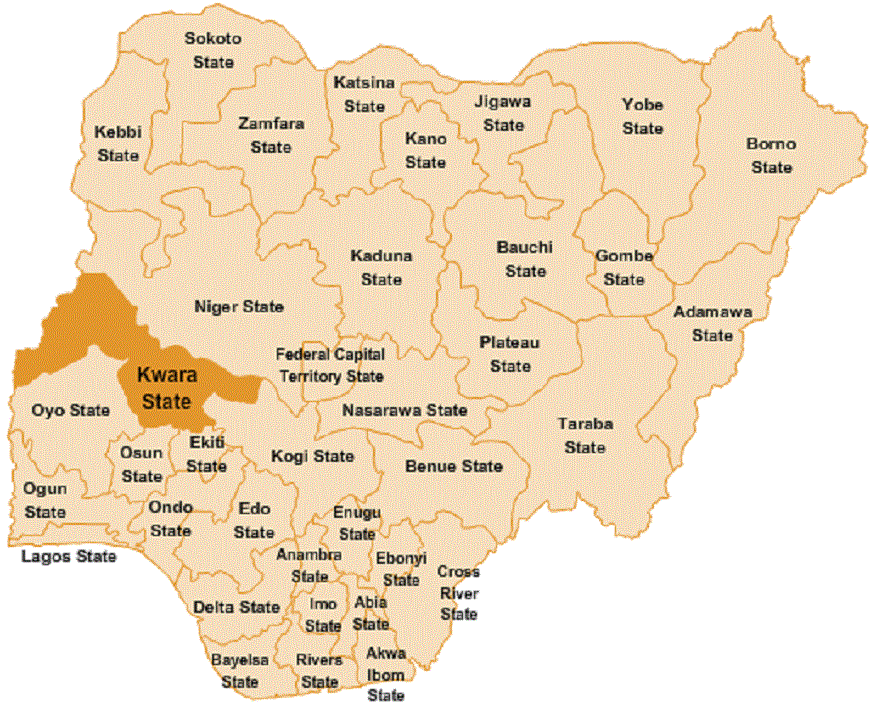
Middlebelt

On the (official) division of Nigeria

By Hammed Adam

Dividing Nigeria into Oduduwa Republic, Biafra Republic, Arewa Republic, and possibly the Niger Delta Republic has been done already with the current level of hatred and mistrust between the citizens. It is just that it has yet to be officially announced.

They’re not yet officially recognised as sovereign states because there might be a physical war before any country break out from another, which is yet to be witnessed. Moreover, everyone knows it’s constitutionally treasonous and felonious to rebel against any government.

Another reason is that most of the Yorubas and Igbos who want secession aren’t fully ready (militarily wise) to weigh a war against Nigeria, a recognised country, knowing they will be resisted firmly using the might of the Nigerian armed forces.

Igbos, in particular, delay their move to go into war against Nigeria because they have first-hand experience. They also know that with the unity between Hausa and Yorubas, they won’t succeed, and the result can be disastrous, just as it was back in 1967-1970.

Now that Yorubas are fed-up, they have risen against Nigeria to actualise the Oduduwa Republic. They do so by provoking the Northerners into war by evicting Hausa-Fulanis from their regions. The Igbos will back the Yorubas to become allies as they both pursue the same interests.

Mazi Nnamdi Kanu is on air with his compatriots, trying to see how they can galvanise the Yorubas, the Christians in the Middlebelt, and other Christians of the minority tribes in the North. These include the Atyabs of Kaduna, Jukuns and Mumuye of Taraba and Benue State, Berom of Jos Plateau, Tivs of Benue State, Bachamas of Adamawa State and others. He wants them to pay allegiance to Biafra and rise against the Hausa-Fulani-Muslims in the North.

The more Yorubas and the aforementioned ethnic groups heed the calls of Nnamdi Kanu, that would be the beginning of the fight between Nigerian soldiers of Northern extractions vs Nigerian soldiers of Southern extractions mixed up with Christians vs Muslims. That could be the end of one Nigeria unless those defending the unity of Nigeria becomes victorious.

If Yorubas still prefer Nigeria over Oduduwa and Biafra, the Igbos agitating for secession are like barking dogs in chains. Half of the Igbos and most people from the South are already against the creation of Biafra. But with Yorubas by their side and the disjointed Northerners, be it on the battleground or polling units, none in Nigeria can be successful against them and is nothing but toothless.

Who knows Nnamdi Kanu his first arrest in 2015/2016? But he cunningly crawled into the limelight with his verbosity. Today, with the help of the Nigerian Govt, he’s not only controlling Igbos but mightily influencing Ijaws, Igalas, Kallabaris, Tivs and the almighty Yorubas here and abroad. They all listen to him better than they do, even to their Churche’s Pastors, Monarch, Alfas, State Governors, etc. He’s much more as an Emperor than a just leader, which is perilous as he’s becoming more powerful by the day.

This is only possible when a country is ruled by someone like today Muhammadu Buhari, or a country ruled by cabals as the amiable wife of Buhari hinted as early as 2016. Still, even some patriotic Nigerians failed to listen to her and resort to calling her petty names and politicising it in defence of APC and Buhari.

For God sake, if not because of craziness and stubbornness, what makes any Nigerian think they can love or care for Buhari better than how his only wife, Āisha, can do?

If I tell you I’m not scared of the disasters the demarcation of Nigeria into four or at least two parts would bring upon innocent people, I’m lying to you. But, still, God knows, if Nigeria can be divided into many parts without bloodshed, I have no problem with that. So, likewise, if the creation of Biafra and Oduduwa would be resisted without wasting the lives of innocent people, I have no problem too.

May God, in His infinite mercy, look into this matter and choose for us which is the best. Āmin Thumma Āmin.

Hammed Adam sent this article via hammedadam2@gmail.com.

On teenage girls and the house help business

By Maimuna Abubakar

The house girl business is ancient in Nigeria and the most common one in my area. I am from the north-central part of Nigeria, also known as ‘The Middle-Belt’.

It is common among women here in my local government area to keep girls at home as house helps, girls who, in most cases, are between the age of 13-18 while some may even be younger.

The idea of keeping young children as house helps has always eaten me up, and I have probed a lot of people regarding the rationale behind it. And because I am familiar with a number of these girls and even one of the parents, I decided to ask directly from the horse’s mouth.

For the sake of privacy, I will name the girls after colours. The first house girls I know are Violet, Lavender and Purple. They were about the same age, 12 or 13, I guess. They were brought to the city by a man from their village, who works in the city and became the supplier of these girls. These three girls stayed with people I know, and their job description involved doing all house chores and hawking.

In addition, the girls took care of the domestic needs of their madam’s children, such as the washing of clothes, sweeping and tidying of their rooms, making their meals etc., including children that are older than the girls. Their case, except for Lavender, is a bit favourable compared to others because these madams treated them almost the same as their children. They bought whatever they got for their children and enrolled them in Islamic schools (Islamiyya).

When I asked Violet who I was closest to why they don’t attend a school like the children of their employers did, she told me their parents are against it and asked that they should be enrolled in skill acquisition instead. Unfortunately, the reason these parents are against their children going to school was not disclosed to the wards concerned, as Violet told me.

However, she was very curious to learn. She would always ask me to teach her how to spell things or say when speaking to someone who doesn’t understand Hausa. As Violet got older while staying with her madam, she began to lose interest in her job. Every time she came back from their two-week annual break – they got to see their parents for only two weeks in a year – Violent kept telling me that she wished she never returned, that her father is an older man who she believes needed her assistance. Still, her stepmother insisted that she be married off with nothing from her family if she didn’t return to her job. So she was sent out to the city to fetch money to get her married to a man chosen by her family. Violet later told me that she kept coming back even though she hated it because it was the only choice she got if she didn’t want to get married at such an early age.

The story is the same for Purple. Although, unlike Violet, who was very enthusiastic and ready to learn, Purple always stayed home and watched movies while her madam was at work and the children had gone to Islamiyya. 

On the other hand, Lavender was not as lucky as Violet and Purple. Her mistress owns a local restaurant. She woke up as early as 5 am and slept as late as 12 am, and the cycle continued. She often faced sexual harassment from her madam’s customers, but she could not report them because the first and the last time she did, she was beaten black and blue after being accused of lying. So she had to learn to protect herself by cursing them and drawing others’ attention when anyone tries something inappropriate.

Lavender didn’t attend any school, nor did she acquire any vocational skills. She later ran back to her village and never returned. But I heard from Violet that she was taken to another state different from ours. These three girls were later called back home by their parents and were married off.

Blue is another girl I know who was brought to the city by a woman from her village. She worked with this lady who didn’t allow her to eat with the rest of the family, wash her clothes along with the lady’s children’s or even sleep on the same bed even though they were almost Blue’s age or younger. She couldn’t eat if the children didn’t eat because she was supposed to eat only the remnants of the family’s meal. She got beaten for slight mistakes like accidentally destroying anything from the lady’s home, even if it was as small as a plate. The lady always threatened to deduct it from her annual payment.

I asked Blue why she stayed despite this visible maltreatment, and she said it was because she had to earn to support her family. She never returned after she left this lady’s house, but I am almost certain that she was taken to another home.

On the other hand, Ash is a bit older than the rest of them, and she is the one whose mum I know. Financial hardship made Ash’s mother send her to her neighbour’s house as a house help in exchange for Ash’s school fees. When this neighbour decided to relocate to a new environment, Ash’s mother pleaded with her to take her daughter along to get an education. But this neighbour is a difficult one.

If Ash doesn’t finish her chores on time, she won’t be allowed to go to school. If the neighbour’s children don’t go to school, Ash won’t go too. If they are sick, Ash cannot go to school. Ash will also have to miss school if their school is on break. And because Ash does everything in the house, including cooking for about eight to ten kinds of dishes a day since the neighbour loves varieties and always have guest around, Ash is consistently unable to do her homework and often fails her tests and examinations. Not considering all the extreme labour Ash is carrying out, this neighbour told Ash’s parents that she is a dumb girl and only wastes her money on Ash’s education. She refused to allow her to attend extra lessons organized for students like Ash, who are left behind academically, especially since they are about to write their SSCE. Ash was only enrolled in Islamiyya when the neighbour’s kids were old enough to attend. 

Ash felt she couldn’t take it anymore, so she sought respite in marriage. She decided she wanted to get married as soon as she completed her WAEC and NECO, so she brought home a man she chose for herself. He is a young man who owns a kiosk close to Ash school. He asked Ash out when she was in SS2. But Mrs Neighbor said that Ash could not marry an illiterate. That Ash should either bring an M.Sc. or at least a degree holder or no one. She told Ash’s parents that it is in the girl’s best interest that she is trying to make sure Ash has both social and financial security.

Although Ash is not very far from her parents’ house, she seldom visits them because, according to this neighbour, no one will do the house chores while she is gone. Therefore, if Ash’s parents wanted to see her, they would go to the neighbour’s house. Ash’s mother, on several occasions, goes to this neighbour’s house while the neighbour is at work to relieve her daughter of the overbearing labour.

These are a few out of a hundred horrible stories of such girls. I’m not saying there are no house helps who have attained success or are in the process of achieving their life goals with their initial job as a stepping stone. There are!

I know someone who owns a fashion designing shop. I also know someone who has graduated from a higher institution and is already starting a career. Some are still pursuing their education at different levels. But, there are only a handful of such girls, they are rare, and their rarity proves the point that house help business as conducted in my locality especially is just typical child labour and abuse.

How do we curb this dangerous abuse that has been going on in almost all parts of the country?

Since the growing number of working-class women in our society means that mothers can no longer take care of their children 24/7, entrepreneurs can use this opportunity to create niche markets. They can then form a house help agency in or around areas where mothers with such needs are residing.

Again, we have thousands of graduates from the department of ECCE (Early Child Care Education) both from our various colleges of education and our universities. These entrepreneurs can implore their services. These agencies can then employ older women willing to take care of children. Young individuals, both men and women, can also be engaged as either part-time or full-time employees depending on such a person’s financial needs.

The agency can also run a temporary employment program for college students who are on holiday to earn money before resumption. These agencies can have two or more departments; those involved in housekeeping, those responsible for babysitting etc. That way, hopefully, these teenage girls whose parents have been taking advantage of them can also have a life of their own. 

Maimuna Abubakar is a Sociology Student at Ahmadu Bello University, Zaria. She sent this article via maimunaabubakar200@gmail.com.
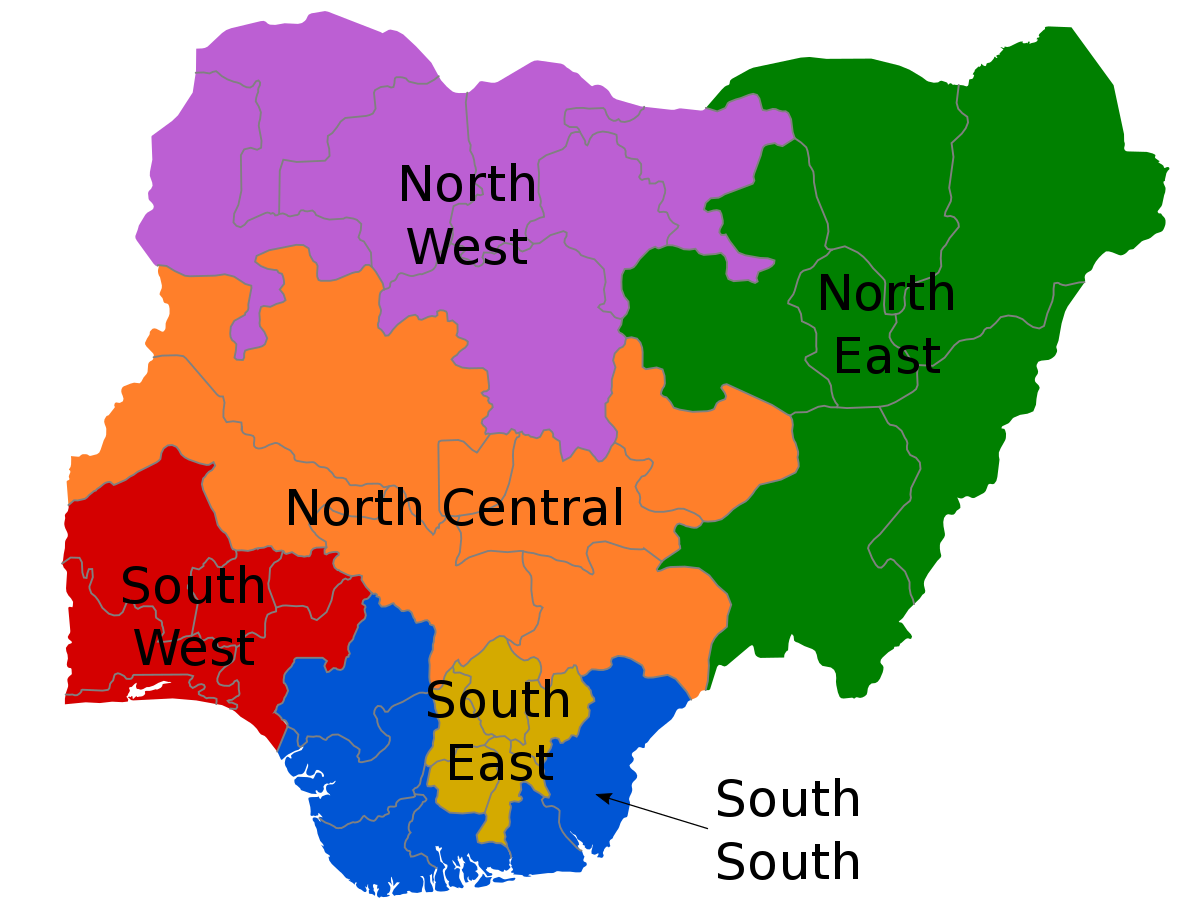
Kwara State: Arewa, Middlebelt or Oduduwa Republic?

By Ahmed Zakaria

With the recent agitations for “Yoruba Nation” and “Middlebelt”, it is pertinent for Kwara State indigenes to review their relationships with other groups, narrate their stories by themselves and resist all efforts at manipulations of the narratives.

Some raucous voices have always taken it upon themselves to categorise Kwara State where it suits their tribal, political, religious and sentimental inclinations without considering the choice of the state’s indigenes.

Just because the Yoruba language is the Lingua Franca in Kwara doesn’t separate Kwara from the northern states. But, that does not also mean only Yorubas reside in Kwara, or only they “own” Kwara, as there are many other tribes, like Nupes, Barubas, Kanuri, Fulani,

Some people wrongfully assume the scale to be a Northern State is being above River Niger, which is absurd and wholly superficial and unwarranted.

Others use Hausa or Fulfulde language as a yardstick for grouping northern and southern states, which is also fallacious. A lot of people in northern Nigeria do not speak Hausa or Fulfulde.

Others use religion as a criterion, which is also untrue. For example, many communities in northern Nigeria have large populations of Muslims, Christians, and worshippers of traditional religions. Most recently, agitators of the “Middlebelt” have used religion as a basis for dividing northern Nigeria. 

With the recent agitations in the South West for “Oduduwa Republic”, many people encourage Kwara Yorubas and even Kogi Yorubas to join the struggle. They claim they will regret being part of the North or be oppressed by the “Northerners” or that they won’t gain anything from the North. Many other things they enjoy saying without knowing the repercussions of what they are saying or putting into consideration the emotions of others while saying it.

It is all due to utter historical ignorance. It is highly offensive to assume Kwarans are Northerners by chance or are “Northerners” for the benefit of what they “gain” from the “North”. 

Kwarans are unfortunately projected as “power-hungry” folks, making them seem all their decisions are guided by the love of money, power or recognition, which is wrong, untrue, and humiliating. 

Adding more salt to injury is to assume that other “Northerners” will “oppress” Kwarans or take away their “rights” or “resources”. It is more painful and mischievous. Nothing as such exists in the dictionary of the good people of Kwara State. It is a lack of understanding of the historical relevance of the current nomenclature of Kwara State that leads to all these unfortunate and insincere utterances and views.

No one can take away the “rights” of Kwarans or “resources”. We are focused on what “we” can sincerely offer this nation and region and not what this nation or the North can offer us. We do not discuss our “rights” when we haven’t discharged the “obligations” upon us.

The people in Kwara State have a strong ideological and religious association with  Northern Nigeria, which is stronger than mere tribal and geographical relationships.

Those who wish to project Kwarans as unclear of where they belong or are lost, looking for an identity, or seeking acceptance are deceiving themselves, not Kwarans. They deny the obvious. 

Many Kwarans welcomed the news of the raid on Sunday Igboho’s house and the arrest of his criminal associates for their effrontery towards Kwara State heroes and monuments.

They employed their propaganda machines to tarnish the good image of Kwara as well as to portray them in a negative light. They rubbished our traditional institutions and had the audacity to instruct their foot soldiers to be insulting Our Royal Father, the Emir of Ilorin.  

He thought the hooliganism and thuggish behaviour he exhibited in Oyo State could be condoned and replicated in Kwara State. He does not know the bonds that bind the people of Kwara are more robust than what people like him could ever break. Many sacrifices were made to build, foster, and develop these bonds and brotherhood, but his followers kept praising him till he met his Waterloo.

No true son of Kwara will support the criminal attitudes of Igboho. That is why some people believe that most people causing trouble and tribalism today in Kwara State are not true sons of Kwara. No true son of Kwara will support the disrespect meted on the state by Igboho and his propaganda machines.

It is harrowing and highly disappointing to paint Kwarans as people without an identity, just like it is a blatant lie to assume Kwarans don’t know their identity; that was what Igboho worked extremely hard at achieving.

It is unfortunate to assume Kwarans don’t know where they belong to or are looking for love and affection from any people or group of people. But, on the contrary, Kwarans respect everybody and bear no grudge towards anyone.

The mere thought of what Igboho represents is distasteful, extremely humiliating, and deeply heartbreaking. Kwarans are not troublesome; they are warm-blooded, unlike their counterparts in other parts of the country. 

That is the opportunity Igboho seized and the reason he dared to insult, belittle, humiliate, and threaten Kwarans. Yet, he dared not threaten Kano, Sokoto, or Borno in the same fashion he threatened Kwara.

Those supporting Igboho’s antics, methods, styles, and methodology do not and will never represent Kwarans. The attacks on our Emir and traditional institutions even made us more united behind our Emir despite all our differences.

Igboho consistently portrays hatred for those he terms the “Fulanis”, but we all in Kwara State fall under that category. He has been blinded by deep-seated tribalism and hatred that he views all of us in Kwara State as Fulanis and “Eru Fulanis” to the extent that it is absolutely impossible to convince his myopic mind that not all people in Kwara are Fulani and that Yorubas, Nupes, Barubas, and Fulanis live side by side, peacefully since the time of Shehu Alimi, that’s two centuries ago.

We thank the swift intervention of the DSS in tackling the menace and criminal activities of Igboho and his cohorts, for if the government hadn’t intervened, other non-state actors would definitely spring into action to counter his illegal activities and unguarded utterances against Kwara State. He and tribalists like him are not welcome in Kwara State. 

May ALLAH bless Kwara State and the whole of Nigeria, amin.

Ahmad Zakariyah writes from Kwara State. He can be reached via ahmadzakariyah@gmail.com.