Middle East

Italian journalist dismissed after question on Israel at EU briefing

By Maryam Ahmad

Italian journalist Gabriele Nunziati, a Brussels-based correspondent for the Italian news agency Nova, has been dismissed after posing a question about Israel during a European Commission press briefing.

According to reports from La Stampa, Nunziati asked officials about Israel’s responsibility in the ongoing Middle East conflict — a question his employer later described as “inappropriate” and “embarrassing.” Shortly after the exchange, Nova informed him that his collaboration had been terminated.

The incident has sparked debate within journalistic circles about press freedom and the limits of editorial control. Colleagues in Brussels expressed concern that the dismissal reflects growing pressure on journalists covering sensitive international issues, particularly those related to Israel.

Neither Nova nor the European Commission has issued a detailed statement on the matter. Nunziati, for his part, has defended his question as a legitimate exercise of journalistic duty.

Hula: A symbol of cultural, religious, and social status in Hausaland

By Umar Aboki

The traditional Hausa cap, also known as “Hula,” is recognised for its intricate embroidery and is often worn with traditional Hausa attire. It has a long history in Hausa land, originating as a common and traditional male garment and later evolving into a symbol of cultural, religious, social, and even political status.

Many people associate any man they see wearing a Hula with being a Muslim or Hausa or both. Yusuf Ahmad, a traditional Hausa cap seller, believes that wearing a Hausa cap is a sign that indicates someone is a Hausa man and a Muslim, and that wearing a Hausa cap is what completes a man’s decency. 

Yusuf added that the older generation of Hausa men like to wear tall Hausa caps, while the new generation prefersshorter ones. And when people come to buy caps, they mostly ask for the cheaper and lighter ones; it is the rich men who usually ask for the Zanna-Bukar and other heavier ones.

There are various types of traditional Hausa caps, including “Zanna-Bukar”, “Damanga”, “Zita”, “Maropiyya”, “Zulum” and “mu-haɗu-a-banki”. They are distinguished by factors such as the materials used to make them, their place of origin, the wearers, and their purposes, among other considerations. However, the most popular and widely worn is the “Zanna-Bukar”. Overall, the hula has evolved from being merely a piece of headwear to a symbol of cultural identity and belonging within the Hausa community and beyond. 

Malam Khamilu, a resident of Yahaya Gusau Road, Kano, claims that he wears Hausa caps frequently, especially the Zanna-Bukar. He says it is very special to him and he got his own tailor-made, specially for himself. He also considers his cap a part of his identity as a Hausa-Fulani man and a Muslim.

The Hula is not limited to being worn only within Hausa communities. It is worn by men in many populations in North Africa, East Africa, West Africa, South Asia, and the Middle East.

Zulyadaini Abdullahi Adamu, a Hausa cap knitter and seller, says he wears his Zanna-Bukar or Damanga daily, and he knits the Zanna-Bukar, Damanga and PTF, then sells them at prices ranging from eight thousand to thirty thousand Naira, and that people come to buy them from Jigawa, Maiduguri and other states and places.

Men throughout the African diaspora also wear it. Within the United States and other foreign countries, it has become primarily identified with persons of West African heritage, who wear it to show pride in their culture, history, and religion. Dauda Ibrahim Dachia, a Northern Nigerian staying in Tirana, Albania, claims to wear his traditional Hausa cap overseas, but not all the time. He usually wears it on Fridays, during Eid celebrations, or during cultural events.

It was written in an article by the Centre de l’ldentité et de la culture Africanes titled ‘The Khada Habar: A traditional hat in a Hausa environment’ that “wearing a hat is a mark of respect for oneself, above all, according to Mr. Adéyèmi “when you don’t wear a hat, traditional dress is not complete”, he insists, “it reflects a disconnect between man and his own culture”.

Muhammadu Sa’idu, another resident of Kano, claims to wear the Zanna-Bukar frequently, usually to events. He says that anytime he wears it, people respect him a lot. He also has a ‘Damanga’ but prefers wearing the Zanna-Bukar. In his case, he doesn’t usually associate Hula with the Hausa tradition or Islam.

 Sa’id Salisu Muhammad, a Hausa cap washer at Gaɗon ƙaya, says he wears traditional Hausa caps a lot, especially the Zanna-Bukar. He says that a typical Hausa man always wears the Hula to work, events and other places, so they have to always bring them in for washing. He also notes that people bring in Zanna-Bukar the most, followed by the lighter ones such as the “Maropiyya” and “Zita”.

The Hula also serves as a means for people to fit into Hausa communities, as they are seen as a symbol of identity, and provide a sense of belonging. Musa Abdulrazaq, a young man from Kaduna who studies in Kano, says anytime he is in Kano, a place where the Hausa culture is evident and vibrant, wearing the traditional Hausa cap is very important to him. Although he doesn’t wear it much back at home, he understands that it is a vital part of the culture in Kano, so he regularly wears his Hula to fit in with the people of Kano and feel at home.

However, not everyone from outside the Hausa community feels the need to identify with the Hausa people. Umar Ahmad, a Fulani man who visits Kano but has been staying here for about two years, says he doesn’t wear the traditional Hausa caps. Instead, he maintains his Fulani cap. And when asked, he said he does indeed associate the Hula with Islam and Hausa tradition.

Umar Aboki wrote via umaraboki97@gmail.com.

More than 60% of Gen Z in US back Hamas over Israel, survey finds

By Muhammad Abubakar

A new survey published by The New York Post has revealed that more than 60 per cent of Generation Z in the United States sympathise with Hamas over Israel in the ongoing conflict.

The findings highlight a significant generational divide in perspectives on the Middle East, with younger Americans expressing stronger support for Palestinians compared to older demographics who largely align with Israel.

Analysts suggest that Gen Z’s views may be shaped by social media narratives, human rights advocacy, and growing criticism of U.S. foreign policy in the region. The data underscores shifting attitudes that could have long-term implications for American politics and international relations.

The survey has sparked debate across the political spectrum, with some commentators arguing that the results reflect rising awareness of Palestinian suffering, while others warn of increasing radicalisation among youth.

OIC summit convenes amid Middle East turmoil, with little hope of influence

By Muhammad Abubakar

Leaders and foreign ministers from the 57 member states of the Organisation of Islamic Cooperation (OIC) are gathering in Istanbul this Saturday for a high-stakes summit overshadowed by escalating tensions in the Middle East, most notably Israel’s war with Iran and the ongoing devastation in Gaza.

Iranian Foreign Minister Abbas Araghchi is set to attend, as many of his counterparts are expected to call for an immediate ceasefire. Yet the OIC, long criticised for its limited political clout, is unlikely to shift the course of either conflict.

The situation in Gaza—now in its 21st month—remains dire. Humanitarian workers report that more Palestinians are killed by the Israeli army while trying to collect food than in actual combat. 

On June 17th, at least 59 people were killed when Israeli tanks reportedly opened fire near an aid distribution centre run by the Israel-backed Gaza Humanitarian Foundation. Israel’s military has pledged to investigate the incident.

Despite repeated condemnations and emergency meetings, the OIC has remained largely powerless in stemming the violence in Gaza. With tensions now spilling into a broader regional confrontation, the summit is expected to issue a familiar call for peace that few expect to alter the course of events.

US Army colonel suspended after calling Israel “Our worst ally”

By Muhammad Sulaiman

The U.S. Army has suspended Colonel Nathan McCormack following controversial remarks in which he described Israel as “our worst ‘ally,’” igniting a firestorm of political and military reaction.

In a statement made during a closed-door security forum that was later leaked online, Col. McCormack reportedly said: “Israel is our worst ‘ally.’ We get literally nothing out of the ‘partnership’ other than the enmity of millions of people in the Middle East, Africa and Asia.”

The Pentagon confirmed McCormack’s suspension on Tuesday, stating that the remarks are under formal review for possible violations of the Uniform Code of Military Justice and Department of Defence policies on political expression.

“While service members are entitled to personal opinions, public statements by active-duty officers that could affect diplomatic relations are taken seriously,” a Defence Department official said on condition of anonymity.

Col. McCormack, a senior officer with experience in multiple overseas deployments, has not yet commented publicly, but sources close to him say he stands by his critique and views it as a matter of strategic honesty.

His suspension has drawn sharply divided reactions. Critics called his comments inflammatory and damaging to U.S.-Israel relations, while supporters praised his candour, arguing that Washington’s unconditional support for Israel has long gone unquestioned within military circles.

The incident adds to a broader debate in Washington over the costs and consequences of U.S. foreign policy in the Middle East, especially amid ongoing international criticism of Israel’s actions in Gaza and Iran.

U.S. Intelligence: Iran not actively pursuing nuclear weapon, capability still years away

By Muhammad Sulaiman

U.S. intelligence assessments have concluded that Iran is not currently pursuing a nuclear weapon, despite heightened regional tensions and fears of escalation. According to officials cited by CNN, Iran would still need up to three years to produce and deliver a nuclear warhead to a target of its choosing, should it decide to take that path.

These revelations come amid a dramatic military conflict between Israel and Iran that erupted earlier this month. On June 13, Israel launched a wide-ranging preemptive military campaign—codenamed Operation Rising Lion—against Iran, targeting over 100 sites including nuclear facilities in Natanz, Isfahan, and Tehran.

The Israeli strikes killed at least 224 people and injured more than a thousand, many of them civilians. Civilian infrastructure, including hospitals and power stations, was also severely damaged.

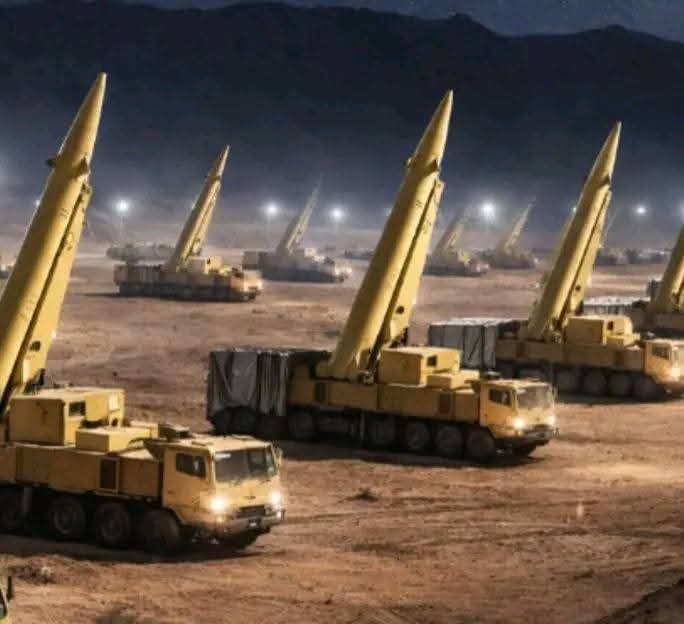
Iran retaliated with Operation True Promise 3, unleashing a massive barrage of over 150 ballistic missiles and more than 100 drones against Israeli military bases and infrastructure. Dozens of Israelis were injured, several seriously.

Despite the intensity of the conflict, U.S. intelligence officials maintain that Iran has not made the political decision to weaponize its nuclear program. While uranium enrichment activities continue, they have not reached a threshold indicating imminent nuclear arms development.

The ongoing war has raised concerns among international observers, with legal experts warning that elements of the Israeli offensive may violate international law. As both sides continue exchanging fire, diplomatic efforts face severe obstacles, and fears grow of further escalation in an already volatile region.

IRGC intelligence chief killed in Israeli airstrike, confirms Fars News Agency

By Muhammad Abubakar

Iran’s state-affiliated Fars News Agency has confirmed the deaths of top Islamic Revolutionary Guard Corps (IRGC) intelligence figures in an Israeli airstrike earlier today.

Among the dead is Brigadier General Mohammad Kazemi, the head of the IRGC’s Intelligence Organisation, a key figure in Iran’s security and military apparatus. His deputy, General Hassan Mohaqiq, was also killed in the strike, alongside senior intelligence official Mohsen Bagheri.

The strike reportedly targeted what is believed to be a sensitive IRGC facility, possibly the organisation’s headquarters. While Israeli officials have not yet publicly commented on the operation, the move is expected to escalate tensions between the two regional rivals.

Kazemi was appointed in 2022, succeeding Hossein Taeb, and was known for reshaping the IRGC’s intelligence posture during a turbulent period marked by domestic unrest and growing international scrutiny.

The Iranian government has not yet released an official statement on the incident, but security sources suggest a high-level investigation is underway.

This strike marks one of the most significant Israeli operations against Iranian military leadership in recent years.

Nigeria condemns Israeli strike on Iran, urges immediate ceasefire

By Hadiza Abdulkadir

The Federal Government of Nigeria has strongly condemned Israel’s recent unprovoked strikes on Iran, which have triggered a fresh wave of hostilities between the two Middle Eastern powers. In a statement issued on Friday, the Nigerian government described the escalating conflict as a grave threat to regional and global peace.

The Ministry of Foreign Affairs, through its spokesperson, Kimiebi Imomotimi Ebienfa, expressed deep concern over the sustained missile and aerial exchanges between the Islamic Republic of Iran and the State of Israel, calling for an “immediate cessation of hostilities” and restraint from both parties.

“The continued cycle of retaliation not only endangers civilian lives but threatens to plunge the broader Middle East into further instability, with implications for international security and economic development,” the statement read.

Nigeria, which has long championed non-aggression and multilateral diplomacy principles, urged Iran and Israel to return to dialogue and constructive engagement. The government also called on the United Nations Security Council and the broader international community to intensify de-escalation efforts and provide diplomatic platforms for resolution.

Reaffirming its stance against military confrontation, the statement noted that “military action is not a substitute for negotiation” and that lasting peace must be built on diplomacy, mutual respect, and adherence to international law.

“Nigeria stands ready to support all genuine efforts aimed at de-escalating tensions and promoting peace in the region,” the Ministry added.

The statement comes amid growing international alarm over the potential fallout of the conflict, which many fear could destabilise the already volatile Middle East and disrupt global economic and political systems.

Israeli cyberattack crippled Iranian defenses during airstrike, sources say

By Muhammad Abubakar

In a stunning display of cyber warfare, Israeli forces reportedly rendered Iran’s military defenses inoperative during a recent strike, leaving the Islamic Republic’s army effectively “blind, deaf and dumb,” according to military analysts cited by the German outlet Bild.

The report suggests that a sophisticated and large-scale cyberattack paralyzed Iranian radar systems throughout the night, allowing Israeli aircraft to carry out their operations without detection. Only a single Iranian air defense base managed to register the strikes, underscoring the scale of the electronic disruption.”

Israeli forces appear to have disabled Iran’s radar infrastructure so thoroughly that Iranian fighter jets scrambled without ever spotting the incoming targets,” Bild reported, citing military observers.

The extent of the cyber intrusion also reportedly severed internal communications among Iran’s air defense units. Mobile networks, radios, pagers, and even encrypted messaging platforms such as WhatsApp were reportedly jammed or rendered inoperable during the attack. This effectively left military personnel and targeted sites unaware of the impending strike.

“Hundreds of Iranian officers and pilots did not even know that anything was happening,” the report stated. “This points to a massive cyberattack using advanced electronic warfare, likely initiated as Israeli aircraft began their mission.”

The Israeli Defense Forces (IDF) have not officially commented on the operation, but the reported scale and precision of the strike suggest a high level of coordination between Israel’s cyber, intelligence, and air units.

If confirmed, the incident would mark one of the most significant uses of cyberwarfare in a live military operation to date, raising serious questions about the resilience of critical defense infrastructure in the face of digital threats.

Illinois man sentenced to 53 years for killing Palestinian-American child

By Hadiza Abdulkadir

An Illinois man has been sentenced to 53 years in prison for the fatal stabbing of a six-year-old Palestinian-American boy in what prosecutors described as a hate-motivated attack.

Joseph Czuba, 71, was convicted earlier this year of first-degree murder, attempted murder, and aggravated battery after he attacked Wadea Al-Fayoume and the boy’s mother, Hanaan Shahin, at their home in Plainfield Township in October 2023. Authorities said Czuba targeted the victims because of their Muslim faith and the ongoing conflict in the Middle East.

During sentencing on Friday, the judge described the act as “brutal and senseless,” emphasising the need for justice and deterrence in cases driven by hate.

Wadea, who had recently celebrated his sixth birthday, was stabbed 26 times. His mother, who survived the attack, suffered multiple stab wounds and continues to recover.

The case drew national attention and widespread condemnation, with civil rights groups calling for greater protection of Muslim and Arab-American communities amid rising tensions.

Czuba showed no remorse during the hearing. His attorneys said they plan to appeal the conviction.