Mental health

Teens, social media and mental health

By Muhsin Ibrahim

Social media has a double-edged function. It can uplift you or do the exact opposite. It largely depends on the people and pages you interact with. Worried about their teens’ mental health, Utah became the first US state to regulate teen social media access this week.

According to a BBC report, “under the measures enacted on Thursday, a parent or guardian’s explicit consent will be needed before children can create accounts on apps such [as] Instagram, Facebook and TikTok.”

People of all ages can have their mental health wrecked on social media if they aren’t cautious. Some of us crave attention or other’s validation. Thus, people do crazy things to get more “likes” or ensure what they do gets their friends’ applause. That is one thing some of your social media ‘friends’ will never grant you because they are not your friends in the true sense of the word. So, the earlier you understand this, the better.

Of course, you should not be carefree. Each culture has its codes, and so on. So, consider these etiquettes but worry not about people’s attention or endorsement. Social media friendship is primarily fake. Folks, especially teens, can’t understand this. Thus, trolling push them to lose self-esteem, hate themselves, and some take their lives!

I salute the government of Utah. I am sure more states in the US and elsewhere will do the same. However, as ours (in Nigeria) will likely not do the same anytime soon, parents and guardians should do more. As it’s very challenging to deny your kids access to social media, monitor whom they interact with and the pages they visit.

Muhsin Ibrahim lives and works in Cologne, Germany. He can be contacted via muhsin2008@gmail.com.

Brain-gut connection and Gastrointestinal (GI) problems

By Aminah M. Abubakar

Sometimes last year, a Nigerian PhD student at Korean University named Abdulqaadir Yusif Maigoro tweeted about his PhD thesis research work. He talked about his findings on the relationship between gut health and autism spectrum conditions. During a presentation at the International Meeting for the Microbiological Society of Korea, Maigoro discussed how gram-negative bacteria endotoxins could travel from the gut to the brain and cause inflammation in people with an autism spectrum disorder.

The research sparked my interest, so I joined the conversation on his Tweet. I asked; if gastrointestinal issues, such as stomach aches, irritable bowel syndrome, constipation, and bloating, are commonly seen in individuals with autism and other neuro conditions. It is possible that these issues may be related to the gut-brain connection and the role that the gut plays in regulating the body’s immune response. How close are experts to getting a cure for the gut disease in Autistic individuals?

Abdulqaadir Maigoro (@Abdul_Y_Maigoro) responded that it’s true individuals with Autism condition have gastrointestinal problems, and further research is needed to fully understand the relationship between gut health and neuro conditions by exploring various mechanisms. But it is clear that the gut plays a significant role in overall physical and mental health.

Maigoro’s findings have prompted my interest in getting more information by exploring the connections between gut health and other neurological conditions, such as Autism, Depression, Anxiety, ADHD, Alzheimer’s disease, and Dementia.

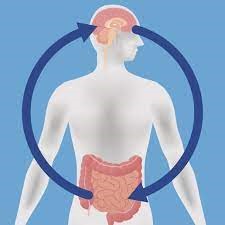
Gut health has long been known to be connected to overall physical health, but recent research has also shown a link between the gut and mental health conditions such as depression and anxiety. The gut is home to the enteric nervous system, sometimes referred to as the “second brain,” which has a network of nerves, neurons, and neurotransmitters that extend throughout the digestive tract. The enteric nervous system communicates with the brain through the nervous system, hormones, and the immune system. This communication is especially important in regulating the body’s immune response, as 70% of the immune system is focused on the gut.

The gut, or “second brain”, is vital to overall human health and well-being. It breaks down food, absorbs nutrients, and eliminates waste through chemical and mechanical processes. It also has its own nervous system called the enteric nervous system, which is made up of nerves, neurons, and neurotransmitters and extends throughout the digestive tract – from the oesophagus, through the stomach and intestines, and down to the anus. Because it uses the same types of neurons and neurotransmitters as the central nervous system, some experts refer to the enteric nervous system as the “second brain.”

The enteric nervous system communicates with the brain in the head through the nervous system, hormones, and the immune system, and it plays a key role in certain diseases and mental health.

Researchers are beginning to examine the gut in people with conditions such as depression, Parkinson’s disease, Alzheimer’s disease, autism, ALS, multiple sclerosis, pain, anxiety, and other neurological disorders. They are also studying the role of the gut in gastrointestinal conditions like ulcers and constipation and how it affects brain function.

The gut is also home to microorganisms that help regulate the body’s immune response, and around 70% of the immune system is focused on the gut to fight off and eliminate foreign invaders. Research on how the gut, or “second brain,” mediates the body’s immune system is exploring ways to expand the treatment of psychiatric and other neurological conditions, including the gut’s nervous system.

Researchers are now exploring various mechanisms in an attempt to find a potential cure for neuro conditions through the gut. The medical breakthrough will surely transform the world and touch the lives of nearly every person on the planet.

Aminah M. Abubakar sent the article via mbubakar.minah@gmail.com. She can also be contacted via her Twitter handle: @MinahMbubakar11.

Mainstreaming mental health in Nigeria

Bello Hussein Adoto

The signing of the Mental Health Bill into law presents a renewed imperative to rewrite the mental health narrative in Nigeria. Here is how Nigeria can do better.

‘All diseases are equal, but some are more equal than others’. Although Nigeria is not George Orwell’s Animal Farm, the country has a glaring disparity in the kinds of diseases it considers a priority, but the recent signing of the Mental Health Bill into law can help us to rewrite the narrative.

At the mention of infectious diseases like HIV, tuberculosis, and malaria, or non-infectious diseases like diabetes, hypertension, and cancer, one could point to tangible, nationwide, and sustained initiatives to promote public health and reduce their impact on individuals and communities. But very few such initiatives are available, if any, for anxiety, depression, or Alzheimer’s disease. 

While anxiety and depression do not kill as regularly as untreated malaria, HIV, tuberculosis, and uncontrolled diabetes and hypertension – diseases that received far more attention, these mental illnesses are nonetheless deadly.

Anxiety and depression, for instance, reduce our quality of life and living, undermining our productive capacity, while depression increases a person’s risk of suicide. This reality makes diseases that affect moods and behaviour as relevant as those that affect tissues and organ systems.

Mental health disorders are a huge challenge in Nigeria. A recent report puts the number of people living with one mental illness or the other in the country at 60 million. According to a World Health Organization report, Nigeria has more than seven million people living with depression. This value doubles the number of people living with depression in South Africa and Ghana combined. A similar story plays out in the estimate for people with anxiety in the continent.

Nevertheless, the signing of the Mental Health Bill offers a renewed imperative for stakeholders to harness the several opportunities that could rewrite the narrative of mental health in the country.

The first opportunity is an extensive network of primary, albeit underfunded and underutilized, healthcare centres across the country. Nigeria has more than 33,000 primary health centres with a potential capacity to provide mental health first aid services to Nigerians. The government can expand these facilities to provide mental health care services.

The centres have community health officers (CHOs), community health extension workers (CHEWs), registered nurses, and midwives. Specialists can train these non-specialist healthcare workers to provide basic mental healthcare services nationwide, especially in rural areas, in a task-sharing, task-shifting policy.

Nigeria has applied this policy to provide malaria and family health services, and a 2015 study shows that integrating mental health into primary healthcare in Nigeria could follow a similar model. Such integration will buffer the shortage of mental health specialists in the country and improve care coverage for underserved populations.

Secondly, the digital era is here. Digital channels such as social media, webinars, SMS, and tools such as smartphones and software, provide an exciting, affordable, and sustainable opportunity to reach many people. The government could harness these channels to support non-specialist care delivery, educate the public about the fundamentals of mental health, reduce ignorance about mental health, and eliminate the stigma and dangerous practices associated with mental health disorders in the country.

Beyond helping to raise awareness, the government and other relevant stakeholders should harness digital channels to deliver e-health to people with mental health disorders and bypass the barriers to accessing traditional care. Such digital interventions have been shown to improve mental illnesses among students and could be helpful in care delivery to a larger population.

A third opportunity is the existence of non-governmental organizations, such as the Mentally Aware Nigeria Initiative (MANI) and Asido Foundation, that champion mental health causes in the country.

NGOs are paramount to health promotion because they supplement public efforts to promote health. Some NGOs operate helplines for mental first aid; others, like the Asido foundation, run the Unashamed campaign to increase mental health awareness and reduce stigma in the country. The government can partner with these NGOs to sensitize the public and provide the much-needed care and support that millions of Nigerians need.

Finally, a special insurance package should be instituted for people with mental health disorders, so they can access essential care without worrying about the cost. Awareness about health insurance has increased over the years, and more Nigerians are enrolling in their numbers. The number of enrollees in the Nigerian Health Insurance Scheme [(NHIS), mow National Health Insurance Authority (NHIA)] has nearly doubled between 2007 and 2013. Stakeholders can expand current social health insurance packages for insurance owners to include mental health conditions and give Nigerians a new lease to access proper mental health care whenever needed.

Bello Hussein Adoto, a researcher, writer, and journalist, writes via bellohussein210@gmail.com.

Assent to Mental Health Bill, better late than never

By Lawal Dahiru Mamman

Ann Soberekon, a retired laboratory scientist, was almost lynched by a mob in Port Harcourt following an accusation of witchcraft. Ann was actually suffering from dementia – a condition of the brain characterised by impairment of brain functions such as memory and judgment that interferes with doing everyday activities. 

The incident led a rights group, Advocacy for Alleged Witches, to decry the ill-treatment meted out to those with mental health challenges. According to the group, the attribution of dementia and other mental disorders is rooted in irrational fear, misinterpretation and ignorance of the cause of disease. 

Living in fear of being called names and other forms of stigmatisation is the way people with mental health issues live in Nigeria and even other African countries. Mental disorders are viewed as spiritual attacks, and patients are mirrored as those under the influence of evil spirits, bewitched or hexed. The only way to cure the world of such back in the dark days and put victims out of their mystery is to send them 6 feet down, while in more recent times, stigmatisation and other forms of inhumane treatment are dished out to mental health patients forcing them to instead of seek for solution drown in their unfortunate circumstances. 

With the proliferation of knowledge of mental health, some African nations started signing Bills to protect the right of people suffering from mental health issues. Foremost among are countries like South Africa which signed the Mental Health Care Act 17 of 2002 on October 28, 2002, which then took effect on December 15, 2004, to cater for treatment and rehabilitation of persons with mental health illness. In 2012 Ghanaian government signed Mental Health Act 2012 into law. Zambia signed its Mental Health Act in 2019, and then in June 2022, Kenya’s President Uhuru Kenyatta signed the Mental Health Bill into law.

Nigeria followed suit when President Muhammadu Buhari, as a parting gift, bequeathed Nigeria on the 5th day of January 2023 the long-awaited Mental Health Bill by signing it into law, repealing heretofore extant law, which was known as the Lunacy Act CAP 542, of the laws of Nigeria 1964. 

This is coming after the Bill has failed two attempts. Firstly, it was after the presentation in the National Assembly in 2003 before its withdrawal in April 2009 and secondly, in 2013 when the National Policy for Mental Health Services Delivery set out the principles for the delivery of care to people with mental, neurological, and substance abuse problems, but it was not signed into law.

The Mental Health Bill is a piece of legislation that covers the assessment, treatment, care and rights of people with mental health disorders while also discouraging stigmatisation and discrimination by setting standards for psychiatric practice in Nigeria, among other provisions. 

The assent of the law generated a positive response, with physicians saying the law will afford those in the field the power to work unhindered and also enlighten Nigerians of the dangerous lifestyles that may lead to a breakdown in one’s mental health. 

Doctor Olakunle Omoteemi, a physician in Osun State, said, “Due to the negative perception attached to mental health issues in Nigeria, the society still sees any case related to it as that of lunacy, and as a result of this negative perception, individuals shy away from making known, discussing or approaching professionals to discuss or reveal their mental health status.

“People also often cannot go for counselling based on the prejudice from the society. There is also the issue of stigma attached to it, as people are afraid to be called certain names. With this law, it is hoped that the prejudices and stigma attached to mental health issues will be laid to rest.”  

The World Health Organisation (WHO) said at the 2022 World Mental Health Day on the 10th of October that One Hundred and Sixteen million (116,000,000) Africans suffer from one mental health disorder or another, and according to the President of the Association of Psychiatrists in Nigeria (APN), Taiwo Obindo, over sixty million (60,000,000) Nigerians agonise from mental illnesses. 

Since the Bill this time around was not allowed to fade in oblivion, it will be safe to say ‘it is better late than never’ considering the statistics of the WHO and that of the president of APN. What is left is for those responsible for the bill to take charge in ensuring that the purpose for which the bill was signed is not defeated.  

Lawal Dahiru Mamman, a corps member, writes from Abuja and can be reached via dahirulawal90@gmail.com.

Exercise: A panacea for mental health?

By Aishat M. Abisola

As everyone knows, maintaining a proper grasp of your mental health can be difficult, especially in stressful environments. Stressful situations make it hard for people to have good mental health, making the mind vulnerable to mental illnesses like depression or anxiety disorder.

As someone who has dealt with anxiety, I can say with complete honesty that it is a terrible thing to deal with and the feeling of it lingers for a while until you feel better.

The best way to describe the anxiety, or how it made me feel, is that it made me feel cold and numb. It was hard for me to breathe as if I was drowning and many hands were pulling me down.

I didn’t know anyone around me who felt the same way I did, so it was a struggle for me. Luckily, I found a way around it, which was through exercise.

I’ll be honest and say that I don’t exercise as much as I used to, but when I did, I felt as if I had no worries. So I understand if you might be confused about why and how I started feeling better with exercise.

What you should know about exercise is that it keeps people in peak physical form and improves their overall well-being by creating changes in the brain.

Let me clarify that any form of exercise is better than none: yoga, walking, swimming, martial arts, stretching, and housework (despite what some may think, things like sweeping and mopping can put your muscles to work).

People who often exercise generally sleep better, feel more energetic during the day, have better memories, and feel more positive about themselves.

This is not conjecture, but facts, as studies have shown that exercise can treat mild or moderate depression the same way antidepressant medication can – minus the side effects. For example, walking 15 minutes a day or walking for an hour reduces the risk of depression by 26%.

Inactivity damages your mental health in the same way that exercise can bring many benefits to your mental health. As a natural anti-anxiety treatment, exercise relieves stress and improves physical and psychological energy. In addition, exercise releases what I refer to as the body’s “Happy” chemicals (Serotonin, Endorphins).

These chemicals are known for improving one’s mood, and exercise releases a particular amount depending on the type of exercise.


Exercise also improves physical in more ways than one:

• Improves cardiovascular health by lowering blood pressure, improving cholesterol levels, and reducing the risk of strokes, heart attacks, and heart disease.

• Helps with diabetes by improving blood glucose control, reducing cardiovascular risk factors, helping with weight loss, and delaying/preventing the development of type 2 diabetes.

• Reduces the risk of cancers: stomach cancer, breast cancer, bladder cancer, kidney cancer, uterine (endometrial) cancer, etc.

• Improves bone health by strengthening the muscles and bones because ageing causes bone density loss and prevents osteoporosis.

• Increase the chances of living longer.

• Helps you to maintain an appropriate weight level.

• Improves brain functions and reduces the risk of dementia.

When it comes down to exercise, at most, you should perform 2.5 – 5 hours of exercise a week.

It isn’t recommended that you do your exercise all at once. Instead, reducing it into time intervals would be best to make it easier. If you don’t have much spare time, here are ways that you can exercise without it taking up too much time:

• You can try walking or cycling if you have a bicycle.

• Incorporate exercise into your daily lifestyle by maybe taking the stairs when you would probably take the elevator or parking your car (if you have one) far from your destination.

• You can practice yoga by searching on YouTube and following the videos through the motions.

• You can exercise in the morning before you prepare for work.

• Dancing is a fun method of exercising without putting much effort. Just play music and move your body.

If you have a chronic condition like arthritis, a disability, weight issues, or an injury that prevents you from moving too much, talk to your doctor about ways for you to exercise safely. You can worsen your condition by exercising without consulting a doctor on the proper steps.

Another thing to note is that if you are feeling pain while exercising, stop and rest. Drink some water and lie down. If the pain continues, don’t ignore it. Go and see a doctor for help.

If you’ve heard the saying “Health is Wealth” before, then you know that you should prioritize your body. Harming yourself to improve your mental health will only make it worse.

Exercise may be helpful to the body and mind, but make sure to listen when your body clearly says, “NO!”.

Aishat M. Abisola is a member of the Society for Health Communication, Wuye District, Abuja. She sent this article via aishatmohd02@gmail.com.