Mass Communication department

Why do Mass Communication students prefer broadcast media?

By Dahiru Kasimu Adamu

Mass Communication is a broad field with different areas which include journalism, broadcasting, public relations, digital Marketing, film and television production, advertisement, strategic communication and many more others.

Thus, Mass Communication as a profession is said to be a great field which is like the proverbial Hausa cow with more than ten benifits, however, the students from this field often restrict themselves to broadcast media especially during their ‘student industrial training.

On 13 February 2025, during MACOSA student orientation organized by Mass Communication students association (MACOSA) at Usmanu Danfodiyo University, Sokoto, a lecturer and SIWES co-ordinator from Mass Communication Department, Mr. AbdulHakim AbdulGaniyu emphasized the need for students to explore other Mass Communication channels while they undergo their mandatory industrial training at 200 and 300 levels respectively.

Mr. AbdulHakim also highlighted the role of students industrial work experience scheme SIWES in supplying new skills and ideas to students.

“Mass Communication is a vast environment, and students need to explore such environments, they should not restrict themselves in Radio and TV only” Sir Abdulhakim said.

Mr. Abdulhakim, who narrated his past experience, mentioned that students can do their SIWES at various ministries, departments and agencies, this is because, all organizations, governments and even non governmental institutions have information units and they need image makers, and those are public relations officers.

Also, speaking at pioneer day of Mass communication students of Usmanu Danfodiyo University Sokoto, held on 7th November 2024, a veteran broadcaster and Director News and programs of Sokoto Media Cooperation, Hajiya Balkisu Abubakar, implored students that “they should not limit themselves to Radio”.
She appealed to them to engage themselves in other means of communication and contribute their quota to the development of their society.

Despite the fact that, Mass Communication is a broad field and students learn the rudiments skills of the field in schools, usually these students seem to have much interest in broadcast media particularly radio, and this brought the question of why the students are neglecting other areas of the profession?

To answer this question we need to critically observe the course and the students. Traditionally some students join the field with an intention becoming popular in their respective communities.

According to Aliyu Muhammad who obtained a National Diploma in Mass Communication from Umaru Ali Shinkafi Polytechnic Sokoto, he said students like him selected and chose radio or television during their SIWES because a journalist is easier to be known through broadcast media being the most popular channels of communication known and used widely.

He also mentioned that limited access to print media by the community members is another factor discouraging students of Mass Communication to do their industrial training in print outlets.

While sharing his opinion Ibrahim Shehu Bulama from Kaduna State University, KASU, said “this is happening due to lack of good awareness on other channels of Mass Communication”.

On his part Abubakar Mai Lafiya said; students mainly want to be seen in television screens and their voices been heard, not focusing on other critical fields of journalism and information practices.

Speaking anonymously, a Mass Communication students of Usmanu Danfodiyo University Sokoto, said they normally choose Broadcast media (Radio and Television) due to its nature of easy access, portability and wide outreach.

To change some of these narratives there should be some measures that will motivate students and induce hope for them in other fields of Mass Communication.

There should be a good orientation to educate students that they can also carry out their SIWES in other information units, public relations Departments of public and private sectors such as financial institutions, law enforcement agencies, markets and almost all other places of human interactions.

Another alternative is, the Mass Communication departments should establish a collaborative relationship with such organizations, so that they can formally send letters, requesting spaces for the students to join and garner the experience. Such organization should make special provision for SIWES students and prepare to take them when there is need.

Moreover Mass Communication Departments should help students to understand why they should go for their SIWES in areas they’re strong as reflected by their grade points.

Being a Mass Communicator, one should understand that his/her basic responsibility and professional calling is with every institution. One should remember it’s time to acts, time to rethink and focus. Students have to confront the current challenges of the field so that one can explore utilize and make impact. This will make someone to influence the world positively.

BUK alumni celebrate lecturer for achieving PhD milestone

By Uzair Adam

The 2022 graduates of the Mass Communication Department, Bayero University Kano (BUK), have celebrated their former level coordinator, Dr. Ummi Muhammad Hassan, in recognition of her recent PhD achievement.

The event, held on Tuesday at BUK’s new site, was attended by family members, alumni, and lecturers from the Faculty of Communication and related departments.

It featured a cake-cutting ceremony, an award presentation to Dr. Ummi, and speeches from invited guests.

Dr. Ummi’s PhD research focuses on the Challenges and Perceptions of Muslim Hausa Female Rap Artists in Kano and Kaduna States.

Speaking at the event, the students said the celebration was a way to honor Dr. Ummi as their “academic mother” and acknowledge her dedication to their success.

“We wanted to express our gratitude to Dr. Ummi for all she did for us during our time at BUK,” said Umar Isa Dandago, one of the event organizers.

He added, “She treated us as family, and this celebration is our way of giving back.”

In her response, Dr. Ummi expressed heartfelt appreciation. “When one of my students, Uzair Adam, informed me about this, I was speechless.

“I consider my students as my second family, and seeing them organize this for me melts my heart,” she said.

The Head of the Mass Communication Department, Dr. Gambo Nababa, lauded the students for their thoughtfulness.

He also encouraged Dr. Ummi to continue her academic journey and expressed optimism about her attaining the rank of professor soon.

Dr. Ummi’s husband, Dr. Musa Labaran, who also serves as the department’s examination officer, shared his pride and gratitude.

He noted that the gesture reflected Dr. Ummi’s devotion to her students.

Other notable attendees included the Head of the Information and Media Studies Department, Dr. Nura Ibrahim, as well as Dr. Hadiza J. Ibrahim, Dr. Ibrahim Siraj, and Dr. Muhammad Danja.

They described Dr. Ummi as a remarkable academic who has left an indelible mark on her students.

The celebration underscored the enduring bond between Dr. Ummi and her students and highlighted her contributions as an educator and mentor.

Kano poly educates students on entrepreneurial journalism

By Uzair Adam Imam

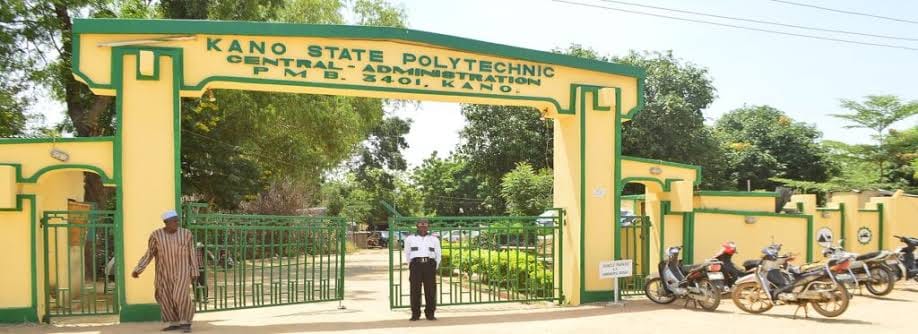
Department of Mass Communication, Kano State Polytechnic, organised a one-day lecture series to prepare their students about the dynamic nature of 21 century journalism.

The event Thursday had three guest speakers who discussed on the topics; The 21st Century Mass Communication Students by Associate Professor, Mainasara Yakubu Kurfi, Head of Mass Communication Department, Bayero University, Kano.

The remaining two were: Crime and Judicial Reporting by Comrade Abbas Ibrahim, Chairman Nigerian Union of Journalists (NUJ), Kano and Reading: A pathway to Entrepreneurial Journalism by Mal. Badamasi Aliyu.

Speaking after the event, the convener, Malam Aisar Salihu Musa (Aisar Fagge) said, the essence of the event was to prepare students about the new skills of 21st century journalism.

He added that the event would also help the upcoming journalists develop a critical and entrepreneurial mindset which will enable them to excel in their choosen career.

In his words, Aisar stated, “The emergence of new media technologies, the ICT and the user-generated-content have transformed the way news is produced, consumed and distributed. So there is a need for our students to know about these changes in the practice of 21st century journalism.

“Not only that, there is also a need to introduce our students into entrepreneurial journalism, especially in a country where job opportunities are rare; a country with a massive unemployment problem where majority of the youths are roaming the street without job.

“So the students need to know that they can get job for themselves by learning new skills assisted by the internet. Students could be content creaters, content developers, writers, advert practitioners, copywriters, public speakers,” he stated.

In his paper: “Reading: The Pathway to Entrepreneurial Journalism,” Mal. Aliyu said, by reading, you can become whatever you want in life. You can write well, speak good because of reading good books. Knowledge and skills are buried in books. Explore them and be what you want to be. I got 4 million naira as a result of the book I read “How to write a business plan.

The event was graced by the academic and non-academic staff across the Kano Poly schools, lecturers from Bayero University, Kano, Federal University Dutsin-ma, Al-Qalam University, FCE Kano and former students among others.

The Head of Department, Mass Communication, Kano State Polytechnic, Malama Binta Muhammad Lawal, ably represented by one of the lecturers, Malam Salihu Sule Khalid, commended the event.