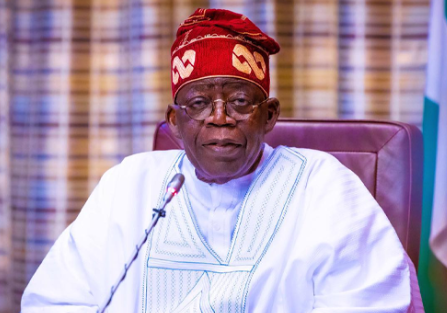
Maruf Olatunji Alausa

FG removes Mathematics as compulsory subject for Arts students

By Muhammad Abubakar

The Federal Government has announced a major review of admission requirements into Nigeria’s tertiary institutions, declaring that Mathematics will no longer be a compulsory subject for candidates seeking admission into Arts and Humanities programmes.

The new policy, unveiled by the Federal Ministry of Education, forms part of a broader revision of the National Guidelines for Entry Requirements into Tertiary Institutions in Nigeria. According to the guidelines, Mathematics remains mandatory only for Science, Technology, and Social Science courses, while English Language continues to be compulsory for all programmes.

Under the revised rules, candidates seeking university admission must still obtain a minimum of five credit passes in relevant subjects, including English. For polytechnic admission at the National Diploma (ND) level, four credits are required, while five credits, including Mathematics and English, remain mandatory for the Higher National Diploma (HND).

Similarly, in Colleges of Education, English Language is compulsory for Arts and Social Science students, while Mathematics is required for Science, Technical, and Vocational programmes.

The government explained that the reform aims to make tertiary education more inclusive and accessible, reducing unnecessary barriers that have prevented thousands of qualified candidates from securing admission. Officials project that the new policy could enable an additional 250,000 to 300,000 students to gain admission annually.

Education stakeholders have welcomed the move as a progressive step towards aligning Nigeria’s education system with global best practices, though some have called for careful implementation to maintain academic standards.

FG set up another committee to quicken talks with university, poly unions

By Anwar Usman

The Federal Government has reconstituted and inaugurated the Mahmud Yayale Ahmed Federal Government Tertiary Institutions Expanded Negotiation Committee to expedite ongoing discussions with academic and non-academic unions across universities, polytechnics, and colleges of education.

In a statement issued on Tuesday by the spokesperson for the federal ministry of education, Folasade Boriowo, it was stated that the Minister of Education, Dr Tunji Alausa, has set up a new committee to harmonise all negotiation processes under one coordinated framework that reflects institutional memory and sector-wide inclusiveness.

Alausa explained that, unlike previous fragmented negotiations, the expanded committee will engage all unions collectively to achieve a comprehensive and sustainable agreement. “The membership of the committee has been carefully chosen to represent the full spectrum of the education sector, ensuring that no group is left behind,” he said.

The Minister stated that the committee has been given a well-equipped and functional secretariat to enable it to carry out its mandate effectively, adding that, “its inaugural meeting will be held at 2 p.m. Tuesday, 7th of October. He urged all academic and non-academic unions to cooperate fully and respond promptly to the committee’s engagements.”

According to him, President Bola Tinubu has given full political support to the process, with a clear directive that all negotiations be concluded swiftly, fairly, and in a spirit of civility and mutual respect.

Earlier, ASUU, in a bulletin released to its members on Monday, urged them to prepare towards a two-week warning strike set to commence on October 13.

The planned strike follows a two-week ultimatum issued by the union last week, calling on the Federal Government to proffer solutions to its unresolved issues, including the signing and implementation of the renegotiated 2009 ASUU-FGN Agreement.

In the fresh circular, ASUU National President, Prof. Chris Piwuna, complained about the government’s failure to provide any meaningful response to the union’s demands despite the ultimatum.

FG imposes 7-year ban on establishment of new federal tertiary institutions

By Abdullahi Mukhtar Algasgaini

The Federal Executive Council (FEC) has approved a seven-year moratorium on the establishment of new federal universities, polytechnics, and colleges of education across the country.

The decision, announced by the Minister of Education, Dr. Tunji Alausa, on Wednesday, aims to address declining standards and infrastructure challenges in Nigeria’s tertiary education sector.

The ban, which takes immediate effect, is intended to curb duplication, optimize resources, and improve existing institutions.

Alausa stated that Nigeria currently has 72 federal universities, 42 polytechnics, and 28 colleges of education, yet many struggle with low enrollment and inadequate facilities.

“Access to tertiary education is no longer the problem—quality is,” Alausa said.

He cited alarming statistics, including 199 universities with fewer than 100 applicants in the 2024/2025 academic session and 34 institutions with zero applicants.

Similar trends were observed in polytechnics and colleges of education.

The minister emphasized that the moratorium will allow the government to focus on upgrading infrastructure, enhancing staff capacity, and expanding the carrying capacities of current institutions.

He also warned that unchecked expansion risks producing unemployable graduates. Meanwhile, FEC approved nine new private universities, clarifying that these were long-pending applications.

Alausa noted that stricter guidelines would soon apply to private institutions to prevent unchecked growth at the expense of quality.

FG unveils committee to boost education infrastructure via PPP

By Hadiza Abdulkadir

In a significant move to overhaul Nigeria’s educational infrastructure, the Federal Government has inaugurated a high-level committee to develop comprehensive Public-Private Partnership (PPP) guidelines aimed at attracting private sector investment into the sector.

The initiative, led by the Honourable Minister of Education, Dr. Maruf Olatunji Alausa CON, seeks to address persistent infrastructural and capacity deficits, particularly in secondary and tertiary institutions.

Speaking at the committee’s inauguration, Dr. Alausa emphasized the need for innovation and collaboration in education financing. “Government cannot do it alone… We must leverage private funding to modernize and sustain our educational system,” he said, noting that while current funding efforts—such as the 2025 education budget and TETFund interventions—are commendable, they remain inadequate.

The newly inaugurated committee, chaired by the Honourable Minister of State for Education (represented by the Director of Special Duties), includes key directors from the ministry, and representatives from the Infrastructure Concession Regulatory Commission (ICRC), Ministry of Housing, and other stakeholders.

Its mandate includes formulating PPP benchmarks, reviewing legal frameworks, clarifying stakeholder roles, establishing performance indicators, designing oversight mechanisms, and recommending penalties for non-compliance. The committee has been given three months to submit its report.

“If we do this right, this document can be a model for other ministries,” Dr. Alausa noted.

Other speakers at the event, including ministry officials and stakeholders, expressed strong support for the initiative and its potential to transform Nigeria’s education landscape.

FG releases ₦50bn to university unions, reaffirms commitment to education

By Muhammad Abubakar

The Federal Government has released ₦50 billion to academic and non-academic staff unions of federal universities, fulfilling a promise made by President Bola Ahmed Tinubu as part of efforts to enhance the welfare of university personnel and strengthen Nigeria’s education sector.

Announcing the development, the Honourable Minister of Education, Dr. Maruf Olatunji Alausa, described the disbursement as a strategic move to reaffirm the President’s commitment to transitioning Nigeria into a knowledge-driven economy. He emphasised that the release goes beyond a financial transaction, calling it a bold investment in human capital and youth development.

“This intervention is a reaffirmation of our President’s belief in the capacity of Nigerian youth and the invaluable role played by academic and non-academic staff in nurturing them,” Alausa stated.

In a message conveyed through the ministry, President Tinubu reiterated that ensuring uninterrupted academic activity in Nigerian universities is a core priority of his administration. “Keeping our children in school is not negotiable,” he declared, expressing optimism that strikes in higher institutions would soon be permanently resolved.

The Education Minister also acknowledged the cooperation of university unions, noting that Nigeria is currently experiencing one of the longest periods of academic stability in recent years.

The release of the funds is seen as a significant milestone in the President’s Renewed Hope Agenda and a step toward positioning Nigeria’s education system as a benchmark for excellence on the continent.