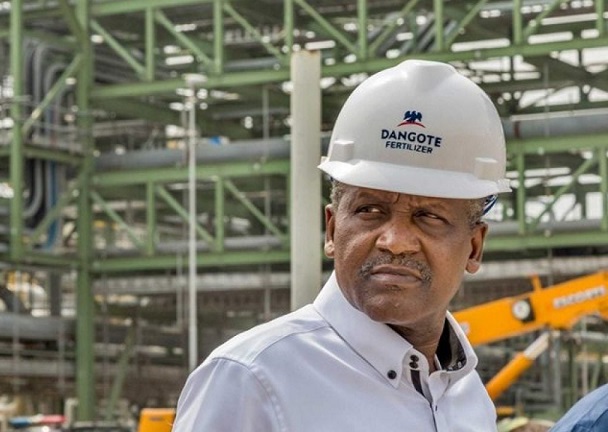
Dangote Refinery and the Malta story
By Zayyad I. Muhammad
Petrol and electricity are the oxygen of any nation. Once these two crucial resources are restricted, the country struggles to breathe. Many Nigerians were surprised to learn that Nigeria’s petroleum importation from Malta surged significantly to $2.8 billion in 2023, up from zero importation between 2017 and 2022.
On the other hand, the majority of Nigerians were unhappy with the news that the $19 billion Dangote Refinery is struggling due to a poor supply of crude oil and other hindrances from government agencies that are supposed to support such a national asset.
For most Nigerians, Dangote Refinery represents hope and the expectation of lower petroleum prices. Regardless of people’s opinions about Dangote, he has accomplished what Nigeria has failed to achieve in decades. In fact, in the last ten years, only six countries in the world have managed to build new massive petroleum refineries, including the Dangote Refinery.
Other countries that have built refineries include China, which has added multiple new refineries like the 400,000 barrels per day (b/d) Yulong Petrochemical Plant and the 300,000 b/d Shenghong Refinery; Kuwait’s Al-Zour refinery with a capacity of 615,000 b/d, which started operations in 2021; Saudi Arabia’s Jazan refinery with a capacity of 400,000 b/d, also operational since 2021; and Oman’s Duqm Refinery, with a capacity of 230,000 b/d, which commenced operations in 2022. Additionally, India has expanded its refining capacity with new units at the Ratnagiri refinery.
Nigeria’s importation of petroleum products was initially intended as a temporary solution to the insufficient supply from its four state-owned refineries. However, due to inefficiency and corruption, this temporary measure has become a permanent solution.
In Nigeria, the prices of refined petroleum products are heavily influenced by import-related factors. There are over ten components contributing to the landing cost of petrol, including freight, port charges, the NMDPRA 1% levy, storage costs, marine insurance, fendering, the NMDPRA COQ and NOA, Q&Q analysis, letter of credit fees, and interest. Additionally, the high exchange rate further inflates the price of imported petrol. To eliminate these extra costs, local refining is the only viable solution. Nigeria’s only option for now is the Dangote refinery.
Many Nigerians, ordinary citizens, and bureaucrats view the $19 billion Dangote refinery as an asset and a blessing. It has the potential to liberate Nigeria from decades of dependence on petrol importation, which is one of the major causes of pressure on the Naira and the scarcity of the dollar. The refinery will position Nigeria on the map of nations exporting crude and refined petroleum products and fertiliser.
Dangote Fertiliser is one of the largest fertiliser plants in the world, with an annual production capacity of 3 million metric tonnes of urea. Nigeria’s yearly urea fertiliser needs are only 1.5 million metric tonnes.
Dangote has already demonstrated his capability in the cement industry. With Dangote Cement, Nigeria is a net exporter. Nigeria boasts one of the largest cement industries in Africa, with a combined production capacity of over 58.9 million metric tonnes per year among major producers. It leads the cement industry in West Africa, hosting at least 12 registered companies. Dangote Cement is the largest producer in Nigeria and West Africa, contributing over 35.25 million metric tonnes per year (Mt/yr) to the region’s cement capacity. Due to Dangote’s significant cement production capacity, Nigeria satisfies not only its domestic cement needs but also exports to neighbouring countries, enhancing regional trade and economic integration.
Let the Dangote refinery be! It will transform the Nigerian oil and gas industry into a net exporter of refined petroleum products.
Zayyad I. Muhammad writes from Abuja via zaymohd@yahoo.com.