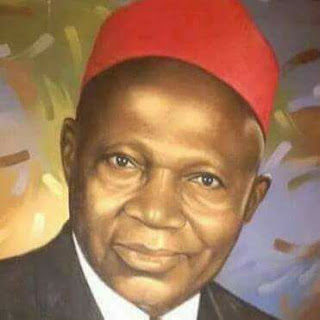
Malam Aminu Kano

Tax reforms in Nigeria: Expectations and realities discussed at BUK symposium

By Anas Abbas

The Centre for Democratic Studies at Bayero University Kano held its 23rd Annual Symposium on Thursday morning, honouring the 42nd memorial anniversary of the esteemed Mallam Aminu Kano. 

The event, which took place at the Aminu Kano Centre for Democratic Studies, was centred on the theme “The Politics of Tax Reforms in Nigeria: Expectations and Realities.”

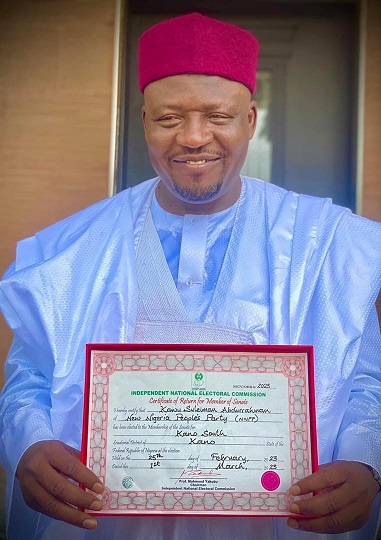
Prominent figures from the political and academic spheres graced the symposium, including Professor Abubakar Adamu Rashed, who delivered the opening remarks, and Professor Badayi, who served as a co-discussant. Other notable attendees included Alhaji Abba Kabir Yusuf, represented by Comrade Aminu Abdulssalam, and Senator Abdurrahman Kawu Sumaila.

In his address, Professor Rashed underscored Mallam Aminu Kano’s legacy, describing him as “not just a politician from Kano, but a revolutionary figure for Nigeria and Africa.” He highlighted Mallam Aminu’s strong opposition to colonial taxation and his belief that the lumpen proletariat should be exempt from taxation.

The guest speaker, Professor Kabiru Isa Dandago, a distinguished professor of accounting at Bayero University, presented a thought-provoking paper titled “The Politics of Tax Reforms in Nigeria: Expectations and Realities.” He advocated for the acceptance of a proposed development levy included in the tax reforms bill, suggesting a uniform rate of 4% across the board.

Professor Dandago proposed allocating 50% of the development revenue to the Tertiary Education Trust Fund (TETFund), with 20% directed towards the National Economic Recovery Fund (NELFund). The remaining 30% would be distributed among various initiatives, including NITDA, NASENI, cybersecurity projects, and police trust funds.

He expressed concern over multinational companies’ inadequate contributions to the tax reforms outlined in the bill. Professor Dandago called for substantial enhancements in the bill’s content to ensure that the renewed tax system effectively delivers the intended benefits for Nigeria.

The symposium served as a vital platform for discussing pressing issues surrounding tax reforms in Nigeria, echoing Mallam Aminu Kano’s enduring legacy in advocating for social justice and equity.

World Speech Day, 2025: Know your audience or don’t speak to them

By Bello Sagir Imam                                           

In 2005, Prof. Auwal Yadudu of the Faculty of Law, Bayero University Kano, had to speak to a bench of Kano state Sharia courts judges at Aminu Kano College of Islamic and Legal Studies (AKCILS), where I was studying Law at Diploma level. I was even nicknamed as Senior Advocate of Nigeria (SAN) by my colleagues. The college management invited me to represent students as the Public Relations Officer (PRO) of Redemption Chambers, an association I co-founded at the AKCILS.

The legal luminary started his speech by addressing the judges in English, smiling. After about six minutes, I noticed him slowing down, and he completely paused. While silence overtook the venue, making it a graveyard, the lawyer examined the hall, making eye contact with some of us as if searching for something in our eyes. Then he returned to his speech with full force but this time with a bit of speed. We were all shocked to have discovered that Prof. switched to speaking in the Hausa language instead of the English language he was using earlier, which I enjoyed because of his near-native speakers’ control of the language I sensed in it.

Prof. Yadudu spoke for a while in Hausa, as if trying to do what he knew best: “defense”. He then paused and quickly said: “na tsara jawabi na gabaki dayansa a harshen Turanci, amma, tun kafin na yi nisa, sai na fahimci cewa, kaso mai tsoka daga cikinku ba sa fahimtar abin da nake fada yadda ya kamata, saboda da harshen Turanci nake magana, shi ya sa na yi sauri na koma yin magana da harshen Hausa.”

He mentioned his full name as “Barrack HUSSAIN Obama.” The former US president deliberately added the middle name (i.e., Hussain), a Muslim name, in his address to Turkish Muslims that he came from a Muslim background. This is unusual; Obama does primarily address Americans or other non-Muslim audiences.

Malam Aminu Kano, in his time, was hated by many Kano elites, including monarchs, politicians, and clerics. Why? Because he opted to always please the masses (talakawa), to the detriment of the elites, in his speeches. Why? Perhaps the masses cast votes en mass, while the elite, who were much fewer, hardly voted, and the Malam, a politician, needed votes.

The three stories above demonstrate the power of knowing your audience as a speaker for an effective speech.

Eugene Ehlich & Gene R. Hawes have recommended finding the answers to the following questions for any speaker who wishes to speak effectively to the audience. For instance:

What is the:

  1. Age
  2. Gender
  3. Educational status
  4. Religious inclination (including sectorial affiliation)
  5. Social status
  6. Their knowledge of you (the speaker)
  7. Their familiarity with your subject matter
  8. Race
  9. Peculiarity
  10. Career of the audience.

A series of phone calls ensued between me, the secretary, and the Chairman of Elite Coven of the Faculty of Law, Bayero University, Kano, last month, shortly after I accepted their invitation to train them in public speaking. That was in my effort to find answers to some of the questions above. For instance, number 2,3,7 etc. The aspiring lawyers furnished me with all the answers, accordingly.

One of my public speaking students asked me what she should do if, despite her effort to know her audience, she couldn’t succeed. My response was: “Don’t speak to them. Simple!”

In conclusion, “Unexpected Voices: 10 Years of Speaking for the World” is this year’s World Speech Day (WSD) theme, marking the 10th anniversary. All the voices that shaped the world, Like Malala’s, King’s, and Danfodio’s, that WSD aimed to celebrate and promote would not have been heard if the people behind them were oblivious of who their audiences were. The fate of future voices is going to be bleak, except if the knowledge of the audience is understood.

Bello Sagir Imam is a Public Speaking Coach at Domain Leadership Academy, Zoo Road, Kano. He can be contacted via belsagim@yahoo.com.

Forty years without Malam Aminu Kano


By Amir Abdulazeez

I became familiar with politics before the age of ten. One contributing factor was family members who contested for elective positions during Nigeria’s botched 3rd Republic in the early 1990s. I was close to people contesting positions as low as councillorship and as high as president. Whenever they were having discussions, there was one name that came up frequently, and that name was Malam Aminu Kano. At that time, his death was not even ten years old.

I knew little about this frequently discussed man then, but I grew up striving to understand more about him. I noticed that politicians from all affiliations adore him, pray for him and then treat him like a prophet. Whenever he is mentioned, people get filled with nostalgia. There is virtually no politician in Kano and, by extension, the greater part of Northern Nigeria who doesn’t want to be associated with the Aminu Kano brand.

For over thirty years since I first heard his story, I have struggled to understand more about him.  The deeper I went, the more I realized how special he was. From 2002, when I became much keen on observing and studying Nigerian politics, up to date, I have been very much convinced that the majority of the set of people we call politicians today are mere jokers without any vision compared to the likes of Malam Aminu Kano. Only a very few of them have tried to replicate the kind of discipline and honesty he was known for. During their era, the likes of Aminu Kano were in politics for a reason which was never self-centred.

Although he was known mainly as a politician, emancipator, reformer and activist, Malam was also a great author, orator, mentor and educationist. He is credited with establishing the modern Islamiyyah system we operate today. He is also believed to be one of the shapers of mass education practised today. He had touched society positively in many ways other than politics. That is why we have diverse institutions named after him; roads, schools, hospitals, airports, etc.

At the peak of his powers, Malam was literally the owner of Kano politics, yet he was humble, kind and generous even to his opponents. His honesty was uncommon even for his era. It was reported that one day, the then Kano State Governor, Muhammadu Abubakar Rimi, visited him with the gift of an electric generator. Malam enquired whether the governor had provided a generator for all the people of Kano State. That was how he rejected it, and Rimi had to leave with it. When Malam died, he didn’t leave any wealth for his family. His only house is now a research centre managed by Bayero University, Kano.

Today marks exactly 40 years since the demise of this rare human being. Although his ideology, ethics and teachings have remained significant, the people have never stopped mourning him. Every year, his death looks fresh; Malam will be mourned forever. He was a champion of progressive politics and justice, a defender of the oppressed and downtrodden, a true man of the people and a dedicated ad unique statesman. He is among the most outstanding Nigerians and a role model to millions of citizens and leaders. He will remain a reference point for a long time or forever. His history will be written and rewritten severally.

His death marked the end of ideological politics in Northern Nigeria. I see him as the greatest Kano citizen of all time, at least in the modern era. He has established a norm by living a life that any right-thinking person would aspire to lead. But, unfortunately, a society like Kano, which enjoyed a solid political foundation laid by the likes of Aminu Kano, is now governed by the kind of shameless and self-centred people we see today.

While some political leaders have worked hard and tirelessly to sustain the Aminu Kano legacy, many others have been anti-people, playing the politics of self-interest at the expense of society. The bitter part is that even political crooks and criminals disguising themselves as leaders are claiming to be identifying with the teachings of Aminu Kano.

Today, we have so many pretenders who claim to be disciples of the late sage, and only people with historical knowledge can unearth their treachery. It is funny that some people even wear his kind of attire, bragging about being like him, while in practice, they are corrupt, morally bankrupt and don’t adhere to any of his teachings.

Unfortunately, many who lived with him did not inherit his modesty, honesty and simplicity. Many of the influential people who remember him today only do so hypocritically. They were never sincere about promoting his virtues. People who claim to have him as their role model are stupendously rich beyond rationality while maintaining a questionable character. If he were alive, he would disown most of these pretenders.

Malam Aminu Kano was not wealthy; he didn’t hold many government positions. Malam didn’t force people into building a political empire, and he wasn’t greedy; his name has been written in gold, and nothing can erase it for the rest of history. The corrupt leaders of today will die to have his kind of name, but they can’t exercise any of his virtues. Instead, they are shamelessly hell-bent on garnering wealth, wealth and more wealth as if there is no life after death.

All my life, I have aspired to become myself and carve a niche from my own view of life. I had understood very early in life that every human being is unique in his own right, and there is no rigid template that everyone must follow to become great. Many great men have inspired me, but I still enjoy being myself. However, for every rule, there is an exception; from what I’ve gathered about Malam Aminu Kano, he is one person I can give up everything to be exactly like him.

Twitter: @AmirAbdulazeez 

Kawu Sumaila: The ghost of Malam Aminu Kano

By Umar Ahmad Rufai

As we all know, politicians in Kano have been claiming they are followers of the late Malam Aminu Kano to achieve their political interests. We all know and remember him as a leader of the masses, a reformist, educationist and revolutionist. Mallam had built the most substantial legacies. When he was minister, he joined protests against the federal government in Nigeria.

Honourable Kawu Sumaila is Malam’s ghost. As a strong opposition leader after resigning from his position as senior special assistant to the president on national assembly matters,  Kawu defeated the incumbent senator that spent sixteen years in the seat last week.

He is ready to represent the good people of southern Kano. He contrasted and won the election three times. He represented Takai/Sumaila for 12 years in the Green Chamber.

Kawu’s action is louder than his voice. He knows the problems of his senatorial district. That’s why he aspired for the seat in 2019 and lost in a questionable primary election. He is ready to speak about his senatorial district, Kano state and northern Nigeria.

Kawu supports the less privileged within and outside his constituency. He founded Al-Istiqama University, the first private university in southern Kano.

Umar Ahmad Rufai wrote from Kano via umarahmadrufaijr@gmail.com. He is a student at Aminu Kano College of Education in Kano.

Governor Fayemi pays tribute to Malam Aminu Kano, says he was real ‘patriot’’

By Muhammad Sabiu

The governor of Ekiti State and a key figure of the All Progressives Congress (APC), Mr John Kayode Fayemi, celebrated the late Malam Aminu Kano over his patriotism, advocacy for education and support for the poor.

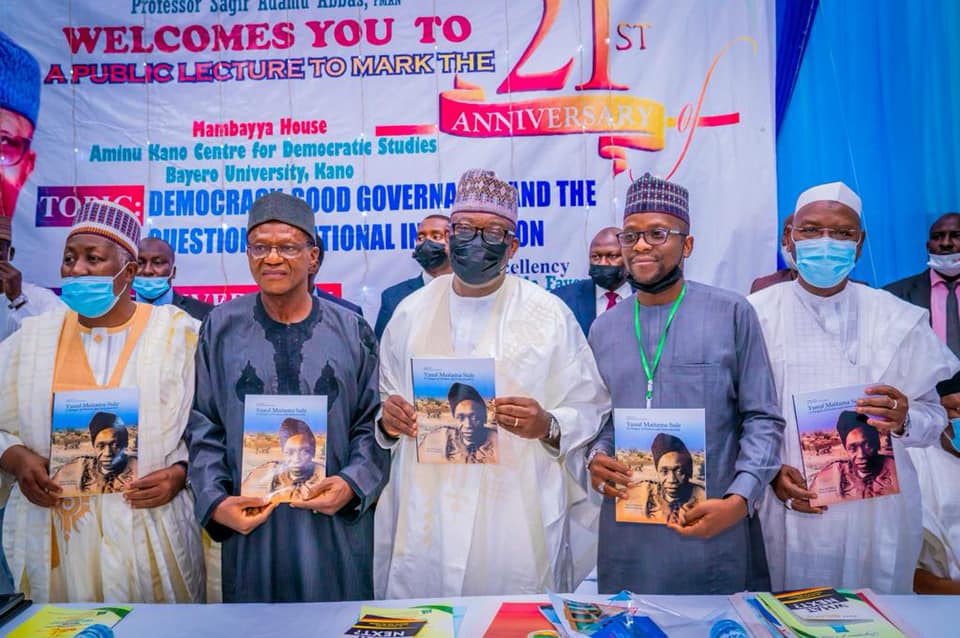
Delivering a speech on Saturday to commemorate the 21st anniversary of Mambayya House at the Sa’adu Zungur Auditorium Complex in Kano, Governor Fayemi said he was so delighted to be invited to give a talk at such an event, adding that “Mallam stood out in our entire post-colonial experience as the very anti-thesis of money politics.”

Mr Kayode’s speech partly reads: “Born on the 9th of August 1930, and as an early beneficiary of both Quranic and Western education, Mallam as he came to be known affectionately very quickly carved a niche for himself as the pre-eminent voice and champion of the talakawa – that mass of peasants, the urban working poor, and the déclassé.

“His emergence and growth into this role emanated from a deep-seated set of values that he embraced and honed at an early stage in his political career and held on to tenaciously for the rest of his life.

“Concerned by the reported excesses that were built into the colonially-licensed native authority system and convinced that the system needed to be overturned in order for the talakawa to be able to have a fighting chance to lead a decent and dignified life free of oppression, he committed himself to organise the mass of the people to exercise their agency to imagine and create an alternative political order.

“The principal agency through which he did this was the movement which he helped to found in 1950 and which was named the Northern Elements Progressive Union (NEPU). The establishment of NEPU was to mark a significant milestone in the history of political radicalism in Nigeria. The tradition of radicalism which it represented was carried over into the late 1970s and beyond by the Peoples’ Redemption Party (PRP), which Mallam Aminu Kano also led.”

Malam Aminu was a famous political figure, especially in Northern Nigeria. Public institutions named after him include an airport, a teaching hospital, and a college in Kano and other states.

Many dignitaries from around Nigeria graced the occasion. These include Governor of Jigawa State, Muhammad Badaru Abubakar; former Deputy Governor of Kano State, Prof. Hafizu Abubakar; Vice-Chancellor of Bayero University, Kano, Prof. Sagir Adamu Abbas, among others.