Life

Embracing life’s fluidity: Finding strength in change

By Abubakar Aminu Ibrahim

Life is so fluid. What once seemed overwhelming, embarrassing, or deeply significant often appears trivial with time. As we move forward in life, we begin to see past experiences in a different light, realising that our worries were not as permanent as they seemed.

As individuals, we evolve our understanding, emotional strength, and ability to handle challenges. Situations that once troubled us may later become sources of amusement because we have outgrown them. This shift in perception is a sign of personal development and an indication that hardships do not last forever.

Time itself plays a crucial role in shaping how we interpret past experiences. Pain and hardship, no matter how intense, tend to fade as new experiences replace them. Reflecting on past struggles with a sense of humour proves that time has a healing effect and that difficult moments are only temporary.

When we understand this concept, we can approach life with more ease and patience. If we can recognise that today’s problems may seem small in the future, we will be less burdened by stress and anxiety. Instead of worrying excessively, we can develop a lighter approach to life, embracing challenges with confidence and optimism.

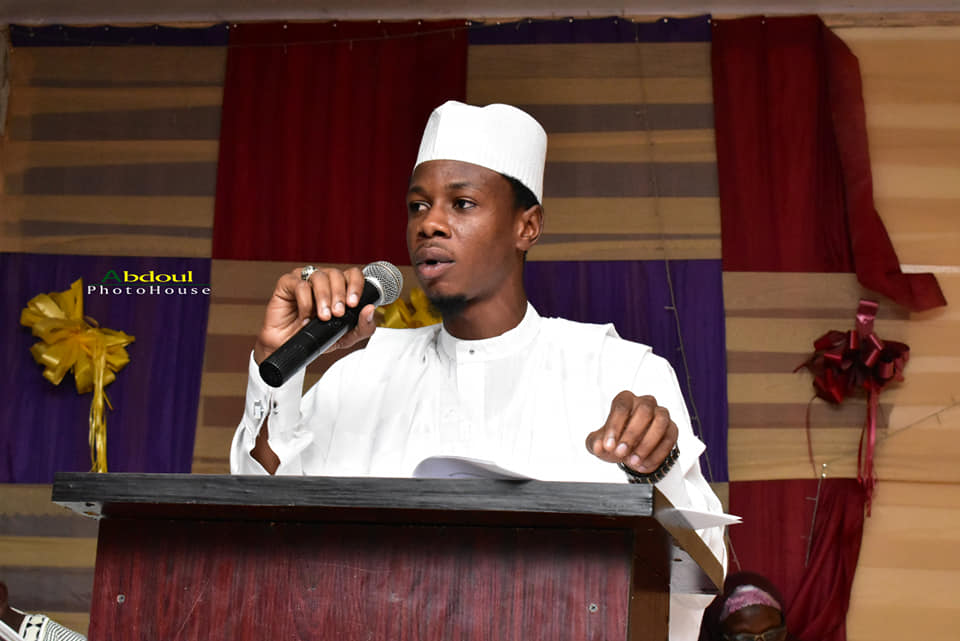
I recently gave a talk (a book review) about worry and anxiety. One powerful insight I gained from the session is that challenges are not only inevitable but also an integral part of life. A great way to avoid devastation from calamities is to be emotionally prepared for them. 

Imagine two people walking toward a corner—one is aware that there is a dog ahead, while the other is not. When the dog suddenly barks, the informed person remains calm, anticipating the encounter, while the uninformed one may panic and even stumble into another danger.

This is how mental preparedness can help us navigate life’s uncertainties more easily. By acknowledging that challenges are a natural part of our journey, we diminish their power to destabilize us, allowing us to confront difficulties with confidence, adaptability, and flexibility.

Take life easy; the way you laugh at yesterday today is how you’ll laugh at today tomorrow!

Abubakar wrote from Katsina via abubakarmuhammadaminu21@gmail.com.

A few important lessons about the highs and lows of life

By Suleiman Ahmed

1. When things are going well for you, remain humble. It’s not just about your hard work, intelligence, skills, or talents; factors like luck, good timing, opportunities, and privileges also play a role.

2. Conversely, when things are going bad for you, forgive yourself and avoid falling into despair. Some aspects are beyond your control. As long as you did what you had to, forgive yourself, learn from the outcome, correct your mistakes, and keep moving forward. 

3. You’re not as good as you think you are when you’re winning, and you’re not as bad as you think you are when things are going poorly. Take it easy.

4. Bad things will happen. It doesn’t matter if you’re a good person or not; bad things can happen to anyone. There are too many variables beyond your control. This is why it’s crucial to prepare for challenging days when things are going well. 

The Igala people have a wise saying: “In times of abundance, prepare for hardship.” Life isn’t all about feasting; there will be moments of famine. What you do during times of plenty determines how you cope during times of scarcity. A great year doesn’t guarantee the next one will be the same. Life is unpredictable. Another crisis might happen, or unexpected challenges may arise. 

Many things are beyond your control, so staying prepared is the best way to handle surprises. In essence, the Igala wisdom encourages prudence during prosperous times. It teaches us to resist the temptation to indulge in extravagant spending during good times and, finally, to adopt a sustainable life, diligently saving for unforeseen emergencies. 

A lack of preparation for the bad times exposes one to relying on charity from others for financial assistance when hard times eventually arrive. While this may not be wrong in and of itself, relying on people’s benevolence during emergencies is not only risky but also unfair to both yourself and the people you seek help from, especially if feelings of betrayal arise when they can’t rescue you. Numerous relationships have been strained due to one party’s inability to offer financial support during times of distress. It’s crucial to recognise that we don’t always know the challenges others are silently facing. Therefore, feeling offended or betrayed when they are unable to help is rather unkind. 

In summary, stay humble and frugal during good times, forgive yourself and remain patient during bad times, and stay prepared for the unexpected. While the future is unpredictable, being prepared helps you handle surprises better.

The path is long. 

The burden is heavy. 

May your arm be strong. 

May your sword be sharp.

Suleiman Ahmed is the author of TROUBLE IN VALHALLA. He is also a software engineer. He is available on X/Twitter via @sule365.

Death is the key to life

By Abdullahi D. Hassan

For centuries, the word Death has been viewed according to civilizations, faiths and isms. Death is the only attribute a person must undergo regarding social status or wretchedness, from the recorded history of Homo Sapiens to the present age. Humans face all sorts of challenges that cease the existence of life and body. Thus, some individuals meet their end via natural causes.

Death is a threshold; disunite a magnetic love between children and parent, decouple chemistry among spouses and reflect mourning on a follower’s mind over the demise of a good leader. Yet, for ages, no one returns from such a journey to testify for the living souls. So, how is life in purgatory?

We read and write biographies and memoirs of late people to adjudge their erstwhile accomplishments, either good or harmful to society. Statues were erected for the commemoration and monumental projects named after great people across walks of life.

The first death that shook my nerves terribly happened two decades ago in Jos, North Central, Nigeria. Then, the two Abrahamic faiths were involved in a brutal religious conflict. Both the Muslims and Christians kill indiscriminately for futile and dogmatic intuition. The dreadful scene is yet to skip my memory.

Two people, a man in his blooming age and an adolescent girl, were caught by the militia mob. They received intense attacks from all directions. Finally, one of the zealots struggled the man down, poured fuel on him, and ignited the lighter. The girl cries in a harrowing pitch, pleading in Hausa, “Dan Allah, kada ku kashe mu! Yaya ne,” meaning, I’m begging you in God’s name, don’t murder my brother. He was cremated alive to ashes. I don’t know what happened to his sister. If I hear any narratives about death, murder and genocide, my mind abruptly recalls the barbaric nostalgia.

In 1888, a French newspaper published an obituary headline entitled ‘The Merchant of Death is Dead’ erroneously confused Alfred Nobel instead of his brother, Ludwing Noble, who died on his visit to Cannes. Alfred Noble amassed a huge fortune by selling explosives used in wars. The story went viral across Europe, and critics were happy over his death. He wrote in his will, “those who, during the preceding years, have conferred the greatest benefit to humankind”. The Prize was established in Chemistry, Literature, Medicine, Physics and Peace. The Nobel Prize has been awarded to great thinkers, policymakers, leaders, advocates, activists, and international organizations for over a century. From 1901 to 2020, 962 became Nobel laureates.

Mikhail Kalashnikov, the world’s deadliest inventor of AK-47, designed the assault rifle used by the Soviet Army in 1949. His horrendous automatic weapon soldiers hold for wars to kill enemies at the battleground. Warlords, like Charles Taylor, trained child soldiers to torture, kill and rape women. AK-47 is the weapon of choice by Jihadists in terrorist activities. In 2007, a statue of Kalashnikov was displayed in Moscow. Vladimir Putin described him as “a symbol of the creative genius of our people”. He wrote a letter to the head of the Russian Orthodox Church saying, “the pain in my soul is unbearable. I keep asking myself the same unbearable question: If my assault rifle took people’s lives, that means I am responsible”.

The two famous men, Alfred Nobel and Mikhail Kalashnikov, destabilized human sanity and championed cruelty. Noble is an antithesis of knowledge and rational thinking to wedge vacuums in scholarship for the benefit of humanity. For instance, in 2010 Nobel Prize in Physiology-Medicine was awarded to Robert Edward for curing infertility and IVF discovery. And also, Paul Crutzen won the Nobel Prize in Chemistry for the breakthrough in studying the ozone layer and climate change.

On the other hand, Kalashnikov’s invention is the anathema of the world’s suffering. Especially, Global South countries, some 800,000 Tutsi villages were slaughtered with machetes and AK-47 in Rwanda alone. His unwanted weapon caused more havoc worldwide than any assault rifle from the 20th century to this millennium.

Death is the key to life. Since we were born, we have escaped many channels to survive. Some die at the neonate stages; others pass from adolescence to the peak moment of life. Some took their life by themselves as a result of karma or tiredness to continue living in a dying condition and hopeless dreams. But, no matter what it takes, one day, we must die by a slight obstruction unbeknown to us or evident.

Lastly, change your storyline as Alfred Nobel does if you are not dead. Not insincere lamentation of Mikhail Kalashnikov’s conviction to write a letter to the religious leader. Who is not a God rather tutelage of religion? If your close relatives display selfishness like Kevin Carter, it is not too late for his attention and legacy changes.

Abdullahi is a freelance journalist and writer. He will be reached via Abdulbaffah@gmail.com.