Kidnapping

Pandemonium in Kaduna as shooters storm community, abduct people

By Uzair Adam Imam 

Reports reaching The Daily Reality indicate that unknown shooters have stormed the Kaduna community and abducted the daughter-in-law of the Chairman, Northern Elder’s Forum, Ango Abdullahi.

The bandits were said to have invaded the community, Yakawada village in Giwa Local Government Area of Kaduna, on Tuesday night, where they abducted the woman and other residents. 

This is, however, coming barely a month after the abduction of one of the sons of the elder statesman, Ango Abdullahi, by the unknown shooters. 

The elder statesman confirmed this to journalists on Wednesday, adding that the victim was abducted alongside four of her children.

“My daughter-in-law, Ramatu Samaila, was among the abductees, including her four children. She is the wife of my son-in-law, who is the village head of Yakawada,” he said.

According to a source, the bandits also kidnapped some of the residents of the community. 

“They also went to the residence of the neighbour to the village head and kidnapped the household, Abubakar Mijinyawa, along with his two wives, namely Aisha and Hajara. And the two wives were both nursing mothers who were abducted with their little babies.”

I smuggled drugs to raise N5m ransom for my mother’s abductors—detainee

By Muhammad Sabiu

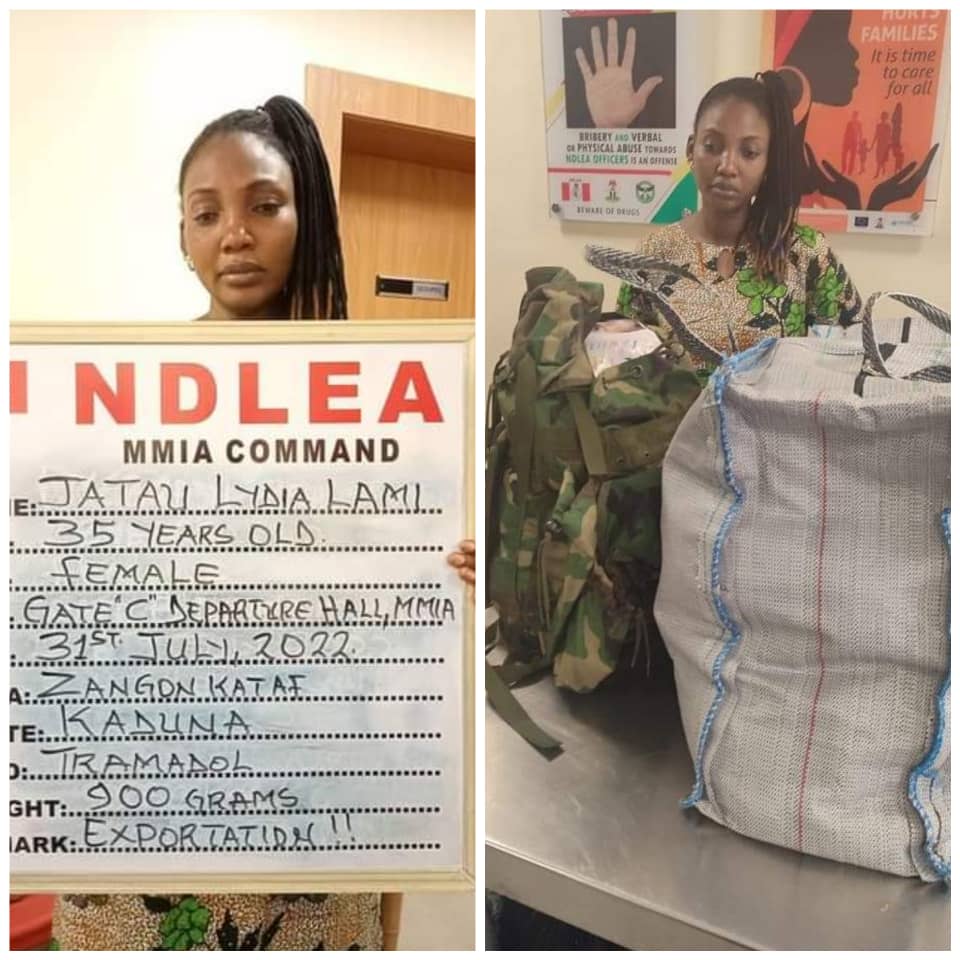
The National Drug Law Enforcement Agency (NDLEA) detained a female traveller named Jatau Lami at the Lagos Airport for attempting to export 1,700 Tramadol 225mg tablets.

Her arrest was confirmed by the director of media and advocacy at the NDLEA, Mr. Femi Babafemi, in a statement made public on Sunday.

Babafemi revealed that the package was carried undercover in her luggage on a Turkish Airlines journey to Istanbul, Turkey.

The suspect, a mother of three, is a native of Zango Kataf Local Government Area (LGA), Kaduna State, but she currently resides in Istanbul, Turkey, with her family, according to a preliminary inquiry.

She attributed her action to pressure to earn N5 million in ransom money to release her mother from the robbers’ custody.

Insecurity: A bomb capable of blowing into civil unrest in Northern Nigeria

By Abdullāhi Muhammad

Sadly, the issue of insecurity is becoming somewhat politicised. The danger lurking behind this, however, is alarmingly disarming. The problem is multifaceted. While some criminals do so to make end meets, many indulge in crime due to conflict of interest. Be that as it may, the government’s inadequate measures to tackle security is a lurking bomb capable of blowing into civil unrest.

In a documentary by BBC in Zamfara, Fulani Bandits frequently invade villages, abduct inhabitants and slaughter anybody who resists. They also raid roads, shoot passengers and drag drivers out of their cars. In a somewhat passionate yet disarming effrontery, Fulani Bandits have gone beyond the camera reach as they film each other, showing obsession with guns and frequent drug-taking.

Speaking to one of the bandits’ warlords, Ado Alero, BBC reported that Alero considers his action to be a means to attract the government’s attention. Alero is one of the most feared warlords in Zamfara, whose behest police had put the bounty of 5 million Naira considering his rule in a recent massacre. He was recently turbaned in one of the bandits’ villages.

In another interview with one of the leading bandits’ commanders who led an attack and abduction of nearly 300 school girls in one government girls’ secondary school in Jengebe, Abu Sani confirmed to BBC that they had collected 60 million from the government to release them. They used the money to buy more riffles. Abu Sani said they did that to destabilise the government and keep her from intervening in the parrying. In another attack launched by the bandits, more than 200 people, including women and children, were reportedly killed. Further, they threatened to kill 120 Hausas at the behest of any single Fulani lost to Hausas.

This follows the sorry state the Fulani had been subjected to. They were abandoned, extorted and apprehended for so long. Their cattle were also rustled. They’re made worthless; no hospitals, no schools, and nobody cares to listen to their cries. Thereupon, they take guns to protect themselves.

In response, the Hausa, on the other hand, organised vigilante militias who went on a rampage and attacked Fulani Hamlets, killing any Fulani their eyes could meet.

Hassan Dan Tawaye (Hassan the rebel), a Fulani, who was reported to have first brought AK-47 to Zamfara, explained to a BBC correspondent that each side of the warring parties was at fault. When bandits attacked the Hausa community, Hausa militias were quick in reprisal and, in the process, killed many innocent lives. 

Hassan Dan Tawaye, having laid down his guns to pursue peace, has returned to armed conflict. Hassan said they could not endure the levity of getting killed and were tired of waiting for the government to intervene. Therefore they have taken guns.

At this point, the Zamfara state government is in a dilemma and forced to negotiate with the bandits. However, Abu Sani said that each side benefited from the insurrection. He further noted that the polity’s increased insecurity politicised the problem. Things deteriorate because any of the parties, from top to bottom, needs money.

Dishearteningly, while Northwestern Nigeria is on fire, governments both at the federal and state level are becoming insensitive and lack the audacity to tackle the menace adequately. This has led to the bandits getting more enamoured and the victims being pesticide. The worst is how the state government asked the citizenry to buy guns so that they could depend on themselves. However, this is not the answer to the situation on the ground and would not provide the garment possible enough to stampede insecurity within the polity.

On the other hand, it’s interesting how the National Assembly’s impetus to impeach the president over the long-endure insecurity issue in the nation. The National Assembly had on Wednesday given the president six weeks ultimatum to resolve the issue of insecurity in the country or risk impeachment. This has relieved the citizens but is not good enough to suppress their fears of the criminals who sworn hell-bent on countering peace in all ramifications and bringing the nation to its knees.

It’s indeed of great concern and fear to see the centuries-old, good relationship between Hausas and Fulanis deteriorating. We, therefore, urge the government to deploy numerous tactics to tackle the insecurity issue in northwestern Nigeria and other parts of the country. More military bases should be built in and across various states with insecurity problems, and there should be sufficient military equipment for proper and successful operations. Finally, both sides should be demanded to lay down arms, concede for peace, and reconcile a trust.

May Allah bring back peace in Zamfara, Northwestern Nigeria and Nigeria in general, Amin.

Abdullāhi Muhammad lives in Azare, Bauchi state, and can be reached via abdullahimuhammadyalwa02@gmail.com.
Kidnappers cart away 3 kids in Kogi—police

By Muhammad Sabiu

The Nigeria Police Force confirmed the kidnapping of three kids in Kogi State.

This was contained in a statement issued on Friday night by SP William Ovye Aya, the public relations officer for the Kogi State Police.

Early reports claimed that unknown gunmen attacked Kaduna Estate in the Ajaokuta Steel Township Complex, Kogi State’s Ajaokuta Local Government Area, on Wednesday night in order to kidnap their victims.

According to information from a family source, the kidnappers sought N100m in order to release their victims.

In the statement, Aya made a hint that Kogi State Commissioner of Police CP Edward Ogbuka had sent members of the Police Mobile Force, CTU, and Quick Response Unit on the hunt for the kidnappers with the goal of freeing the kids and putting the criminals to justice.

It may be remembered that lately, in Jida Bassa, Ajaokuta Local Government, gunmen ambushed three police officers and five vigilantes, killing them all.

Kogi in the North Central part of Nigeria has also been one of the states badly hit by the activities of gunmen.

Bauchi plans security outfit to tackle insecurity

By Muhammad Aminu

Bauchi State Governor, Bala Mohammed, disclosed that the state had finished preparation that would enable it to establish state-owned security outfit to tackle banditry and other crimes.

Mohammed said this when he paid a condolence visit to the family of a 75-year-old Jauro Katu Mai Dakkuna who was killed by bandits while kidnapped in Shafa community of Alkaleri Local Government Area.

According to him, the State is making arrangement to recruit over 2000 youths that will man the security outfit across the 20 LGAs of the state to safeguard lives and properties.

The Governor alleged that the bandits that operated in the area have local collaborators.

“There was no how somebody from somewhere in Zamfara would visit that secluded place of Shafa hamlet to kill somebody unless he has an informer and collaborator. As the security agencies have always said, such thing could not happen without collaboration with some obnoxious elements within us.

“We have to fear God in all our dealings, we have already requested the two district heads to make sure they become circumspect, to look inward because we too were looking so that they can arrest all these issues of compromise, information being given to the bandits.

“Reports reaching me the day before was some locals were supplying foodstuff to the bandits in the forests, so we are aware of such retrogressive tendencies, there are some few dissident security operatives that are compromising with the bandits.

“So, we are requesting the commissioner of police and the brigade commandant to effect a change or redeployment of the guards here who have over stayed in their duty posts to have been conniving with the bandits,” he said.

He assured residents that a feedback mechanism will be put in place to improve the security situation.

“We are establishing a system of feedback, and I had some people within us are even feeding the bandits in their secluded places by giving them grains and flour to feed, that is the report I got, and we are going to take measures against such people wherever they are and no matter how close they are to us,” he stressed.

The Governor advised the people to give the government information through their local authorities such as the LG chairman, councilors, district, village and ward heads for prompt action to prevent any breakdown of law and order.

Gunmen storm Zaria, abduct woman on sickbed

By Uzair Adam Imam

Unknown shooters abducted a woman patient on her sickbed in Zaria Local government Area of Kaduna State on Thursday.

The shooters were said to have arrived at Anguwar Malamai village in Kakeyi, Zaria, where they abducted the woman to an unknown destination.

The Daily Reality learned that the incident reportedly occurred around midnight on Thursday.

It was gathered that no sooner had the bandits arrived than they proceeded to the residence of Alhaji Shu’aibu Dallatu and abducted his wife.

Speaking, one of the residents disclosed, “The bandits arrived at the residence purposely to kidnap the household, Alhaji Shuaibu Dallatu, because on arrival they asked some young men who sleep in the shop outside the house of his whereabouts.

“Meanwhile, Alhaji Dallatu, who was fully awake attending to his sick wife, overheard the conversation and quickly sneaked out.

“They bundled her into a waiting car and started shooting into the air as they made their exit,” he stated.

The Police Public Relations Officer in Kaduna, Mohammed Jalinge, could not be reached as at the time of filing this report.

On the emerging narratives of Hausa/Fulani animus in the Northwest

By Dr Raji Bello

The past few years have witnessed a gradual emergence of references in public commentary and social media to a potential or actual rupture of relations between Hausa and Fulani groups in the Northwest geopolitical zone of Nigeria. Prior to this, the two groups had enjoyed a largely harmonious relationship for much of their history which was only punctuated during the period of the establishment of the Sokoto Caliphate.

Since Nigeria came into being at the turn of the 20th century, conflict between the two groups was limited to occasional farmer/herder disputes. While the region has distinct Hausa (majority) and Fulani (minority) communities in the rural areas, the urban centres tend to have mostly mixed populations united by the Hausa language and Islam, which eliminates the possibility of ethnic conflict.

The idea of Hausa/Fulani antagonism began to emerge several years ago in the commentaries of individuals from outside the North like Femi Fani-Kayode and Nnamdi Kanu who relished in promoting it as a potential tool for undermining northern hegemony, as they saw it. But recent developments in the Northwest like the emirship succession in Kano and Zazzau, and the violent conflict between rural Fulani and Hausa vigilante groups as well as the wave of banditry against local communities by Fulani elements has created narratives of Hausa/Fulani conflict among northerners themselves.

As we acknowledge this new reality, it is also important to recognise that there are two strands of these narratives out there and the motives of those who articulate each of them are different. I will group them into non-extremist and extremist narratives.

Non-extremist narratives

These are propagated by ordinary Hausa citizens who are concerned by what they see as the continued suppression of Hausa identity and prestige as well as threats to the security of Hausa communities in parts of the Northwest as a result of banditry. They hold an unfavourable view of the existence of exclusively Fulani traditional ruling dynasties in Hausa-dominated emirates like Kano, Katsina, and Zazzau which were established when the Sokoto Caliphate came into being over 200 years ago. They object to the references that are often made to the Fulani heritage of the emirs (although I believe that this is not done out of ethnic chauvinism but because of a need for historical accuracy). These are concerns that the state governments in the Northwest can engage, with a view to introducing reforms that would assuage negative feelings and lead to a more harmonious society.

Traditional institutions play a vital role in preserving our heritage but for some segments of society, they may also be permanent reminders of an unpalatable past. It is the responsibility of modern day governments to ensure that they strike a balance between the two i.e. preserving heritage while not alienating some segments of society.

Reforms could be introduced that would formally recognise and integrate the legacies of the pre-Caliphate Hausa emirs. Like a contributor Aliyu Ammani has suggested in a Daily Trust article, Hausa ruling houses could be included as contenders during succession to the emirships; our governors are fond of creating new emirates where they didn’t exist before and therefore, they should not find it difficult to create new ruling houses within the existing emirates. The Sokoto state government may also consider elevating the status of the Sarkin Gobir of Sabon Birni – the ancient Hausa kingdom of Gobir being the epicentre of the Sokoto Jihad.

Governments have a duty to recognise and preserve heritage holistically; the heritage of some segments of society should not be elevated over those of others in a post-Caliphate and post-colonial nation state. This is a recipe for entrenching communal tension and possible conflict. The Northwest governments should collectively nip these emerging issues in the bud and not allow them to fester and grow into major problems in the future.

I expect some readers to either say that these suggestions are too radical or that they will be impossible to implement. I’m used to hearing this from reform-shy Nigerians who like things to remain just as they are even when the existing situation is pushing us towards the edge of the cliff.

The second cause for concern is, of course, the ongoing wave of banditry against local Hausa communities in many parts of the Northwest in which Fulani elements are major actors. However, this is not primarily an ethnic conflict; if communities that have lived in peace for generations are now locked in violent conflict we need to scratch below the surface to find the actual causes.

The banditry is a symptom of the failure of governance at various levels. Even a report commissioned by the Zamfara state government (the MD Abubakar-led committee) has alluded to that by indicting former governors, top government officials, traditional rulers and members of the security services. There are chronic issues with agricultural land management, law enforcement capacity, corruption and maladministration by local officials and traditional rulers.

The lack of a long term plan by successive federal and state governments for transitioning nomadic pastoralists to modern and sustainable livelihoods is itself an evidence of leadership failure. While people are entitled to show concern about the apparent ethnic divide in the conflict, it is clear that it is not fundamentally an ethnic one.

Extremist narratives

These are deeply inciting and apocalyptic portrayals of the state of Hausa/Fulani relations in the Northwest which are propagated on the internet by people with no apparent desire for peaceful co-existence. Their aim seems to be to incite a major upheaval in order to undermine the fabric of society. They are a faceless mix of anarchists, genocide entrepreneurs and probably, people with a religious agenda. They often start their narratives by depicting the arrival of the Fulani in Hausa land hundreds of years ago as an invasion, then portray Usman Danfodio as the original Fulani bandit leader before dwelling on their favourite topic of interrogating the validity of Hausa-Fulani as a descriptive term for a segment of the population of the Northwest. They hide behind a veneer of seductive Hausa ethnic nationalism but their true agenda is to engineer maximum disruption in the Northwest which they hope would serve their interests.

There is a YouTube site and a Facebook page dedicated to the project (yes, it does appear to be a well-funded project) and I have viewed a few of their videos. Some of the voices on the videos bear distinct Nigerien accents (with French-influenced pronunciations) and some of their messages give a hint that they are non-Muslim Hausas. One of the voices called for unity among Hausa people of all faiths – Muslim, Christian and pagan to confront the Fulani threat, as they saw it. From my knowledge of northern Nigerians, it is very unlikely that a Hausa Muslim Nigerian would call for unity between Hausa Muslims and Hausa pagans considering how paganism is viewed in Islam. A Hausa individual who makes this call is likely to be a non-Muslim. And if those behind the extremist messages on the internet are non-Muslim Hausas, the question arises about whether they are working for a religious agenda or not. By saying “non-Muslim Hausas” I’m not necessarily alluding to the Hausa Christian community; there are also a small but assertive number of Hausa atheists and modern day pagans who are not necessarily enamoured of the prevailing order in Northwest society. If anyone feels that I’m being alarmist here, they should visit the YouTube channel of Jaruma Hausa Tv and listen to the messages themselves.

Conclusion

Authorities in the Northwest need to face the new reality of tension and misgivings between the hitherto harmonious communities of Hausa and Fulani. There are issues that are germane (the exclusivist Caliphate traditional dynasties in some of the Northwest emirates and the ongoing banditry) behind the new unease in ethnic relations which need to be actively addressed, in order to re-establish harmony. But it should also be recognised that not all those who are currently pushing narratives of Hausa/Fulani conflict or Hausa nationalism on the internet are working for peaceful co-existence. Some of them are merely exploiting contemporary issues in the Northwest to achieve their own dark agenda.

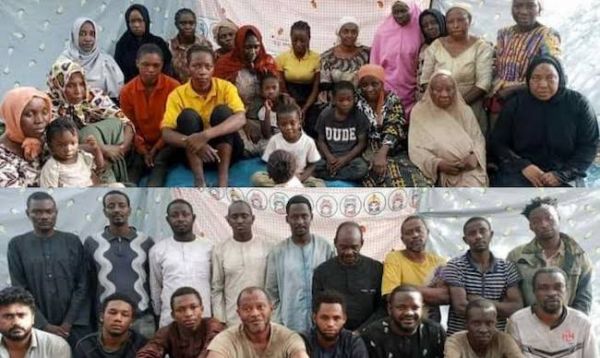
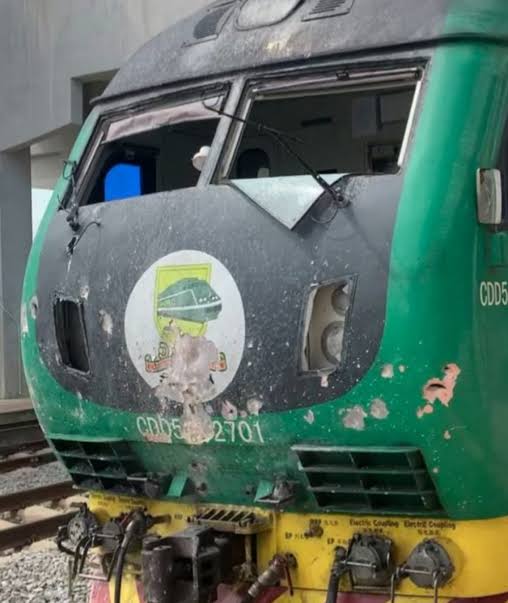
Kaduna Train Attack: A scenario 

By Hamza Muhammad Tasiu 

Let’s imagine this: 

You are a young mother. You leave Kaduna a few days earlier for a task in Abuja. After finishing the task, you call your husband and tell him that you will be coming back and that he should buy your best food from your best restaurant for you. You tell him how badly you miss him. You tell him that you’ve bought his favourite perfume for him. You even tell him that he should tell your little daughter that you have bought her a special present from Abuja.

And given that this is the first time you go to Abuja, you tell him that you have a lot of stories from the nation’s capital. So you stop and buy your mother apples and pineapples on your way to the train station. You also buy a new shirt for the Almajiri that runs errands for you.

You leave Idu station at 6 pm and are scheduled to arrive at Kaduna’s Rigasa train station by 8 pm. On the train, you say salaam to the other occupants and shake their hands. You smile at a little girl, and she smiles back. Her cute smile injects you with a dose of happiness you’ve not felt in a long time. The woman sitting next to you is an elderly woman in her late 60s. She looks like your mother. She starts a conversation, and, before long, you feel at home with her. You talk about a lot of things with her. You talk about the month of Ramadan and how you plan to spend it. You even tell her your readiness to fast throughout Ramadan as your ulcer seems to become dormant lately. She complains that she cannot fast as she is on medication. She says she will fast after finishing her drugs. 

Not more than 30 minutes into your journey, that woman now seems like someone you have known for many years. Amidst the exciting conversation you are having, she suddenly falls asleep. You want to continue the conversation but feel it uncourteous to wake her up from sleep. You allow her to continue sleeping. Before long, you also get overpowered by sleep due to the exhaustion from your work in Abuja. Suddenly, you wake up to the sounds of explosions and gunshots. In what seems like the twinkle of an eye, all the unlucky passengers are rounded up by the terrorists. They rain all sorts of abuse on you and force you to walk for tens of kilometres on foot in the bush.

Days have now become months, and you are still under the pharaonic care of these terrorists. You look at that older woman, and you feel sorry for her. Her health is deteriorating as she does not have the drugs that she takes three times a day. She often tells you in the night: “Zan mutu ‘ya ta. Ga ruwa, ga sauro, ga yunwa, ga duka, ga jinya. Ba zan iya ba. Karfi na ya kare!” But you give her words of encouragement and ask her to keep on, promising her that God will bring help.

Your comments seem to boost her spirit. She says to you: “Allah Ya miki albarka ‘ya ta. Da ba dan ke ba, da bansan inda zan sa kaina ba.” As soon as she closes her mouth, one of the terrorists says to her: “Idan ba kiyi shiru ba hajiya, zan zane ki wallahi! Kar kiga shekarun ki, yanzu zakiyi kuka wallahi! Kin manta dukan da aka muku da safe koh?” 

The elderly woman then says, somehow inaudibly: “Ya Allah ka saka mana. Ka mana hisabi da wadanda suka daurawa kansu nauyin kare mu amma suka banzantar da nauyin da suka daurawa kan su, amin.” As if someone has put her on a speaker, all the kidnapped victims say, “amin” in a resounding voice. The terrorists then descend on them, beating them mercilessly, saying: “Mu zaku hada da Allah? Wallahi zamu kashe ku gaba daya! Matsiyata kawai! Tsinannu! Idan ba a bamu kudi ba, wallahi sai mun kashe ku duka! Wahalallun banza! Dangin matsiyata!” You become angry because of the abuses they rain on you because you are someone your people highly respect, but then you remember there’s nothing you could do.

Back at home, your little daughter has been waiting for you for more than 100 days! All she can do is to pray to Allah to rescue you. She often tells her father: “Baba ni na hakura da present din, kawai ni mama nake so na gani. Dan Allah ka dawo da ita!” The father goes into his room and cries because there’s nothing he can do. He raises his hands in prayer: “Verily, the most helpless of people are those that are unable to ask for Your help. We ask for Your help regarding these servants. Rescue them, Ya Allah!

If this story touches you, then wait a minute and reflect on what the kidnapped victims are going through. Think of what their families are going through after watching that video. It’s devastating, to say the least. May God rescue them! The leadership has failed them!

Hamza Muhammad Tasiu 

The dilemma of being a hostage in the kidnappers’ den (II)

By Alkasim Harisu Alkasim

The abductors got bewitched by Hajiya’s daughter and wanted to hold her for marriage. Had they ever had sex with her? This remains an unanswered question, although such an act is their capital source of chillaxing. During their stay, the abductees could not be in the arms of Morpheus. I told you earlier that the kidnappers do different assignments, such as denying the victims a chance to sleep. There are others assigned to supply food and water and those to provide bullets, etc. 

Naturally, women suffer from menstruation period. How do they look after themselves during their monthly friend? It is devastating that the kidnappers eject from the den any victim suffering continuing ill health by gunning him. The kidnappers love talkaholism. They talk their ears off after drinking alcohol and dragging marijuana until an uproar overwhelms the place. Nobody is to tax the patience of these bestiality-stricken people unless they want to die.  

The bitterest part of this tragic story was where Hajiya came the selfish with the driver. Given the opportunity to call a blood brother residing in Saudi Arabia, she said something that made my blood boil. When the Saudi-Arabia-based brother asked how many of them got abducted, she shamelessly said they were two, deliberately forgetting to mention the driver. This unprintable selfish behaviour of Hajiya redounded back on her as the kidnappers held her daughter all the more and threw away the key. What a world! The driver got sorrow-ridden as problems slammed him. 

The superior kidnappers exploit the inferior by capitalising on their weaknesses and expertise. The inferiors bust their asses to gather money for the superiors, yet they can’t get the money that is worth their effort. The toil of the junior kidnappers is worth hundreds of thousands of naira. Things continued to pick up steam. As a result, they got pretty fed up with how the senior kidnappers capitalised on their expertise to gain money. This dilemmatic situation they got entrapped in emerged as a genuine concern. 

As raging parties, the senior and junior kidnappers failed to ensure a common mind among themselves. As the high frequency of their getting exploited steamed more, the juniors cut corners with some of the hostages despite their being under the magnifying glass of the kidnapping honchos. The new abductors collocated their new abductees in a new hidey-hole. Hmm! There is betrayal and sabotage even among the abductors.

One of them said to the driver, “Between you and me and these four walls, do you have relations who can ransom you?” The kidnapper did this to gain money to recompense the exploitation he had stomached when under the employment of their former superiors. But will they ever mend fences with their bossyboots? Nobody knows. The seceded kidnappers considered releasing whoever paid a ransom. They ordered the driver to pay some handsome amount to compensate himself. He told the kidnappers that his whole family could not gather such an amount. 

The driver bequeathed his wife and children through Hajiya, who was released on that very day following her ransom payment. So that the driver could not afford the amount they requested, they told him to pay any amount he could, no matter how smattering. Upon payment, he finally got relieved of being a hostage.

At this juncture, society and the government must do their utmost to see the youth walk a straight line in their respective communities.  Otherwise, they will always be putting a foot wrong. We all need to stop this problem, for failing to do so means we are putting a gun to our heads. It is also good to know that gaoling the criminals is not the only solution. Because at times, gaoling does not end social ills such as this.  Rather, the criminals should be rehabilitated, educated, enlightened and offered jobs. If you give them jobs, they can put butter on their bread.

Parents, too, should stop spoiling their children rotten to avoid paving the way for them to stubbornness. They should be more thorough with their children and reprimand them if they go wrong. They should be taken to market to learn the basics of trading. Maybe, some of them have got a Midas touch. Some boys are brilliant for they can work like clockwork. They can perform like a duck takes to water at anything they start. Let’s help them mend their lifestyle to begin to feel like a million bucks. It is disgusting that some parents contribute to spoiling their children by refusing to admit to handling even simple misbehaviour their children start to embody. This makes me lose the run of myself. This fact can’t admit to two interpretations. First, it is your faux pas. Period! 

I feel like a chicken with its head cut off to see our children engaging in the misbehaviour of flirting, misspending, playing truant, etc. Like it or lump it, our youth are rampantly becoming wayward. They abuse drugs like it is going out of style. They don’t only like it, but rather like it like mad. They busy themselves smoking and drinking like nobody’s business as if their lives depended on it. But indeed, if we make it our business, stopping this behaviour is just like taking candy from a baby. 

In conclusion, the government should redouble efforts, tighten security and reconnoitre suspicious places. The more disturbing thing the government should know is that the Chadians, Cameroonians, and other Fulani tribespeople form most of the kidnappers, while Nigerian kidnappers form a minority of those abductors. The government should also wake up to this, work hard to gain a wonder drug for the situation and record a great success. Let us strike while the iron is hot.

Alkasim Harisu Alkasim wrote from Kano via alkasabba10@gmail.com.

Banditry: FGC Kwali closes after attack

By Ahmad Deedat Zakari

Federal Government College Kwali-Abuja has been shutdown after midnight attacks on the neighbouring Sheda community.

Gunmen, suspected to be bandits, attacked Sheda community on the night of Saturday June 23, 2022. According to locals, there were gunshots which lasted almost an hour and a resident was kidnapped.

Following the attack on Sheda, a community that shares the same border with the college, the school management has informed parents to pick their children from the school.

A senior staff of the college who spoke to the Daily Reality on ground of anonymity said:

“The management has gotten the approval of the Ministry of Education for parents to pick their children from the school pending when their safety can be guaranteed”.

The incident has prevented the students of the institution from completing their third term examinations, which supposed to come to an end on Tuesday.